Cartier-Bresson: The Impassioned Eye

A Cartier-Bresson documentary.

To wile away a couple of hours being shown his pictures by the great man himself is one of the better things to do with your time.

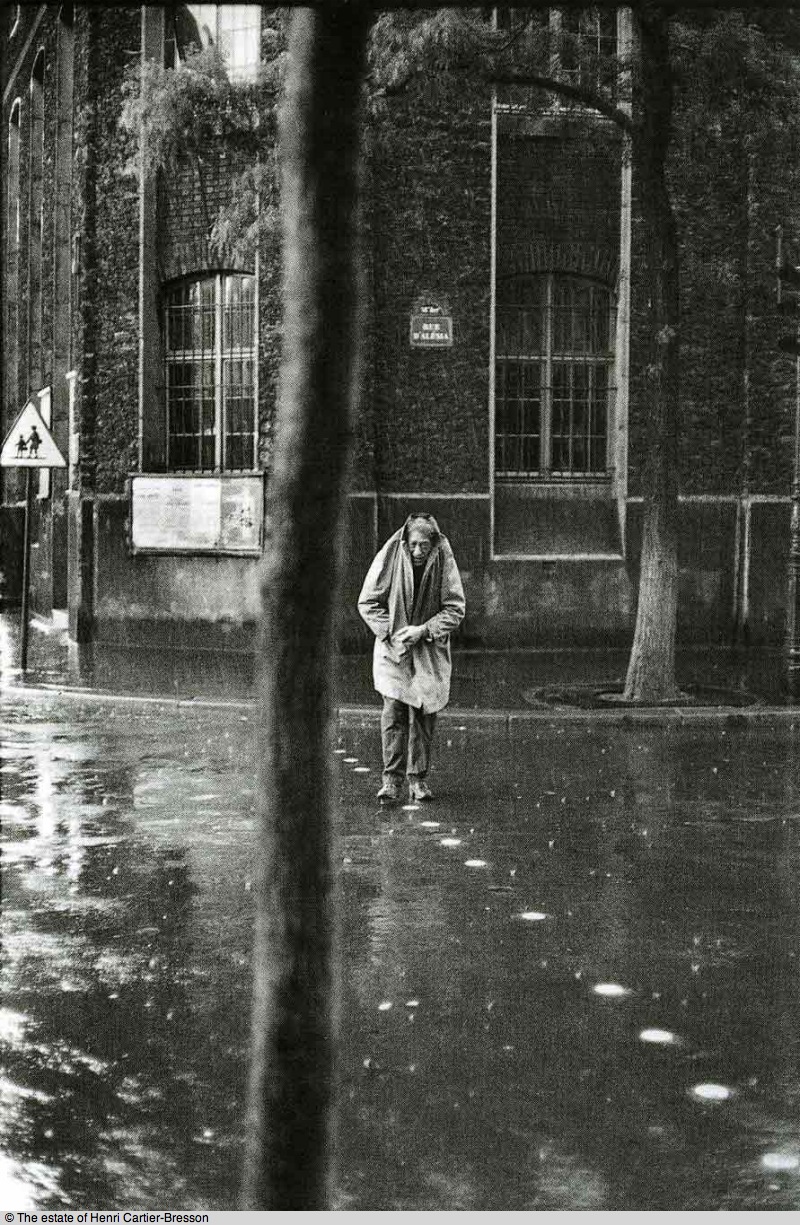
The documentary is called Henri Cartier-Bresson – The Impassioned Eye and is an orgy of HCB’s pictures, with many interesting tidbits on what was happening at the moment he pressed the button. I am struck again by how special his early (1930s) surrealist vision really was. It’s something which faded over time making his newer pictures mundane by comparison.

If there’s an error it’s the credit for his greatest picture – the man jumping over the puddle. It’s not a 1950s effort – it dates from 1932 and was taken during a time when his vision would forever make Henri Cartier-Bresson the most renowned photographer this world will ever know. And when you listen to the stories behind the pictures of Chanel or Bonnard or the Curies, all will be forgiven.

Highly recommended.

Steichen and fashion

A true modernist.

A reader dropped me a note about a fine slide show profiling the fashion photography of the great American photographer Edward Steichen. Click the picture to view.


Martha Graham by Edward Steichen, 1931

These pictures are from the Conde Nast library and are just as striking today as they must have been 80 years ago.

Cheer up!

It will get better, despite the government.

It seems more than appropriate to share a depression era photograph of Norma Shearer, by the great Cecil Beaton, at a time when America is leading the world into a massive depression, one likely to compete with the Big One for the worst ever.

The coming depression is a good thing, contrary to what our ‘business as usual’ leaders tell us. America is over-levered, over-retailed, over-car’d, over-banked, over-housed, over-medicated, over-lawyered and over-fed. We need a large percentage of the related businesses to fail, bringing down inflation and encouraging savings and capital formation. Because, sure as hell, if you don’t provide for yourself you know the government will not. And I can assure you that no conceivable form of government stimulus will fix what ails us until a broad swath of bankruptcies cleans the Augean stables known as American Retail and Residential Housing. Face it – most people are designed to rent, not own. And no one needs a new iPod.

So enjoy the picture, look forward to going to the movies for $1.50 (it’s called Netflix and you don’t have to drive your foul SUV to see one), forget the vacations (you have had too many as it is) and save your money. You are going to need it.

SDHC cards in the Canon 5D

Some surprising results.

SDHC cards are, let’s face it, the happening thing. With capacities up to 32gB and multiples of that in the offing in a postage stamp-sized medium, CF cards are not going anywhere. Add the fact that one vendor even offers an SDHC card with wireless transmission capability (though it does not support RAW files at the time of writing) and there’s reason to think that the greater bulk and inferior contact mechanism of the CF card (which depends on mating fragile pins with the card as opposed to the SDHC’s far more robust broad wipers) are headed for the technology waste bin. Finally, the burgoening netbook and flash memory markets are not about to use CF cards whereas every netbook and more devices have built-in SD card slots.

So, just for fun, I procured an inexpensive CF-SDHC card adapter ($25) and a bottom-of-the-line Kingston 8gB SDHC card ($18) and tried it in the 5D.


CF-SDHC Jobo card adapter, 8gB Kingston SDHC and 2gB Sandisk CF cards


455 RAW images on one card!


Side loading of the SDHC card in the adapter


While thicker than a CF card, the adapter fits the Canon 5D fine

The comparison, for timings, was a top-of-the-line Sandisk Extreme IV. I expected write times to be much faster with the Extreme IV, and they were. Taking 10 snaps in rapid succession in RAW on the 5D, the red light (indicating write status) on the rear of the camera remained on 16 seconds with the Sandisk compared with 39 seconds for the SDHC+adapter combination after taking the last picture. So if serial shooting in vast quantities is your thing, look elsewhere – the 5D has a 17 image RAW buffer so rapid shooters will find themselves bumping up against this – and slowing snap to snap times – with slower cards.

However, when it came to importing the images into Lightroom 2 (I used a Firewire CF card reader for the Sandisk and a cheap Transcend USB reader for the Kingston), import timings were 28 seconds and 26 seconds respectively. The SDHC card was faster! By contrast placing the SDHC card in the CF adapter and using the Firewire reader took 34 seconds – slower still. So SDHC import using an SDHC USB reader beats CF in Firewire!

Why bother? Because I like to use a netbook (with its SDHC slot) on the road and the built in SDHC card reader is a joy to use – no card adapter to forget. And because fast write times mean little to me, I am quite happy to have 450+ pictures available on one card which also fits a broad gamut of other devices in the home. And, maybe one day, Eye-Fi will produce an SDHC card with wifi built-in which supports RAW files. You won’t be seeing that in the CF format any time soon.

My only niggle is that it would have been nice had the adapter been end- rather than side-loading as the design requires removal of the adapter from the 5D to permit removal of the card. But overall, this is a fine value and I would guess the slower write speed in the camera would be made up for by the use of faster cards, if that matters to you. For me, it’s not an issue.

Vionnet

Greek classicism.


Vionnet dress with ruffle skirt, 1934

Take the Greek classicism of the great French dressmaker Madeleine Vionnet (1876-1975) and marry it to the no less classical photography of George Hoyningen-Huene and you have a timeless combination of life and art. So it hardly needs adding that the best gift this Christmas brought along was Betty Kirke’s definitive book Vionnet which my grandparent’s gave me this past December 25th.

Not only an orgy of photography by Hoyningen-Huene, Penn, Steichen, Beaton, Horst and other greats, this very large format book includes detailed patterns for many of the seemingly simple, yet highly skilled, creations of this greatest of clothes designers.