Getting rid of junk
If you haven’t used it in a year, get rid of it.
Now that rule may not work for certain special tools. That wrench that fits that special nut or the super telephoto you use rarely but for which there is really no substitute when you need it.
But, overall, the biggest obstacle to this principle is emotion. It’s hard to get rid of things you are attached to, even if they are inanimate objects.
But I gritted my teeth the other day and sat down to compile a list of the things I really do not need. And it was surprisingly long.
That Thorens turntable? I listen to a handful of LPs annually and invariably get frustrated with all the clicks, pops and the sheer fragility of the medium. So the 480 LPs went to Goodwill (libraries no longer want them) and the Thorens went on ePrey. The related ancient but great British Quad amplifiers? eCheat. Those enormous transmission line loudspeakers I built 35 years ago? Goodwill. Great sound but not much use stored in the cellar and no way was my better half going to allow them in the home. And I can get sound almost as good from modern miniature satellite speakers with a subwoofer, all in a fraction of the space. DVDs? Horrible space consumers. Off to the library, all 535 of them. If I want a DVD I rent it or go to the Apple Store.
Add to these the 200 classical CDs I gave them a while back and there’s a remote chance that the citizens of Paso Robles, CA will learn to spell ‘culture’, though I wouldn’t hold my breath. After all, this is an area where it’s the done thing to marry your first cousin while inhaling too many agricultural chemicals. Call me cynical, but somehow I don’t see Antonioni, Visconti and Scriabin conquering local tastes which stretch to revolting country music and regard Thomas Kinkade as an artist of esteem.
OK, so what about photo gear? I suppose it really makes more sense to send out files for the making of large prints as my wide carriage printer gets relatively little use. But I cannot get myself to part with it. But some others are easy. The 20mm Canon EF for my 5D? A real dog. Canon refuses to make quality ultra wides and I refuse to use the ones they make. Plus my 24-105mm at 24mm is much better and if I want really wide I use the 15mm Canon fisheye (which is great) and ImageAlign if I want rectilinear rendition – at 12mm wide! Anyway, the 20mm is out of here.
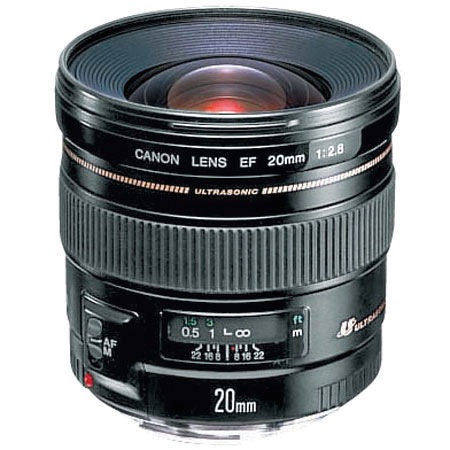
Canon 20mm – the lens that drinks from a bowl – my second and almost as bad as the first
Having grown up with any number of 50mm Summicrons on my Leica M cameras, I am attached to lenses of that length. But the Canon 50mm f/1.4 I own is right in the middle of the 24-105mm range and while the zoom is bulkier and slower, there’s nothing to choose between the two in sharpness and I do not need f/1.4, so it’s out of here. Take it to f/2.8 or larger (the zoom is an f/4) and the quality deteriorates rapidly. At f/1.4 it’s the proverbial Coke bottle bottom. I cannot remember when I last enjoyed using it.
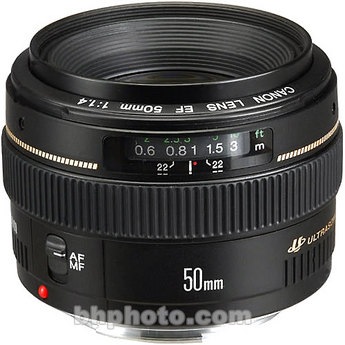
The 50mm cousin – another stinker
The 5D, 24-105, 15mm, 85mm, 200mm, 400mm Canons and the fabulous 100mm macro – all by Canon – are all keepers.
That massive wooden Gandolfi tripod? Redundant as I use an alloy Linhof. But it doubles as a display piece and may yet survive the purge though there’s absolutely no chance I will ever use it to take pictures again. Maybe I should dump it?
But after that there’s little left that does not get used frequently and my life is the better for a lack of clutter. Plus many Goodwill shoppers can exult in my great classical LPs, so it’s not all bad. And, just maybe, someone sufficiently undiscriminating will like those awful lenses.