Grain is dead

From the Canon 5D Mark II.

Vince LaForet’s work with the new Canon 5D Mark II at 1600 and 3200 ISO confirms that, for all practical purposes, grain is dead.

Click the picture for large JPGs at high ISO speeds from the new Canon body. In many you will see color fringing near the corners suggesting Canon has some way to go to better Leica in its optics, albeit even L lenses are mostly chump change compared to those from Germany. The fringing (correctable in post processing in Lightroom or Aperture) is especially noticeable in the snaps taken with the 45mm TS-E and the 15mm Fisheye (which I own and love). High time Canon started adding in-camera processing to fix this sort of thing. Obviously, the body ‘knows’ which lens is mounted and it’s not like Canon is ignorant of the aberration patterns in their optics. Adding a lens ‘map’ for each lens doesn’t sound like nuclear physics.

What you will not see is grain.

It would seem that the resolving power of Canon’s latest sensor significantly exceeds that of many of its lenses. I would suggest that use of any of the consumer zooms on this body is a complete waste of time – the proverbial Coke bottle lens on a Hasselblad. The cheaper non-L primes are fine (I love the fisheye, the 50/1.4 and the 85/1.8) but ‘kit’ lenses are a no-no. Garbage in, garbage out.

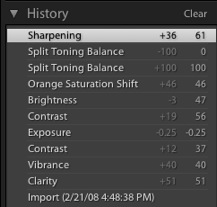
So, if you want grain, you are going to have to add it at the processing stage!

Mother Russia

Nothing changes.

What on earth can one make of Russia? For centuries it has stumbled from one brutal murderous dictator to another seemingly yet more heinous. Democracy, simply stated, is a concept they are incapable of embracing, preferring the cold clutches of the state and cheap booze. The current Russian poll to seek out the greatest Russian has Stalin in a healthy lead. Runner-up? Tzar Nicholas II. This from a nation that has given us Tolstoy, Tchaikovsky, Solzhenitsyn, Sakharov, Horowitz, Nureyev and on and on. You figure it out. I cannot.

So how is it that so cruel a system has given us much of what we think of as great art today, whether in music, painting, ballet, opera, architecture, you name it? Maybe it’s simply that the Slav creative gene only works well when depressed.

Click the picture for a beautiful monochrome photo essay by James Hill on the remains of agrarian Russia, appropriately published in that most socialist of US papers, The New York Times:

Brooklyn Then and Now

Yes, dear, NYC does have five boroughs.

To the average Manhattan dweller who, like the cartoonist Steinberg, believes civilization is bounded by 96th Street, Water Street, the Hudson and East rivers, it will come as a shock if I write that some of the most charming architecture and open spaces in New York City are to be found in the Borough of Brooklyn. And, of course, the best views of downtown from the Promenade on the East River.

I was fortunate to live there for a while when I first moved to New York in 1980 and liked much of what I saw – vibrant cultural diversity, a burgeoning progressive arts scene and all those great parks and churches. And it’s closer to Wall Street by subway than much of Manhattan.

These thoughts came flooding back upon opening the pages of this quite splendid book:

On opposing pages we see pictures of identical sites in Brooklyn with the old ones typically taken fifty to a hundred years ago. What is so striking is that, almost without exception, the old Brooklyn looks a whole lot better than the new, the latter invaded with ugly mass housing and devoid of the welcoming warmth of trolleys and trams.

It is only appropriate that the Brooklyn Bridge adorns the covers for there is no finer architecture to be found in America.

It’s a great way to wile away a couple of hours for very little – my remaindered copy ran a few dollars.

Cristobal Balenciaga

In a class of one.

The cover says it all

If you love severe sculptural form – whether in your women, buildings or clothes – then there’s a strong argument to be made that fashion starts and ends with the Basque designer Balenciaga.

If you love great photography of the most beautiful women and clothes ever seen, then there’s every reason to get this very large and very expensive book about the designer.

The core of the book addresses Balenciaga’s output through 1968 when he closed his eponymous couture store in Paris. The last third deals with the resuscitated Balenciaga name from 1999 on and it is rubbish – ugly people in T shirts and poor make-up. The book is still worth it for the first two thirds.

The 1950s saw the nascent flowering of the supermodel who would henceforth have a name and with it fame and fortune. The only snag is that Balenciaga’s designs demanded a perfect figure. Size 8 and up need not apply. And in the likes of Lisa Fonssagrives (Mrs. Irving Penn), Suzy Parker and the impossibly perfect Dovima (she of Avedon’s ‘Dovima with Elephants’) Balenciaga had all he needed to best show his creations. The Basque with French and Spanish in his blood and the sureness of line last seen in Matisse tolerated nothing less than perfection.

There was another significant change in the 1950s – the rise of the supermodel coincided with like ascendancy of star photographers, and their work is on show in a big way here – Cartier-Bresson (some priceless dressing room snaps which are new to me), Avedon, Penn, Clarke. The best of the best.

Here’s my favorite of Dovima in a stunning Balenciaga creation, appropriately taken by Richard Avedon.

Balenciaga and Dovima, 1950

And if the following raises a question it is a simple one – Where have all the lovely women gone?

Balenciaga and Georgia Hamilton by Avedon, 1953

Game Boys

Photo Essay by Shauna Frischkorn.

I quote from the original:

Eyes cast upward in ecstatic contemplation—500 or 600 years ago these expressions might have been found in a work by Raphael or Guido Reni. But Shauna Frischkorn, an associate professor of art at Pennsylvania’s
 Millersville University, has captured the agony and the ecstasy of our own age in a wide-ranging series of portraits: no monks or saints, just ordinary teenage boys playing Halo. She says that “while they seem passive, they’re actually performing fast-paced maneuvers and executing split-second decisions, making these portraits of intense concentration.”

Whatever the frightening implications of this misdirected intensity may be, the essay is intensely original and worth taking a look. Click the picture for more.