Ludwig Schricker

A forgotten name

From its post-war inception in the late 1940s, the German Leica Fotografie magazine, under its founding editor Heinrich Stöckler, profiled much that was best and most banal in European photography.

I subscribed in the 1970s (mostly because I wanted to get published there!) and managed to find most of the back issues to those from 1952, the first to come with an English translation. Stöckler was strictly a pictorialist, meaning he loved the worst kind of schmaltz which typifies the German love of all that is bourgeois, but even he saw the writing on the wall as expressionism raised its (to him) ugly head.

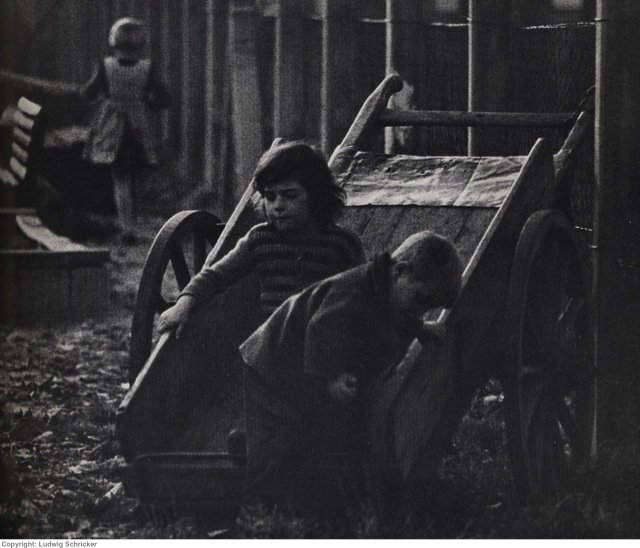
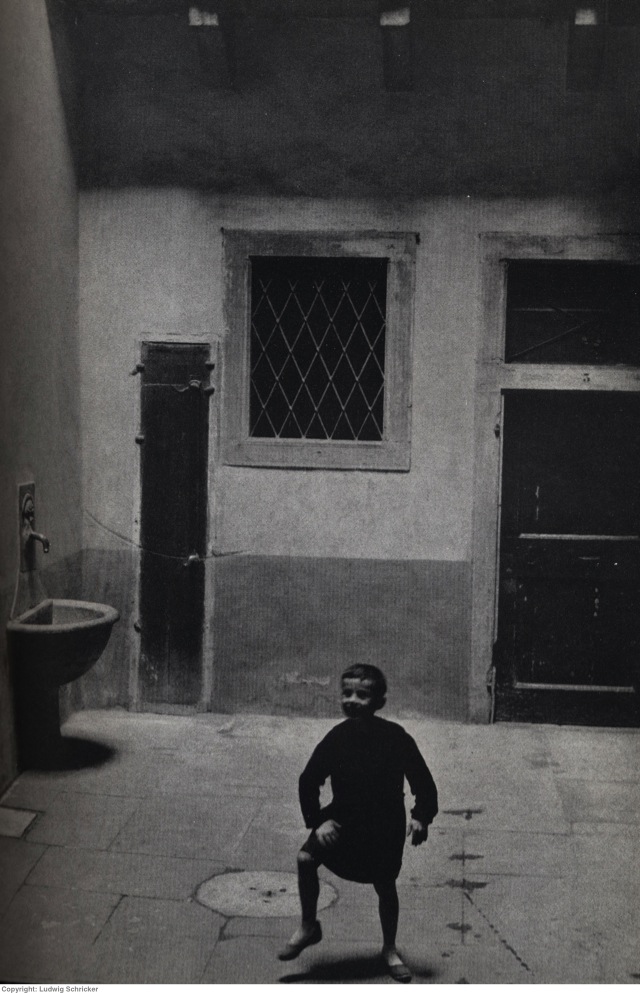
This pretty much came to a turning point with the 5/1958 issue – the magazine was published bi-monthly. Stöckler had the courage to publish a selection of photographs by Ludwig Schricker, publishing also their exchange of letters where Stöckler made it clear that he had no love for the young Schricker’s work. Where was the fabled German countryside and its buxom blonde lasses? Nowhere to be seen in Schricker’s dark work.

I have been thinking of publishing this piece for a couple of years but could not find any of Schricker’s work on the web to illustrate my writing. He is non-existent on the web. So I finally dug out that old issue and scanned four pictures for reproduction here.

Schricker’s is a dark vision of a nasty, cruel world. I hope you find his pictures as memorable as I do. They are scanned unretouched here and, as the magazine is now 50 years old, some yellowing and fading has occurred.

Stöckler finally retired in 1973 at which point the magazine was far more skewed to expressionism than pictorialism. Therafter it went off the rails and now seems to be published once or twice a year as little more than an advertisement for the latest overpriced and already obsolete Leica toys. But I did learn mightily from its pages in the 1970s.

Update February, 2026: For more of Schricker’s fine work click here.

Winston and Vermeer

Our boy is six

For the annual portrait of our son Winston, I decided to try Vermeer lighting this year. There is little new under the sun when it comes to portraiture. Winston is six years old.

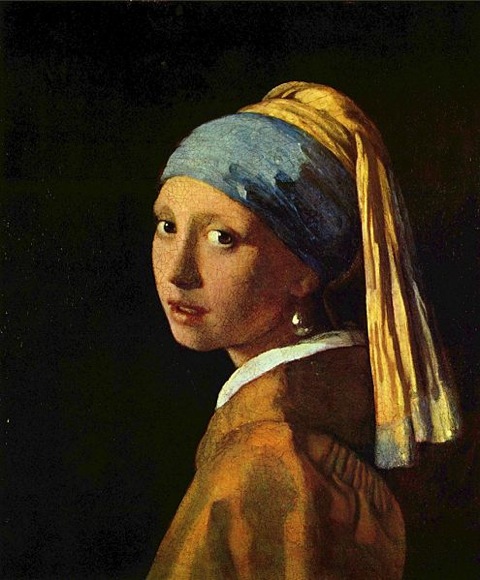
Vermeer used window light often in his portraits, with the darker side of the face rotated towards the viewer. As I prefer the control that comes with studio lighting, I used umbrella flash to emulate the effect. Here’s the result:


5D, 85mm, 1/180, f/5.6, ISO 50, two Novatron flash heads with silver and gold umbrella reflectors


Vermeer. The girl with the Pearl earring, 1665.

The black background Vermeer used would be too harsh for our young subject, but for contrast I opted for Winston’s karate outfit. The gold-coated umbrella was used on the shadow side, the silver, one stop brighter, on the bright side. I moved the dark side light far enough to Winston’s right side that only one flash reflects in his eyes – the main light on the left. It seems Vermeer was a Novatron fan too! Aperture 2 (Trial version) was used to process the RAW original.

Read more about my highly portable studio flash outfit here.

Obviously you know which subject I find to be the most beautiful.

News and Standard!

Some street portraits

When I was a student in London it was unheard of for any but the wealthiest to have their newspaper delivered. Rather, you simply bought it from the corner vendor on the way to work and the evening paper on the way home. Delivery actually cost more!

You could have your choice of any number of dailies across the political spectrum, from the stodgy and boring voice of the establishment, The Times, the typo-prone Guardian (its left leanings meant most of the journalists there could not spell, hence the paper’s moniker ‘The Grauniad’), the solidly socialist Daily Mirror (where the masses forever read that they had been robbed of something or another by the government of the day) and the paper beloved of the horse and hound set, The Daily Telegraph, though they bought it more for appearance, given their dedication to killing God’s innocent animals. The loony left got the Daily Worker, and the thinking man could be seen with The Economist, a weekly paper with a perfect grasp of history but zero ability to see tomorrow. That’s economics for you. City snobs read The Financial Times, ever so self aware that it was printed on pink paper – a color unconnected to its political leanings. Amazingly, all of these, and more, survive to this day.

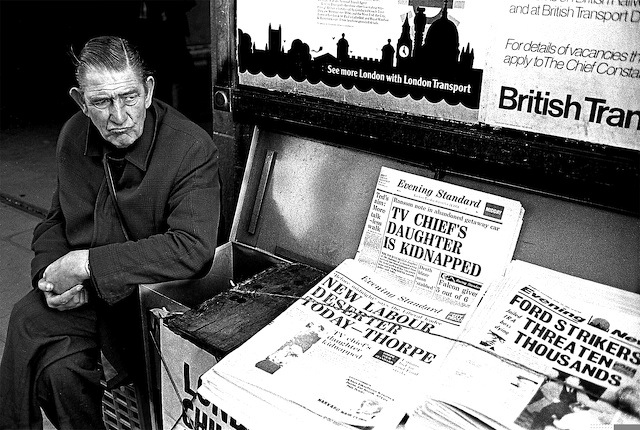
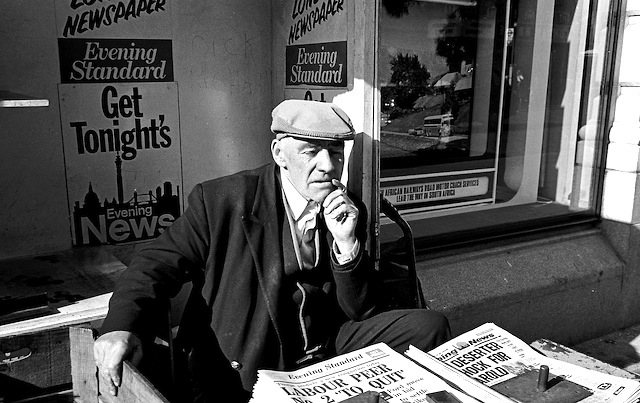
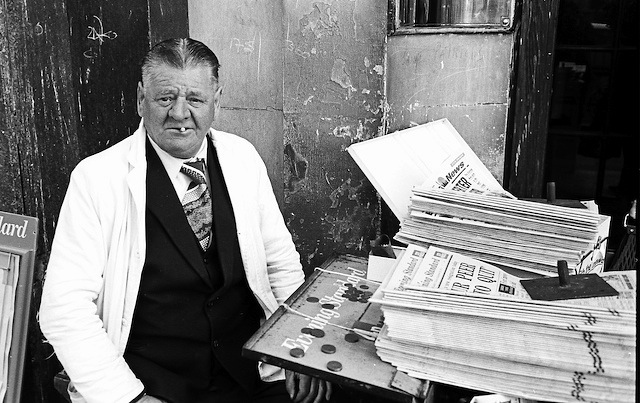
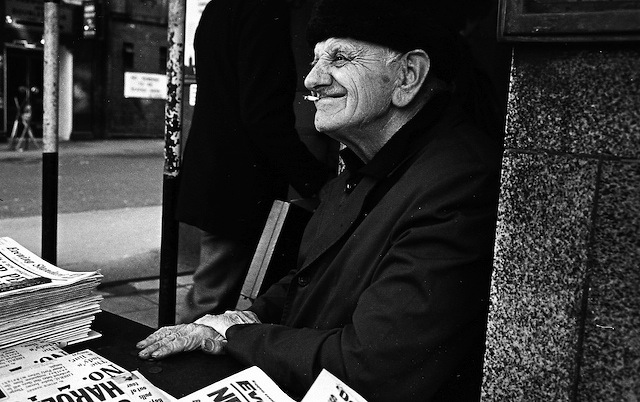
One day it struck me that the street vendors from whom I bought the daily paper were far more interesting than the contents of anything they sold, so I took the tube to Charing Cross Road and proceeded to walk west across London to my home in Kensington, with the simple goal of snapping a few of these characters for fun …. and posterity.

It’s not like equipment choice was difficult, as I had nothing to choose from, so Leica M3, 35mm Summaron and one roll of TriX it was.

Now these street-aware characters are very sharp people, always ready with a joke or some political or sports snippet of news. Can you imagine a more people-intensive job than selling papers on the street? So capturing them unposed was a challenge, and it was a setting in which the ultimate street camera of the time, the rangefinder Leica, was just the right tool. And forget rangefinding. Set the lens at f/5.6 and 7 feet or so and bang away. No time for that fancy focusing stuff.

All of these were taken on one day – something you can see in the originals. September 24, 1974. And, yes, everytime I pop these onto the screen, I still find myself retouching dust. There is something to be said for digital imaging ….

The headline to this entry refers to the two evening papers of the day – The Evening News and The Evening Standard. The vendors’ cries – “News and Standard” – still ring in my ears.


Charing Cross Road


Oxford Street


Regent Street


Knightsbridge


South Kensington

Walking across London was about as much fun as you could have for no cost in those days. I suspect it’s no longer quite the same in a western Europe each of whose wonderful capital cities is now a target for some nutcase with twisted values. As for the headlines, as the French would say “Plus ça change, plus c’est la même chose”.

Sharp and unsharp

A little glow can make the day

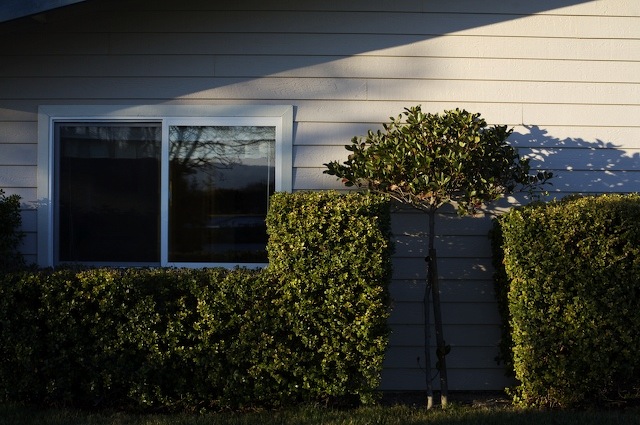
My piece on some of Irving Penn’s early work with a small negative got me thinking about how to emulate the effect using an all digital approach.

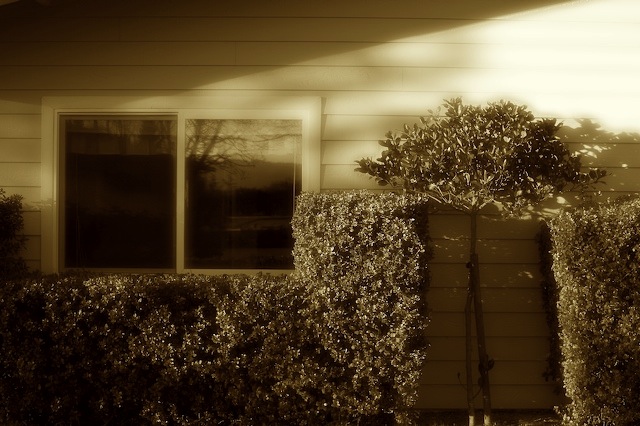
Aperture does not have the horespower to do these things, as we forever wait for plug-ins that do more than import and export files. So you have to resort to Photoshop, into which I roundtripped the file from my Aperture database. Thereafter, I applied Dave Beaman’s Ethereal Glow action. Download it, click on the downloaded file (this is for Mac users; Windows users will probably need some arcane incantations to make things work) and the action will become available in Photoshop’s Action menu which you can display from the Window menu. Click on the action, click the right arrow at the bottom of the Actions palette, wait a minute and you get the original transformed to the ethereal glow effect. Back into Aperture with the file and add sepia toning and you are done. Sure, you can mess with doing the glow effect in PS manually, but why bother when it has been done for you?

I did not add noise/grain as it did not work well in this example, but you get the idea. The effect is actually quite a bit more dramatic on a large print. Some parts of the resulting image are etched, some are glowing – not too far from Penn’s effort applyying re-photographing of the original and use of the point-focus enlarger, and a lot less work of course.


A corner of the estate. 5D, 50mm, 1/350, f/5.6, ISO 250


With glow and sepia toning added, plus a light crop

I’m not that keen on picture manipulation, but if that’s your thing there are dozens of actions to be found on that click-through page above.

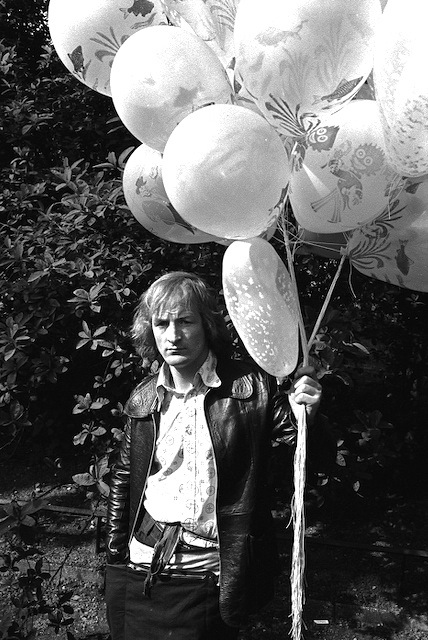
About the snap: Balloon seller

Balloon seller


Date: Easter Day, 1974
Place: Battersea Park, London
Modus operandi: Enjoying the Easter Parade
Weather: Lovely
Time: 2 pm
Gear: Leica M3, 35mm Summaron
Medium: Kodak TriX/D76
Me: Glad the balloons were helium filled
My age: 23

The Easter Parade at Battersea Park, then a fun, working class area in London (now doubtless replete with overpriced, cardboard condominiums), was always a good source of street snaps. This macho-attired balloon seller gave me a mouthful of the best four letter words seconds later but, then again, what could he do? Give chase and lose his balloons? Anyway, with the 35mm lens I was pretty close, it’s true, and this was one of those rare occasions where I simply stuck the camera in an unsuspecting stranger’s face.

I have always enjoyed the comic contrast between the seller’s attire and his product offering, and hope you like it too; God help anyone trying to sell balloons decorated with golliwogs today in our uptight, bigoted world.