Edward Quinn: Photographer

A man of grace and beauty

Mention Edward Quinn’s name today in photography circles and you will get puzzled looks. Partly that’s because he was a quintessentially European photographer, meaning that maybe the US saw less of his work. Part is that his work is just too refined to appeal to modern tastes.


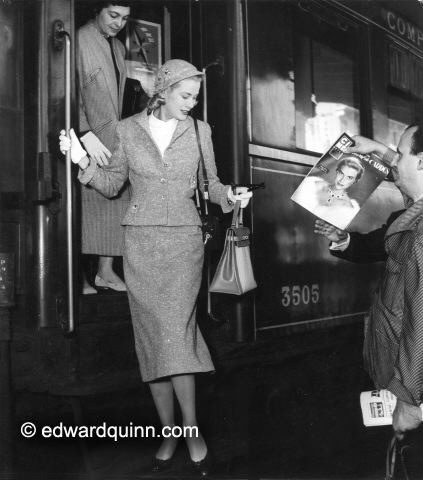
Grace Kelly by Edward Quinn

Yet Quinn (1920 – 1997) was the first among those who plied their trade on the Côte d’Azur, where his subjects were the rich and famous, much of his work gracing the pages of Paris Match or Life magazines.

I first came across his work in the English Edition of Leica Fotografie issue 4/1966 (I was published there in 1974, by the way, back when I cared about such things). His picture shows a rather formal, slightly over-dressed tweedy individual, holding an M3 with the 35mm Summaron I knew and loved so well. He looks to have come from central casting for a movie on the British Raj. While his subjects are invariably famous they are clearly at ease with this ‘Master of the Leica’ as LF styled him.

Take a look at his web site which, while a bit of a mess organizationally, shows his work well.

His book Riviera Cocktail is available from Amazon. Sadly the text seems to be in German, but the pictures are timeless.

A welcome winter visitor

A dash of beauty during the most miserable time of the year


Click the right arrow above for a recorded sound version of this piece.

There is very little good that can be said about the winter, even in lovely California. The days are short, the lighting drab, the vines lonely, denuded and miserable.

So at this time of the year that house guardian and all around good egg, Bertram the Border Terrier, adopts a winter routine. After hopping off the bed he makes a quick trip to the outdoor toilet, then spreads himself out on the big sofa in the living room. How a small terrier manages to claim all of a three seat sofa beats me, but I know my place.

Anyway, aforesaid Border was seen to raise a questioning eyebrow this morning as his guide and master, doing his best Rambo imitation, crawled along the carpet with camera and honker lens attached. I had replaced the obligatory head strap with a pair of woolen pajamas, you know, the ones with the classy paisley design, but the whole ensemble attracted little more than a sigh of disgust from the four legged one who wrote the whole episode off as just so much more eccentricity on the part of his guide and master.

The family manse is some 22 miles east of the Pacific and is guest to many fine animals. A couple of rabbit families have burrows in the vineyard, much to Bertram’s dismay, and the bird boxes see swallows, finches, bluebirds and other relatives at various times of the year. Hummingbirds do a number on the star jasmine on the north patio, with their high pitched chirps and wonderful flying. Red tail hawks provide an unceasing vigil, with ground squirrels being a particular delicacy while the turkey vultures, with faces only a mother could love, teach one and all what effortless flying is about. Once the grapes ripen, the flocks of starling feast on our crop with no intent of payment (just like Bubba on my taxes), accounting for no less than a ton of grapes last year. Greedy buggers!

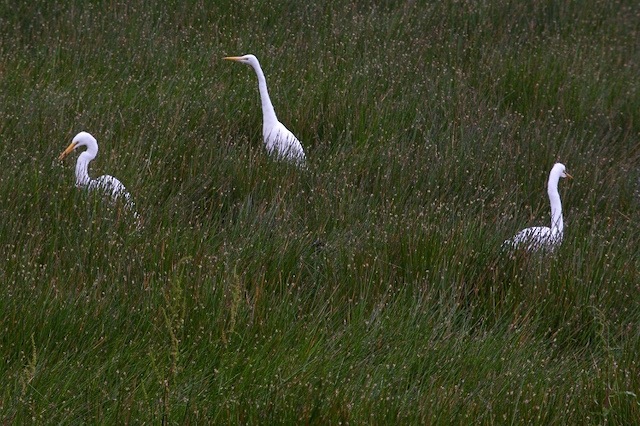
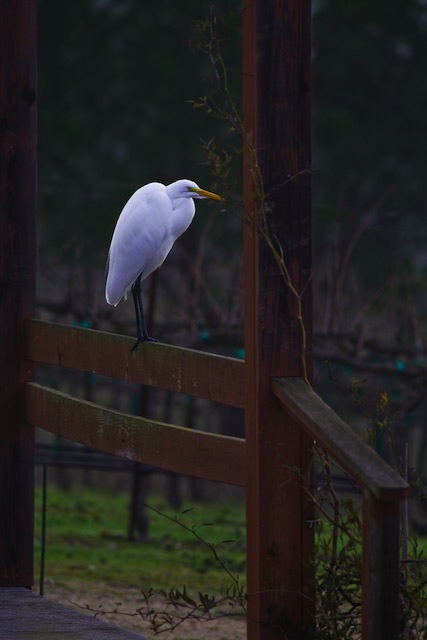
But back to the Rambo bit. The object of my attention was a rare visitor indeed. A magnificent egret was perched on the little bridge over the pond. He had been dropping in for a couple of days now and any sign of movement in the home would immediately spook him. Hence the all fours bit. The moment I spotted him early this morning I did my best commando imitation and high tailed it (OK, grovelled on the carpet), to the office to slap the 400mm honker on the camera.

Gradually sliding open the sliding glass wall on the south side of Chez Pindelski, I had time for just two snaps before the Great White Egret made off. I was all of seventy feet away. What brings him so far inland I have no idea, as you usually see him and his kin hanging out along the coast in marshland. The little pond used to contain magnificent carp which I had raised over a couple of years, but the sushi-loving racoons put paid to that. Maybe he just liked the clear well water that feeds the pond?

Anyway, here he is in all his splendor. I had to really crank up the contrast when processing the picture, owing to the horribly flat light. No matter. A visitor of this distinction is always welcome at the estate. Check out those legs!


Great White Egret. 5D, 400mm Canon EF ‘L’, 1/500, f/5.6, ISO 500. Processed in Aperture.

Ordinarily these fellows are to be found at the coast in reedy surroundings, like here:


Great White Egret. 5D, 400mm Leitz Telyt, 1/500, f/6.8, ISO 800. Processed in Aperture.

This was snapped just off Highway One a couple of years back.

GAF 500 is back!

A trip down memory lane

This is hardly the first time I have expressed enthusiasm for Ansco’s old 500 ASA grain monster, a slide film sold as GAF 500. This piece neatly summarizes what I’m going on about.

And, strangely, the effect is very easily simulated with the (admittedly crappy) camera in the iPhone, something I discovered quite by accident.

My boy, in-laws and I were enjoying a fine birthday dinner (mine!) in late December last year and the lad, not too keen on messing with an Italian menu when all he wanted was Chicken Stars, needed some distraction. He hates to waste time. Like his dad he will doubtless read while shaving. So I gave him the iPhone, with all its colors and icons and effects, and he noodled away on it happily, doubtless placing a couple of costly calls to the Southern Hemisphere. Kids learn fast today, and at age 6 I expect no less of Winston. And as for boredom, he models that on his namesake who once submitted three blank sheets of paper as his entry in the ‘Write an Essay about Boredom’ class.

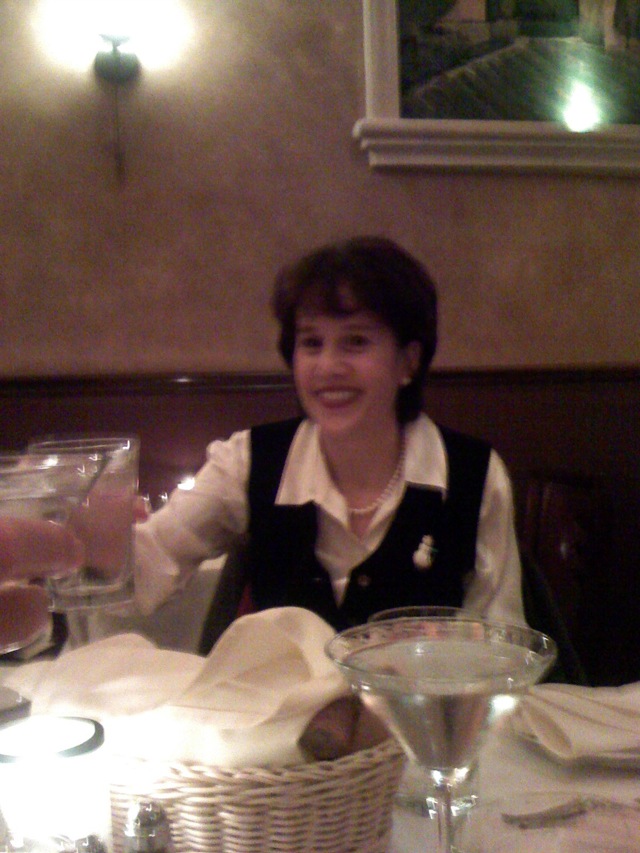
Well, Winnie’s fried chicken special arrived soon enough and he dutifully returned the toy to his dad. As it transpired, cocktails had just arrived and the little lady was proposing a toast to Yours Truly so …. snap! …. and the iPhone was back in my vest pocket.

I thought nothing of it until this evening when I downloaded the picture to iPhoto. Downloads are higher quality than their emailed cousins – for the gory details read my pieces on the iPhone’s camera.

And this is what I saw:


Cheers!

Lovely, soft definition, tons of grain, massive flare from the lighting. It was just like using GAF 500 again.

OK, the hell with the grain. Is that a gorgeous woman or what?

Frescos and photography

The modern professional photographer is at a huge disdvantage

A recent email from a reader, a professional photographer, bemoaned the growing difficulty of making money in the profession.

Now while the Renaisasance is a period of great interest to me and I have oft exhorted photographers to study the great works of that greatest period of western art, it doesn’t merit extensive mention here simply because the subject is too far removed from the world of photography.

But the book I am reading, Michelangelo and the Pope’s Ceiling, is not just compelling reading, maybe the finest art book I have yet read, but it also goes to the heart of the pro’s complaint.

Look at the skill set Michelangelo had to bring to the equation. When Pope Julius II retained him to paint the vault of the Sistine Chapel (Julius was busy tearing down old St. Peter’s at the time – we are talking c.1508 here) Michelangelo had several problems.

First was the small matter of several tons of Carrara marble he had procured to sculpt the Pope’s tomb. They were sitting in a square around the corner from St. Peter’s when Julius decided to pour capital into the new cathedral, and hang the tomb. And hang paying Michelangelo for the useless marble. So Michelangelo was broke.

Second was the problem that Michelangelo was a sculptor, not a painter. He had created the two greatest sculptures ever, the Pietà, (though adherents of Donatello’s Mercury might differ) and followed up with the David, also not too shabby.
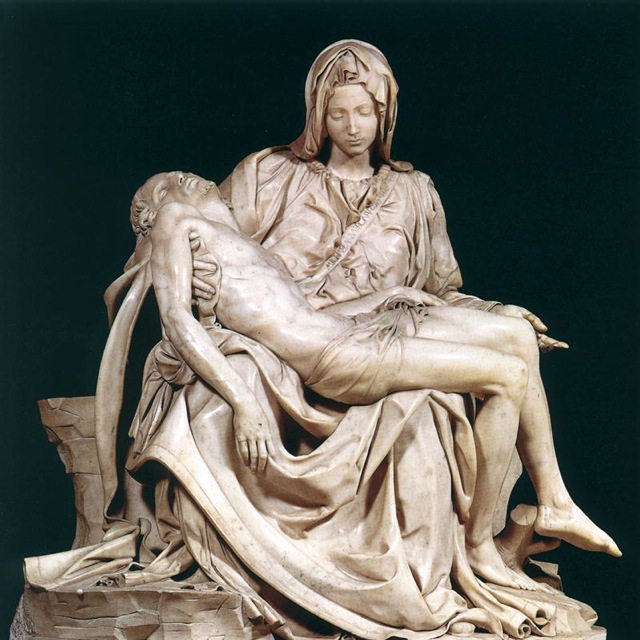

Michelangelo’s Pietà, St. Peter’s Basilica, Rome. 1499

Third, the Pope was a true believer in having only the best – Bramante was retained to design the cathedral, Raphael to do the walls in the papal apartments and when it came to the ceiling, it had to be on fresco, meaning a layer of wet cement that had to be painted within 12 hours if the pigments were to be absorbed by the cement. Michelangelo had never painted on fresco.

Now the painters and sculptors of the day, the same we now adulate, were regarded as little more than tradesmen at that time. Sure, highly paid tradesmen (just like the public school educated plumber today who, when he deigns to show up, does so in a brand new SUV), but they took their orders from their employers. If the Pope said I want the Virgin Mary right here, that’s what you did.

Unlike the more politically astute Raphael – I consider him the greatest painter of his age – Michelangelo cared not one whit for his employer’s preferences and proceeded to craft a large canvas sheet (the invoice still exists!) to screen his work from visitors to the chapel. My way or no way. Indeed, so confident was he of his skill that the book relates how he got in a physical fight with his patron who had tried to sneak in to look at the work. Luckily for posterity, Julius repented and the threatened death sentence for his painter was soon forgotten.

Michelangelo’s contract provided for a payment up front, one half way through, then a final payment on completion. ‘Half way through’ meant two years, after many false starts as the sculptor learned just how hard fresco painting was. In other words, he had serious technical problems with the composition of the concrete, its absorption rate, etc., etc. Like photo processing in the dark ages of the darkroom. But the artisan in him triumphed and two years later he and his team unveiled the first half of the ceiling, to universal approval. God alone knows what Julius would have done had it gone down poorly. Mercifully his syphilis was not playing up at the time.

So look at the skills Michelangelo had to bring to the equation. Negotiation, procurement, relearning how to paint, mastering a new medium, man management (it takes lots of people to build scaffolds and make concrete), a psychotic, driven employer, mastery of the latest in pigments and colors, composition, cartooning, transfer of the cartoons to the wet fresco. The list is endless. And the one essential skill, which cannot be learned, was the fact that he was a great artist.

Now think of the modern photographer. Let’s assume he knows how to take good pictures. Unlike Michelangelo and Rapahel and Bramante, he has enormous competition. After all, is it not true that anyone can take a photograph? The barriers to entry are non-existent. There is no trade school or years of apprenticeship to foster development of technical skills. Why bother when it’s largely done for you by the people at Nikon or Epson or whatever? Sure he has to have marketing skill to find a client but unfortunately for him his client can get most of what he wants at very low cost on the web. His art, in other words, has been commoditized. The premium for skill has been drastically discounted.

Step back and look what has happened to western hemisphere people. Maybe it’s best illustrated in the story of the two American tourists (one imagines they must have been Texans) who, presented with yet another priceless Renaissance church on their trip to Italy, yet keenly aware that their flight back home is but two hours away, are posed with a quandary. How to take it all in during the time available? “Simple”, says the hubby. “You take the outside honey, and I’ll do the inside”. Cameras clicking, videos whirring.

So in a world increasingly suffering from short attention spans who has the time, let alone the interest, to absorb a beautifully composed, perfectly lit, artistically printed photograph? Who cares when you can see something even better in video on the truly ghastly YouTube?

So the professional photographer’s lament of how it’s getting harder to make a living at his art is not hard to understand. Anyone can push a button. Few can paint a fresco ceiling.
Favorite posts of 2007

Enjoy!

America does lots of things well, but none better than marketing. This piece attempts to identify how Madison Avenue’s best have affected my photography.

A little bit of math dispels oft held notions about the warranty racket. If you ever paid for a warranty, read this and think again.

The Rennaissance is a magnificent repository of the best that preceded photography. More here.

Adding another one to the dead pool, this time it was photojournalism’s turn to take it in the pants.

A favorite, poignant moment from that most beautiful of cities, Paris.

See more about Hoynijngen-Huene’s spare design ethic here.

All the worst facts about consumer digitals caused some vituperation back in June.

The summer saw some fun with Bubba.

If you are sufficiently morally challenged to work for the government and leech off my taxes, read this, grow a backbone, then either get a real job or please stop visiting this journal. You are emphatically not welcome here.

So you think your rangefinder Leica is fast? Get a life, shake the label worship and find out what real shooting speed is all about.

Now that I no longer live there it’s de rigeur that I wax poetic about that unflushed toilet of the Western hemisphere, New York City.

Want fast mirror lock-up in your 5D without paging through arcane menus on that horrible little LCD screen? Stop complaining about the useless Print button on the 5D and do this instead.

Got the DTs after that New Year’s party? Blow thirty bucks on one of these.

Too late now, but had you listened back in April you could have doubled your money. I wouldn’t be touching this stock with a barge pole right now.

Remember those ‘This is your brain on drugs’ ads from the ’70s? Here’s a guy who didn’t heed their message.

Still wasting time on monochrome? Read this and get a life. Some courage to go along with it might help, too.

Lens of the year? Yes. Dirt cheap? Yes.

And finally, the high point of my year was my one man show and you can see it by clicking here.