Thomas Eakins

Book review

Growing up as a lad in London I knew but three things about Philadelphia.

  • It’s the HQ of the Mob.
  • The great impressionist painter Mary Cassat was a native.
  • Photographer Thomas Eakins also hailed thence.

Well, I’m no longer sure about the first fact (I think the mob has now moved to Detroit where it runs GM), though Rocky did make out well in Philly.

I’m certain about the second, having adored Cassat since I first saw mention of her work in John Rewald’s definitive ‘A History of Impressionism’. Now famous, her work holds its own with the best. And while you are at it, check out Berthe Morisot’s canvases – another less known but outstanding painter of that age.

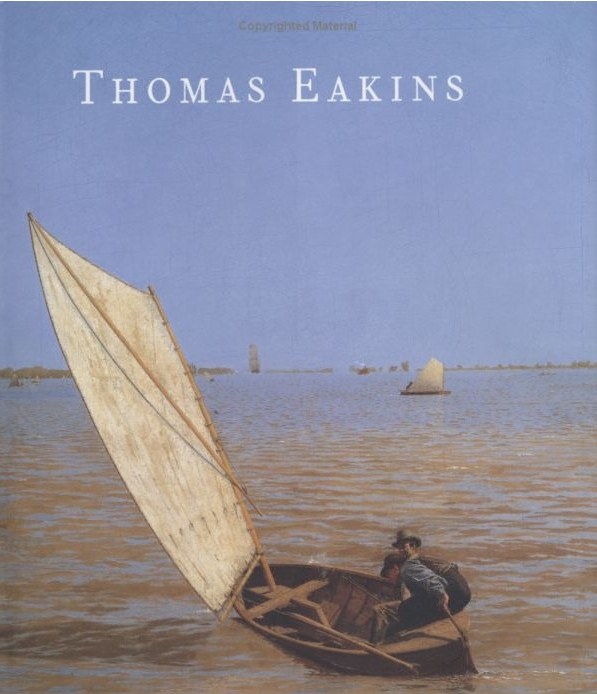
As for the third, I grew up knowing Eakins (1844-1916) as a photographer not as a painter. This book is one where various scholars pen chapters on aspects of Eakins’s work, so you never get bored with any one writer’s approach, and has an excellent chapter addressing how Eakins used photography as a tool in his painting. Indeed, Eakins was most secretive about his use of photographs to flesh out details in his paintings, in the face of a raging debate whether photography was art.

The book, gorgeously produced and illustrated, shows that this fine photographer was a superb painter. The idiom is uniquely American, strong, forthright, confidently realist, and his work is always memorable, as the 243 plates and 209 illustrations attest. Even if you don’t care to read the text, get the book for all those pictures.

Not cheap, it’s available from Amazon and is a splendid value.

Bob Carlos Clarke

Never boring

When it comes to photography of exotic women, when America gave us the crass, crude and vulgar German, Helmut Newton, England blessed the photography world with Bob Carlos Clarke, who died by his own hand and was buried a year ago yesterday in one of my favorite haunts, Brompton Cemetery.

Clarke never saw a woman, it seems, he did not like, though towards the end disillusionment with his profession had set in:

After 30 years as a photographer I can say this
business has got harder, more callous, less open and much
more competitive. In the 1960s, photographers ranked just
behind rock stars in terms of image. Now they’re way down
the list, behind brawling footballers and provincial DJs.

As the UK’s Photography magazine printed my snap which went on to become the Photographer of the Year prizewinner in 1974, I always remember that the issue where I was published also had an article on Clarke’s photography, my first intoduction to his work.

Here’s a snap from Brompton Cemetery I took in the early ’70s which, it seems, is appropriately dedicated to his memory.


RIP BCC. Brompton Cemetery. Leica M3, 90mm Elmar, TriX

Beating the system

Here’s someone who got it right

From yesterday’s Wall Street Journal article on photographer Jeff Wall:

Now while I wish Mr. Wall the best of good fortune in selling his snaps for $1mm a pop, maybe you should read this for a reality check while you’re at it.

And while I remember, you can get my framed 22″ x 28″ prints for quite a bit less. Though I do like his fluorescent tube touch, I must say. If you really want those, let’s talk. Limited edition? No problem.