Yearly Archives: 2006

Pandora’s Box

The Canon EOS 5D arrives

With so much in excess equipment sales proceeds burning a hole in my pocket, I splashed out wildly and paid the nice people at B&H in New York $20 more for Second Day shipping to the Templeton estate. This wild act of rash spending saw the Canon EOS 5D and the 24-105mm Canon lens arrive yesterday evening, where Bertie the Border Terrier and I dutifully placed it on the south patio so that we might contemplate what wonders this Pandora’s Box might disclose. Further, it was the Cocktail Hour, and nothing short of a second Japanese attack interrupts that.
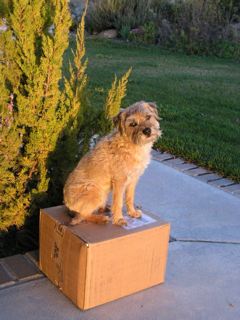
This was a mixture of fun, as we enjoyed the delicious anticipation of what was inside, yet no less a period of deep apprehension. Setting aside my recent use of an Olympus Digital POS (in case you are wondering, that stands for Point Or Shoot, because with that camera’s shutter lag you cannot have both), for the last 40 plus years I have been loading cameras with film and adjusting but three variables – shutter speed, aperture and focus, and most of the time these adjustments have been manual. Often, it should be added, with incantations to the exposure God, praying that I would be within four or five stops of the right settings.

Lest the reader wonders at my sense of apprehension, then it has to be pointed out that the camera in my hands for most of those forty plus years was a Leica M2 or M3. And because I know a good thing when I see my negatives, the lenses on those Leicas always said ‘Leitz, Wetzlar’ on the front. For all of Leica’s problems, they remain the standard against which to judge to this day. And what lenses. The distortion free 21mm Asph Elmarit. The ’standard’ 35mm Asph Summicron. Any number of 50mm Summicrons. The ne plus ultra 90mm Apo Asph Summicron, perhaps the most perfect optic ever made. And finally, one of the very sharpest, the 135mm Apo Telyt, now winging its way back after a one year loan to a friend on the east coast. Throw in a couple of Telyts used on the idiotic Visoflex housing and you can see where my heart lies, optically speaking.

Before the great day arrived I had done a spot of studying and had procured a nice little Firewire card reader for the iMac; all this talk of plugging the camera into your computer strikes me as so much nonsense. Just remove the card and place it in the reader. Further, I had also learned that the swines in marketing at Macromedia/Adobe had ensured that Photoshop CS would not read RAW files from the 5D, so I had grudgingly upgraded to Photoshop CS2 which does. Unfortunately, the latest Adobe Camera RAW software is not backwards compatible with the earlier version of the application. I had also spent some time on Canon’s web site studying the interactive tutorials on the 5D and digital photography in general and found them useful and entertaining. Most importantly, they took out some of the apprehension I was suffering from the oncoming blizzard of knobs, dials and menu options.

Now Bertie’s take on this was, as usual, philosophical. “What have you got to lose?” he asked rhetorically. “Heck, the gear in that box was free, after all, and you can always sell it for little loss if it’s not for you.” By now the sun had almost set and the Martini glass, sadly drained, was now home to a lonely cocktail onion. So I gave the onion to Bert (we are dealing with a pretty sophisticated animal here) and set about the box, hoping to snap at least one picture before sunset. You know the sort of thing – “My first picture with my new toy on the day I received it”.

So we opened the boxes up, stuck the lens on the body, popped in the battery (nice that they ship it partly charged), inserted a memory card and stuck our head out the front door. Notice the strict adherence to American Attention Span with regard to the instructions.

And this is what we saw:

Canon EOS 5D. Picture 0001.

And that, dear reader, is why I live in California.

Anyway, suitably drained after this emotional experience, Bertram and I headed for the home theater to watch Hitchcock’s Frenzy, to learn better how real pictures are taken.

The EOS 5D is here, it looks like it works and there’s more to come….
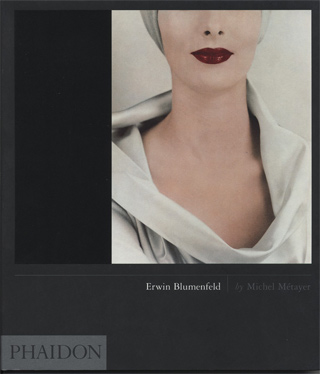
Erwin Blumenfeld

There’s a lot to learn from this great photographer.

Whenever I get tired of reading yet another homage to Ansel Adams, that most glorified of darkroom technicians, I turn to the work of a real photographer who also happened to be a competent technician. The difference is that visualization never takes second place to darkroom technique with Erwin Blumenfeld.

Another in a long list of German outcasts, Blumenfeld (1897-1969) chanced upon a darkroom in his retail store in Berlin and a lifetime’s addiction started. Changing careers, he made his at Vogue and Harper’s during and after the war and was given remarkeable creative freedom.

His influence spread wide, his work a mix of the abstracted and the expressionist.

The other day I was rewatching the greatest Western film ever made, Sergio Leone’s Once Upon a Time in the West and there, right in the middle, is a jaw dropping shot of Claudia Cardinale, whom the camera observes from above and through a screen atop her four poster. Now every image of Claudia Cardinale is an occasion for rejoicing, it’s just that this one immediately says that Leone was a Blumenfeld fan, and the movie is nothing more than a succession of glorious still images. Blumenfeld’s net of influence was cast wide.

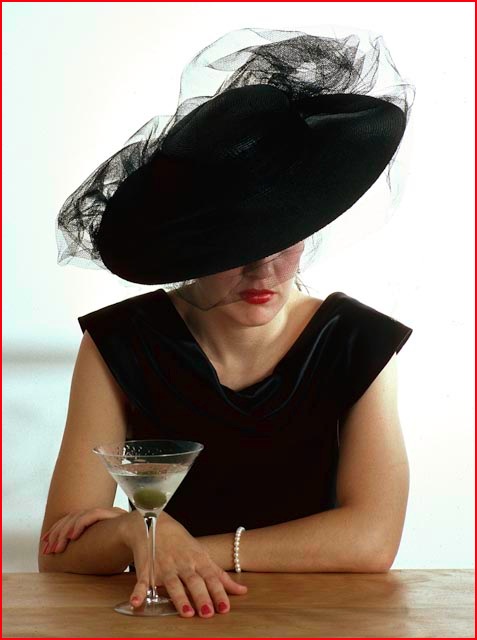
The book’s cover picture is but one example of where less is more. Appearing on the cover of Vogue in October 1952, it personifies glamour, class, sensuality and eroticism yet nowhere are the model’s eyes to be seen. Seldom has a Jacques Fath dress or a gorgeous neck been done greater justice.

And as you leaf through this slim book, just the right length to prevent overload, you realize that Blumenfeld’s compositions are what makes the pictures so striking, never mind the peerless technique.

It’s a whole lot more fun than those wretched Adams prints.

Putting my money….

….where my mouth is.

I have written quite a bit about the imminent demise of film in these columns. Now is the time of reckoning, where I make the move from my point-and-shoot-one-second-shutter-lag-digital to the real thing. My drivers are medium format quality without the bulk, full frame digital sensor, no shutter lag and the convenience of not having to process and scan film, in that order.

Let’s face it, if you want a full frame 35mm digital camera your choices are not great. Until a while back there were two from Kodak and one from Canon, all very expensive. Kodak, being the second worst run American company, just discontinued theirs, of course. That leaves only Canon, with a $7,000 very costly and very bulky offering. I cannot remember the model designation but it’s something like ‘2006 Model 15B we-just-upgraded-it-twice-this-month mega-digital something or other’.

Then, late last year, Canon capitalized on its lead with larger light sensors and released the EOS 5D for some $3,000. Now it may well be free with any purchase of two boxes of Corn Flakes two years hence, given the rate of depreciation of these digital wonders, but Canon’s exclusive offering makes it look positively cheap compared with the professional model. The smart people at the company priced it right – expensive enough that you can console yourself that it is a ‘professional’ camera, whatever that means, but cheap enough to attract a host of keen amateurs. Like me.

So I waited a while to let the initial bugs get sorted out, meanwhile pondering whether the sale of my medium format equipment should proceed immediately, given that film is unlikely to be available in this format for much longer. The value of this gear is important to me as I propose to make this whole change a zero cost affair. Enough with net equipment spending!

Now I’m a photographer and an American. That says when I list things on eBay I support the listings with the very best pictures, knowing that a good picture really is worth a thousand dollars. Forget words. Not American. So I spend the best part of a day with the Novatron studio flash, umbrellas, backdrops, you name it, and take revealing, detailed pictures of my wares. All on my little Olympus 5mp digital, the one with the one second shutter lag. All of this culminates in no fewer than eighteen listings on Fraud Central, excuse me eBay, the ultimate destination for sellers. Only America could conceive of a multi-billion dollar business where you can lie about your wares and be pretty much assured of free passage. Why so many auctions? Because history proves that you make more from breaking up sales into small parts. The ‘outfit for sale’ thing reduces your market and selling price.

Well, pretty much everything sold for top dollar and the household is now replete with packing boxes containing fine Rollei and Mamiya medium format equipment. It’s good to know that these superb tools are going to good homes and that UPS will make some money. I have $6,000 in the bank and B&H Photo Video in New York has a $6,000 order. And yes, that’s another $435 in sales taxes not paid to the thieves in Sacramento.

The first claim on these funds is my wife’s. I have long known that if you are to buy yourself a toy, budget 100% more than you plan to spend. That’s the cost of a face-saving gift for the wife and keeps things humming along smoothly on the marital front. And in case you still think this is money poorly spent, just take one look at the object of my affections and you will know otherwise:

The next time you will be reading this I should have the camera in my hands and a few shots to show for it.

So why the insistence on full frame and why not a Leica? First, I like my wide angle lenses to be wide angle. A 21mm which becomes a 35mm on any one of a number of digital SLRs out there is senseless. Secondly, I like differential focus. That 90mm on full frame is 55mm on crippled frame. Suddenly your portrait lens has added one stop’s worth depth of field. After over 40 years with 35mm, I know how the depth of field feels with all my lenses. I do not propose to relearn that. So that ends the full frame vs. crippled frame debate. Finally, I want medium format quality and basic physics tells me that’s easier to do with a large original (or sensor) than with a small one.

And what happened to waiting for Leica? Nothing would make me happier than simply moving all my superb Leica glass from the M2 and M3 rangefinders to a digital M. Well, I concluded a while back that the lack of entrepreneurial vision and capital at Leica means we will not see a digital M for many years and even then you would be paying $6,000+ for a crippled frame sensor. Sure, the excuses everyone makes against full frame sensors with wide angle lenses that place the rear element too close to the ‘film’ are well known. We are told by these Luddites that the light rays strike the sensor at too acute an angle, causing definition problems. The solution is simple, but it takes some genius at Canon to implement it. Cameras can electronically sense focal length – that’s why you can see the exact focal length at which you took a picture displayed in the EXIF metadata stored with your digital snap. So when the focal length gets short, have a small vacuum device bow the sensor backwards, thus flexing the edges to a perpendicular angle to incoming peripheral light rays. Hard you say? Is not Canon the company that gave us lens gyroscopes (Image Stabilization), eye controlled focus (the camera focuses where your eyeball is pointed), full frame sensors, lenses with diffraction gratings to cut bulk, and on and on? And vacuum backs intended to keep the film flat are as old as the earth. Well, what’s called for here is a vacuum back that distorts the film. And let me tell you, there is no way on earth that Leica has the capital or the distribution to develop and market that.

Now I’m not about to sell all my Leica gear. First, it is not dependent on the continued existence of film to retain its value, unlike all that medium format gear I just sold. There are any number of Leica equipment fetishists out there, many in a newly recovering Japanese economy, that value retention is simply not an issue. Second, I still enjoy using the M rangefinders and can see that continuing for a while at least. Third, maybe Voigtlander/Cosina will come out with a full frame version of their Epson RD-1. In which case the Leica bodies will move on to pay for the new digital body and those phenomenal lenses will get another lease on life. So it’s premature to sell this gear.

In the meanwhile, with the goal of learning a complex piece of new equipment and making it work for me, I have loaned my M2 and 35mm Aspherical Summicron to a friend for a year. That should focus the mind wonderfully. Mine and hers! And yes, I still have the M3 if I need a quick fix.

At the movies

Three great films about photography

Hollywood, for the most part, has not served still photographers well and there is little of note when it comes to portraying the profession. By the way, have you ever wondered why we refer to photography and prostitution as professions, when either can be practiced with a bare minimum of education? These are trades, not professions, though each doubtless includes some real artists in its ranks.

However, three films come to mind which not only do photography justice, but are also shining examples of great film making within their respective genres of comedy, drama and musical.

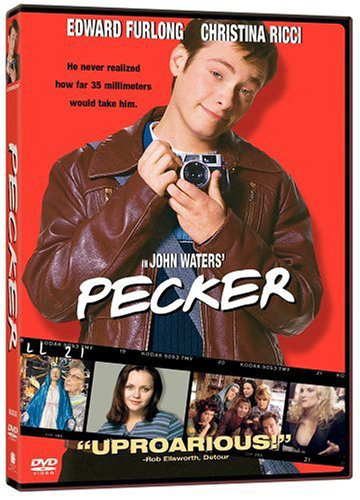
First comedy. John Waters’s ˜Pecker”(1998) is, well, a typical John Waters movie. Something to offend everyone and hilariously funny for all but the thinnest skinned. This comedy portrays a teenager who is accidentally vaulted to stardom for his snapshots and somehow manages to survive the experience. No great substance here, but an absolute hoot to watch. Filmed, of course in Baltimore, which is the director’s home town.

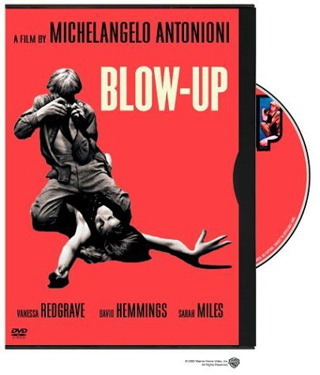
Next drama, and here we are talking of a very great film indeed, made by the splendidly named Michelangelo Antonioni – a name to conjure with. “Blow Up”, dating from 1966 and purportedly modeled on the working-class-photographer-who-made-it-big David Bailey, the anti-hero, played expertly by David Hemmings, thinks he has photographed a body in a public park. Or has he? Full of mystery and great acting, filmed in a 1960s London largely devoid of people, the film has a haunted air. It’s a fascinating piece of history that bears repeated viewing and denies the audience simple solutions or a nice ending.

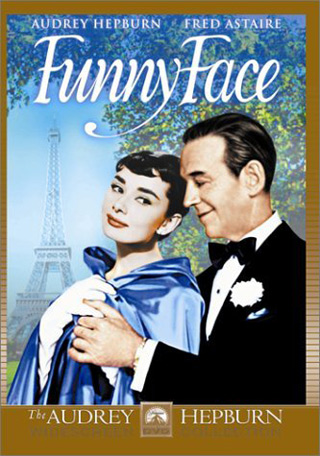
But I have saved the best for last. A delightful confection with Fred Astaire and Audrey Hepburn. ˜Funny Face” was made by Stanley Donen in 1957, which seems a long time ago. Add the wonderful Kay Thompson and you have a prescription for champagne. French champagne (is there any other kind?) as the whole thing largely takes place in that most beautiful of cities, Paris. Mercifully, Parisians take up negligible screen time.

Fashion magazine photographer Astaire, modeled on Richard Avedon who advised on the movie, is invariably draped with Rolleiflexes, though almost all the pictures he takes are made on a huge field camera. Even the action shots. Not that hard to believe when you realize the shutter lag on this monster is far less than that on most modern digital wonders.

Kay Thompson’s opening number, ˜Think Pink” is simply a show stopper. Diana Vreeland at Vogue was never this much fun.

And, of course Audrey Hepburn. Like her or hate her.

Astaire being Astaire manages to dance and sing between photo opportunities and Hepburn almost keeps up with him.

Let’s see, what else?

Well, did I mention the Givenchy gowns? Or George Gershwin’s music?

Should you ever get jaded with the process of taking pictures, just pull out this movie and watch the sequence in Paris where Astaire snaps Hepburn in a variety of posed settings, each snap appearing immediately on the screen once taken. When the cape swirls about her head and she squeals “Take the picture. Take the picture.” you are reminded of the sheer joy and excitement of photography. Just like the time that first black and white print appeared in the developer tray in your darkroom.

Impossible to think that any self respecting photographer would not have this magnificent movie on a shelf at home.

Hurry. It’s almost over.

Don’t emulate the Poles in 1939

I can claim some authority in writing about the ostrich-like behavior of my noble Polish ancestors in 1939. You see, my ancestry goes back for more centuries than I care to admit in that most conquered, yet most proud, of nations. When I was growing up, I looked around, and once old enough to appreciate these things, I realized we were poor. Why so?

That was in London. Back in 1939 when the Stukas threatened and the Panzers loomed and the Polish army prepared to charge on horseback, my parents placed all their valuables in a safe in Warsaw. You might well question this asset diversification strategy when the most powerful, aggressive nation known to man was massing on Poland’s borders. I hold no rancor for my parents’ behavior. Hindsight tends to be perfect and if I could only get the Wall Street Journal a day or two early, place just a couple of hot trades, I would be writing this from my Gulfstream private jet. It happened. Get over it.

My parents, of course, were in deep denial. After all, how do you move 15,000 acres of some of the most beautiful land man has seen? Deep denial. Like modern users of film.

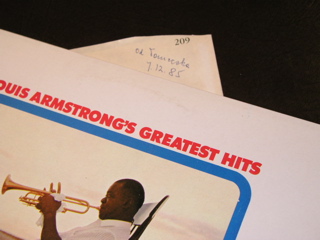
To get in the mood for this piece, I thought I would turn on an LP, for old times’ sake. They do sound good, we all know that. If you can disregard the scratches, the click and pops, the cleaning ritual and on and on. So I pulled an old Louis Armstrong number out and it’s playing as I write. There on the inner sleeve, forgotten, was a lovely note from my dear departed mother to herself. She wrote ‘od Tomeczka’, meaning it was from me. I had given her this LP on December 7, 1985.

So what has all this to do with photography?

Well, that little note on the inner sleeve of the 20 year old LP speaks to obsolescence every bit as much as film speaks to the sea change in photography. Like Proust’s madeleine dipped in tea, it brought thoughts of the need for change flooding back to my brain.

Like most of us, I have been forced to change. LPs gave way to CDs. CDs eventually moved to the iPod, 300 discs in the space of a shirt pocket, fidelity uncompromised. The cathode ray tube gave way to the flat screen. VHS tapes moved on as DVDs came in. They must be due for obsolescence any time soon. How else are the electronics manufacturers going to stay alive?

And, like the aggressive German masses congregated on the border of my parents’ estate in September, 1939, that change is now rolling over the serious photographic world faster than we can begin to realize.

It started with the mass consumer. Easy prey for innovation, digital cameras were sprung on him seemingly overnight and, even if he still struggles to get the picture while squinting at the barely visible screen in broad daylight, the digital camera has become as de rigeur as the SUV. A staple of American life, meaning the rest of the world will follow in short order.

The professional press photographer got the idea three or four years ago when up-market SLRs started sporting acceptable definition and the city desk editor wanted to beat the competition with the latest picture of the celebrity of the day behaving badly. The studio and wedding professionals followed suit and Apple recently jumped on the bandwagon with software aimed solely at enhancing digital workflow with RAW files. It’s called Aperture. Some one third of the content in the leading Macintosh monthly, Macworld, is now dedicated to digital capture. Capture. That’s hip talk, I have learned, for snapping pictures.

The Art Photography set, however, held out, clutching their platinum prints to their troubled chests. Nothing can equal the quality of a darkroom print. Deep denial.

One second – I have to attend to my 80 year old technology and flip the LP after all of 20 minutes of playing time.

Well, I think the Art Photography set, while not wanting to admit it, is getting the idea. The last ball to fall.

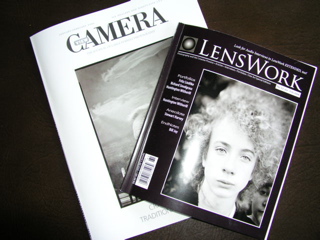
I subscribe to a couple of top quality photo magazines. Strictly minority material. LensWork and View Camera. They showcase fine work and offer a good reading of the pulse of the market.

LensWork has a very high opinion of itself, right down to its small size masquerading as Art. The magazine has very high production values. Printing is fabulous (as it should be for so small a format), writing is excellent, the whole thing reeks of quality. Until a couple of issues ago they refused to accept ink jet prints for publication! Suddenly, seemingly 50% of their content is all digital – camera and print – and the equipment, which they invariably mention, is pretty much at the consumer end of the spectrum, meaning mid-range SLRs and the like. Nothing like market forces. Needless to add, content is strictly monochrome. They say it’s for aesthetic reasons, which means they cannot afford color with their miniscule print run. No matter. It’s a fine magazine whose content always makes you think. It’s going digital fast.

View Camera, on the other hand must have either some of the most dyslexic, or most stoned, proof readers in the world. It reminds me of that old leftie standby of English newspapers, The Guardian, known to one and all as The Grauniad. Beloved reading of faded academics in tired tweeds who think fondly of Stalin as a great liberator. An issue of either VC or TG without typos is like a US Congress without crooks. But once you get past this slovenliness, you find a fine magazine with a balanced mix of the photographic and the technical. I just received the current issue and what do I find? Articles on digital backs for 4”x5” cameras! Reminiscent , it is true, of Lord Chesterfield’s thoughts on sex – “The pleasure, momentary. One’s position, ridiculous. And the cost …. damnable.” Now you not only have to lug the camera, lenses and tripod, you need a laptop computer, back-up hard disks, cables and a very, very costly digital back. We are talking the cost of a new car here. Of course you save the weight of all those film holders. Great. And if you use a scanning back every picture takes many minutes to expose. Go on line to one of the advertisers selling scanning digital backs and you find a comparison of full frame 35mm digital (meaning Canon) with scanning 4”x5” backs. Now is that defensive or what?

Another article in Veer Pamela, sorry, View Camera, speaks to ULF. That’s Ultra Large Format to the ignorant, meaning people silly or strong enough to lug around 8”x10” cameras so they can make contact prints from the negatives, allowing them to be printed smaller than actual size in photography magazines. No, I’m not kidding. These poor photographers pool their meagre resources (all that’s left after their chiropractors’ fees) to convince Kodak, Ilford et al to make just one more batch of 8”x10” or 16”x20” film. Please. Humor us. Just one more time. The fact that Kodak and Ilford even bother confirms that they both deserve to go out of business. You want to own stock in a company engaging in this sort of trivial pursuit?

Denial. My parents were graduates of the art. These fellows are post-grads. The only difference is they are not risking their lives.

Aargh! The needle on that LP is stuck again, right in the middle of Basin Street Blues.