Yearly Archives: 2008

Two years with the Canon 5D

What’s good and what rankles.

It’s been some two years since I bought my Canon 5D, an appropriate milestone from which to reconsider what is good and bad about the decision.

Since then the price has come down significantly, meaning almost a 30% drop yet, amazingly, with other market segments seeing many model changes since, the 5D remains available and has not been upgraded. I have no idea how sales of this model compare with Canon’s other offerings, and I suppose you could argue that they haven’t made a replacement because sales are very high …. or very low.

I don’t care. It remains a quantum leap in making the picture taking process an easier one. Forget all the mind numbing choices in all those menus, the reality is that the chances of making a technically solid picture, sharp, properly focused and grain free have risen manyfold owing to this superb machine. Plus you can make a perfect print of any size you want from just about any frame. More time for seeing, less for worrying.

Things I like:

  • The 3:2 aspect ratio of the frame. I grew up with Leicas. It would be even nicer at 16:9 widescreen.
  • The large, uncluttered, near life-size, viewfinder.
  • The fact that the depth of field and coverage of a 50mm lens …. remain the depth of field and image coverage of a 50mm lens on a film camera.
  • The grain free sensor – the ISO adjustment is just another way of controlling aperture and shutter speed. I never worry about grain. If I need grain, something like this works.
  • The great selection of inexpensive Canon lenses – the non-zooms I own are mostly wonderful.
  • The lack of shutter lag – as good as a Leica M2 or M3.
  • Autofocus. With mediocre eyesight like mine the fabulous rangefinder in the Leicas is improved upon by modern technology. And it’s faster.
  • Spot focus/lock/recompose. Never another unsharp studio picture.
  • Auto exposure. Another impediment removed.
  • Spot exposure measurement for those difficult occasions.
  • The reliability. The 5D’s OS makes a Mac look like a dog. You never have to reboot.
  • The battery life. Simply incredible. Carrying a spare hardly seems necessary.
  • The 85mm f/1.8 EF Canon lens. The Leica Apo-Summicron Asph at a fraction of the cost.
  • How all that automation makes use with a 400mm Canon ‘L’ lens so easy.

Things I dislike:

  • The bulk. Bigger than my Leica Ms, it’s no joy to tramp around with.
  • The noise. Not bad, but silence would be nicer.
  • An LCD screen which is unusable outdoors.
  • Poor auto white balance indoors but easily fixed with one click in Lightroom.
  • The attraction the sensor has for dust. I mitigate that by using (superior) non-zoom lenses, but that’s not the answer. Actually, it’s more the pump design of Canon’s 24-105mm zoom and poor dust sealing in the lens that seems to be to blame here.
  • The advertising – that big white ‘Canon’ logo and crass ‘5D’ sticker – both easily fixed with some black tape. You want me to advertise your goods you pay me, OK?
  • That criminally inept stock strap. Criminal, as the first thing it will do is make sure your camera falls off your shoulder.
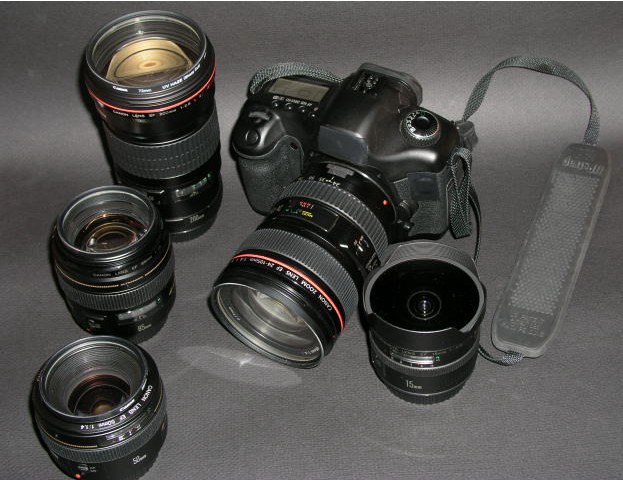

    5D and friends. Not a worthless lens hood in sight.

  • The fact that I take too many pictures. Digital makes you lazy, less selective. Good digital management in the likes of Lightroom helps. But nothing beats the Delete button.
  • That horrid flap.

But, taken as a whole, these really are minor gripes in exchange for the wonderful image quality.

The 5D will likely be updated/obsoleted any day now, but for this photographer it remains the bees’ knees. Would I buy it today in preference to anything else? Absolutely. The improvements in Mark II – sensor dust removal apart – will be visible to academics only. But the 5D (Mk. I or II) only makes sense if you like to make Really Large Prints. For web display even a 2 megapixel P&S is fine.


The Canon 5D. A new era in equipment.
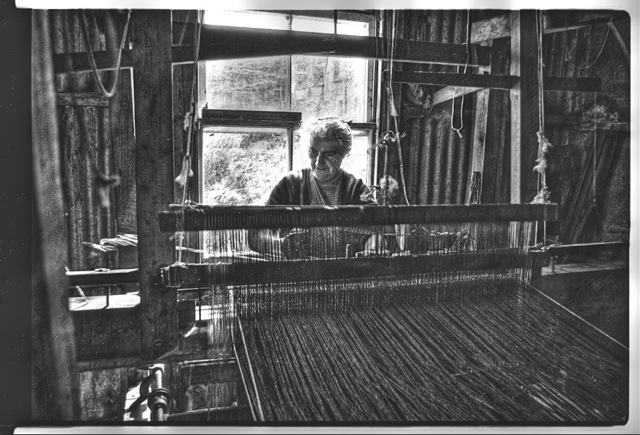
About the snap: Marion Campbell

A memory of the Island of Harris, Scotland,

Date: September, 1977.
Place: Harris, Outer Hebrides, Scotland.
Modus operandi: Enjoying the finest hospitality.
Weather: Sun to rain every few minutes.
Time: 2pm.
Gear: Leica M3, 35mm Summicron.
Medium: Kodak TriX
Me: Looking forward to becoming an American.
My age: 25

Just before setting out on a new life in the New World, I made a visit to the Hebrides off the west coast of Scotland.

My eldest sister had graduated from St. Andrews in Dundee in the sixties and, as a schoolboy, I still fondly remember a visit to that old Scottish city where my youngest sister and I were presented with a Scottish Terrier. I also remember the people – dour, hard to get to know and not a fake in sight. Just like that Scottie. There’s an awful lot to like about the Scots – a nation we have to thank for single malts, Harris Tweed and golf. Well, two out of three’s not bad.

I took the ferry to one of the more southerly islands, South Uist, home of that peaty single malt scotch named Laphroaig, and gradually wended my way north by bicycle and ferry, getting soaked seemingly every 15 minutes as clouds scudded by, dropping their loads en route to the mainland.

The Scottish Tourist Board had this arrangement where, for 50p ($1.20 then) a night, you would get bed and breakfast and use of a local bicycle. One evening I was asked by the aged proprietors of one such B&B to join them and listen to old Gaelic songs on big 15 inch shellac 78s. Sad wailing sounds in perfect keeping with the desolate beauty of these islands. The next morning I recall coming down to eat with another young lady tourist and was dismayed to find that my plate was loaded up with twice as much food as the young woman’s. That impugned my sense of fairness. Questioning the proprietoress I was told in no uncertain terms “You’re a man, lad. You have to work the fields”. Blood pudding, rashers, sweet corn, potatoes, fried tomatoes, liver. No more questions from me. Just a full belly, set for the day.

My last stop was Harris, the northernmost island of the Outer Hebrides, shared with Lewis. Home of Harris Tweed. Truly a cottage industry. The hard wearing tweed is made in cottages and though power looms have now taken over, I asked around and found one of the last practitioners of hand loom weaving. More. This artisan had her own sheep from which she would shear and dye the wool then spin the yarn, before weaving it on the loom.

Marion Campbell
Address: Plockropool 8, Harris. Scotland.

The hospitality accorded me is still different from anything I can recall. The reason is simple. Ms. Campbell had very little in the way of possessions or wealth, yet insisted that I stay and enjoy tea, a delicious mix of home made scones, tea and other delicacies. Ever so tentatively I asked if I might take her picture at the loom and, of course, she agreed. This was after I explained to her that, accent notwithstanding, I was anything but English. That broke the ice! There’s no love lost between the Scots and the English over the past millennium or so. And as I was the son of refugees from an oppressed nation, a bond was formed.

I have been trying to process this snap for thirty years. Every decade it gets better as processing technology improves. Oh! if only I had had a fill in flash with me. Anyway, I now have the burned out highlights largely recovered and some vestige of detail in that wonderful, craggy face.

Marion Campbell, Harris,
Outer Hebrides, 1977.

I can still hear the clack of the shuttle as she threw it first one way, then the other. The memory of that afternoon’s wonderful hospitality will never fade.

Two months later I left London for good, a one way PanAm ticket in one hand, the Leica in the other, and made my new home in America. This is my fondest memory of what I left behind.

Upate November, 2025:. The exceptional masking abilities in the latest version of Lightroom – v15 – make reprocessing this image for a fine result simple – 48 years after the original was snapped.

Innovation is not invention

Those brilliant Japanese.

Talk of warranties requires that I point out that Joseph Juran died the other day at the grand age of 103. With W. Edwards Deming he taught the gospel of quality control to Japanese management and workers after World War II. Why the Japanese? Because when he tried to teach Americans he invariably found the bosses stayed away and sent only low level workers to his lectures. To this day Detroit has not learned the lesson that quality starts at the top.

Today ‘Made in Japan’ is a touchstone of quality whereas ‘Made in Detroit’ is what ‘Made in Japan’ was in 1945.

But it isn’t just quality that distinguishes Japanese products.

It is also innovation.

Yet you still hear that old saw that the Japanese are mere copyists and incapable of innovating.

Never mind that while GM’s CEO just stated that he is going to devote more time to lobbying (read – going to Washington with his right hand out, the other in the taxpayers’ pocket), Honda is test marketing a hydrogen powered car in Los Angeles. It comes complete with a device that plugs into the natural gas line at home and makes hydrogen for the car. Washington will doubtless try to quash this innovation as there go all those gasoline taxes. Much the way in which Detroit destroyed rail travel in the US. For all its talk of free competition America still loves monopolies and cartels. Can you say Microsoft? A company which never learned the meaning of quality and which could learn a lot from the likes of Juran and his followers.

Look at camera gear. The last innovation out of Germany was the wonderful view/rangefinder in the Leica M3 -1954, though designed in 1938 or so. No need to dwell on the reasons for the delay. No, it had nothing to do with quality.

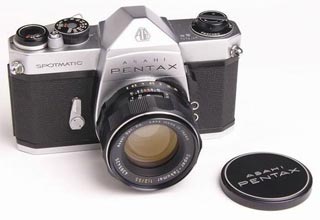
The Japanese? Look at some of the functions in cameras which they have perfected. The SLR instant return mirror, auto diaphragms, auto-focus, matrix metering, all sorts of viewfinder displays, linear focusing motors, affordable aspherical lenses, miniscule motor drives, eye controlled focus (beats me why Canon ceased offering that – the camera would focus where the eye was looking – sheer genius), image stabilization, face detection, smile detection, tiny mass storage devices, LCD screens. Amazing stuff. Great innovation.


The elegant and affordable Pentax Spotmatic – the camera whose maker made the instant return mirror a reality.

Innovation is not invention. Innovation is bringing the invention to market in quantity at an affordable price with a guarantee of quality. Juran knew that. Anyone can invent.

So next time your neighbor tells you the Japanese are copycats, just purr away in your hydrogen powered car, your magical Japanese DSLR in the glove compartment, leaving a trail of water droplets in his driveway while he ponders the challenge of a refill at $10 a gallon to drive his Detroit steel to the repair shop.

But there is hope. It seems that NASA gets it.

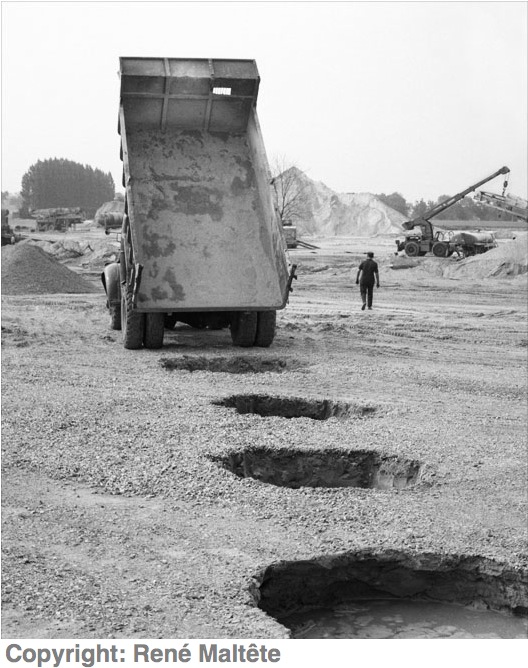
René Maltète

A fine French photographer.

A reader writes:

Thomas,

You often make reference to great or at least famous photographers. I am French and when I was a child (I am 56 now) I used to flip over my uncle’s photography books. There was one French photographer I loved and I would like to share it with you, here is the link.

You may have to brush up a bit your French to understand certains images, they were taken some 40 to 50 years ago.

Cheers,

Michel

Thanks, Michel. I was not familiar with René Maltète’s work and I’m grateful for the reference.

Most enjoyable!

At the Moscone Center

Sterility makes for opportunity.

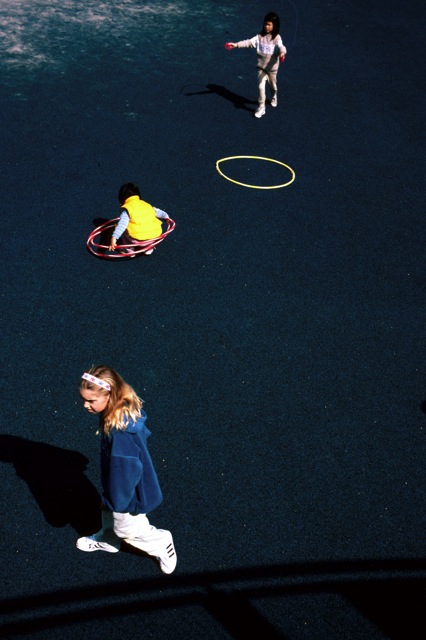
The Moscone Center – named after the assassinated mayor – in San Francisco is probably best known for hosting the annual love-in where Steve Jobs previews the latest in Apple toys early each new year. It also hosts a playground which may be the most sterile I have ever seen, but that’s not all bad. It makes for interesting photo opportunities.


Moscone playground, 2000. Leica M2, 50mm Summicron, Kodak Gold 100. Contrast enhanced in Lightroom.

I was very much thinking of the work of Ludwig Schricker when snapping this.

No, I wasn’t there for an Apple love-in.