Yearly Archives: 2011

Two bargains from Panasonic

Cheap lenses.

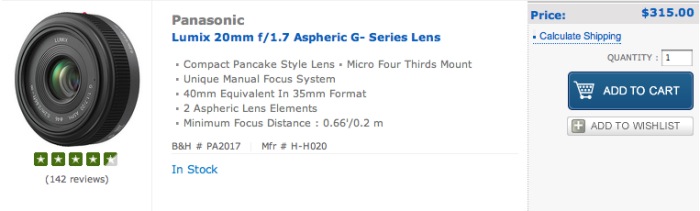
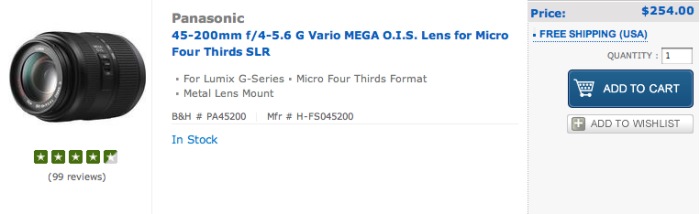
Aficionados of the MFT camera range from Panny (G1/G2/G10/GH1/GH2/GF1) can hardly complain about the prices of two of the most useful lens options – prices are from B&H in the US but doubtless can be matched elsewhere:

I have no special need for the first as the 14-45mm kit lens does it for me, and I wouldn’t use the fast aperture of this neat pancake lens, but I simply love the 45-200mm zoom for its OIS, low weight, small size and great performance.

I forget the prices of these when they were first announced, but suspect the above are much less.

The beauty of the promise of the MFT format is that it seems to me that the sensors will only get better, so these lenses will deliver better results from the next generation of bodies than they already do from the ones currently available.

Monochrome curves in Lightroom

Sometimes black and white works.

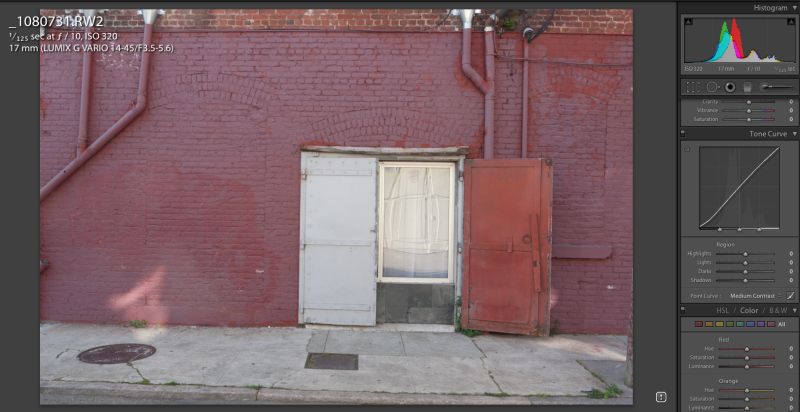
I was much taken with this peculiar security door in the Mission District of San Francisco, but the color original was surpassingly bland. More punch was called for.

Original snap.

Long time readers of this blog will know that, despite growing up with TriX film, I generally consider contemporary use of black and white so much of an excuse for trying to make a lousy picture half decent. Sometimes, however, a subject really does scream ‘monochrome’ at you, and this is one of those times. (Mantra? “Black and white sucks, except when it doesn’t”)

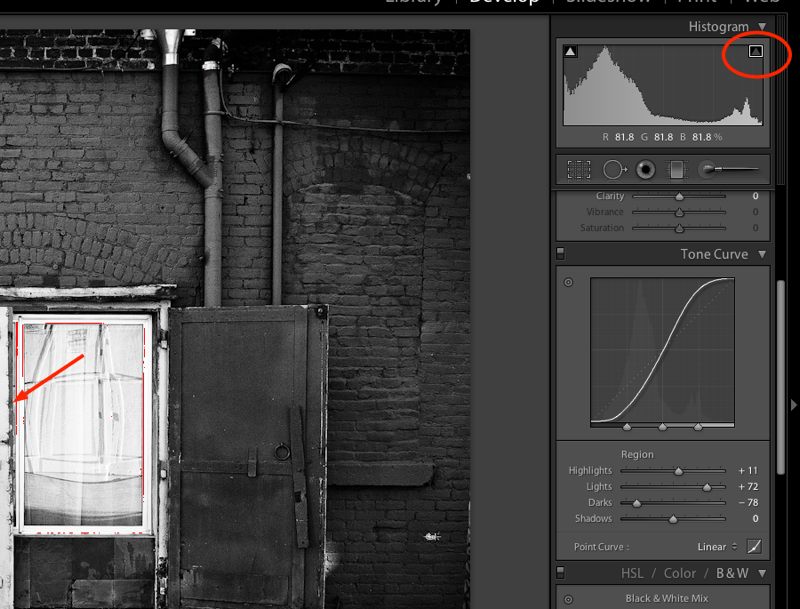
After a quick round trip to Photoshop to correct leaning verticals, (read the Comments below to see why PS is superior to LR for perspective correction) I clicked on the B&W panel in LR3 then proceeded to mess with the Tone Curve and associated sliders. By clicking the triangle at top right of the histogram (circled), I could work the ‘Highlights’ slider to the point where clipping just occurs (see the arrowed red line in the snap), thus preserving highlight details.

The tone curve has been modified into an ‘S’ shape from the linear original, thus heightening contrast while preserving shadow details.

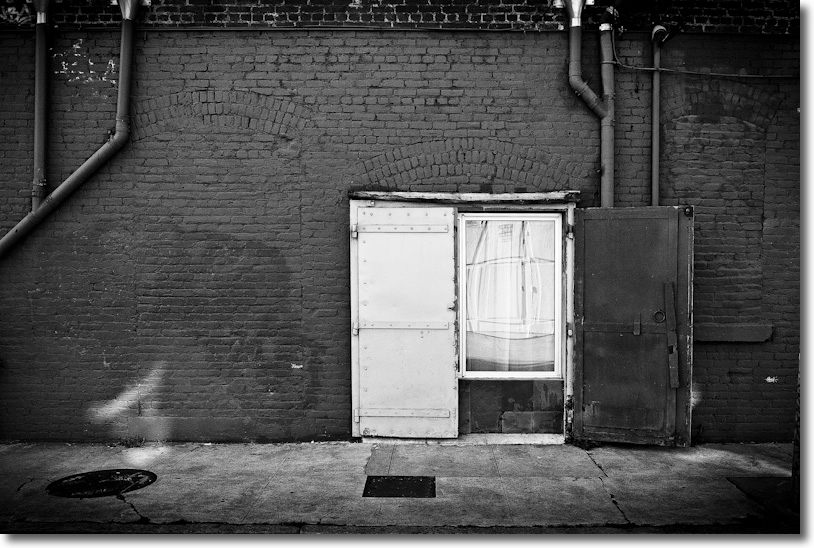
And here is the finished result after applying a touch of post-crop vignetting to heighten the focus on the main subject:

Security door, Mission District, San Francisco. Panasonic G1, 14-45mm kit lens at 17mm, 1/125, f/10, ISO320.

On rare occasions black and white does work, though in this case I confess I was thinking in color, as I usually do, when pressing the button.

Making luck

It rarely ‘just happens’.

There’s a cadre of photographers out there which maintains that cell phone cameras are the ideal. The simple reason is that you always have your camera with you. Sure, the quality may not be the greatest, the controls limited or non-existent, the ergonomics could hardly be worse, but it beats the whopper DSLR and batch of lenses you leave at home because the whole thing is just too much to carry. Pro photographer Chase Jarvis is an advocate of cell phone cameras, and you can see some of his original iPhone work here.

Because I no longer have to wear a uniform, a.k.a. a suit, I find that my Panasonic G1 usually goes with me as often as not. Not as small as a cell phone, sure, but infinitely more capable and light and unobtrusive enough that it’s no chore to carry.

So next time you hear ‘lucky shot’, discount it. Chances are that the photographer didn’t so much get lucky but rather that he put himself in a position to capitalize on luck, and the only way to do that is to have a camera with you.

Here are some recent street snaps where I just ‘got lucky’.
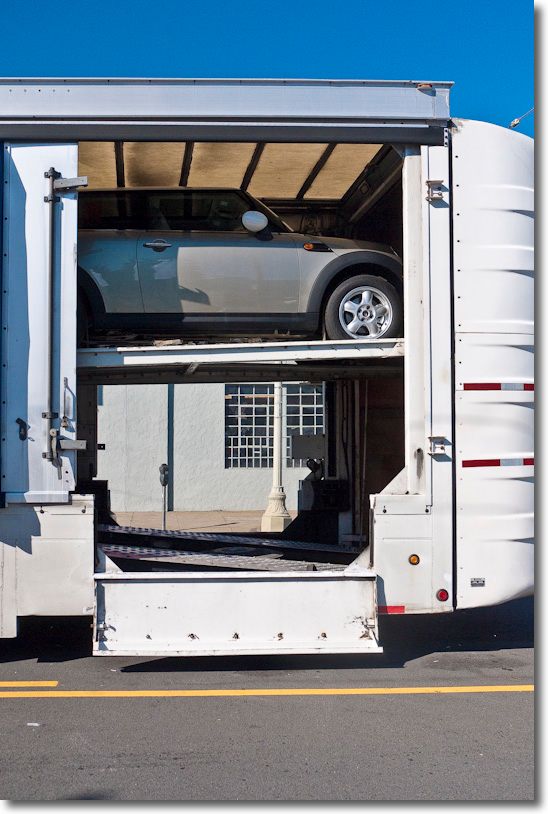
Mini. Seventh Street.
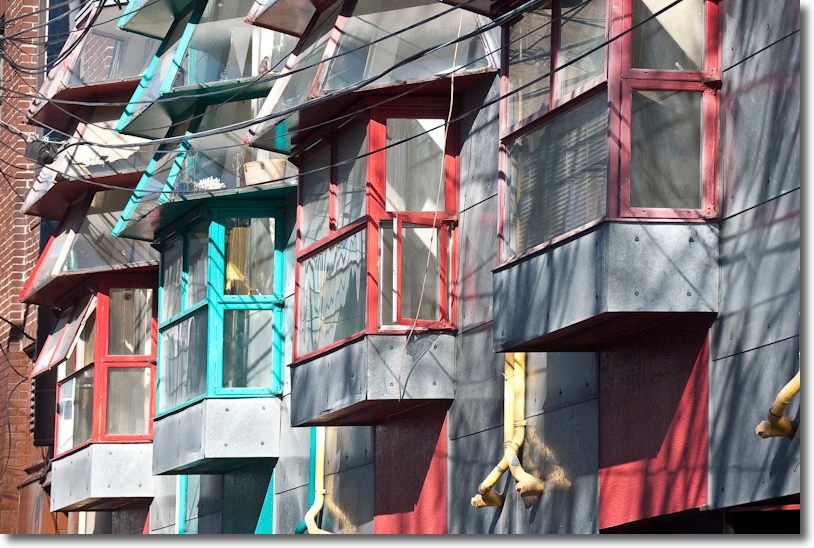
Colored window frames. Sumner Street.
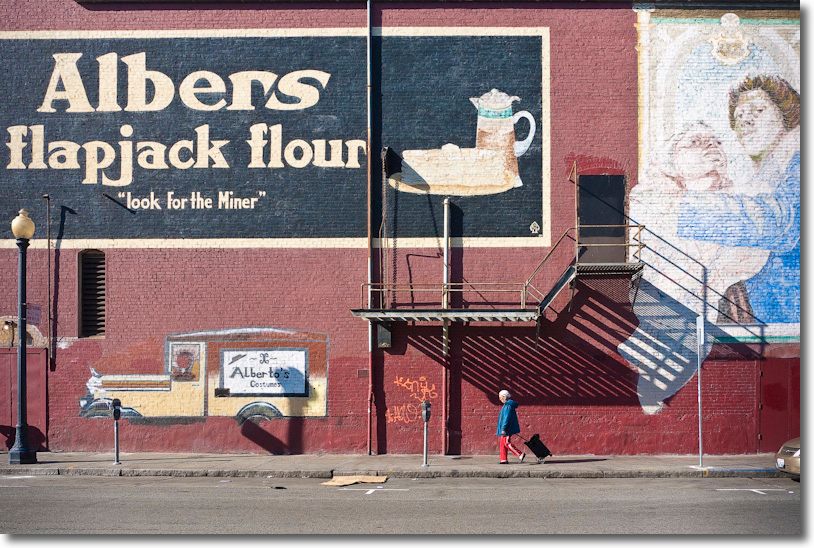
Albers Flour mural, Victoria Theater, Capp and 16th Street.
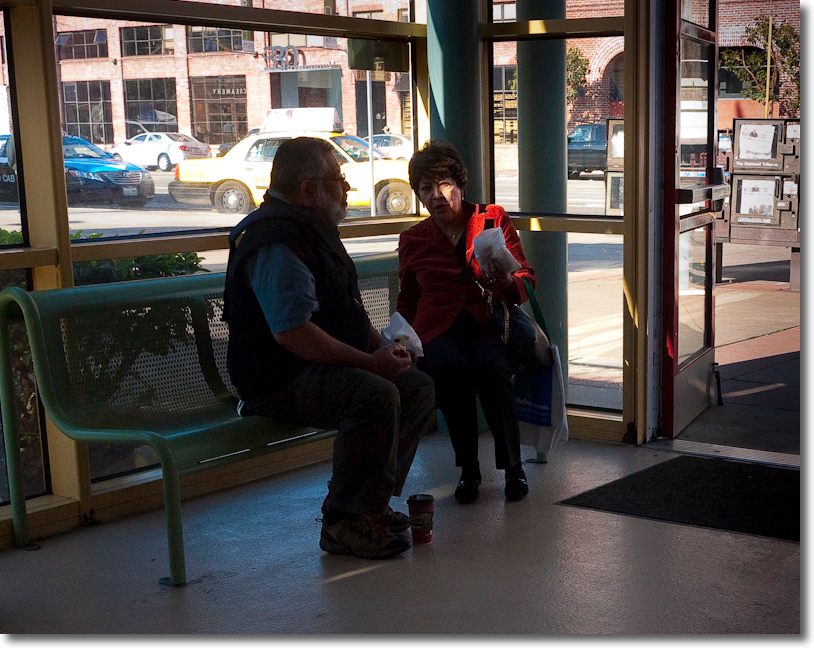
Sun. Caltrain Terminus, Fourth and Townsend Street.
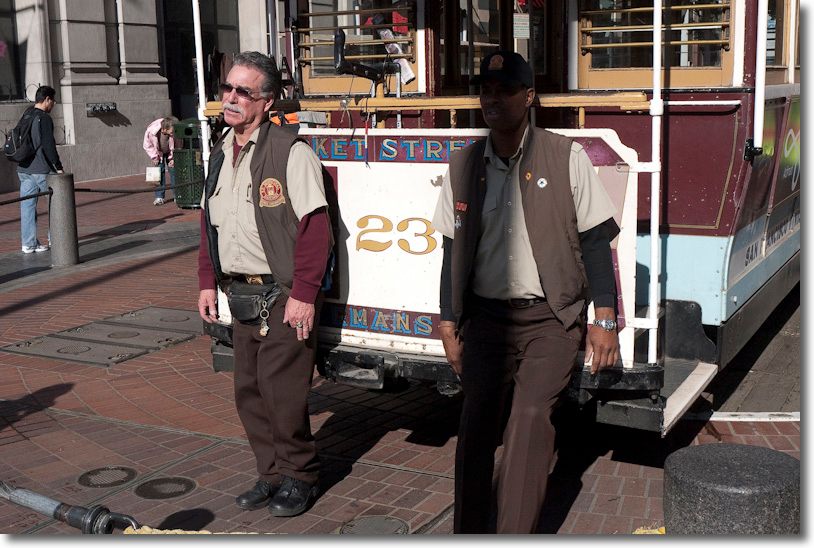
White and black. Cable Car turntable, Market Street.
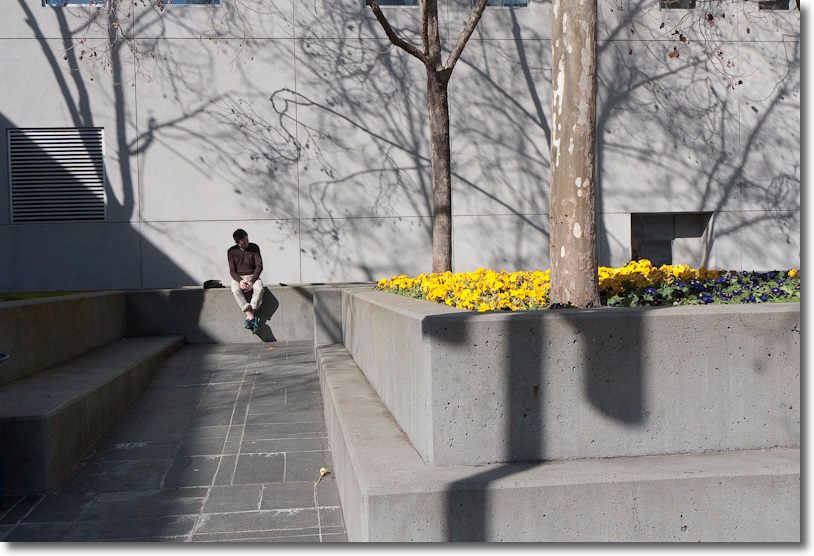
MOMA
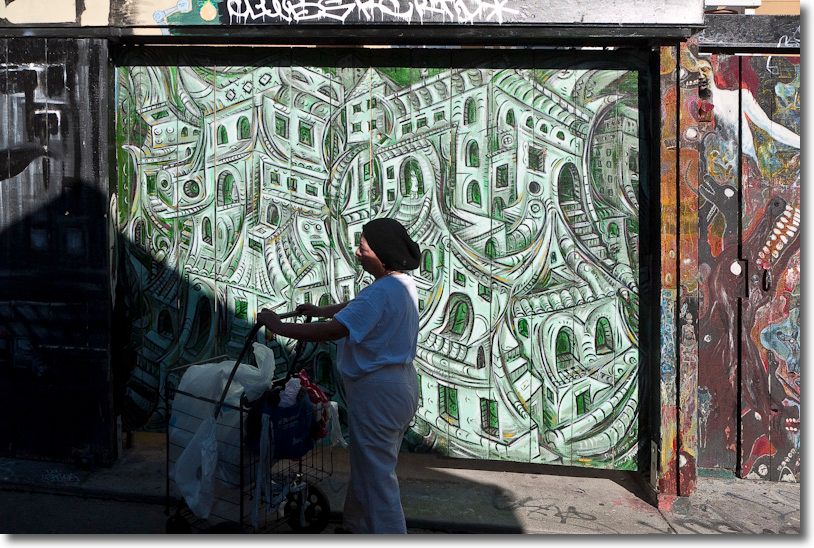
Clarion Alley, Mission District.
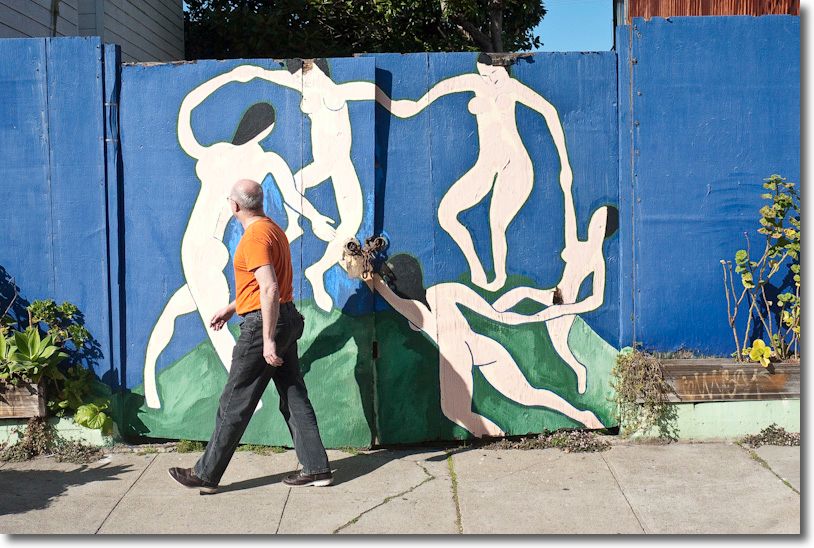
“La Danse”, Clarion Alley, Mission District.
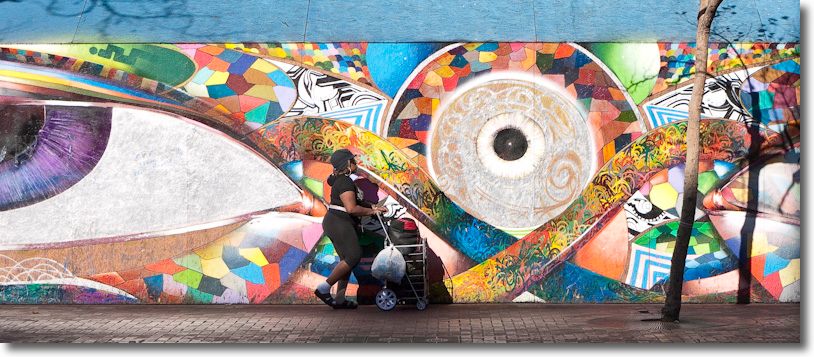
Eyeball, Market Street.
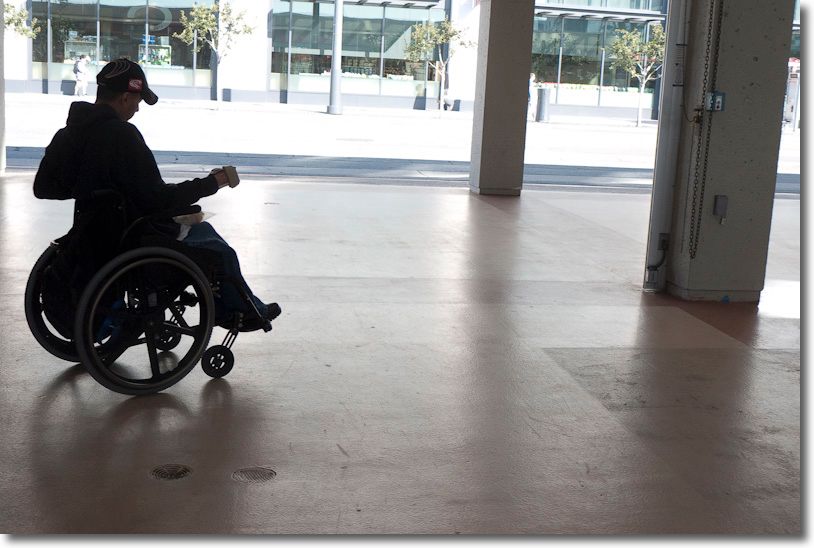
Fourth Street.

All snapped in San Francisco using the Panasonic G1 with the kit zoom, except for the one on Sumner Street where I used the 45-200mm Panny MFT zoom.

For those not familiar with the wonderful murals to be found throughout the Mission District in San Francisco, and most especially those on Clarion Alley, the story is writ large by the artists in the mural at the south-west end of the alley. The Mission District isn’t exactly Beverly Hills, but the art is well worth a visit. Just be sure to keep a low profile and avoid breathing what passes for air here.
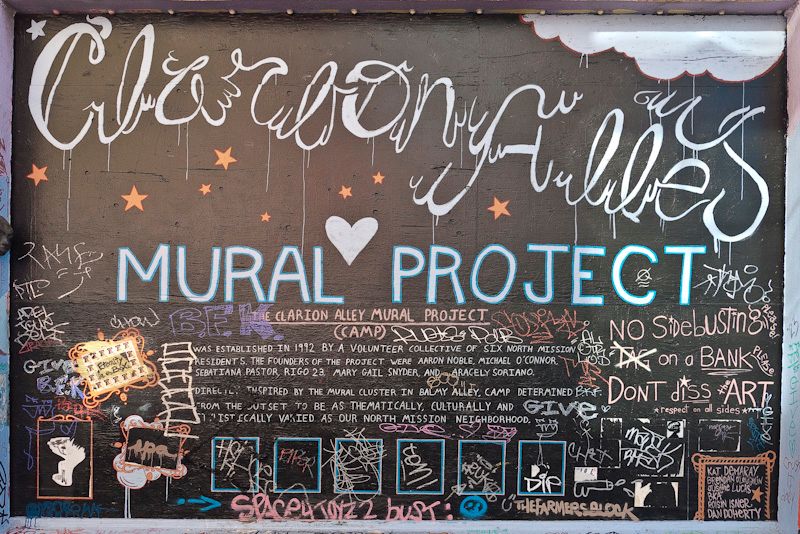
Too bad about the graffiti. Who could disagree with the exhortation “Tag on a Bank, please. Don’t diss art.”
Click bait

Thoroughly disingenuous.

‘Click bait’ is slang for web content with no substance with but one intention – to get viewers to your site and hopefully have them click through to something which earns you commission, even though the actual posting on your site has no substantive content.

Even quality sites are prey to this poor practice, and one of the worst examples I have seen is DPReview’s ‘Preview’ of the much anticipated Fuji X100. I’m not going to provide a link as the piece is so offensive as to discourage me from routing anyone else there but suffice it to say that, after allegedly handling an early prototype, which they laud endlessly for ‘feel’ and ‘quality” they failed to:

  • Take any pictures
  • Comment on responsiveness
  • Say anything about noise
  • Test the lens
  • Report on the quality of the sensor
  • …. and they even forgot to weigh the thing if, that is, they ever had it.

In other words, a marketing piece, pure and simple. Scandalous. DPReview is owned by Amazon and the latter, which prides itself on respecting its customers, can do better.

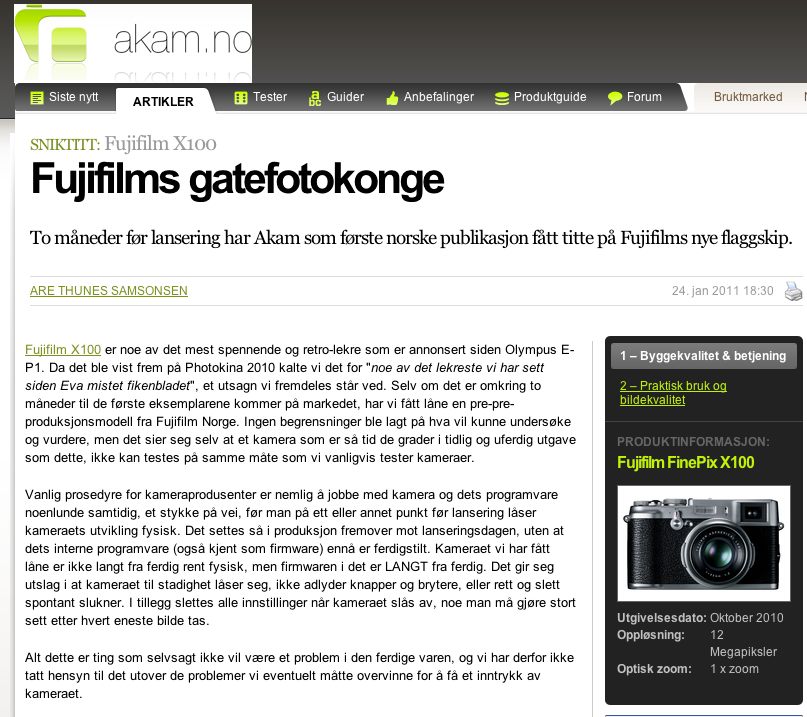
A far superior job (not difficult, given the hurdle posed by DPR) was done by the Norwegian site akam.no which not only got its hands on a very early prototype, but actually took real pictures with the camera and published them. While your Norwegian is likely no better than mine, you can still make sense of the test snaps on their site and suffice it to say that the definition of the lens and the high ISO performance both look very promising. Reading the related discussion at DPR discloses that the camera’s software is at a shockingly early stage of (in)completion, though it’s impossible to tell how old the prototype is. If it’s recent you can forget about seeing this camera on the market until the second half of 2011. The author of the Norwegian piece, Aethius, participates in the discussion which is well worth reading if you have any interest in the X100. He relates, among other things, that the software is so incomplete that the camera had to be restarted after every picture with many menu items garbled or missing! Not what I would call an alpha test model, let alone beta.

Click the picture for the akam.no review.

Aethius relates that this was an official tester from Fuji, his magazine having signed an NDA, which begs the question whether the CIA is in charge of Fuji’s marketing. It would take an organization which cannot distinguish Iraq from Australia to so bungle matters. Let’s see now – pre-release it in a nation where caribou outnumber humans, make sure it’s so buggy as to be scarcely worthy of attention, over promise and under deliver, raise the hype machine to the max practically guaranteeing dismay when the real thing hits retail, and make sure that only the worst things get said about it in the limited test and ensuing discussion. Buggy software, lens corrections yet to be completed and, worst of all for a camera whose primary (sole?) purpose is street snapping, it’s not especially fast or responsive according to Aethius’s comments in the discussion. Way to go, Fuji! Well, I suppose Leica needs the competition when it comes to rolling out buggy and costly hardware.

As for DPReview, you are a dishonorable entrant to this site’s Hall of Shame.

Eddie Rickenbacker’s

For real men.

Real men ride motorbikes, hang out at local bars and think nothing of confrontation and a good fist fight. If that’s your sort of thing, and you believe real motorcycles come from America and Europe, then you owe it to yourself to visit Eddie Rickenbacker’s at Second Street and Minna Street, in the vibrant South of Market district in San Francisco.

The food is cheap and served in the usual gargantuan American helpings, drinks are inexpensive and the atmosphere is real. A BLT served with fries plus draught beer (get the Racer IPA) will set you back $17 with tip. This is a genuine old place with a long bar on one side, an unkempt set of tables on the other and with friendly help. No fake Tiffany lampshades and Armani wearers here. And did I mention that Norm, the proprietor, who could stand to lose 100 lbs or so, hangs out on a sofa at the end of the bar …. his breathing assisted by an oxygen bottle? Like I said, this is not for the chi chi set. The snaps below will give you a sense of the place.

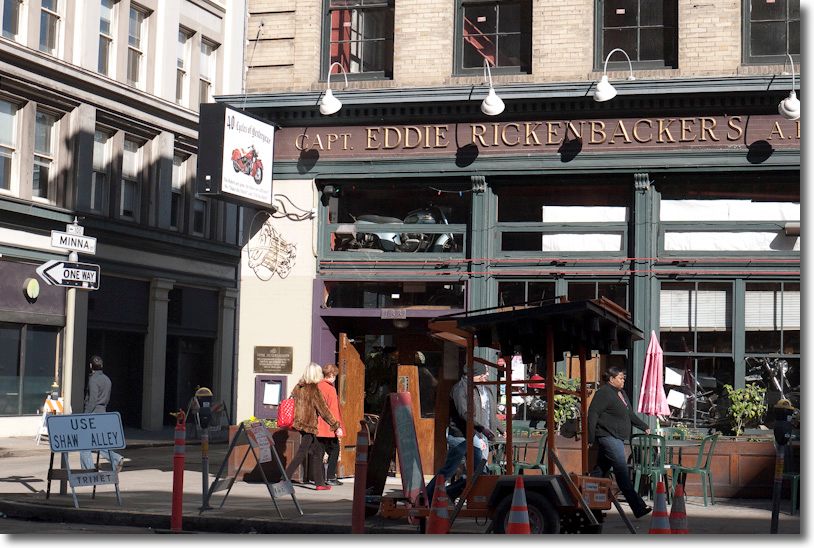
Located at Second and Minna, SoMA. A post war Triumph is above the entrance.

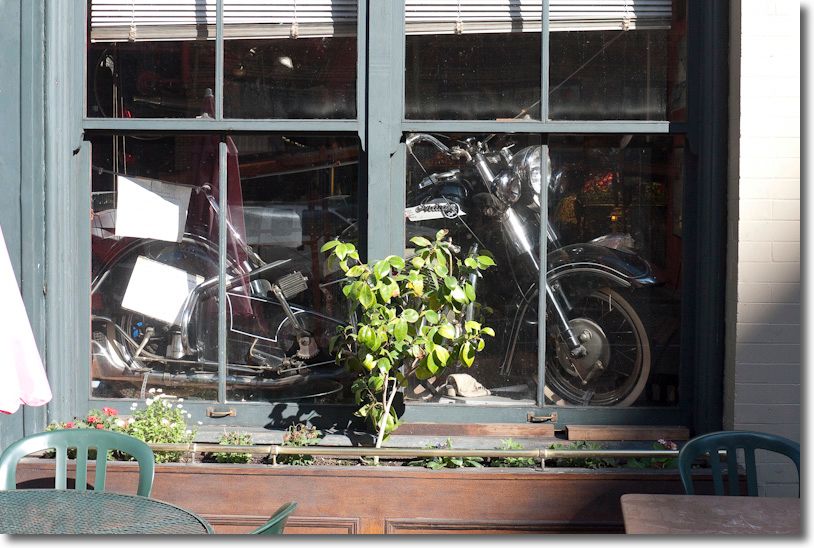
Classic Indian in the window on Second Street.

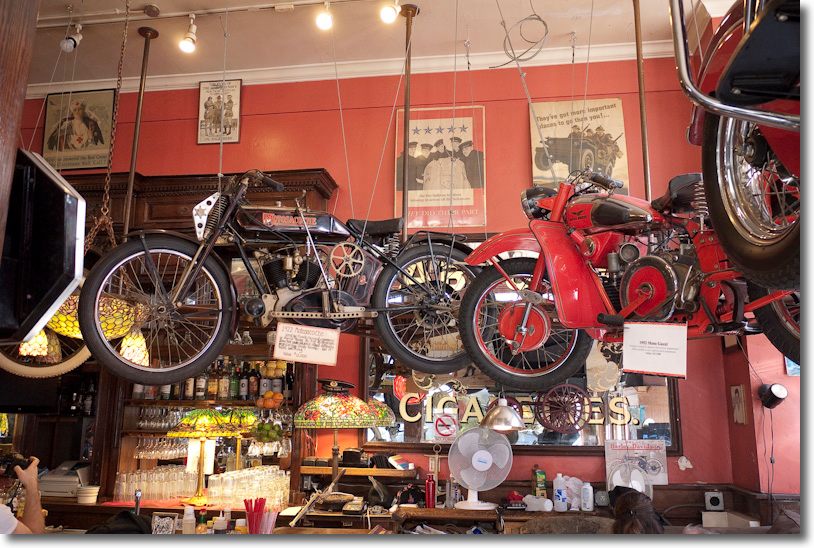
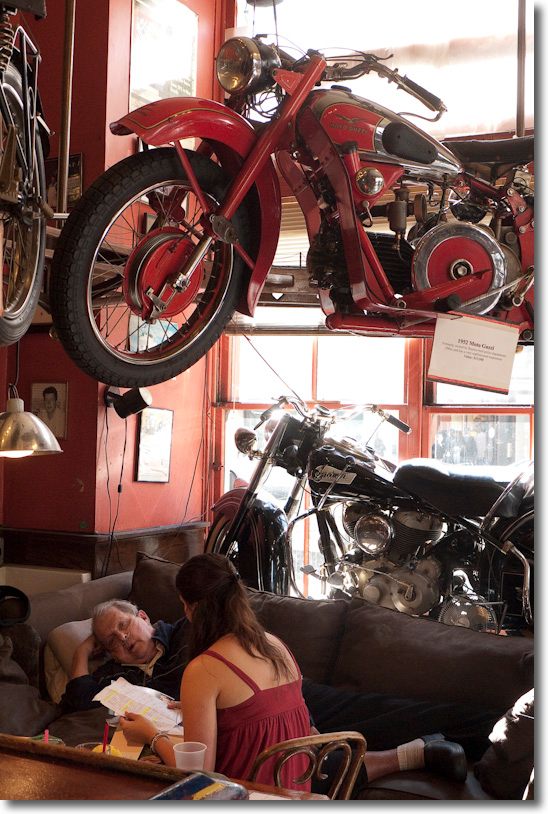
A 1922 Motosacoche and a 1952 Moto Guzzi.

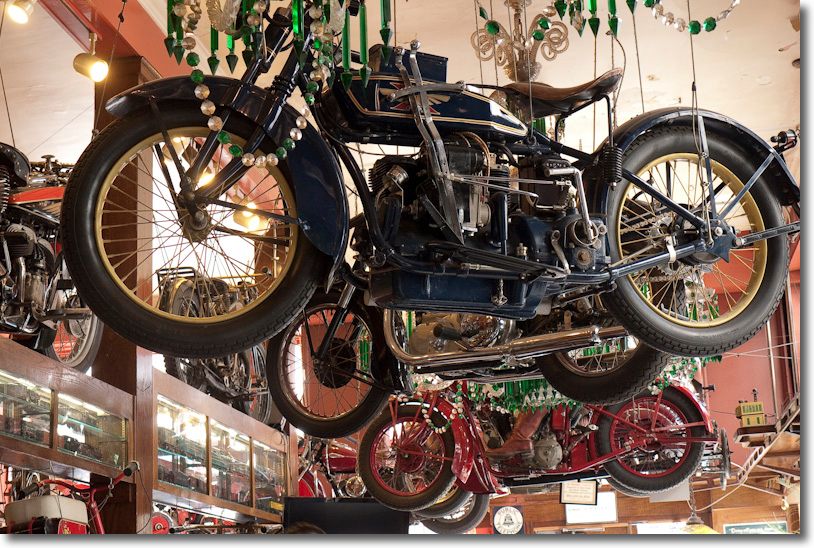
A gorgeous 1920s Excelsior leads the parade of bikes suspended from the ceiling.

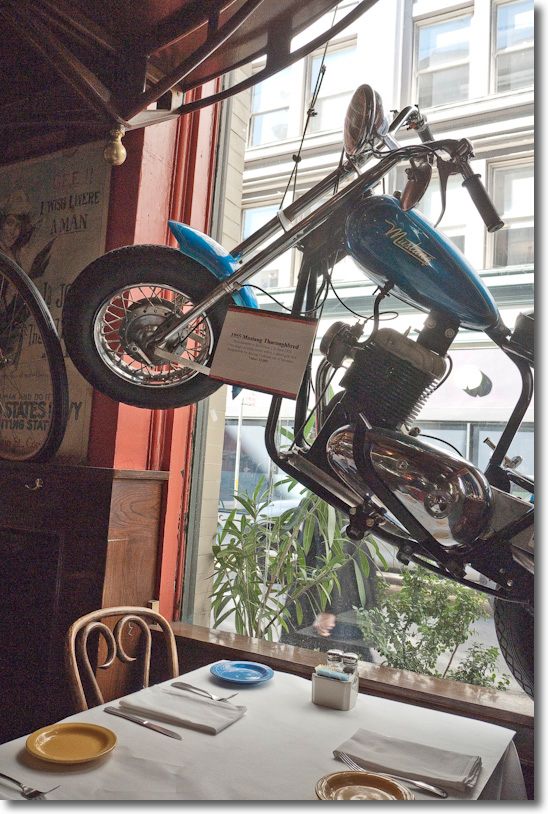
1955 Mustang Thoroughbred.

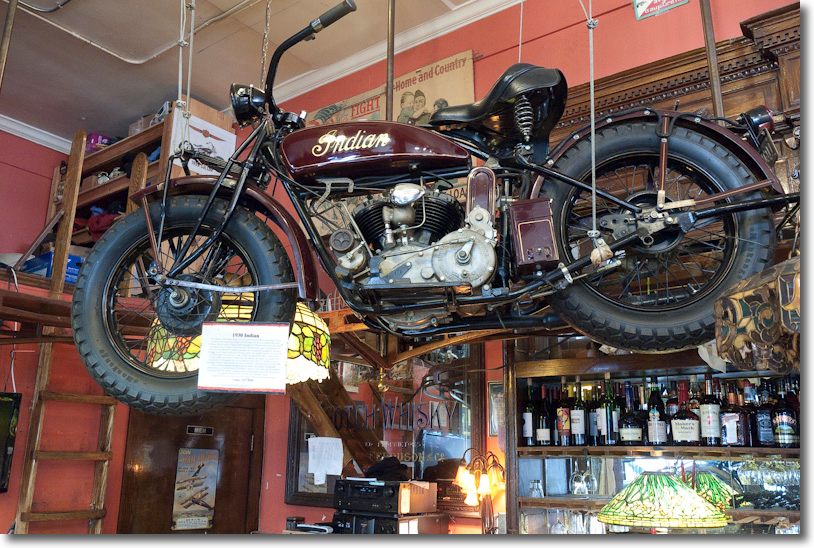
1930 Indian. They don’t make ’em like that any more and if you have
ever tried to kick start one that’s probably a good thing!

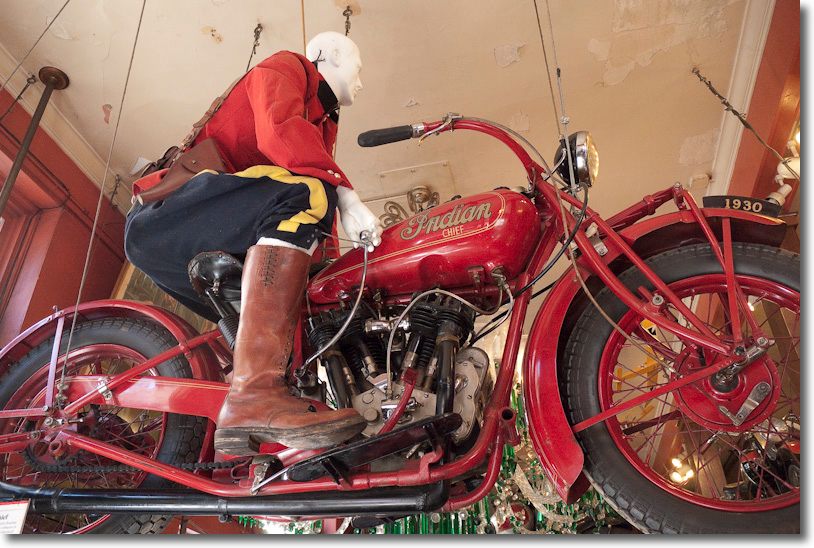
Indian Chief with complex leading link girder front forks.

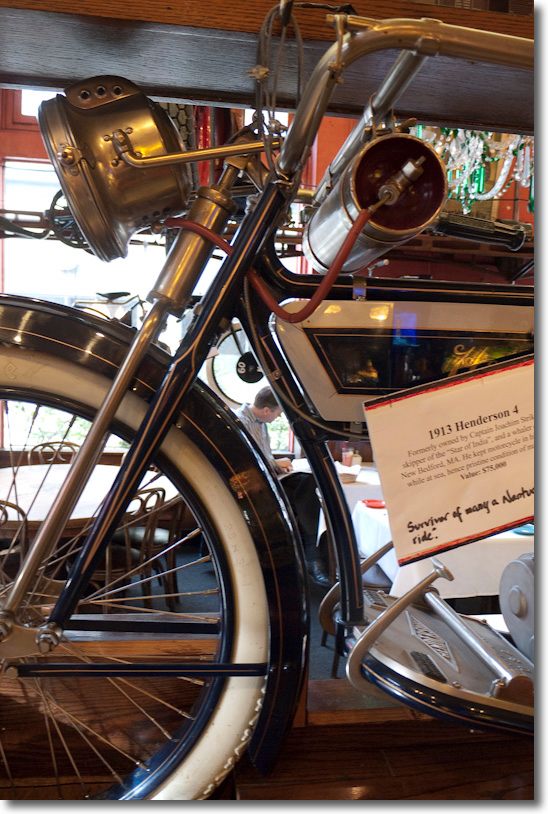
1913 Henderson 4.

The obese proprietor, Norm, hangs out on the couch,
below the Moto Guzzi and a classic Indian, breathing with an oxygen bottle.
The waitress is compiling a food order with his help.

All snaps on the Panasonic G1 with the kit lens at ISO800. Real Men don’t use flash.

Sad update: Norm Hobday passed away February 25, 2011. He is now in the afterworld, enjoying the world of the two wheeled afterlife. All speed, Norm.