Monthly Archives: January 2013

The 20mm Nikkor revisited

Outstanding and tiny.

I wrote about the 20mm f/3.5 Nikkor Ai-S of the early 1980s a year ago. This prime lens continues to delight, not least for its diminutive size as well as its outstanding optical performance. A fraction of the vast bulk and weight of the modern 16-35mm f/4 VR zoom, it deletes VR and the zoom range for compactness with little performance sacrifice. From reading various sources on the web, it seems that Nikon has never made a prime at this focal length which was a stinker. Starting with the pre-Ai f/3.5 UD Nikkor of the 1960s (which I would love to own as its size will balance nicely on the bigger bodies), the Ai f/4 of the 1970s, through to my f/3.5 (mine is Ai-S, earlier ones are Ai) and the even later Ai-S f/2.8, each has a fine reputation. The f/3.5 and f/4 versions remove any excuse for taking it with you, as size and weight are barely noticeable. I use no lens hood, just a UV protective filter.

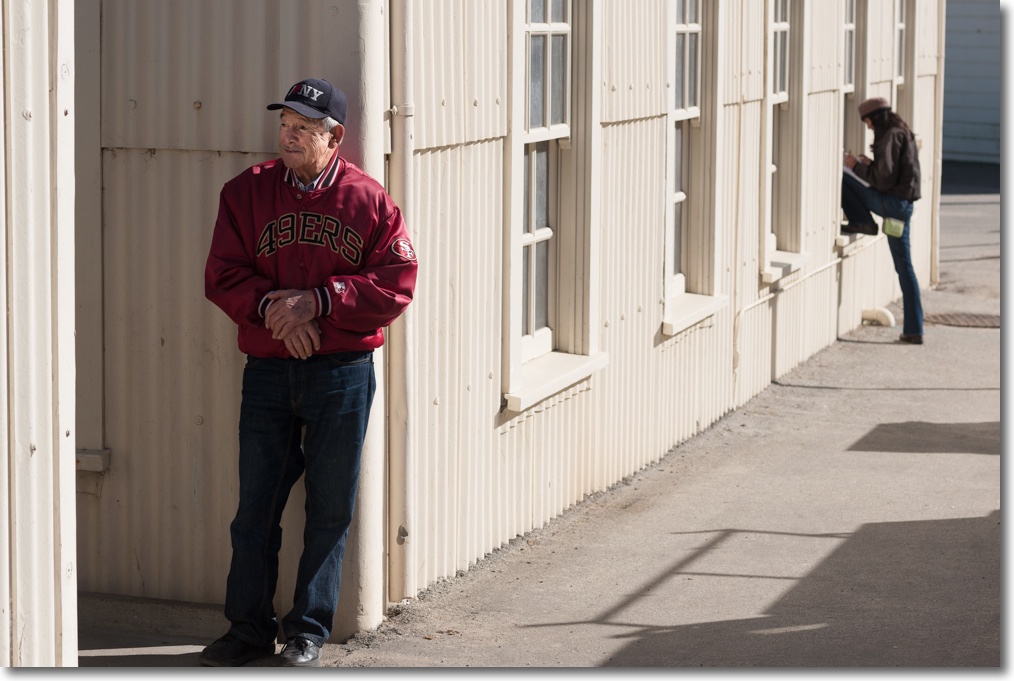
When I set out for San Francisco’s gorgeous Presidio National Park the other day – the park runs from the foot of the Golden Gate Bridge to the spectacular old mansions of Pacific Heights to the south – I took my ‘around the world’ outfit consisting of one body and but three prime lenses – the 20/3.5 Ai-S, 35/2 pre-Ai and the splendid 85/1.8 AF-D, plastic barrel notwithstanding. The 20mm saw its share of action.

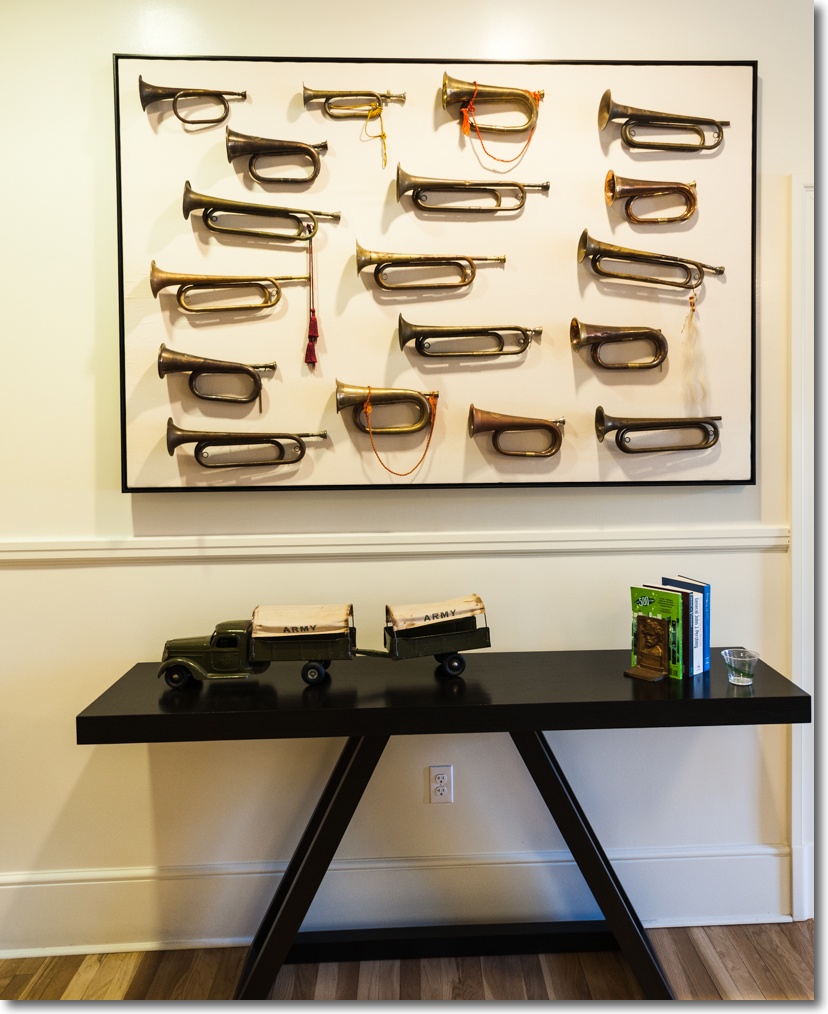
First, inside the beautifully restored Inn at the Presidio bed and breakfast Hotel. Yes, you can stay there but weekend reservations must be made a year in advance! The government, as usual, has no sense of supply and demand. Triple the price and reservations would equal demand.
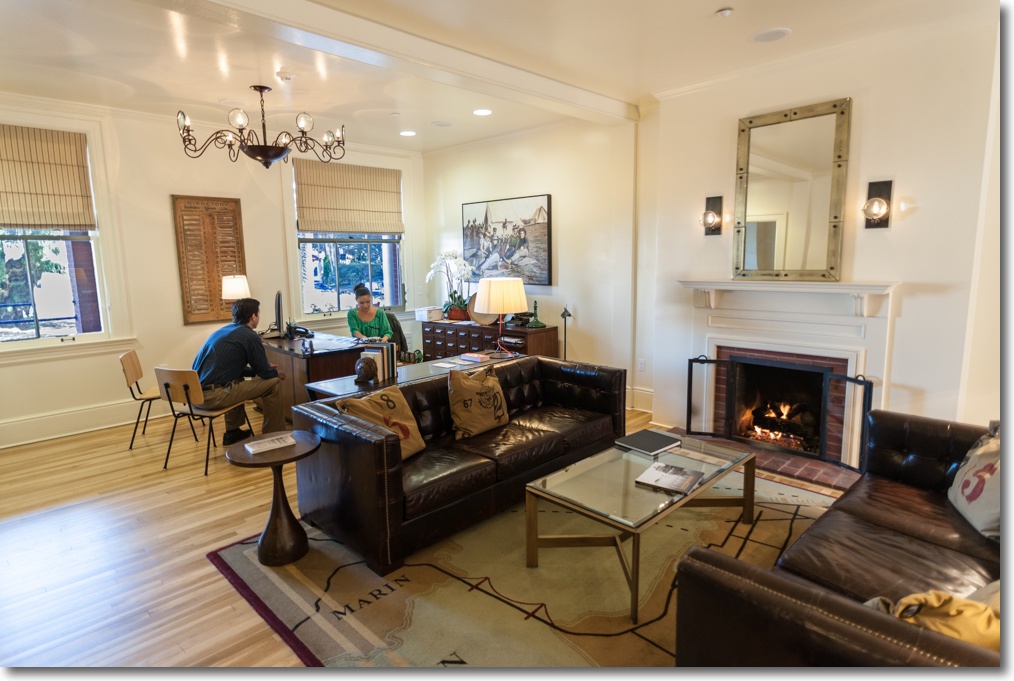
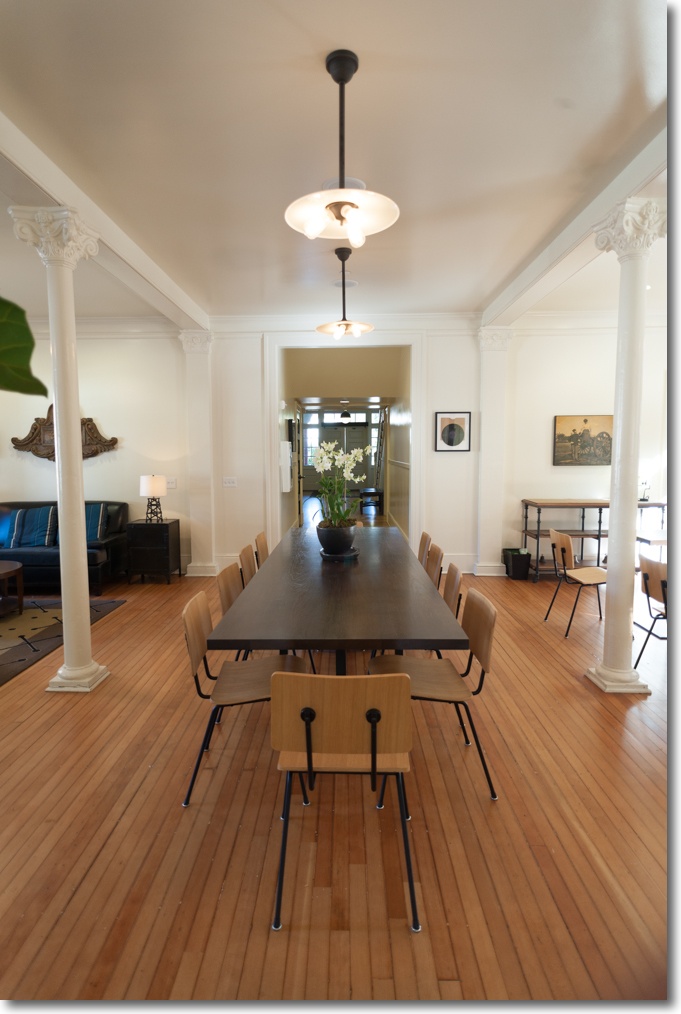
Of the last snap a friend, and a former member of the US Coastguard, writes: “Arrgh….. I’ve awakened to reveille too many times 🙂 Fortunately, it was accompanied by a full breakfast in the mess hall or galley. (Our national debt is partly due to my consumption of lobster, steak, and cheesecake.)”

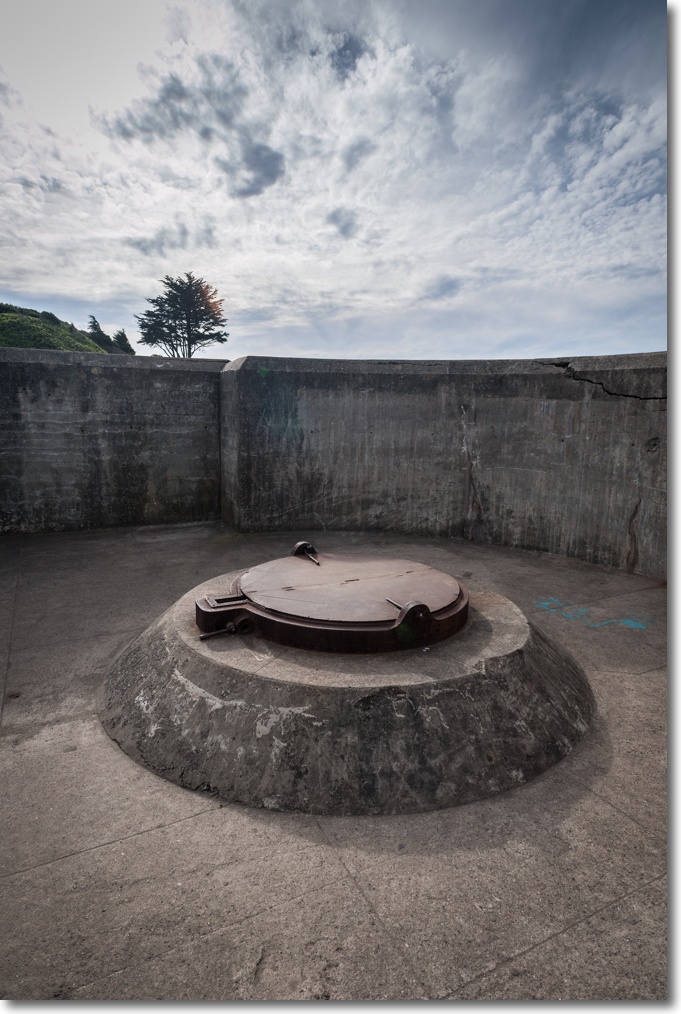
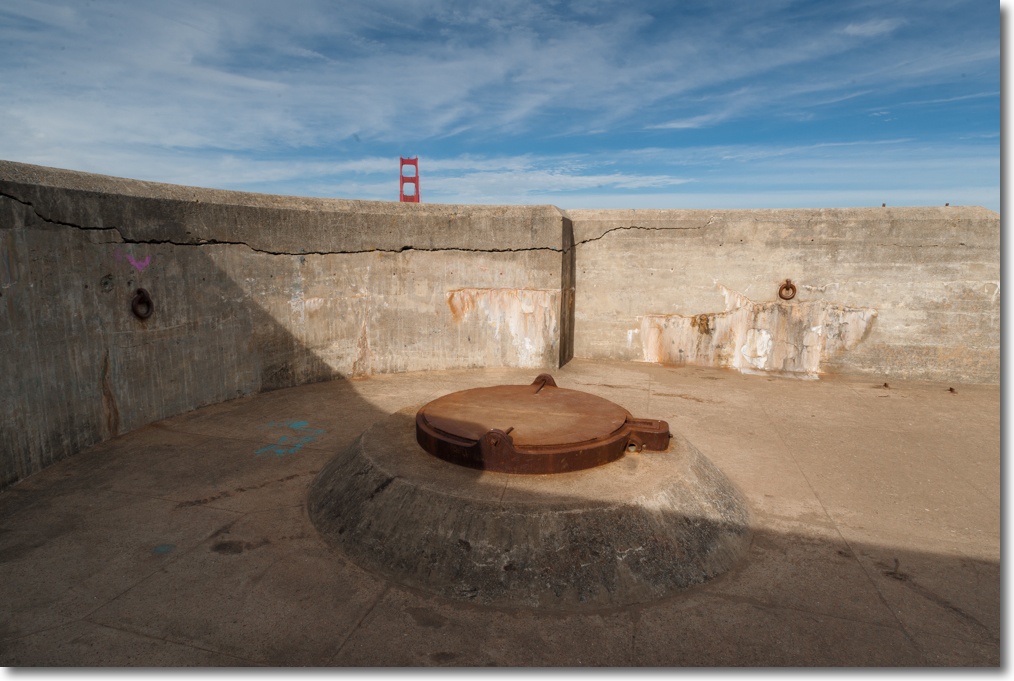
Making my way down to the Golden Gate Overlook I meandered around the old gun emplacements, set in feet of concrete. Guns gave way to rockets which gave way to nothing as satellites took over, but the concrete remains in place:
Finally, wandering around Crissy Field, these two kids burst out of the swimming pool building and it was all I could do to get the snap. No chance to get closer:
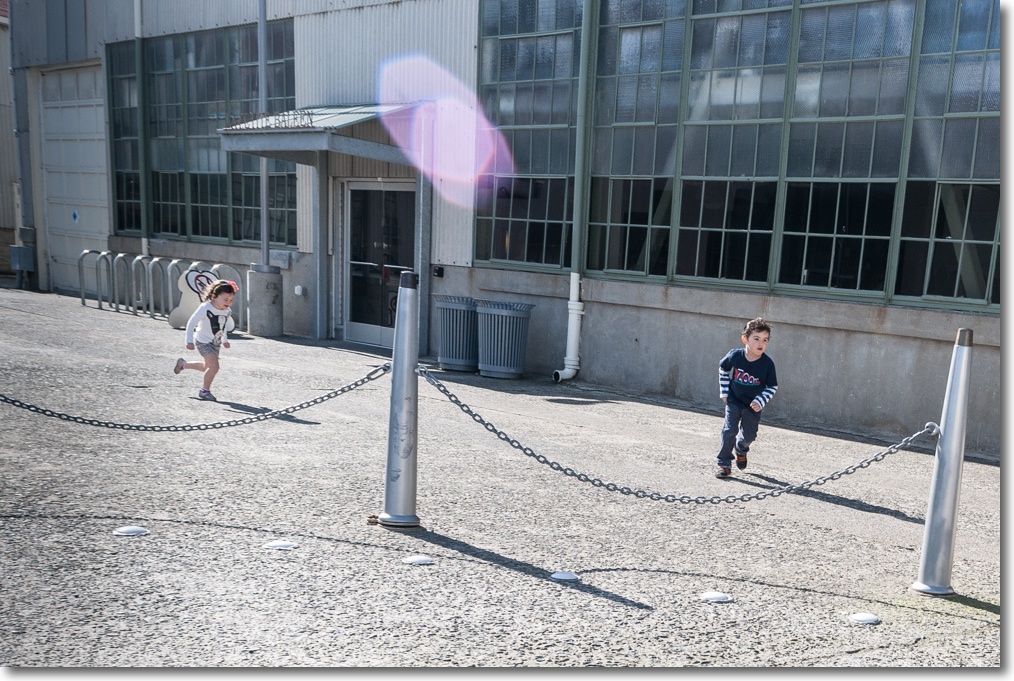
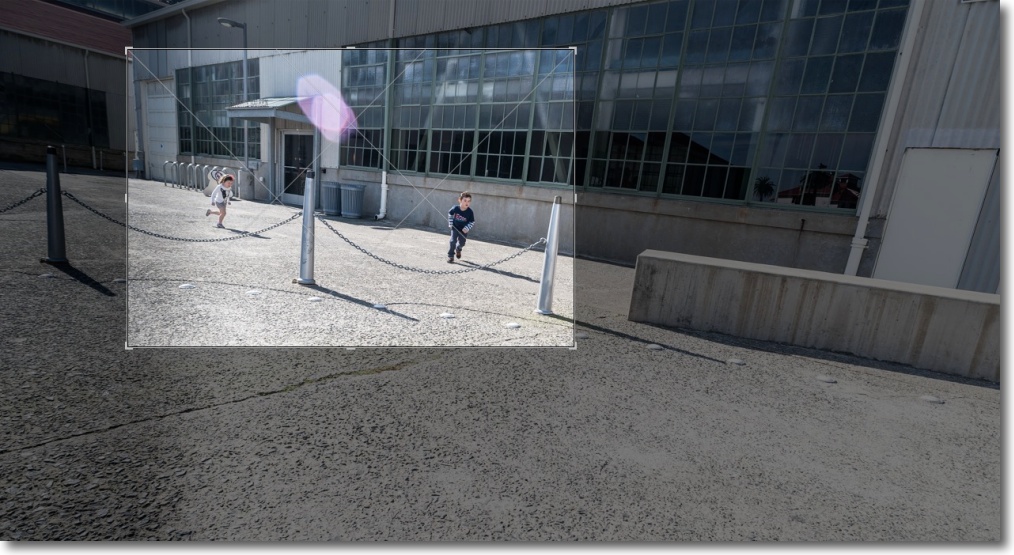
High pixel count sensors are not just for big prints – here’s the sectional enlargement:
Sure, the old 20mm flares a bit into the sun but the effect works well here, so I have left the flare spots untouched.

So if dragging around pounds of glass is not your thing, check out these old MF primes. At 20mm it’s not like you have to do a lot of focusing. Nice used f/4 and f/3.5 versions can be found for $225, though prices are creeping up as word gets out how stellar these older MF Nikkors are. For some reason the older f/4 version seems to sell more typically for $300. All four versions can be easily chipped, the $29 CPU adding a host of functionality (matrix metering, proper EXIF data recording, automatic invocation of the lens correction profile, etc.) and requiring only a dab of epoxy to keep it in place. What little ails the f/3.5 version is easily corrected using my lens correction profile. That profile corrects the lens’s ‘moustache’ non-spherical distortion of straight lines at the edges, something Photoshop cannot do. Nice for architectural work. f/5.6-f/11 is the sweet spot for the f/3.5 optic, with tack-sharp 24″ prints the order of the day.

All snapped on the D3x, 20mm f/3.5 Ai-S MF Nikkor.
Paulette Tavormina

Gorgeous neo-Dutch work.

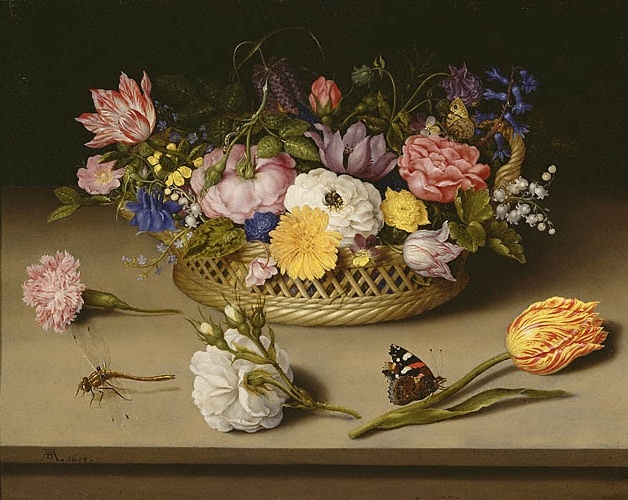
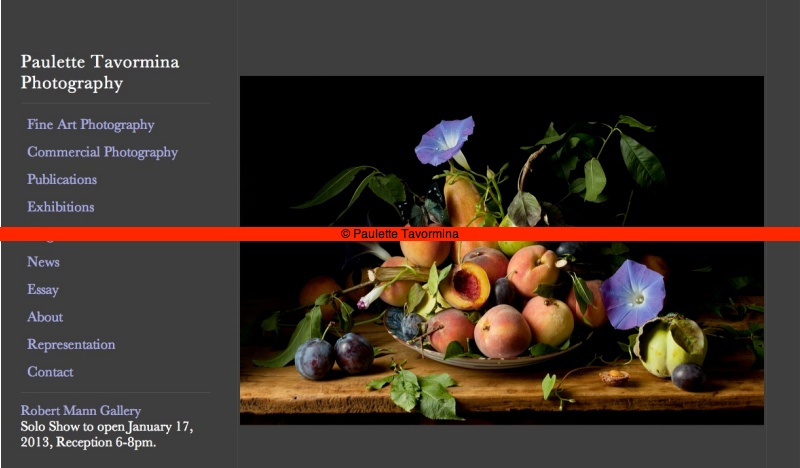
A reader put me onto the work of still life photographer Paulette Tavormina. Much of her best work is done in the style of the great Dutch painters of still lives who originated the movement in the late-16th Century.

Here’s a typical Dutch piece, oil on copper:


Painting by Ambrosius Bosschaert the Elder, 1614.

And here’s a photograph by Ms. Tavormina:


Click the image for Paulette Tavormina’s web site.

An avid collector of butterflies, shells and ephemera, Tavormina makes a living from her still lives and it’s easy to see why. Her work is quite exceptional and gorgeous to look at. Take some time to look around on her elegant blog. And thank you Peter S. for the lead.

The Golden Gate Bridge – Part I

Thinking out loud.

New Yorkers have the Roeblings’ (father and son) Brooklyn Bridge. Britons have Fowler’s and Baker’s Forth Bridge. But San Franciscans have the best of all. Strauss’s Golden Gate.

I made a commitment last year to get around to taking more pictures of the Golden Gate Bridge and finally started to do something about it this past long weekend.

Before diving in, a step back brought the realization that I was not about to improve on any of the great images made over the years of the bridge at sunrise, the bridge at sunset, the bridge at full moon, the bridge poking its towers through the fog and so on. That’s been done to a level of perfection it would be pointless to even try to imitate.

Nor was I about to improve on what I think is the most moving work out there, that of LIFE’s Peter Stackpole in the late 1930s when the bridge was being built. It was completed in 1937, some 75 years ago now, and Stackpole was able to make images that can never be repeated, such as this one of the saddle of the south tower before the suspension cables were in place. You can see the cruciform section of the north tower in the background (these are below the roadway), awaiting installation of the beautiful Art Deco upper sections we all know and love.


Awaiting the cables.

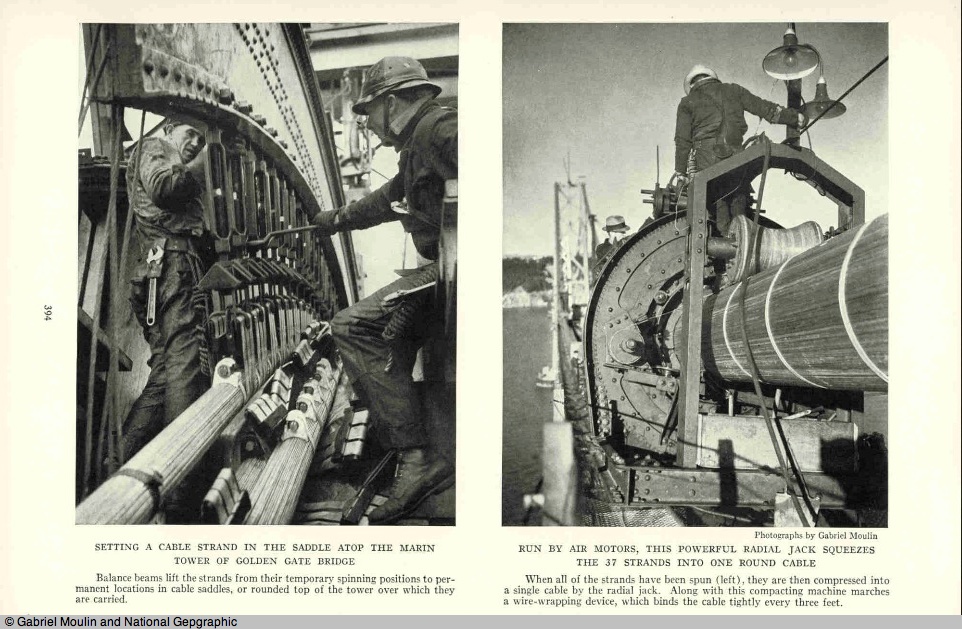
Here’s another couple of stunners from the March 1936 issue of National Geographic by Gabriel Moulin:

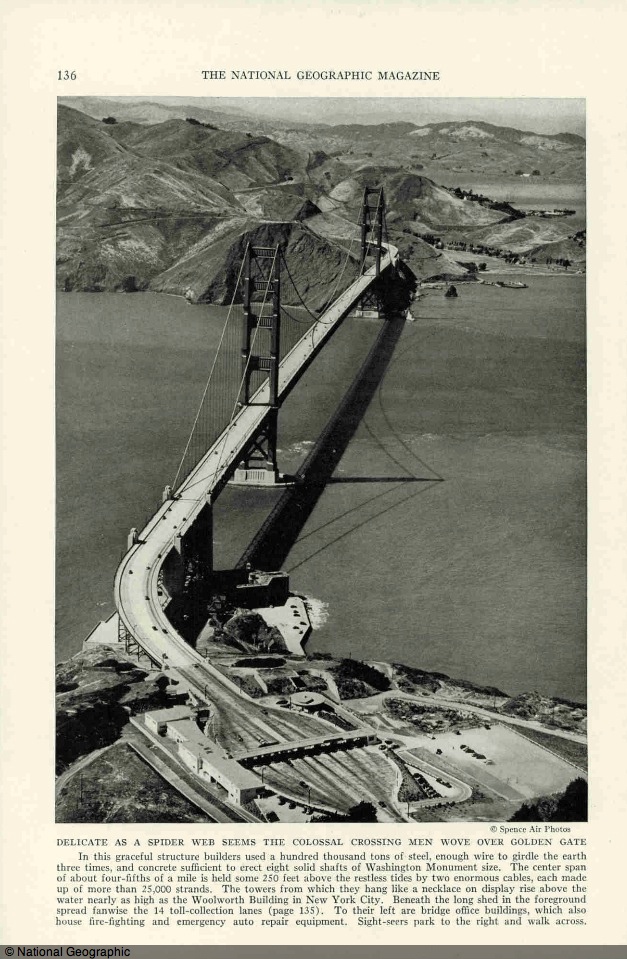
And an air shot in February 1939, shortly after completion:

So I meandered into the city and figured out how to find a parking spot in one of the small lots on the south side, making my way up to the east footpath, the west being the one for homicidal bicyclists who, like most of the genre, seem to believe that their machines give them sole right of passage. Rather like their hero, The Man Who Was Never Finally Caught.

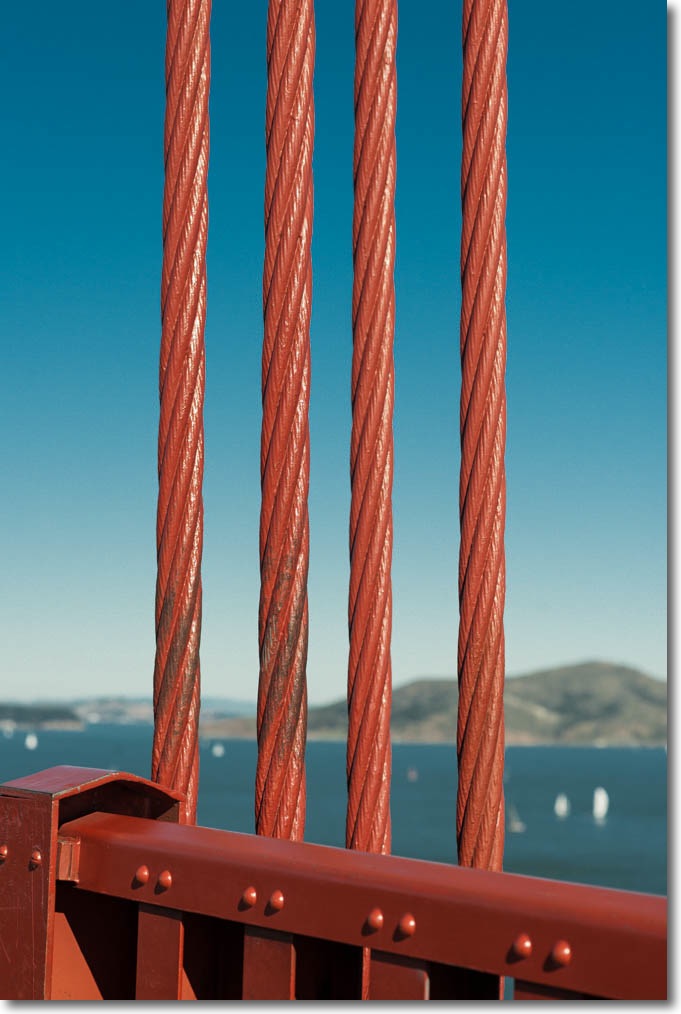
Mooching about on what has to have been one of the most fabulous days ever in San Francisco, windy, warm, clear as it gets, I got down to touching, smelling and tasting all aspects of the bridge with my eyes soaking up this thrilling setting like an alcoholic in a bar on St. Patrick’s Day. The footpath is remarkably vibration free despite the constant noisy traffic rattling over the expansion joints in the roadway, but grab one of the suspension cables in a clenched fist and you realize that what you are walking on is alive.

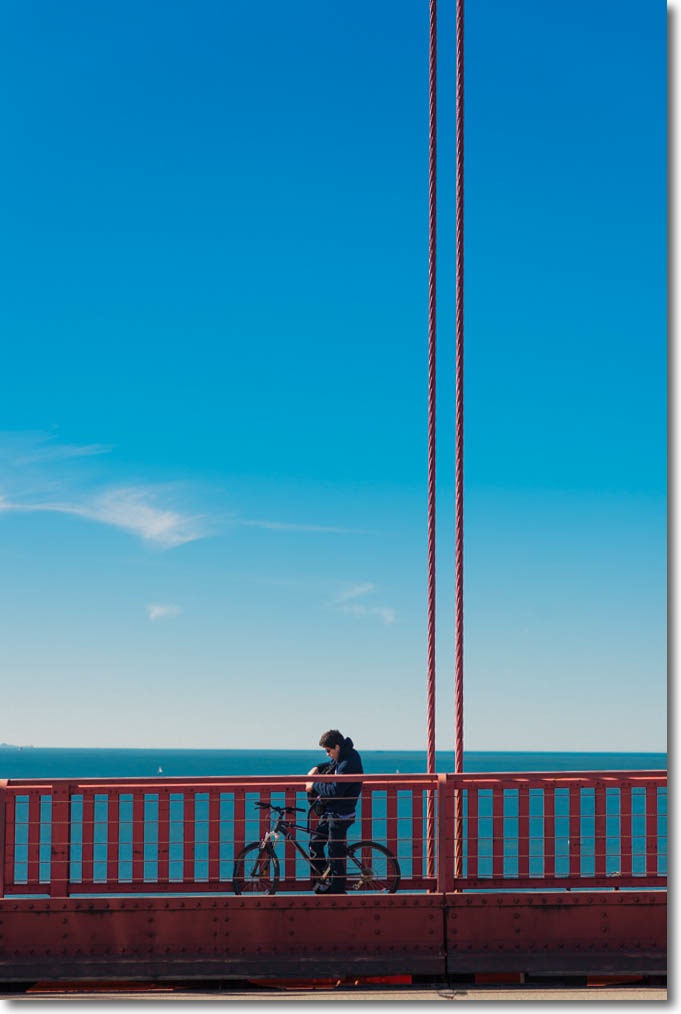
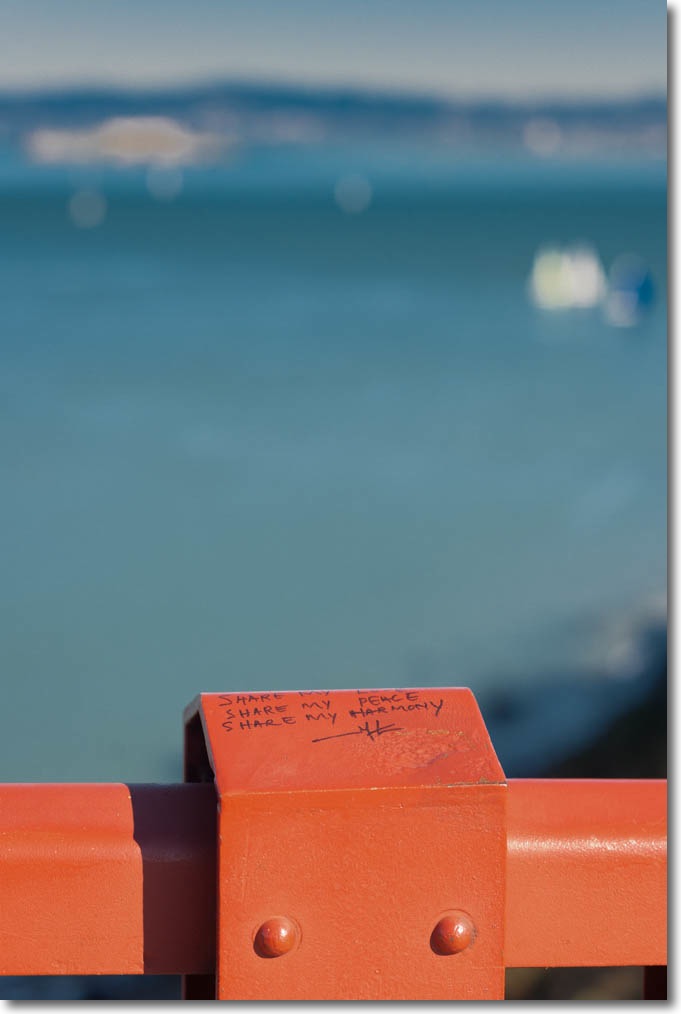
The snaps from this visit were more thinking-aloud sketches than anything else, but I’m getting a feel for the task. More challenging lighting conditions await. Here are a couple. Suffice it to say that, up close, the power and majesty of this engineering marvel are overpowering.

Well, it’s a start.

Nikon D3x, 16-35mm AF-S and 85mm AF-D lenses, ISO 200.

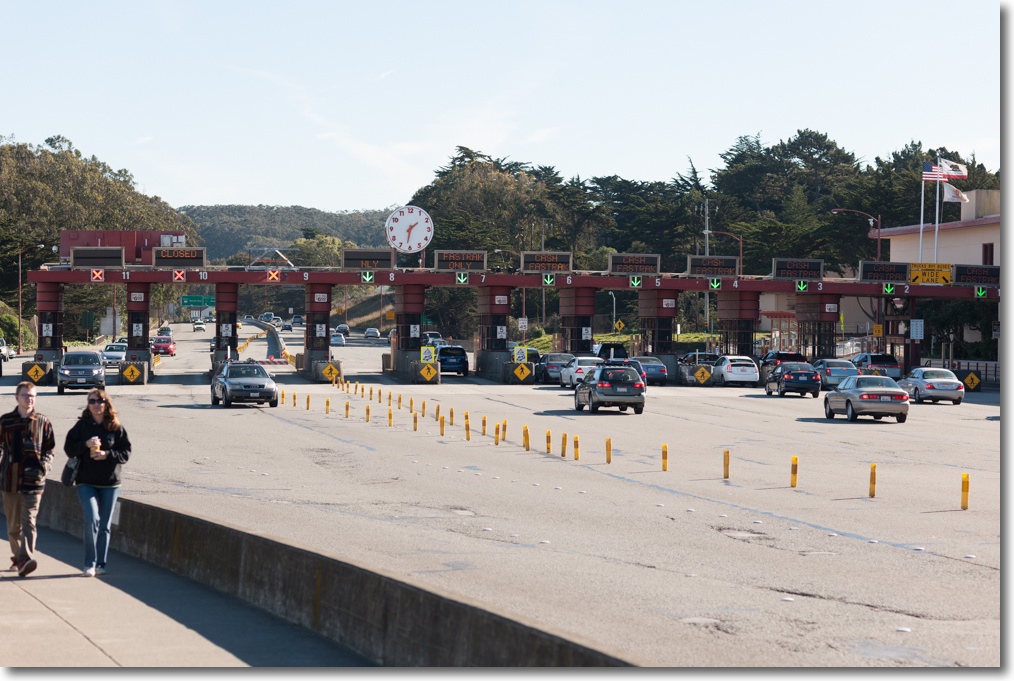
By the way, the 14 toll lanes referred to in the NG 1939 image, above, are now down to 11. Goodness knows how many times taxpayers have paid for this structure …. the 1939 toll was $0.50. Today it is $6.00.


11 lanes at work today.

National Geographic’s archive remains an invaluable research tool I recommend highly, especially as they are pretty much giving it away.

Click here for Part II.

Advice for Mr. Cook

No more iconoclasts.

Apple reports its earnings for the Christmas quarter today.

If ever there was a company which has peaked, looking to a low or no growth future, it is Apple. The easy money in the stock has long ago been made. Oh! sure, it may be another blow-out quarter predicated on sandbagged earnings estimates, but wither here? It’s the next quarter which matters, not the last.

There is no reason – other than the occupant of the corner office – that Apple should not continue growing. One oft quoted line from Steve Jobs on his deathbed is “Don’t ask what Steve would do”. Dead wrong. Apple needs to ask this all the time, the core belief being that you give people what they need, not what they want. Apple’s pipeline of Jobs’s ideas is quickly running dry and its tedious and boring iPhone refreshes – 70% of revenues – are complacency redefined, while Samsung eats their lunch with better/bigger/faster devices. You can talk all day long about Apple’s wonderful ecosystem, but if I cannot make the screen out you know where you can stick it.

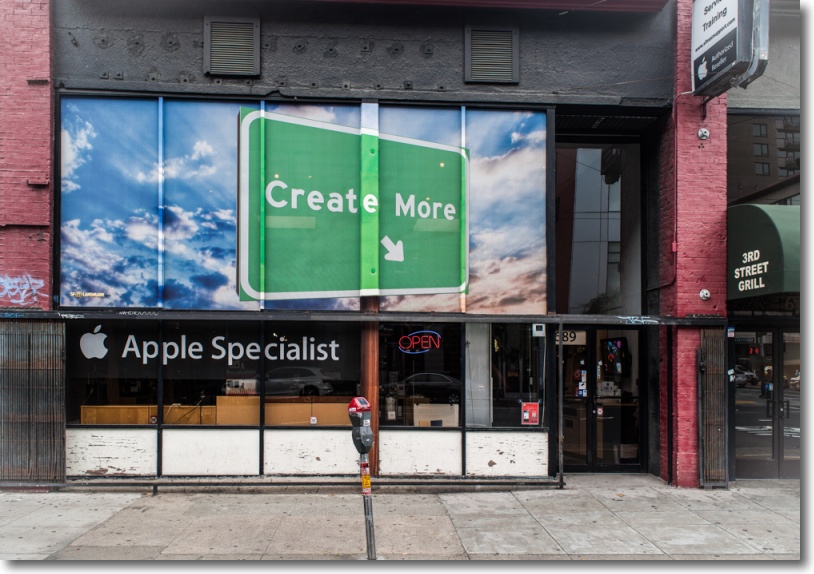
Oh! well, Apple put my son thorough Harvard, class of 2025. His descendants will have to look elsewhere. The latest rumors have Apple providing a low margin, overpriced TV set (will not move the needle on earnings) or ‘wearable computing’ – please. Forget about what is really called for. An Apple Camera.

Meanwhile, here, in a couple of words, is my advice to Mr. Cook’s deaf ears:

Disclosure: No AAPL positions.