Monthly Archives: April 2026

Helicon focus stacking with electronic flash and the Leica SL2-S

Better modeling.

For an index of all Leica-related articles click here.

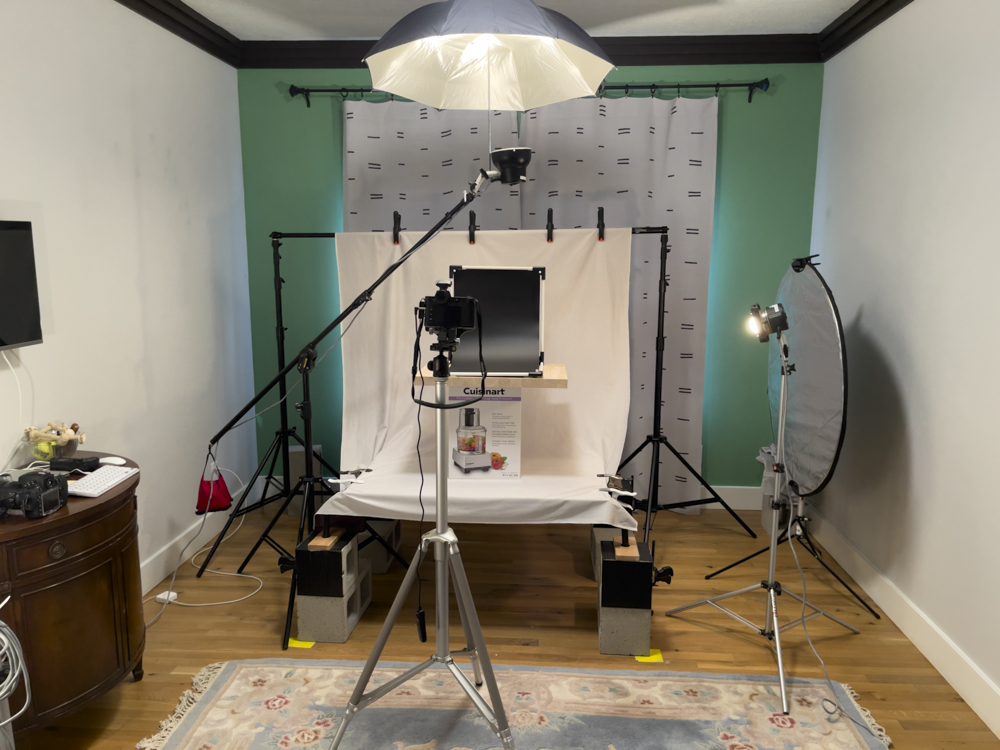
While the ring flash light works well it’s totally shadowless, meaning there is no modeling of depth as there are no shadows. Desirous of adding these, I experimented on a macro of a beautiful portabella mushroom using my ancient remote flash trigger on the Leica SL2-S. The transmitter goes in the hot shoe and the receiver plugs into my Novatron studio strobe power pack. Despite dire warnings in the SL2-S’s instruction manual that use of non-approved triggers might damage the camera I had at it, knowing that the transmitter works faultlessly with my Nikon D800, so I guessed all would be all right with the SL2-S. And it is.

I first wrote about this trigger in 2006 when using a Canon 5D and you can click here for details. Doubtless similar devices remain available inexpensively on eBay. The transmitter in the camera’s hot shoe is used wirelessly and the SL2-S must be set to use the mechanical shutter. As the Instruction Manual confirms, flash will not be triggered in electronic shutter mode owing to the possibility of rolling shutter banding effects.

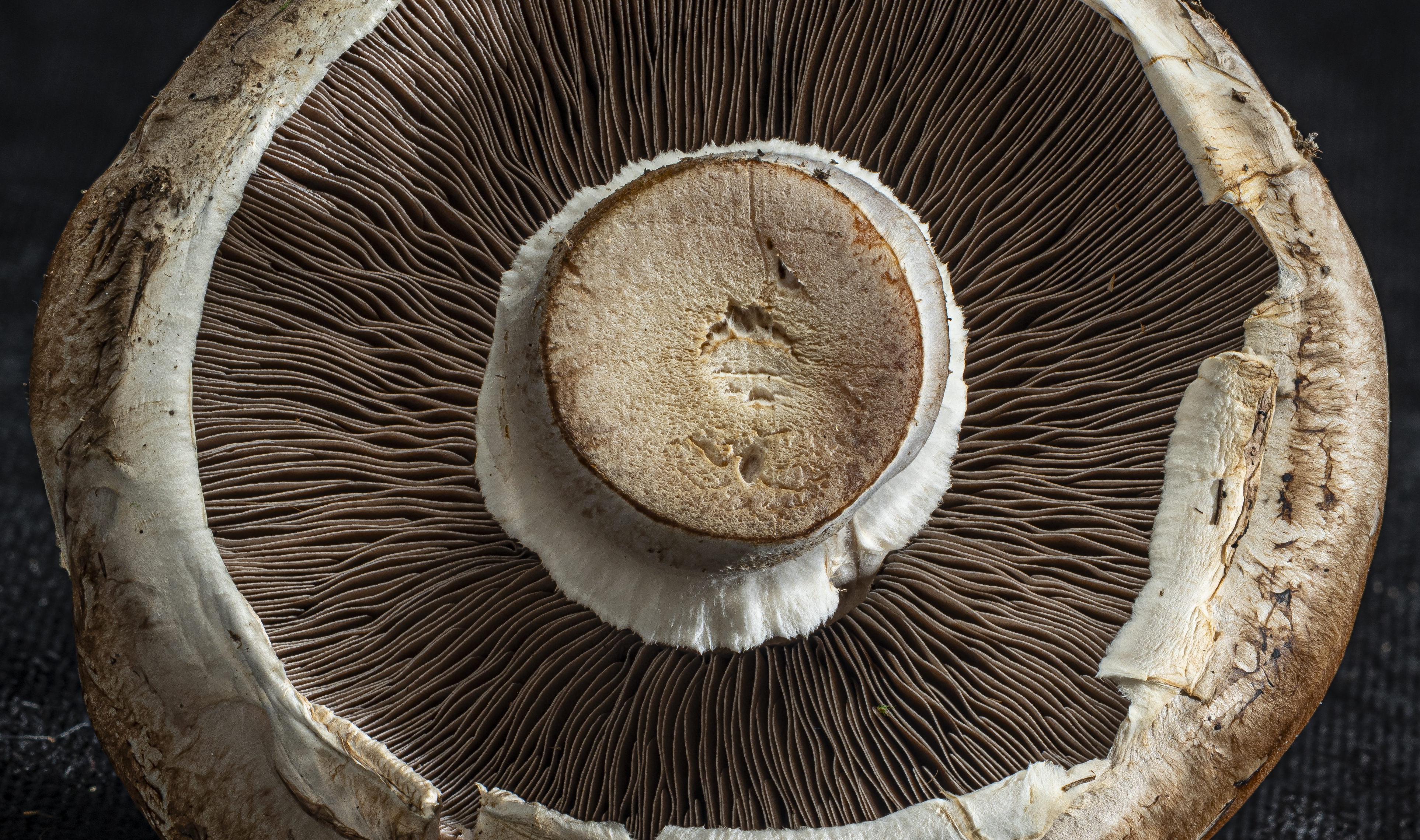
For the image below I wanted to get the base of the mushroom’s stem sharp, with the focus range extending all the way to the beautiful folds. This necessitates no fewer than 77 exposures, the full travel length of the lower rack on the Leitz Focusing Bellows II. Helicon Focus Pro handled the DNG files with aplomb, rendering the stacked result in no time. Maybe 30 seconds. I’m using an Apple Mini M4 in base configuration. The resulting stacked file in DNG format came in at an economical 64mB. And boy, is it a cracker:
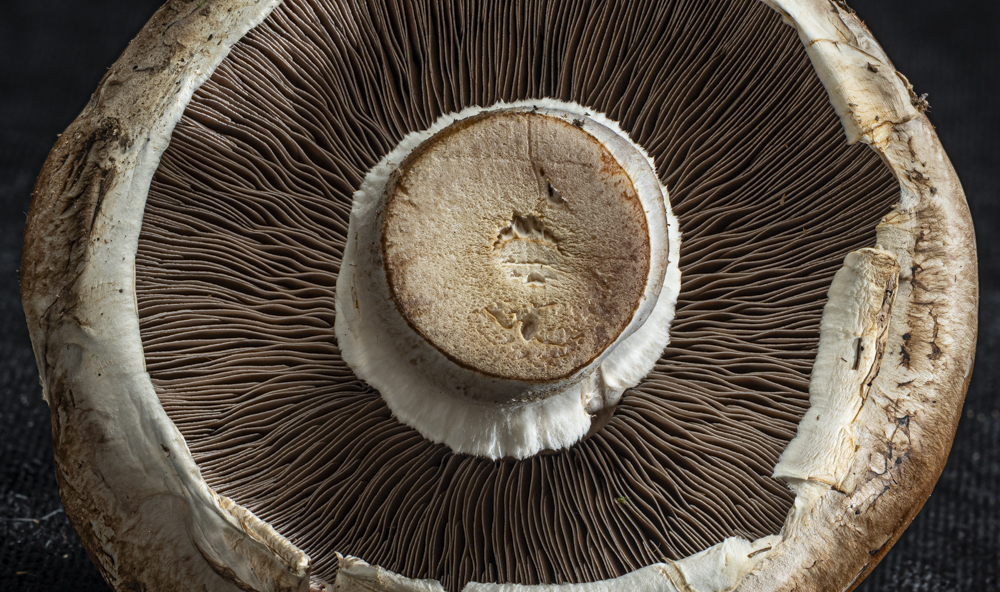


Click the image for a larger version.

The 135mm Elmar was set to f/16, the three Novatron strobes at half-power, handling the 77 exposures, one every 2 seconds, with aplomb. I confess I closed my eyes to avoid the worst of all that flashing. Probably the first time I have taken a photograph with my eyes closed.

Leica SL2-S, Leitz Focusing Bellows II, Leitz 135mm Elmar lens head, three Novatron studio strobes, shutter set at 1/125 second. ISO 400.
Kiwi fruit

Edible art.

For an index of all Leica-related articles click here.


Click the image for a larger version.

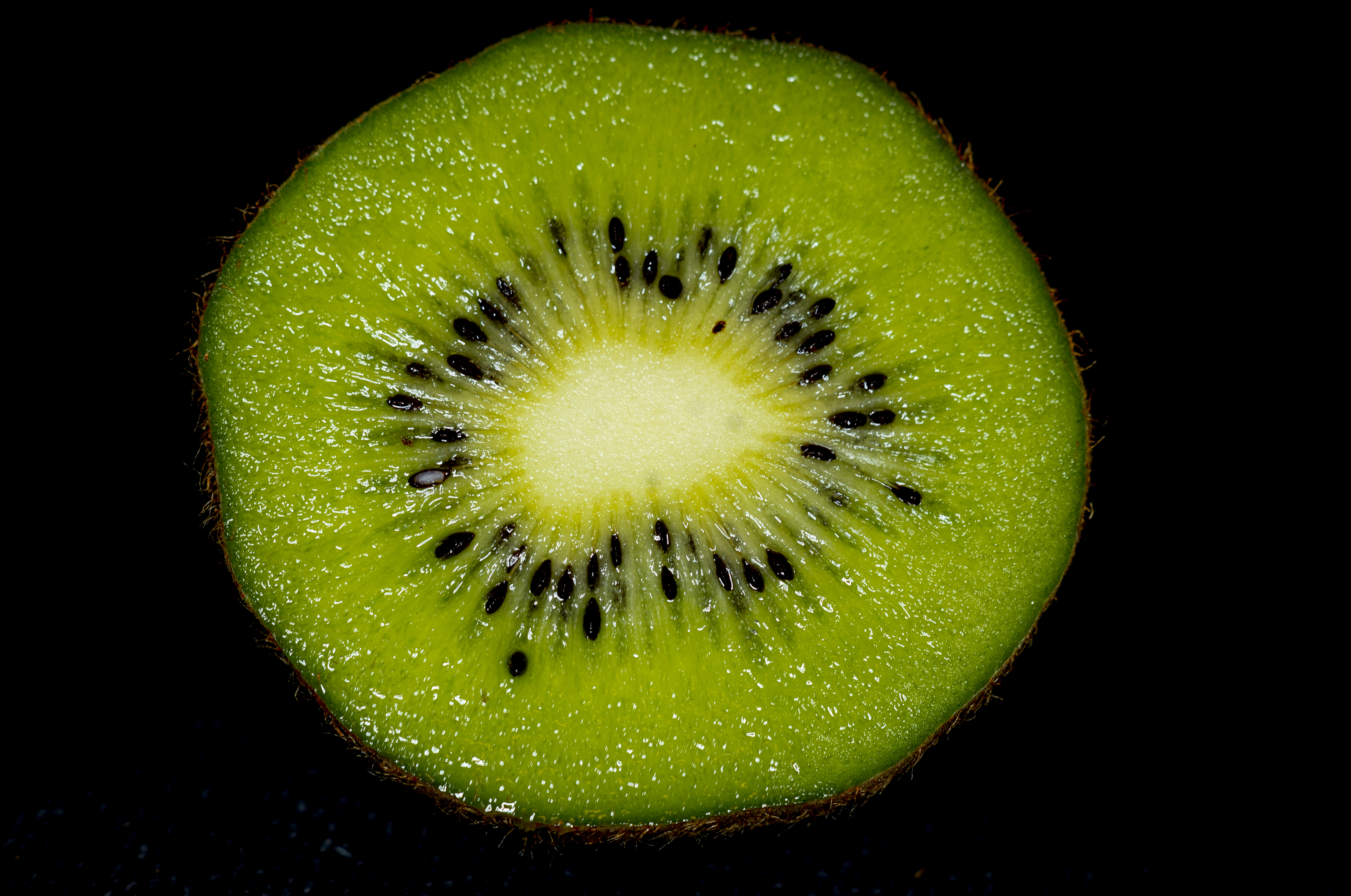
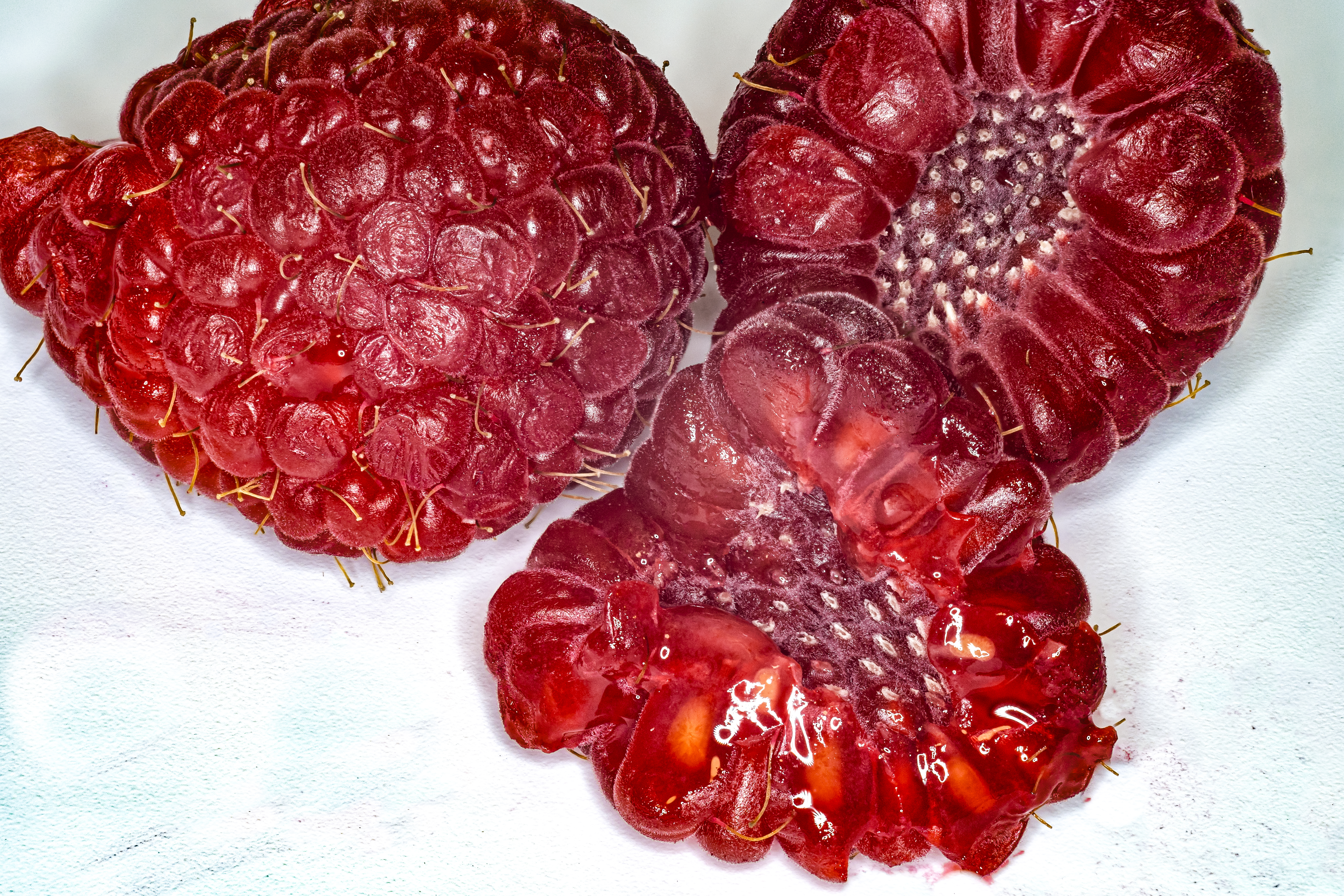
Slice a Kiwi pole-to-pole and it’s pretty mundane inside. But cut it across the equator and magic happens.

Leica SL2-S, Leitz Focusing Bellows II, 135mm Elmar lens head, LED ring light. 5 stacked selective focus images combined in Helicon Focus. It’s a flat subject so few images are required. ISO 400.

An inexpensive wired remote for the Leica SL series

You can’t beat the price.

For an index of all Leica-related articles click here.

Cost:

You can be profligate and blow $215 for a wired Leica remote. Or you can be frugal, and spend $6 on one of these. You will also need a 2.5mm to 3.5mm adapter, another $7. While Pholsy makes versions with several different connectors, the 3.5mm jack does not appear to be available, hence the need for the adapter.


Connected to the SL2-S.

There’s also a Bulb option – you press the button and, while depressed, slide it forward. With the camera set to ‘B’ the shutter remains open until this move is reversed. No battery is required.

Wireless option:

If you require wireless operation then something like this, which works with Panasonic cameras, will probably do the trick, though I have not tried it. Again the 2.5mm to 3.5mm adapter will be required for the SL2-S body and likely with any SL series mirrorless Leica. A couple of reviews suggest it works fine.

In use:

I’m using this for tripod macro work with my Leica macro kit where smaller apertures dictate slow shutter speeds, given the modest light output of my LED ring light. While the SL2-S’s IBIS is turned on it’s never good to tempt fate and a remote release takes out any risk of camera shake, along with use of the vibrationless electronic shutter option. (Menu->Page 2->Shutter Type->Electronic). As the Electronic Shutter is silent I also turn on the Acoustic Signal (Menu->Page 6->Camera Settings->Acoustic Signal->Electronic Shutter Sound->On). I set the Acoustic Signal volume to High as I can barely hear it on Low, a problem I attribute to anno domini. The aural confirmation assures you that you have snapped the photo.

Focus stacking:

In practice this makes for very easy use with focus stacking. You determine the range of movement of the Focusing Bellows and then, starting at one end of the range snap a picture, move the bellows a tiny bit, snap another, and so on until the other end of the desired range of sharpness is reached. The calibrated rail on the rack of the Bellows makes this easy. I find that taking, say, two dozen images this way takes but a few seconds, whereafter the SD card is off to the card reader for passing the images through Helicon Focus.

Leica Fotos – pass:
One alternative idea is to use the remote trigger in the Leica Fotos app on your iPhone, but as the likelihood of that app connecting with the camera is as likely as my emigrating to North Korea, I pass on that approach.

The result:


Click the image for a larger version.
44 images stacked in Helicon Focus.
Leica SL2-S, Leitz Bellows II, 135mm Elmar lens head at f/8,
LED ring light.

Manual focus, obviously, and ISO fixed at 400. The shutter speed was 1/3 second. The camera’s distance from the subject was varied across the whole range of the lower focus rack on the Focusing Bellows II. f/8 is the sweet spot of the 135mm Elmar, now 66 years old, for macro work, but even at the full aperture of f/4 the lens is tack sharp. Modern digital sensors make these old optics sing. Adobe RAW (DNG to Leica fans) was used in both the camera, Lightroom Classic and Helicon Focus, with only the final result output to JPG.

This makes for a simply gorgeous large print:


13″ x 19″ print, but wall sized would be just as good.