A sad anniversary

On its 250th anniversary this is not the nation I once knew.


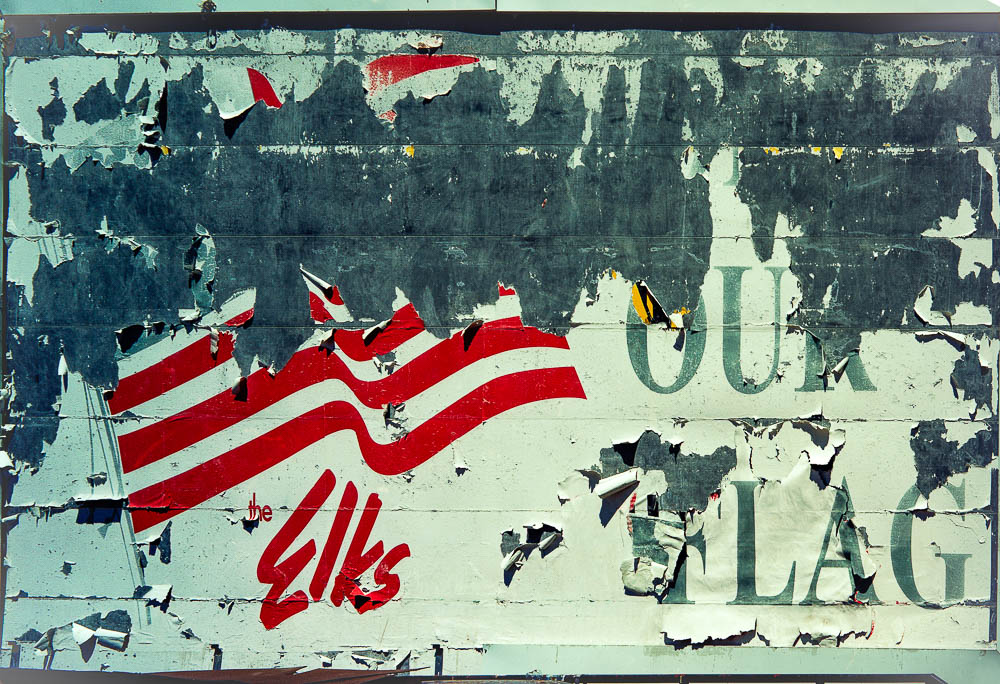
Our flag. Crown Graphic 4×5, 135mm Xenar, Kodak film.

I left the failed nation of England for America 49 years ago, full of anticipation and hope for this new adventure.

Today, the America I so proudly joined in 1977 is unrecognizable.

– Where there was love now there is hate.
– Where there was tolerance now there is bigotry.
– Where minds were open now they are closed.
– Where there was adulation of education now there is denigration.
– Where there was a Great Society now every man is out for himself.
– Where there was a decent leader now there is a common criminal.
– Where immigrants were welcomed with open arms now there is ICE.
– Where children could look forward to a better future than their parents now they cannot.
– Where there was peace now there is endless war.
– Where there was a thrust for equality now we have the greatest inequality since the Gilded Age.

I weep for my adopted country.

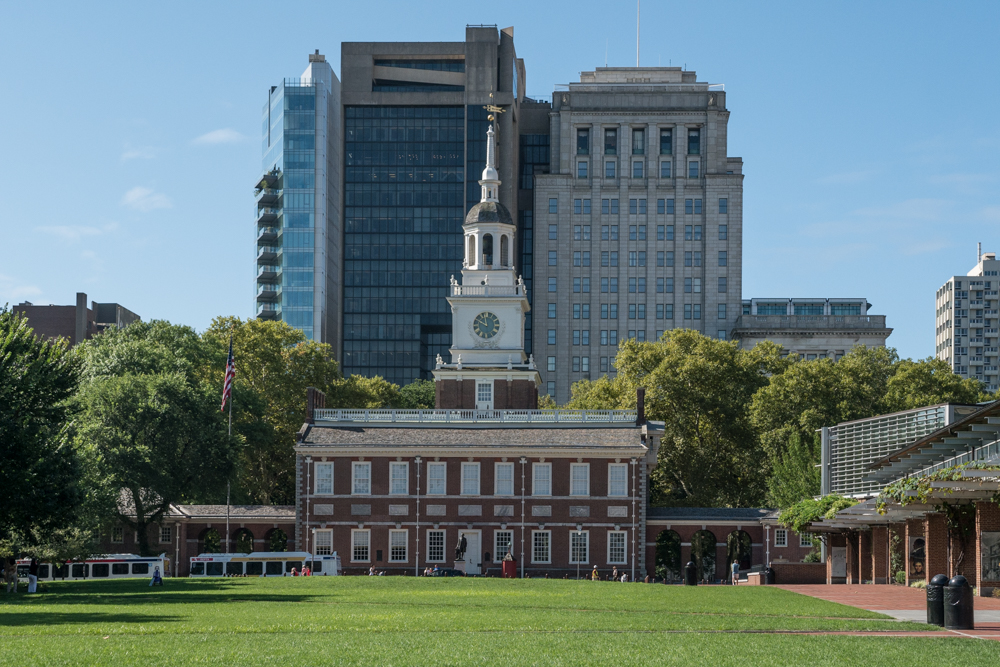
Independence Hall

In Philadelphia.

Snaps from a trip in 2019.


Independence Hall where both the Declaration of Independence and the Constitution were signed.


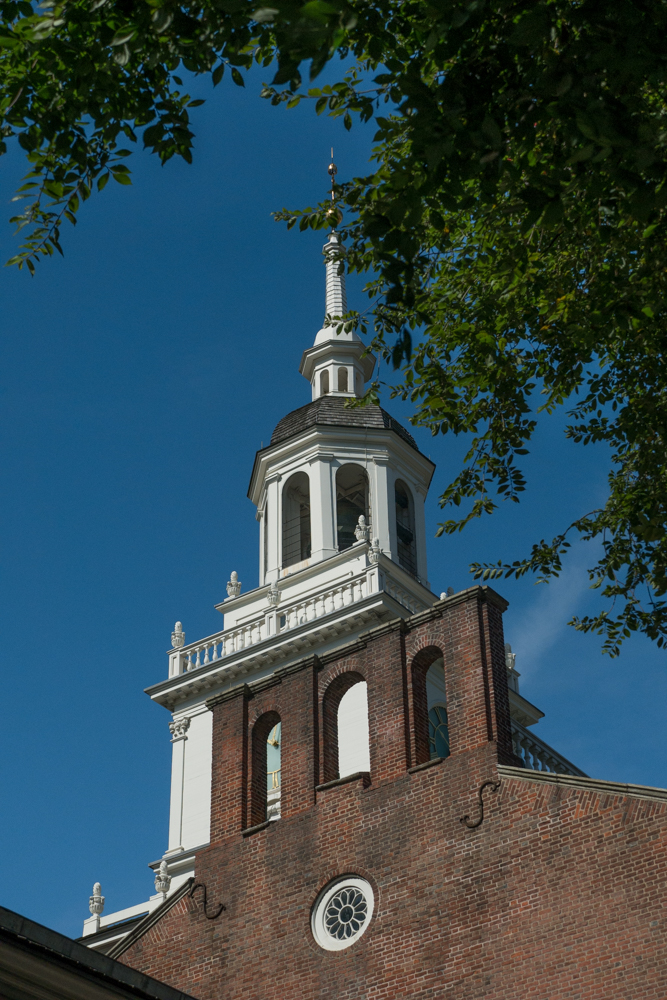
Independence Hall is very well maintained – here’s the clock tower.


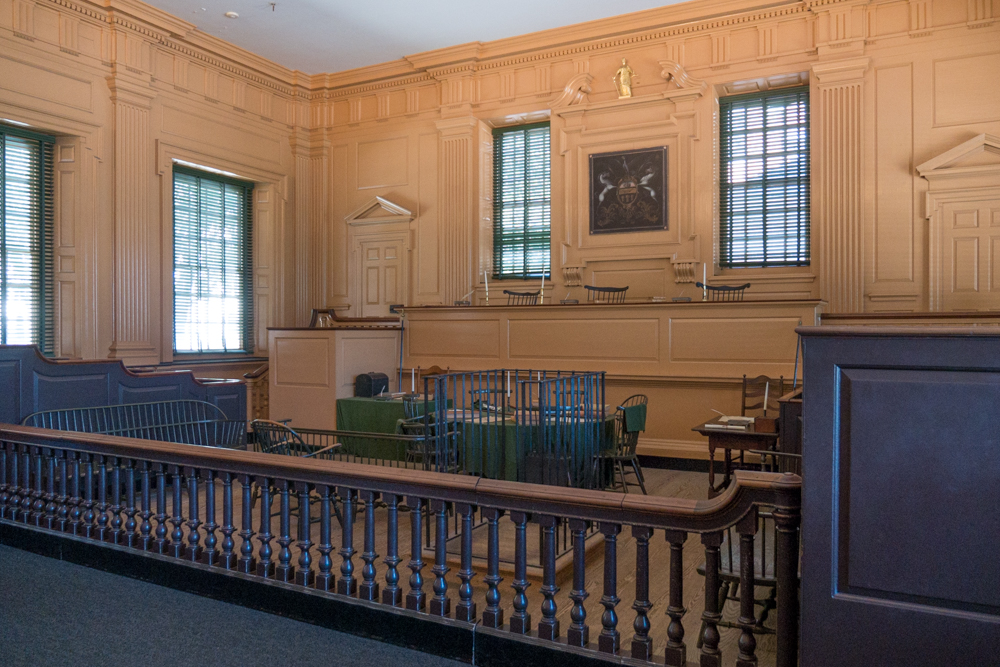
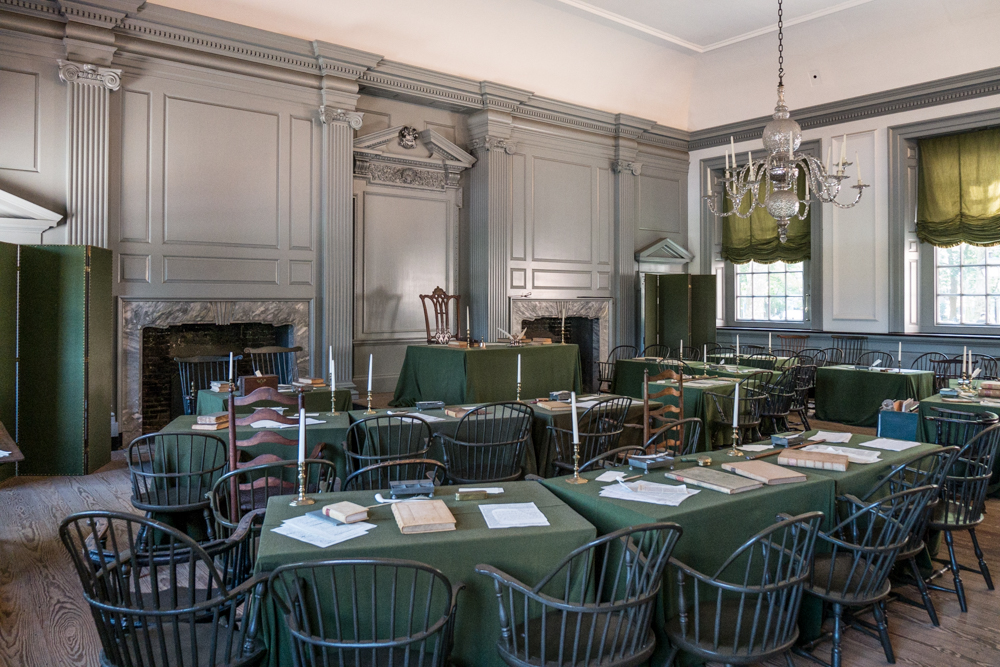
The Court Room inside the Hall.


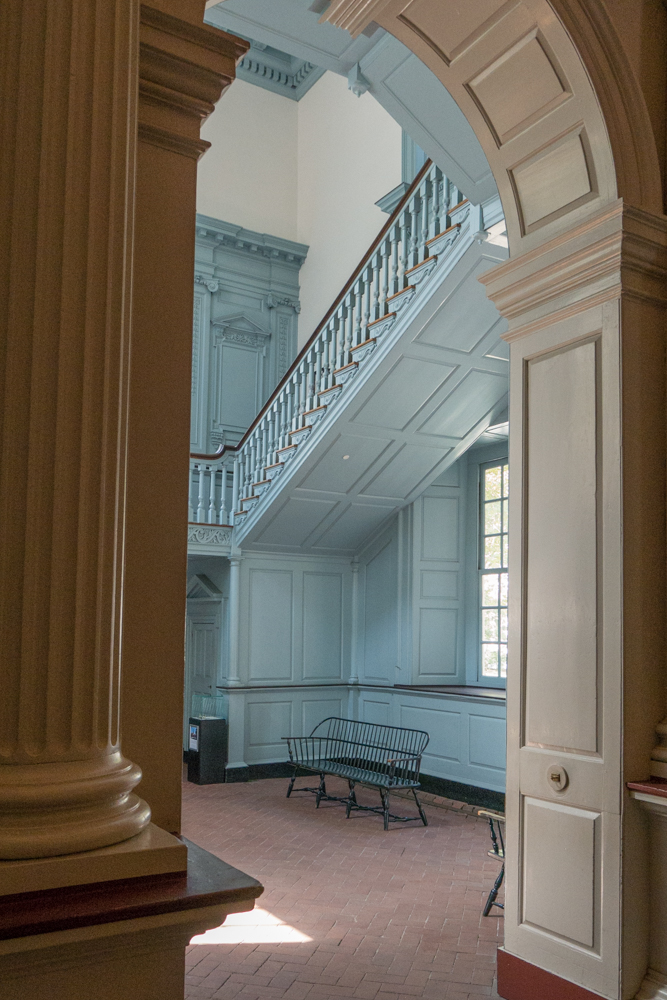
The architecture has withstood time well.


The Hall room where the Declaration of Independence was signed on July 4, 1776.


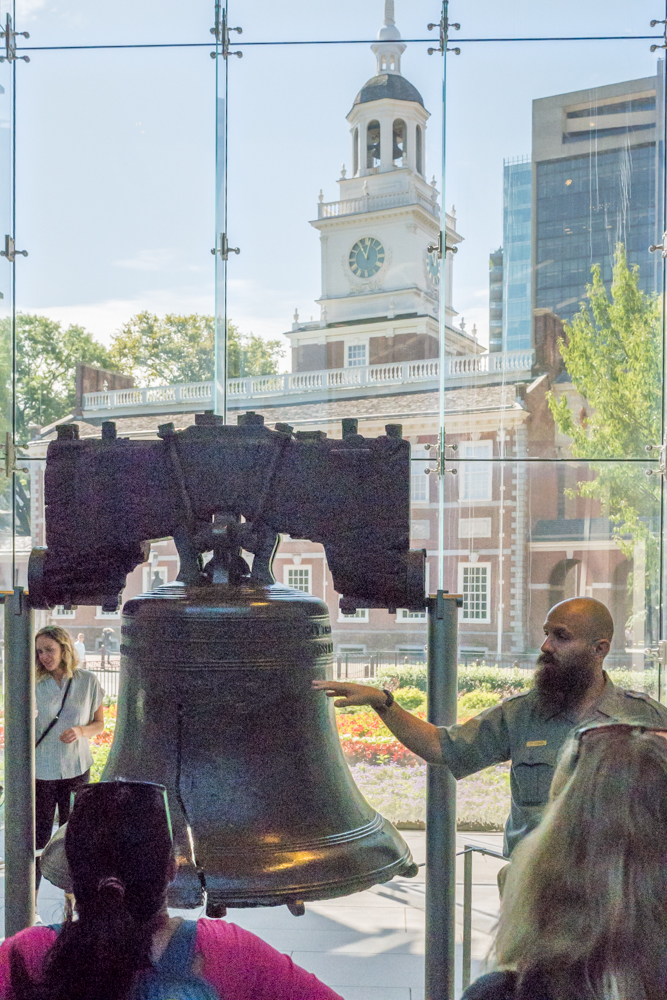
The Liberty Bell, crack and all. Wikipedia has the story of this mess.
Independence Hall is in the background.

All snaps on the Panny GX7 with the 12-35mm pro zoom.

Hanging huge prints

Not a lot of fun.

Having mounted and framed the three 24″ x 36″ prints for my living room it came time to hang them. The post production time for printing, mounting, framing and hanging is a multiple of the time required to take and process the images, but there are no short cuts. Scrupulous cleanliness is dictated as even the smallest particle of grit will destroy the mounted print’s surface and white cotton gloves for handling everything are mandatory, if greasy fingerprints are to be avoided. In other words, the whole process is a royal pain.

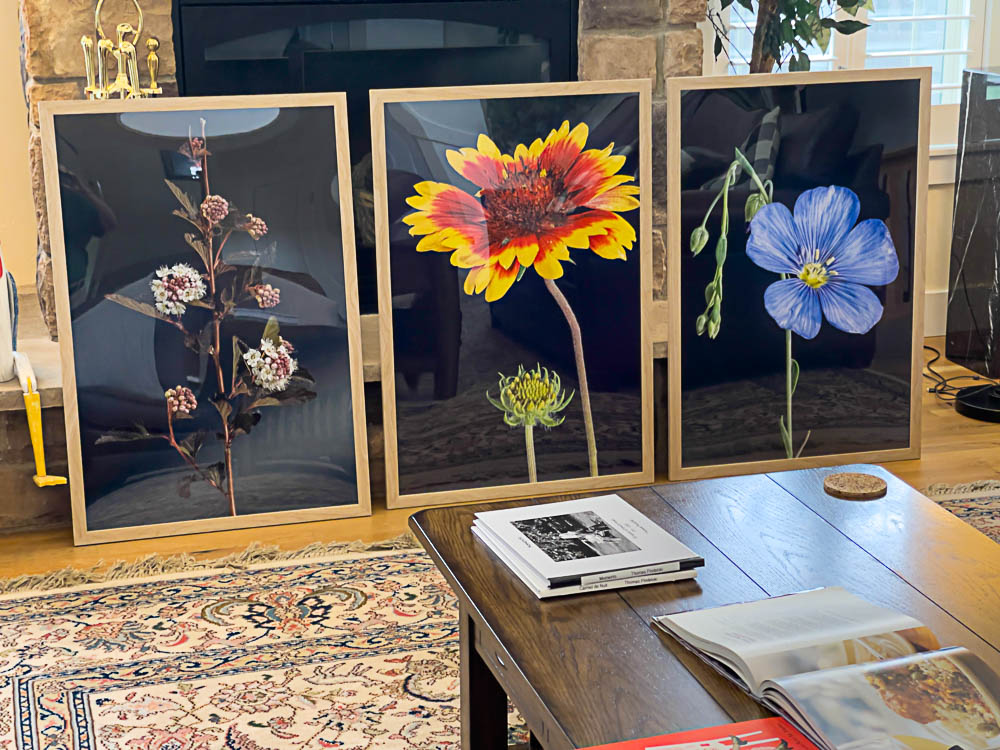
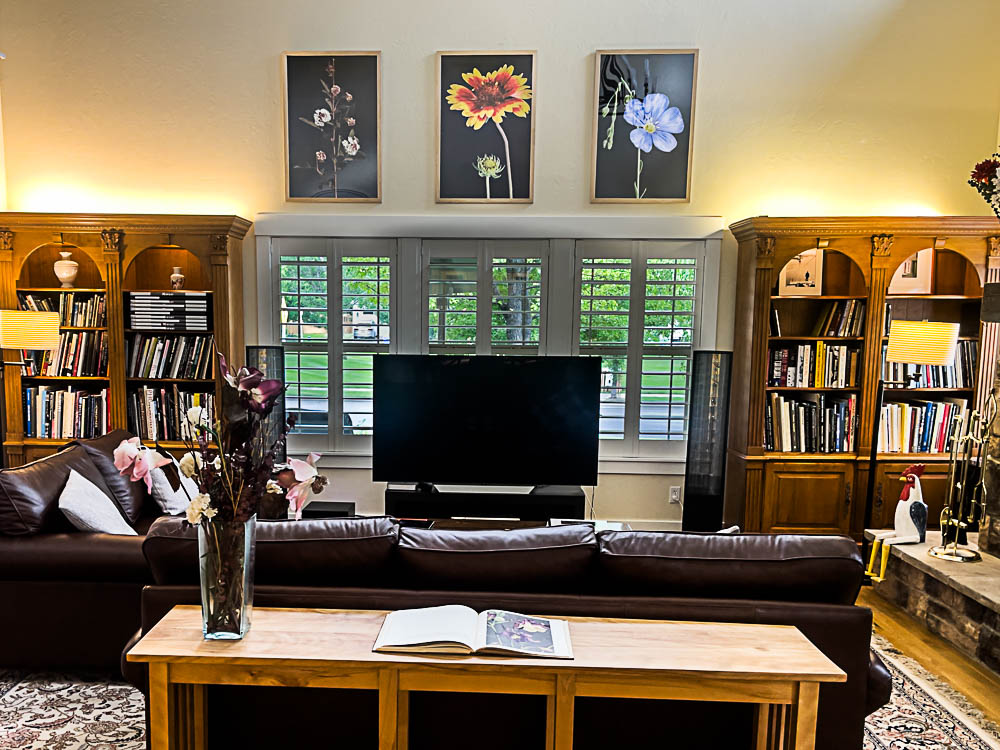
First my son and I debated in which order the prints should be hung. After trying all the variations we decided on this:


Common Ninebark, Common Blanketflower and Flax wildflowers.

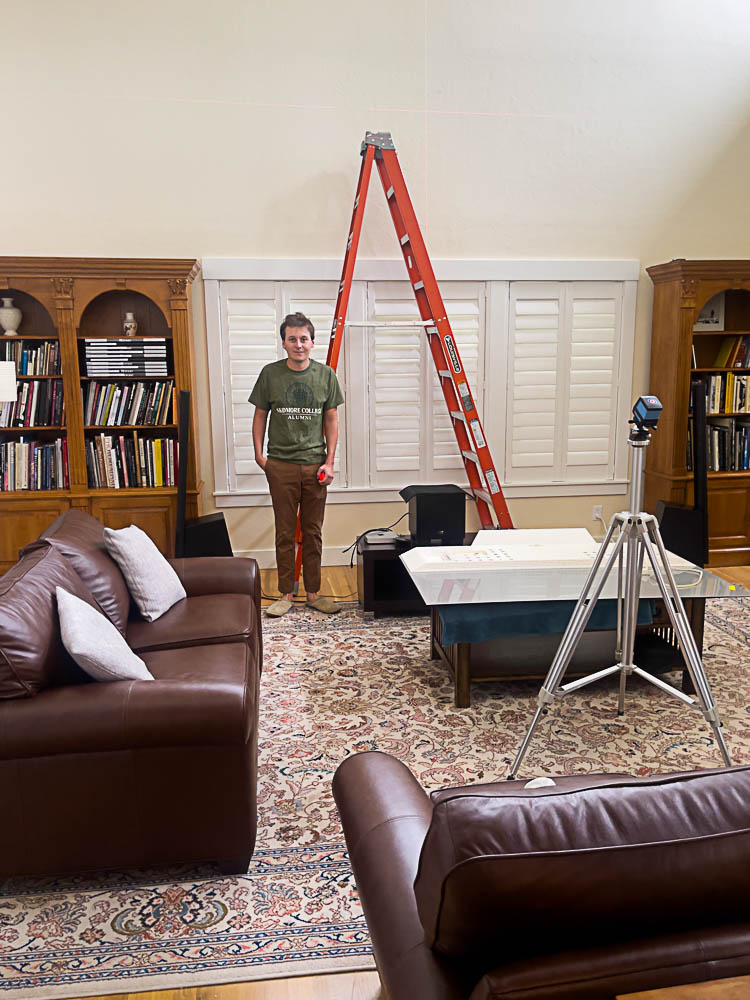
The print location is above three sets of louvered window shutters and we used a self-leveling laser level which projects a pair of 90 degree laser light lines on the wall, making alignment with the center of each pair of shutters a simple matter:


Laser level on the Linhof tripod.
A very tall ladder is involved.

As this location has a 19′ ceiling and we wanted the prints approximately half way up a very tall ladder was called for. Not much fun, I confess.

Here is the result after much struggling with this monster ladder, not to mention moving furniture around to accommodate it.


Common Ninebark, Common Blanketflower and Flax wildflowers.

A lot of work, with much fun finding the wildflowers in my community and photographing them, followed by hours of mirthless, hard labor to complete the project.

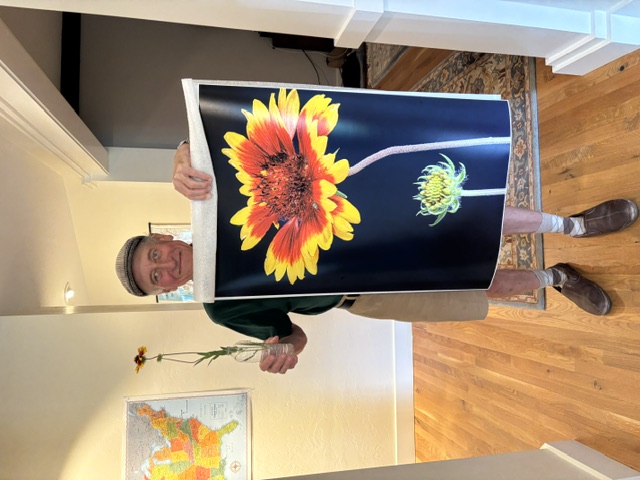
This will convey a sense of the enlargement ratio. I am holding the original of the Common Blanketflower in my right hand:


Holding the original and the print.

Making huge prints revisited

It’s a little easier now.

Over a decade ago I wrote about making a 36″ x 48″ print for wall display. You can read about that here. Now that was a bit of a cheat, really, as I had to assemble the final result from four tiled 18″ x 24″ prints, the largest my HP DJ90 could output. Still the result worked pretty well.

Today the largest my Epson ET8550 printer can manage is 13″ x 19″, and while that’s fine for most purposes, not to mention easy to mount, mat and frame, I recently got a hankering for something larger, and luckily have wall space to accommodate it.

The Postal Annex nearby recently installed two very large printers, a 44″ Canon and a 64″ Hewlett Packard, selling their services to those requiring large banners and posters. The HP, according to the proprietor, can print on vinyl paper for waterproof outdoor displays, but is limited to eight inks, whereas the Canon boasts no fewer than a dozen. Given that making very large prints is a once-a-decade exercise for me ownership of either of these monsters makes no sense (the HP costs a stunning $38,000), so when it came time to make three 24″ x 36″ prints I duly delegated the task and emailed the TIF files – each some 60mb in size – to Postal Annex. Four hours later saw the job completed and I was on my merry way home to attend to mounting and framing tasks, poorer for the modest sum of 3 x $45. Not at all bad, and the print quality, on Canon’s satin photographic paper, is everything one could wish for. Too bad they do not offer a glossy option.

Until mounted these prints are very fragile so the quicker this task is completed the better. I use 24.5″ wide mounting tissue and my Seal Jumbo 160M heated dry mounting press requires six ‘bites’ (90 seconds each @ 170F) to do the task after first tacking the print, tissue, and mount together using a heated tacking iron. The prices for a new press and iron are ridiculous, and given that’s there’s little to go wrong I recommend a search on eBay where the press can be found for $500 and the iron for under $50. Much of the cost of the press is for shipping as this whopper weighs a stout 60lbs. Repair parts for the press, should anything fail, are available. The press is now marketed under the D&K name, though it’s otherwise unchanged,
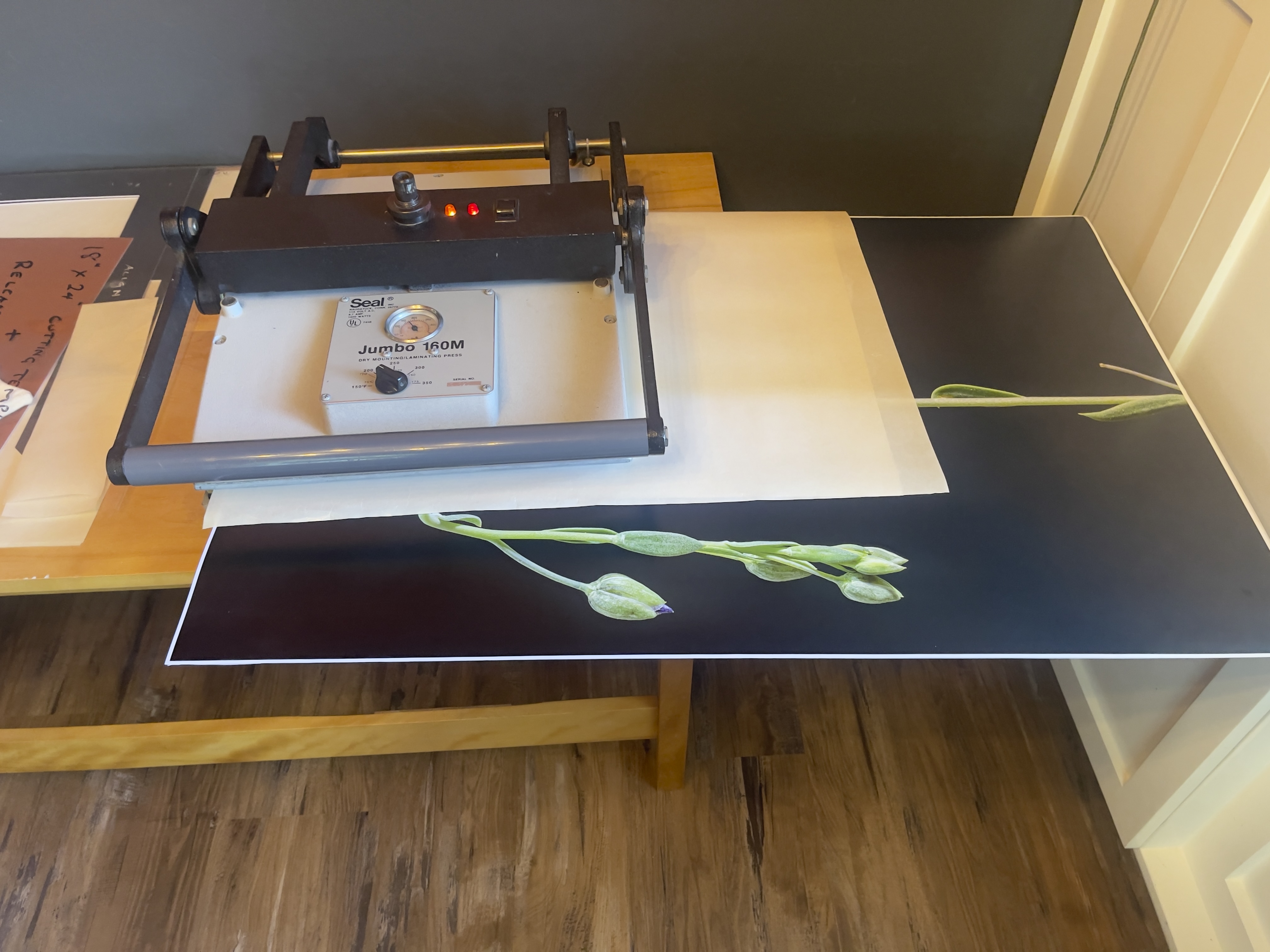


Six passes needed for a 24″ x 36″ print.
Release paper protects the print’s surface.

I opted for plain wooden frames with plexiglass – cheaper than glass and, more importantly, much lighter. Given that hanging the framed prints involves my least favorite pursuit – ladder time – light weight is an issue. The unstained pale wood contrasts nicely with the black backgrounds in my wildflower images. The plexiglass has a protective clear film on both sides and it does well to remember to remove this as it robs definition. Here’s the first of the three framed prints ready for hanging:
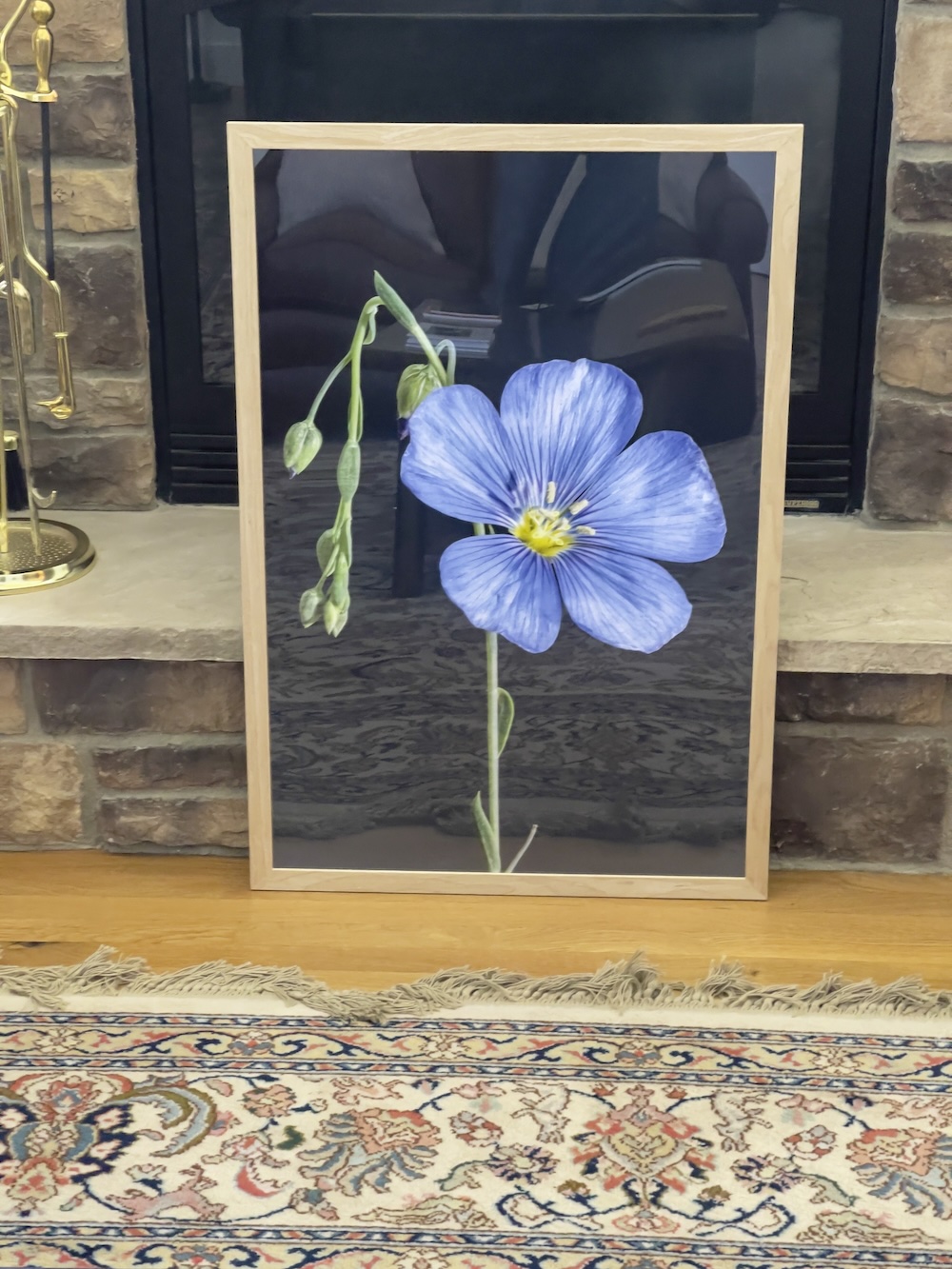


Ready for hanging.

After removing the pressed wood backing board I retain the print in the frame using a framing points driver tool. Owing to the thickness of the mounting board the backing board can no longer be installed, so a couple of hanging hooks is attached to the frame for the hanging wire.
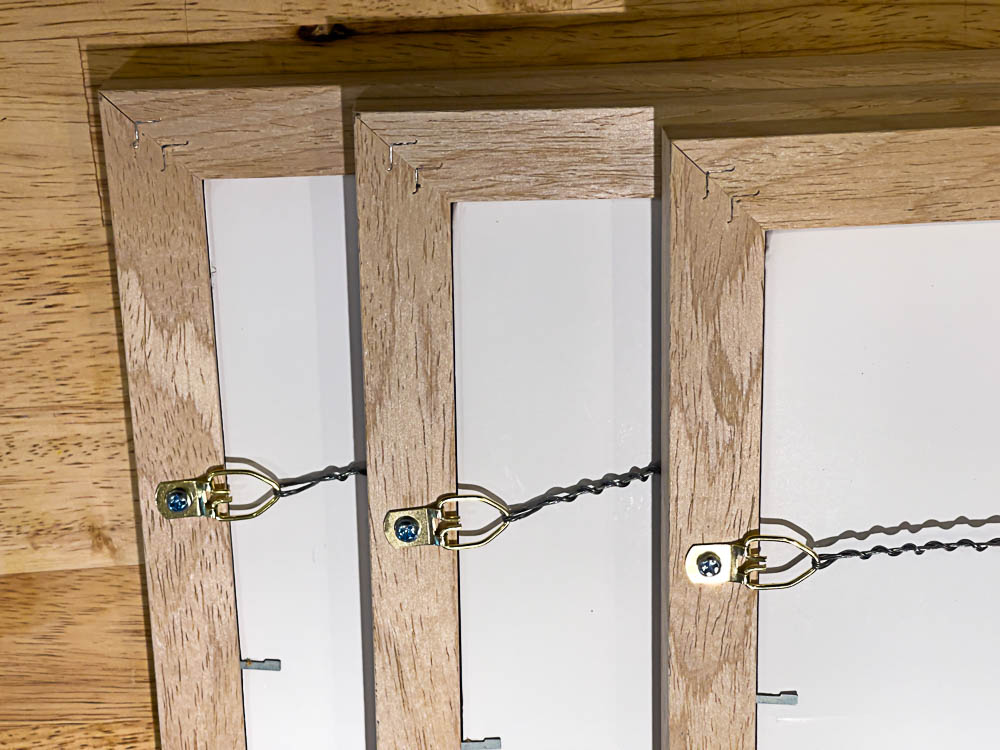


Framing points replace the backing board, which no longer fits.
The hooks and wire came in this kit.

The all in cost of each framed print including printing and all framing materials is a reasonable $102, each.

Now it’s ladder time. Ugh!
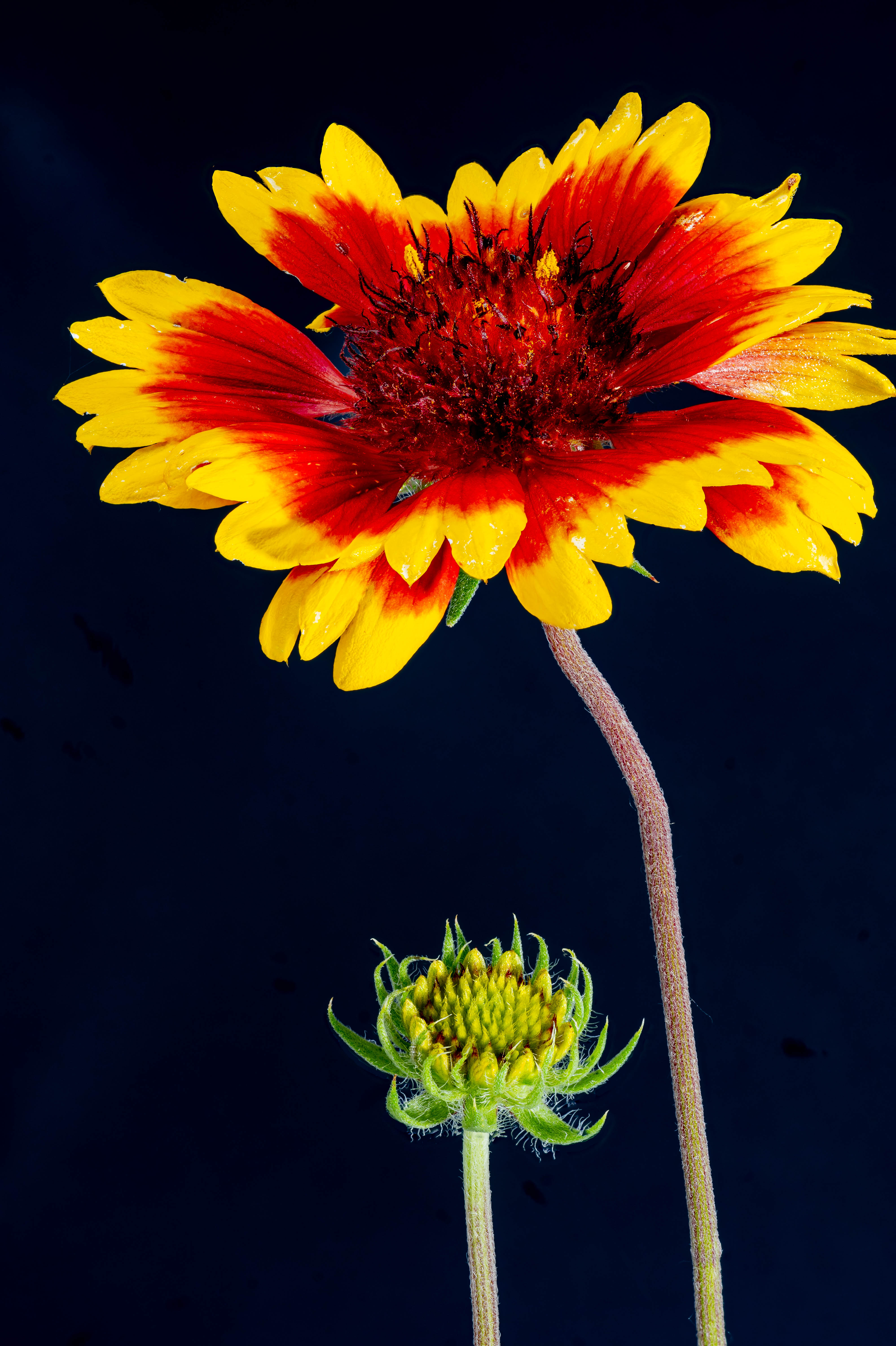
Common Blanketflower

Picked locally.

For an index of all Leica-related articles click here.

This charmingly named flower gets its name from the colorful blankets made by American Indians.


Click the image for a larger version.

Taken with the best macro lens I have, the 135mm El Nikkor. Leica SL2S, Nikon PB4 bellows, 36 images focus stacked. Helicon Focus really struggled with this one owing to the considerable depth, and I had to do quite a bit of retouching to remove ghosting. The long focus rack of the Nikon bellows works well here. That lens cost me just $65 …. no one wants enlarging lenses today, and it’s cheerfuly ‘repurposed’ here. It delivers an almost etched rendering. Just sent it out for a 24″ x 36″ print on the 44″ 12-ink Canon printer at the local Postal Annex.