Brought to you from bankrupt California, USA


Brought to you from bankrupt California, USA
Catch that thief!
This seems like a compelling application for anyone with a costly MacBook laptop – it’s named Undercover and for $49 a year provides a decent chance of not just catching the thief of your laptop but also, probably more importantly, recovering your laptop and all the data resident thereon.
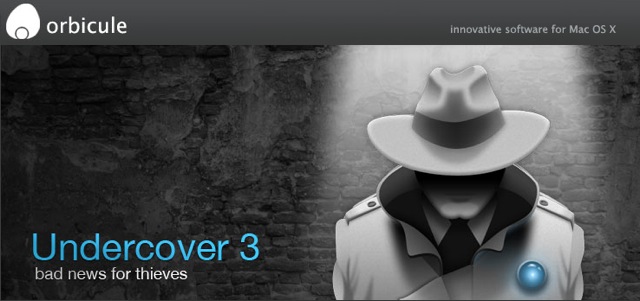
It’s a software service which is loaded on your MacBook laptop which, if stolen, transmits screenshots of what the thief is doing and sends his picture to law enforcement using the built in camera. All Macs except the Mini now have a built in iSight camera. The thief’s IP address is also recorded when he logs in to the Internet and allows the cops to locate him easily.
The next best thing to loading your laptop with some C4 for remote detonation.
Of course I am fighting the urge to point out that this does not work on Windows laptops for a reason, but I won’t go there. Just take a look at Microsoft’s latest exercise in incredibly poor taste and you will see why no one should care if a Windows laptop is pinched. Purportedly an advertisement for Internet Explorer, this really does confirm that MSFT needs to address changes at the CEO level.
Full disclosure: I never let my disgust with MSFT’s products interfere with investment policy and I do own their 6/01/2019 4.2% corporate bonds. Even Ballmer can’t screw up $22bn of annual free cash flow to service a few billion in senior secured debt interest. The bonds were issued to finance the idiotically overpriced acquisition of Yahoo at $30bn which, of course, failed, much to the relief of MSFT’s shareholders. Yahoo’s market value today is now half of that bid and falling. Still, I suppose those same shareholders can take comfort in the knowledge that there is (or rather, was) a dumber CEO than Ballmer – Jerry Yang at Yahoo.
Fine work
A couple of readers were kind enough to comment on yesterday’s piece about the Reader application put out by the New York Times and pointed me to two NYT photoblogs in the process.
One is Lens and the other is 1 in 8 million. Both are well worth a visit though the latter does take a while to load owing to the inclusion of sound and video. That said, the presentation of both is superb and the use of short introductory sound clips in the ‘1 in 8 million’ blog is inspired, doing just enough to pique your interest.
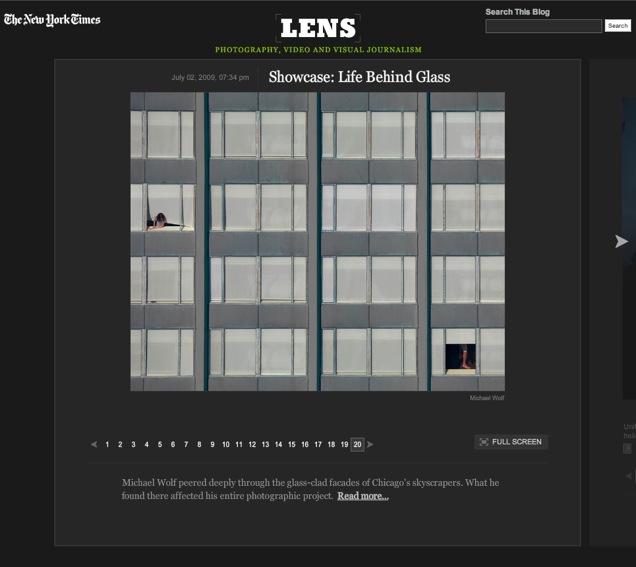
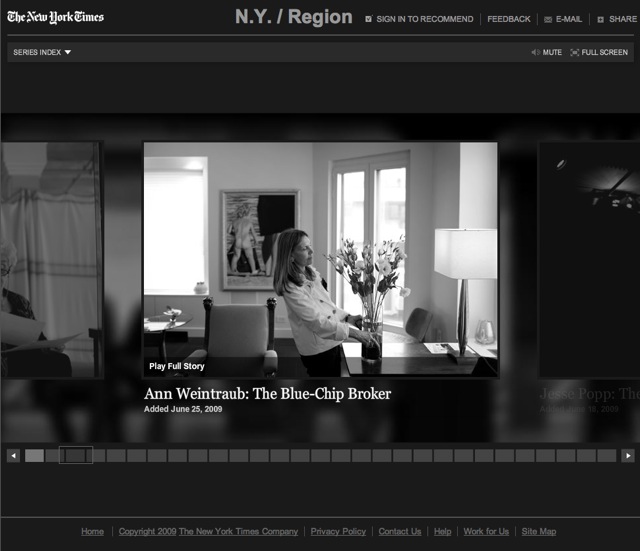
For a truly splendid profile of an exceptional man, take a look at this piece on Harry Reininger by Sarah Kramer. It’s the scarcity of such people in New York that contributed to my departure from that modern Gomorrah in 1987.
Nice work, NYT!
By the way, it is incorrect to ascribe the demise of newsprint to financial engineering, as one commentator on yesterday’s column states. Rather, the causes are:
Financial engineering does not account for the drop in circulation. I am no defender of Wall Street, but it is hardly to blame for the above.
A master of color
This picture by Ernst Haas (1921-1986) is the earliest ‘art’ photograph in color which I recall, having probably seen it in my early teens.
Talk of starting at the top!
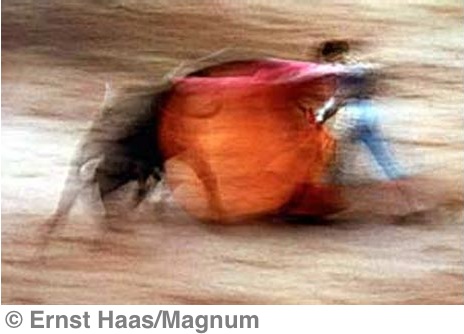
While abstraction pervades his work, Haas never abstracts just for the sake of doing so; rather, the context is always clear, the vision insightful and the feel warm and sympathetic.
Check out more of his work in the book Ernst Haas – Color Photography – hard to get, expensive and worth it.
As good as they get
Edwin Smith (1912-71) was a photographer of the British heritage. That sounds pretty dry, but once you have seen the work of this architect-painter-photographer, you realize that he really is as good as they get.

His wonderful vision, perfect technique and aesthetic sensibilities are perfectly displayed in this book, published by Merrell and the Royal Institute of British Architects, with monochrome reproductions of the very highest quality.
If high aesthetic sense is your thing, executed at an incomparable level of excellence, this book is for you.