Category Archives: Photographers

George Hoyningen-Huene

Book review

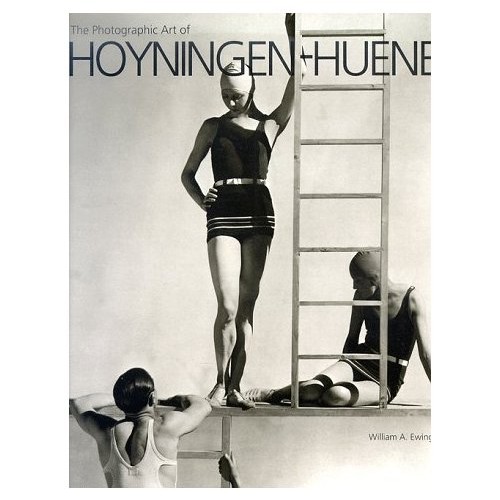
While Cecil Beaton was the ‘go to’ photographer at British Vogue in the 1930s, his counterpart at French Vogue was the aristocratic and temperamental George Hoyningen-Huene. (Cecil was temperamental but, try as he might, no aristocrat).

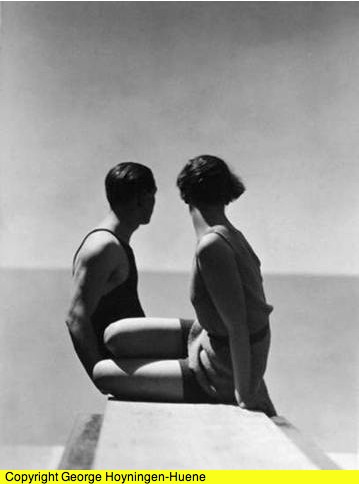
Where Beaton’s tastes tended to the frou-frou, Huene’s were solidly based in Greek classicism, as the wonderful pictures on display here show. His fascination with Greek sculpture and architecture is everywhere to be seen in his photographs, which are marvels of careful composition and lighting. The most reproduced is probably this one from his bathing costume series. The author William Ewing does a great job of explaining exactly how this picture was made (you will be amazed and I’m not telling!) and when you realize that the male model is none other than Huene’s long time companion and ace pupil Horst P. Horst, well, it’s icing on the cake.

Published some ten years ago in paperback, this book remains available from Amazon. When I tell you that all of Huene’s negatives went up in a house fire and the ones here are reproduced from prints, your heart may sink. No need. The quality of the reproductions is fine, including some dazzling color plates – I’m guessing on early Kodachrome – and the book is an absolute essential for anyone interested in the development of twentieth century photography (I almost wrote ‘fashion photography’ but Huene’s work is far more than that).

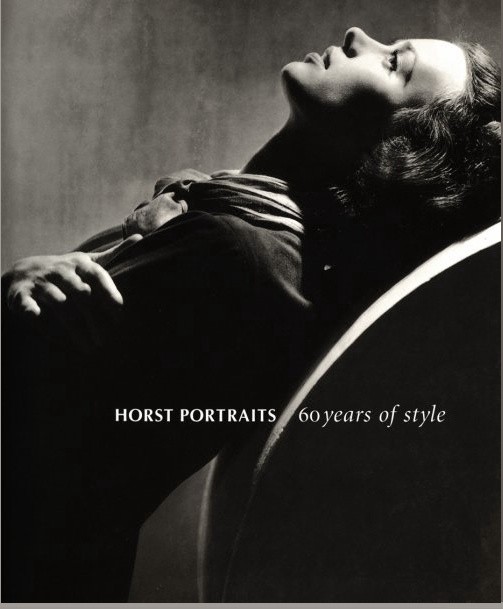
As for the equally wonderful work of Horst, well, more of him later.

Huene was also a major influence on the Vogue photographer John Rawlings, whom you can read more about here.

Ilse Bing

Book review

A photographer whose vision matches that of the best, but with none of their technical limitations, Ilse Bing deserves the renaissance her work is currently enjoying. Like Cartier-Bresson she did her best work in the thirties and, like him, insisted on using the small negative Leica, even using it exclusively in her studio advertising work.

From the cover photo to the colophon, this is one splendid display of the work of a great pioneering photographer. Like Kertesz and Cartier-Bresson, there is the wonder at all things new, the joy of discovering the sheer liberating qualities of a portable, small and fast snapshot camera. Just check the picture of Greta Garbo – I’m not telling the story here! You need this book.

Everything about this book, available from Amazon, is special. Whether the great photography, the impeccable reproductions, the erudite and well written essay by Larisa Dryansky – well, the whole production exudes quality, style and perfection. The quality Bing managed to extract from the poor monochrome films of the time has to be seen to be believed. I have not encountered so exciting a book of photography in ages, and it has replaced my well worn copy of Cartier-Bressons’s ‘The Man, the Image and the World’ as the ‘book on display’ in the ancestral home.

Cartier-Bresson: Point-and-shoot and Hank Carter

Good enough for HC-B

Any book comprised solely of snaps of one great photographer by another is bound to fall into the ‘Silly’ section of a library. Such is the case with ‘Faceless’, a slim book published in 2000 with 36 snaps of Henri Cartier-Bresson taken by David Douglas Duncan. It went out of print almost as fast as it hit the stores. I bought it solely as a memento of HC-B and found a little more to it than at first meets the eye.

Cartier-Bresson may not have taken a memorable snap in twenty years, but he still messed about with cameras. So, as a new generation of Leica film fetishists reluctantly migrates to Leica rangefinder digital in the underwhelming M8 ($5k, lens extra, largely useless viewfinder, fragile optical rangefinder, personalized engraving extra, gold plating on demand if you are a Saudi) these poor boobs (OK, not so poor) tell themselves that HC-B used an M rangefinder for most of his years, so it has to work for them. Snag is, as the above shows, ol’ Hank Carter (as his mates at Magnum knew him), was no longer an M Man. Rather, he had switched to a point-and-shoot Minilux which was emblazoned with the Leica logo but came from points farther east.

So while the M8 set keeps telling itself that its deeply flawed camera (IR problems, execrable quality control, largely useless viewfinder if you use wide angle lenses, manual focus, noisy shutter, no assurance that the poorly capitalized manufacturer will survive the next economic downturn, today’s technology in a geriatric body, ridiculous price for what you get) is just the sort of thing HC-B would use today, the old man had finally got what he always wanted – meaning auto-everything, fixed focal length lens and near silent shutter, allowing all the photographer’s skills to be directed at the subject, not the gear. Plus, you can stick it in your pocket; ever tried that with an M Leica?

No matter; before long someone will come out with a like version with a decent digital sensor; essentially a throwaway camera whose very disposability will make it a better tool. After all, who is going to take risks with a camera like the M8 which represents several months disposable income for most, with the occasional fitness for purpose afforded by a street snapper design? And maybe that digital maker can come out with two versions – one with a fixed wide and one with a modest long-focus lens. And no shutter lag. Put me down for two, and keep the change from not getting an M8 for the gas pump. We’re going to need it.

Beaton in the Sixties

Book review

For an index of all my book reviews click here.

Taken in moderation, a sip here, a nibble there, these sixties diaries of Cecil Beaton are a blast to read. A sort of cross between the National Enquirer and the Tatler. Indiscreet, vicious, bitchy, funny, warm spirited, mean, generous, spiteful, the full panoply of human emotions, both good and base, is on parade for all to see here. And Beaton is rarely without his camera, conjuring up some new piece of fluff for all to enjoy.

If you like this sort of thing, and I wouldn’t put it on the recommended reading list without at least some prior exposure to his earlier, less gossipy writing, it’s a fun way to spend an afternoon.

Vision

Hoppé got it right


Carmel, CA. M2, 35mm Asph, Gold 100, processed in Aperture

“The task of the artist is to develop his powers of perfection and sympathy, to bring a new vision of beauty and spiritual strength to a mechanistic age. This cannot be done in a darkroom or laboratory.”

E. O Hoppé, A Hundred Thousand Exposures. Focal Press, 1945.