Category Archives: Photographers

Take 55

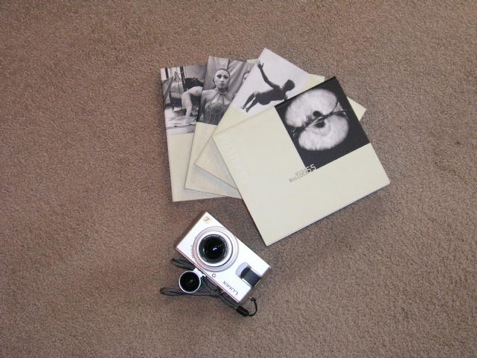
A useful and inexpensive photography book series

There are many photographers whose work I enjoy but not enough to splash out big bucks on a monograph of their work.

Enter the ’55’ series of small paeprbacks published by Pahidon.


Panasonic Lumix LX-1 included for scale

I think that means there are 55 pictures in each 128 page book, as they are printed one every other page, with descriptions on the left. Phaidon says that their goal is to emulate the Penguin paperback pheneomenon of the 1930s which made so much great literature available inexpensively to so many. They want to do the same for photography. A laudable goal.

These are easily obtainable remaindered from on-line booksellers. I generally pay inder $4 (under $4!) for each. While the pages are small, the quality of printing is high and it’s an economical way of finding out if you want to learn more of an individual’s work.

Phaidon continues to list a dozen or so on what has to be one of the worst designed web sites of all time, and you can do better for less by simply going to Powell’s Books.

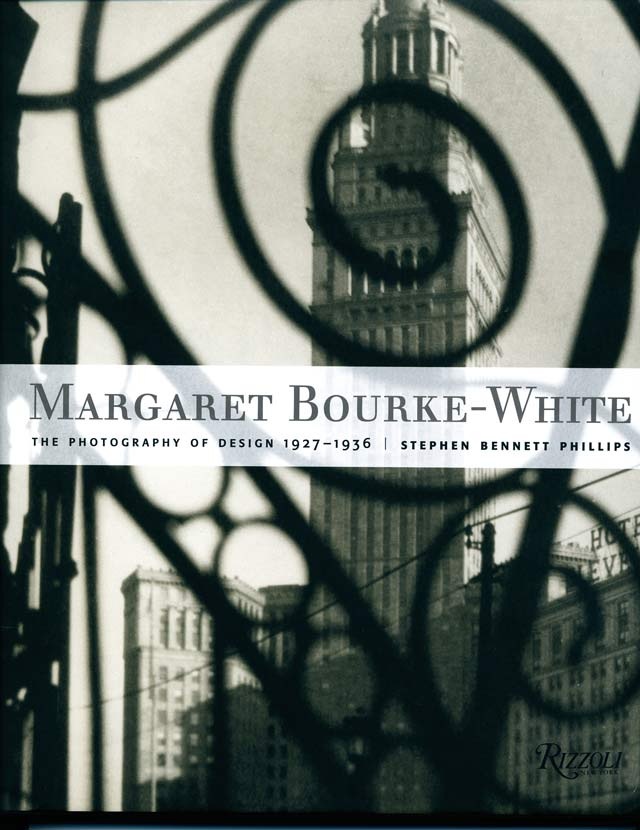
Margaret Bourke-White – early work

A great woman photographer in a man’s world.

She was beautiful, well educated and had a strong sense of design. That Margaret Bourke-White (1904-1971) photographed the first cover of Fortune magazine in 1930 is well known. It is no less surprising a fact today, when one considers the extent to which men dominated journalistic photography at the time. Indeed, just three years earlier, Bourke-White had to lobby for weeks to be allowed into the Otis Steel Mill in Cleveland, for her gender was a ‘do not enter’ sign writ loud and clear in a man’s world. Fitting, then, that the resulting pictures, taken in 1927, made her famous.

This book chronicles her Machine Age photographs, taken through 1936, before she grew into a great humanist photographer, one adopting the candid style that the Leica had made possible. You will not find Leica pictures here. No, large format was the order of the day and Bourke-White embraced it enthusiastically, reveling in the fine level of detail the medium afforded.

Perusing my collection of photography books the other day I realized with some dismay that there was not a single one dedicated to the photography of Margaret Bourke-White. That omission was quickly corrected. This volume, published by Rizzoli in 2005, remains available from Amazon. You will not find a photography book with better quality reproductions, the pictures being printed with great tonal range and depth.

Bourke-White was not loved by the dominant working class male photographers of the day, a fact well illustrated in the excellent text by Stephen Bennett Phillips, which is quite devoid, mercifully, of dry academic drivel, and a fascinating read. As Phillips points out, where a Walker Evans would record his subjects in dry, unemotional, square on detail, Bourke-White could never resist the soaring diagonals which render her photography of man made objects so exciting. Further, she committed the cardinal sin of working for Big Business, becoming one of the highest paid women of the day, rather than choosing to starve nobly in some unheated garret. In these, her early works, people are mere design elements in pictures which glorify machines. Only later would her style change and adapt, and people would become the subject.

This book is not for everyone. Certainly it will stir the socialist souls of those convinced that industry exists to dehumanize and control. But for those who see the Machine Age, that time during which America simultaneously became the most powerful and most generous nation that the world has ever seen, as a true reading of America’s greatness, will revel in the magnificent photographs on display here.

Richard Gere – Photographer

A moving book of pictures chronicles Tibet.


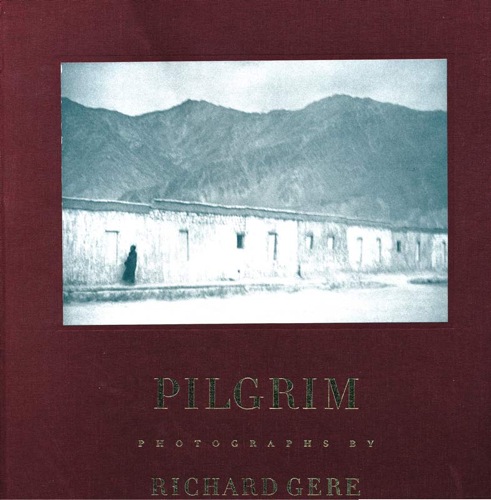
Pilgrim. Photographs by Richard Gere

I have long enjoyed Richard Gere as a film actor, not least for his light touch and excellent timing. For whatever reason, he seems to have fallen out of favor with US audiences, yet finds himself more popular than ever in Japan, where his movies are invariably huge box office hits.

But I’m not writing about Gere the actor here. Rather, this piece is about Gere the photographer, a man who has been a long time devotee of Tibetan Buddhism and documents his faith here. His love for the country and its gentle, cruelly oppressed people, shows well in this large book. Gere spared no expense in production, for the book is beautifully clothbound with the sixty-four pictures reproduced in warm monochrome tones on Mohawk Superfine acid free paper (I quote from the Appendix). Suffice it to say that the look and feel of the whole project is of something of the finest quality.

Gere’s photography is noteworthy. He does not hesitate to publish pictures which are blurred because of camera shake, where the effect justifies it (indeed, the cover picture is blurred) nor to use slow shutter speeds to blur moving people in otherwise sharp surroundings. This is no mere affectation for leafing through this book shows that the effect is used well and never detracts from the emotion of the pictures.

And emotional they are, none finer than that of His Holiness the Dalai Lama on page 63 or the simply gorgeous, there’s no other word for it, picture of the hands and prayer beads on page 48.

It doesn’t hurt to read that Gere donated all his profits to Tibetan charities.

Perhaps the biggest challenge with a book like this is the celebrity status of the photographer, but this is miles away from another tome of lousy snaps by yet another underemployed spouse franchising her marriage to a rock star. Gere, clearly, is not only the real thing in his beliefs, the photography is simply beautiful to behold and very moving.

The book appears to be out of print; my used copy came from Powell’s Books for the not inconsiderable sum of $35. Money well spent.

Skrebneski – Portraits

A flashback.

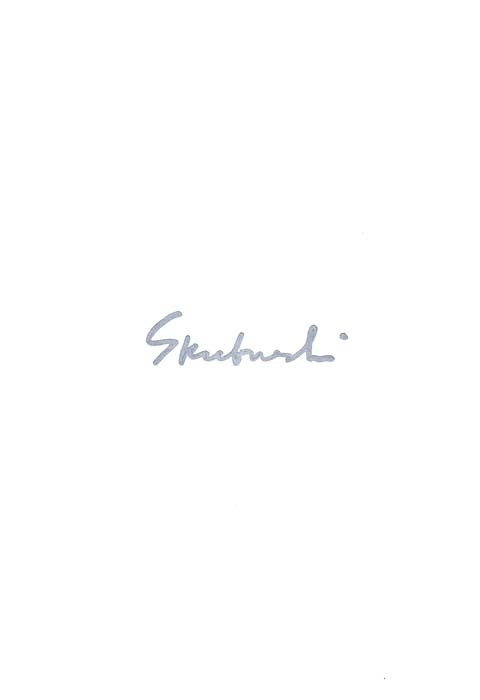
An email from a friend had me rushing to my bookshelves – sadly now dispersed over three rooms owing to their seemingly organic growth – in search of my Victor Skrebneski picture book. “You have to look at these” was the general thrust and, in fairness, I had probably not looked at ‘Victor Skrebneski – Portraits, A Matter of Record’, for ten years. Used copies can be had for a trivial sum on the web.

The only snag was that I couldn’t find the book. Whereas my own pictures are ordered in studied manner, my workshop tools each have an allocated space, DVDs reflect a near manic filing method replete with bar codes and scanners, when it comes to picture books my approach is one of sheer chaos. By design.

The goal is simple. By adopting a random approach to arranging these, the sole determinant of position being whether the height of the book will fit the shelf, the experience of looking, of searching, of surprise, is enormously heightened. The trade off is that if you tell me to find a book by, say, Minor White or Cecil Beaton, well, prepare yourself for a wait as the chances are that I will not have the faintest idea of its location.

Not that I mind being asked. Not at all. Because you can bet that in the frenzied search I will come across several other long lost friends that deserve an airing.

Victor, Victor, Victor, where on earth are you?

My first pass was a goose egg. No Skrebneski to be found in the ancestral manse.

Tried again the next day. Now I remember. The book was huge. Not huge in the sense of the modern novel or biography, whose quality is invariably in inverse proportion to the quality of its content. No, huge in the sense of big. Not thick. Big.

So I reset the grey matter to search for Big, which helped not one whit. There are lots of Big photography books. Lots of tall shelves to accommodate them. But persistence won the day and there it was, Skrebneski’s book of portraits of famous people.

To this day the photographer makes his home in Chicago, that haven of civilization in the culturally arid desert that is the mid-west. True, the climate is abominable, but all these famous people must have made the pilgrimage to Skrebneski’s studio for a reason, and it was clearly not for the weather.

Now if you usually think of fashion photographers as purveyors of candy and fantasy, I agree. However, Skrebneski’s portraits are on a higher level.

The reason is, of course, self evident once you peruse his work. ‘Portraits’ is a collection of his ‘black-turtle-neck-dark-lighting-period’, for lack of a better cliché, and one of the most amazing aspects of the pictures is that in many you can see the subjects’ eyes …. but you cannot see their eyes. Meaning they are lost in unlit sockets. Somehow this conspires to make them more dramatic, conferring a sense of ‘Guess Who I Am?” on the portrait.

The strong sense of déjà vu is fomented by the fact that I was a young man growing up as a photographer when these were taken. I can recognize fully half of the subjects today, the book having been published in 1978. It’s no accident that the index is not referenced, so you have to follow along diligently, flipping back and forth, if you want to put a name to a strange face. Skrebneski is playing along with his style which is, once again, “Who Am I?”

Let’s see. An Audrey Hepburn, her face in such extreme close-up that you cannot recognize her.

That iconic image of Miss Blow Up, V. Redgrave. Every red blooded male recognizes that one.

Orson Welles, haughty, threatening, mischievous.

Diana Ross at the top of her game. Gorgeous, powerful.

Karen Graham. The Estee Lauder Woman. So used to the lens she seems almost bored. Wow!

Brooks McCormick Jr. and his threatening German Shepherd. (Have you noticed that nearly all the killer dogs have German names – Rottweiler, Doberman, German Shepherd, Weimaraner?)

Georg Solti. A wonderfully warm man whose orchestral rehearsals I used to attend frequently when a student. The price of concert tickets was beyond me back then.

The ageless Patrick Lichfield, society photographer with great hair.

An ice cold Hubert de Givenchy followed by the radiant warmth of Oscar de la Renta. Personalities displayed in their couture.

Cliff Robertson looking for all the world like Francis Bacon. Probably those unlit eyes remind me of Bill Brandt‘s work.

Irving and Mary Lazar. The cold eyes of the one and the almost equally cold eyes of the other. Not people to mess with.

Truman Capote looking …. well, like Truman Capote.

And finally, Fernando Bujones. When I saw Bujones dance Giselle the ‘Bujonistas’, as the press dubbed his followers, were whooping and hollering. So naturally I joined in, and what are you going to do Lincoln Center? Arrest us?

I have named but a few. It’s a book worth tracking down.
Political photography

Anti-American photojournalist’s writings exposed.

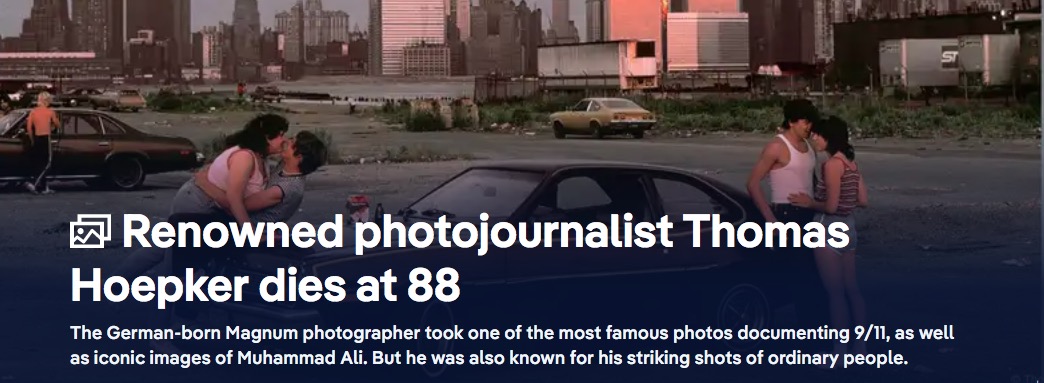
In yesterday’s Wall Street Journal, art critic Richard B. Woodward writes about how famous Magnum photographer Thomas Hoepker fabricated a story to suit his anti-American mind set. No surprise that German Hoepker proudly boasts of making his home on Manhattan’s upper east side.

The picture in question shows five people in Brooklyn chatting on the waterfront on September 11, 2001, while smoke billows from the World Trade Centers behind them.

Specifically, and scandalously, Hoepker wrote:

“It’s possible they lost people and cared, but they were not stirred by it.”

And here’s more of his tripe:

“Four and a half years later, when I was going through my archive to assemble a retrospective exhibition of my work from more than 50 years, the color slide from Brooklyn suddenly seemed to jump at me. Now, distanced from the actual event, the picture seemed strange and surreal. It asked questions but provided no answers. How could disaster descend on such a beautiful day? How could this group of cool-looking young people sit there so relaxed and seemingly untouched by the mother of all catastrophes which unfolded in the background? Was this the callousness of a generation, which had seen too much CNN and too many horror movies?”

Needless to add, Hoepker’s fraud was aided, abetted and amplifed by none other than, yes, you guessed it, The New York Times, whose Frank Rich called the image “shocking”. You can imagine how much research went into that opinion. Any publication with ethics policies would fire Rich for his drivel; I imagine a promotion is probably in store for him for getting circulation and anti-American feelings up.

Hoepker’s fraud was exposed when none other than one of the people portrayed in the picture wrote to Slate magazine stating:

“Had Hoepker walked fifty feet over to introduce himself he would have discovered a bunch of New Yorkers in the middle of an animated discussion about what had just happened.”

Subsequently, the woman in the picture – a professional photographer, no less – also contacted Slate with a poignant and moving rebuttal.

The Wall Street Journal writes succinctly that “In effect, (Hoepker) has Photoshopped (the image) in his mind so that it now belongs neatly in a more contemporary storyline of this nation’s culpability for world unease”.

Well written.

While I disagree with Woodward’s earlier statement that digital trickery has “…not eroded the truth value of photographs…” – I have shown many examples of Photoshop fraud in this journal which should make everyone sceptical – it is heartening to see people taking a stand against America’s detractors, not least against those who would, in the same breath, proffer inane apologia for all that was good and great about all those moral German industrialists during WWII. You can substitute ‘German industrialists’ with ‘terrorists’ and ‘mass murderers’, and it works just as well.

Update 9/102014: Hoepker’s cynical exploitation of tragedy for personal gain, his self-serving response notwithstanding, is further addressed here.

Update July 12, 2024:

Mercifully Hoepker has finally done the decent thing and passed on to his German heaven. A first for him, doubtless.


A bad man passes.

His crass profit making from one of America’s greatest tragedies confirms that no German should ever lecture Americans on what doing the right thing means. Good riddance.