Category Archives: Photographers

Brassai

The Monograph – book review.
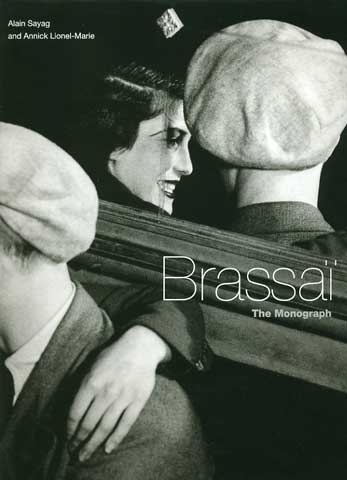
Paris de Nuit, a collection of Brassai’s pictures published in 1933, remains one of those books of photographs that are essential to understanding the street photography school of the early twentieth century. There is none of the acidity of Cartier-Bresson or the remoteness of Kertesz. Rather, there is a feeling that the photographer is one with his subjects in a city he loves dearly.

This tome, The Monograph, published in 2000 by Bulfinch, has much content from that classic, all of it reproduced in deep toned, juicy monochrome. While technique is never an issue with Brassai, always being superb, the large scale of this book only emphasizes just how good he was, considering the great limitations of the equipment of his day. This is 1933, for goodness sake, and no, there were no 5 frames-per-second digital cameras with shake reducing lenses available.

Something new for me, gleaned from this book, is how many of Brassai’s pictures were crops of a larger negative. Sometimes one negative would result in two or three separate images. Shocking? Absolutely. Justifiable? Totally. If it’s good, what do you care whether the whole frame was printed (what a silly pretentious idea) or not?

And if you thought the perversions of San Francisco, or earlier, New York and London, were in some way original, you need only check this book to learn that there is nothing new under the sun.

Degas was a fine photographer given the limitations of the medium in his time. His paintings speak loudly of the photographic world to come. Many images here conjure up memories of Degas’s L’Absinthe and the lives of the down-and-outs of cafe society. Had Edgar Degas lived another thirty years, these are the pictures he would have taken. Brassai realized that vision. See it in this fine book.
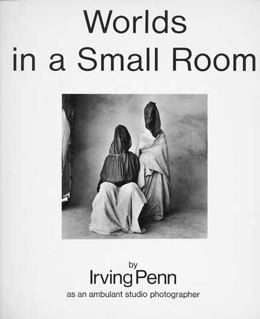
Worlds in a Small Room

Some of Irving Penn’s finest work.

Irving Penn is not just a great fashion photographer. Give him some spare time and off he goes on some personal project or other, frequently to the remotest places on earth, or the strangest. Like San Francisco.

This fine paperback shows pictures taken in his portable studio across the world, always by northern light. Published in 1974, it goes much further than August Sander’s cold, soulless work. Penn is vitally involved with, and sensitive to, his subjects, be they the mud people of New Guinea or Crete’s wizened old women.

If there are favorites then one has to be the group shot of Hell’s Angels with their women and machines, their leader looking like nothing so much as a Greek god. Then there are the Moroccan women so shrouded that only an eye protrudes.

I have been coming back to this book for some thirty years now and it never ceases to stimulate the senses and please the eye.

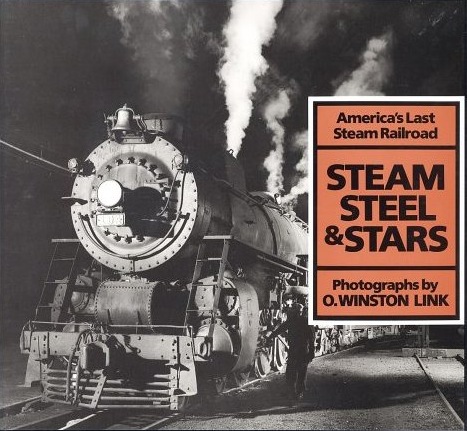
Steam, Steel and Stars

O. Winston Link’s masterpiece.


Click the picture for Amazon US. I get no payment if you do so.

Of all the books of railroad pictures you need know of only one. This one. Indeed, whenever photographs of breathtaking beauty are sought out, many in this book will be on the list of finalists regardless of subject.

Every picture in this book, all taken in the dying years of steam on the Norfolk and Western Railway of Virginia, is taken at night using flashbulbs, sometimes dozens at a time, using Link’s specially made apparatus.

Link shows that, to do something well, you have to be totally involved in, and in love with, your subject matter.

The composition, the insights into the last years of Norman Rockwell’s America, and the sheer love lavished on the work makes this book one of the very best picture books ever published, right up there with Cartier-Bresson’s ‘Decisive Moment’, though the subject matter could hardly be more different.

You don’t care about steam trains? No matter. If you care about drop dead, fabulous photography, you should have this book on your shelf.

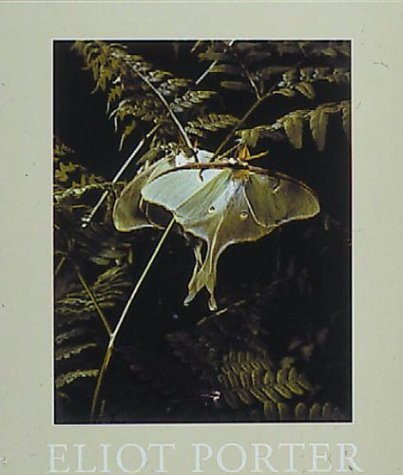
Eliot Porter

The Color of Wildness – book review


Click the image for Amazon – I get no reward if you do that.

Porter’s work changed how we look at the outdoors, moving away from the mundane, overrated monochromes of that adept darkroom manipulator Ansel Adams, and seeing the details in all their beauty. And yes, the emphasis in all of Porter’s work is beauty, greatly aided in this case by the well reproduced, large format pictures.

The book includes a fascinating essay by John Rohrbach explaining how Porter moved from black and white to color, despite snide asides from Adams and his set of toadies. It has long been my contention that Adams rejected color owing to his lack of ability in the medium, hiding behind the mistaken belief that if it’s monochrome, it’s Art. And it doesn’t hurt to print on fancy paper using ridiculous assortments of chemicals to emphasize the fact.

The modern version of this idiom is the growing reference by photo sellers to ‘giclee’ prints, as if association with something French must be a good thing. What they mean is that they printed on an Epson ink jet. Making a virtue out of necessity. Sounds sexy and mysterious, it has to be said.

In Porter’s own words ‘I believe that when photographers reject the significance of color, they are denying one of our most precious attributes – color vision.’

Highly recommended.

Cecily

Not just your average queer.

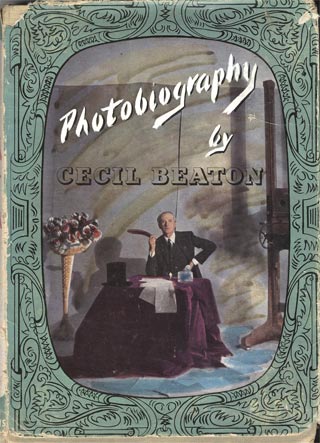
I cannot remember a time when I was not aware of the multi-talented Englishman, Cecil Beaton (1904-1980). Photographer, writer, designer, he did all of these at the highest level.

Whether it was 1964 when My Fair Lady hit the big screen (Beaton designed all the gowns) or 1971 when his landmark show An Anthology of Fashion premiered at the Victoria and Albert museum in Kensington, or 1962 when at the tender age of ten, I first read his book, Photobiography, Beaton has always held a special place in my growth as a photographer.

Central to his development was a surpassing interest in fashion, and it has to be said that the classic Vionnet, Schiaparelli and Gres costumes on display at the V&A show were breathtakingly well exhibited. The Gres and a couple of magnificent Balenciagas stick in my mind even today. How did women fit in these? Beaton, of course, had all the right connections to secure loans of these high flights of couture from their rich and famous owners. Sharing an alma mater with Churchill (Harrow School) and a Cambridge graduate, Beaton occupied the rarefied, dandified world of fashion and aesthetes from day one. Even as a boy, he experimented, using his sisters and relatives as models, with exotic lighting and backgrounds, the latter of his own creation as often as not.

And before you dismiss him as just another pansy in a cultural subset seemingly dominated by them, take a look at his pictures of war torn London and you will see the work of a great, tough photographer, unafraid to risk life and limb. How can one look at his pictures of the ruins of St. Paul’s even today, and not feel hatred towards the German Master Race?

None of this is to deny that Beaton came in for his fair share of ridicule during a long life. His epicene manner did not help. In 1971 David Bailey made a vicious television documentary named Beaton by Bailey, where Beaton comes over as nothing so much as a tired old fag, none of this helped by Bailey’s reference to him as Cecily in a newspaper interview of the time. Not for nothing was this hatchet job dubbed ‘Beaton by Bailey’ soon after its showing.

Then there was the ridiculous ‘love affair’ with Greta Garbo. A homosexual and a lesbian. Straight out of the Tchaikovsky playbook and just about as successful. Add accusations of being a relentless self publicist and publicity hound – how else does one get known for heaven’s sake? – and you might view the man with faint ridicule. Yet just one look at the Ascot scene in My Fair Lady or any one of hundreds of his great photographs of royalty and fashion (no confusing those two!) and you see the work of a great and original artist.

Hunt down some of his work. It’s worth it.