Category Archives: Photographs

Early photographic vision

Uccello and Carravaggio had it down 500 years ago

As a boy growing up in London I lose count of the number of visits I made to The National Gallery in London. Whether going through my Impressionist period, High Renaissance or early Renaissance, there was always something there to fascinate and to intrigue. While photography had always been my first love in the visual arts, I think I learned more about seeing from gazing at the art in this great collection than from any number of photography books.

Some of these experiences left deep impressions. When asked which of the works on display I liked most, nay, desired to possess, the choices narrow to a few. Titian’s ‘Noli Me Tangere’ (1512) (Do Not Touch Me) of course. I have always been captivated by the dynamic use of diagonals – Christ, Mary Magdalen, the tree, the lovely warm light, Christ’s daring near-nakedness. You can feel the motion as he grabs the shroud to prevent Mary pulling on it. It is hard to conceive of a more perfectly balanced composition and if you think you cannot get away, as a photographer, with lampposts growing out of people’s heads, well just look what Titian did with that tree!
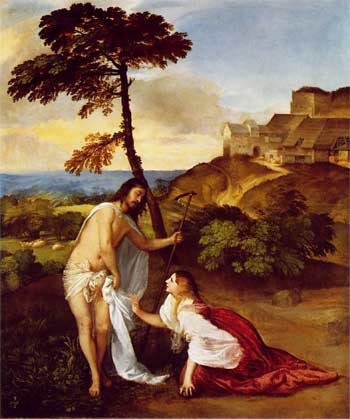
I have always felt that The National Gallery has way over-restored its Titians to near-Cibachrome color intensity, and that clearly shows here, but the magic of the picture saves the day.

So when it comes to lessons in composition, just check a few Titians out.

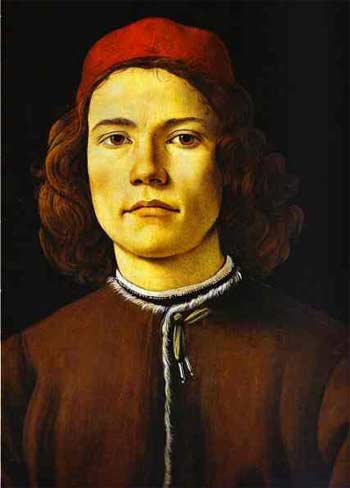
Botticelli’s Portrait of a Young Man (1485) is simply arresting. It’s one of the smallest paintings on display at 16″ by 12″ – the size of a regular photographic print. But you walk into that gallery and there’s only one thing you can see. The certainty of the gaze, the confident bearing, the red cap accent, the somewhat rushed rendering of the tunic, all to good purpose. It places all the focus on the eyes. When I first saw this – I was probably fourteen at the time – I made such a bee line for the picture that I nearly knocked over one of London’s dowager ladies in my rush. It’s that good. I frequently fantasized about pinching this masterpiece – how hard would it be to make off with a 16″ by 12″ canvas, after all? To this day the use of daylight and the way shadows model the face leave anything Vermeer did with lighting in, well, the shade.
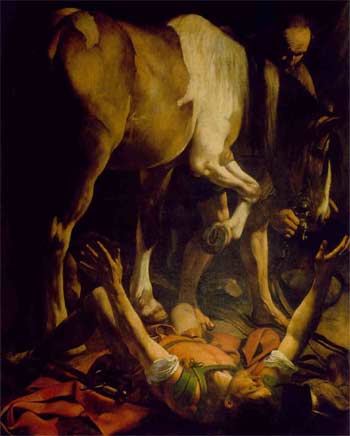
As a photographer it is simply impossible not to like Caravaggio. Versions of The Supper at Emmaus hang in both the National Gallery and the Louvre, the diners’ ragged clothing rendered just so, the worms in the fruit on the table and, of course, Caravaggio’s signature lighting. But great as that painting is, it is simply eclipsed by The Conversion of Saul (St. Paul). In London’s Swinging Sixties the 21mm lens on a 35mm camera was de rigeur for any self respecting trendie. You saw its abuse everywhere, especially on record sleeves of the more extreme rock groups. Wild perspective, severely receding lines, objects very close to the lens, distortion galore. Well just take a look at this. Caravaggio had the 21mm figured. What is breathtaking about this canvas is how little space he has worked in. Painted in 1601 the canvas is simply enormous – some 7 1/2 by 6 feet. In other words, the horse is rendered at almost life size. Why so large? Caravaggio was a student of perspective. He knew that viewers would get too close to the painting, but that, by doing so, the grandeur of his ultra-wide angled vision would be correctly rendered and the perspective distortion would disappear. And so it does. The painting is immensely involving. You are there. Like a movie in a theater compared to the same thing on television, you have to see this live. Not reproduced.
But easily the strangest use of perspective on view in The National Gallery belongs to a visionary whose work preceded that of all the above, none other than Paolo Uccello. In 1450 he painted three enormous panels depicting the battle at San Romano in which the Florentine army defeated Siena some twenty years earlier. The three panels are some 6 feet by 10 feet in size. One (the weakest, and that’s a cruel critique) hangs in The National Gallery. The others hang in the Louvre and the Uffizi. Fitting that three of the greatest masterpieces of the early Renaissance should hang in the three greatest Renaissance collections.
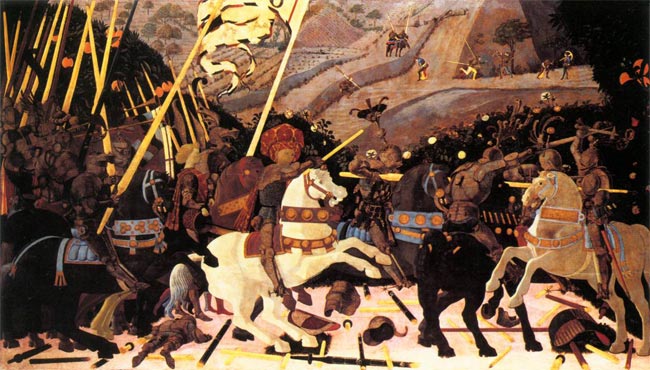
Appropriately, the best hangs in the Florentine collection, but look, if you gave me the one in London I would have no issues with finding wall space for it. I assert that there is more to be learned, as a photographer, from this one painting than from any number of academic studies on the use of perspective. By the time this painting was made, artists understood the rendering of perspective well. Uccello just chose to disregard the rules, dramatically foreshortening perspective, predating surrealism by some six hundred years. The repeating motif of the lances, the purposeful abuse of sizing (look how small the dead soldier in the left foreground is), the steep, tilted, climbing background with the horsemen rendered way too large, the detritus of battle painted in seemingly random perspective. It’s magic. Simply the greatest lesson in the (ab)use of perspective on canvas.

As photographers, we have a lot to learn from the masters.

And no, I harbored no fantasies about making off with the Uccello. It’s just too big to stash under a genuine English raincoat.
And now for some pictures

Which is what it’s all about.

All that cataloging in Aperture did have a bright side, specifically an opportunity to reacquaint myself with many pictures from days past. So after all this talk of cameras and printers and software in recent columns, I thought it might be nice to share some pictures with you.

As is the case, I suspect, with many photographers, I have perfect recall of the equipment and film used to take these, even though the stored files are silent, as it’s not something I routinely record. The digital age, of course, does this for you today.

So here goes – 15 snaps chosen at random and in no particular order.


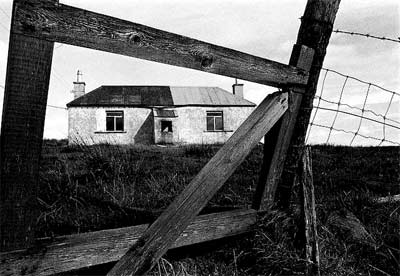
South Uist, Outer Hebrides, 1977.
A rugged, lonely place.
Nikon F, 28mm Vivitar, TriX.


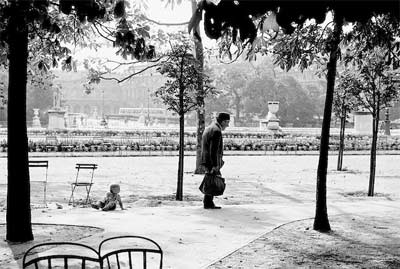
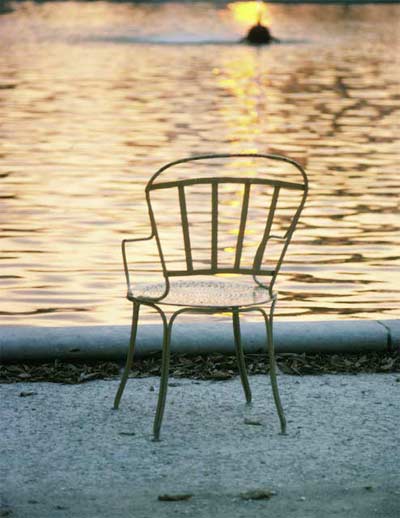
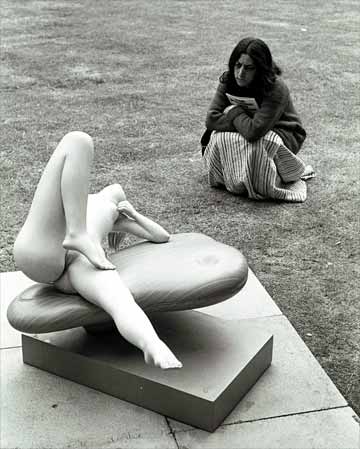
Tuileries Gardens, Paris, 1977.
A life begins, another draws to a close.
Leica M3, 35mm Summaron, TriX.


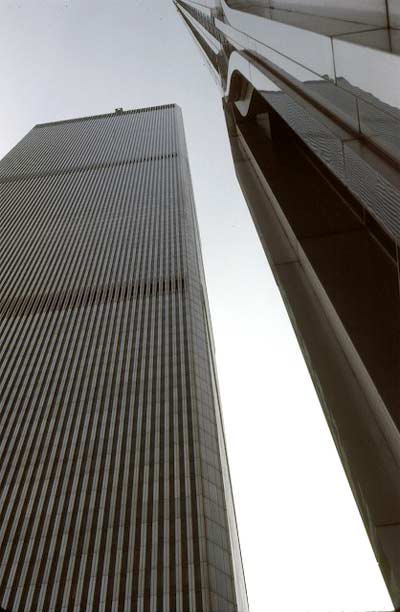
World Trade Centers, 1982.
Pentax ME Super, 40mm Pentax SMC, Kodachrome 64.


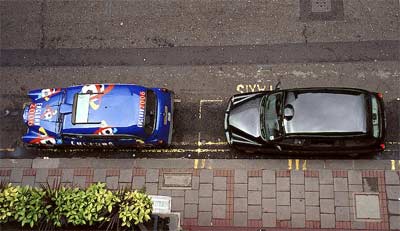
London, 2000.
Cabs old and new.
Leica M6, 35mm Asph Summicron, Kodachrome 64.


Tucson, Arizona.
A warm day!
Leica M6, 90mm Elmarit, Kodachrome 64.


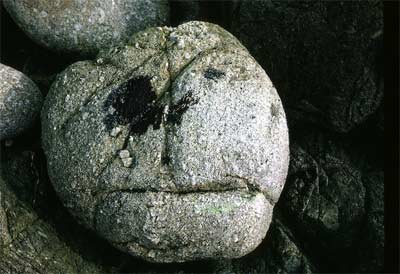
Pebble Beach, California, 1987.
‘The Pirate’.
Leicaflex SL, 50mm Summicron-R. Kodachrome 64.


Tuileries Gardens, Paris, 1975.
What’s not to like about Paris?
Leica M3, 90mm Elmar, Kodachrome X.


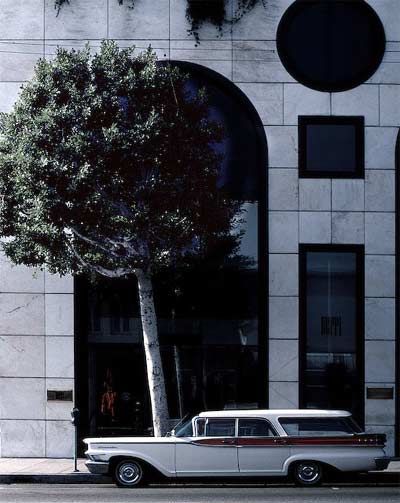
Rodeo Drive, California, 1989.
Someone parked this huge ’60s wagon on this costliest of shopping destinations.
Leica M3, 50mm Summicron, Kodachrome 64.


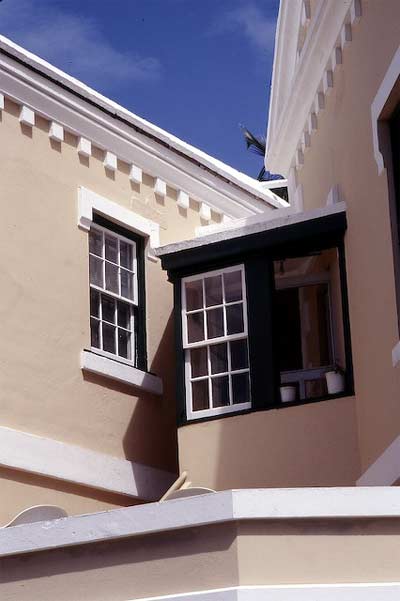
Bermuda, 1999.
Land of sublime architecture.
Leica M6, 90mm Elmarit, Kodachrome 64.


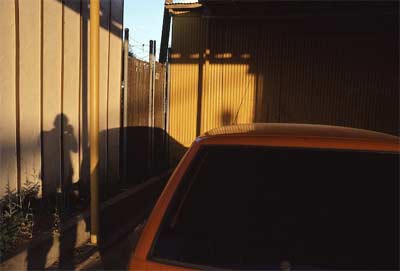
Somewhere in Arizona, 1988.
Leicaflex SL, 50mm Summicron-R, Kodachrome 64.


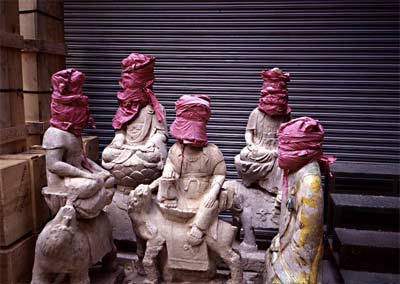
Hong Kong, 1995.
Statues ready for illicit export.
Rollei 35, 40mm Tessar, Kodachrome 64.


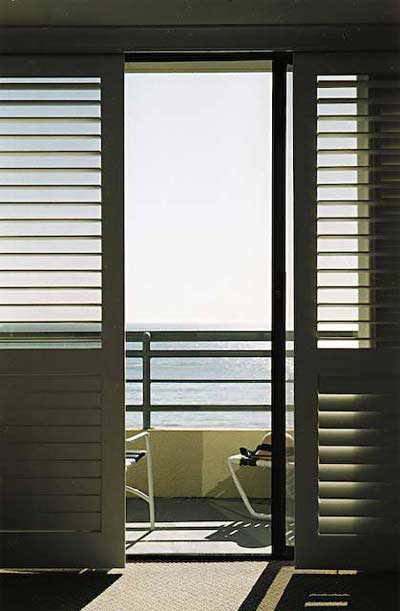
Pismo Beach, California, 2004.
A lazy, sunny afternoon by the Pacific.
Leica M2, 35mm Asph Summicron, Kodak Gold 100.


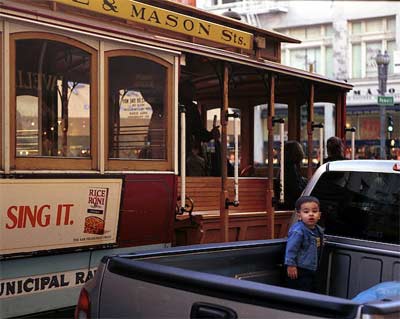
Union Square, San Francisco, 1999.
A child’s wonder.
Leica M2, 35mm Asph Summicron, Kodak Gold 100.


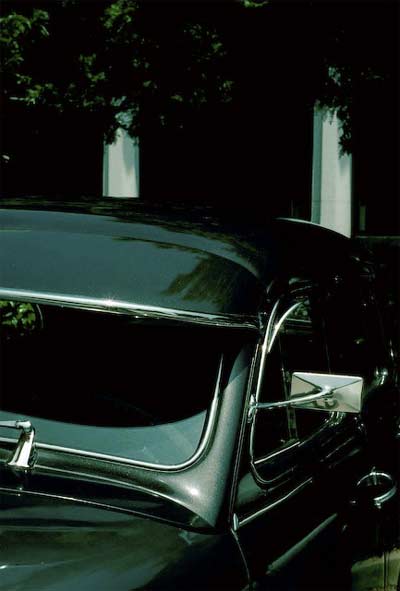
Pasadena, California, 1988.
Gangster car.
Leica M3, 35mm Summicron, Kodachrome 64.


Santa Fe, New Mexico, 1995.
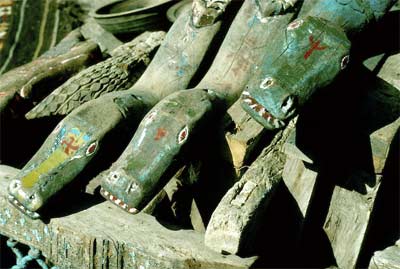
Rocking horses at an antique dealer’s.
Leica M2, 50mm Summicron, Kodachrome 64.

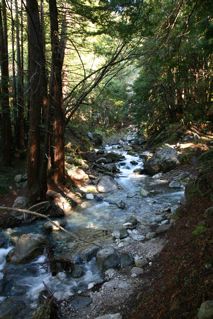
Limekiln

A very special place.

I have been visiting Limekiln State Park for some time now. It is seventy miles or so from home, up Highway One, so no excuse is needed for the drive. Roughly midway between Cambria and Carmel on the central California coast, it offers magnificent ancient redwoods and waterfalls galore. Best of all, it’s generally deserted and though I have paid more than my fair share of California taxes, I do not feel too badly about the $6 entrance fee. It is a special place and sheer hell to photograph.

One reason is that you are simply overwhelmed by the beauty of the venue, meaning your first few trips result in lousy pictures. Then as you get to learn it you begin to appreciate the huge contrast range and begin to tackle it as best as you can. Unlike most landscape photography where the best lighting is early and late, Limekiln is best photographed between noon and 2 p.m., by which time the coastal fog has burned off and the sun is high enough in the sky to penetrate the dark forests of one hundred foot high redwoods. Then you get that magic light effect of sun dappled spots surrounded by this herd of ancient giants.

Up to now my best work there has been on 4”x5” film, which means 1-8 second exposures on my favorite Kodak Portra VC160 film with the 90mm Angulon wide angle stopped down to f/22 or smaller in the perennial quest for depth of field. That means the massive Linhof tripod has to come along with the Crown Graphic and all those film holders. Well, by the time you get there, what with lugging all that gear, it feels like the cocktail hour. Anything to stop the shakes.

So today I tried something different. No excuse was needed to try the new toy, the Canon EOS 5D, but the gear was minimalist at best. The camera, the 24-105mm lens (OK, so it’s the only one I have. I’m making virtue out of necessity here), my little alloy monopod and that wonderful Leitz ball and socket head which I seem to have been born with. Add an inexpensive quick release plate on the camera and the monopod and you have the kit I used today.

Now I’m still sticking with 6mp JPGs. Not that RAW scares me but because I’m a dumb ass. In all my excitement when I was placing the order with B&H, all those eBay medium format sale proceeds burning a hole in my pocket, I forgot to order a couple of 1gB CF cards on which to store the large 13mB RAW files. The only CF card I have at home is a 256 mB used in the Olympus C-5050Z, the one with the one hour shutter lag, so I stuck that in the 5D while waiting for the big capacity cards from B&H to arrive. Boy, UPS must just love me. In fact the gate to the estate finally gave up the ghost today from all those deliveries…. JPG gets me 47 images, RAW 13. Now 24 is about right for me, so JPG it is for now.

I’m rapidly learning that to extract maximum dynamic range from digital your exposure has to be pretty much spot on. It feels like using slide film again. Maybe 1/2 stop tolerance either way. That means sharpening my skills as I’m used to the two stop latitude of color negative film. It also means that, in Limekiln’s dark interior, I finally used the built in LCD screen on the back of the 5D to optimize exposure. At least it was dark enough to see it. Several pictures were a stop out, so I erased them on the spot (that wretched 256 mB card!) and re-exposed. Two clicks on the Info button and you get a little picture on the camera’s LCD screen with the overexposed bits flashing at you. Now is that cool or what? The working dynamic was fascinating to compare with 4”x5”. Where the latter dictates f/16 or smaller apertures, meaning seconds of exposure. I cranked up the 5D to 400 ASA (oops! ISO. That dates me!) having learned that the big sensor in the camera shows no noise at this speed. 1 1/2 stops gained. Then I shot at f/4, the maximum aperture on the 24-105mm, as the lens is simply very, very sharp at all openings. 4-5 stops gained. Then I used the IS in the lens to cut vibrations for another three stops gained. That’s some 9 stops gained over 4”x5”, meaning I was shooting at 1/30th @ f/4, aided by the monopod. And the results are critically sharp. My back does not hurt and I don’t feel a day over 50 on arriving home.

Next time you visit here I shall be messing about with RAW. Is this a steep learning curve or what?

Expose yourself

Let’s face it. Your photographs are no good until you have shown them to the world. Whether that means your next door neighbor, an exhibition at the local town hall, a book or the virtual universe, the world is waiting.

One thing you can be sure of is that the world will most certainly not come to you.

So if you don’t screw up your courage and expose your work to the broadest possible audience, you will never know whether it is any good.

I know of what I write. I have had my work published in competitions, put out a book of my pictures and a while back started a Photoblog. I have an extensive web site of my pictures. Be assured, only someone with the ego of Attila the Hun would venture into any of these display avenues without a few butterflies in the old stomach. Why? You know why. You will now be subjected to criticism from all and sundry. The critics will all be strangers. Only friends and relatives will be consistently supportive and nice, even though much of their feedback will be damning with faint praise.

But without criticism, how will you ever know if your work is any good?

Not fair, you say. Like Oscar Wilde’s Lord Darlington, you believe that all critics are, at best, cynics who know the price of everything and the value of nothing.

Look, even Wilde made a living as a critic before he started earning income from his plays. And you can be consoled by the knowledge that when you do finally expose your work to criticism, you will be dealing with the same, bunch of snobs, ignoramuses, morons, petty idiots, ill educated fools and sundry other losers that plagued Wilde. But without them your work will never be seen or appreciated. Is that not one of the reasons you take photographs – recognition and appreciation by your fellow man?

My experiments with criticism started when I got my first serious camera, the Leica M3 I use to this day, in 1973. As I started making street pictures which I thought had merit I began to submit them to the many photography magazines in the England of my youth, only to be rewarded by much critical feedback. Sadly, most of it was printed in form letters known as rejection slips. Very hurtful. How could everyone else not like my work? Plus, let’s face it, as a poor student whose scholarship money and governmental support could only go so far I needed the money for film and paper. So I kept banging away and as my ability to produce decent prints gradually improved the Honorable Mentions and better started to roll in. I must have been doing something right because the leading photography magazine of the day, a monthly named, originally, ‘Photography’, saw fit to award me The Photographer of the Year award – for one single picture no less! – in the mid-1970s. An award built on rejection slips. Here is that picture, if you must ask, dust spots and all. You did ask, didn’t you?

What a joke. One picture makes you Photographer of the Year. Of course, by that time you had paid your dues with any number of rejection slips, Honorable Mentions, Third Prizes, Second prizes, and so on. So acceptance had to be due any time soon. Like being a frequent poster to a discussion forum at your favorite internet chat board, say. The fact that your content is undiluted tripe, the fact that your claims to fame are never substantiated with a single picture, just having done your time and consistently published your work makes you accepted and lauded.

About the same time Leica Fotografie, the house organ of the camera maker of the same name, published a snap I had taken on Rue Mouffetard in Paris and I thought I had arrived.

So I stopped submitting pictures for publication. I had beaten the system. I had got inside the minds of those lousy critics, the same ones who had sent me all those rejection slips, and beaten them at their own game. It didn’t hurt that I still liked the work I was submitting, but I no longer needed the rewards, economic and psychic, which resulted. I now had a full time job and could take pictures to please me, not the critics.

Well, of course, that was all wrong. For twenty years thereafter I banged away, filling boxes with beautiful 8 x 10” prints which no one ever saw. I was self-satisfied with my work and did not need anyone else to tell me it was good. Or bad.

Yet something was missing. As human beings we all have an ego and not one of us dislikes being told that his work is good. Why, screw up your courage and you will even be prepared to hear that, well, maybe it’s not so good. Find a good critic who will help redirect you, question his input, and maybe you will find new directions and meaning in your photography.

One thing has changed greatly since those days of my youth and it is access to distribution. It has never been easier or cheaper to get your work out there and you no longer need to butter up publishers, attend obligatory cocktail parties or call people ‘darling’ while reminding all and sundry that the editorials of the New York Times and Guardian are your thoughts exactly. One month from reading this there is no reason why you wouldn’t have scanned your hundred best pictures, placed them in a word processed document and submitted your output to a print-on-demand publisher at very modest cost. Why, if you are a digital photographer the most onerous part of the task, the scanning part, does not even exist.

But the chances are you will not do this and that is a shame. Excuses are easy. I don’t have the time. The spouse is ill. It’s too complex for me to learn. No one is interested. And on and on.

All of these excuses say just one thing. You really do not care enough for your photography to do anything with it.

OK, so the book route is not for you. Well, how about a Photoblog? Access is even easier than publishing a book. You go to any one of the providers on the web and set up an account. It can be paid, like the one I use, where the friendly people at Expressions charge me the stunning sum of $3 monthly to host my picture uploads. I use them as they provide a nice point-and-click selection of screens to display your work and have been very nice in helping me design a screen to my own liking which is not available in their canned selections. Plus, I’m not exactly God’s gift to the coding profession.

Or you can try a free service such as the oddly named Flickr and share your work for all to see. Free.

So now tell me, why, within 60 minutes of reading this, you should not have a Photoblog up and running. You want to get paid for doing this?

Frankly, unless you are an equipment collector, in which case why are you even reading this, there is no reason.

Tomorrow I will share my Photoblogging experience with you, by which time your Photoblog will be up and running. Promise?

And closing on another Wilde witticism, when you get rude, uninformed morons trashing your work, “Always forgive your enemies; nothing annoys them so much.” Then delete their droppings.