Category Archives: iPhone

A smartphone with a decent camera

The next revolution

Time waits for no one.

There have been three revolutions since the invention of photography in the early 19th century.


Roger Fenton’s assistant in 1855 with his photo gear. The horse was extra.

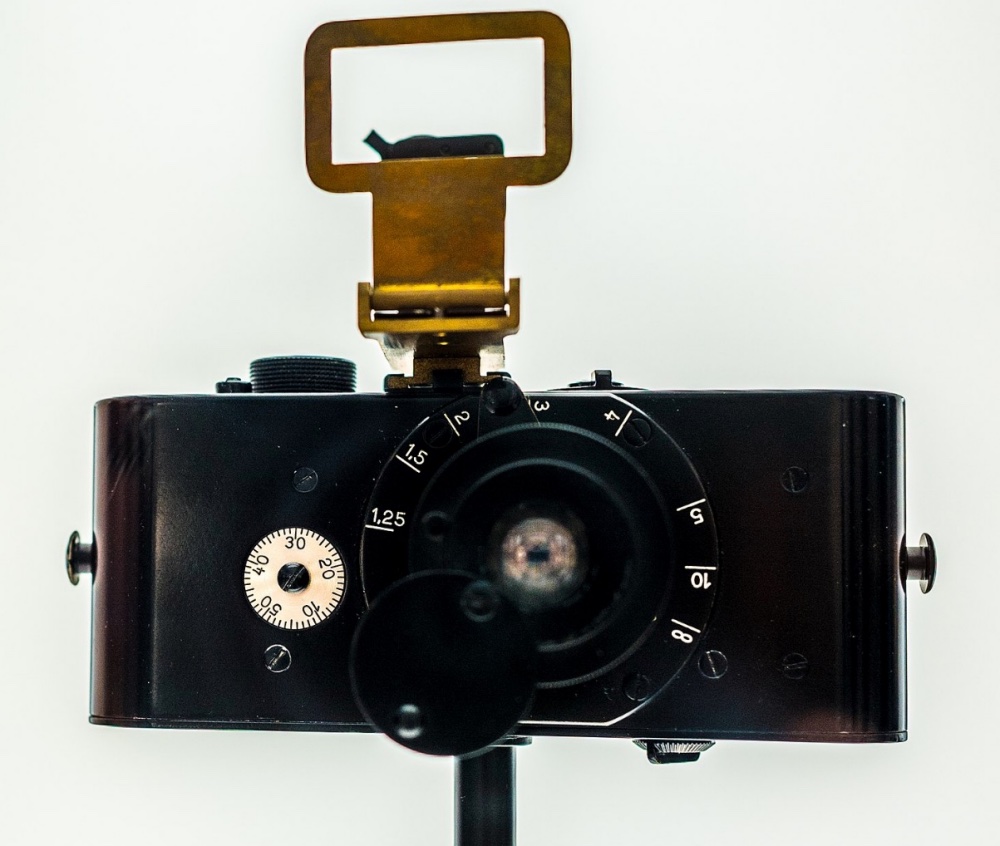
The first was miniaturization, credited to German engineer Oskar Barnack who invented the Leica in 1913. The Leica user could take 36 images on one roll of film, loadable in daylight thanks to the cassette design, and enjoy decent quality not really that much worse in pocket prints from that delivered by the monster cameras which preceded this piece of design genius. Leica continues to this day but long ago ceased making cameras, remaining in existence as a purveyor of overpriced jewelry.


Barnack’s genius writ small.

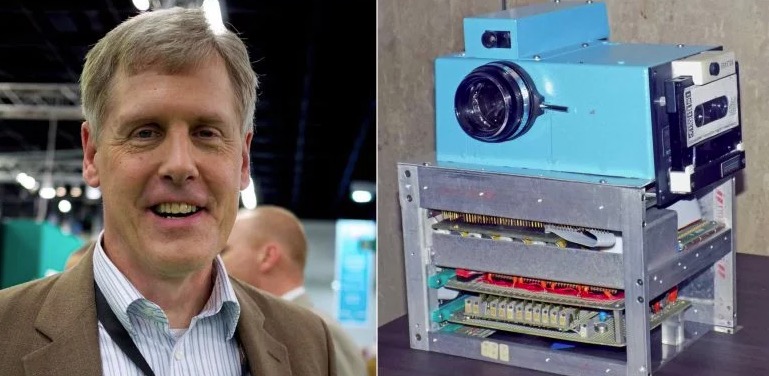
The second revolution was the invention of the digital sensor camera for which we can thank Kodak. Being abject fools they concluded that film would last forever, abandoning digital, making one of the worst business decisions of the 20th century in the process. They went bankrupt. Steven Sasson was the Brooklyn born engineer behind this revolution (not the bankruptcy) and while his first design was anything but compact, rapid development of sensors fixed that.


Sasson with his invention. Genius writ large.

Digital sensor sizes are now whatever you want, from monsters divining distant galaxies in outer space to pin heads in digital cameras much loved by the Kremlin.

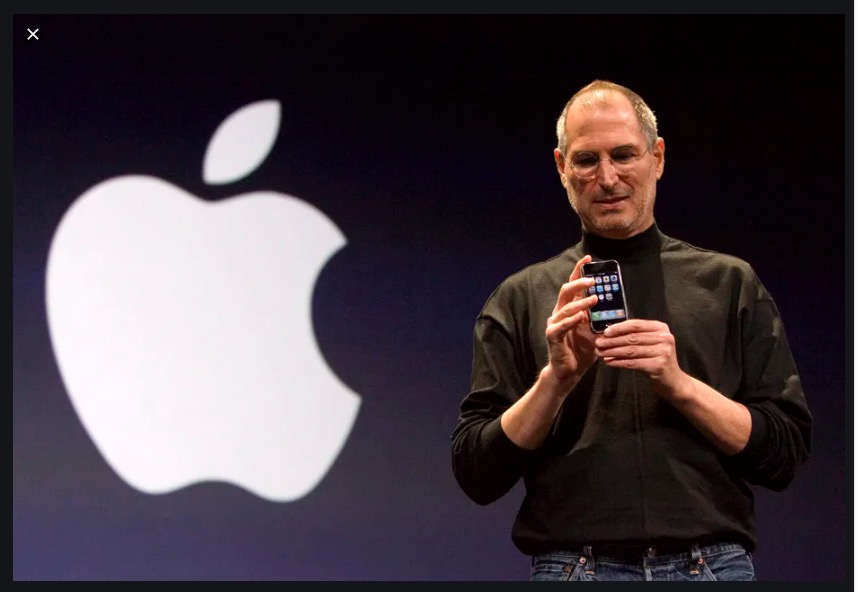
The third revolution was in the creation of the cell phone camera, and while the nutty genius running Apple could not claim the company had invented cell phone photography, he very much packaged the whole thing in a device that would become ubiquitous, user friendly and now delivering more images than any of its predecessors did in aggregate.


A man who is very much missed.

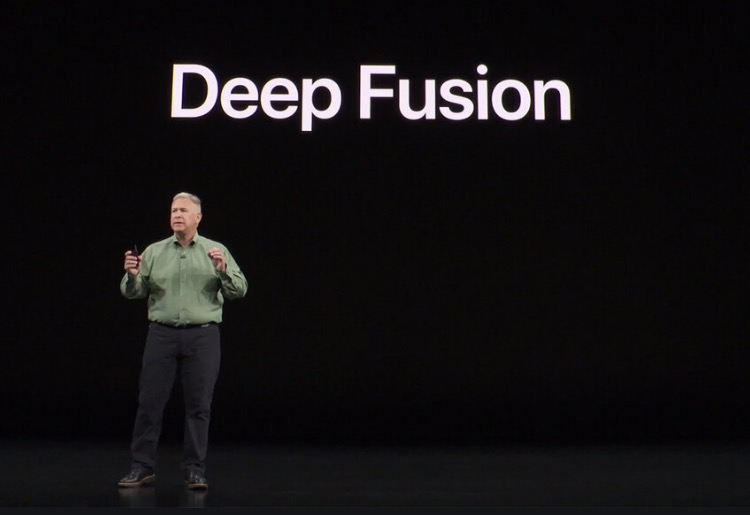
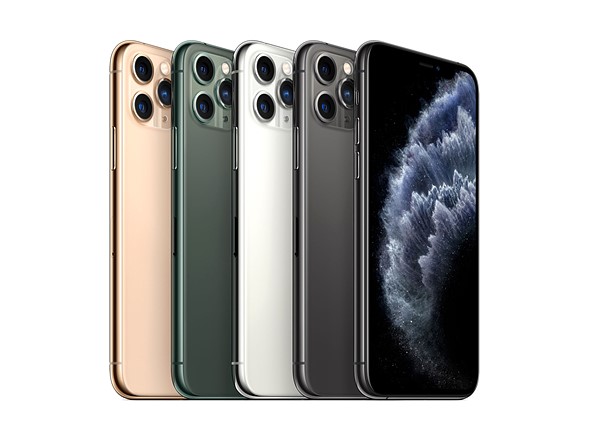
Now while no one could accuse today’s automaton CEO of Apple of ever having had an original idea, time marches on and, despite Apple’s characterless leadership, really good small sensors are now available in the latest iPhone, the four lensed iPhone 11Pro. What the business community expected to be just one more modest product refresh turns out to be at the cutting edge of the cell phone photography revolution. And that cutting edge performance is delivered with really small sensors.

The percentage of photographers needing large sensors in large bodies is minuscule, a statistic which predicts the rapid demise of all traditional cameras, be they medium format, FF, APS-C or MFT in format. Medium format and FF digital will retain infinitesimal market shares for specialized commercial and scientific purposes, but otherwise their time is done. And as for APS-C and MFT, with the latest cell phone cameras equalling or beating their output in terms of quality and versatility, those formats will shortly be indistinguishable from toast. A very tough time to be Canon, or even worse, Nikon. As for Panasonic and Sony, they can stick to making ever larger TV sets.

The cutting edge cell phone photographer has access to depth maps with his images, selective focus of his choice, multiple lenses with the wide in the Pro being very wide indeed and a Night Mode so spectacular that Walter Mandler must be spinning in his grave. Oh! and did I mention 4K video, all in a wafer thin package which also just happens to make phone calls and works seamlessly with the internet? And that photographer does all of this with the most sophisticated CPU and brilliant software design available, neither feature found in traditional cameras.

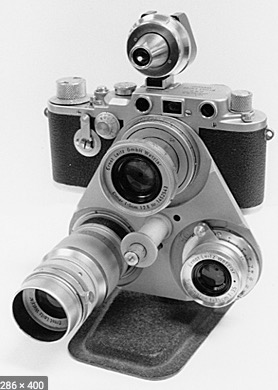
The new iPhone’s three forward facing lens design is nothing new. Leica and many movie cameras have had it for ages. No, ‘selfies’ were out. No fourth lens for you.


Early 1950s Leica three lens camera attachment. 35/50/90mm focal length choices, f/2.8-4. Weight? A lot.

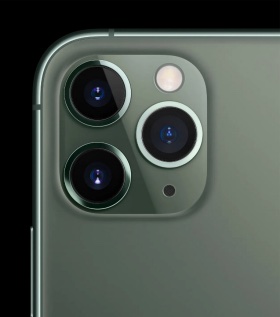
But now the lens in the ‘turret’ is chosen with a touch, nothing moves, it’s stabilized for all but the ultrawide option, and you choose the depth of field after taking the picture:


Apple updates the turret.13/26/52mm options. f/1.8-2.4. Yes, that’s 13mm. Weight? Unnoticeable.

The above is all by way of a preamble to my upcoming purchase of an iPhone 11Pro. I’m sticking with Apple as only an insane person would trust Google/Android with his data and, yes, all my MFT hardware is being sold as I write. I’m getting with the plan before it becomes completely worthless. It’s been a fun decade since that groundbreaking Panasonic G1.

I’ll keep a few items of Nikon FF digital and film gear, as they are already worthless, and as I still have vestiges of nostalgia in my psyche. But, as a street snapper, I can see no reason to actually use this megalithic gear. And I try very hard, in an increasingly uncluttered life, to avoid owning things I do not use.

The old cliché has it that “the best camera is the one you have with you“. You always have your cell phone with you.

Computational photography

The new magic.

Click here for an index of all iPhone articles.


The latest nom de jour in photography circles is ‘computational photography’, which is a fancy way of saying that image control has been passed from hardware to software. This augurs poorly for the latest high end ILCs with their ridiculous 50mp and higher sensors, with attendant demands on computer upgrades to handle those behemoth files in something under a week per snap.

DP Review’s technical writer Rishi Sanyal does an excellent job of explaining just how software in devices like the Phone 11Pro is taking the lead from hardware in delivering the best image quality in small files using brains, not brawn. Sanyal writes:

“Newer, faster processors often mean increased photo and video capability, and the iPhone 11 is no exception. Its image processing pipeline, which handles everything from auto white balance to auto exposure, autofocus, and image ‘development’, gets some new features: a 10-bit rendering pipeline upgraded from the previous 8-bit one, and the generation of a segmentation mask that isolates human subjects and faces, allowing for ‘semantic rendering’.”

What shines through in his detailed exposition of the newest iPhone’s features is how all three of its cameras are used to deliver the best picture, along with brilliant technologies like storage of a depth information profile for an image which allows the application of selective focus, as an example, in post processing.

Some 13 years ago in a piece titled “It’s the software, stupid” I wrote:

“And who will be the genius designing these new ‘lenses’? It won’t be a god the likes of Max Berek or Walter Mandler in Wetzlar. It will be some kid who is really sharp at coding who happens to like a superb picture from the one ounce piece of plastic passing for a lens attached to his camera. The great days of optics are yet to come and their designs will emanate from the keyboard of some unknown master even now getting his lips around the teat on that plastic milk bottle.”

Like that milk bottle, today’s lenses are plastic, their unprocessed quality is garbage, and software does what plastic cannot. Say goodbye to big cameras, big lenses and big sensors.

The iPhone 11 Pro

Profound implications for camera makers.

Click here for an index of all iPhone articles.


Ugly as sin – Steve must be spinning in his grave.

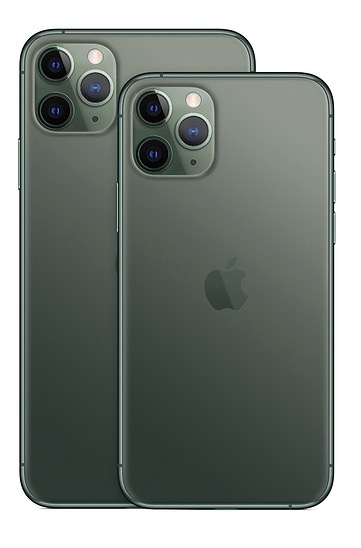
Yes, the price of the new iPhone 11Pro, just introduced, is high. Yes, the ergonomics are as awful as they were with iPhone 1 back in 2007. The on/off switch remains opposite the shutter button, making sure you turn off the camera when you most need it. And yes, the absence of a proper viewfinder in bright light makes framing a hit-or-miss proposition. And yes, the device is sprouting ugly faster than the pig in the Oval Office, with its three clunky lenses and increasingly confusing menu structure.

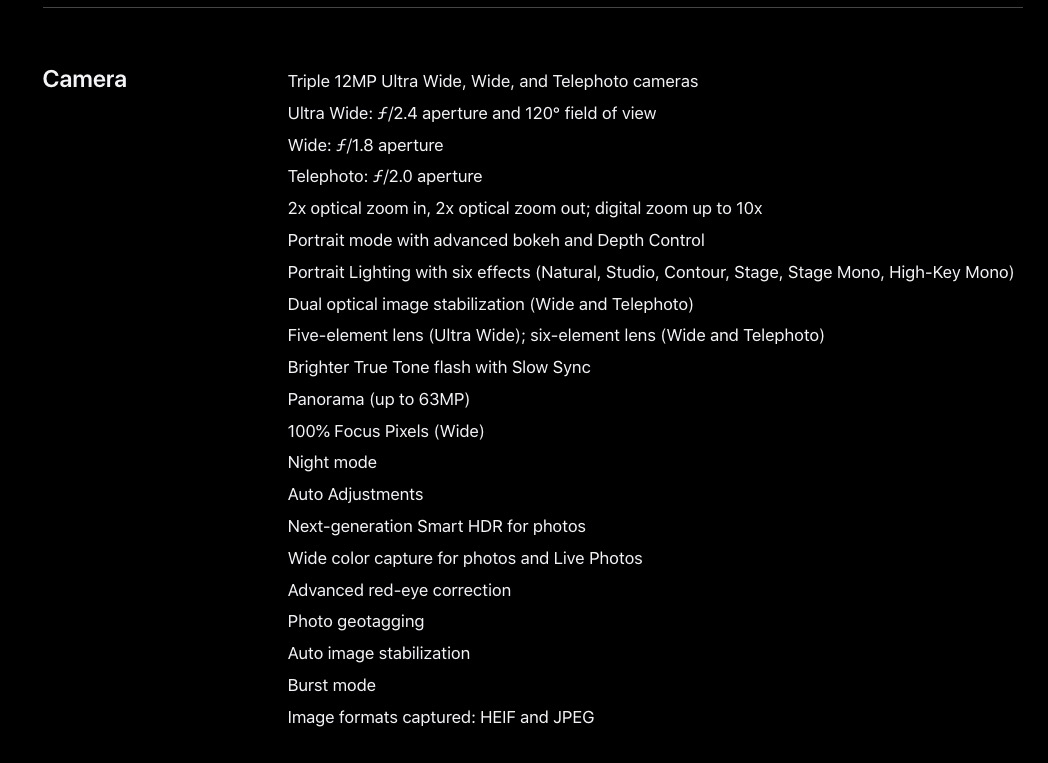
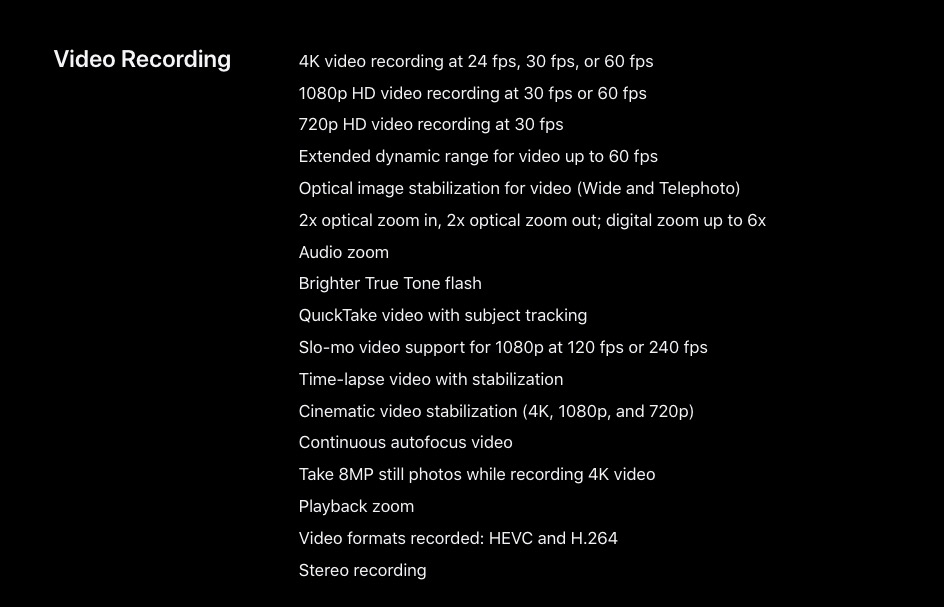
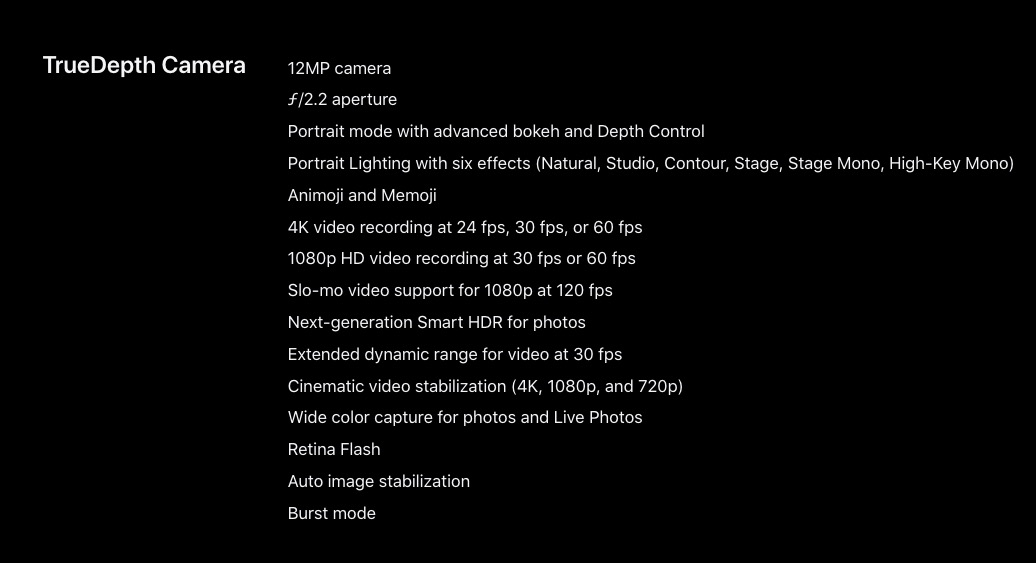
But take a moment to read the specifications and compare them with your advanced MFT or FF camera:

And don’t forget the always on GPS so you always know where your snap was taken. And the cell phone. And the internet. And email. And Messaging. And Google Maps. And all those stupid games. Your camera does none of those.

When I started with MFT one of the primary appeals was that you could get close to FF quality without FF bulk. This was especially true when it came to the size of lenses, something which has always made a nonsense of the ‘in between’ APS-C interchangeable lens format whose lenses are scarcely smaller than their FF counterparts. I transitioned to MFT with the superb Panasonic G1 a decade ago. As a replacement for the film Leica M it was a street snapper’s dream. Better definition, finer grain, lots of images on one card, great lens range and size and bulk comparable to the exemplar of film rangefinder cameras. Later upgrades saw the Panasonic G3 replace the G1 and finally the GX7 which is the ultimate Leica M replacement, with its truly silent electronic shutter and Leica M form factor.

But now the iPhone, with its multiple lenses covering most of what a photographer needs – wide, standard, modest telephoto – looks set to obsolete the MFT system in a much smaller package. FF? At the high end for sports snappers and journalists needing ‘street cred’ (who is going to take you seriously if the iPhone is your camera of choice?) it’s likely to survive, albeit with a minuscule and falling market share.

Price of the new iPhone 11? $1,000 with 64gB, which compares with $600 for iPhone 1 in July, 2007, with its crappy 2mp camera. Inflate that at 4% annually and you get $960 and the new iPhone has a larger, better screen, eight times the memory and is several orders of magnitude faster. So while $1,000 sounds like a lot, I prefer to think that $600 back on 2007 was really expensive. I know. I bought one.

Bartlett Lake, AZ

In the Tonto National Forest.

Bartlett Lake is 35 miles northeast of Scottsdale and is deserted on weekdays. The ride through the high desert is lovely, and while the 20 mile approach road through the Forest has seen better days the gentle sweepers and absence of traffic make for a fine opener for the 9 month motorcycling season here, now that daytime highs have dropped to the low 90s.


No traffic in sight.


The map view in Lightroom.


The Last Stop is the only dining place at the lake. Usual burger fare.
Note the matching 1975 historic registration plate on my 1975 BMW R90/6,
now in my 29th year of ownership and a delight to ride.

Boat and JetSki rentals are available.


This was the first occasion on which I aired out the camera in my ‘new’ iPhone7. In contrast to the 8mp files from the excellent camera in the iPhone6, iPhone7 files are 12mp and what little grain there was in iP6 images has disappeared, the crazy azure skies have been tamed a bit (if not quite enough) and resolution is everything you would need for the largest of prints. An incredible technical accomplishment.

The miserable CEO of Apple, Tm Cook, a man devoid of original ideas, claims that one of the justifications for the crazy pricing of the latest iPhones is that you get a great camera thrown in. Well, there’s no question the camera is fine (albeit with the world’s worst ergonomics) but I’ll stick with a separate SLR when conditions get challenging. But for a day-to-day snapper the camera in the iP7 is exceptionally good.

The 2018 iPhones

Victimhood.


The ‘cheap’ iPhone Xr starting at $750 + tax.

Despite a new battery my iPhone6 is becoming very sluggish. Apple makes sure this happens with its older devices by loading them up with ever slower code in its unending pursuit of planned obsolescence. My original iPad Air is suffering the same symptoms.

So announcement of a new series of iPhones sort of catches my attention. While I want a new iPhone like a hole in the head, the operating realities of my current one leave me no choice but to upgrade. And as 50 of my 64GB remain unused, it’s not like it’s a memory issue.

The sad truth is that the technological edge of two manufacturers – Apple and Samsung – has landed consumers with an inescapable oligopoly. Your choice is the Sammy with the insecure, rat infested Android OS or Apple’s ‘my way or the highway’ iOS. And as I would rather keep my credit card out of Ivan’s hands when he next goes on a free shopping spree, I am pretty much tied into iOS.

Now I am not obsessed with the need for an edge-to-edge screen and am most certainly averse to shelling out a minimum of $800 for a new iPhone, you know the one without a headphone socket and that ridiculous face recognition technology replacing the excellent thumbprint sensor on my iPhone6, which has yet to let me down. But, sadly, $750 + tax is the lowest point of entry to the new iPhone universe, with costlier models (one is appropriately named the ‘Xs’ which will be immediately read incorrectly by the 99.999% of the populace without an education in Latin) adding unnecessary OLED displays in lieu of LCD ones and adding more costly storage when none is needed in the age of the cloud. That’s monopoly pricing power for you, albeit you must respect Apple’s pun in the name.

But a friend points out that, given my modest needs, an iPhone7 will do just fine and he pointed me to the web site ‘Swappa’ (doubtless run by chaps in Sicily) as an alternative to the slime pit that is eBay (full disclosure: my last two iPhones were sold on the slime pit to Russkies!):


Clicka da image to goa to de Swappa.

Here you can sella your olda iPhona and buya a later, if discontinued, replacement for a whola lotta lessa dan de latest iPhone from da gender challenged boy in Cupertino.

So I’m thinking I mighta giva da Swappa a chanca befora shelling out $800 on the latest and greatest. My friend upgraded from an iPhone 6 to a 7 and noted a large speed increase, so that upgrade path seems rather appealing. After sale of his iPhone6 his net outlay was very low indeed. Sadly, however, the iPhone7 deletes the headphone socket, meaning yet another adapter is required.

CPU speed? Check this Geekbench chart. The iPhone7 offers the best bang for the buck over the iPhone6 on CPU speed with a speed gain of 147%. Thereafter, later models are pretty much hitting the law of diminishing returns.

The ‘new iPhones’ are nothing but a bait and switch from a disingenuous Apple. There are zero compelling new features for the outrageous 25% price increase. How long will it take consumers to realize that they are being conned? AAPL’s unit sales of iPhones were up just 1% last year with all of the large revenue gains resulting from the high price increases on the iPhone X. How much longer can Apple get away with this ‘no product upgrade’ strategy for a 25% increase in price?

Update:

I bought a mint, boxed 128GB iPhone7 from an established Swappa seller for $429, shipped. I get 81% of the speed of the iPhone X for 54% of the cost and will happily resell my iPhone6 on the Swappa site once all is said and done. It will be a cold day in hell before I lay out $1000 or more on a cell phone. (The iPhone7 is still being sold new by Apple. The price I paid is $180 less than they are asking and, if needed, I can have the battery replaced for just $29 through 12/31/18 – Apple’s ‘guilt price’ after they were caught cheating on battery lives. Replacement sky-rockets come 2019, with Apple hoping no one notices).

The iPhone7 is indeed much faster than the iPhone6. No more grinding waits while it processes ever more bloated code. And the haptic feedback is well implemented and a ‘nice to have’ feature as is ForceTouch which Apple just discontinued on its latest iPhones, ever in search of greater margins. (You push down on an icon for more options – for example accessing bookmarks in Safari). The iPhone7 is a recommended upgrade for owners of the iPhone6 and earlier models.


No comment.

I got 4 years’ hard use from the iPhone6. Not bad.