Category Archives: Leica

All about the wonderful cameras from Wetzlar.

The cost of gear

Never lower.

Selling off my Canon 5D outfit gave me pause to reflect on the cost of photography gear. While it’s not something I pay much attention to, my ‘investment’ in hardware has, for many years, been less than zero. That is largely attributable to selling off my Leica equipment a few years back, most of it bought before the lunatic increases in second hand values seen in the late 1990s. Most items sold for at least twice what I had paid, some of the older ones for five times my cost. So even after splashing out on my 5D, a bunch of lenses and the HP DJ90 printer, I was well ahead of the game. While I denigrate the collector mentality which saw my Leica gear rise so greatly in value, living free is not so bad either.

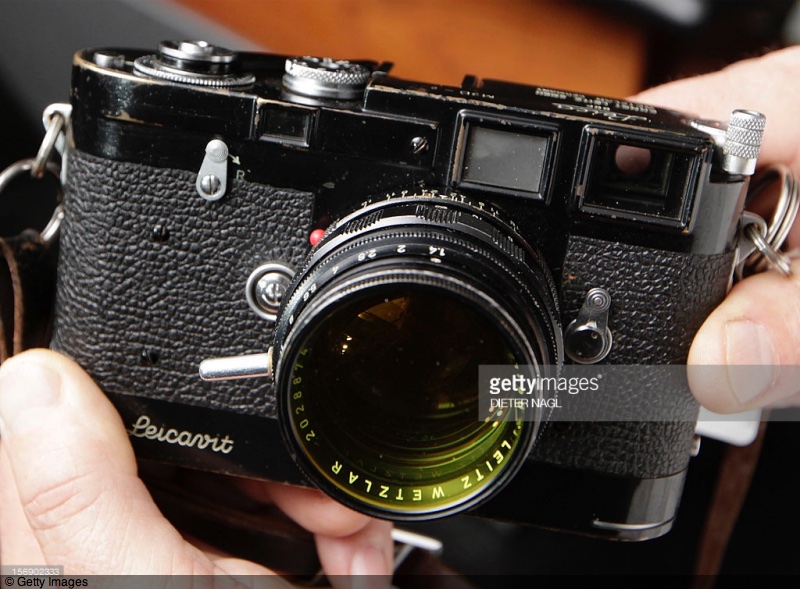
My Leica M3. That was then ….

In 1971, when I got serious about street snapping and bought my first Leica, a used M3, a new M4 could be had for some $940, complete with the greatest 50mm lens ever made, the f/2 Summicron. If film is your thing you cannot improve on this combination forty years later. Today a new digital M9 with a similar optic will run you $9,000, or $10,000 with the even more street-suitable 35mm lens. That’s an annual compounded inflation rate of almost 6%. By contrast, the US CPI has an annualized increase of 4.5% over the same period, which makes Leica’s price inflation look reasonable. Stated differently, that M4 + lens, inflated at the US CPI rate, would cost you $5,200 today. Yet, when someone tells you that a modern M9 + lens runs you the price of a good used car you blanch and look elsewhere.

The M9 is a far more capable body than any of its predecessors and for the over-and-above-inflation price increase you get a full frame digital sensor, a ‘motor drive’ as there’s no film to advance, aperture-priority exposure automation, extremely high ISO capability, a thousand shots a roll and instant gratification. All missing from that M4 of yesteryear. That’s a lot of value added for the incremental $4,000 or so over an M4 at today’s prices. And you still get that dumb-as-it-gets removable baseplate.

Yet why do so few serious photographers buy it? The reason is simple. It’s not that the M9, in some abstracted sense, ‘seems’ expensive. It’s that everything else is so much cheaper. And if you take function and flexibility into account, the single-use Leica (street snaps only, please) pales when compared to like priced modern megacomputers in the guise of the big Canons and Nikons. Indeed, for just a few hundred dollars you have a choice of any number of DSLRs from the likes of Nikon, Canon, Pentax, Samsung, Olympus, Sony and Panasonic which will outperform that M9 in every respect – speed, automation, flexibility and so on – while yielding results indistinguishable in quality from the Leica’s to all except those who have shelled out the price of entry for the latter. The Leica has migrated from tool to fetish.

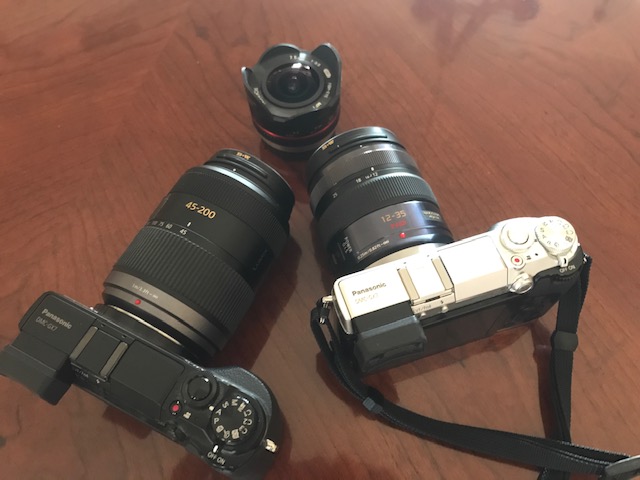
I’m thinking about this as I contemplate what to do with all the excess proceeds from my 5D sales. My little G1 outfit with 9-18, 14-45 and 45-200mm lenses, which ran me all of $1,650, can deliver 13″ x 19″ prints with ease, 18″ x 24″ if I try a little harder. I tried the 20mm f/1.7 pancake and returned this poor optic one day after purchase. It was, arguably, a luxury purchase, meaning I really did not need it, but I had all that cash burning a hole in my pocket, so blowing $400 of it on a toy seemed the thing to do.

Panny lists a 45mm Macro with Leica branding (right, pull the other leg) which helps them justify $800 for the lens. But my macro days are over. Been there, done that.

…. this is now. G1 and friends.

There’s also a tempting Panny fisheye lens which may entice me should I get the hankering to do QTVRs again, but the 9-18mm Oly satisfies my ultrawide needs for now.

On the software front simplification has also been the order of the day. Lightroom and Photoshop CS5 are a powerful team for just about everything I need, absent QTVRs. Panoramas, perspective correction, selective blurring, you name it. Plus LR’s superb cataloging and keywording. So no way to blow some cash there.

And when it comes to heat mounting my big prints, the old Seal press has about a thousand years left on it and the last I checked, they do still make them like that.

I guess I’ll just invest the excess, setting $1100 aside for the Fuji X100. Now that is one piece of gear I very much do not want to have to return for credit.

Meanwhile, there’s nothing to it. I simply have to take my dirt cheap gear and go make some more pictures.

The Leitz close-up gizmo outfit

A new high in strangeness.

For an index of all Leica-related articles click here.

If the 20mm Russar and 400mm Telyt were odd ducks in my lens tool kit over the years, this one takes the biscuit.

It’s the Leica close-up kit marketed in the 1950s which I owned for many years. I say “owned” rather than “used” because it was much more fun to assemble this collection of hardware and play with it than it was to use.

The Leitz close-up kit.

What you see in the neat fitted box is my Leica M2 attached to a Visoflex I mirror housing. The housing is attached to the Leitz Focusing Bellows I fitted with a 135mm f/4.5 Hektor lens head and a compendium lens shade – the latter extendable at will for very effective shielding of the lens. There’s a fine 45 degree right-way-round prism finder lower left. An excellent Leitz ball and socket head is lower center. These are beautifully made and I continue to use a variant on my monopod with the Panasonic G1. Highly recommended if you can track one down on the used market – exceptionally engineered, very secure when tightened owing to the design of the ball and indestructible. Attach a QR plate and you are done.

It’s hard to put into words how beautifully engineered everything in this kit really was. Every component speaks to the very height of the machinist’s art and confirms that Leitz’s quality and finish had only one way to go once the fifties ended. Downhill.

The lens fitted to the assembled Visoflex I and Bellows I

The idea of a continuous focusing range from infinity to life size was not new at that time – large technical cameras with long extension bellows had been doing that trick for ages – but seldom had it been executed as elegantly as here, especially in the 35mm film format.

The fitted case also accommodated a dual cable release with adjustable pin lengths. The idea was that the longer pin would raise the flapping mirror in the Visoflex I and further pressure on the plunger would then trip the camera’s shutter. It worked well.

Double cable release attached to the Visoflex I.

Everything was designed just so, right down to the bracing blocks in the lid of the case which made absolutely sure that your precious gear would not flail about in transit.

Truly a fitted case.

A second finder in the kit provided a reverse waist level view and, as you can see, the mirror in the Visoflex I was well oversized, for better function with long lenses.

With the waist level viewfinder in place.

In practice the 45 degree finder was far superior, offering an unreversed image at chest height, and included eyesight adjustment. Perfect.

Focusing, however, was far from perfect. The plain ground glass screen in the Visoflex I had no focusing aids and lacked a fresnel lens, so light drop off to the edges was severe. You simply opened the lens up to its modest f/4.5 maximum aperture (nope,no click stops here) and then racked it back and forth either side of what you though was sharp until it looked as good as you could get it. Then, fingers crossed, you pressed the button or rather you depressed the plunger on the twin release, trying not to forget to stop the lens down first. Of course, as the lens was completely manual things went dark really fast, so that handheld photography was pretty much out of the question. Definition at f/4.5 was iffy and depth of field so shallow that only the very lucky tried to use this apparatus hand held.

The compendium lens hood just went to prove that the engineers and designers at Leitz, Wetzlar had spared no expense. Like everything else in the kit it was beautifully made, slipped into the front of the bellows focusing rack on two chromed rods and clipped neatly to the front of the Hektor lens head in the groove provided.

The compendium lens hood for the Visoflex I.

The Hektor lens head was ordinarily sold with a coupled rangefinder focusing mount but for use with this kit the head was detached from the rangefinder mount and inserted into an adapter tube for fitting to the Bellow. Leitz wallowed in an orgy of adapters for seemingly everything in those days and various other lens heads had to use specific types. However only the rare 125mm f/2.5 Hektor and the 135mm Hektor and, later, Elmar and Tele Elmar kens heads would focus to infinity. You could also fit the 200mm and 400mm Telyt heads if you could find a second tripod to support the whole thing. The 135mm Hektor was a decent pre-war four element design and gained anti-reflection coating during the war years, being replaced by the more capable Elmar and, later the even better Tele Elmar which was the last 135mm rangefinder lens Leitz made with a detachable head. The even later 135mm Apo-Telyt-M was strictly for use on a Leica M body, with a fixed head. It was quite superb for its intended purpose, as my copy testified, provided your Leica M’s rangefinder was properly calibrated. Many were not and only the M3 with its nearly life-sized finder could really do the lens justice at full aperture and close focus distances when it came to dead on focusing.

The Hektor lens head fitted to its intermediate collar.

It’s some reflection on how times have changed when this sixty year old gear is compared to a modern full frame DSLR. My Canon 5D fitted with the Canon 100mm f/2.8 EF Macro and a ring flash offers focusing from infinity to life-size in a standard focus mount – no bellows needed! – is auto focus and auto aperture, delivers quality which will knock your socks off, and is easy to use handheld. There’s even a costlier ‘L’ version available with anti-shake technology. As these things go it’s also relatively compact, if not lightweight. None of that could be said of the Leitz outfit but the craven functionality of the Canon gear lacks everything the Leitz hardware possesses in spades. Sheer physical engineering beauty.

I have taken more great pictures with the Canon gear than I can recall but cannot recall having taken one half decent picture with the Leitz outfit – which is why you see none her.

But it sure was nice to look at. I bought and sold mine, after many years of ownership, for a song.

Leitz 400mm f/6.8 Telyt

Another funky lens.

For an index of all Leica-related articles click here.

Templeton sunset. Leicaflex SL, 400mm Telyt f/6.8 with adapter #14127,
1/125, f/6.8, Kodak Gold 100, handheld with shoulder brace.

Continuing the saga of odd lenses, here’s another one I used for years before it gave way to modern automated technology.

This one is at the opposite end of the range to the 20mm Russar profiled the other day and is none other than the magnificent Leitz 400mm f/6.8 Telyt.

Leitz has a long and storied tradition of making great 400mm lenses, starting with the 400mm f/5 Telyt made for the 1936 Olympics – you know, the games where Jesse Owens so disappointed German hopes for white supremacy. Indeed, you can bet there are many images documenting his four gold medals taken on this very lens. The pre-war model was uncoated and once America had recapitalized them on the sound principle that a fat German was safer than a hungry one, the Germans updated it post-war with a new mount and lens coatings to reduce flare. While the lens was fairly special for its time – f/5 at that length was really fast – it used a conventional rotating helicoid to focus and was a handful to use owing to its great weight. Handling was hardly helped by the fact that the Leica screw mount body user had to first fit a mirror box, the Visoflex, to permit focusing and viewing. This device did Rube Goldberg proud. To make matter worse, Leitz also offered a simple mounting tube and an optical viewfinder, though how on earth you focused or, for that matter, composed accurately with that remains a mystery to me.

So Leitz went back to the drawing board and conceived a handy follow focus mount with a trigger. The user held the grip and, on pressing the trigger, could change focus with a trombone sliding action, with fine focus being accomplished with a turn wheel under the thumb.

The focusing device, the Televit, came in Leica M and R mounts for use on the fine Leicaflex cameras and accepted the lens heads from the 200 f/4 and 280 f/4.8 existing lenses plus two new head units designed specially for the Televit.

These were the 400mm and 560 f/5.6 Telyt lens heads, which could only be used with the Televit, unlike the 200mm and 280mm lenses which came with a traditional, and detachable, helicoid focus mount. The Televit was a big improvement in the focusing department but the whole thing still weighed a ton.

So Leitz tried yet again and, in the 1970s, released their best effort yet, the 400mm and 560mm follow focus Telyts with a modest maximum aperture of f/6.8. These used a simple two element construction and were long focus not telephoto, meaning the 400mm lens really was 400mm (16 inches) long. Like the Televit, the heads for the two optical units were interchangeable and the lens came with a shoulder stock. This was a nice idea but in practice was a pain to assemble, so most dispensed with it. I always preferred a monopod with a QR base with mine and mostly used the lens at f/6.8. Sharpness did not improve on stopping down and you generally wanted to avoid doing that as the aperture control was as rudimentary as on the pre-war f/5 predecessor, meaning click stops with no preset mechanism. Ugh!

I used my 400mm f/6.8 Telyt first on my M2 and M3 with a Visoflex 2 or Visoflex 3 mirror box (much improved versions of the earlier Visoflex 1, but still Goldbergish), then on my Leicaflex SL film body with an adapter where it worked well if slowly – exposure metering was a match-the-needles affair. A nicely balanced outfit. But it really came into its own when the Canon 5D came along and one more adapter ring now allowed use of the lens on a modern high definition full frame body with aperture priority exposure automation.

The 400mm f/6.8 Telyt dismantled for transit.

Assembled.

Built-in filter slot.

The focus release button for the trombone movement.

When I first bought the lens it had been sitting unused for many years and the grease in the trombone slide had dried out. $80 later it was relubricated and working superbly. You really needed no fine focus control as it was so nicely balanced that achieving fine focus just using the sliding motion was easy. This was probably as good as traditional manual focus technology every got with a lens of this length. They can be found for a song on the used market; just prepare to have yours relubricated before use.

As you can see the lens was no slouch:

Egrets off Highway 1, California. Canon 5D, 400mm f/6.8 Telyt with #14127 Leica-M to Leica-R
and Leica-R to Canon EOS adapters, 1/125, f/11, ISO 200, monopod.

The Telyt was sold (as it was in mint condition it went to a collector, needless to add – what a waste) and replaced with the Canon 400mm f/5.6 ‘L’ which is superior in every way – sharper, auto aperture, superb autofocus. Technology had moved on and it’s the reason you will never see a pro using a Leica at a soccer game – they still do not make autofocus long lenses to this day, and without autofocus you cannot compete. That Canon lens has, in turn, been largely superseded by the magical Panasonic 45-200 (90-400mm FFE) which offers 400mm equivalent length at the long end at f/5.6 and – here’s the magical bit – fits in your jacket pocket and weighs under one pound. And did I mention that it includes anti-shake technology?

The Russar 20mm lens

Major league strange.

For an index of all Leica-related articles click here.

The Unfinished Church, Bermuda, 1999. Leica M6, 20mm Russar, Kodachrome 64.

Mention of the quirky Leitz Stemar stereo lens yesterday got me to thinking of some of the stranger lenses I have owned. Without a doubt on of the oddest was the 20mm Russar-M f/5.6.

Mine came in black – the Russar 20mm f/5.6 ultra-wide angle lens.


This was a super wide angle Leica thread mount lens without rangefinder coupling. Not that any was needed as at 20mm pretty much everything was sharp all the time. I got mine shipped from the UK for under $200 and it came with the best wide angle viewfinder I have yet seen. Not only was the image clear and relatively undistorted in the finder, the field of view was accurately defined and the whole thing was superbly made using light alloys. None of these atrributes apply to the awful Leica 21mm finder, now in plastic and costing a ridiculous $750 today. Further, the Russian finder had a swivelling foot which allowed you to tilt it down for parallax correction at close distances. A masterpiece.

But the lens was even better. When the Russians took possession of eastern Germany in 1945 one of the priceless properties there was the old Zeiss, Jena factory. I cannot confirm this but am fairly certain that the 20mm Russar was optically identical to the 21mm Zeiss Biogon and like designs, meaning a deeply protruding rear element which rested very close to the camera’s shutter and required a deep rear lens cap for storage. The oddest ‘feature’ of this lens was the aperture ring which was deeply recessed within the front of the lens so you had to stick your finger almost into the lens to change f-stops.

This placement, of course, precluded the use of a filter as with one in place you could not adjust the aperture.

Viewfinder and Russar 20mm on the Kiev copy of the Contax II. The lens also came in a Contax bayonet mount.

The definition was excellent at all apertures and best at f/8. In practice you would simply take a wild guess at the correct focus distance (in meters, not fun for one brought up to estimate in feet!) sight through that wonderful finder and bang away. I kept it permanently mounted, using a screw to bayonet adapter, on my Leica M6 which had such a poor viewfinder (can you say flare? – I shoot into the sun a lot) that it made a natural mule for the Russar. What’s more, it amused me no end to have a Russian lens mounted on what was then Germany’s finest.

The lens was an inexpensive alternative to the Leitz Super Angulon f/3.4 (the earlier f/4 was a real dog) and later Leitz Elmarit and Aspherical Elmarit f/2.8 designs which cost and arm and a couple of legs. The Aspherical variant remains in the catalog at $4,400, so you get the picture. When my Russar-M finally moved on, replaced by that same unbeatable Aspherical Elmarit (it was one of my ‘more money than sense’ moments, I confess) I found myself missing the Russar’s compactness and built-in ‘hood’. The Elmarit was gargantuan by comparison, and the even larger hood an object of ridicule. I never used it. When the Aspherical Elmarit was finally sold I did at least have the pleasure of doubling my money on it, Leica gear prices having gone through the roof.

The equipment pictures above are from the excellent USSRPhoto site which has masses of information on all sorts of Russian camera gear.

Bermuda Sky, 1999. Leica M6, 20mm Russar, Kodachrome 64.

A 20″ x 16″ print of the above over the mantlepiece at home testifies to the quality of the Russar.

Panasonic 3D lens

The Stemar is back!

For an index of all Leica-related articles click here.

Sold in very limited numbers in the mid-1950s, Leica’s Stemar lens was an elegant way of making stereo pictures with your rangefinder Leica.

The 33mm f/3.5 dual lens Stemar

The Stemar lens (the name derives from STEreo elMAR – meaning a simple four element design like the 50mm Elmar) would take two images, each 18x24mm on a standard 24x36mm film frame and came in a kit with a tailored lens hood, a 33mm clip-on viewfinder, a close up lens/prism, and a binocular viewer to permit 3D examination of the transparency image. There was also an even rarer attachment for your slide projector to project the twin images on a large screen. All are visible in the picture below.

Stemar outfit.

Given that it came in a Leica screw mount, easily adapted to the latest Leica M cameras, there’s no reason why it wouldn’t work every bit as well with the latest M7 Leica film camera or even the M9 full frame digital, though I’m not sure how you would create viewable transparencies with the latter; doubtless possible with some ingenuity.

As the picture shows, the lens was something of an ugly duckling, screws showing prominently on the front plate, the ugly protruding finger focus tab, the many gadgets needed to make it work, and definition cannot have been that great. The four element Elmar design works reasonably at 50mm and 65mm (the latter on the Visoflex SLR ‘mirror box’) and well at 90mm but is probably poor at 35mm. Leitz made a 35mm full frame Elmar pre-war and it was soon replaced with the excellent six element Summaron. Compare with the Panasonic lens, below and see what stylish modern design is all about.

As with all low production Leica hardware, the Stemar has now acquired that awful epithet of ‘collectible’, meaning it’s doomed to a china cabinet and commands a $6,000 price tag at auction. I find this every bit as damnable as the $1mm Ferrari treated in like manner rather than thrashed on the backroads, which was the design intent.

Now a Stemar was not something I ever owned. Even a few years ago when it was actually affordable it would have been no use to me, as a childhood eye defect forever rendered me incapable of seeing in three dimensions. My brain – such as it is – cannot fuse the disparate images, with the happy result that I read with my right and drive with my left eye. It makes for interesting moments when trying to pour red wine in a white tablecloth restaurant, as I have no depth perception, and is the reason you will invariably find me delegating the task! I have experienced too many reddening tablecloths to want to repeat the experience, testimony to my having missed the glass completely ….

But I console myself that my infirmity has been all to the good. Like the blind man with an overly developed sense of hearing, this One Eyed Jack simply tries harder with what he has. While motorcycling near the cliff edge can be an unusually unnerving experience, I grit my teeth and try harder, consoling myself as the journey ends that I am a better and stronger person for the experience! Further, I get to save money and weight on binoculars, as a monocular is fine, the second optic being wasted on me.

But 3D is the coming thing. In one of those mail catalogs I simply cannot seem to unsubscribe from, the assorted big screen TVs for sale were dominated by one thing – labels screaming ‘3D’. Motion pictures are a hit in the format (or so my 8 year old assures me – I cannot go with him as I cannot actually see anything but a head-splitting mess on the screen) as Hollywood discovers the latest in moneymaking technology. More power to them. I get to save on the entry price to the 2D theater.

Many of those 3D TVs in the catalog come, of course, from Panasonic, which is a pioneer of the technology. So it’s hardly a surprise that they will shortly release a 3D lens – just like the Stemar but auto-everything – for the G-series of micro Four-Thirds camera bodies.

Panasonic’s modern Stemar.

I don’t know the focal length but would assume 16mm or so, as the Full Frame Equivalent of 33mm used in the Stemar is ideal for 3D images – anything much longer and the subject tends to lose the 3D effect. Or so I am assured by those with binocular vision. I think it’s a tremendously exciting development as the images taken with this optic will simply be ported to your Panny 3D TV set for viewing with those funky glasses, a far superior experience to the Stemar’s hand-held binocular viewer, I would guess. In that case, your ‘collectible priced’ Leica M9 may finally fulfill the potential, with its equally collectible Stemar, which the latter so under-delivered on over fifty years ago. The G-body + Panny 3D lens will run you some $12,000 less, by the way.

Just goes to show, doesn’t it? There really is not that much new under the sun.

Here’s Panasonic’s press release on the subject; check the double asterisked note – you can bet Panny’s designers have a Stemar or two in their labs. The English may be stilted but the awareness of the predecessor design is clear:

And here’s the 1954 audience enjoying the predecessor anaglyph system – one lens red, one green: