Category Archives: Leica

All about the wonderful cameras from Wetzlar.

Marketing and choice

America’s strong suit.

As an American resident for some 55% of my life now, I’m permitted to make value judgments about what we do well and not so well. Note the “we”. I may still affect an English accent but 20 years of American citizenship and a disproportionate tax burden grudgingly paid over those years very much entitles me to say ‘we’.

So America does lots of things very poorly. Since 1955 our foreign policy has varied from criminally incompetent to disgraceful. It is nothing less than a history of failure. Our secret services probably couldn’t find bin Laden if he had a permanent suite in the Holiday Inn behind the White House, and we continue to think that waging hostile, aggressive foreign wars is the solution to what ails us. We guzzle oil like there’s no tomorrow – not surprising in the absence of an energy policy – and continue our migration to adoption of the worst of the nanny state policies of a dying Europe. Our fiscal and taxation policies make some sub-Saharan dictatorships look the model of common sense and our insane greed translates into bubbles of excess more or less twice each decade. We have a public schooling system that is a criminal conspiracy against our children and one of our main political parties derives its funding from shake down artists – trades unions and class action lawyers.

That’s some pretty bad stuff. But the other side of the coin continues to surprise and delight, for we do so many things right.

Whether by accident or design we are exceptionally welcoming to immigrants, despite all the hatred we engender abroad. We are, beyond any shadow of a doubt, the most generous and open-hearted nation the world has seen. We are, for the most part, supremely powerful and exceptionally benign in wielding that power. We are brilliant scientists and technologists and, most of all, we are the world’s business leaders. We grow more food than an we can consume. We are the leaders in all aspects of art and entertainment. Anyone can get an education for very little and anyone can get a job. We have the finest private schools the world has ever seen.

But, above all, we are a nation of hustlers, nowhere more evidently so than in our infinite skill at marketing. We can sell anyone anything. Whether it’s a fighter jet for the despot of the day in the Middle East or a newer, better car, boy, do we have a deal for you.

I am always reminded of our marketing prowess when I think about my mother, who passed away a few years ago. No way, she would tell you, was any marketer ever going to direct her thinking away from its independent path. But what did my sister and I find in her closet once she had passed away? Some dozen Coach bags and sufficient numbers of pairs of Evan Picone shoes to give even Imelda Marcos a little frisson. So, like the rest of us, the US marketing machine had got to the old girl.

In my fifty or so year life as a photographer I have always been fascinated by the externalities that affected my choice of equipment. Was I choosing based on need, economics or because the Coach-bag guys had got to me? I would like to tell you it was need, that money did not matter and that, like with my mum, no marketer was going to change my mind. Wrong on all three.

Let’s get specific. Of all the gear I have owned over the years which items mean the most to me? Worked best, took the best snaps, gave me that warm glow that comes with seamless execution?

As I don’t want this journal entry to stretch to book length any more than you do, I narrowed it down to just five. Five pieces of photographic equipment that changed my direction and interests.

In chronological order, with my ownership period shown:

  • Leica M3 – 33 years
  • Epson 1270 printer – 6 years
  • Rollei 6003 – 7 years
  • Apple’s Mac – 8 years
  • Canon 5D – 2 years

Actually a very easy list to make, for each of these machines made a big change in how I work.

What made these special, and how did American marketing affect my choice?

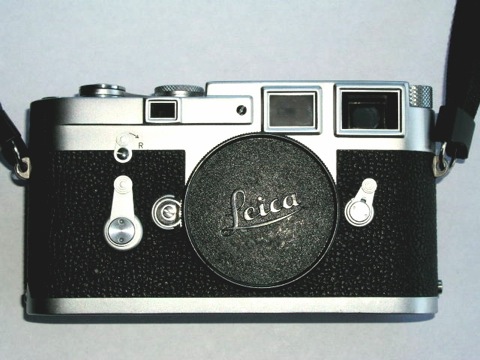
The Leica M3 was the result of viral marketing as we would call it today. A relative had an M2 and once I handled it as a teenager, I had to have one. First there was the world’s best viewfinder. Second was the relative silence. But above all, it just felt right. And it so totally meshed with my interest in street photography that Leica’s marketing can rightfully be said to have been undertaken without pay by Cartier-Bresson, Brassai and Kertesz, because it was through their work I knew the rangefinder Leica. Leica’s marketing is, of course, some of the worst on earth. First, they made a device so good and so expensive that most of their market came from resales of used gear. When my last Leica finally saw the insides of the local UPS store last year I couldn’t help reflecting that after all those years of cameras and lenses from Wetzlar only once had I ever bought a new Leica product – the 90mm Apo-Summicron Asph, bought from England when the mighty dollar was well, mighty. Leica has got over its attention to detail and quality since those days so now everyone can own one. Which did nothing to improve Leica’s bottom line. Anyway, with that M3 the marketing feed was like that of a fellow painter recommending a brush. Word of mouth or eye, in this case.

By the time the Epson 1270 came around in the mid-90s, not only was I well and truly an American, but computer processing had sounded the death knell of traditional processing methods. And the dyes in Epson’s inks were so well made that great prints were limited solely by your ability to tune your hardware just so. The only reason this machine moved on was that I wanted to make larger prints, something the HP DJ90 readily offered in its 18″ x 24″ capacity, compared to the more limiting 13″ x 19″ of the Epson. Unusually for modern technology, the Espon truly is a Ten year digital device. Suddenly my default print size was no longer 8″ x 10″. The marketing input here was simple. I used to subscribe to an advertising magazine for photo gear named Shutterbug. It had started as a classified ad rag and then tried to migrate up market with the inclusion of content. The fact that said content reflected some of the worst writing ever put out by flacks dependent on free gear (“Sure you can keep it, if you like it”) was lost on me. They said the Espon was great, I bought it and, well, I bought it. I was lucky. Their lies were my truth. I lucked out as it really was that good.

In a roundabout way, the Epson reacquainted me with medium format photography. I had long owned a little used Rollei 3.5F TLR but never got on with the reversed waist level image. My brain had become lazy after all those years with Leica’s ne plus ultra viewfinders. But the Epson had opened my eyes to larger prints and, frankly, only rarely was the resolution/grain/whatever of my Leica snaps equal to the occasion. Epson had done Rollei’s marketing and the wonderfully ergonomically correct Rollei 6003 SLR, with a prism viewfinder, made for one very happy camper. Pretty much fully automated, the lenses beyond reproach, it made medium format as easy and as approachable as banging away with that Leica. Too bad it weighed about as much as a Mack truck. Not only was Rollei’s marketing nowhere to be seen – they don’t even bother advertising their medium format gear here and had they done so I would likely have avoided the product. Have you ever studied the sheer ineptitude of German marketing in the US? They just don’t get it. We don’t want things that last forever and get handed down to the next generation (only Patek Philippe gets that one right, and they are Swiss). We want the here and now.

Apple’s Mac was a no brainer and viral marketing was again at work. For the last five years of my life which saw me as other than my own boss, I ran an investment firm. We ran all our technology on Windows NT and had no fewer than six people (out of 50) running IT to make sure the daily failures by Windows would not show their ugly head in the front office. I was shooting the breeze with the head of IT one day and he mentioned he had just bought a roll sheet feeder to go with his Epson 1270. I chance to ask which computer he used at home and the surprise answer was “I use a Mac”. Now this is a fairly limp-wristed admission in the machismo world of Wall Street which regards Mac users to this day as a bunch of artsy-fartsy Nancy boys. Now because my CTO was a very capable person, I paid attention. Add the fact that my home PC ran Windows 98 (want to know how to cure world air traffic problems? Run the Civil Aeronautics Board on Windows and, after the first two mid-air crashes, traffic will disappear) and crashed daily, you can imagine I was more than a bit receptive to some good marketing. Even if it was for a fag product. OS X had just arrived and the machines looked like nothing I had ever seen. I own my original G4 iMac with the screen on a stick to this day, even if it is relegated to back-up duty. The machine worked, it did not lock up, the awful Photoshop ran nicely on it (Apple’s Aperture was not to become available until years later) and it looked great. As has every Mac since. And while I only work for one asshole now (me) I can still run Gates’s version of organized theft in Parallels, where Windows’s virusphilia is neatly contained in its own little incubated tent. I still need that for stock market applications – hardly Apple’s forte.

By the time I found out about the Canon 5D the Shutterbug subscription had been cancelled. Any number of web sites now published equipment tests and whenever you doubted the independence of the writers you could always jump over to comment boards. Even the smart marketers in camera-land couldn’t pollute all of those with purportedly independent emails extolling their products. Like any rigorous stock analyst I was approaching every piece of gear with the question “Where’s the money?” uppermost in my mind. So the decision to try a 5D was the result of word of mouth, too. People who used it loved it, I was getting increasingly irate with the amount of time wasted on the back-office functions related to film (all that non-creative processing and error correction) and people who splash out $3k on a camera body should, you would like to think, be pretty critical. After all, you could get a couple nice used film Leicas and a few of Wetzlar’s magical lenses for that kind of cash. The 5D made a huge difference to what I did photographically. The street stuff of Leica days-yore no longer interested me, the bulk and weight of medium format displeased me and I had grown to love the outdoors and the landscapes it offered. Plus I now hated, just hated, processing pictures. Just show me which button to press for a huge print, please. The 5D made all that possible – my migration to the front office of photography was complete.

And many thanks to all those anonymous, unpaid marketers who made it possible.

More censorship from Leica

Censorhip is simply much tougher than in day’s past.

I wrote of Michael Reichmann’s appalling behavior regarding his review of a faulty camera from Leica (the M8) here.

Now an erudite posting, addressing the M8’s problems that Reichmann struck from his ‘review’, was censored by one of the moderators on the Leica User Forum. Not so fast, Mr. Censor – you can erase the message on the forum, but you cannot remove it from my news reader:

Now I do not know the poster, but the message seems rational and well argued. Why then was it struck soon after posting?

Leica’s Watergate

Just another case of a lack of journalistic integrity?.

When I trashed the Panasonic L1 I wrote positively about Michael Reichmann’s objectivity when he wrote about this camera on his web site.

I now have no reason to any longer think that Reichmann is an objective writer.

He has admitted (after clicking the link go to the bottom) that, in ‘reviewing’ the Leica M8 he pulled critical comments from his piece as requested by the Leica Company who had loaned him the camera. It is possible that many who based their purchase decision on his purportedly objective review would have refrained from buying the camera had these comments not been censored.

While he has since bought an M8, I assume using his own money, the reality is he allowed his objectivity to be irrevocably compromised, in this writer’s eyes, by the provision of a free loaner, trading it for self aggrandisement that comes from being one of the favored few to be graced with a pre-production M8. “Look how important I am. Leica gave me a free loaner.” Psychic payola, and good value, had it worked for Leica. They didn’t even have to write a check. In the event, collusion between manufacturer and ‘reviewer’ has, in this case, hurt both.

Had Mr. Recihmann published his adverse findings, explaining that Leica told him they had fixed the problem (they have not) that would have been quite different. In that case he could have stated that he would verify such claims in a follow-up to his review.

As long time readers of this journal know, there is no earthly chance that Yours Truly would ever be given anything free by any manufacturer to ‘review’, as a manufacturer’s publicity machine is not intended to spread truth, justice and the American Way. Rather, its sole intent, which is fine with me, is to sell products. Just don’t expect me to write manufacturer-censored reviews under the guise of objectivity.

You may check my ethics policy by clicking ‘Author and ethics’, below.

The closing three sentences of Reichmann’s apologia are breathtaking and I quote – my underscore. I quote, in case they should one day disappear from his site – please read his whole piece to put these in perspective by clicking on the link in the third paragraph above:

“But, in the end I would do what I did again, simply because I felt that potential owners needed to know what I had learned in my testing, without delay. And, I would have held back again on the issues that I was requested to because that’s the proper way to deal with manufacturers, who one assumes will take their responsibilities to journalists seriously. Enough said.”

If you can reconcile the first and second sentences, please educate me by leaving a comment, below.

So now that you understand Mr. Reichmann’s “….proper way of dealing with manufacturers….” you will know better than to believe anything he ever writes again on his Luminous Landscape web site.

Mr. Reichmann, let me put you out of your naïveté. A manufacturer’s goal in a capitalist system is to get journalists to write what is best for the profitability of the manufacturer. A journalist’s goal is to write unconflicted truth as he sees it, pulling no punches with regard to material facts.

And here is what you really meant to write, and do feel free to copy and paste it into your column – no attribution needed:

“Dear Luminous Landscape readers – I made a serious ethical and journalistic error in withholding information regarding product defects in the new Leica M8. I did this at the request of the Leica Company who had given me a free loan of the camera. In doing so, I made a material misrepresentation to you, my readers. I have seriously compromised my journalistic integrity and accept full responsibility to all of you who bought the camera on my recommendation and now find that, had my findings been uncensored, they would have changed your purchase decision.”

Trust, once lost, Mr. Reichmann, is seldom regained. Print a proper retraction on the lines of the above and I will be happy to publish it here.

As for Leica, the company may have knowingly released a faulty product. If that is the case, the class action lawyers will take care of them, assuming there’s enough money left there to make the suit worthwhile. Why, even Mr. Reichmann would collect something in the settlement.

Withdrawal symptoms

Well, just one Leica left.

For an index of all Leica-related articles click here.

Be under no illusion. Selling off the last of my Leica equipment was emotionally wrenching. These may be mass produced machines, true, but when something has been a part of you for more than a third of a century, well, parting is not easy.

I cannot but reminisce about some of the wonderful optics that made their home on my Leica and Leicaflex bodies. And, in truth, there were more optics than one could recall without saying, in the same breath, that he was privileged indeed to have enjoyed so much that was wondrous. For whatever their future, Leica can claim, without any fear of exaggeration, to have made most of the best lenses that have graced any camera. Ever.

Some stand out not so much for their optical prowess as for the results they delivered. And if I sound a bit like Woody Allen reciting his favorite things on this earth, towards the end of the beautiful film that is Manhattan, well, so be it. Favorites in the early years were the 90mm Elmar – small, modest, unpretentious, yet always willing. The perfect match for that stroke of genius we know as the M3 viewfinder. On those trips to Paris it ceded primacy to the 35mm f/2.8 Summaron. The “eyeglasses” this needed to frame properly with the M3 were not the most chic of Leitz’s designs, but the lens was superb in every way, certainly more affordable to this impecunious student than its f/2 Summicron stablemate. Suffice it to say this optic saw more use on the M3 than anything else during my monochrome London years.

As affluence raised its head after a year or two in the world’s greatest democracy, the M3 was joined by a Leicaflex SL with the ne plus ultra 50mm Summicron-R.

Hard to do anything wrong with that combination. Certainly, the svelte style of the M3 was missing from this bulky pair, but the camera came with the best viewfinder and focusing screen ever built into an SLR – a fact to this day – and once that body was mated to the superb 180mm f/3.4 Apo-Telyt-R, well, this photographer had found his Chateau Lafite Rothschild of landscape equipment. Throw Kodachrome into the mix and you have maybe the finest equipment the twentieth century ever made available to an aspiring photographer. With but one exception, read on below, this was the best lens I have ever owned.

After years of providing for old age, a process that common sense dictated was something you would be foolish to trust to government, the photographic ethic saw a return to the M and its street capabilities. The so-so 50mm f/2.8 Elmar gracefully gave way to a lovely v3 Summicron, the last model with the removable lens head, and the increased contrast and lovely tonal rendition of this masterpiece, now used exclusively for color, were a joy to behold.

Small, fast focusing, it has moved to a good home. It served me faithfully for the best part of two decades.

The 90mm Elmar gave way to a Leicaflex design mounted in an M mount, the 90mm f/2.8 Elmarit-M. Nowhere near as compact as the old Elmar, its lens element did not rotate as you focused, so the apertures were always clearly visible on top. Almost worth the trade off in size and weight, and the jump in definition and resolving power was out of this world.

But the M3 lusted after something better still, and before you knew it the Elmarit-M was joined by a brand, spanking new 90mm Asph Apo-Summicron-M. The only new Leica lens I ever owned and there are no words in the vernacular to describe the capabilities of this optic. It is as if the M3, released in the early ’50s, had finally found a lens to do it justice some forty years later. Suffice it to say that it simply intimidated me every time I mounted it on the camera, for the knowledge was certain that there was simply no way I could do it justice. Without a doubt one of the best lenses I have ever owned.

But that was far from the end of it. Like the poor kid who grew up lusting after Ferraris but never dreamed he would own one, I chanced upon a new 400mm f/6.8 Telyt.

This lens had always fascinated me when I was a kid, just like those Ferraris.

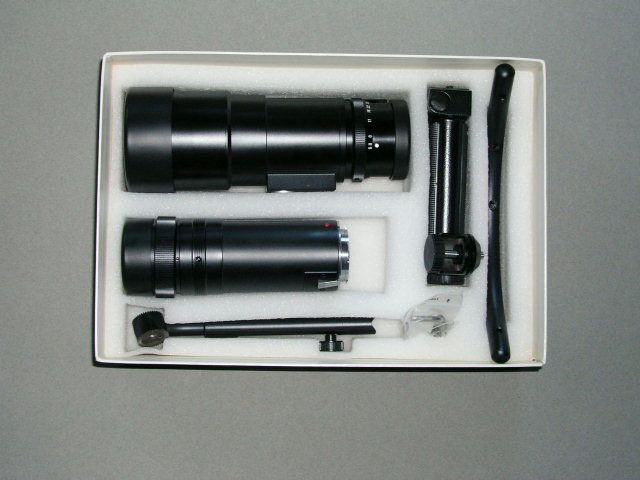
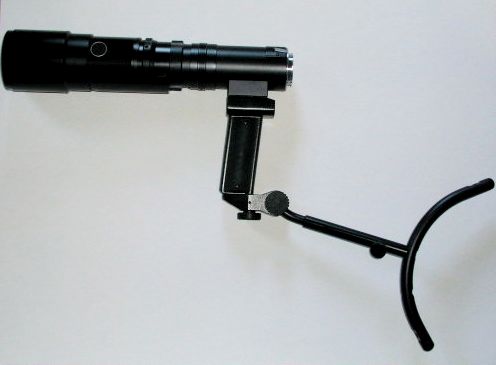
The lens had been owned by a collector (Ugh! A lawyer to boot, as if that was a surprise) for twenty years and never taken out of the box. Sacrilege! The lubricants in the trombone focus action were dried up, the schmuck lawyer’s protestations notwithstanding, making focusing about as much fun as a root canal, but a quick trip for relubrication saw another example of Leitz’s genius mated, with the appropriate adapter, to the Leicaflex. The design may only have used a couple of glasses but, goodness, was it sharp. The thing was a foot and a half long, making for a discomfiting feeling in later years as everyone was now watching everyone else, but it cranked out some great pictures despite the perceived threat to life and limb of all and sundry.

Reverting to the streets, where I had pretty much grown up as a photographer, called for something really wide, so why not the best? The late ’90s market was booming, everyone was an investment genius, money was cheap and, so it seemed, was the outrageous 21mm Asph Elmarit-M.

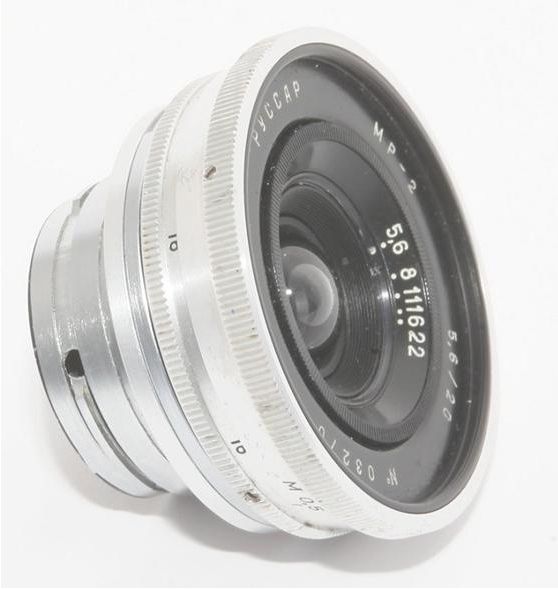
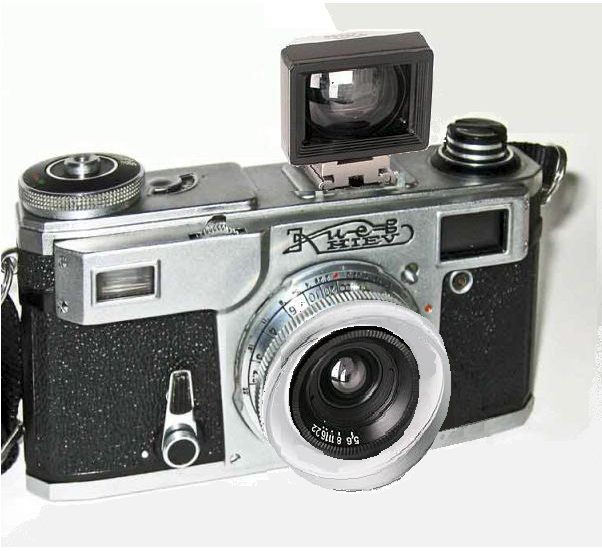
The third best lens I ever used. Sure, the clip on viewfinder was simply lousy, plastic casing and all, and the lens hood was consigned to the garbage can as soon as I looked at it, but it replaced a bizarre, if cheap, Russian 20mm Russar (a design that Comrade Stalin appropriated from Zeiss) and showed this user what a super-wide was really about. This one really became a part of me. I find it hard to believe that the coverage and micro-contrast of this very special optic will be exceeded at this focal length.

And finally, because I simply had more money than sense at the time, why not a 135mm f/3.4 Apo-Telyt-M?

I already knew what the magical combination of apochromatic glasses and Telyt design could do, so the 135mm replaced a long string of 135s – the Hektor, the Elmar, and the Tele-Elmar. It badly embarrassed all of its predecessors.

There were many others, of course. Like old girlfriends, you never forget them. (There were, I hasten to add, more lenses than girlfriends). Each had its genius. Each had its faults. All were loved. And remain so to this day. (Lenses and girlfriends).

So now I have one Leica left. My M2, with what is perhaps the ultimate street snapper’s lens, the 35mm Asph Summicron-M. Yes, another gift courtesy of the Internet Bubble. The pairing is on extended loan to a fine English photographer, and will probably return home sometime in 2007. That Summicron replaced a very modest 35mm f/3.5 Summaron which, despite its unprepossessing looks, was as good as you could wish, at any aperture. Indeed, with the sole exception of the 50mm Elmar my M3 started life with, all those wonderful Leica lenses never much cared what aperture you selected, for they were equally good at anything the lighting conditions dictated. And the 35mm Asph is maybe the only design where Leica finally got the lens hood dead right.

So, will I sell both? Well, the M2 body must move on. I am simply not returning to the drudge of film/processing/scanning/dust removal that digital obsoleted. Further, I have little interest in cropped digital sensors, especially at the outrageous price Leica is asking for the M8, so unless the House of Leica comes out with a full frame sensor, affordable M9 (as likely as finding integrity in a politician), and stops making all those darned excuses about technology, the 35mm Asph will go also. Modern point-and-shoot digitals get better daily at prices, compared to the M8, that represent impulse buys. They also permit cost effective annual upgrades, something no M8 owner will like to contemplate after a mere twelve months of ownership. And that, by the way, is why I think Leica’s M8, after the honeymoon is over, is doomed to fail.

Complacency is easy. Change hard. Neither negates the fact that technology marches on.

Leica – Witness to a Century

A fine chronlogy, if factually flawed

I picked up my copy of this book a couple of years ago from overstock bookseller Edward R. Hamilton for a few dollars. It’s actually worth that sort of money.

This is the last place to go for factual accuracy regarding the various Leica models; I am no maven but could scarce find a page without several technical errors accompanying each of the illustrations of the many models of cameras made by Leitz over the years.

On the other hand, the book does a fine job of showcasing the work of some great photographers from Oscar Barnack, the inventor of the Leica (he was a fine photographer), down to modern times. Especially pleasant to see is the work of a couple of relatively unknown Italian photographers, probably attributable to the nationality of the Italian author, Alessandro Pasi.

And, technical errors apart, who can argue with the caption for the M3, first sold in 1954? “The turning point: Leica M3”.

Indeed.