From today’s iPhone4 roll out
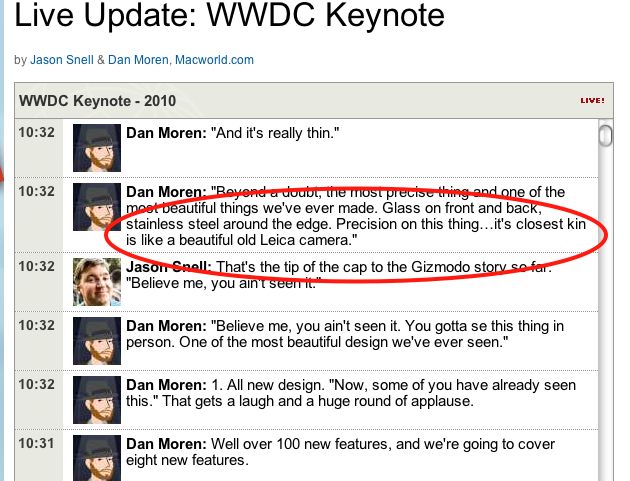
Though Steve Jobs forgot to add “…. and a heck of a lot more reliable”.
From today’s iPhone4 roll out
Though Steve Jobs forgot to add “…. and a heck of a lot more reliable”.
The last face lift.
I wish Leica well with its new M9. There’s always a market, however small, for the dowager on her third face lift and no shortage of insecure, wealthy buyers with weak egos craving fame by association. I think of the M9 as the Joan Collins of cameras. Neither is cheap.
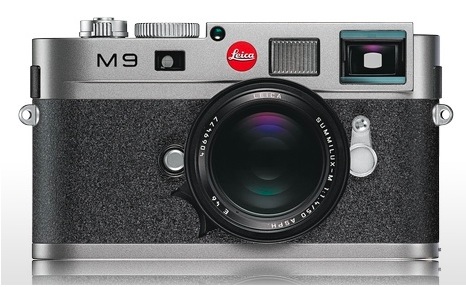
The Joan Collins of cameras – the Leica M9.
The best thing to be learned from the M9’s tired makeover of a design that peaked in 1959 with the M2 is that the viewfinder is key. It is the window to the soul of the photographer’s subject, and the less it imposes itself between subject and snap, the better it serves its purpose.
The first twenty years or so of digital camera design will, I believe, go down as the period during which manufacturers’ disregard of the needs of consumers was at an all time high. So enamored did they become of digital this, and LCD that, their design results were some of the slowest, least responsive and unusable cameras ever made. You hardly need me to tell you that. Go to any crowded place on a sunny day and enjoy watching their owners squinting at silly little screens held two feet away from their eyes while taking pictures far worse than their parents managed on the Brownies and Instamatics of yore. Those at least were properly framed and action shots were the order of the day.
At the other extreme from the point-and-shoot set were the ‘professional’ DSLRs which made matters even worse. Like the Leica M9 these depended on fifty year old technology, this time in the guise of flapping mirrors and bulky glass prisms to get the image to the snapper’s eye. But as this is the digital age, these cameras started to sprout dozens of excrescences in the guise of control buttons and yet more ergonomic noise on their miserable LCD screens and ever more cluttered viewfinders. The only significant change in appearance was that the shapes became more organic and free flowing as modern plastics and manufacturing technologies took the sharp edges off. Just look at the original Nikon F for comparison, if you want to see what I’m talking about.
But the innovators in camera design, the Japanese, have woken up. First, they need a new idea to sell more gear to all those current digital owners, be they amateurs or pros. Second, some of them actually use the gear they make and grew up adulating the Leica M as the touchstone of camera and industrial design for, in 1959 when Mr. Yamamoto was knee high to a grasshopper, the Leica M2 was the unique blend of form and function. Small, fast and with decent lenses, it was the traveling companion of choice not just for well heeled amateurs but for pros wanting the best there was. And Yamamoto san, when he finally migrated to longer pants, found that the M2 was his snapper of choice, surrounded as he was by flashing LEDs and beeping buzzers galore.
To cut a long story short, the example set by the Leica M has placed camera design on the cusp of the next revolution. The changes that will bring will be nowhere near as earth shaking as the invention of digital sensors but they will finally make the digital camera the practical tool it has so far largely failed to be. And the most significant of those changes will, simply stated, be in the area where the Leica M once excelled. The viewfinder. The window to the subject’s soul.
I doubt it matters what the sensor size or format will be, for the new crop of digital cameras will come in any size you want. Medium format, full frame 35mm, APS-C, Micro four thirds, microdot – whatever. But what all of these designs will boast will be an absence of the ridiculous pentaprism, flapping mirror and LCD screen, all obsoleted by the growing availability of fast, noise free, bright-in-any-light and superbly compact electronic viewfinders. And they will focus fast with no shutter lag. A whole new selling proposition, rediscovered from those halcyon Leica days.
The maker at the cusp of what I call the Viewfinder Revolution is, of course, Panasonic, with their ground breaking G1/GH1 designs. That will not last long and you can bet that the basements of Nikon, Canon, Sony, Pentax/Samsung, Olympus et alia are a beehive of activity, filled with engineers and lawyers finding workarounds to Panny’s patents.
And their new designs will boldly drop the faux pentaprism hump that Panny felt was needed to introduce users to a new design ethic, will delete all the silly little buttons and will relegate the LCD screen to its rightful place as nothing more than a rarely used configuration display for favored settings. The EVF, whether eye level, waist level or both, will move modern camera design to a place where the wonderful digital sensors of today and tomorrow will finally be wrapped in a body with a viewfinder which can do them justice.
So thanks, Leica, for pointing the way. It’s just too bad that, like our heroine in the first paragraph, you refuse to age gracefully and pass to the museum which is your well deserved resting place.

The Leica M of women – Joan in 1960 and in 2007
Note: The writer used Leica M2/3/6 cameras and lenses almost exclusively in the period 1973-2008 (doubtless all now owned by Yamamoto san) and can assure the reader that the only ‘Leica glow’ he ever felt from all those wonderful lenses was from the red ink on his bank statement. Only those who have paid the asking price of the M9 and its glass will feel that glow, and they will spare no effort telling you about it.
Some thoughts.
It’s 9/9/09 and Leica finally introduced its full frame digital M9. I won’t be dwelling on it here as I doubt there’s much need for, or interest in, a $10,000 camera (with lens) which comes with almost no automation, bulky lenses and a near total lack of weatherproofing. For that sort of money there are several rugged and capable DSLRs available from other makers and the specific situations in which a rangefinder camera excels are few and far between. Street snapping is probably the main genre where the r/f is most at home. A good reality check may be found here.
Leica has also introduced the X1, a fixed lens (35mm equivalent) APS-C body with a very appealing design. They deserve hearty congratulations on this as it’s not yet another rebadged Panasonic, though the premium price of $2,000 is hard to swallow. Plus you will need to add an optical viewfinder to make the thing workable in street situations which adds more cost. With v/f and with its non-detachable lens extended it’s much the same size as the G1 or GF1:
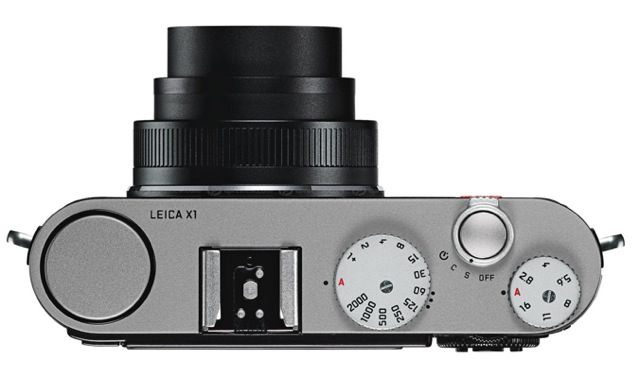
Note the full manual operation afforded by separate shutter and aperture dials.
So who needs this? Well, my perspective has altered significantly in the two short months during which I have owned the Panasonic G1. Having been a street snapper since childhood and having given up on film when the Canon 5D came along, I have been waiting for the ‘digital Leica’ a long time. And the G1 has changed how I think about street cameras.
In days of yore you would load up your little shoulder bag with a 35 and 90mm Leica lens, leave the 50mm on the M2 or M3 slung over your shoulder, and cram in a few rolls of film wherever you could stash them. After decades of use all the manual adjustments required became second nature – aperture, shutter speed, focus and the endless tedious changing of film in fair weather or foul (mostly foul in my London days). The results of those early efforts can be seen in all their monochrome splendor here. You didn’t complain because there not only was no alternative, no one saw digital coming. And SLRs were too loud and bulky and noisy to be an alternative for the truly unobtrusive and relatively quiet Leica M. You just learned to pre-visualize the image and would change lenses on the run to make sure the right one was in place by the time you pressed the button. And it made sense to have the right lens in place as film could only handle so much enlarging.
When the 5D came along you suddenly had medium format film quality at an affordable price with full automation thrown in. The bulk seemed modest compared to my Rollei 6003 and the ergonomics superior, but no one could accuse the 5D of being a street snapper. Landscapes, macro still lifes, portraits, QTVRs, HDR, all well and good, but unobtrusiveness is not that camera’s strong point.
So along came the Panasonic LX-1 with its host of compromises. Shutter lag, slow autofocus, an awful LCD screen replaced with a glued-on optical finder and too small to handle easily in a hurry, yet it was the best this street snapper could find at the time.
But the digital Leica did finally come along and the logo said ‘Lumix G1’.
After the first few hundred street exposures you realized that the craving for the rumored 20mm f/1.7 (now available) pancake lens was gone. I don’t need f/1.7 but I do occasionally like 35, 50 and 90mm focal lengths, much as I did in the M2/M3 film days. And the G1 went one better at the wide end, stretching to 28mm.
But it’s the total automation and that revolutionary Electronic View Finder which make the G1 the digital Leica. No need to change lenses. No need to excuse the quality of the kit lens or sensor, both small and superb. No need to wait for autofocus – in 1,200 exposures I have ‘beaten’ the AF just once. It’s that good. And as for the sensor, you may not want to make 30″ prints (who any longer makes these regularly?) but 13″ x 19″ is par for the course. And no need to set anything other than the aperture or squint into a dark finder trying to figure out what the camera is doing. The automation is outstanding and the EVF even better. In fact it’s pretty close to my wish list. Best of all, you can set the frame aspect ratio to 3:2, just like in that Leica of yore, and that’s how I use my G1.
So while Leica has done a fine aesthetic job (let’s just hope the shutter and focus delays are low) in designing the X1, I really question who needs a fixed focal length camera at such a price when you can have a more versatile tool with the same bulk for under one third of the cost? The only thing the G1 has which I have realized that I do not need is the interchangeable lens. The kit lens is this street snapper’s ideal.
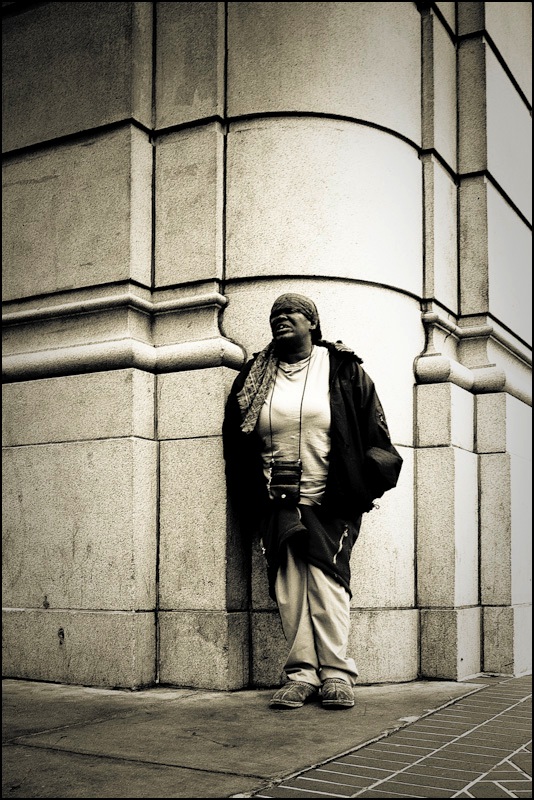
So yes, the digital Leica is here. It just happens to be made by someone else.
A medium format DSLR.
With all the money wasted in making the underwhelming Leica M8, a dated and obsolete 35mm format SLR and the silly rebadging of Panasonic point-and-shoots, you would think it was all over at Leica. With its modest resources the company is foolishly trying to compete against the vast capital of Canon, Sony, Nikon, Pentax, etc. all of whom make cameras far superior to anything from Leica at a fraction of the price.
Well, finally, Leica has taken a leaf out of Apple’s book and is Thinking Different.
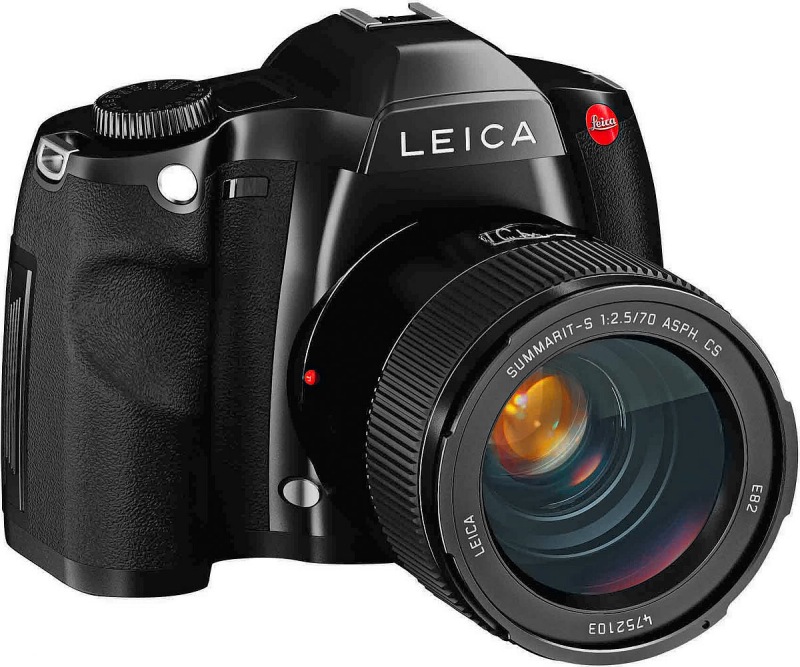
The Leica S2. A 30 x 45mm 38 megapixel sensor and a new range of lenses.
Clearly a premium product which should appeal to many professionals, this camera would seem to compete directly with the Hasselblad H range of digital cameras and, I would guess, would be priced similarly, meaning $30,000+ for the body alone. The DSLR format (much like the Pentax 6×7 in concept, but digital) makes for a far easier to use camera than the more tripod oriented Hasselblads and the lens range promised is impressive.
The sensor is made by Fujitsu, and unknown quantity, so it will be interesting to see how it performs. Much of the design work seems to have been done by Phase One, an established presence in larger format digital cameras. That’s encouraging.
Of special note is the fact that all the lenses will have leaf shutters which are ideal for flash sync, as they will properly expose the whole frame with flash at any shutter speed. Of course, the inclusion of a shutter in each lens makes the lenses costlier and Leica lenses are already very expensive, thanks to an overpaid, lazy, unionized German workforce. In fairness to Leica, the many Leica lenses I have used over the years have, without exception (OK, the 1930s 50mm f/2 Summar was a real dog above f/4) been superior to just about anything out there. The Apo-Macro Summarit f/2.5 120mm (equivalent to 85mm on a full frame camera) looks especially mouthwatering. And, joy of joys, Leica has finally discovered autofocus, some 20 years after Japanese SLR makers added this great technology to their interchangeable lenses. I would guess the lenses will retail well north of $5,000 each though who knows what the dollar price will be once the kindergarten known as the US Congress gets through with destroying our currency.
Promised for the summer of 2009, if the company survives that long, you can read more at Leica’s poorly designed, lugubrious web site – if you have the patience to get through all the mindless and time wasting flash videos.
If the camera ever gets into volume manufacture, it could fairty be said that this is truly the first innovative camera design from Leica since the M3, which I used for some 30 years. That game changer first sold in 1954 ….
A useful accessory for outdoorsmen
A good pair of binoculars is a useful tool to have along in the countryside – a fine discovery tool for those photographers enamored of long lenses.
I struggled along with any number of numbingly awful ones as a kid until, some twenty years ago, I finally acquired the ne plus ultra of binoculars, the Leitz Trinovid 7 x 42B. These remain the only piece of Leitz equipment in the family unless you count the lens on the Lumix LX1, allegedly made by Leica (their involvement was probably limited to design only).
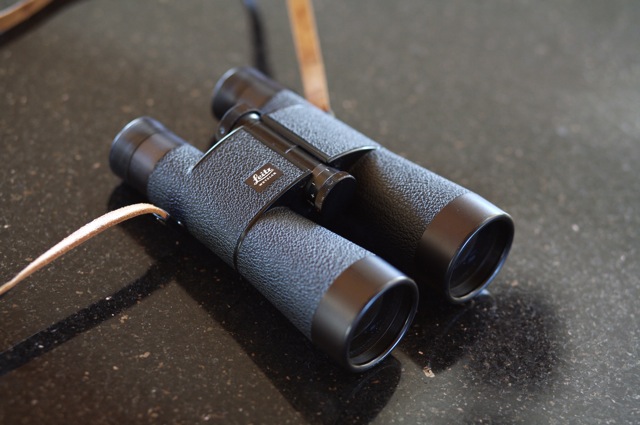
These are distinguished in several aspects of their design. First, as is always the case with products of Leitz Wetzlar (those made through 1965 or so, that is), are the optics. Raise these to your eyes and Wow! You will never look through another binocular again. Second, the large inlet glass, 42mm in diameter, is a boon in poor light. Third, the field of view is exceptionally wide making finding subjects that much easier. Fourth, the 7x magnification is just right – not too high (shakes!) not too low (useless). And finally the construction is like they used to make them. Leatherette covers a light alloy chassis, special prisms constrain the bulk and the feel is like nothing since that 1960 Leica M2 I used for many years in film days of yore. A sensual delight. The ‘B’ designation means that the exit pupil is very large. Stated in English, if you wear glasses, as I do, you will be delighted.
Leica makes binoculars to this day. For all I know they even focus automatically – yeccch! They are ugly to look at, with all that fake machismo effect created by ridiculous rubber casings serving only to cheapen the aesthetics. I haven’t tried a pair nor will I. I already have the best. If you are in the market for a pair of binoculars, try and search out a good used set of these. Mine are not for sale!