Category Archives: Lenses

There’s one born every minute

A fool and his money ….


Click the image for Lomography’s site and hang on to your wallet.

Lomography specializes in selling plastic crap cameras to photographers idiots who desire to take crap pictures. It’s a winning combination, one must admit. The two are made for one another, proving yet again that not only is a fool and his money easily parted, but also that there are lots of fools.

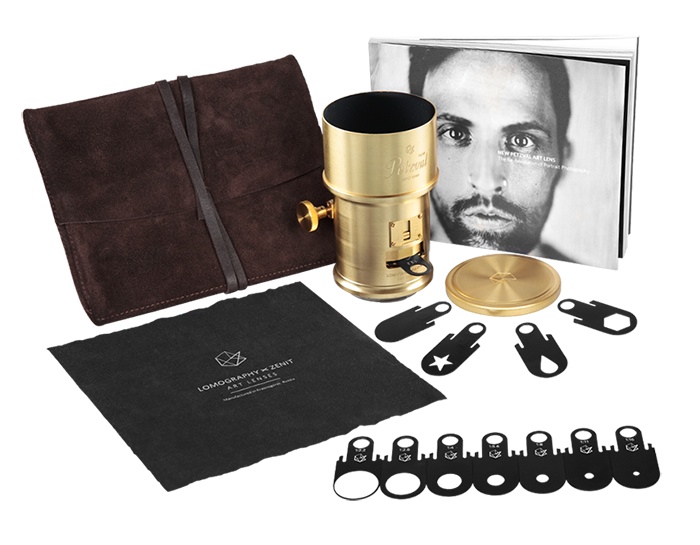
Now the ‘anything to be different’ crowd who need technology, even if distinctly retro, to excuse their total lack of creativity and imagination can blow $600 on a lens first designed in 1840. This comes complete with the most ghastly rendering of OOF areas, dizzyingly bad, and with a set of drop in aperture stops because, let’s face it, for that sum of money who could possibly expect an adjustable iris diaphragm. (“Hang on love, gotta stop down. Dang, just dropped the stop in the cow patty.”)

Of course, if you dare use this on your digital Canon or Nikon, the self-combust device kicks in and your prized DSLR melts. You understand this is intended for film users only? But of course.

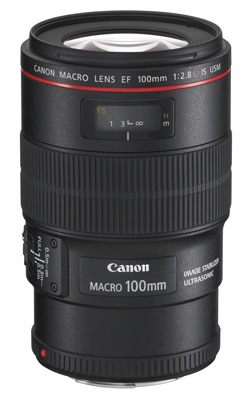
Canon 100mm Macro-L with IS

The Macro finally gets IS.

While I find Canon’s announcement of yet another APS-C camera, the 7D, underwhelming – who needs yet another ‘me too’ DSLR? – this did catch my eye:


The new 100mm f/2.8 ‘L’ IS Macro

I have had nothing but good experiences with the existing (non-L, non-IS) macro which seems almost impossible to improve on optically, but the addition of IS is a welcome feature. Price is rumored to be around $1,000, or twice that of the non-IS lens. If your macro photography is tripod-based, I would find it hard to see spending twice as much on this lens, as IS is wasted in tripod work. Further, from a definition perspective, I find that making razor sharp 18″ x 24″ prints from my non-IS macro is trivial and see no reason why these would not scale just fine to 30″ x 40″, based on what I am seeing on the screen of my 24″ iMac.

So the new lens may be better on paper, but how much better than my experience can you get? Worth thinking about. Some recent snaps with the non-IS Canon macro (using Helicon Focus) appear here.

DPReview has the scoop.

Getting closer

Small, yes, but is it fast?

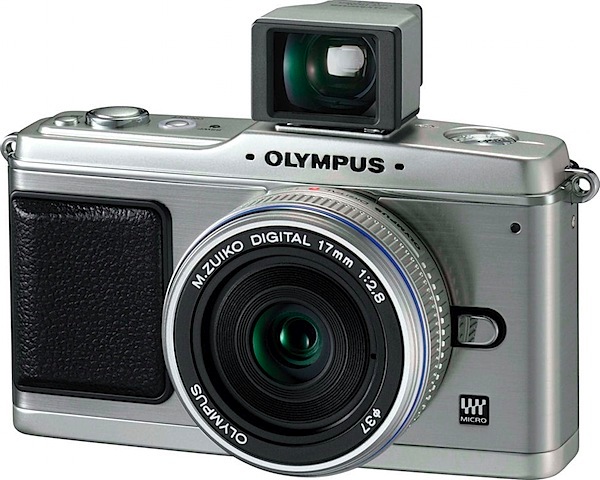
The Olympus Digital Pen is an exciting prospect for those of us interested in an affordable alternative to the ridiculously priced digital Leica M8, whose cost of entry with a lens is well north of $7,000.


The Olympus Digital Pen wit the 17mm (=34mm) non-zoom lens

At $900 for the body with the 34mm wide angle and optical viewfinder it is affordable as a street snapper but as yet there’s no indication what the shutter lag is like; auto focus with a lens this short is not important as pretty much everything will be sharp all the time, but what the world really needs is a pocketable high quality camera with a decent sized sensor without the interminable shutter lag which makes just about very point-and-shoot out here useless for street photography.

Thank goodness Olympus has had the good taste to release the body in chrome. The more amateur it looks the less visible the photographer becomes.

One other thought – the Pen is smaller than the M8 in every dimension without a lens, and much smaller with the 17mm fitted compared to, say, a 28mm lens.

Check the Comment for some preliminary feedback on shutter and focus lag.

Lens of the Year

No contest.

It’s not so much ‘Lens of the Year’ as it is ‘Outfit of the Year’ and the choice will surprise none who have been visiting here recently.
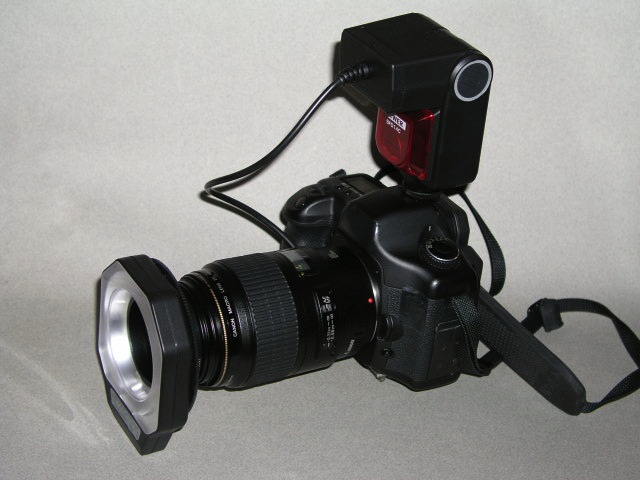

Canon 5D, Canon 100mm EF Macro and Bower ring flash

While none of this gear is ‘new’ – the 100mm macro has been around for ages, the 5D is no spring chicken and ring flashes are as old as politicians’ lies – what is so very special about this outfit is how simple the technical side becomes. Back when, in the bad old film days, you used a lens head on a bellows, constantly messed with focus and depth of field, tried to remember the right exposure compensation when the bellows were racked out and then suffered agonies trying to light your subject. Then, when you snapped the picture, you realized that you had forgotten to stop the lens down and were five stops over-exposed.

But Canon obsoleted all of that with a few strokes of genius, doubtless available from other makers also. First, they made the lens fixed length. It does not change in size as you focus. Second, the focus range is continuous from infinity to life size on a full frame sensor body. Third, focus is automatic and blisteringly fast. And, finally, E-TTL makes sure that all those arcane calculations are a thing of the past, computing the optimal blend of natural and flash light on the fly. A nice 100mm length also allows the photographer to step back from the subject, leaving more working room, and throw in the Software of the Year and you have the most perfect macro kit yet.

Thanks to all this magic 100% of your attention can be devoted to the subject and the technology takes care of the back end. This compares well with the automatic gearbox in cars which leaves more brain cycles available for the job of driving rather than shifting gears. Sure, there are people who like to use a clutch. (None of them drive in Formula One, by the way). There are also people who will tell you that film beats digital and good sound ended with the LP era. Have pity on them, while they do their calculations and make incantations to the analog gods of yore. The world will always have its technophobes, most so over-invested in yesterday that they have to defend antiquity.

And it’s not like this wonder lens is wildly expensive, compared to the mess of adapters, bellows, racks etc. in olden days. The lens retails for under $500 and works every bit as well on Canon’s cropped sensor bodies as it does on full frame. The optical and mechanical quality is right up there with Canon’s exalted ‘L’ offerings – I know as I own some. In fact, there’s not a sharper lens in my kit. So add an inexpensive digital Rebel body, splash out another $150 on the ring flash (no need to get Canon’s costly version), and you have the best macro kit out there for under $1,000. What’s that, you say? You want the ability to switch off one side of the ring flash tube for better modeling effects like the Canon one does? Well, dear reader, I have two words for you. Black tape. You stick it over one half of the flash tube in the same way you stick it on your camera to obliterate all those gauche manufacturer’s markings. Now that’s what I call a bargain.
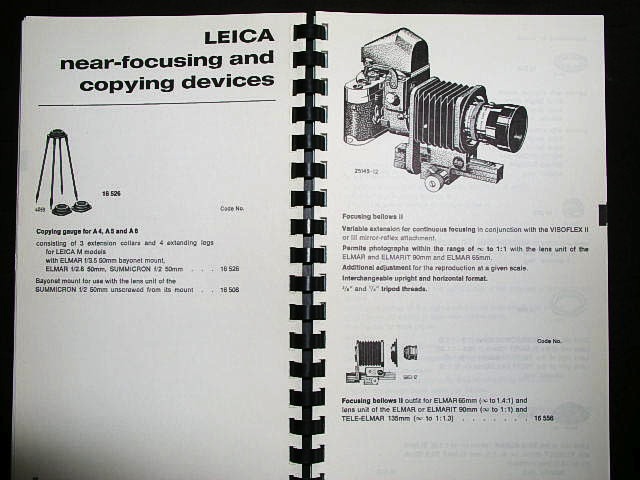

The good old days were …. really bad.

The Canon EF 100mm f/2.8 USM Macro autofocus lens is the Lens of the Year.
Canon – you need to fix your glass

Simply unacceptable color fringing.


5D, 50mm f/1.4 at f/8 – after and before correcting for green and red chromatic aberration

When processing the picture included in yesterday’s journal entry, I was reminded again of the truly frightful extent of uncorrected chromatic aberration (color fringing) in Canon’s 50mm f/1.4 standard lens. For many this is a portrait lens on cropped sensor bodies, with an equivalent focal length of 80mm.

The picture on the right is unprocessed, straight from the camera at the lens’s sweet spot of f/8. The one on the left is after removing the chromatic aberration using the sliders in Lightroom. Even in these small pictures the amount of chromatic aberration is shocking – these enlarged snaps would make for a 30″ x 20″ print. (The small scale difference results from correcting converging verticals in Photoshop CS2).

Given the superb quality of the sensors in Canon’s DSLRs, isn’t it about time that some more attention was paid to fixing dated lens designs like the fixed focal length 50mm one? This sort of thing has been properly designed by any number of manufacturers decades ago and there really is no excuse for such poor optical engineering in a medium priced fixed focal length lens who many, suspicious of the bulk and poor optics in most zooms, still regard as their ‘standard’ lens. Especially old duffers like me who toured the world with a 50mm or 35mm on our cameras, because that’s all we could afford.

Now a glance at any news source will confirm that there are more complaining historians in the world than people with fix-it ideas. The fix here could not be simpler, or more lucrative for all concerned. Do a Panasonic. License Leica’s fabulous designs, Canon, forget about corporate pride, and make sure the final product is emblazoned with the Leica name. Use your mass manufacturing genius to drive the price down and I will be the first to have a fully automated 50mm f/2 Summicron-R Leica lens (made by Canon) on my wonderful 5D – the best 50mm lens ever made. Heck, if I’m feeling spendy I’ll even consider springing for the 50mm Summilux-R with its f/1.4 maximum speed – the second greatest 50mm lens ever made. And while Leica, 40 years on, still cannot manage to add autofocus to its SLR lenses, for Canon that would, of course, be de rigeur.

And while you are at it, Canon, feel free to replace your underwhelming 20mm f/2.8 (which I know and dislike) with Leica’s superb 19mm f/2.8 Elmarit-R, or even with the older 21mm f/4 Super Angulon-R which I knew and loved for many years. Leica and Schneider conspired on that design – can life get any better than that?


A big enlargement to make things yet clearer – color fringes before correction