Tons of fun.
For an index of all Leica-related articles click here.
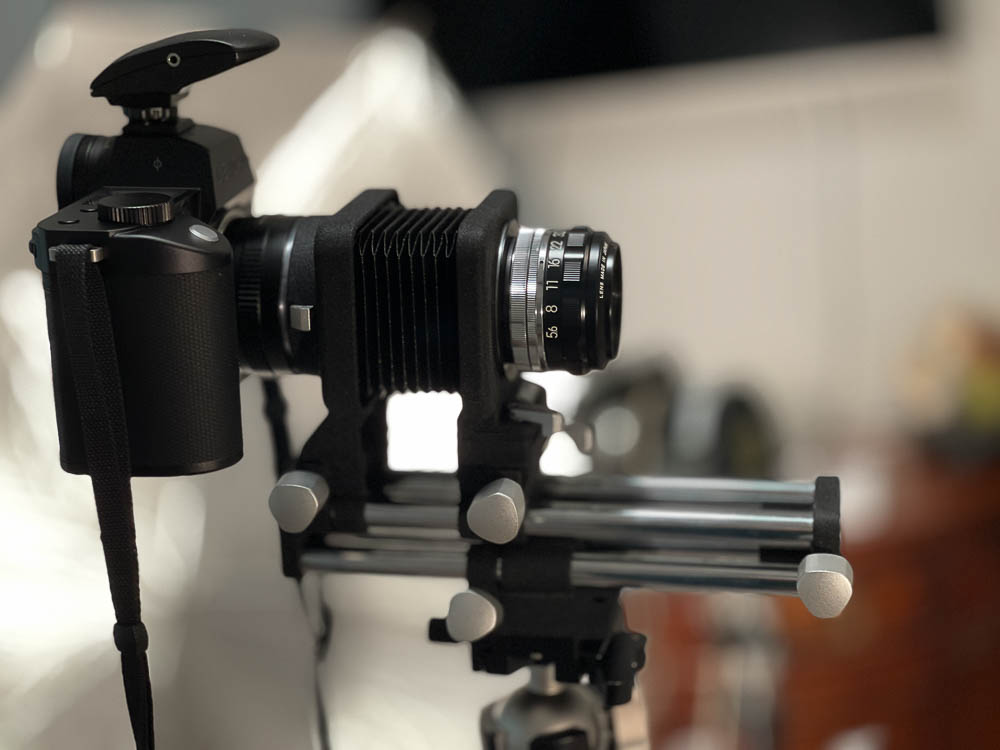
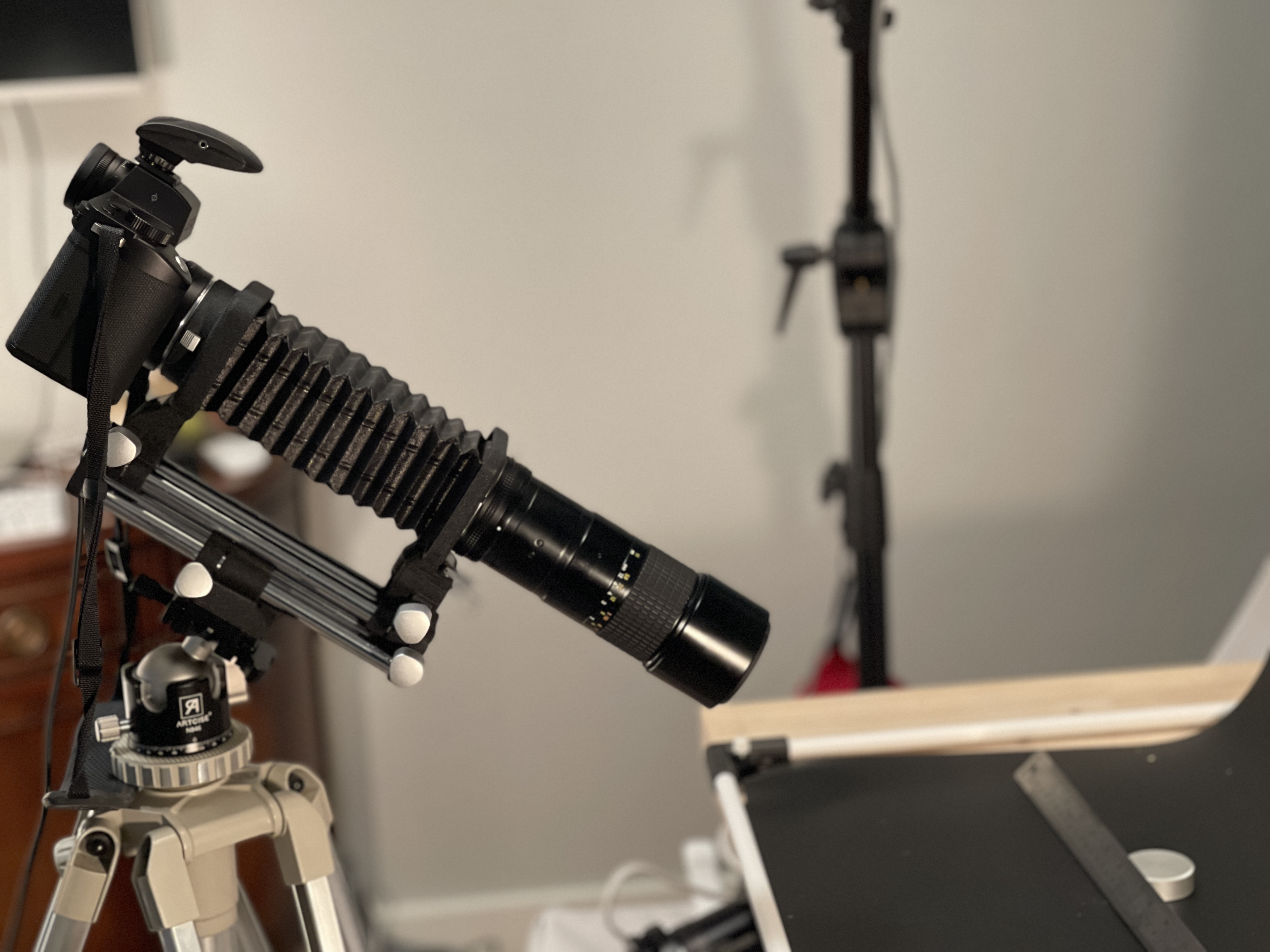
My kit. 135mm El Nikkor on the PB4
bellows. 80mm El Nikkor standing by. Remote
strobe trigger atop the Leica SL2S.
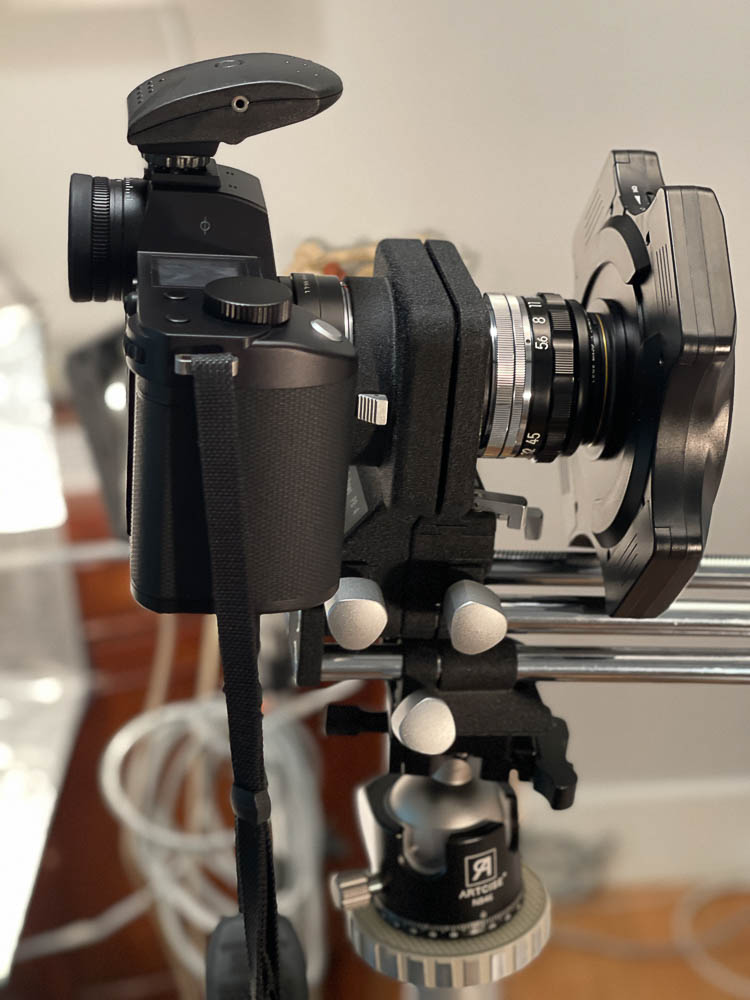
Heavy duty ball and socket head and
massive Linhof cantilevered tripod.
I have published several hardware articles detailing my approach to close-up and macro photography over the past few weeks, as well as many images. I continue working on improving my technique.
Click the image for a larger version.
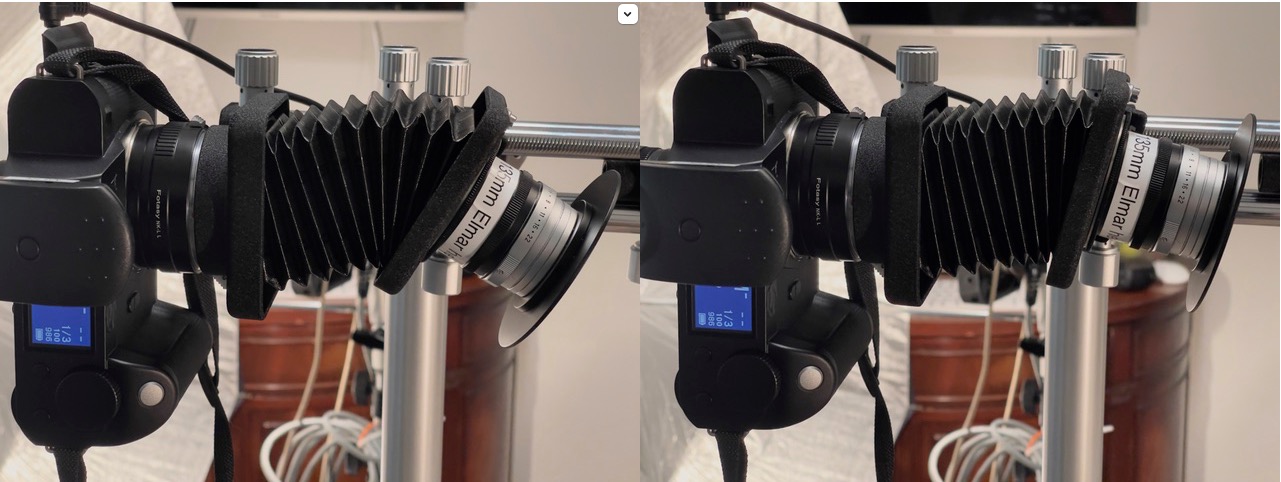
Leitz Focusing Bellows II and 135mm Elmar lens head.
An early attempt with flat lighting.

Click the image for a larger version.
200mm Micro-Nikkor. Note the considerable
improvement in lighting technique.
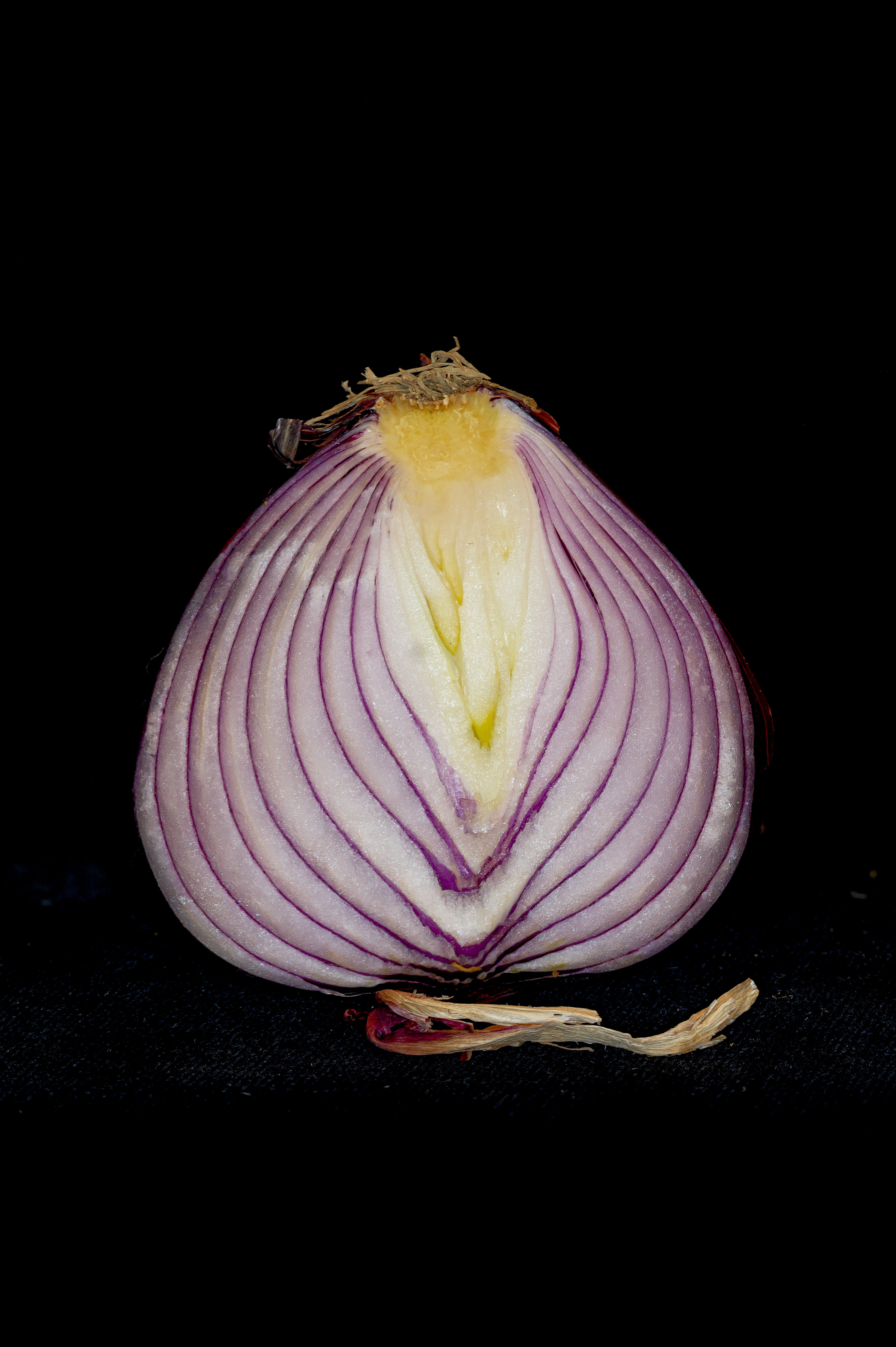
My goal is to illustrate the beauty of everyday foods and flowers, from the simple red onion to the complexities of the Showy Milkweed.
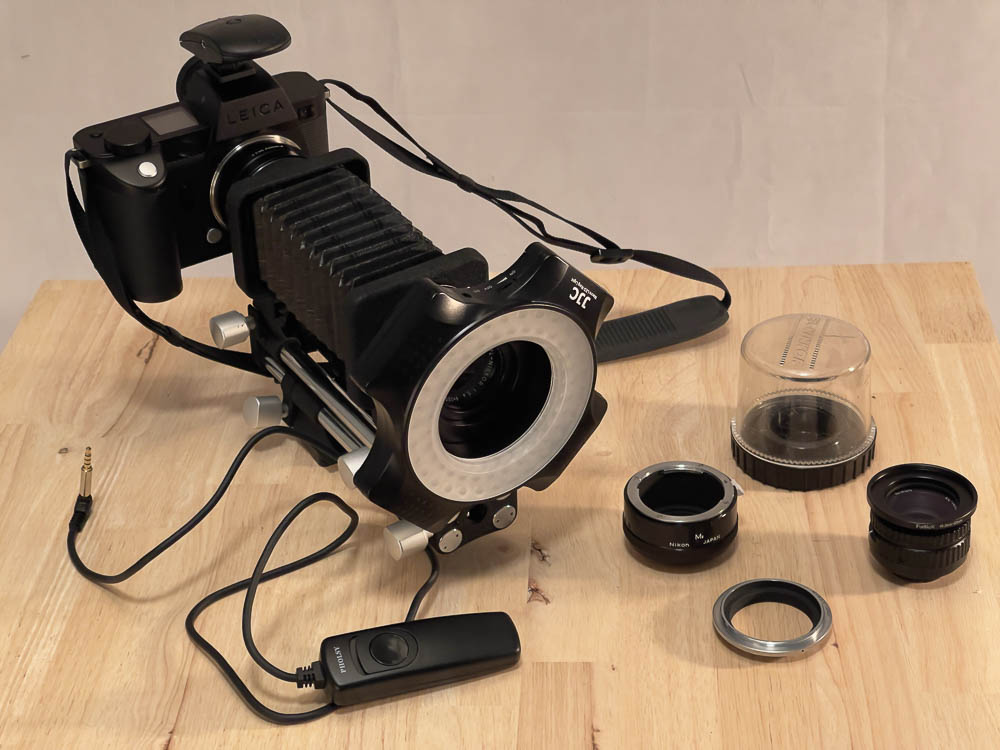
Working mostly in the one half through two times life size range using a full frame sensor, I started my journey with the Leitz Focusing Bellows II adapted to my Leica SL2S mirrorless digital. Any mirrorless digital will work, obviously, and adapters are abundantly available to fit everything together. The Focusing Bellows II, a monorail design, worked very well and I discovered that the lens head of my Leitz 135mm f/4 Elmar, normally used in the RF focusing mount on my Leica M10, was a splendid performer in the close-up range. The one advantage of mirrorless versus DSLR camera bodies is the ability to magnify the image in the EVF for critical focus. Further, the short lens flange to sensor distance (no flapping mirror) makes adaptation of just about any lens out there a simple matter.
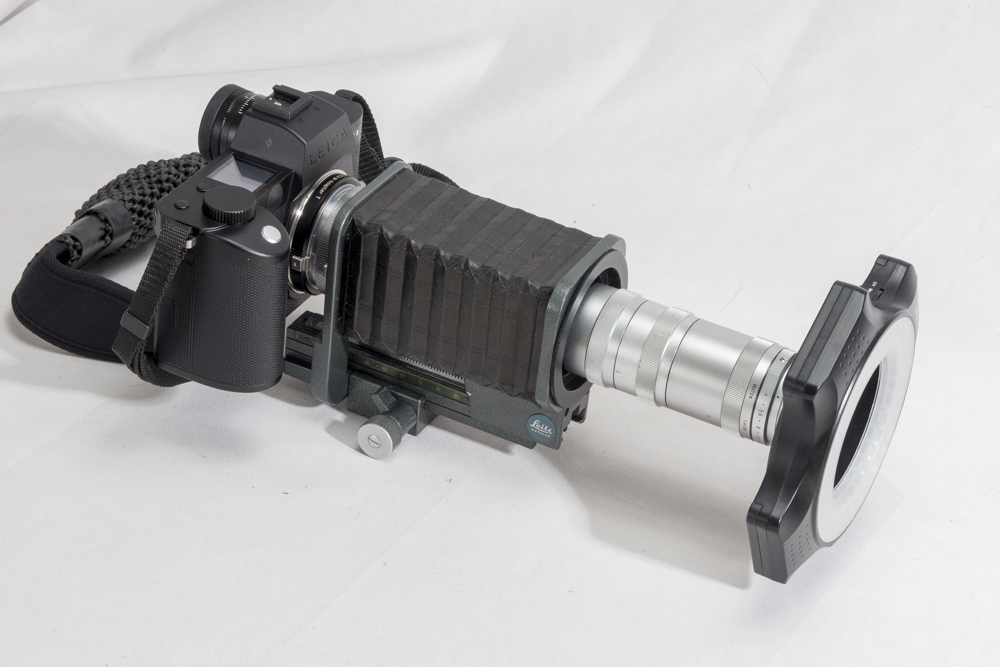
Leitz Focusing Bellows II.
Because I tend to prefer an ‘everything sharp’ rendering I procured a license for Helicon Focus image stacking software, which I has first used decades ago. It’s easy to use via a round trip of differentially focused images from Lightroom and is better than ever. The license fee is a bargain and I see no reason to try alternatives, given how good Helicon Focus is at the job. Apparently Photoshop has a focus stacking feature but from what I have read it’s a bit of a dog, and bog slow. HF is fast and (mostly) accurate.
Though I was perfectly happy with the Focusing Bellows II I chanced on the later Leitz Bellows R complete with a 100mm Macro-Elmar-R lens head, which delivered infinity through life-size focus. Also a monorail design it was, if anything, even more robust than the Focusing Bellows II and the minimalist design proved easy to use with the lens head. The Macro-Elmar-R delivered results indistinguishable from the 135mm Elmar.
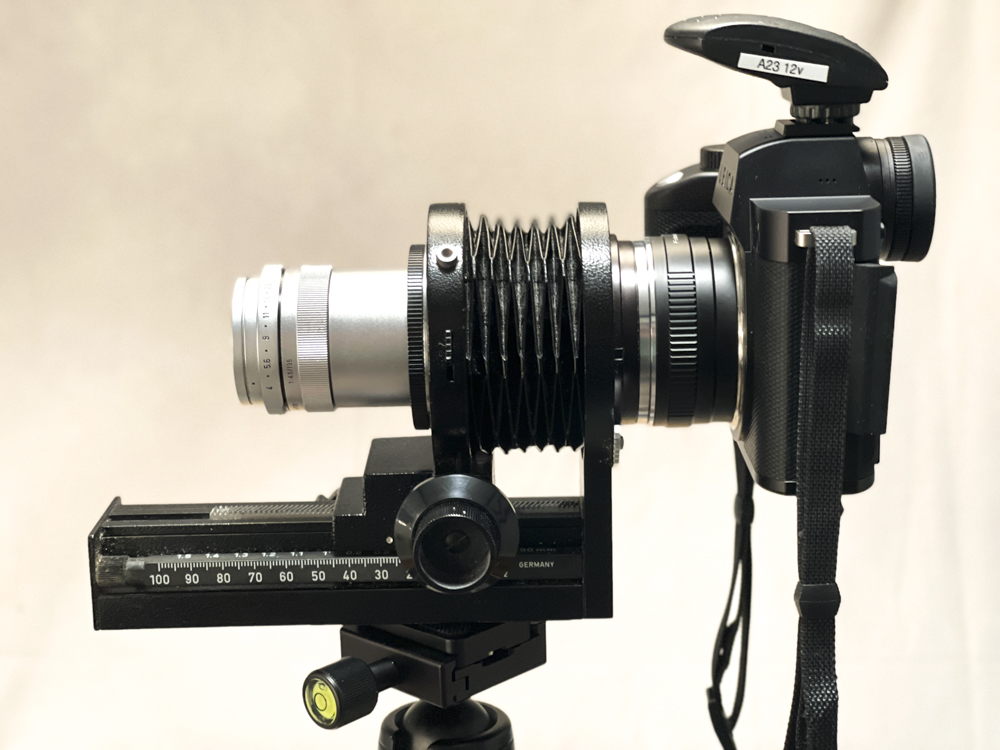
The Leitz Bellows-R with the 135mm Elmar lens head.
Later still I discovered the Nikon PB4 bellows, the only one from Nikon’s extensive range which offered front panel tilt and shift, making for easier overall sharp focus with objects not plane to the sensor. This is a traditional four rail design, rather than monorail, and is the ne plus ultra of small bellows hardware. Immensely robust and, like the two Leitz bellows, it includes a rack and pinion focusing rail allowing the camera + bellows + lens assembly to be moved to or from the subject as one unit, making differential focus child’s play.
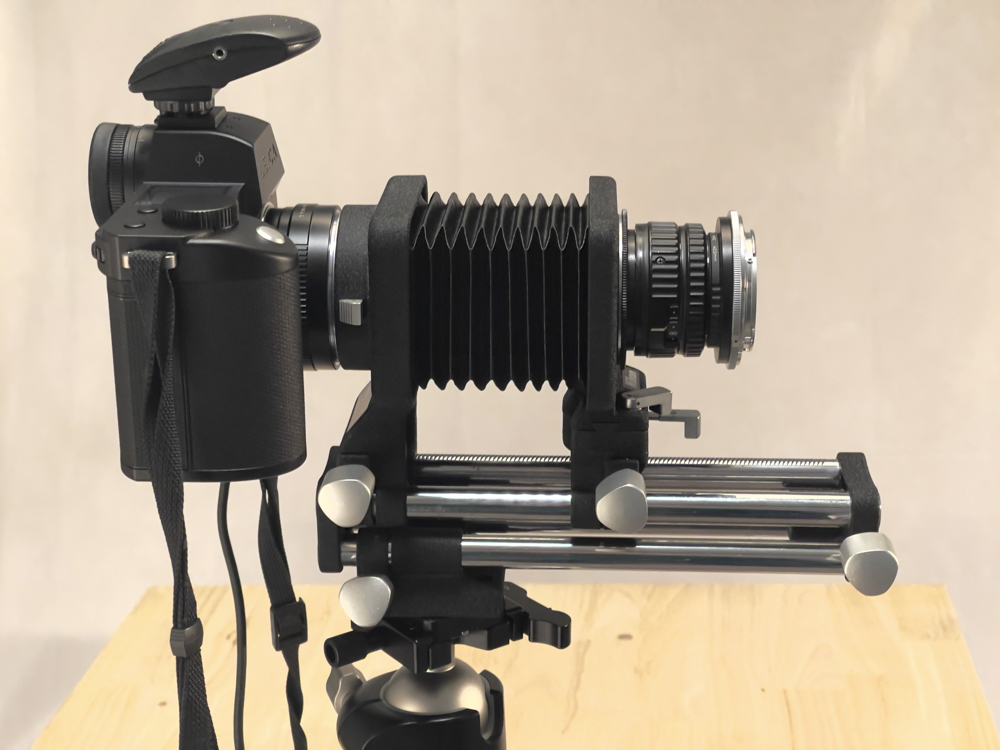
The 80mm f/5.6N El Nikkor on the PB-4 bellows.
For lighting I took a dual approach. Focus is aided with a JJC ring light which attaches to the lens. Image lighting is from my ancient Novatron studio flash and I find that I generally use three heads – a main umbrella light, a top umbrella light to light the innards and a no-umbrella strong side light to confer modeling and plasticity. The recharge time is a scant 2 seconds, less time than it take to rack the kit for the next image. An inexpensive wired remote makes doubly sure that there is no camera shake, though the brief duration of the strobe lights probably makes that accessory redundant.
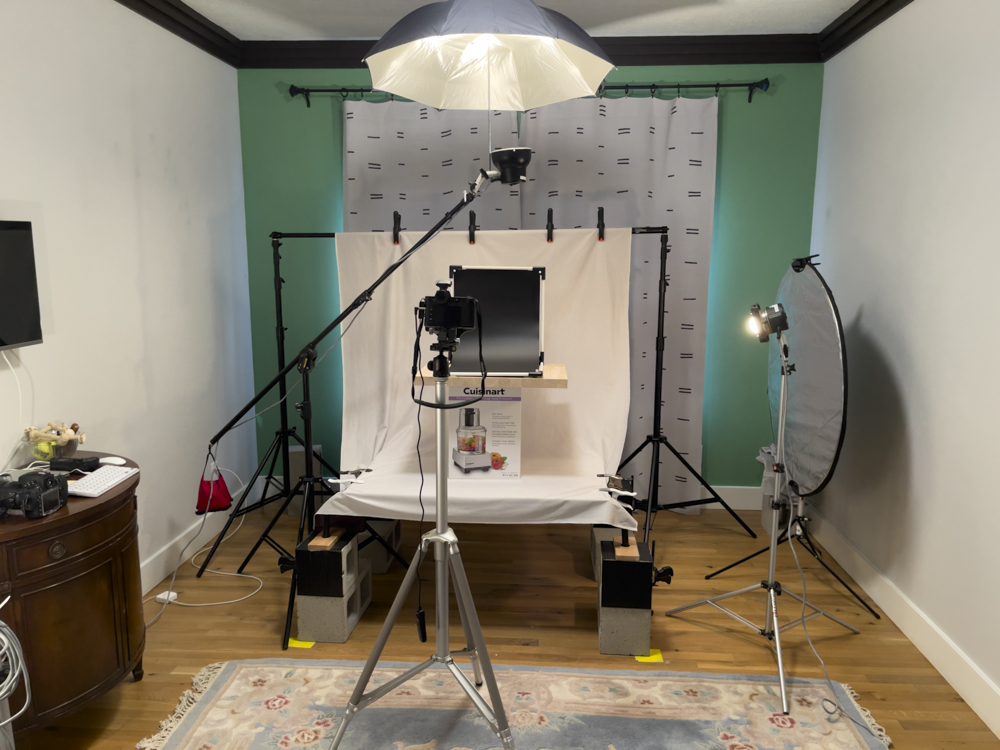
The studio.
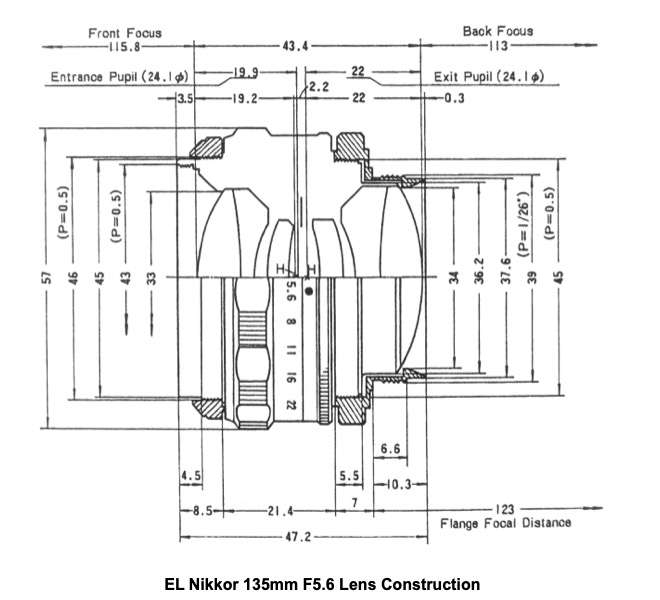
With the tilt and shift capability of the PB4 available, I quickly realized that the image circles of the 100mm and 135mm Leitz lenses were inadequate. Tilt the front standard of the bellows and the image circle is too small, so I put on the thinking cap and quickly realized that Nikon made a superb series of 6-element enlarger lenses which not only have very flat fields but also boast very large image circles. They are also insanely inexpensive and have proved to deliver very high resolution. I purchased the 80mm f/5.6N El Nikkor and the 135mm f/5.6 El Nikkor. These are computed to cover 2 1/4″ x 2 3/4″ and 4″ x 5″ negatives, respectively, and have no issue with even the maximum tilt of the PB4.
And that’s where I am today. The earlier experiments are for sale (though I’m keeping the 135mm Elmar for use on the M10 and SL2S in non-macro mode) and I’m delighted with the simplicity and quality of the remaining kit.
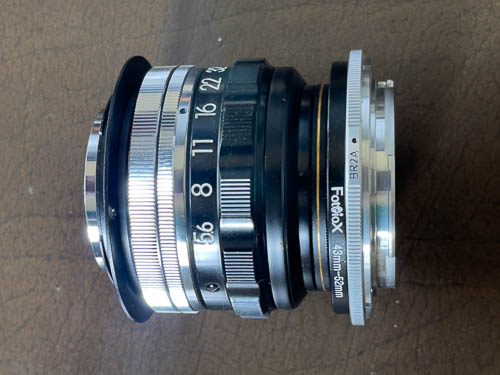
Along the way I added a Nikon BR2A reversing ring for use with the 80mm El Nikkor in larger than life settings and also a 200mm Micro-Nikkor which goes down to half life-size without bellows, or one-and-a-half times life-size on the bellows with both lens and bellows full racked out. I’m not too sure I really need this lens but in addition to its macro capabilities it’s also a fine general purpose 200mm optic with Nikon’s butter smooth and light Internal Focusing movement.
Did I mention these focus stacked images are high resolution? Here’s a 24″ x 36″ print made at the local Postal Annex on a Canon 12-ink inkjet printer. A serious piece of hardware. The bloom is maybe 1/2″ across:

Flax wildflower print.
55 images focus stacked.