Category Archives: Hardware

Stuff

Contax II

Zeiss Ikon’s finest.

Zeiss’s finest rangefinder 35mm film camera, the Contax II, was manufactured in Germany between 1936 and 1941. I was lucky to borrow a used one from a camera store I worked in during my student days, along with the contemporary Leica IIIc, the Contax with the 50mm Sonnar, the Leica with the 50mm Summar. The Sonnar was far the better lens at f/2 and f/2.8.

The cameras were night and day. One version has it that Zeiss was determined to best the Leica with a more modern design. Another maintains that they had to change the design dramatically to avoid patent infringement. One thing is certain. The Zeiss business dwarfed that of Ernst Leitz, Wetzlar in wealth and breadth, so starting with a blank sheet of paper on the drawing board was no big deal, given Zeiss’s resources.

What emerged was a camera of quite exceptional elegance. Compare with the Leica IIIC:

Where the Leica is all knobs and dials and busyness, the Contax is an integrated whole. The Leica is an unfinished engineer’s design, the Contax a Bauhaus aetheticist’s dream. Not until 1954, when Leitz released the greatest 35mm rangefinder design in history, the Leica M3, was anything comparable to the Contax made.

What prompts this piece is my recent article on The Mexican Suitcase and mention therein of the great war photographer Robert Capa. For when Capa landed on Omaha Beach on D Day in 1944, he was armed with two Contax II cameras and a Rolleiflex. The few images which survived from that reportage are among the most famous war pictures made:


Robert Capa’s unforgettable image of the American
Normandy landing on D Day.

The Leica user of that time had to focus through a rangefinder eyepiece, then change his view to the (awful) viewfinder, using a separate eyepiece. Slow shutter speeds had to be set on the small front dial, after setting the upper dial to a specific index. When the Leica’s shutter was released the upper dial rotated – interfere with it and your exposure would be off. The Leica’s lens had to be screwed in. You had no choice but to rewind the film when your 36 exposures were made.

The Contax changed all that. The rangefinder was brilliantly integrated as a central patch in the viewfinder, one eyepiece for both. All the shutter speeds from 1/2 to 1/1250th (!) of a second were on one large click-stopped dial concentric with the wind-on knob, with the release button elegantly integrated into the center. The clunky ‘lift-turn-drop’ miniscule main shutter speed dial of the Leica with its irregularly spaced settings, which could only be set accurately with the film advanced, was history. Interchangeable film cassettes could be loaded in both the feed and receiving bays, requiring no rewinding. Where the Leica used a horizontally running shutter made of rubberized cloth, the Contax ingeniously opted for a vertically running assembly of interlocking metal slats which permitted faster flash synchronization speeds, though factory flash synch was not added until the post-war Contax IIa/IIIa were released. Copal of Japan were to adapt the design to many Japanese cameras much later.


The Contax II shutter. Click the image for
Mike Elek’s excellent Contax repair site.

You can get a good sense of the quality of the camera’s engineering from Mike Elek’s site.

The lens used a bayonet mount – actually a dual bayonet mount. Shorter lenses fit in the inner mount focused with the small geared wheel in front of the wind-on knob, whereas longer, bulkier ones used the external bayonet claws you can see above, focused with a regular focus collar on the lens. Canon later used the same idea in its post-war Canon 7, where the external mount was used exclusively for its extraordinary f/0.95 50mm optic. The inner Leica screw thread mount used by Canon was too small to accommodate the huge f/0.95 lens.

A modern analogy is apposite. When the iPhone was released in July, 2007 it was a Contax II to every predecessor’s Leica IIIc. Function and form were one.

Only when the Leica M3 came along were all these modern features (save the dual bayonet mount – one bayonet sufficed) incorporated by Wetzlar, who also greatly improved the rangefinder by adding sharply defined edges to the rangefinder patch, suspended finder frames for three focal lengths, and an ingenious parallax compensation mechanism. That was 18 years and a world war later.

While some aver that the shutter in the Contax was more fragile, as the horizontal slats were connected with thin silk tapes which age poorly, contemporary users had no complaints, nor did I when I used this wonderful camera.

Contax simultaneously released the Contax III which added a non-coupled selenium cell exposure meter on the top plate, deemed revolutionary at the time, but in practice it ruined the lovely lines of the model II’s body.

After the war Zeiss released the IIa/IIIa pairing, much the same but maybe even better made. The basic body design was retained through the Contarex SLR range whose complexity and high manufacturing cost did a lot to bankrupt the Zeiss Ikon of old. Those Contarexes retained the dual reloadable cassette chambers, and updated the advance knob with a lever, but the design heritage was obvious for all to see. When the greatest film SLR of all time, the Nikon F, was released many years later that same dual locking/removable baseplate design was retained. It was not ideal – you sometimes wanted a third hand to change film – but it was solid, simple and robust. Compare that to the film baseplate slot-loading mechanism in every film Leica through the last model, the M7, and you will be in no doubt which is the superior system.

Amazingly, Cosina released the Voigtländer R2C in recent years sporting a Contax lens mount along with TTL metering, even if the body was an ugly duckling. The Zeiss aficionado could find new use for his classic Zeiss Ikon lenses:

A handful of modern lenses was also released in the classic Contax mount and adapters are available to use old Voigtländer Prominent lenses – here’s the Prominent’s 50mm f/1.5 Nokton in a handsome semi-matte chrome finish on a Contax II body:

The Contax worked fine for Capa and no one reading this can lay claim to being a better photographer – or a more courageous one. The Contax II is one of the great classics of the 35mm rangefinder camera world.

Update July 203: I just added a Contax IIa, the post-war version, to my home theater display.

Sigma 18-35mm f/1.8 APS-C zoom

An interesting innovation.

Sigma has just announced an 18-35mm zoom for APS-C sensor DSLRs with a fixed maximum aperture of a speedy f/1.8. It works out to 27-53mm full frame equivalent.

It’s no lightweight at 29 ounces – 5 ounces heavier than the stellar 35/1.4 – but the finish appears to be the same, meaning excellent. Like that prime, the new optic will be programmable using Sigma’s dock. I would guess pricing at $900 for the lens and under $100 for the dock. The lens comes in Sigma, Nikon and Canon mounts. I’m sure my D2x would love one, but I am very happy with the inexpensive 35/1.8 Nikkor G prime.

It’s good that an independent maker can challenge the big boys on both quality and price. It seems that true innovation is mostly coming from Sigma and Fuji today.

Sample images appear here.

The Hackintosh for 2013

More attractive than ever.

Apple’s MacPro is now seriously obsolete. Memory is a slow 1333Mhz, USB 3 is not supported, Thunderbolt is not supported and the best video card option is the ATI Radeon 5870, now a generation behind and sporting but 1GB of memory. With 32GB of CPU memory and the 5870 GPU, along with one 1TB HDD, the rig will run you just shy of $4,000. Displays are extra.

Here’s the current Hackintosh build, not bleeding edge, just leading edge, which uses Intel’s i7 IvyBridge CPU, easily overclocked under warranty from stock:

That’s some $1,060 with no HDDs and no displays, keyboard, speakers or mouse. A keyboard, speakers and mouse of choice will add $100 and the rule here is anything but an Apple keyboard (foul chiclet keys) or mouse (the carpal tunnel special). Add $20 for OS X and $70 for a 1TB HDD to make things comparable and the all in cost becomes $1,250. Unless heavy video editing is contemplated, the $200 GPU can be omitted with the Hack using the excellent Intel HD4000 onboard GPU which comes with the CPU. Perfectly capable for LR and PS use. Further, 16GB of RAM is more than adequate, bringing the price down to $940. The power supply used is massively over-spec’d at 850 watts, but the marginal cost over a smaller power supply is so modest that there is no reason to compromise. You can spend as much or as little on storage and displays as you like, whether Mac or Hack. An exceptional value.

Apple has hinted that a new MacPro is in the works for 2013 and if this is true I expect that it will be far costlier than the current MacPro, Apple knowing that these are mostly used by design and video professionals spending someone else’s money. I also expect the new MacPro to be much smaller thus compromising cooling and it will, of course, use many proprietary parts meaning that when something breaks chances are the whole box will be out for repair. Meanwhile, the hospitalized Hack needs but a trip to Amazon or your local electronics store to fix what ails it at very low-cost in very short time indeed. It is a great comfort knowing that Fry’s Electronics is a 30 minute drive from my home though, like the umbrella never seeing rain, nothing ever breaks in my Hack.

Best of all, while there is still a need for a tinkerer’s mindset as Hacks can have quirks at the software – if not hardware – stage, the free tools available for today’s builder have never been better. It’s still not a plug-and-play experience, but it’s getting close.

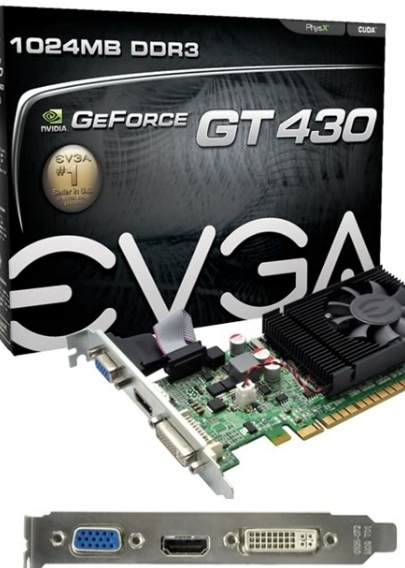
The Hack build above sports a very quiet case (recommended by a reader – thank you PB) with superior cable management, adds two Thunderbolt sockets, front panel USB3 support, 32GB of memory which is more than anyone needs, an outstanding GPU ideal for still photographers and the best wifi in the business.

My slightly earlier SandyBridge i7 CPU Hack uses many of these parts and the only time it is restarted is when an OS X upgrade dictates that. Otherwise it’s on 7-by-24 and runs as cool as the proverbial cucumber no matter what it is tasked with. Used very hard, it is, in a word, as reliable as a brick.


Massive, silent cooling fans inside Corsair’s Obsidian case.

For the first time builder, the support community is so broad and so helpful that the risks of DIY are negated. Your sweat equity will total 1-3 hours of fun assembly time and another 2-5 hours installing OS X. What’s not to like?

Intel’s CPU for 2013 will be the yet to be released Haswell which will have lower power consumption (irrelevant for a desktop machine) and maybe the usual 7% or so speed increase. Integrated graphics will again be improved and a new motherboard will be required to accommodate the new CPU. I do not see any of these enhancements as a valid reason for delaying a Hack build.

Serial failure

The jury has left the building.

It is a good rule in life never to apologize.
The right sort of people do not want apologies,
and the wrong sort take a mean advantage of them.
P.G. Wodehouse, The Man Upstairs

The old saw in banking has it that when you owe your local bankster $1,000, he owns you, but when you owe him $1 billion, you own him.


The last great iMac, the G4. Conceived at a time of great crisis.

It’s a lesson that the Serial Apologizer passing as CEO at Apple has never learned. When the Chinese make an organized propaganda attack aimed at Apple for allegedly poor warranty terms and service – ridiculous however you look at it – what does Cook do? He goes cap in hand to his main provider and apologizes. He has fallen into the $1 billion debtor trap, mistakenly believing that the Chinese own him. They do not. Apple owns the Chinese. Concentrating so much production in the hands of one man – the fella in charge in Beijing – was never a wise strategy, any more than concentrating retail lending in the hands of a few US mega-banksters extending credit based on fraudulent loan docs, the while contending that they are too-big-to-fail,is wise. With such concentration comes the need for courageous and robust leadership. The banksters were far smarter than Cook. They used walk away power and totally pulled one over on Uncle Sam. We own you, they said. Let us fail and you go down with the ship.

What is Cook thinking? That Foxconn will lay-off two million Chinese workers if he tells Mr. Xi where to stick it? Please. Maybe Cook needs to bone up on The Man with No Name. Go ahead, make my day. How about a spot of civilian insurrection, pal, should we walk?

Cook, having set three miserable precedents in his dreary catalog of apologia, is now a pushover for any number of bullies who smell fear and weakness. The right response here was “Go ahead, Mr. Xi. Make my day.” You do not bend over to a despot. Now Cook is stuck with that old military acronym. BOHICA. Bend Over, Here It Comes Again. He probably knows more about that than I want to think about.

Now I’m beginning to pine for that old SOB who was Apple, Steve Jobs. When did Jobs ever apologize for anything? When Dot Mac failed miserably he did not go around cap in hand beating his chest and chanting ‘woe is me’. No. Rather, he excoriated the development team for ‘…. letting down everyone at Apple ….’ then fired the guy in charge. Then he fixed it and we got iCloud.

Great businesses do not run on niceness policies, respect for your fellow-man and gentility. They become great by fostering internal and external competition – remember Jobs’s early hatred of IBM? – and inculcating a ‘cream rises to the top culture’. Successful businesses do not crave love or respect. All expect excellence and have at the core of their genetic makeup a protocol which demands winning. Being nice in competition is for losers. ‘Show me a good loser, and I will show you a loser’ as Vince Lombardi bluntly put it.

As a photographer, I very much want to see the likes of Scott Forstall driving Apple to greatness, even if it means his face appears on many dart boards in adjoining offices. People who threaten a CEO accomplish one of two things. The CEO either rises to greater heights, as did Jobs, or the threat is fired as was Forstall’s fate when Cook decided the usurpation risk was too much to bear. Churchill’s struggles to return to power in the 1930s are an apt precursor, weak leaders in Downing Street forever threatened by the firebrand who was finally only appointed at the moment of greatest crisis. An irritant is a requisite for success, not an obstacle to it.

And that’s what Apple needs today. A leader, an irritant, who is prepared to see that the company is already in crisis and a leader who places scant value on popularity. And one who will fire the losers, not the winners. Starting at the top. What Apple needs is …. Steve.


The last great piston engined fighter. Conceived at a time of great crisis.

The seed of Apple’s problems lies in the design office and it’s named Jony Ive, the much applauded designer of all that is thin, thinner and thinnest on Cupertino’s drawing boards. Hence the overheating iMac G5. The overheating iMac Core2Duo. The overheating iMac notebooks. The overheating MacMini. The hard and costly to make iPhone 5. The long time to market and to volume production. The high production costs. And Apple’s problem with China is also Apple’s problem with Ive. They have made him so famous, so indispensable, so adulated that instead of owning him, he now owns them. How do you get rid of an icon and Steve’s best buddy? Meanwhile Apple’s innovation is a day late and a dollar over, damned by ridiculous designs when what most buyers want is function, not form. Like the PowerMac and the MacPro. In other words, machines using reliable, cheap PC parts and the best desktop OS in the business. For more, check out ‘Hackintosh’ in the Sitemap.

Excellence in business is not tea and crumpets. It is war. America and Apple used to be good at that. And wars are won by the strong not by milque toasts who make a habit of bending over.

An amusing review

The competition neatly skewered.

Atlanta based music photographer Zack Arias has an amusing review of the Fuji X100S, well illustrated with excellent photography, on his blog. I think my favorite bit is about the two old duffers, Canon and Nikon, sitting in the corner, resentful of the newcomers, and perennially arguing.

Click the image below to go there.


Click the picture.