Category Archives: Photography

Google – a culture of theft?

Doing Evil.

For profit companies exist for one reason only. To make as much money as quickly as possible for the owners. That means making products as cheaply as possible and paying employees as little as possible. Nothing wrong with that. It’s called capitalism. It has nothing to do with morality. A company has none. It is, by definition, amoral.

So when a company grandly rolls out a corporate mantra that enshrines the very basics of morality, I tend to smell a giant rat. Google’s mantra is “Do No Evil” which suggests we should watch them the way a hawk watches a field mouse.

Let’s look at some of the behaviors of the Do No Evil company which are all over the press recently.

The China debacle: Having done Evil for years in China by tacitly permitting the dictators to censor web searches, suddenly Google co-founder Sergey Brin wakes up one day, recalls his poor Russian upbringing and decides Chinese censorship is wrong. “That’s what they did to us in the mother country”, he cries in anguish. Now this epiphany just happens to coincide with competitor Baidu’s market share peaking at 70% with Google’s dipping below 20%. Coincidence? Maybe. But it smells.

The Net Neutrality scam: Net neutrality is an awful idea. Simply stated, the concept dictates that everyone should have equal access at the same price to broadband. This naturally leads to crooks and abusers being subsidized by honest users. Take a look at some of the peer-to-peer networks out there, like Pirate Bay. (Mercifully a Swedish court has fined and sentenced the owners to gaol) Their sole reason for existence is to facilitate the theft of intellectual property – software, movies and so on. The thief dials up the network and merrily downloads the latest movie and, in doing so, makes massive demands on the cable or telco provider of broadband. Yet he considers it his divine rightf to pay the same as you and I do for that access. Google, unsurprisingly, is a strong proponent of net neutrality. It guarantees more hits on their search engine and more advertising revenues. Plus they get to deliver trashy YouTube content at no premium cost to the user. (Google owns YouTube – arguably one of the dumbest acquisitions of the decade). Coincidence? Maybe. But it smells.

The HTC scandal: Google’s CEO, one Eric Schmidt, who may be the luckiest person alive having accidentally walked into a $3bn fortune when he joined Google, was recently fired form the Apple board. All his acquisitions of truly garbage businesses like YouTube (pretty much impossible to monetize) have added nothing to the bottom line of a company which derives all its revenues from click-through advertising. No one said ‘fired’ because companies never fire board members. They always leave because of time pressures or to pursue other interests. But right after Schmidt left the Apple board, Apple brought a suit against one of Google’s primary cell phone hardware providers, HTC, for theft of a variety of patents, not least the ones relating to touchscreen use. Schmidt will have known more than most and earlier than most what Apple was up to with the iPhone when it was still an idea in Jobs’s skull and, wonder of wonders, who comes out with the first Android-capable touchscreen? Why HTC of course. (Android is Google’s mobile OS). Coincidence? Maybe. But it smells.

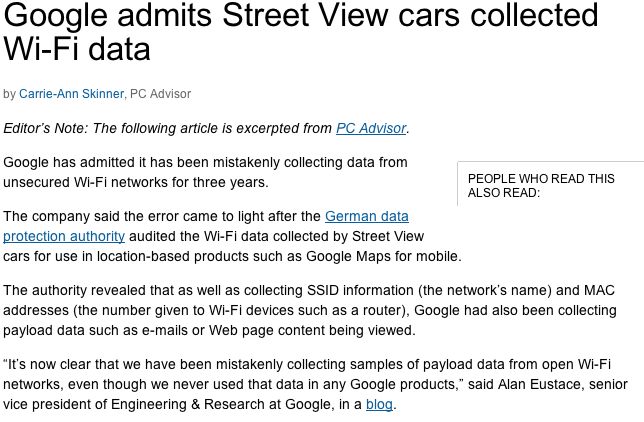
Making information available: Every photographer and writer should be up in arms about this one. Such is Google’s public posturing as a democratizer of information availability that it’s common to find your work available for anyone to steal. Just do a search using Google->Images and there are your pictures. No permission, no copyright, no payment for their use. Available for one and all to take as they please. Well, now they are at it with books as well, as the following from Reuters attests:

The courts can decide that one but it smells to high heaven. It’s a bit like eBay fronting for the sale of counterfeit goods and claiming innocence. “We are just providing a service and cannot be responsible” they say. Uh huh. How else is the thief to ‘fence’ his goods to a global audience then?

China lies? One of Google’s attempts at extricating itself from the decision to quit China was that its servers had been penetrated and code stolen. Wait a minute here. Your code was stolen? What about all the books, images and movies your servers store, Google? You are facilitating freedom but the Chinese stole from you? It doesn’t solve.

So Google, have you Done Any Good recently?

Update May 17, 2010: Google continues to do good.

The HP Slate

Well, it has a better name.

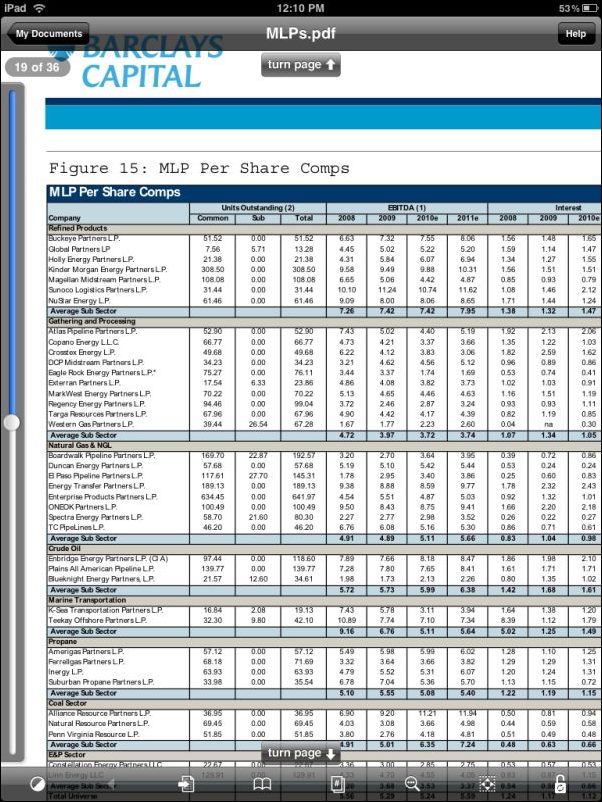
This somewhat forlorn HP marketing piece is meant to buck up the salesmen at HP.

Some issues with the Slate:

  • HP uses the Atom CPU I used in my netbook the past two years (recycled two days after getting the iPad). I overclocked it from 1.6 to 2.0gHz and it was still slow. Not too bad (OS Leopard 10.5.6) but the A4 in the iPad is really special. Fast. (“Wicked fast” as Mossberg of WSJ put it). The iPad surfs almost as fast as my desktop which has thermonuclear power, five big fans and a Core2Quad CPU running Snow Leopard 10.6.3. The iPad’s apparently slow 1 gHz CPU speed does not make for meaningful comparisons – I know, I have used both CPUs.
  • The Atom CPU runs pretty cool but uses much more power than the A4. The result is a much lower battery life. 5 vs 12 hours. Huge difference.
  • The HP’s screen is same as on netbooks – 1024 x 600 vs. 1024 x 768 pixels on the iPad. You will be amazed how much difference those extra 168 pixels make – the iPad screen shows 28% more. Non trivial.
  • No 802.11n wifi on the Slate.
  • No App Store for the Slate.

The HP has a camera, SDXC card reader and USB port. Very nice. The iPad really needs a card reader built in, not as an add on. The HP can likely multitask (my netbook did) – multitasking is coming to the iPad soon with tomorrow’s announcement of iPhone OS 4.0. The Slate’s price seems far too high – aren’t Apple products meant to sell at a premium?

But the real deal killer is the OS. Windows 7, even it is better than Vista and XP, was not designed for touchscreen use. HP has rushed this out in 6m whereas AAPL has been developing the iPad with a ‘ground up’ designed OS for 5 years and has millions of users’ experience from the iPhone/iPod Touch (85.5 million to be exact). HP make nice pro printers. They should stick to that. The Slate looks like a very costly netbook to me.

I would hate to have to compete against the iPad with all that patented technology and wish HP well. They make some great hardware.

Update April 30, 2010: The rumor mill is reporting that HP has decided to cancel the Slate. No surprise there. Windows and 5 hour battery lives just don’t cut it any more.

The iPad’s IPS screen

Not half bad, as we used to say in school.

One of the iPad’s biggest advantages for photographers is it’s IPS (In Plane Switching) display whose singular advantage over TN (Twisted Nematic) LCD displays is that it suffers far less fall off viewed from acute angles.

A picture being worth a lot more than words, I imported a snap from a Panasonic G1 RAW file into iPhoto on the iPad using iTunes (boy, does that ever sound dumb, or what?), the only method available until the iPad’s SDHC card reader debuts later this month.

In the comparison pictures below you are looking at JPG renderings of the RAW file on both monitors, the large one being one of the two Dell 2209WA IPS displays on my desk.

Face on, the iPad’s image is a little warmer.

Off axis, reflections make comparisons tricky.

The Dell monitor is profiled using the EyeOne colorimeter. At present there is no way to profile the iPad’s screen but it’s close enough to be useful for preview and culling. Off axis, reflections on the iPad make comparisons difficult, (the Dell is, of course, matte), but the drop off in illumination intensity is far less than the picture suggests.

Some aver that off axis viewing is not something you do with portable devices. That’s largely true for the miniscule screens in devices like the iPhone but the iPad is quite capable of supporting multiple users – some games already provide that functionality – and obviously not everyone can have the screen dead front and central.

So the IPS technology in the iPad’s display is welcome and yet another technological step forward by the design geniuses at 1 Infinite Loop, Cupertino, CA.

The Unfair Advantage

With thanks to a great engineer.

As a kid, when I was taking math finals in school, one of the rich kids had an electronic calculator. The rest of us had slide rules and logarithmic tables. What struck me was that he was forced to surrender it at the door before entering the exam hall. You see, this being a very proper British establishment that believed in a level playing field, they thought it unfair that he should have that technology available to him compared to the paper and pencils the rest of us had. An attitude which has a lot to do with Britain’s fall from world leadership, this young prat’s use of technology was deemed unBritish. It was my first exposure to what I later came to know as the Unfair Advantage. What has not changed one iota since then is the resentment the owners of the Unfair Advantage engender in the deprived masses without.

The concept of the Unfair Advantage was made famous by a great American race car driver and mechanical engineer named Mark Donohue. His education and analytical engineering skills, something not possessed by any of his competitors, allowed Porsche to develop his race car, the 917-30, to a peak of perfection which saw it win all but one of the CanAm races in 1973. The format was subsequently changed and the car obsoleted, but Donohue had shown that having an Unfair Advantage was a winning formula.

Donohue’s Unfair Advantage – the 917-30.

I learned a lot from Donohue and have always been seeking the Unfair Advantage in whatever I do, be it business or pleasure.

Take Harvard, where I would like my son to get an MBA many years hence. He is male. Unfair Advantage. 98% of Fortune 500 CEOs are men. He will have the best education leading up to his Harvard MBA, commencing with four years at one of the eight elite New England prep schools with four more in a no less exalted college. Unfair Advantage. While the hard scrabbling ghetto kid can win, the odds are long. My son is white. Unfair Advantage, like it or not. There are four or so black CEOs in the Fortune 500. My son is an American. Unfair Advantage. He has access to teaching and technologies most would die for though few can afford. My son will have a substantial trust fund (if I don’t blow it first) which will allow him to take risks the poor cannot afford. Unfair Advantage. At a premier American college, even if his academic accomplishments are mediocre, he will leave with one of the best possible Contact lists on his iPhone. Unfair Advantage. It’s who you know …. My son lives in San Francisco which, with just two or three other US cities, offers access to culture and diversity. Unfair Advantage. Sure there are some successful people in Mississippi, but he will never have to suffer the miseries or lost opportunities of growing up there. My son is also physically beautiful. How many ugly CEOs do you know? Unfair Advantage.

So some of his Unfair Advantages are genetic – height, skin color, genes, looks, while others are man made – wealth, education, technology. But while I have no more idea whether he will be successful than any parent ever has, I have maximized his chances within the currently white dominated rule system by maximizing his Unfair Advantages.

In photography, technological change has always brought with it an Unfair Advantage. However, unlike with education where wealth correlates highly with access, the Unfair Advantage in photography lasts a brief time. Color film gave Life magazine an Unfair Advantage over its competitors then suddenly it was cheap and everyone had it. Life magazine folded. Early adopters of digital had an Unfair Advantage. They could process and deliver images faster than the film users but before you could say CMOS sensor, everyone had digital and it was dirt cheap. Kodak folded. The Unfair Advantage was gone and had become a necessity. Unless you want to be a target for hilarity, no self respecting professional photographer would be seen dead using film unless, that is, he is so successful that it can be shrugged off as a charming eccentricity. “That’s Bruce, man. That’s the way the dude rolls.”

When technology suffers one of its frequent seismic changes, the early adopters are scoffed at by fools like this – in today’s WSJ:

Not one moment’s thought has gone into that piece of nonsense, written by a guy who drives looking in the rear view mirror. What he does not know and likely will never understand is that, armed with an iPad, my eight year old son has a massive Unfair Advantage. He can both consume and create using the device in ways not a single one of his classmates can. By the time they have all caught up because they don’t get it, or their parents don’t get it more likely, or they are waiting for ‘the bugs to be worked out’, or because they want feature this or feature that, Winston will have had a one year lead on them which they cannot recover. His Unfair Advantage is conceptually identical to Mark Donohue’s.

Thank you Mark for teaching me one of the most important things I ever learned, and it’s not something I picked up in the storied corridors of academe. You can buy Donohue’s book from Amazon and, yes, it’s titled The Unfair Advantage.

One of Winston’s many Unfair Advantages.

Genetic determinism is a fact of life. Get over it and choose your parents well.

Mind blown

Another early adopter.

Dropped by the city today on a glorious spring day to pick up some slippers from the nice people in the Allen Edmonds store (America’s finest shoe maker) and was not only amazed by the profusion of iPod advertisements but by the number of people talking about it on the street as I ambled along. If you think this device has buzz, you are right.

Early adopter

This chap bought one the day it came out this past Saturday and, as you can see, his mind has been blown ever since.

On a related note I wrote the Macworld people asking, now that the iPad is here, why I should renew my print subscription? I’m not holding my breath for a reply, but then neither do I propose to renew.