A handy plug-in.
DxO is a Photoshop or Lightroom plugin whose purpose is twofold. Correcting keystoning from leaning verticals or slanting horizontals and removing volume anamorphosis, the elongation of objects near frame’s edge when very wide angle lenses are used. I have traditionally used PS CS5 to correct keystoning and believe that PS CS6 adds volume anamorphosis correction, but as DxO is running a $39 special offer – half off – through December 31, 2012, I purchased the Mac version on the recommendation of a friend.
DxO’s poky servers went down half way through my first download attempt but the second was successful. It’s a whopper at some 187MB, larger than Lightroom itself. You have the option of installing it as a PS and/or LR plugin in addition to the mandatory stand-alone version which is installed in the Applications folder.
The LR version integrates seamlessly, requiring the user to hit Photo->Edit in->DxO Viewpoint when in the Library or Develop module whereupon LR generates a lossless TIFF file which pops up in DxO ViewPoint. You have a choice of 32-bit or 64-bit versions. I went into Finder and erased the 32-bit one as it’s a distraction. If you can use 64-bit, why not?
The controls are intuitive. In the image below from the San Francisco Palace of Fine Arts, there is keystoning in two planes – vertical, obviously, and horizontal as I was not plane to the subject.
There are three keystoning icons in addition to traditional sliders. Icons are the way to go. First you dial in your preferred aspect ratio – 3:2 like the original in this case – then click on the double keystoning icon and align the guidelines with the two verticals and two horizootals that have to be straightened:
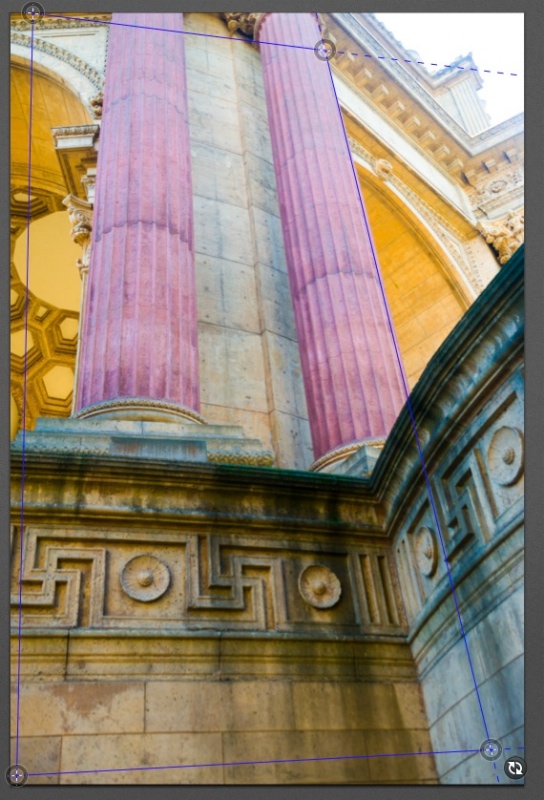
Guidelines aligned along two verticals and two horizontals.
Click Accept then File-Save and the corrected version is saved, stacked, along your original in LR:
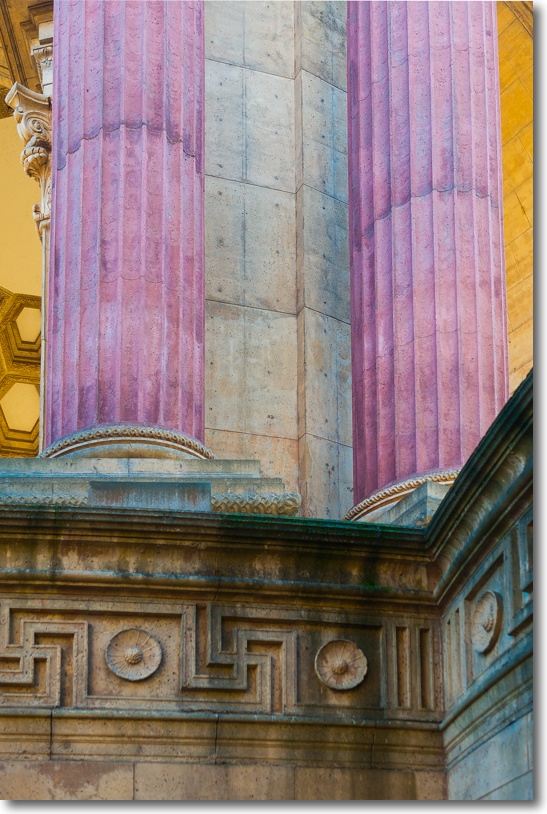
Corrected version.
Here’s the result after using the Transform->Distort command in PS CS5 for comparison:
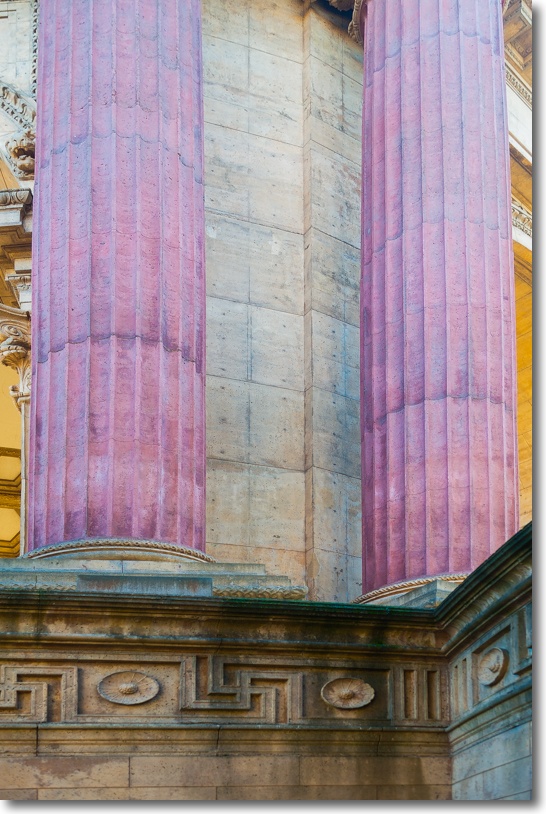
Corrected in Photoshop CS5.
Note the excessive elongation of the plinth compared with the DxO ViewPoint corrected version. I have left in a hint of keystoning in both versions to preserve the suggestion of great mass and height.
Either version is better than the rudimentary correction in Lightroom, which tends to remove far too much of the original.
I don’t know that I would pay $79 for this plugin but $39 seems fair. As I do a fair amount of architectural photogrtaphy, it fills a niche in the toolbox. Whenever taking pictures where keystoning is unavoidable, I make sure to include lots of space around the main subject, knowing that much of it will be lost in processing.
Original on the D700, 35-70mm f/2.8 AFD Nikkor.