The Russar 20mm lens

Major league strange.

For an index of all Leica-related articles click here.

The Unfinished Church, Bermuda, 1999. Leica M6, 20mm Russar, Kodachrome 64.

Mention of the quirky Leitz Stemar stereo lens yesterday got me to thinking of some of the stranger lenses I have owned. Without a doubt on of the oddest was the 20mm Russar-M f/5.6.

Mine came in black – the Russar 20mm f/5.6 ultra-wide angle lens.


This was a super wide angle Leica thread mount lens without rangefinder coupling. Not that any was needed as at 20mm pretty much everything was sharp all the time. I got mine shipped from the UK for under $200 and it came with the best wide angle viewfinder I have yet seen. Not only was the image clear and relatively undistorted in the finder, the field of view was accurately defined and the whole thing was superbly made using light alloys. None of these atrributes apply to the awful Leica 21mm finder, now in plastic and costing a ridiculous $750 today. Further, the Russian finder had a swivelling foot which allowed you to tilt it down for parallax correction at close distances. A masterpiece.

But the lens was even better. When the Russians took possession of eastern Germany in 1945 one of the priceless properties there was the old Zeiss, Jena factory. I cannot confirm this but am fairly certain that the 20mm Russar was optically identical to the 21mm Zeiss Biogon and like designs, meaning a deeply protruding rear element which rested very close to the camera’s shutter and required a deep rear lens cap for storage. The oddest ‘feature’ of this lens was the aperture ring which was deeply recessed within the front of the lens so you had to stick your finger almost into the lens to change f-stops.

This placement, of course, precluded the use of a filter as with one in place you could not adjust the aperture.

Viewfinder and Russar 20mm on the Kiev copy of the Contax II. The lens also came in a Contax bayonet mount.

The definition was excellent at all apertures and best at f/8. In practice you would simply take a wild guess at the correct focus distance (in meters, not fun for one brought up to estimate in feet!) sight through that wonderful finder and bang away. I kept it permanently mounted, using a screw to bayonet adapter, on my Leica M6 which had such a poor viewfinder (can you say flare? – I shoot into the sun a lot) that it made a natural mule for the Russar. What’s more, it amused me no end to have a Russian lens mounted on what was then Germany’s finest.

The lens was an inexpensive alternative to the Leitz Super Angulon f/3.4 (the earlier f/4 was a real dog) and later Leitz Elmarit and Aspherical Elmarit f/2.8 designs which cost and arm and a couple of legs. The Aspherical variant remains in the catalog at $4,400, so you get the picture. When my Russar-M finally moved on, replaced by that same unbeatable Aspherical Elmarit (it was one of my ‘more money than sense’ moments, I confess) I found myself missing the Russar’s compactness and built-in ‘hood’. The Elmarit was gargantuan by comparison, and the even larger hood an object of ridicule. I never used it. When the Aspherical Elmarit was finally sold I did at least have the pleasure of doubling my money on it, Leica gear prices having gone through the roof.

The equipment pictures above are from the excellent USSRPhoto site which has masses of information on all sorts of Russian camera gear.

Bermuda Sky, 1999. Leica M6, 20mm Russar, Kodachrome 64.

A 20″ x 16″ print of the above over the mantlepiece at home testifies to the quality of the Russar.

Panasonic 3D lens

The Stemar is back!

For an index of all Leica-related articles click here.

Sold in very limited numbers in the mid-1950s, Leica’s Stemar lens was an elegant way of making stereo pictures with your rangefinder Leica.

The 33mm f/3.5 dual lens Stemar

The Stemar lens (the name derives from STEreo elMAR – meaning a simple four element design like the 50mm Elmar) would take two images, each 18x24mm on a standard 24x36mm film frame and came in a kit with a tailored lens hood, a 33mm clip-on viewfinder, a close up lens/prism, and a binocular viewer to permit 3D examination of the transparency image. There was also an even rarer attachment for your slide projector to project the twin images on a large screen. All are visible in the picture below.

Stemar outfit.

Given that it came in a Leica screw mount, easily adapted to the latest Leica M cameras, there’s no reason why it wouldn’t work every bit as well with the latest M7 Leica film camera or even the M9 full frame digital, though I’m not sure how you would create viewable transparencies with the latter; doubtless possible with some ingenuity.

As the picture shows, the lens was something of an ugly duckling, screws showing prominently on the front plate, the ugly protruding finger focus tab, the many gadgets needed to make it work, and definition cannot have been that great. The four element Elmar design works reasonably at 50mm and 65mm (the latter on the Visoflex SLR ‘mirror box’) and well at 90mm but is probably poor at 35mm. Leitz made a 35mm full frame Elmar pre-war and it was soon replaced with the excellent six element Summaron. Compare with the Panasonic lens, below and see what stylish modern design is all about.

As with all low production Leica hardware, the Stemar has now acquired that awful epithet of ‘collectible’, meaning it’s doomed to a china cabinet and commands a $6,000 price tag at auction. I find this every bit as damnable as the $1mm Ferrari treated in like manner rather than thrashed on the backroads, which was the design intent.

Now a Stemar was not something I ever owned. Even a few years ago when it was actually affordable it would have been no use to me, as a childhood eye defect forever rendered me incapable of seeing in three dimensions. My brain – such as it is – cannot fuse the disparate images, with the happy result that I read with my right and drive with my left eye. It makes for interesting moments when trying to pour red wine in a white tablecloth restaurant, as I have no depth perception, and is the reason you will invariably find me delegating the task! I have experienced too many reddening tablecloths to want to repeat the experience, testimony to my having missed the glass completely ….

But I console myself that my infirmity has been all to the good. Like the blind man with an overly developed sense of hearing, this One Eyed Jack simply tries harder with what he has. While motorcycling near the cliff edge can be an unusually unnerving experience, I grit my teeth and try harder, consoling myself as the journey ends that I am a better and stronger person for the experience! Further, I get to save money and weight on binoculars, as a monocular is fine, the second optic being wasted on me.

But 3D is the coming thing. In one of those mail catalogs I simply cannot seem to unsubscribe from, the assorted big screen TVs for sale were dominated by one thing – labels screaming ‘3D’. Motion pictures are a hit in the format (or so my 8 year old assures me – I cannot go with him as I cannot actually see anything but a head-splitting mess on the screen) as Hollywood discovers the latest in moneymaking technology. More power to them. I get to save on the entry price to the 2D theater.

Many of those 3D TVs in the catalog come, of course, from Panasonic, which is a pioneer of the technology. So it’s hardly a surprise that they will shortly release a 3D lens – just like the Stemar but auto-everything – for the G-series of micro Four-Thirds camera bodies.

Panasonic’s modern Stemar.

I don’t know the focal length but would assume 16mm or so, as the Full Frame Equivalent of 33mm used in the Stemar is ideal for 3D images – anything much longer and the subject tends to lose the 3D effect. Or so I am assured by those with binocular vision. I think it’s a tremendously exciting development as the images taken with this optic will simply be ported to your Panny 3D TV set for viewing with those funky glasses, a far superior experience to the Stemar’s hand-held binocular viewer, I would guess. In that case, your ‘collectible priced’ Leica M9 may finally fulfill the potential, with its equally collectible Stemar, which the latter so under-delivered on over fifty years ago. The G-body + Panny 3D lens will run you some $12,000 less, by the way.

Just goes to show, doesn’t it? There really is not that much new under the sun.

Here’s Panasonic’s press release on the subject; check the double asterisked note – you can bet Panny’s designers have a Stemar or two in their labs. The English may be stilted but the awareness of the predecessor design is clear:

And here’s the 1954 audience enjoying the predecessor anaglyph system – one lens red, one green:

Topaz DeNoise

Snake oil?

I confess that I have always regarded noise reduction applications for digital images as so much snake oil – a solution which makes the problem worse. Sure, they reduce noise but they also destroy definition in the process. Better noisy and sharp than blurred and smooth, in my book. Further, with most of my digital snaps being on the essentially noise-free sensor in the Canon 5D my incentive for ‘denoising’ images has been non-existent. Until, that is, the Panasonic G1 with a sensor one quarter the area of the one in the Canon became my daily user. Go over 13″ x 19″ when printing (and that is really the only time you will see noise in practical use) and noise makes itself heard, if you get my drift.

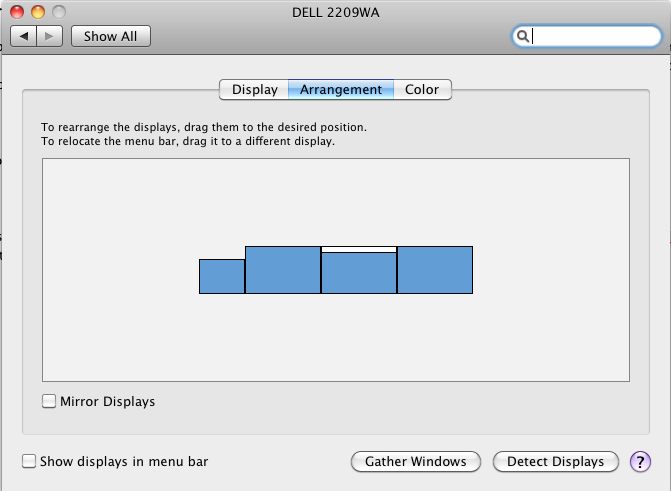
So the other day when I was giving my new Olympus 9-18mm MFT lens a good workout on the G1, I indulged in a spot of pixel peeping to see how good the definition was and, in the process, ran into noise when examining the equivalent of a 30″ x 45″ print on the Dell 2209WA monitor. Now one of the claims for Lightroom 3 is that it comes with significantly improved noise reduction capabilities, so I promptly gave these a shot .

Here’s the original RAW image:

At 18mm, f/8. Sunflowers.

And here’s a 30x selection before applying any noise reduction; this is an excellent test image as it has fine detail and shadows:

No noise reduction at 30x. ISO320, RAW.

Here’s that same section after applying the best looking noise reduction in LR3:

After applying LR3 noise reduction.

The LR3 noise reduction setting were as follows – the sharpness settings are my import defaults for the G1 RAW files, and were determined after much experimentation (5D images need less sharpening, by comparison):

LR3 noise reduction settings

Topaz DeNoise costs $80, seems to be popular on the chat boards, and requires Photoshop CS3 or later, where it installs as a plugin. As I’m still on CS2, and unlikely to upgrade, I wanted to run Topaz DeNoise from within LR3. This dictates the download of two applications – the plugin itself (41.2mB download, 113.7mB installed) and a separate app named Fusion Express (free) which is a 509.1 mB monster of a download but installs at 57.9mB if you restrict the installation to Topaz DeNoise; the Fusion Express application supports many Topaz apps, hence the size of the download. Now the installed size of Topaz Denoise must represent some of the sloppiest programming on record. At 113.7mB for a single purpose tool it exceeds the 89.5mB of Lightroom3 by some 27% – and last I checked LR3 does a heck of a lot more than just remove noise. Draw your own conclusions.

For RAW originals Topaz provides no fewer than seven presets for noise reduction and after some experimentation I determined that the lightest of these gave the best result. That said, the result was significantly inferior to what LR3 delivered with its built in tool. No matter how I tried, I could not reduce the artifacts in the circled area to as low a level as LR3 provided and shadow detail in the hairs on the stem of the sunflower was marginally worse at all settings, even after adjusting the ‘Adjust Shadow’ slider.

Topaz DeNoise version at RAW – lightest setting.

The Topaz noise reduction setting were:

Topaz DeNoise settings

What this little experiment goes to prove is that Adobe has done a truly stellar job in coding the noise reduction features built into LR3 and kept it nice and simply with just five sliders (you mostly use the first three shown above) compared to the overkill of seven offered by Topaz. No matter how much I messed with these I could not approach the LR3 result with regard to the elimination of contour artifacts in out-of-focus areas, and these artifacts are both more noticeable and annoying in the Topaz processed image.

Speed? LR3 is instantaneous. Topaz? First you need to invoke the plugin from within Lightroom which causes the RAW image to be converted to a TIFF copy then exported to Topaz DeNoise, some 7 seconds. Topaz Denoise take a further 7 seconds to process the preview image, and seven seconds every time you move a slider which makes experimentation a royal pain, then a whopping 58 seconds to process and save the file in TIFF format (I’m doing this on my four core Mac with 8gB RAM running a 2.83gHz CPU speed with an Nvidia 512 mB 9800GTX+ video card – it doesn’t get better than that!). So that’s a minimum of 72 seconds per image on a very fast computer. Good luck if you have many images to process …. that’s no more than 50 images an hour.

For the geeks amongst you, here is the Geekbench 64-bit score for my hardware:

So while Topaz DeNoise does a half decent job for the $80 asked, and if you shop around you can find discount coupons bringing the price down to $50, if you are a Lightroom2 user you can upgrade to Lightroom3 for $100. For the additional $20/$50 you get superior noise reduction, the processing is instantaneous compared with bog slow for Topaz, LR3’s improved Adobe Camera RAW processing software compared to that in LR2 is included, and LR3 offers an integrated solution which does not require that you exit the Lightroom application to enter a separate de-noising one. I did not do any tests with JPGs as I only use RAW, and you should too.

You can draw your own conclusions where the value lies. Here’s a side-by-side comparison to make things easier:

LR3 on the left. Topaz on the right.

Keywords in Lightroom

A useful discipline.

No matter how well you catalog your images in Lightroom, adding keywords always helps. That snap at the beach may belong under ‘Beach and Sea’ in your catalog or, equally well, under ‘Abstracts’. But if you add the name of the beach as a keyword, or the words ‘beach’ if it’s cataloged in abstracts, the chances of finding it at some later date when you have many thousands of images added will increase through the use of keyword search.

To find which of your images are missing keywords, set up a Smart Collection (Library->New Smart Collection) as follows:

Then when you click on the Smart Collection named ‘Without Keywords’ you can see all the images that need keywords added. I frequently forget to add keywords before cataloging my images after import and processing, so this is a useful discipline. And if you are way behind on your keywording, simly do a few images each time before quitting Lightroom. The payback down the road in image retrieval and time saved is immense – it takes less time to enter a keyword than to search for an image without one.

And while you are setting up this Smart Collection, take a look at some of the other filters that Smart Collections support. It’s a powerful tool.

Lens profile correction in practice

A dream to use.

Having explained how to create your own lens profiles for use with Lightroom3 yesterday, here’s that experience being put to use.

In this snap I wanted to emphasize the foreground sign to heighten the impact of the lone child on the beach. As you can see the original is rather blah as I was trying to moderate exposure between the poorly lit sign (the sun was shining into the lens – note how flare free the image is, especially as I do not use a lens hood) and the brightly lit beach. A separate attempt using fill-in flash looked too artificial for my taste, like one of those over-lit 1950s outdoor Hollywood musicals.

Original on the top. G1, Olympus 9-19mm MFT lens at 9mm.

A quick tap on the lens correction profile for the lens in LR3, two minutes work with the adjustment brush on the signs using AutoMask and zero feather to faithfully define the edges, a local exposure adjustment of plus one stop on the masked signs, a minus one stop exposure adjustment to the whole image, a touch on the vibrance slider, a little post-crop vignetting (the Olympus lens is totally free from optical vignetting even at 9mm, as you can see from the original, above), some selective darkening of the foreground and a blah original becomes a picture, and exactly what I visualized when pressing the button. The sheer idiocy of the sign testifies to the fact that the least able in any society work for government.

Stop! Turn right! G1, 9-18mm Olympus at 9mm, 1/800, f/8, ISO 320

With images where you expect to use lens distortion correction or perspective correction at the processing stage, it makes sense to compose with a little space around objects close to the edge of the frame, as that space will be lost when corrections are added – as in this example. Things are made a lot easier by the fact that the Panasonic G1 has one of the very few viewfinders which shows 100% of the image – most crop 3-5% making it impossible to exactly preview the saved file.

Lightroom3 is a powerful, efficient photography tool. The enhancements in Lightroom3 have now almost totally obsoleted my use of Photoshop for which feature, alone, I am immensely grateful.

Thank you, Adobe. Now maybe you can convince that jerk Steve Jobs to allow Flash to work on the iPad before I resort to jailbreaking mine.