Cottonwoods

Almost done for the year.

The row of cottonwoods on the old estate, thoughtfully planted by the original owner, is about finished for the year. These lovely trees need little maintenance, grow fast and have leaves which flutter beautifully when in full bloom. I give each a massive fertilizer spike in the spring and lots of water in the summer and that’s about it.


5D, 24-105mm at 105mm, 1/500, f/5.6, ISO 400

At sunset, they are glorious to behold.

Photographer of the Year – 2008

A great portraitist.

I have decided to apply a limited set of criteria in making this award.

The work has to say something new.

It has to be fresh.

It has to regularly surprise you.

You must learn from it.

And it constantly comes to mind.

But, above all, it must stir the emotions.

Now, 2008 has blessed me with many additions to my extensive library of books about photographers (click in the right hand column), yet, looking at those requirements, the choice was simple.

Horst P. Horst is the Photographer of the Year.

You do not need to have a fascination with great fashion or famous people or exceptional portraiture to enjoy Horst’s work. Yes, most of the people photographed by him were famous but they were also beautiful and a beautiful subject rarely hurts a photograph, though it takes a great photographer to do it justice. And you will not find any politicians in Horst’s work, reminding us that politics is Hollywood for Ugly People. Just glance at the front page of any newspaper for confirmation.

What so distinguishes Horst’s work then, is not just the beauty of his subjects. It’s the aesthetic sense he brings to his photography, so much so that you leave his pictures remembering the interpretation and the insights and not especially cognizant that the technical side has been despatched with the greatest aplomb. In the world of painting Raphael and Degas come to mind. Everything is just right.

Horst’s powerful skills and self effacing nature are best illustrated with one of his portraits.


Gloria Vanderbilt. 1941.

Yes, the subject is a knockout. Yes, the composition is startling in its originality. And yes, the gown is sublime. But Horst puts it all together, lights it beautifully – none of this is less than carefully planned – and the result is perfection.

Horst P. Horst is this photographer’s Photographer of the Year.

Speed

We all need it.

Faster lenses. Faster films. Faster sensors. Faster CPUs. Faster prints. Faster publishing. Faster access. Faster retrieval.

In all areas of human effort, speed is seen as a good thing. Time is money. The exception, of course, is government which is not playing with its own money. But we are talking of good things here, so let’s move on.

In most areas of my life I very consciously focus on doing mundane tasks – those which confer no great added value to my world but must be done – as speedily as possible.

In the world of photography that means using digital, not film (plus the results are far superior in any case). Delegating printing of all but the largest photographs to professional labs that do this sort of thing all day. And using snappy processing and data management software like Lightroom to keep all those pictures in easily accessible form. For the most part I see little purpose in spending time at a screen processing images and aim for the best in-camera original to keep back-end efforts at a minimum. Anyone can process and print. These are purely mechanical tasks, despite what those, seeking to protect what little knowledge they have, would tell you. Face it. The ‘great printers’ were, as often as not, lousy photographers. Can you say Ansel Adams?

One of the nicest things about modern computers is that most come with built-in webcams allowing you to make video calls to like-equipped colleagues anywhere in the world. I suppose I should make that “…. Mac-equipped colleagues….” because, for the life of me, I have never succeeded in getting a webcam to work reliably with Windows for any sustainable period and do not know anyone who has. Mine, in various Macs, has yet to fail in four years of solid use. What else is new?

The other day, enjoying one of these calls, I began to grow increasingly irate at the latency and image smearing I was getting on the video side of the call. Now it’s no great secret that America has some of the world’s worst broadband capabilities and, yes, you can blame a government which would rather regulate than free technology. As a result our internet connections are generally 10-25% the speed of those enjoyed by Europeans and Asians. Criminal. This from a country which claims a lead in all things technological.

Living in a rural area – to put this in perspective, most of my neighbors use dial-up – I didn’t hold out much hope of significantly increasing my internet connection speed but decided to call the cable company on a whim and learned that I could double my speed by simply upgrading to a newer modem (which they supplied at no up front cost) and paying an additional $10 monthly. So two hours later I had the new modem on line and could measure the difference. The standard for this is Speedtest.net and here are my before and after readings:
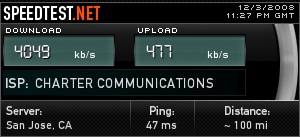

Before
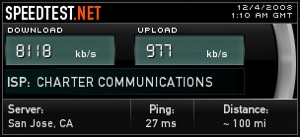

After

Exactly in line with the cable provider’s sales pitch. Amazing. Best money I have spent this year.

Now before you start thinking that 8 mbps/1 mbps download/upload is fast, take a look at the statistics available at Speedtest.net. These are averages for the cities concerned:

Tokyo: 25/15
Sydney: 30/20
London: 35/30
Paris: 21/13

In other words, the best I can get here is still far slower than the worst in these great cities. And these places are run by foreigners, for goodness’ sake!

Nonetheless, the next time I go to upload snaps to any one of my web sites, I am at least consoled that the time wasted will be half of what it was yesterday.

You think it was easy getting broadband here in the boonies? How about a 405 foot ditch and like amounts of broadband coaxial cable and PVC piping? We did this 5 years ago when buying the place and, despite many teething troubles, the whole thing is now very reliable. And newly fast!
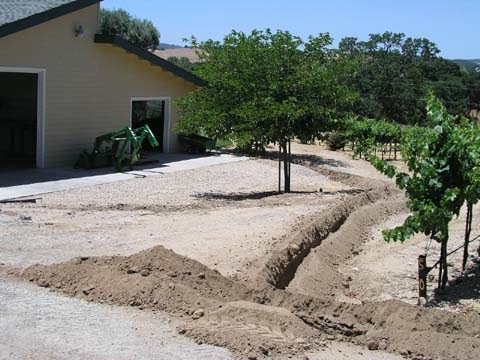

Getting broadband in the boonies is no simple thing

Have you checked your connection speed? Do so. My carrier makes contractual promises about speeds and I hold their feet to the fire on those. Too bad no such speed guarantee is offered by the ISPs I use, whose service and speed vary from poor to execrable.

For the record, this site is hosted at BlueHost.com, whose owner is forever blogging on how great his crappy service is. My photo web site (click on the right) is at Readyhosting.com (I like to spread the pain) and all you need know is that they use Windows server technology. The less said the better.

Too bad it’s so difficult to change ISPs. If you are looking for an ISP, avoid these two stinkers who have the bedside manner of the IRS and the efficiency of General Motors. Remember that 99% up time means an ISP is down over 3 days a year. Just say no to such poor statistics and keep shopping until you find 99.999%.


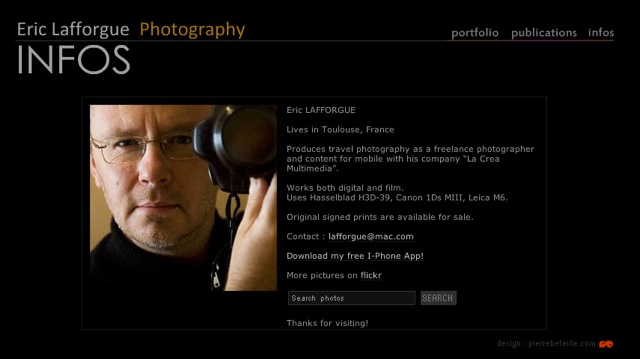
Eric Lafforgue

Exceptional photography, exceptionally presented.


Click the picture to enter Eric Lafforgue’s site

There is a remarkable paucity of iPhone applications which focus on content rather than technique. One standout which I have had on my iPhone for a month now, is Eric Lafforgue’s superb application which does one thing only. It showcases his exceptional travel photography. Further, the implementation is so drop dead gorgeous that it’s a wonder to me that more photographers have not released something similar. Go to Lafforgue’s web site and you see the same elegant presentation with near-total focus on content – something many photographers with insanely irritating Flash websites would do well to learn from. Lafforgue uses Flash sparingly and to great aesthetic effect on his web site. The iPhone variant is as simple as can be – pictures are simply flicked with a finger to turn the ‘pages’.


On the iPhone

I find myself firing up Lafforgue’s application at odd times just to enjoy his work. During the one month it has been on my iPhone it has been updated several times for newer content. Highly recommended on the desktop or on your phone.

Lens of the Year

No contest.

It’s not so much ‘Lens of the Year’ as it is ‘Outfit of the Year’ and the choice will surprise none who have been visiting here recently.


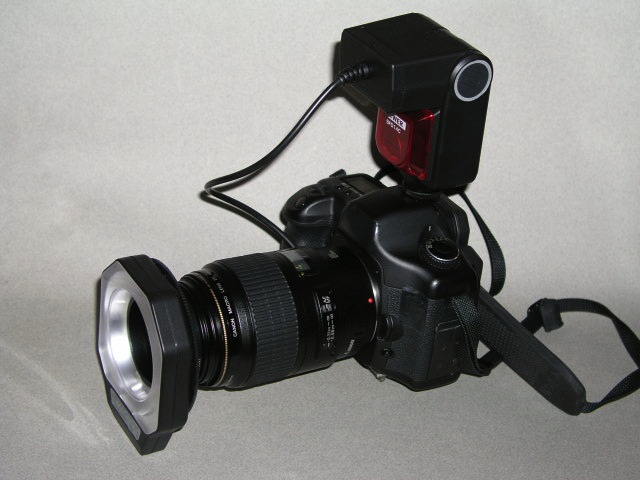
Canon 5D, Canon 100mm EF Macro and Bower ring flash

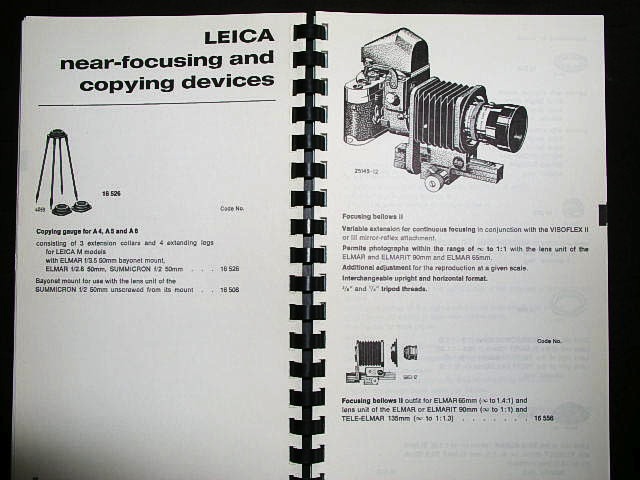
While none of this gear is ‘new’ – the 100mm macro has been around for ages, the 5D is no spring chicken and ring flashes are as old as politicians’ lies – what is so very special about this outfit is how simple the technical side becomes. Back when, in the bad old film days, you used a lens head on a bellows, constantly messed with focus and depth of field, tried to remember the right exposure compensation when the bellows were racked out and then suffered agonies trying to light your subject. Then, when you snapped the picture, you realized that you had forgotten to stop the lens down and were five stops over-exposed.

But Canon obsoleted all of that with a few strokes of genius, doubtless available from other makers also. First, they made the lens fixed length. It does not change in size as you focus. Second, the focus range is continuous from infinity to life size on a full frame sensor body. Third, focus is automatic and blisteringly fast. And, finally, E-TTL makes sure that all those arcane calculations are a thing of the past, computing the optimal blend of natural and flash light on the fly. A nice 100mm length also allows the photographer to step back from the subject, leaving more working room, and throw in the Software of the Year and you have the most perfect macro kit yet.

Thanks to all this magic 100% of your attention can be devoted to the subject and the technology takes care of the back end. This compares well with the automatic gearbox in cars which leaves more brain cycles available for the job of driving rather than shifting gears. Sure, there are people who like to use a clutch. (None of them drive in Formula One, by the way). There are also people who will tell you that film beats digital and good sound ended with the LP era. Have pity on them, while they do their calculations and make incantations to the analog gods of yore. The world will always have its technophobes, most so over-invested in yesterday that they have to defend antiquity.

And it’s not like this wonder lens is wildly expensive, compared to the mess of adapters, bellows, racks etc. in olden days. The lens retails for under $500 and works every bit as well on Canon’s cropped sensor bodies as it does on full frame. The optical and mechanical quality is right up there with Canon’s exalted ‘L’ offerings – I know as I own some. In fact, there’s not a sharper lens in my kit. So add an inexpensive digital Rebel body, splash out another $150 on the ring flash (no need to get Canon’s costly version), and you have the best macro kit out there for under $1,000. What’s that, you say? You want the ability to switch off one side of the ring flash tube for better modeling effects like the Canon one does? Well, dear reader, I have two words for you. Black tape. You stick it over one half of the flash tube in the same way you stick it on your camera to obliterate all those gauche manufacturer’s markings. Now that’s what I call a bargain.


The good old days were …. really bad.

The Canon EF 100mm f/2.8 USM Macro autofocus lens is the Lens of the Year.