Made in West Germany – which quality once called home.
Back in the fifties, the final flowering of the machine age, if you wanted quality in photo gear you used a Leica. However, if you wanted real quality in your pictures, we are talking billboard sized prints here, you used a Linhof. This apogee of field camera design, in the many Technika models, came mostly in 4″ x 5″ size and was the love of industrial photographers across the world. In addition to a broad range of Zeiss and Schneider lenses, you could fit any number of accessories to your Linhof and make it sing. But the only thing you would fit your Linhof on was a Linhof tripod. Naturally.
I have owned mine some twenty years and it will likely go to the grave with me, though I suspect it will refuse to melt when my body is subjected to the fires of hell in the incinerator. I have never understood why one would want to waste valuable real estate on all those tombs, Père Lachaise and Highgate being the only exceptions where this sort of thing makes sense. A world where we cannot commune with Chopin or Michael Faraday would be a sadder place.
All my recent work with multiple images – HDR, panoramas and now Helicon Focus – suggested a piece might be in order about the tripod I use as these techniques dictate one is used. No, its not a $1,000 carbon fiber Gitzo, much as that would be nice to have.
My Linhof tripod came (for very few dollars) with a Linhof pan and tilt head, useless for still photography, so I replaced it first with a Leitz ball and socket head and, later, with the funky Novoflex Mini Magic. Plus, of course, a Manfrotto QR plate. The nice Leitz head now happily makes its home on my Manfrotto monopod.
Update January, 2014:
The massive and very well made Sirui K-40X ball head is a match made in heaven for the Linhof, and far superior to the funky Manfrotto head. Yes, the spirit level in that device is also useless.
Over the years I have had to install three new rubber feet (they are retained with circlips) and had to glue the broken center column knob with epoxy after it disintegrated. It now looks worse but is much tougher and I sure as hell was not going to pay Linhof $40 for a replacement. The use of light alloys makes the tripod easy to carry though not as light, maybe, as the latest, costly carbon fiber and basalt creations. I console myself with the thought that the extra exercise is good for me!
Despite my best efforts to destroy the sliding legs with multiple immersions in sand, mud and sea water, the Linhof laughs at my amateurishness and soldiers on. After a day at the beach I flush it with tap water, pad it dry and it’s ready to go. No nasty, sticky, dirt-loving lubricants needed. Further, the main leg sections are rubber coated, so your tripod does not accrue that totally ghastly scarred look after a few years’ hard use.
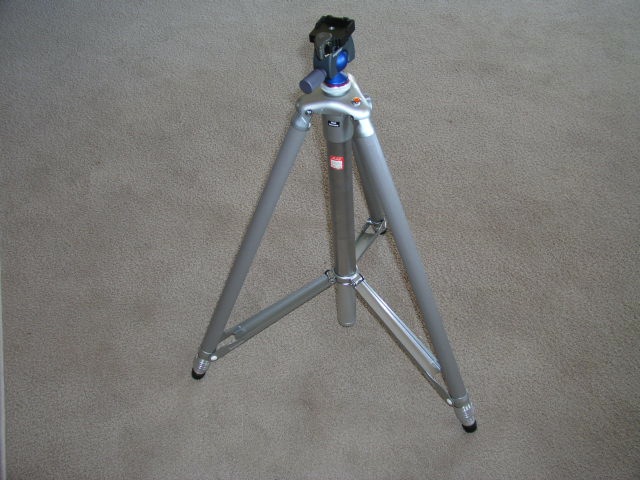
The Linhof S168 – 29″ tall when collapsed
There is only one right way to enhance stability and that is with cantilevers. Ask any bridge builder. Linhof got that totally right with these light yet strong ‘C section’ beams.
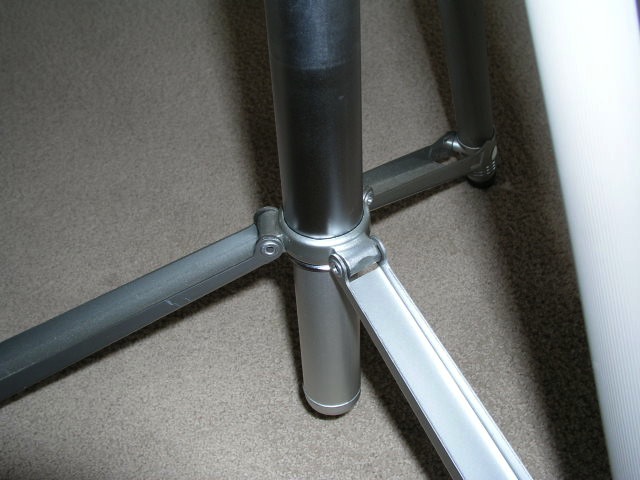
Massive cantilevered legs
To be useful a tripod must be capable of rapid deployment, and the push button sprung lower leg releases means erection is a matter of three or four seconds. For the most part the long, two section center column suffices for the rest of the extension. The Manfrotto plate means that attaching the camera is instantaneous – obsoleting yet another reason to avoid using a tripod.
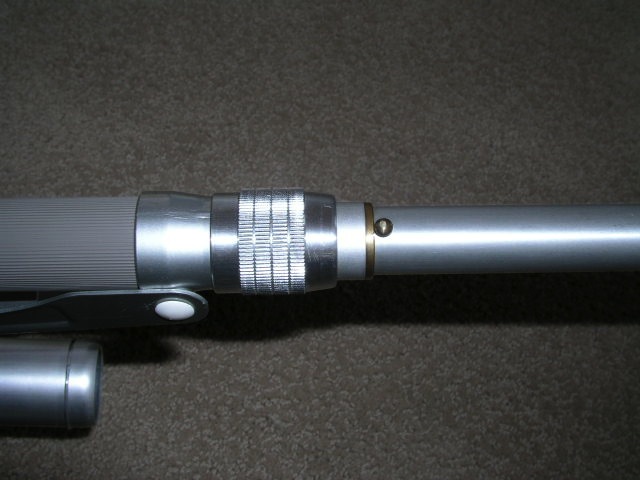
Quick release lower leg section. The twist collar releases the upper section.
If you are working on an uneven surface, the twist collar sections can be selectively deployed (the push button sections are ‘all or nothing’) to even things up. I rarely use them.
The leg tips can be extended for hard surfaces.
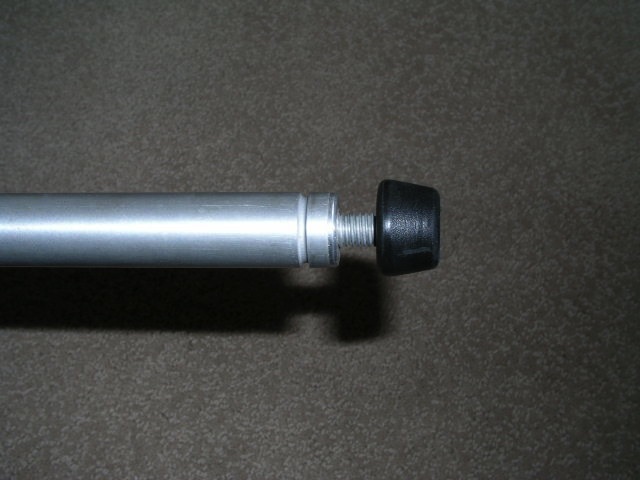
Extendable rubber tip. Note the coarse threads which aid in dirt removal under the tap.
Or retracted for slippery ones.
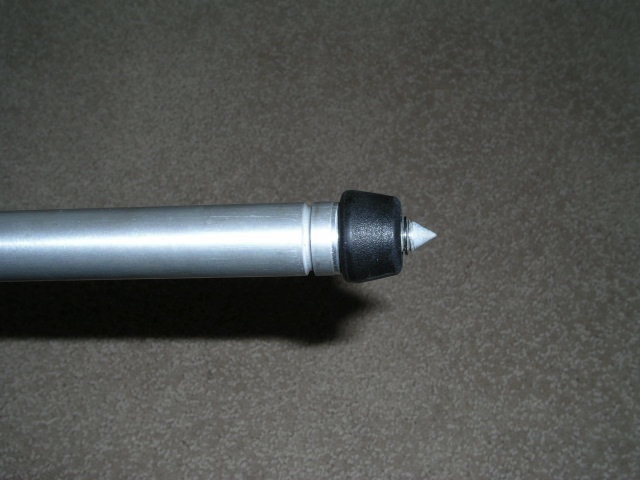
Spike for your favorite oak floor
The column knob benefitted from some epoxy a few years ago. The built-in spirit level works fine …. and is totally useless.
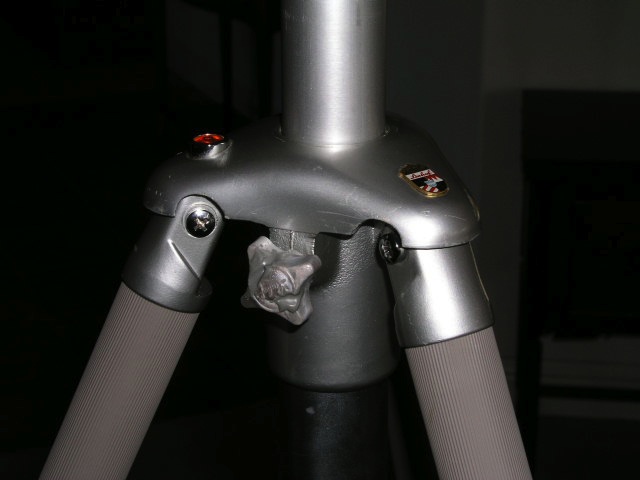
Epoxied plastic knob. Germans and plastics simply do not mix ….
And you want to go really high?
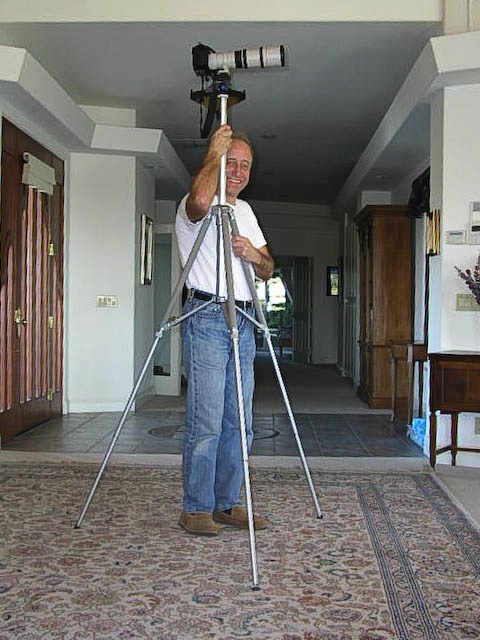
Did I say this thing was tall? I’m 6′ of the total extension!
The Linhof S168 gets so many things right I would be rushing out and searching for one if I were you. Tripods simply do not get any better and a couple of enhancements (ball head, QR plate) make it the most quickly deployed and most sheerly useable tripod there is. If you are searching for a good, used Linhof, I strongly advise looking for a model with the cantilevered legs as these add tremendous stability for a minor weight penalty, and greatly ease deployment. It’s worth the wait for the right one as this will be the last tripod you buy.
The other manufacturer I would look at from that period were I searching for a top quality heirloom tripod would be Schiansky. It’s a name you no longer hear but they made a superb range of tripods at the time the Linhof S168 was on the market.