Mr. Rabbit

A welcome morning visitor.

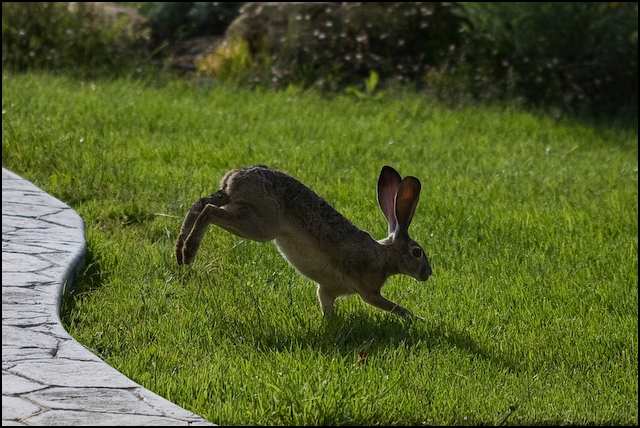
Not only do these chaps make their home in the vineyard, an occasional visit to the garden has them displaying their magnificent ears for all to see. Naturally shy, this fellow made for the bushes when he saw the camera.

That vicious guard dog, Bert the Border Terrier, has given chase many times but, just as he closes in, they always seem to have another gear and leave him standing. Which is just as well, as I doubt he would know what to do if he ever caught up.

Taken though the kitchen window with the Canon 100mm Macro – for no other reason than that’s what was on the 5D when I grabbed it in haste.

Canon 100mm Macro – Part I

Not your father’s macro lens.

For a preamble on macro lenses, please click here.

Over the past five years anytime I wanted to get really close to something meant using my Olympus C5050Z five megapixel digital. Quality is decent, it focuses postage stamp close and framing using the built-in LCD screen is dead accurate. Rack the lens out to maximum zoom and you also get reasonable subject-to-lens clearance for illumination purposes.
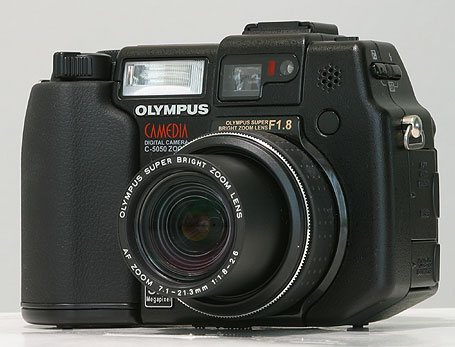
If nothing else, it has been used to list any number of film cameras and lenses on various auction sites, so it has paid for itself many times. Most digital cameras, especially the point-and-shoots, focus easily into what we think of as the macro range, so the Olympus is nothing special in this regard. Handy, though, and easy to use, with auto everything – focus, flash, exposure.

By contrast, here’s my latest Canon lens addition – macro with a vengeance.
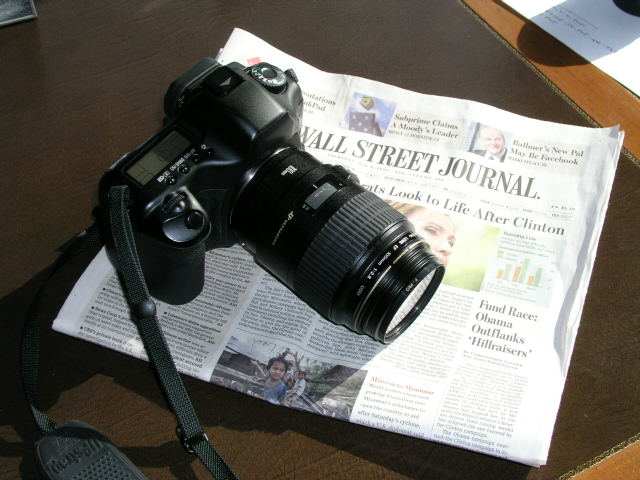

Canon 5D and 100mm f/2.8 USM macro lens, with funding source

With modern multi-coated glasses, charging extra for a lens hood must be as big a scam as ethanol, and I never use one on any of my Canon lenses except on the fish-eye and the 400mm, where they are non-removable. Why? Because they add bulk and make no earthly difference to the picture. And if you have seen the hood for this Canon, you will not want to buy it either. But I do use an UV filter on everything and have recently convinced myself that the German B+W ones are better made than their Japanese counterparts, so I paid up a few dollars more for the real thing. Seems I’m still a sucker for that ‘Made in Germany’ thing. The main reason I use a filter is that I think any decent photographer should throw out all his lens caps.
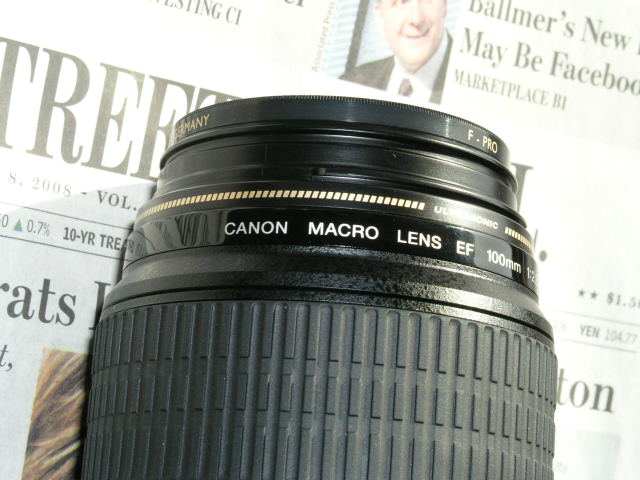

Not a Japanese filter…. As you can see, that Olympus has no issues with getting in close.

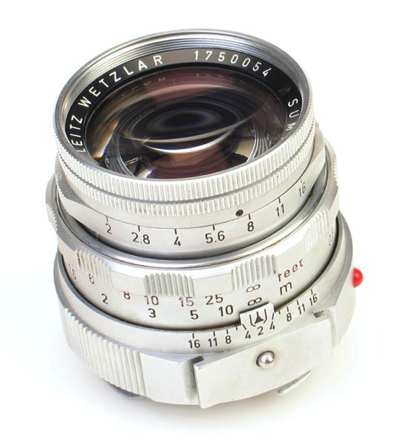
Now no one could accuse the Canon Macro of being pretty to look at – not like in Leica Summicron or Contarex Planar pretty – but its inverted cone design speaks of the Bauhaus, function and funky form. Construction is typical Canon prime – meaning good if not ‘L’ quality and a whole lot better than their crappy kit zooms. Best of all, at under $500, if you drop it you are upset but not destroyed. Try saying that about your Leica lenses….

Everything about the ergonomics of this lens is right. The 100mm focal length means you get a nice long subject distance to simplify lighting. You are twice as far away as with a 50mm macro, at the cost of depth of field. The short (about 135 degree) focus throw from infinity to 1:1 (the lens goes down to life size on a full frame camera) is very smooth and full time manual focusing is included if you use autofocus – very handy for a macro lens where small focus adjustments are the order of the day. The bulk and weight of the lens make for perfect balance on the 5D, meaning hand holding is easy.

Best of all, unlike all those macro lenses I illustrated yesterday, the length of this one does not change as it is racked out – meaning that no new obstacle to proper lighting presents itself. And auto exposure means no more figuring of light loss as 1:1 reproduction is approached – a loss of two stops in brightness owing to the extension of the lens from the sensor. That holds whether the lens is made by Canon or Ballspond Roadski optics.

How accurately does the lens focus on the 5D? I am using the center rectangle here which is the most sensitive focus point in the camera’s design. Placing the camera and lens on a tripod on the high tech Pindelski test bench with the camera at 45 degrees to the tape measure, here is the result with the lens autofocused on the line just above the numeral 3 with the lens at full aperture of f/2.8, set at its closest focus distance:

That looks pretty spot on to me.

Not convinced? Here it is much larger:
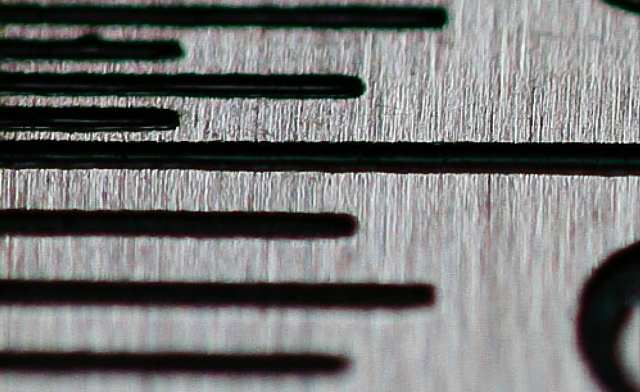
Far better than I could do with manual focus.

Now I am an empiricist by nature, not a test bench nerd, but with a lens whose primary use is for the very close-up subject, a few seconds doing this determines whether the lens is a keeper or not. Clearly, this one is a keeper. Thank you, B&H and thank you, Canon!

The Dr. Pindelski optical test bench? High tech at its best:
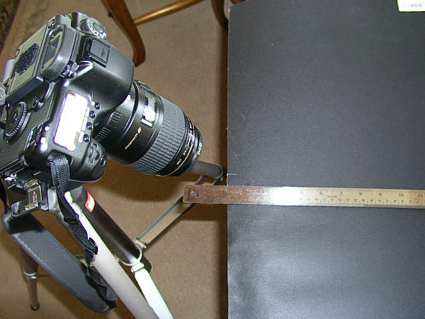
Because of the internal space needed to allow those elements to be racked out when focusing close, the 100mm Macro is necessarily quite a bit longer than that greatest portrait lens I have ever used, the 85mm:
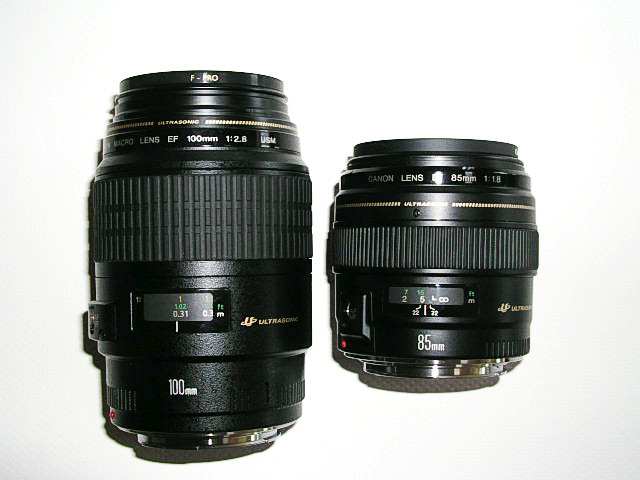

Comparable in weight, the 100mm Macro is much longer than the 85mm. Lens hoods NOT included!

So ergonomics, autofocus accuracy and sharpness are not going to be an issue with the Canon 100mm USM Macro lens.

Focus speed? Simply startling, with little noise. The only time I could trip it up is by focusing at the closest distance then recomposing on a subject at infinity with poorly defined details. The lens would hunt back and forth before locking in. For non-macro use Canon thoughtfully provides a focus limiter switch to prevent this kind of silliness. In practice, I have found that setting the 5D to servo-focus is ideal when this lens is used in the close-up range. This setting makes the lens focus continuously even after the first pressure is taken up on the shutter release button and you can hear the stepper motor working away to maintain the subject in focus. As I said at the beginning of this article, this is not your father’s macro lens.

As I already own the fast 85mm non-macro, I have little interest in using the 100mm Macro lens for any but macro subjects. To do otherwise would be like using an f/1 lens at f/4 – a waste of money. If, on the other hand, this is your only portrait-length lens, then use in the studio should be just fine.

The challenge now is to see whether I can take any snaps remotely up to the technical standards of this optic. Subsequent articles will determine that.

Click here for Part II.
Macro lenses

A brief personal history.

This piece addresses macro lenses – those which provide significant image scale when focused close. Regard this as a teaser for the unfolding story of my macro photography experience.

In Themes have their uses I ruminated on the need for themes – goals if you like – in your photography, if quality results were to be the result. After thinking more about it, I decided to do something pretty foreign, photographically, (God knows, I am foreign enough ethnically) to my way of working. So somehow the idea of a series of macro photographs came to mind.

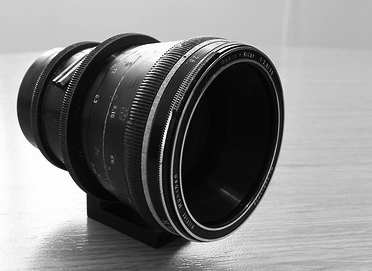
The earliest macro optic I recall knowledge of, as a teenager, is the Kilfitt Macro Kilar. It was for 35mm cameras and went to half or full life size, depending on the model. Given that it was 40mm in focal length, that would have made for pretty tight clearance between subject and lens, making lighting tricky, but it was beautifully made and an original idea. I don’t know, but I’ll bet the aperture was manually set or pre-set, so it must have been a real handful in use. But Kilfitt had a reputation for great optics. Famous bird photographer Eric Hosking frequently used a 400mm Kilfitt Tele-Kilar on his Contarex. A rare and costly beast, Kilfitt was known (like Novoflex) for making adapters for a wide range of cameras.


40mm Kilfitt Macro-Kilar

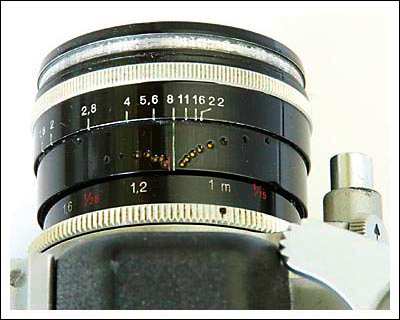
Many Alpa SLRs, beautifully made in Switzerland, came with Kilfitt lenses, so the name has a long and storied tradition of providing optics to the best. Others came with Swiss Kern lenses, most famously the 50mm f/1.9 Macro Switar which focused down to some 7 inches, so maybe 1:8. Gorgeous Swiss engineering, it had the coolest depth of field indicators – colored dots would show up on the barrel as the focus was changed. I can’t swear to this but I think the lens also opened its diaphragm as you focused closer. Optical laws dictate, after all, that at 1:1 a lens loses 2 stops of effective aperture, owing to the illumination drop off in the much extended optic, before light rays strike the film or sensor. Zeiss Ikon conferred this same feature – a piece of mechanical engineering genius – upon several of its lenses for the Contarex, most of which focused especially close, if not in the macro range.


Kern Macro-Switar

Macro range? Choose your definition. For me it’s where I start seeing things I otherwise missed, so I suppose 1:4 and larger.

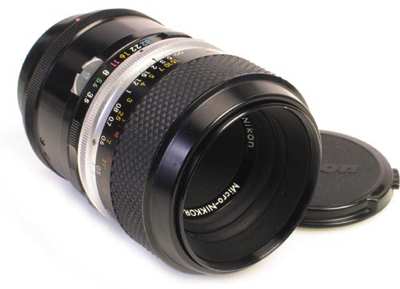
The first macro lens I handled was a Nikon Micro-Nikkor (never did understand why it wasn’t named a macro-Nikkor) for the Nikon F SLR. It handled well and was made in the days when lens barrels were still metal rather than plastic. That feels good even though plastic makes far more sense when it comes to cost and impact resistance. Independent tests at the time raved about it. If I recall, it focused down to half-life size (1:2) and a 25mm extension tube got you to life size, or 1:1. By all accounts it was a decent all rounder, boasted a speedy f/3.5 aperture and decent resolution at infinity, with minimal field curvature.


Nikon 55mm Micro-Nikkor with 25mm extension tube

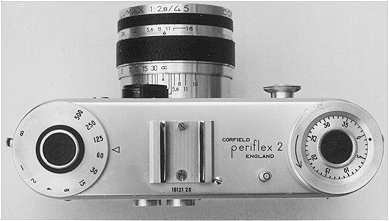
The first really close focusing lens I owned – hard to call it a macro – was the Corfield 45mm Lumax on my Periflex 2. While the camera accepted Leica rangefinder screw thread lenses, it dispensed with the usual cam coupled rangefinder mechanism, opting instead for a small drop down mirror, like an inverted periscope. This, through a separate eyepiece, provided a strongly magnified (if upside down) image of the center of the point of view. Great for focusing but there was no way on earth you could frame accurately at close distances, and the lens focused down to some nine inches. Nice idea though, and nicely made in Britain.


Periflex 2 with 45mm Lumax

After that the closest I got to anything was using the 50mm Dual Range Summicron with those funky clip on eyeglasses for the Leica M. That got you down to some 19.5 inches – close but hardly macro. No mean feat with a rangefinder body, though, especially when you realize that correct framing was maintained all the way to the closest focusing distance. To compensate for the extra extension in the helix, Leitz mounted the lens head in a truly massive, brass base. The eyeglasses clipped to the top of the lens and failsafes ensured you could only use them in the close-up range and that you also had to use them to get into the close-up range.


Leitz 50mm Dual Range Summicron

Macro lenses have changed quite a bit since the above and are now easier to use than ever, as my forthcoming pieces on my experiences will show.

Easy birds

The low stress way.

I doubt there’s a bird I don’t like. Even the turkey vultures which call this area home, with a face only a mother could love, once on the wing are a thing of beauty.

The other day on our daily ramble, Bert the Border Terrier and I observed a red tailed hawk being mugged by two crows and a California Blue Jay. The jay actually landed on the hawk’s back, in mid-air, and gave him one almighty peck. He came out of the sun, rear three quarters and high, like a Spitfire in days gone by. The evil intruder promptly exited stage left. Just like in days gone by.

The little incident (I don’t carry the 5D with a 400mm lens on our walks, so no picture!) renewed my interest of snapping some action at one of the several bird boxes scattered around the estate, so being a lazy bugger, I set the 5D up with that old stand-by, the Vivitar 283 flashgun, together with that sweet little wireless remote.

Now I wasn’t about to hang about outside while the birds obliged me, so I left the whole thing high upon the old Linhof tripod and repaired to the kitchen, to watch things with those Trinovids, wireless transmitter in hand. True, real pros would have built a blind complete with air conditioning, but I’m a simple fellow at heart and it took the residents of the box some five minutes to return to business as usual. In fact, ten minutes later the bluebirds were using the 5D as a handy perch!


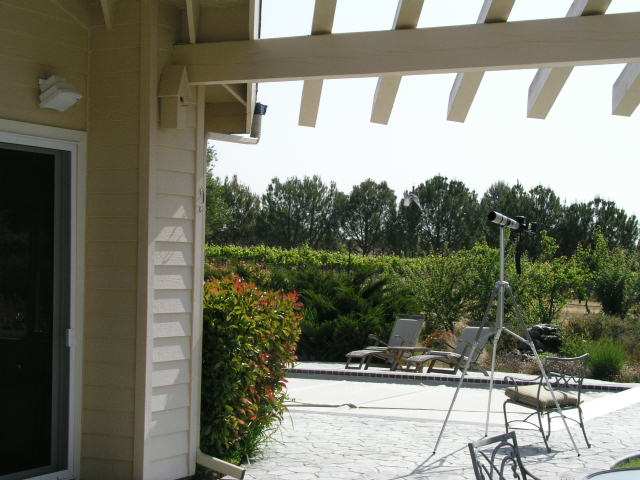
The lazy man’s birding outfit.

Flash was essential to light the shaded area, and the 5D’s less than stellar shortest flash sync shutter speed meant that a short light duration was called for. The 5D was at 1/180th, but the flash is no more than 1/1000 second in duration and that prevails in this instance. So motion blur is simply not an issue, precarious as the Linhof may look at maximum height. The chair in the picture was required as I am shorter than Michael Jordan.


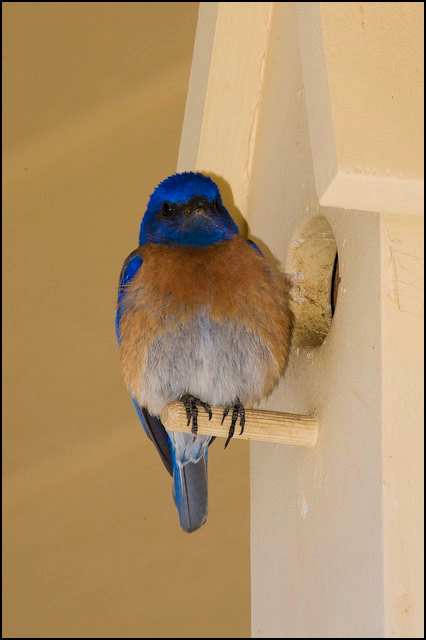
5D, 400mm ‘L’, 1/180, f/13, manual focus, ISO 160, Vivitar 283 flash + remote shutter trigger.

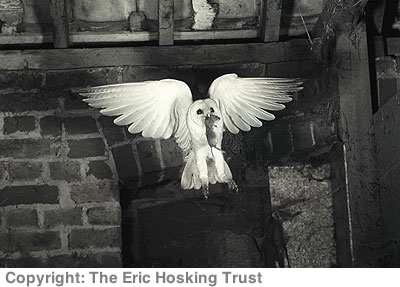
Now while I may be a proud owner of signed copy of ‘An Eye for a Bird’ by the great Eric Hosking, one of the finest bird photographers ever, I have long known that I am simply not going to challenge the best of the best in this genre; but a few happy snaps make the realization easier to live with. On the other hand, given that his famous owl picture was taken by the bird as it flew through a light trigger, I can honestly say I worked harder than Hosking did on this one – I was the one who pushed the button.

These are small birds – the above snap is from one half the original even though the 400mm Canon lens was at its closest focusing distance, so it’s as if I was using an 800mm lens!


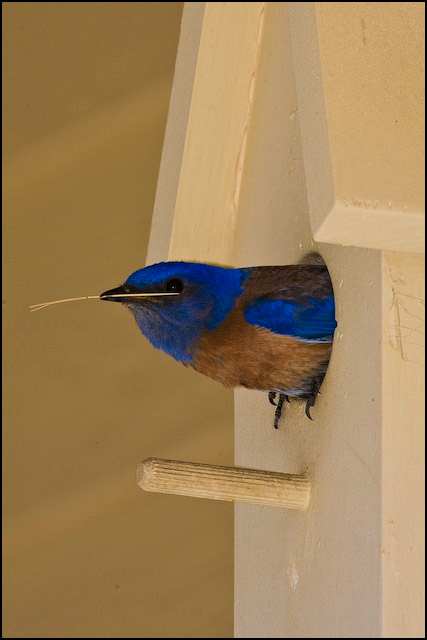
Nest building time. Same data as above.

And if you really believe that good photos can be taken with lousy gear, this is an example where only the best equipment could do the subject justice. Time to get the Rot out of your thinking.


The most famous self portrait ever – Eric Hosking’s bird-activated strobe picture

Venus

No, not the planet.

Everyone knows this one:


Botticelli. Venus, 1486. Uffizi, Florence.

And here’s today’s version:


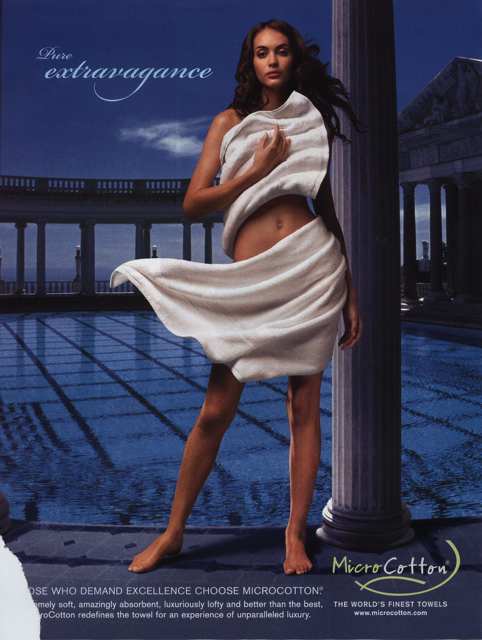
Towel advertisement, 2008

Maybe not as powerful a rendition as with that Raphael but a good effort nonetheless, the towel replacing the hair. Notice how the towel has been cleverly sculpted to imitate the shell in the original.

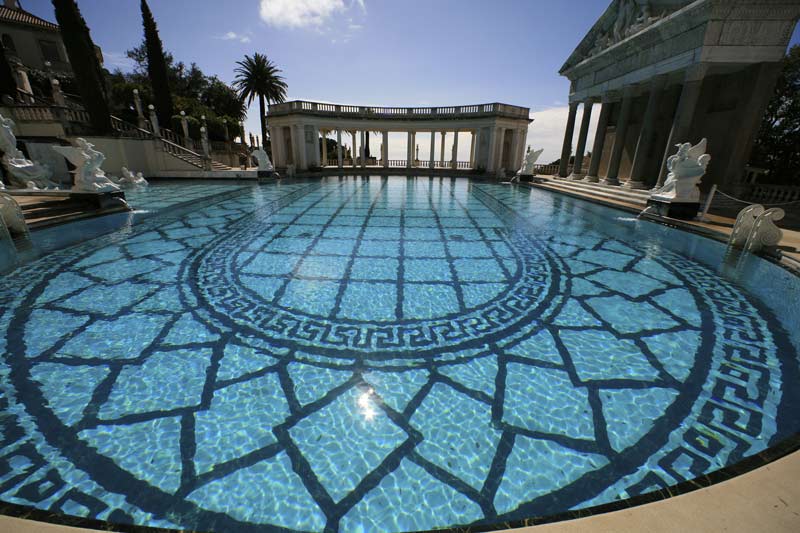
And if you are wondering where you saw that backdrop before, look no further than Hearst Castle’s pool:


Canon 5D, 14mm ‘L’ lens.