The monopod wins for cost-benefit every time
A recent discussion with a friend somehow made its way around to monopods.
“My dear chap”, quoth I, “the single greatest bargain in the photographic world is the Manfrotto/Bogen Monopod. $30 and it’s yours.”
My buddy, a technical sort, felt it necessary to check my ramblings, and came up with this on the estimable B&H web site:
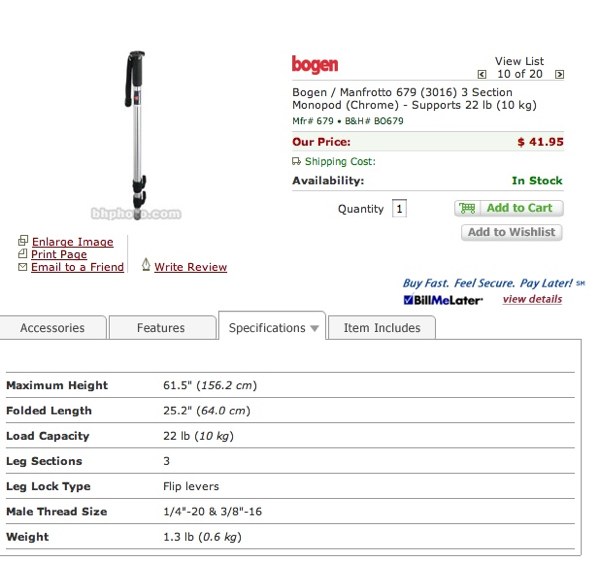
OK, so the price has gone up since I bought mine 15 years ago (a modest annual inflation rate of 2.3%), but the device remains unchanged. It has only three sections, cam locks and a screw top head. You provide the ball and socket head of your choice. It always rides in the trunk of my car, outfitted with a Leitz head and a Manfrotto QR plate – the easier it is to use the more likely it is to be used. If the cam locks loosen, as happened with mine, a metric socket and a few seconds of work allows the lock nuts to be snugged up and function restored.
So does it make a difference?
Nothing like an academic test. Here’s the target I used – a charming book titled “Cakes and Ale – The Golden Age of English Feasting”; just the thing for one who denies the bad reputation of English cooking and likes nothing so much as a good Shepherd’s Pie. Or Fish and Chips.
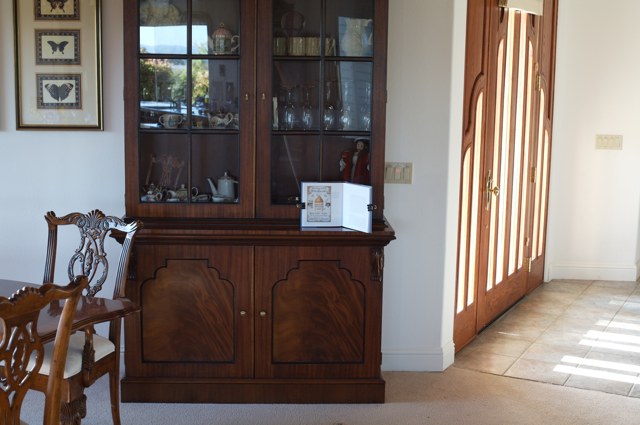
To make things fair I used manual exposure – ISO 160 resulted in 1/8th (good for blur!) at f/5.6 (good for definition). The lens was a non-IS 50mm Canon EF f/1.4, which I know to be superb. In each case – hand held, monopod, tripod – I took three snaps.
The enlargement is 15.8x, meaning a (rounded) 120″ x 80″ (yes, you read that right) print from a 1″ x 1.5″ original.
Here’s an enlargement of the hand held one, best of three:
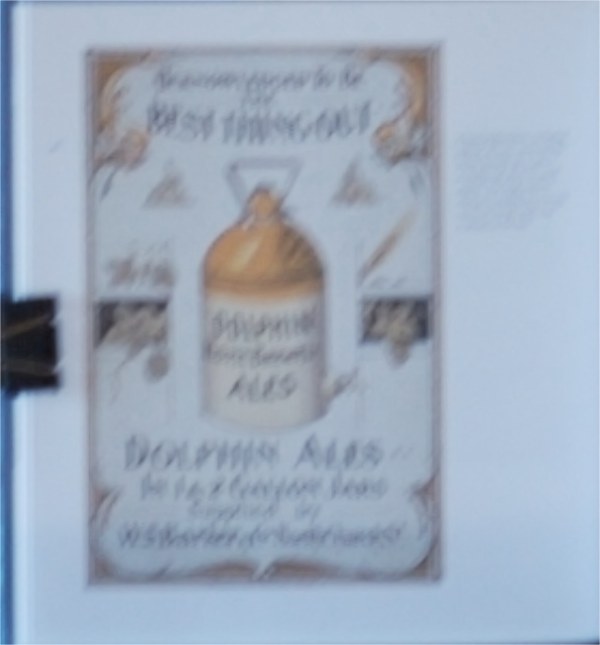
Not so good, and really not usable.
Here’s the best of three on the monopod:
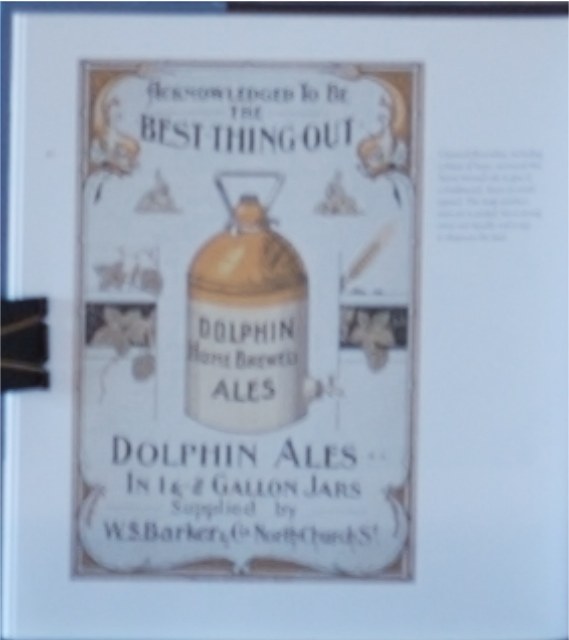
A whole lot better – marginaly usable in an 18″ x 24″ big print – one sixth the size of what you see here for the full frame.
Now here’s the tripod version – any one of three is the same:

So I learned a couple of lessons from this quick experiment:
- A monopod makes a huge difference (though I already knew that)
- A tripod – a really good one with a braced column – is the only way to go (I got my dream Linhof 20 years ago)
- You can’t hold a 50mm lens steady at 1/8 second
- Taking three pictures with a monopod rather than one makes a significant difference to your chances of success – the best was way better than the worst. Now that was a real surprise.
The tripod used was a braced center column, alloy Linhof model from the 1970s going by the moniker of S168 (the maximum height, column retracted, in centimetres, or 5′ 6″). I used a Novoflex magic ball head with a Manfrotto QR plate and released the shutter by hand. Delayed action, mirror lock-up and a cable release would all likely help matters.
Those lusting after a Canon 5D should note the absence of grain above ….
And here’s what that Manfrotto monopod delivers in the real world:
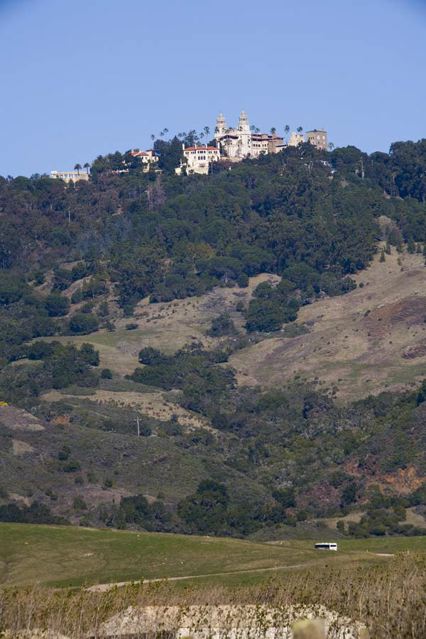
Hearst Castle from one mile away, Canon 5D, Leitz Telyt 400 mm, Manfrotto 3016 monopod and QR plate, Leitz B&S head