The Gutenberg effect

It makes for a lot of photographs.

When the Gutenberg Bible was printed in 1455, it was the first book printed on cheap paper using moveable type. At the time there were maybe a hundred thousand books in print in Europe. Fifty years later there were twenty million. A similar tidal wave is sweeping over photography through the proliferation of web sites.

A couple of weeks ago the U.S. Census Bureau reported that America’s population had crossed 300 million. Even given Government magnitudes of error, meaning the number is 300 million +/- 100 million, that’s a big number.

A few days ago, the Wall Street Journal published a piece on how sales of digital SLRs were booming as photographers wanted something perceived to be better, or at least something without picture destroying shutter lag or camera shake. They mentioned that the percentage of ‘serious’ photographers in the US was 2%. While I have no idea where that number came from, let’s assume a 200mm population of age capable snappers. At 2% that makes for 4 million serious photographers.

Of those four million, lets dismiss 75% as equipment fans who couldn’t take a good picture if it hit them. Down to 1 million.

Of that million, let’s be charitable and say 10% can see rather than just look. 100,000.

Half of these will be mired in old ways, denigrate modern technology and think a web site is a place where ducks with big feet gather. 50,000.

Of those, 50% are passionate enough to show their work. 25,000 real photographers. Why ‘real’? Because if you do not show your work you are not a photographer. No artist can claim the title if no one sees his work as, by definition, photography/art must be seen to be appreciated. By others, that is.

So 25,000 web sites. Now add 25,000 for Europe and 25,000 for the rest of the world and you have 75,000 web sites of good photography, each containing some really good work.

Now add the Gutenberg effect as the populations of China and India and Africa get digital cameras and you have a quarter of a million photography web sites in twenty years.

Which brings me back to the theme of my entry the other day, No more Great Photographers? The individual has been buried by the very technology that makes his work accessible in the first place and the chance that you or I come across one another’s work in a lifetime are very remote indeed.

Technology as enabler has destroyed the significance of the individual.

So while I love how easy it is to make a picture today, I also rue the lack of fame, or even the prospect of fame, that dooms my work.

And yours.

Second fifteen

Enough mounting, framing and hanging for a while.

The goal for my one man show in April, 2007, is to have thirty, framed and glassed large prints on display, maybe supplemented by a couple dozen matted but unframed ones in the saw horses in the gallery.

The first fifteen have been shown here before.

Once the QuickTime image loads – click below – cursor over any of the pictures on the walls and the cursor will change to a finger pointing to a globe. Click and you will be take to a high quality image of the picture. Click the ‘back’ button on your browser to return to the panorama.

Click here

I ran out of conventional wall space in the home and the theater so I had to resort to hanging the final fifteen, now that they are framed, in the garage, which offers lots of unused white walls. Not the greatest display space, perhaps, but it beats having the framed pictures standing up against various walls, waiting to be accidentally kicked.

Here’s a fish eye snap of the ‘gallery’ – not high quality but you get the idea:

The production line process I mentioned in my piece on framing made this a reasonably efficient proces, fourteen steps in all, viz:

Cut the mounting tissue* (30 minutes)
Mat* (30)
Name and sign all the prints* (15)
Build frames (33)
Install glass (7)
Clean glass (60)
Install print/mount/mat sandwich* (7)
Insert framing points (15)
Drill holes for wire eyes (15)
Install wire eyes (30)
Install hanging wire (60)
Mark wall at standard heights – 70″ for the landscape prints, 73″ for the portrait format ones (30)
Knock in hangers (15)
Hang prints (7)

* Cotton gloves are worn in the asterisked steps, all of which involve print/hand contact.

Aggregate time for each step is shown in parentheses, above. The total of three hours and 21 minutes does not include the time taken to make the prints – reckon on 15-30 minutes per print. Excluding the printing time, the time per mounted and framed print is around 21 minutes with this production line approach, which is not as bad as you would think, considering that the final product is a professionally mounted and framed print with real glass. (Lucite or perspex may be lighter and less fragile, but attracts dust horribly and just looks cheap with large prints).

Each step is done 15 times before moving on to the next. Phew! It may be tedious but going through this process print by print would take infinitely longer. If you need to make a lot of exhibition prints, I commend this approach to you.

Why all this focus on time? Because time spent framing is time not spent taking pictures.

Zealotry

To some extent, we are all guilty.

If you accept the modern definition of a zealot as one who advocates the use of a specific technology regardless of its suitability, then I confess I am guilty.

Until digital came along, I was a Leica zealot. Once disgust with Microsoft came to bear, I became an Apple zealot.

I would argue my motivation was simply that something better had come along.

In the case of Leica, superior point-and-shoots – which is what the M Leica is all about – came to market at a fraction of the cost with far greater capabilities.

With Apple it was far easier. The Mac worked. Windows did not.

And now I am a fan of both digital image making and Apple computers. To the exclusion of all else? Not a bit of it. If something better comes along for my purposes, I will move on.

Some Leica film users stick with their old cameras because it’s in their comfort zone. I have no issues with that. It may be that they are limiting their options but that’s not my business. Whatever works for you and makes good snaps possible, have at it.

But here’s what works for me – that sweet little pocketable Panasonic Lumix LX-1.

So, apropos nothing, here are two snaps taken the other day. One is at a favorite restaurant in San Luis Obispo named Novo on Higuera Street, which has a gorgeous patio setting over the river. I asked for the ‘special’ and this magnificent production, halibut on a bed of spinach with that exotic pink mushroom, subtle in size (a rarity in corpulent America), sublime in taste, was presented:

Then, wandering down to that great sausage shop on Marsh Street in this lovely Victorian town, what did I come across?

This great old car company is run by an Englishman named Peter. An American success. He came here some 25 years ago as an illegal immigrant, employs 10 people, now has legal status and works on the finest English machines you could dream of. And it simply does not get any better than an S1 Bentley. We will forgive the missing hubcap and those frightful whitewall tires.

Always carry a (pocketable digital) camera.

No more Great Photographers?

Falling attention spans and video are the cause.

When I was a teenager gazing at photographs some forty years ago, the ‘Great Photographers’ I knew then pretty much remain the ‘Great Photographers’ I know today.

If you want to know their names, just click on Book Reviews and many of those profiled fall in the list. Cartier-Bressson, Sudek, Callahan, Evans, Capa, Ray Jones, Frank, Snowdon, Erwitt, Brandt, Brassai, Kertesz, Penn, Avedon, Porter, Beaton, Blumenfeld. The list is not long. You could add maybe another dozen names and the whole collection would represent 90% of content in photography shows in art galleries and museums.

Journalists do not feature in this list. They never will. Capa comes closest to that description but his pictures transcend journalism and become works of great humanism. Of the other well known photojournalists they are, for the most part, One Shot Wonders. Most remember the picture of the Viet Cong being shot in the head by the Vietnamese, one or two know it was Eddie Adams who took the picture. That’s it for Adams. The American Flag raising on Mount Suribachi during the Battle of Iwo Jima? Why Joe Rosenthal took that one – something most learned when his obituary was published the other day. Matthew Brady and all those dead soldiers in the Civil War? Who has any interest in these drab works today?

No, I’m afraid photojournalism is about as much respected as an art as its twin, journalism. Journalists award one another the Pulitzer Prize as no one else will reward them, for theirs is a transient art, good for the moment, forgotten tomorrow.

The list above include five photographers who made their living in the world of fashion (Penn, Avedon, Snowdon, Beaton, Blumenfeld) yet each reached to greater heights with their art and reportage work. Beaton’s searing pictures of London in the Blitz are more than mere photojournalism and his work in the Far East approaches Cartier-Bresson’s best. Penn’s fertile mind rendered art of everything about him. Snowdon’s work, the touchstone of sensitivity, ranks as one of the greatest photo-portraitists. Avedon was incapable of being ordinary in any work he did, be it fashion or social commentary. Blumenfeld simply changed the way we see.

And what of the others? To a man they were great photographers of man and his environment. From the cubism of Cartier-Bresson to the expressionism of Walker Evans, the beauty of Kertesz or the sublime passion of Sudek, they simply saw more clearly, in a fresher vein, than anyone before.

But how about since? Why is it that most of these ‘Greats’ are long gone? Has the world stopped making great photographers?

No, not a bit of it. Surf photographs on the Internet and you will see photography every bit as good as that of these masters. But the problem is, we no longer care. The age of the still photograph as a Great Photograph is over. On the one hand, still photography has never been so ubiquitous, or so easy to do well, if only from a technical perspective. Focus, exposure, sharpness – they are all pretty much guaranteed today. Results? Instant, obviously. So while it is finally true that Anyone Can Take a Photograph, and certainly many good photographers can take a great one, the audience is, in large part, gone.

And while I, for one, find that sad, I know better than to deny history.

Today’s attention spans, in Western civilization at least, are simply too short for the still picture to make sense. Who is going to stop and gaze and think and wonder just what was going on when Cartier-Bresson pushed the button and why he chose that moment to push it? You and I, maybe, as I doubt you would be visiting here otherwise. But the consuming public needs 24 images a second to hold its attention, even if the visual content is execrable, the message beyond banal. Maybe our brains have become so attuned to, nay, drugged by the need for constant change, that we prefer moving pap to still literature?

And that is why, except for a few devotees of the art, there are no new Great Photographers any more in the world of still photography.

One hundred yards – Part IV

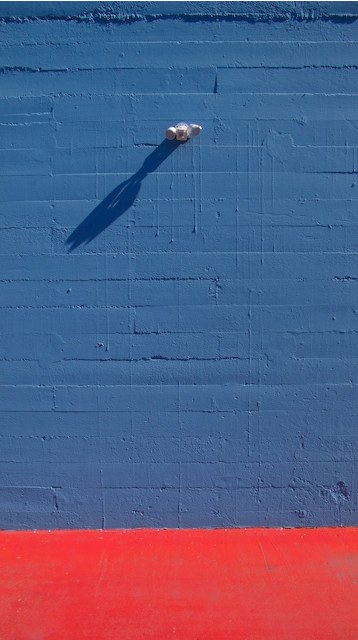
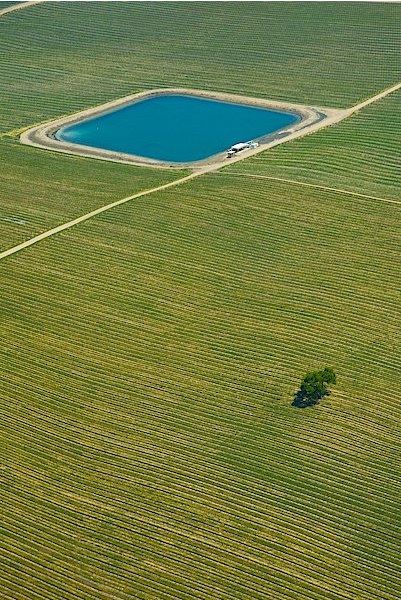
Some of the best pictures are one hundred yards from your doorstep. Or less..

Given how much time we spend in our homes, it’s surprising that many photographers feel they have to journey to remote, exotic locations in search of picture opportunities. They arrive tired, are in a strange location which they have no time to ‘learn’, and leave frustrated. You must make the return flight and have to make do with whatever weather is around at the time.

By contrast, the circle centered on your home, with a 100 yard radius, provides some of the best photographic opportunities. You know the area, are rested and have no deadlines. There is no return flight. And you can wait for the weather to come to you.

Here are a couple more snaps, taken over the years, all within 100 yards or less of where my bed was the previous night. More to come over the next few weekends.


2 yards. Templeton, California. Mamiya 6, 75mm.


7 yards. Templeton, California. Mamiya 6, 75mm.

For more on this theme, please click here.