Yearly Archives: 2025

Garage Art

Making for a fun environment.

In yesterday’s piece I illustrated how continuous improvement of a workspace makes for a better work environment. More welcoming, more useable, more efficient.

I also mentioned how art works interspersed with the various tool walls and shelves lighten up the space, making for a warm welcome on every visit. More fun!

Here are the twenty varied pieces on display in my garage.

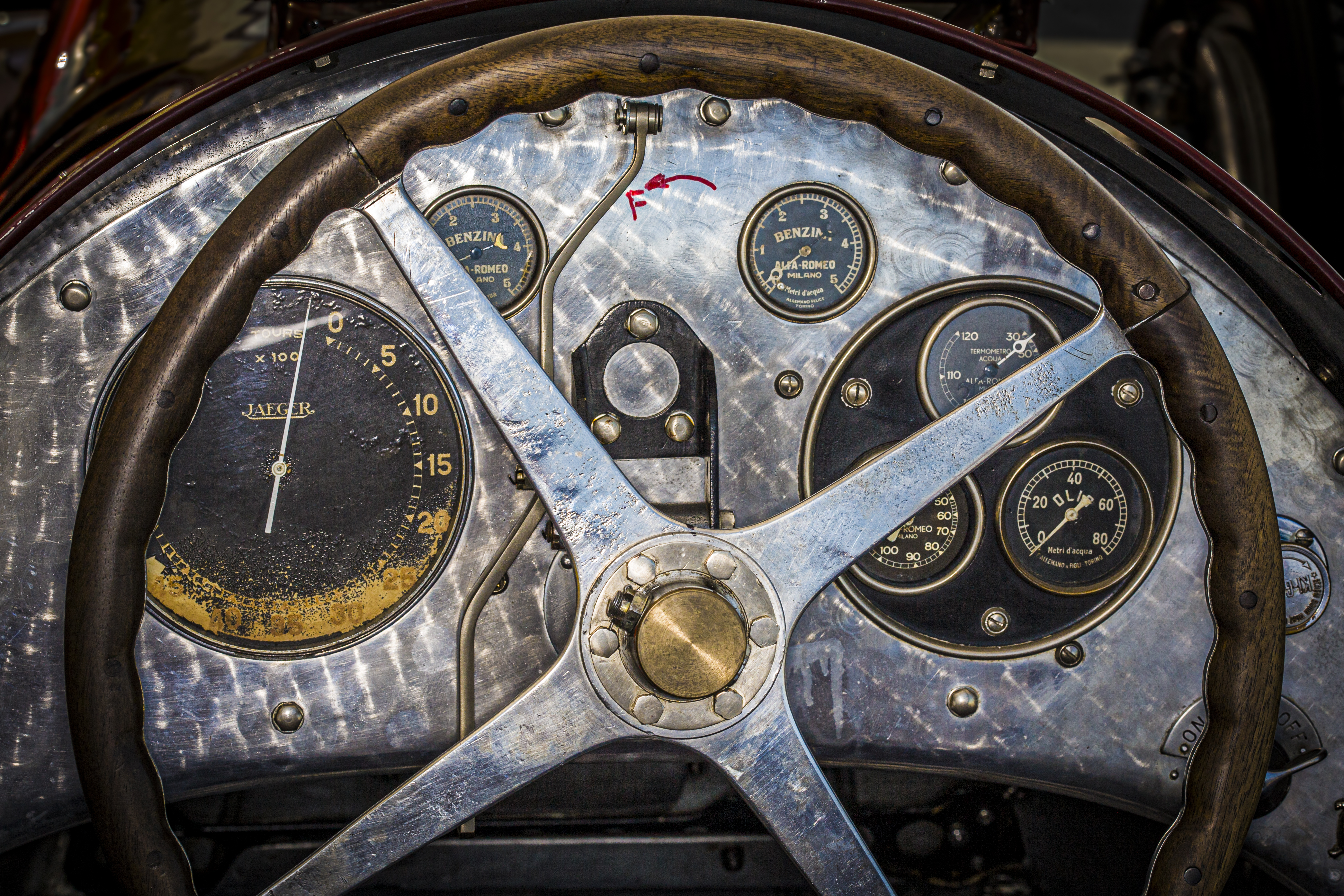
These four prints are from images snapped at the Laguna Seca Historic Races in 2008, where the paddock is nothing less than a cornucopia of vintage machinery. As always, it’s the details from the height of the mechanical age which fascinate. All snapped on the Canon 5D with a 100mm EF Canon Macro lens and a ring flash:


Classic motorcycles are always of interest, here displayed on tinplates:


When it comes to classic BMW air cooled twins, nothing beats period posters:


I first encountered the Sinclair Dino when filling up on a long motorcycle trip through beautiful Utah:


Ford advertisement from the early days:


Back in the day 250,000km was deemed a high mileage for an engine. So much so that Mercedes would give owners a certificate commemorating the event. My 1983 300SD turbodiesel was on 343,000km when I finally sold it in 2005:


License plates from my many locations:


No self-respecting garage is complete without some bawdy tinplates:


So there!


Garage kaizen

The second most important space in the home.

For a closer look at the many art works on display click here.

I wrote about kaizen in the context of the most important room in the home – the home theater – a while back.

It’s common for members of the Toyota C-suite to spend formative years in the kaizen function where failed parts are analyzed and improvements conjured up. This inculcates the belief that nothing surpasses reliability in importance when it comes to daily conveyances and explains why Toyota makes the best cars in the world. Contrast this with GM. One example of many is their Northstar V8 engine. It took Detroit 6 years to determine the cause of the serial head gasket failures and leaks before they realized that the studs were pulling out of the block. A mere few millimeters of additional thread did the trick by which time the motor’s reputation was irreversibly damaged. Considering American occupational psycholigist W. Edwards Deming had taught the Japanese how to make reliable cars you would think GM would know better. But no. Hang reputation, aim for short run profits, the American Way.

And talk of cars brings us to the second most important space in the home, the garage. My goal is to make this a warm and welcoming place, with shadowless task lighting the first consideration. Art works on the walls enhance the sense of occasion when entering this working space, but it’s the placement and display of tools and parts which is the key to making this a proactive and efficient workplace. And there are rules guiding this goal.

First a tool hidden in the drawer of one of those awful rolling carts is a lost tool. The cart will sooner or later crash into one of your machines and you will spend endless hours searching for that one special tool buried in its innards. No, tools must be displayed in logical groupings which means pegboards on the wall. And not those awful, depressing brown ones. Yecch! They must be white to contrast the tool with its background and to reflect ambient light into the workspace. For safety – the weight of tools adds up quickly – wooden battens are fastened to the studs behind the drywall and the pegboards are fastened to these battens, using drywall screws with finishing washers to spread the load. This makes for both a robust attachment method while providing clearance for the pegboard hooks as they poke through to the rear.

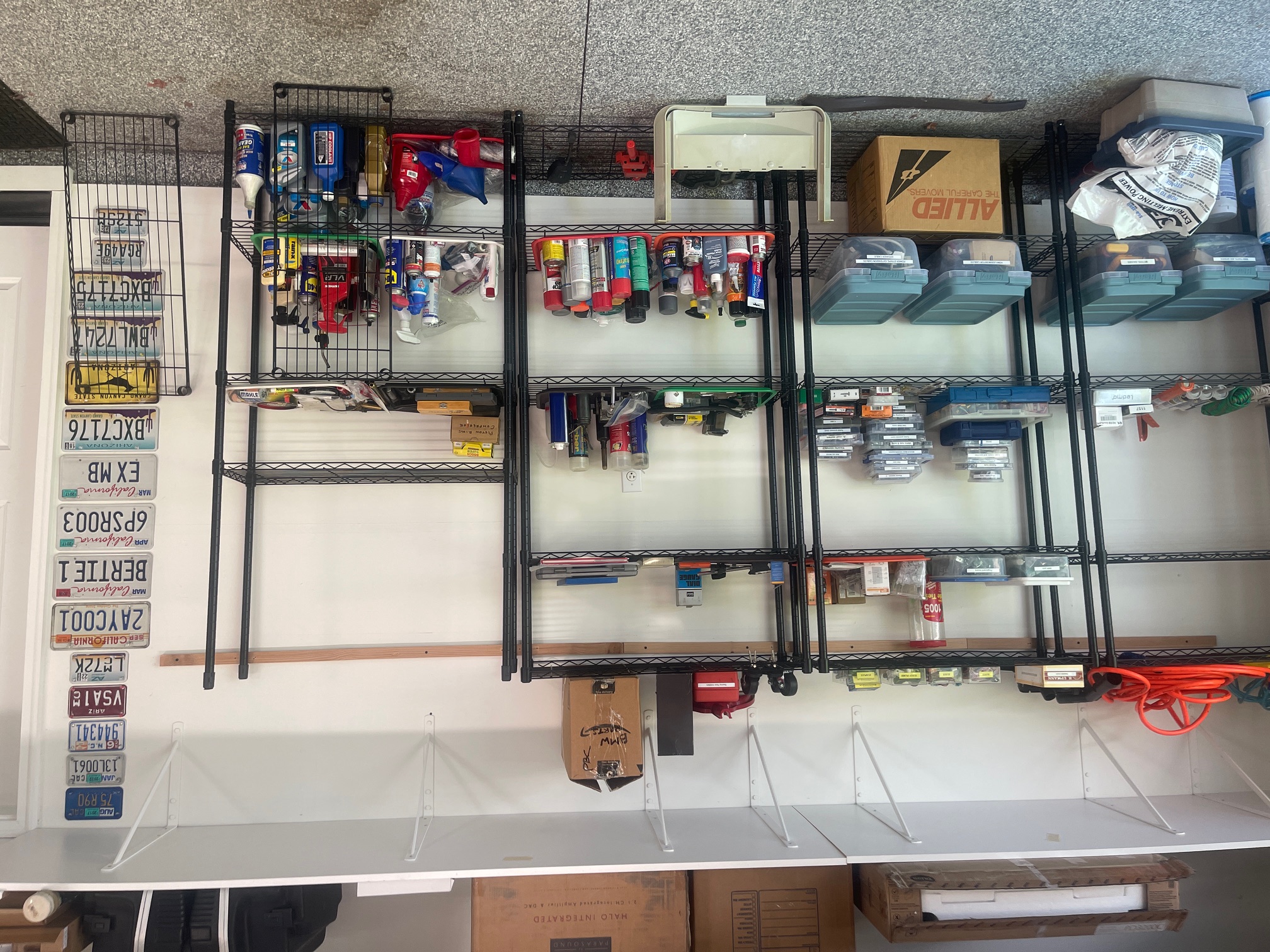
Further, tools must not be stacked for the same reason that they must not be hidden in drawers. Anything below the top of the stack will be lost or forgotten, sooner or later. Here’s my tool wall and yes, kaizen is easily eroded as the images show, for I have started stacking tools over the years, denying my own rules. In addition to the growing stacking issue with the pegboards, the area with fasteners is an absolute disaster, and the shelving needs work too.


The tool wall


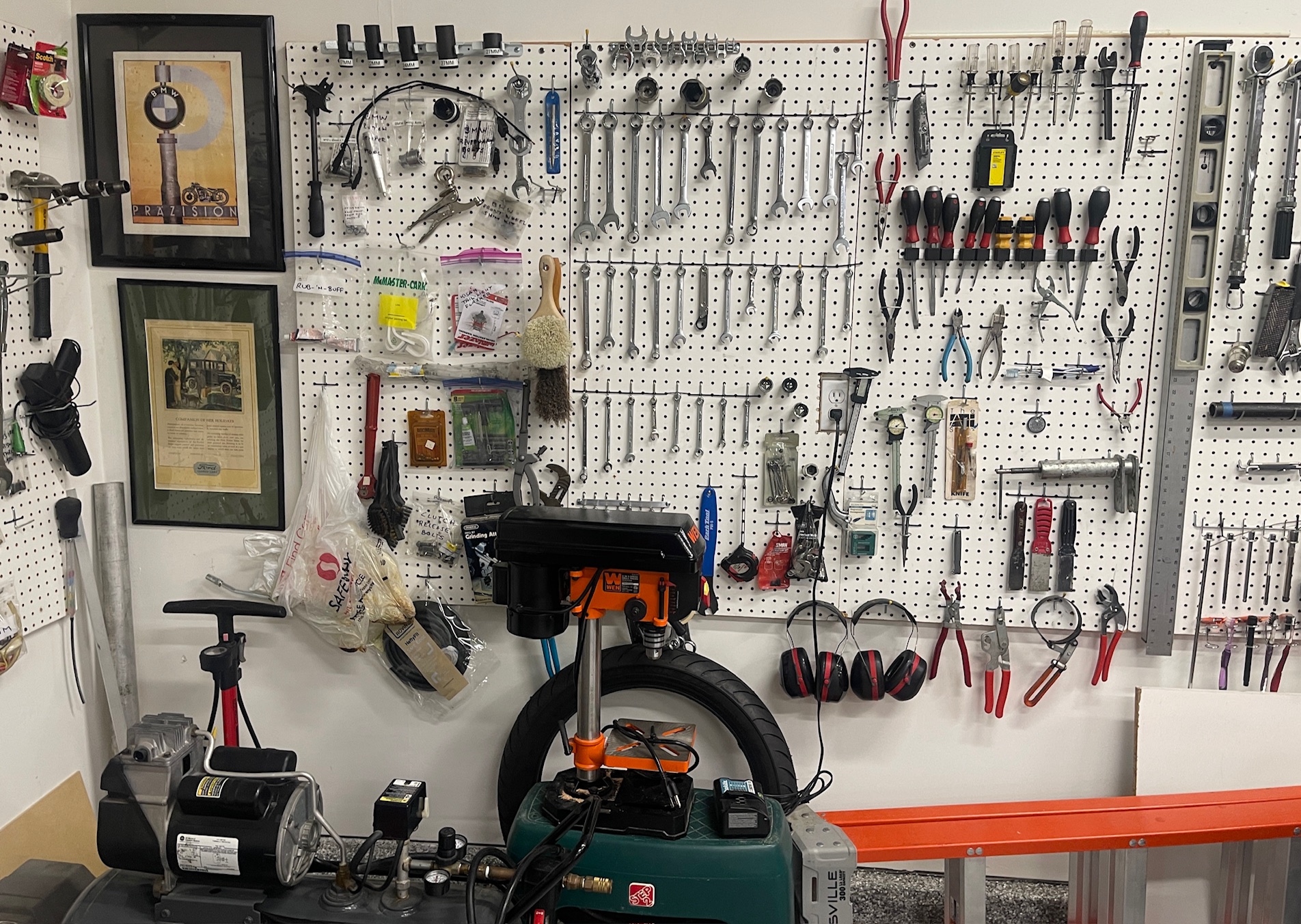
The tool wall – a closer view.
Classic BMW and Ford posters at left.

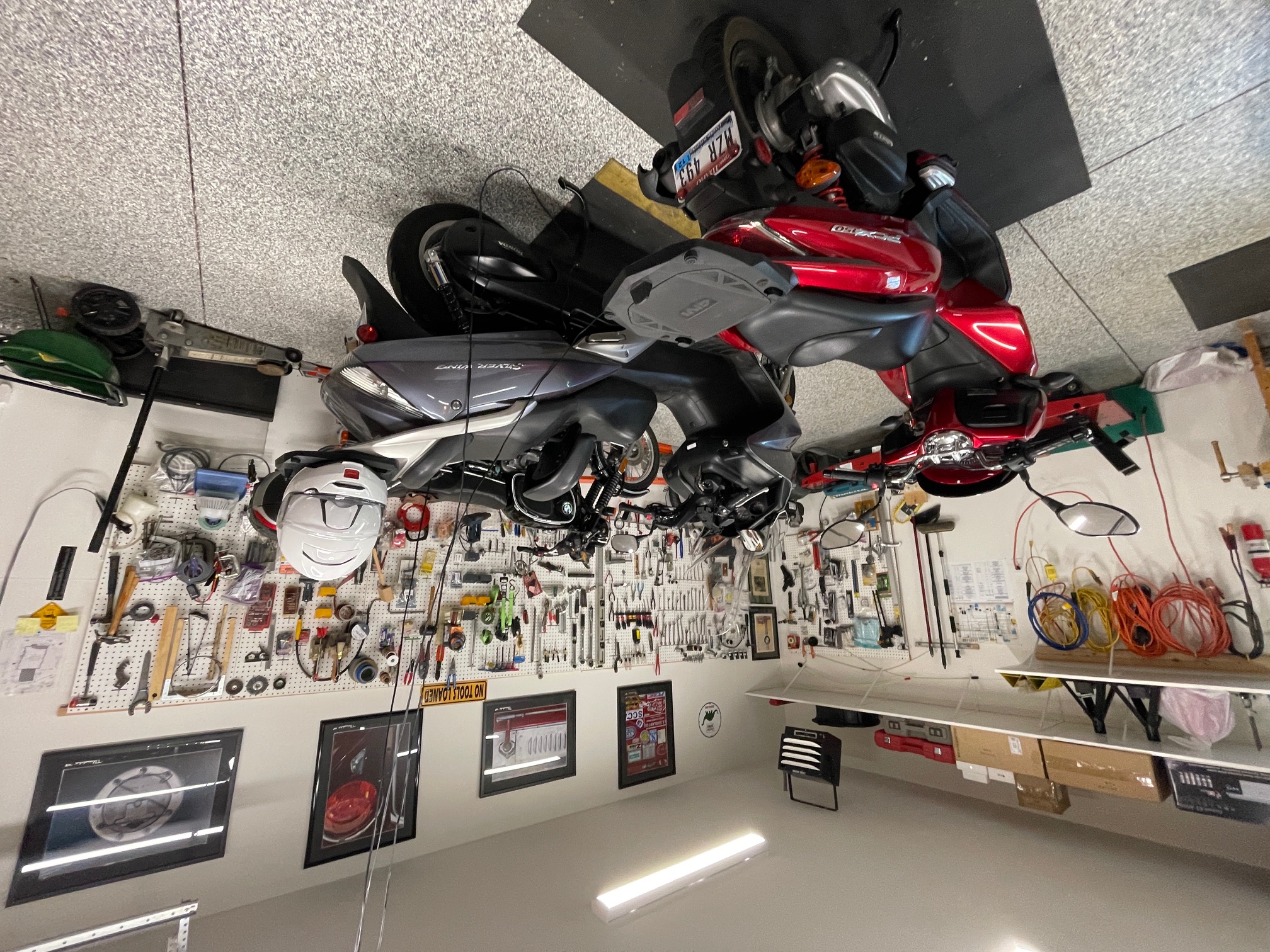
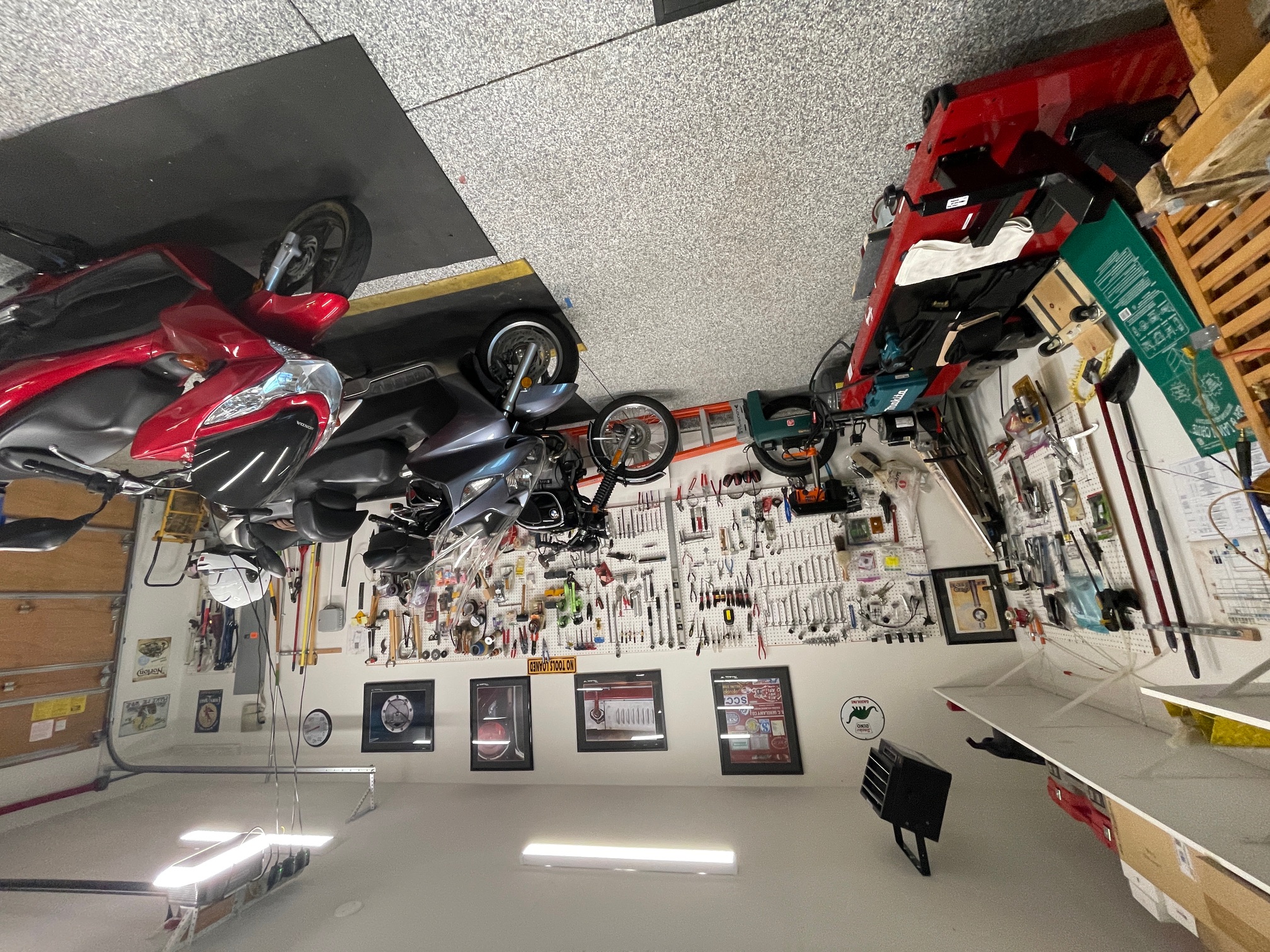
Note the magnificent red Handy motorcycle air lift, the finest tool in the garage, at lower left. It’s one of the few things, along with the attendant compressor, I will allow to take up floor space. As a general rule the fewer things on the floor the better:


1975 BMW R90/6, 2007 Honda Silverwing and 2013 Honda PCX 150.
The artwork is from the Laguna Seca Historics

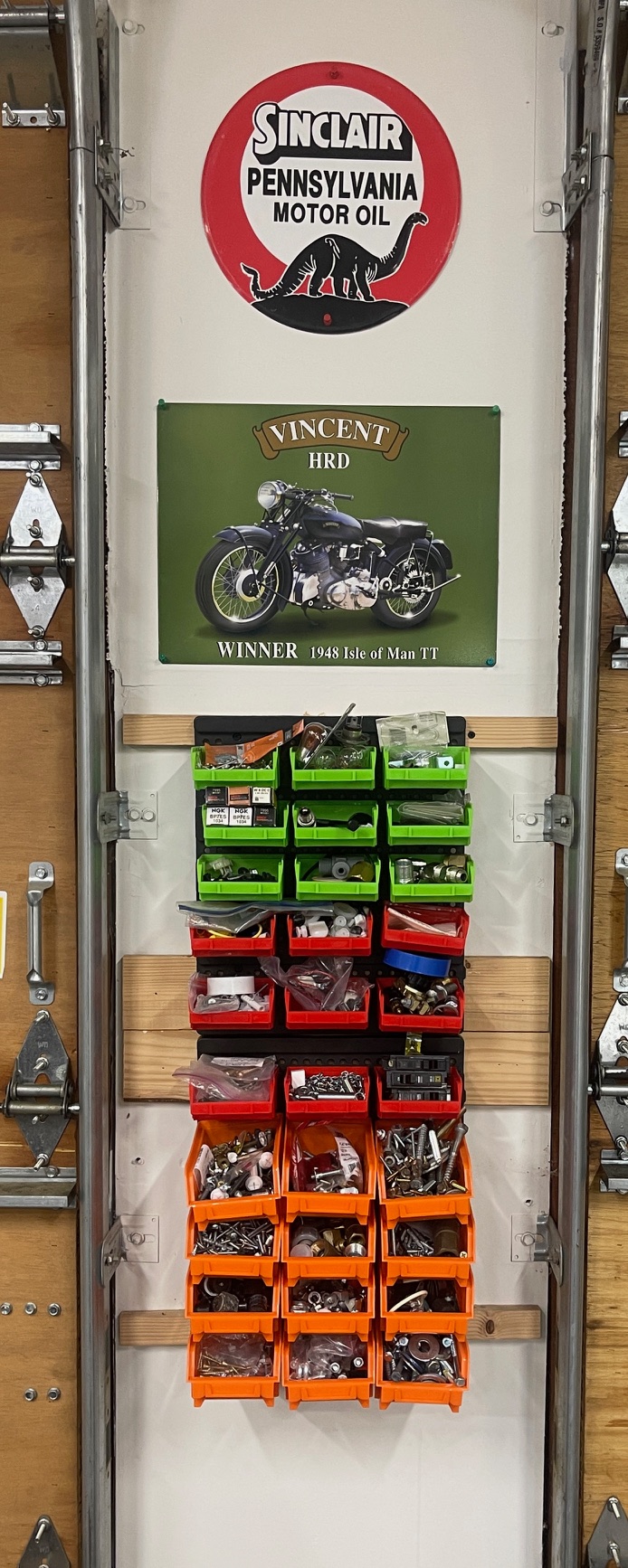
This fastener assembly is a disaster. To remove any one bin all above must be removed, the bins spill fasteners faster than a politician accepts a bribe and those lost nails on the floor lead to flat tires. Hard to imagine anything worse. Well, there’s always the Titanic:


Disaster area – fasteners. Inaccessible and
waiting to fall out.

Mercifully Amazon lists an alternative for very little money with several configurations.

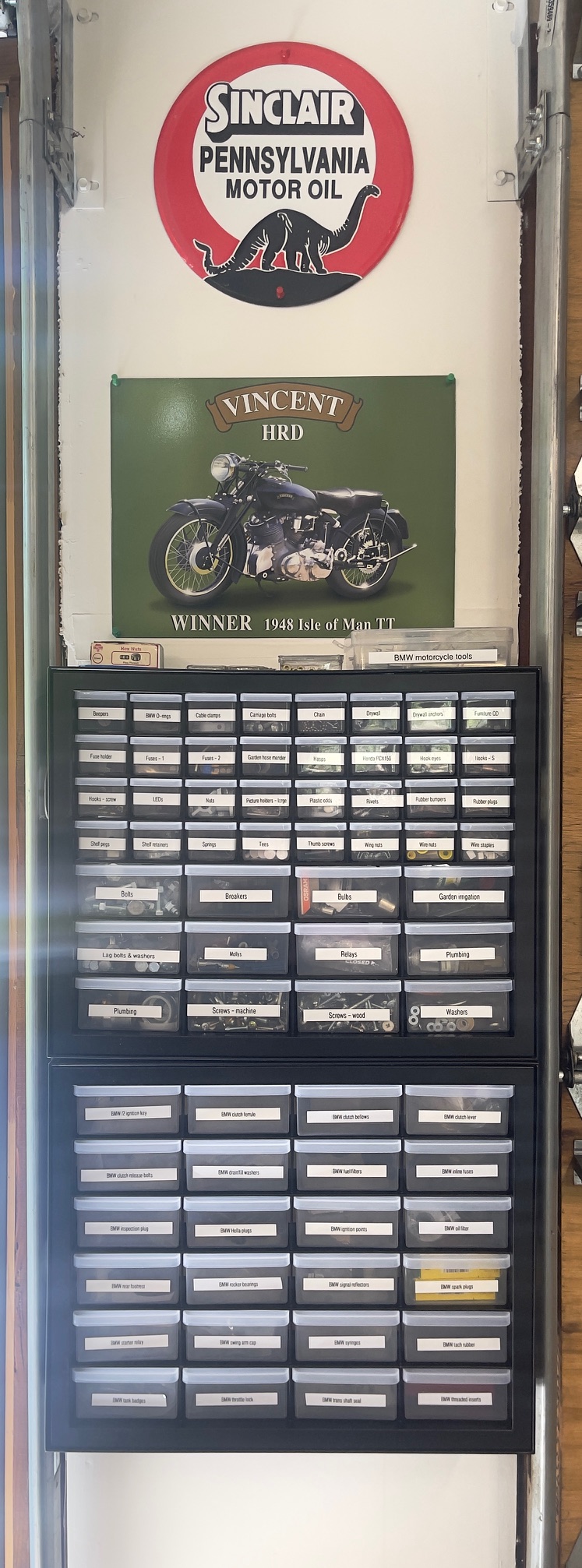
This took a bit of time with the need to properly sort mis-filed pieces, but boy is it worth it:


Neatly labeled in alphabetical order

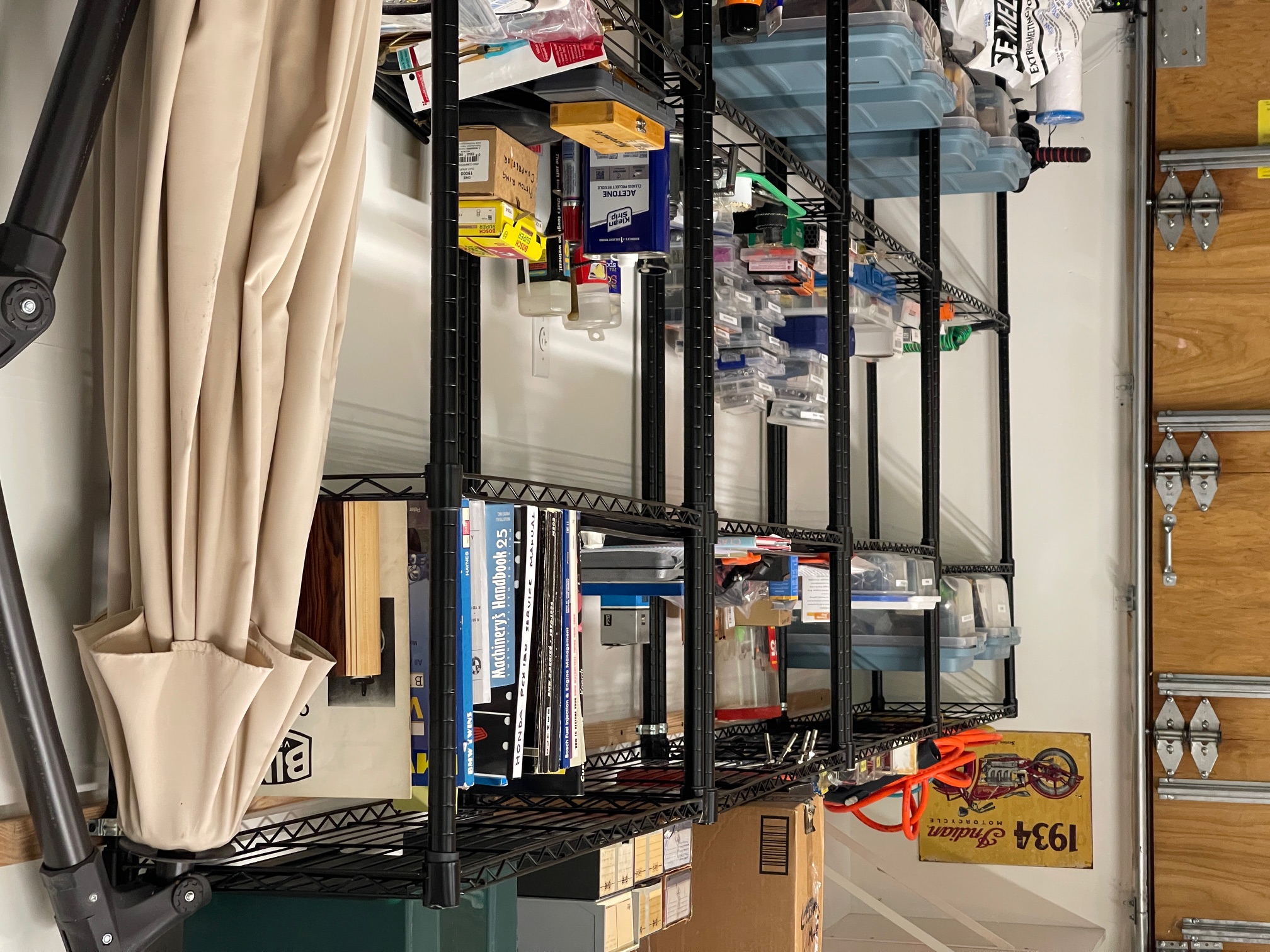
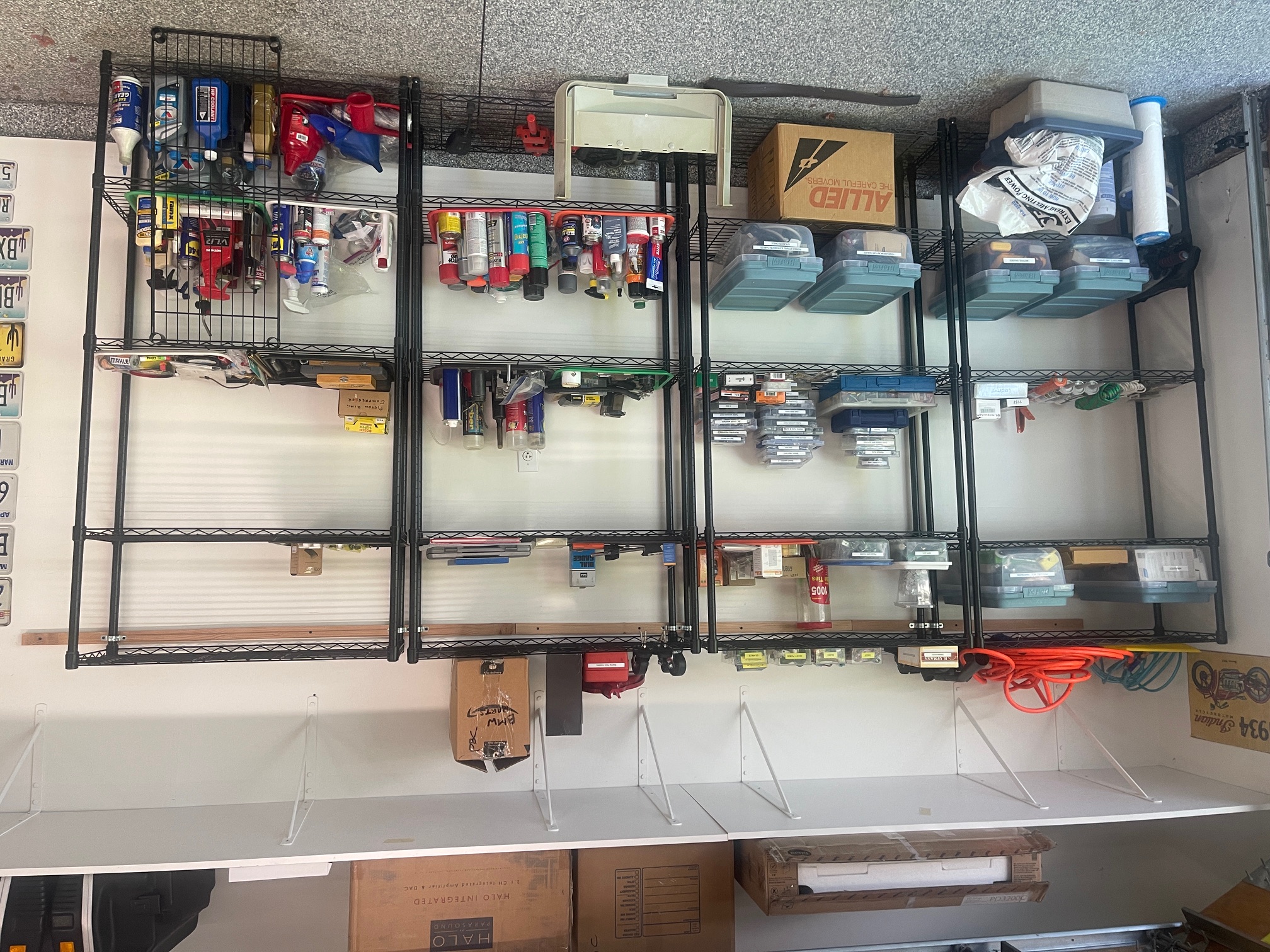
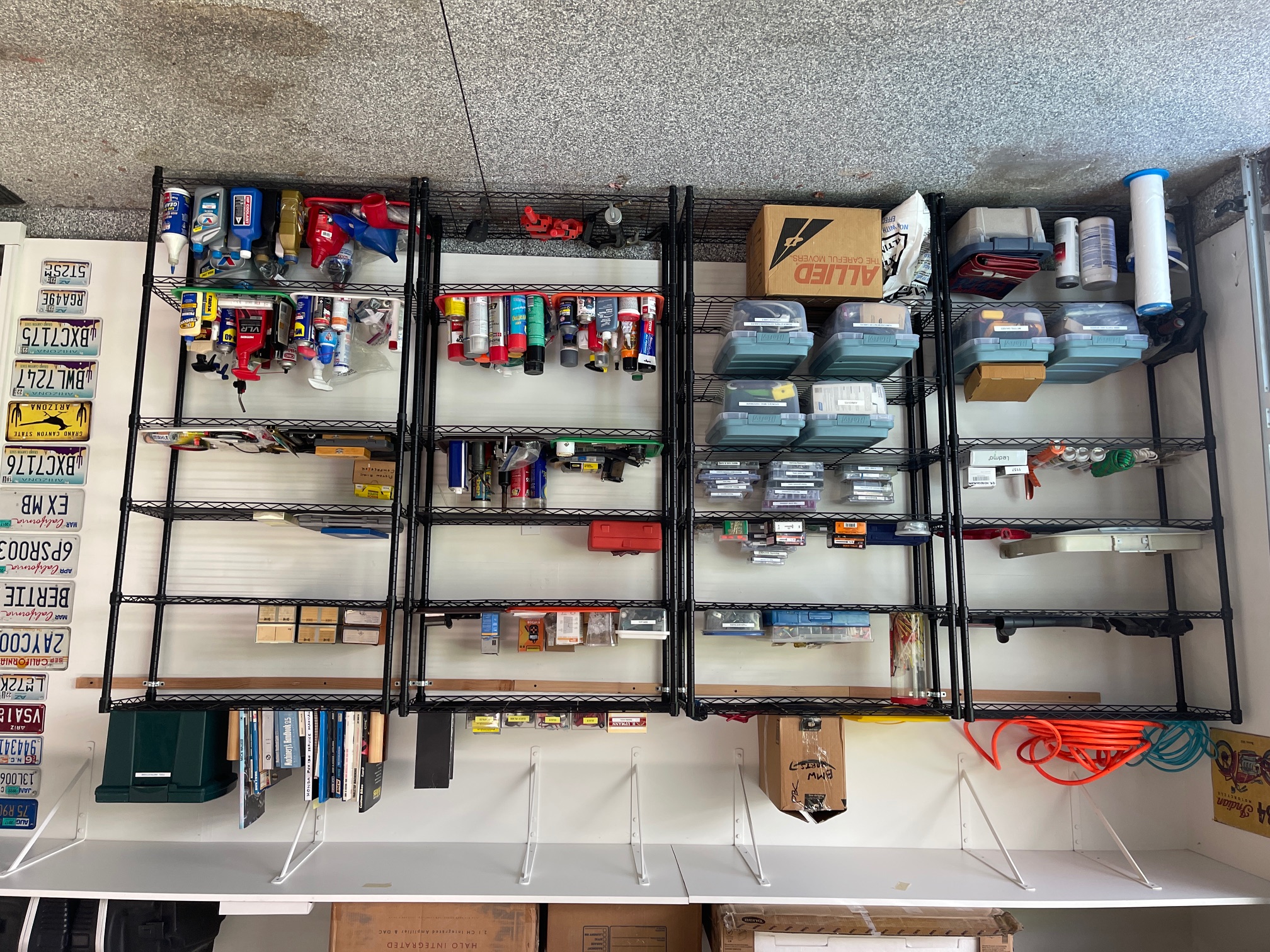
Amazon lists very robust 5 shelf units and I had installed four of these a few years ago when they cost $100. The price has now dropped to $55 and they are recommended. Easy to assemble, robust with a 350 pound capacity per shelf, I fastened them with metal straps to the batten you can see in the image, the latter attached to the studs behind the drywall. This both protects against earthquakes and takes out the tippiness of the heavy structure waiting to fall on a car or motorcycle:


Shelving from Amazon – lots of wasted space, too much stacking

Like the stacking which bedeviled the pegboards the shelves have suffered similar migration over the years and there is much wasted space. More shelves are called for:


Four shelving bays, 5 shelves apiece

So I procured an additional five shelf unit, discarded the uprights and installed the five additional shelves where the gaping spaces were. The metal semicircular straps securing the uprights to the batten have been removed in this illustration:


Adding shelves.

While that’s just a 25% increase in shelf area the difference is night and day. A related rule in any garage is to have as few items on the floor as possible and these added shelves really help:


Five added shelves in place

So after a few days of banging away at this kaizen project the garage is once more that special place which invites quality wrenching …. until the next time things need remediation. Constant improvement is the ticket.

Under Cape Cod Waters

A delight.

For an index of all my book reviews, click here.

Every photograph in this book is a delight to see. Ethan Daniels has strayed from the charming towns and streets of the cape east of Boston in Massachusetts and gone underwater to photograph its many marine delights, and he has done a wonderful job.


Click for Amazon. No money grubbing by yours truly, I do not get paid if you do that.

Here is the location:


Keks M-meter for Leica M – in use

Finally here!

For an index of all Leica-related articles click here.

I ordered the Keks meter for Leica-M the day I profiled it here on March 8. It finally arrived today from Hong Kong, 18 weeks later.

Why buy this? To my knowledge this is the first meter since the Leicameter – discontinued in its various guises decades ago – which offers coupling with the shutter speed dial of the Leica M for speedy shutter priority readings. Users of older Leica M film bodies have been waiting for this every bit as long and, as what follows discloses, I doubt they will be disappointed.

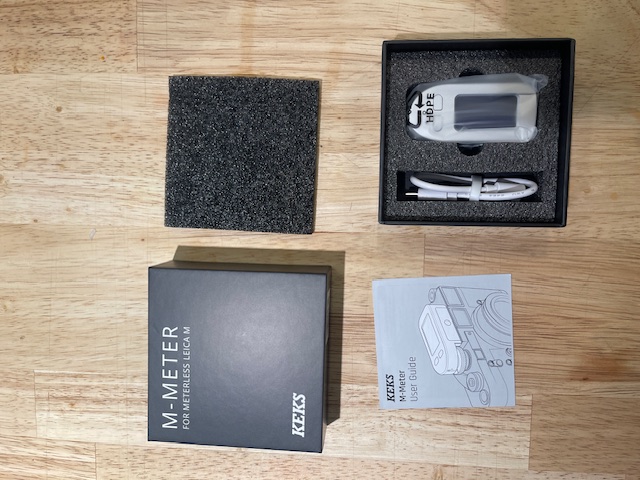
Nicely packed, the first impression of build quality is better than that of the Leicameter M/MC/MR/MR-4 from Metrawatt, meaning up to the standard of the contemporary Leica M2 or M3. The coarse and incorrect satin chrome of the various Metrawatt meters is replaced with a beautiful smooth finish in the Keks meter, done as it should be, and very close to that of the Leica M. Just a tad grainier. And the color match with the camera’s satin chrome is well nigh perfect. That’s close to as good as it gets. Well done, Keks.

Weight: The meter weighs 1.6ozs.

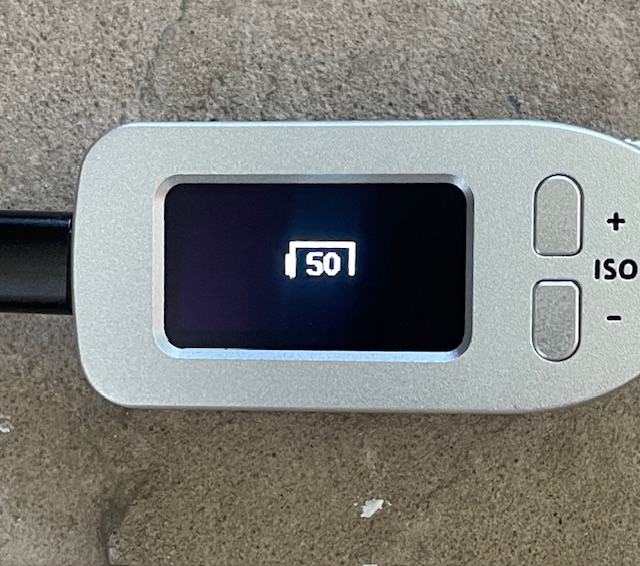
Charge as received: As received the state of charge was 40%, and rose to 90% just 15 minutes after plugging it in using a USB-C to USB-A cable. 90% to 100% took an additional 15 minutes. Not at all bad. (Keks claims 60 minutes for a full charge from flat). As the image below shows, the meter ships with a short USB-C to USB-C cable. I prefer to use a USB-A wall mounted power socket with a USB-A to USB-C cable, which is nice and fast, but the meter should charge nicely from a modern laptop or desktop computer equipped with USB-C, if maybe not as quickly.


Boxed.


Unboxed.


Connected to USB power. Just 20 minutes
from 40% to 90% charged. The state of charge
is displayed when the rear button is depressed.

Setting variables: A host of variables can be tailored. You can see how to do this by downloading the manual here. Here is how the meter is shipped, with parentheses showing my preferred setting:

  • Exposure compensation: 0 stops (Same)
  • Apertures: 1/3 stops* (1/2 stop)
  • ISO stops: 1/3 stops* (1 stop)
  • Display brightness: 50% (Auto)
  • Display on time: 15 seconds (Same)
  • Max aperture: f/1.0 (f/1.4 for my 50mm Canon LTM lens)
  • Min aperture: f/128 – rather silly really (f/22)

    * Using 1/3 stop settings with a film camera is confusing precision with accuracy.

    The last setting allows the user to dial in the 1, 1/2, 1/5, 1/10, 1/25 etc. steps for early Leica M3 bodies. Wonderful that the manufacturer thought of this. (Check my Comment, below, how to do this). As I said in my initial review, Keks is going to sell a lot of these meters and I see they are already on backorder at B&H.

    The claimed replaceable battery: At this time I have yet to summon up the courage to remove the baseplate to discover what sort of (purportedly replaceable) battery is used. The specifications state only that it is a 220mAh cell. Suffice it to say that the base is retained with four Allen head bolts and these fit a 1.5mm (tiny!) Allen wrench. Update: See the conclusion of this piece, below.

    Coupling with the camera’s shutter speed dial: The shutter speed coupling dial turns to ‘B’ smoothly whereupon it is lifted and turned further CCW to a stop. The meter can now be slid into the camera’s top plate mounting shoe, with the camera’s shutter speed dial first set to B. The process is identical to that with the earlier Metrawatt meters. The knurled ring on the meter is then turned CW until the pin drops into the corresponding slot on the shutter speed dial of the Leica. The meter is now coupled to the shutter speed dial and offers far superior ergonomics for shutter speed setting owing to the larger diameter of the meter’s knurled knob. The Keks meter engaged perfectly on my 1959 single-stroke Leica M3.

    Use with long shutter speeds: The Keks meter can display shutter speeds as long as 30 seconds. To access these you set the shutter to ‘B’, lift the knurled knob and keep turning counter-clockwise. Coupling is lost but the shutter speed dial is set at ‘B’ where you want it, and you can count the indicated seconds long exposure when making the exposure using a cable release. This function is identical to that in the various Leicameters.

    Acceptance angle: Using a point light source and a protractor I measured the horizontal angle of acceptance of the meter at 36 degrees (Keks claims 30 degrees), which is close to the 27 degrees (=90mm lens) claimed by Metrawatt for the Leicameter MR/MR-4, meaning that with the 90mm frame line invoked on the camera semi-spot readings of the area indicated by that frame line are possible with the Keks meter. Now I’m getting the sense that some real Leica M enthusiasts were involved in the design of this meter.

    Design errors: Five boo-boos, and none is a big deal.

    First, the meter displays Exposure Values (EVs) below the ISO setting, as shown below. Who on earth uses these with a Leica M, which is not equipped to display them?

    Second, why show EVs (to two decimal places!) when no decimal places are used in practice with EV equipped cameras like certain Rolleis, Retinas and Hasselblads? It would be nice if the EV display could simply be hidden as it adds useless clutter. Perhaps a piece of black insulating tape is called for?

    Third, it would be nice if the aperture was indicated as f/4 etc. not 4.0F.

    Fourth, the display sometimes indicates 1/50th (the flash setting) when it should display 1/60th, especially when moving from a slower to a faster shutter speed. This error is accounted for by sample-to-sample variations in the Leica shutter speed dial’s detents and is not Keks’s fault. Keks is to be applauded on delivering a fix – see “Shutter speed calibration”, below.

    Fifth, on one or two occasions I got wildly inaccurate readings on a first press of the rear button (the readings come on instantaneously), cured by a second button press. The errors are so egregious that you are not about to be fooled. Just press the button again.
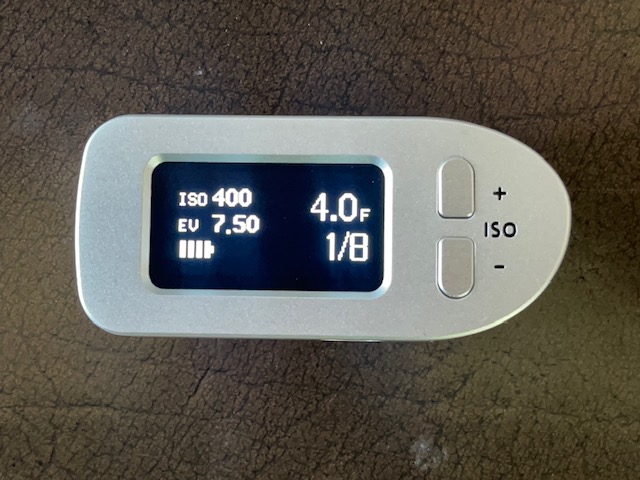


    The EV display is below the ISO. ISOs can be changed with the two top plate buttons.

    Continuous exposure readings: A double press of the rear button is required to enable continuous readings – a ‘C’ will appear on the display to the right of the battery charge indicator. A single press will lock the reading, exiting continuous reading mode. Beautifully implemented.

    Shutter speed calibration: The shutter speed dial click stops are equally spaced on the Leica except for those between 1/30th and 1/50th and between 1/50th and 1/60th. 1/50th is the electronic flash synchronization setting and the click stops between the adjacent speeds of 1/30th and 1/60th are half the spacing of all the others. As shipped my Keks meter could not distinguish between shutter speed dial settings of 1/50th and 1/60th, showing 1/50th for both settings as the shutter speed dial was rotated toward shorter shutter speeds. So a speed of 1/60th was incorrectly shown as 1/50th. Keks includes a useful calibration function to address the issue of the set speed and the indicated speed differing, as here.

    With the shutter set at 1/60th but the meter indicating 1/50th press the power (rear) button and the ISO ‘-‘ button to enter Settings. Then use the ISO ‘+’ button to cycle to ‘Reset’. Press the power button then press the ISO ‘+’ button until you see ‘Calibrate SS’. Press the power button. The display will read ‘Shutter: B-2’. Using the ISO ‘+’ button keep pressing the button until you see ‘1/60’, then press the power button once more. What was formerly displayed erroneously as 1/50th second is now correctly displayed as 1/60th second. This calibration function works for all shutter speeds, though in my case only one shutter speed was being displayed incorrectly. Given that there will be sample-to-sample variations in Leica M bodies Keks can only be applauded for adding this function. Clearly the designers are avid Leica M film camera users. Ingenious.

    Tech specs for the sensor:. Keks uses the Vishay VML7700 sensor and you can see the full technical specifications by clicking here.

    Setting shutter speeds with the meter off: You cannot set shutter speeds on the camera when the meter is off. It must be on for these to be visible. But it’s just a quick press of the rear button to illuminate the display so, again, not a big deal.

    Battery level: This is disclosed as shown at the lower left in the image above. 4 bars = 100%. The Leicameter MR/MR-4 uses a front panel battery level check, notorious for mechanical failure. The Keks approach is better, acting as a continuous reminder in use, with no buttons to press.

    Clearance for a rewind crank: Unless your camera is one of the M4 variants with the angled rewind crank, you may prefer to fit your earlier Leica M with a rapid rewind crank, as I do. In this case clearance with the side of the meter’s case is important as you really do not want to have to remove the meter to rewind the film. As the image below shows, clearance is more than adequate:
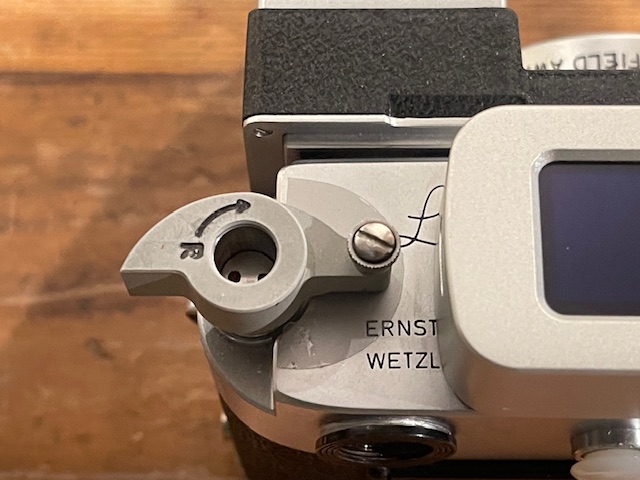


    Clearance with the rewind crank installed.

    Use in poor light:. Far superior to the older Leicameters as the Keks meter’s OLED display is internally illuminated. I just wish it was black on white rather than white on black.

    Beyond the limit? If the light is below the meter’s sensitivity range the aperture display simply changes from an f-number to three dashed lines. Fine with me.

    Sensitivity: Keks claims EV1 at the lower end, which is 1 second at f/1.4 with ISO100 film or 1/4 second at f/1.4 with ISO400 film. My tests suggest this is fairly stated. The upper limit is stated as EV20 which is jolly bright sunshine! I could get it as high as EV21 in the brightest setting.

    Accuracy: I compared readings from the Keks with those from my Leica M10 (built-in meter) and from my Gossen Luna-Pro F under a broad variety of lighting conditions. Used properly the Keks was in agreement with both.
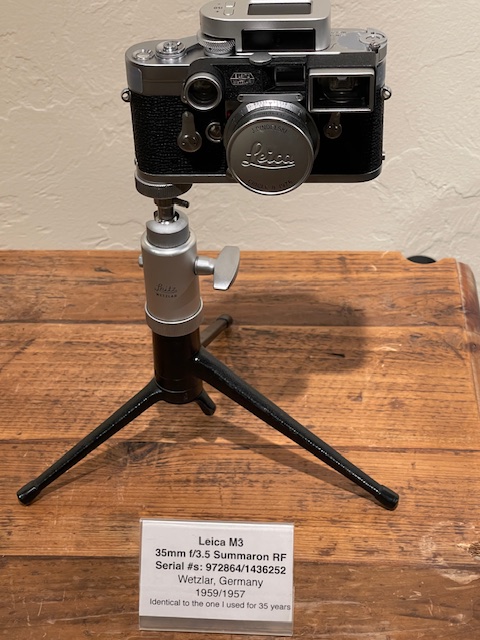


    On my 1959 Leica M3.

    The Keks meter for Leica M is recommended without reservation, especially at the price asked.

    Battery replacement: I screwed up my courage and decided to take the top cover off to see about battery replacement.
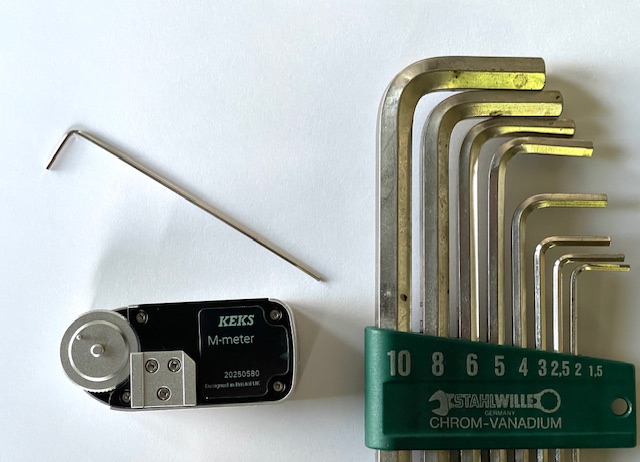


    A 1.5mm Allen wrench is required. A German
    Stahlwille seems appropriate!
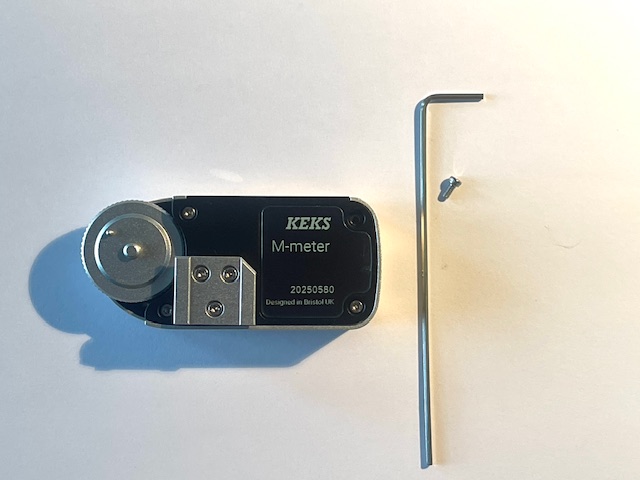


    The four screws around the periphery of the black
    plastic plate are removed. While no thread locker
    appears to be used they are a snug fit.


    The nicely machined top plate comes off
    along with three free-floating buttons –
    power, ISO up and ISO down.
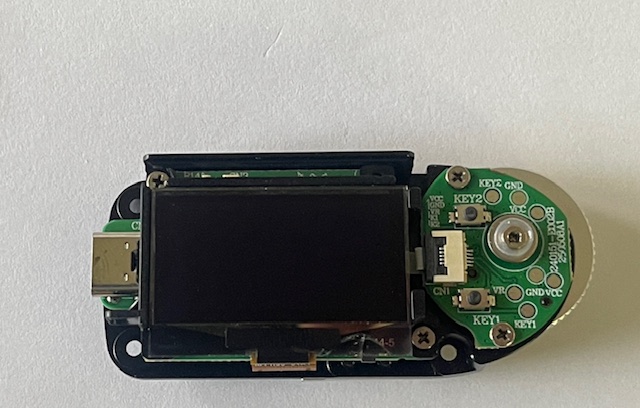


    The innards exposed.
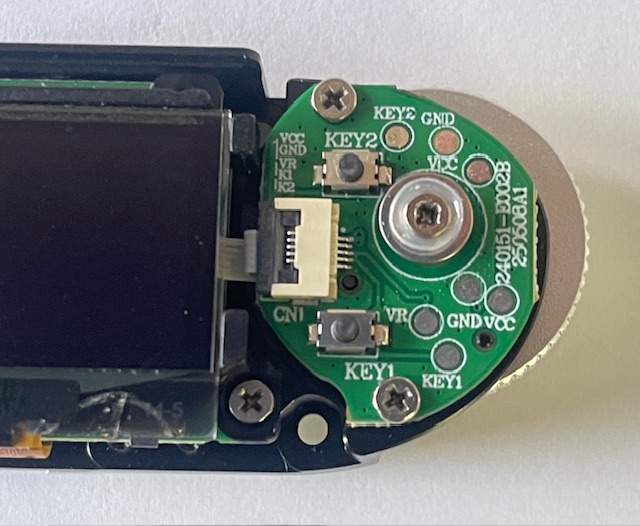


    Battery location?

    The battery is not immediately visible after this first stage dismantling. I suspect it’s under the right hand assembly – last image above – but fear that dismantling that will make reassembly difficult as it houses the shutter speed dial/rotator. So I called it quits at this point. (Check the Comment by Keks, below).

    So my suggestion to Keks – their comment below suggests they read this blog – is to publish the battery replacement procedure for those mechanically adept. The economics of sending the meter in for battery replacement likely do not solve. Now, sure, that battery should last many recharge cycles and several years, but as a legacy product – and a fine one at that – it would be nice to know that the meter can be kept functional in the long term.


Konnwei battery tester

Handy and inexpensive.

I have hit a bad battery spell. The one in the two seater died, no start. The one in my 1975 BMW R90/6 died despite being just 14 months old. And the one in my scooter was beginning to sound weak. All batteries are maintained on a trickle charger in a heated garage.

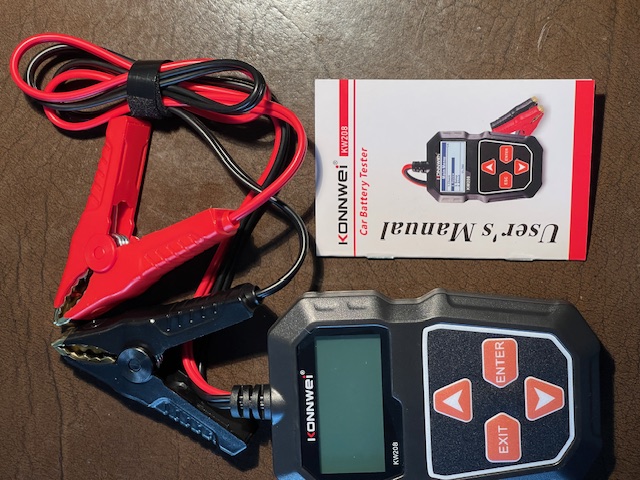
Now I have been very lucky as all my recent battery failures have occurred at home, meaning I was not left stranded on the road. But this spate of failures left me determined to become more proactive about knowing the state of health of my vehicle batteries so I splashed out $23 on a Konnwei KW208 car battery tester. Maybe not the greatest choice of name, true, more like something you expect of the White House, but at that price hardly a great risk either.


First, the manual, in half decent English is printed in minuscule type. Click Konnwei instruction manual and you can enjoy a proper sized version.

The device can test batteries in or out of the vehicle, and this model is limited to 12 volt cells. If in the vehicle and still working you can also test the cold cranking amps (CCA) as a percentage of the rated value (it’s on the battery’s label under ‘CCA’). This is a key measure as CCA is the high current delivery required to activate the starter and turn the engine. Additionally you can test the alternator’s power delivery (the alternator keeps the battery charged when the vehicle is running) as well as the starter’s cranking efficiency. I tested all of these on a failing and then on a new motorcycle battery and the measurements accurately reported ‘Replace’ and ‘Good Battery’, respectively. For the good battery state of health (SoH) and state of charge (SoC) were both reported as high, as expected.

The cables are nice and long so there is no difficulty installing the clamps (remember to connect the red – positive – first and disconnect it last) and the clamps grip well. No battery is required as the tool uses the vehicle’s battery for power. The LCD screen is easy to read, unlike the instruction book.

As for getting stuck on the road with a dead battery, I carry one of these jump starters – it delivers the instantaneous high cranking current which a failing battery cannot deliver and, once the vehicle is running is disconnected as the alternator can pass sufficient current through the dying battery to keep the engine running.

I now feel better prepared for the inevitable battery failure(s) down the road …. or in the garage!