All posts by Thomas Pindelski

The Leica M

Better. With snaps from those bad old film days.

For an index of all Leica-related articles click here.

The Leica M
Kensington Gardens. Leica M3, 50mm DR Summicron, TriX.

Long term users of Leica rangefinder bodies, meaning chaps like me who go back to when the M2 and M3 were the current models and have 30+ years of these under their belt, would make a strong case that the 1950s Leica M2 was the best ever from what was then the house of Ernst Leitz, Wetzlar. The reasons are many. A body screwed, not riveted, together. A rangefinder which did not flare out into the sun. A viewfinder which had but three frame lines and no clutter, all you needed for the ‘around the world’ kit of 35, 50 and 90mm lenses. And bulletproof reliability thanks to German craftsmen untouched by the production line and the need to make quarterly earnings estimates. A workforce which paid tribute to the power of apprenticeship and on-the-job training by some of the best craftsmen in the world. To get a sense of what it took to make that wonderful range-viewfinder, click here.

The Leica M
Leica M2 and a 35mm lens. The ultimate film-era street snapper.

The M4 retained the build quality, if you could cope with the plastic-tipped advance lever, frame selector and delayed action control, but compromised the finder with unnecessary frame clutter for the 135mm lens. This clutter would only grow in future versions. The M5 was a disaster with a cockamamie CdS TTL meter which popped out of the base of the innards and would be crushed if you forgot and retracted your 50mm Elmar into the body. But, worst of all, it didn’t look like an M. It appeared to come more from Tokyo than Wetzlar.

The Leica M
Plain dumb. The Leica M5.

After that things got progressively worse. The M6, which I owned for a few years, had a ghastly, compromised rangefinder, unusable into the sun. The finder was even more cluttered, squeezing in an additional frame for the 75mm lens. It substituted robust LEDs for the M5’s fragile match-needle meter and a silicon cell which had better color response, but the good bits ended there. You could only meter with the camera to the eye, which sort of destroyed the whole Leica stealth concept and the quality was rapidly going downhill with rivets where screws used to be and Portugese workers trying to make like Germans. Not possible. The shutter lost that magic sound and the whole thing was just …. ugh! I dumped mine and returned to my M2 and two M3s.

The Leica M
Victoria’s Secret. Leica M2, 21mm Elmarit, Kodak Gold 100.

The M7 finally added aperture priority automation but little else and quality did not improve while the price skyrocketed. Finder clutter was now maxed out, like in the 0.72x M6 variant, spanning the range from 28mm through 135mm in pairs. It’s successor, the MP, was an attempt to milk ‘retro’ with the original metal film advance lever from the M2/M3 and a unthinking return of the film rewind knob – one of the worst designs ever, small and painful – where every body since the M4 had a fold out crank which worked well. Indeed, I fitted aftermarket cranks to my M2 and two M3s to make the film rewinding process less reminiscent of Torquemada’s ministrations.The M7 and MP were grounds for despair that it was all over for the House of Leitz, and those extolling the virtues of the M7 have likely not used a well tuned M2 or M3. Then, just when everyone thought Leica would go under after several ownership changes, they discovered the digital sensor ten years after the rest of the world. So where do they go for the sensor? Why, Kodak of course. And which do they use? A crippled APS-C abomination which immediately throws out most of what is good and great about the Leica brand. The lens. The magenta distortion was thrown in free, ineffectually corrected by Leica doling out correction filters to those affected. At least they were free. Sort of like Porsche forgetting the steering wheel and offering one at no charge to all affected ….

The Leica M
Leica M8. A dud to match the M5.

Leica (Ernst Leitz had sold out years ago, so no more ‘Leitz’) tried to make amends with the full frame M9, after years of proclaiming it couldn’t be done in an M body, just in time to introduce a camera with an already obsolete sensor from a soon-to-be bankrupt Kodak. (DxO labs, who know about these things just concluded about the M9’s sensor in uncompromising terms: “In fact, with a DxOMark Overall Score of 68, or 69 for the Leica M9, M9-P and ME Type 220, these cameras offer the worst image quality DxOMark have tested on a full frame sensor, with the exception of the 10-year-old Canon EOS 1Ds. The full review is here). The system of marginal miniature correction lenses in front of the sensor is very smart, it has to be admitted, if designed by Rube Goldberg. These correctly direct oblique light rays so that they strike the sensor at a preferred angle. The new M body is now up to $7,000, meaning only three types of buyers can afford it:

  • Banksters and hedgies (these were doctors and lawyers in the ’50s)
  • The insecure with more money than sense (see above)
  • A few great photographers who can make an M sing

The Leica M
Main Street, South Uist, Outer Hebrides, Scotland. M3, 90mm Elmar, TriX.

It’s fair to say that since that M6 of the 1970s, Leica’s rangefinder bodies have sadly trailed their lenses by a considerable margin. And what lenses! You can read about the driving genius behind their optical mastery, Walter Mandler, here. While QC was not what it should be as the company’s meagre capital base dwindled in the 1980s, its latest recapitalization a few years back has seen the company spring back to life. Hedgies are now everywhere, which cannot hurt demand, and their lenses remain optically, if not technologically, the standard against which all others are measured. “As good as a Summicron” is a label every lens manufacturer in the world aspires to. I write ‘not technologically’ because Leica does not make one RF auto-focus optic in M mount (despite pioneering the first AF system, the Correfot, with Honeywell and producing many world class AF lenses for their medium format S2 SLR body) which rules them out for sports snappers. Arguably, no bad thing. How many more images does the world need of ‘athletes’ powered by Bayer, Hoechst and Pfizer, after all?

The Leica M
35mm Asph Summicron. As good as it gets.

So while AF will likely not darken the doors of the Leica M user any time soon, the new Leica M (that’s all, just M, not M10) really shows that they are progressing rapidly to a full EVF mirrorless full frame body. And you really want full frame because fast wides are what the Leica is all about and APS-C chucks out half the goodness and all of the width. Leica has two other Leica M-style bodies on the market. A ‘bargain’ ME which is nothing more than a rebranded M9 with that tired old Kodak sensor at $6,000. And the beyond foolish $8,000 Monochrom for people who like to pay more and not be able to make color pictures. Best of all, the M comes in a silver chrome option which is how Leicas should be. The amateur looks enhance the user’s stealth rating.


Paris Métro. The colors of France. As befits the most beautiful city in the world, the French
take particular care to see that their subway system is well maintained and clean.
Leica M3, 50mm DR Summicron, Kodachrome.

The Leica M adds one feature which has nothing to do with the rangefinder ethos. A movie mode. You are seriously going to make movies with this body when you can get a better, dedicated movie camera for less? I don’t think so. Live view and movies are not consonant with the Leica M ethos. Still, movie mode/live view add little bulk and you do not have to use either. Think of the M as a viewfinder camera also able to take long lenses with the clip on EVF at a pinch. If most of your work is at 90mm or shorter, then you are missing little.

The Leica M
Marion Campbell spinning Harris Tweed yarn, Harris, Scotland. Leica M3, 35mm Summicron, TriX.

And the ability to use the clip-on EVF made for the overpriced $2,000 Leica X2 point-and-shoot is the signal feature added. It’s named the ‘Visoflex EVF2’. The name derives from the mirror box attachments Leica sold back in the film days which made your M into an SLR. Sort of. You had great bulk and weight, poor responsiveness, awful ergonomics for hand-held use, a restricted lens range, no aperture automation and a myriad of adapters and coupling rings. Focussing on the plain groundglass screen which lacked a fresnel lens was iffy at best, with many opting for aftermarket screens you could actually see in less than noon California sun. It never worked anywhere near as well as an SLR, and I made sure I proved that by owning a Visoflex I, a Visoflex II and a Visoflex III. All just awful. There’s Leica fever for you.


St. James’s Park, London. Leica M3, 50mm Elmar, Kodachrome.

The new Visoflex attachment is notable not so much for what it does – lots of MFT bodies and even Leica’s APS-C X2 offer like gadgets – but for what it promises. And that promise is of an integrated, compact EVF built into the next M’s body. No more flaky optical finder frames, no more marginally accurate rangefinder patch (consistently nailing focus with a 50mm atf/1.4 or a 90mm at f/2 is at or beyond the technical limits of the antiquated prism-and-mirror based rangefinder, a trivial process for any modern DSLR), no more clip-on gadgets, but rather an EVF with focus peaking (the sharp bits go red) and center magnification to make MF simple and accurate. The old Visoflex (and it does fit the digital M bodies!) is a comical comparison to the new Visoflex EVF-2 when you look at capability and bulk:

The Leica M
The new Visoflex, with a Leica R lens fitted.

The Leica M
Visoflex 2. Good luck seeing the image with the lens stopped down.

The Visoflex EVF-2 comes in black only, needlessly emblazoned ‘LEICA’ in huge white letters on the front, at $460. You can buy the Olympus VF-2 in black or chrome for $250, get the same 1.4MP definition and flip up capability for waist level use. Leica has confirmed it works. The LCDs in both are made by Epson. Alternatively, the even cheaper Olympus VF-3 at $180, reduced to 920,000 dots but seemingly well regarded, may work as well. I’m not sure. The big wheel is the diopter adjuster.

The Leica M
Olympus VF-3.

The new Visoflex, and the eventually integrated EVF in the next M which is surely coming, offers the ability to use not only every Leica M mount lens ever made with full focus range and accurate framing, but also just about every SLR lens ever made, whether Leica R (we are talking some awfully good lenses here, also damned by Leica’s inept SLRs – yup, I owned a bunch of those, too), Nikkor, Pentax, Canon, etc. as well as almost every screw mount Leica lens ever made. Nirvana for lens buffs! This new Visoflex should offer constant brightness regardless of how much the lens is stopped down (just like a Panasonic with adapted MF lenses), aperture priority exposure automation and, best of all, an optional 5x-10x selectively magnified center patch for critical focusing, a function activated by a discreet front panel switch with a horizontal control wheel on the back changing magnification. How fast the whole thing is has yet to be determined. Panasonic, which lead the way in EVF DSLRs has proved that an EVF can work superbly, as my G1 and G3 Panny bodies testify.

Plus the new M offers a 24mp sensor, CMOS for the first time, which early reviews suggest is a significant step up from the one in the M9, especially at higher ISO settings, the M9’s sensor being bottom decile in that regard. It’s not made by the spin-out Kodak business used for the M8, M9, MM and ME, but rather by a specialty Belgian manufacturer named CMOSIS. Let’s hope they stay in business.

The Leica M
London gent, Green Park. Leica M3, 35mm Summaron, TriX.

There’s a lot to like here, except for the $6,000 + lens price tag. The 35mm lens is the perfect match for the Leica street snapper. Small, fast, light, not too long and not too wide. The rational buyer’s M would likely sport a 35mm f/2 Zeiss optic because it’s rumored to be every bit as good as the $3,000 Summicron at one-third the price. Likewise, Cosina makes a range of M mount lenses which have a great reputation, their 35/2.5 Color Skopar selling for just $410 new. Cosina – the same Cosina which makes Zeiss branded lenses – will sell you a 35/1.4 Nokton for a bargain $630 with a choice of single or multi-coating, which compares nicely with the $5,000 Leica is demanding for its equally fast Summilux. 90% of the performance for 10% of the cost.

The Leica M
Zeiss Biogon. Yes, Leica quality at 70% off, and in silver at that.

The new M owner is also spoiled for used lens choices, with any number of 35mm Summicrons and Summarons available for a fraction of the cost of a new Asph Summicron in any condition desired. Having used early Summicrons and both f/3.5 and f/2.8 Summarons, I can vouch for these optics unreservedly.

Bottom line? Price of entry with an excellent 35mm lens totals under $7,000. Buy a new Summicron and you are close to $10,000, the cost of a good used car. A new Nikon D4 body runs $6,000 for comparison, though most would agree it’s a far tougher beast and hardly comparable in terms of versatility and speed, where it leaves the M in the dust. But’s that’s comparing chalk with cheese. A Leica is not an alternative to a modern DSLR, it’s an adjunct.


Pall Mall, London. Leica M6, 90mm Apo Summicron-M, Kodachrome.

You can download my free book of Leica pictures here, all snapped on my M3 mostly using a 35mm f/2.8 Summaron or, heavens forbid, buy it here for a pittance, which will make me exactly the same sum but will give you something permanent. It’s all black and white because that’s what almost everyone used in the 1970s and, furthermore, I couldn’t afford color in any case. This was in the days of TriX and D76 and Agfa Brovira and smelly chemicals but the results seemed to come out OK, especially once digitized with a Nikon scanner. I was lucky to be able to scan the original negatives some thirty years after they were taken.

No modern Leica can hold a candle to a cheap, modern DSLR at one third the price. A Nikon D600 or Canon 6D is a far more versatile instrument than the essentially single-purpose M. The M is for stealthy street snapping, something the DSLR can do pretty well if pushed. I do fine with a bulky Nikon D3x and despite all the codswallop about it being ‘threatening’ I have found it to be quite unobtrusive in practice. The DSLR can do lots of other things better and faster than any M body. However, until you have used Leica and its natural – if dated – optical viewfinder with a 28mm to 90mm lens and enjoyed its stealthy nature, you have no frame of reference from which to criticize. The price? Give up some other vice and it’s yours in a year. Whether you really want to carry $10,000 on your shoulder in the rougher parts of town is a trickier question.

Of course, should my ship come in, the first thing that happens to my M is that it’s off to the engraver’s to be corrected, and that gauche red dot removed:

The Leica M
Leica M10.

Note that the new M, which really should be named the M10, no longer has the middle window between the viewfinder and rangefinder. The purpose of that was to illuminate the frames in the finder. That is now done electronically and you can even switch the color from white to red – a solution looking for a problem.

The Leica M
Holocaust Museum, Paris. Leica M3, 35mm Summaron, TriX.

Though a self-admitted Leica fan who gets free testers from Leica, Jonathan Slack has a useful review of the new Leica M with comparison notes on the M9, especially informative when it comes to shutter release feel and shutter sound. You can read his piece here.

Alternatives for the stealthy street snapper:

The only other full frame compact snapper currently out there is the Sony RX1. It comes with a fixed 35mm f/2 Zess lens and the mind-numbing price of $3,000, capitalizing on the Leica’s premium pricing. It has yet to be seen if Sony’s AF is up to the task, and the camera would have to be fitted with a proper optical finder at modest additional cost to be useful on the street in fast paced situations. The inclusion of AF rather puts the Leica to shame by comparison.

Far more interesting is the newly announced Fuji X100S, though unfortunately it’s APS-C not FF. Once again the lens is a 35mm FFE (23mm) and f/2. Ideal. Early reviews suggest that Fuji has fixed the frustratingly long list of design bugs which made me pass on the X100. Most importantly there’s a claimed significant increase in AF speed and the innovative integrated hybrid optical/electronic finder is retained. The lens is not interchangeable but the price is very reasonable at $1,300 for a compact point-and-shoot with quality optics and (maybe) newly found responsiveness. If this body had a full frame sensor there would be very little point in spending many times the asking price on any Leica.

The Leica M
Wedding, Parc Monceau, Paris. Leica M3, 35mm Summaron, TriX.

If anyone can come up with a full frame camera with specs to match the X100S I would think it has to be Fuji. They are the most innovative camera maker in the market, they make Hasselblads so they know all about quality optics and large sensors, and they seem to be tapping a rich vein among gear aficionados. I would think that Leica is looking over its shoulder daily hoping that the M-killing Fuji is not about to hit dealers’ shelves. At $2,000 I would buy one sight unseen.

The Leica M
Those Canadians …. Leica M2, 90mm Apo Summicron-M, Kodak Gold 100.

Technical note: The film images illustrating this piece were variously scanned on Nikon Coolscan 2000 and 8000 and Canon Canoscan 4000US film scanners, then minimally processed in Lightroom 4.

Sensor cleaning

Has to be done.

Why bother cleaning your sensor? If you produce more than one picture in a blue moon your choice is simple. You can retouch dust blobs in your images in your favorite photo-processing application, once per image, or you can clean the sensor once and do a minimum of retouching until it is time for another cleaning. Determining whether to clean your sensor manually is a function of how many pictures you publish and of what your time is worth.


At Crissy field, San Francisco. No blobs in this sky. The benefits of a clean sensor.

While my Nikon D700 had a ‘sensor cleaner’ built in – an ineffectual mechanism which applies ultrasonic waves to the cover glass over the sensor, a process which could not wipe dried snot off a sheet of ice – it really was not much better than the sensors in the D3x and D2x when it comes to keeping them dust free. Neither of those bodies has a sensor cleaner. For a more technical reading check here for confirmation of the general uselessness of in-camera sensor cleaning systems.

Stop the lens down, take a snap and sooner or later you will see blobs in large expanses of continuous tone – skies are especially sensitive to this. And releases of oil from the camera’s internal mechanisms onto the sensor will only be spread with the ultrasonic treatment. What’s that? You think your precious Leica does not leak oil? Have you checked the road outside your house recently? Every machine which uses oil leaks it.

Forget blower brushes. These are an excellent way of blasting grit around the mirror box right onto those oily bits and represent an effective way of making matters much worse. Vacuum is the answer, not a hurricane, but sticking the hose from your Dyson or Hoover inside your silly-priced Leica M Monochrom is likely going to suck out the sensor and any dirt with it …. no more dirt, but a trip back to the Fatherland.

What is called for is wet cleaning. Well, moist cleaning.

One thing should be clear – you are not cleaning the light sensitive pixels in your sensor. Every sensor of any design, whether it has an anti-aliasing filter (most) or not (Leica M8, Leica M9, Nikon D7100, Nikon D800E, etc.) has a sheet of protective glass between the pixels and the lens. That is what you are cleaning. It’s not that fragile. We will be using isopropyl alcohol (poisonous to drink) at $3 for a pint, enough for about a thousand cleanings. UK and Benelux readers are recommended to use unflavored vodka, the higher proof the better, as they can take a shot when contemplating the grey skies outside when the process is done. Of course, they will run out of cleaning solution much faster.

You can pay your camera’s manufacturer $$$ to do this task, lose the use of your camera, expose it to the tender mercies of UPS (twice) and still have no guarantee the job will be done right. That’s if you ever get your camera back. You can buy a sensor cleaning kit for some $50 which comes with twelve swabs and magic cleaning solution, which has to be God’s way of telling you you have more money than sense, especially when you use up six of the swabs first time out.

Or you can use Dr. P’s low risk, fast and free method and have the job done in 20 minutes, tops.

You need to concoct a tool which prevents the application of excess force to the sensor glass. No, not that rusty old file from the cardboard box in the basement. Not that the sensor glass protective plate is that fragile, but the cack-handed amongst us can be guaranteed to overdo it. Behold Dr. P’s force-buffered, auto adjusting sensor cleaner.

It’s comprised of two pieces of a regular business card just under 1″ wide (for full frame; make it narrower for APS-C or MFT). The end consists of a multiple-folded piece of lens cleaning tissue, attached at the base to the business card with Scotch tape. Do not use Kleenex – loaded with perfumes and grease and abrasive as heck, it’s a sure way to ensure that you will be sending the camera for service.

First, take a picture of a distant plain object like the sky at the smallest aperture of the widest lens you own. That will bring any sensor dirt into sharp focus.

Next step is to get the swab moist, not wet. Soak a piece of clean, laundered handkerchief in 91% isopropyl alcohol from the drug store, then dab the swab in the handkerchief until you can both see it’s moist and smell the alcohol on it. Do not dunk the swab directly into the alcohol. Moist and wet are diverse concepts. We want moist. Fold up the mirror in your DSLR, remove the lens, insert the swab and swipe across the width of the sensor, flip the swab and repeat. You are pressing hard enough to see the business card bend, not break. If you press too hard the business card will simply break (hence the reference to ‘force buffering!’), limiting the force you can apply.

Wait five seconds for the alcohol to evaporate, down with the mirror, then on with the lens and take another picture. If you need more than five seconds to see the evaporation completed, your swab is too wet. (Readers in England are recommended to use a white wall at home for the picture as it will almost certainly be raining outside).

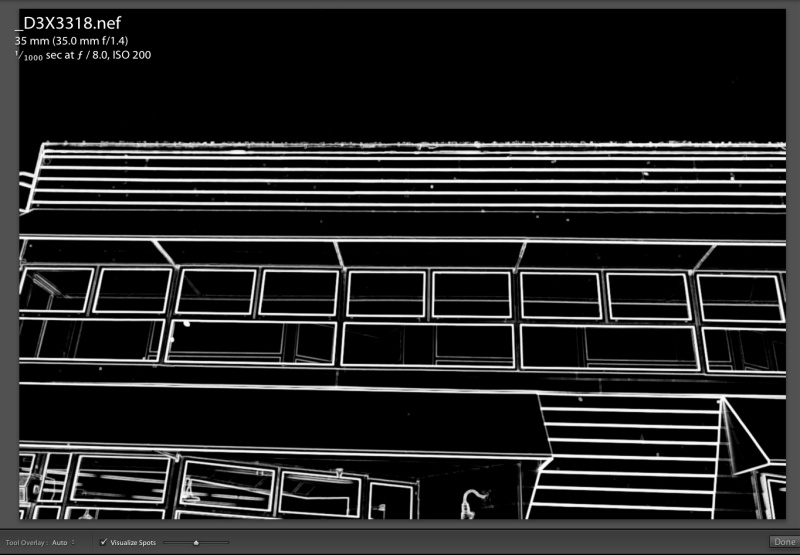
Now load both snaps into something like Lightroom which will permit before:after comparisons and take a look. If there’s still some dirt there, repeat. There generally is.


You think that sensor glass is fragile? Here’s how Nikon cleans it.

My D3x was simply filthy and needed five or six passes. More crud than crooks in Congress. Better to do these passes one at a time than go into an abrasive frenzy while your swab dries and becomes a fibrous hell. The less you clean, the better. It’s called wear.

To find dirt quickly and to also make it more visible, watch this excellent video.

Here’s the result – Before and After – from identical sections of D3x files, greatly enlarged:

Why does dirt build up on sensors? I discount the oft quoted reason that dirt gets in when lenses are changed, unless you are doing this in dust storms in some hell hole south of the Mason-Dixon during tornado season. I have had dirt build-up even when the lens has not been changed – Canon 5D, Nikon D700, D2x, D3x – makes no difference. It certainly is not squeezing in via the lens mount. The particles are too large. Some lenses – the Canon 24-105 L is one of the worst – act like a dust pump when zoomed, blasting environmental dirt into the mirror box through the zoom mechanism. Don’t believe me – take the lens off, and zoom it holding it to your face. Feel the rush of air? Lousy design, improperly vented.

Other causes seem to be sloppy manufacturing processes. Recent reports of the Nikon D600 show dirt build-up with no lens changes, getting worse and worse during the first five thousand or so exposures. Clearly bits of loose material, and excess lubricants left over from the manufacturing stage are being freed up with use and the typically negatively charged sensor is attracting them in the electrostatic hell between lens and sensor. Witness the fact that D600s lose this problem once well run in and cleaned a few times. Motto: Fire off a few thousand ‘wall shots’ at home before using your new D600. Great. Advice to manufacturers: Stop poncing about with inept ultrasonic vibrators and positively charge the protective glass plate instead.

The Panasonic G1 and G3? Never had a problem in years of use and some 20,000 exposures. The sensors in neither have ever been cleaned and realize that these files are enlarged four times as much as files from a full frame sensor, so dirt really shows. I have changed lenses on these bodies with no special precautions on the street many times. Maybe Canon and Nikon could learn something from the fellows at Panny? And guess what? The Pannys have no flapping mirror doing anything up to 10 gyrations a second and flinging oil and detritus around.

It’s not like Nikon et al are new to screwing up with lubricants. Ask any owner of the 55mm f/2.8 Ai-S Micro-Nikkor, made during a long production run from 1979-2006, if he or she has had problems with gobs of oil appearing on the aperture blades. Yup, wrong choice of type and/or quantity of lubricant.

Here’s Nikon’s pathetic D600 sensor advisory, written by some schmuck liability lawyer who wouldn’t know integrity if it whacked him in the chops and whose job it is to help his employer lie and cheat:


“Natural accumulation of dust”, uh huh. “Blower bulb”, please.
.

Here’s the top secret internal memo from the head of engineering to the C Suite:

“Dudes, we messed up royally. The damned accountants cut so many QC steps from our manufacturing to enhance margins that we had to let our Betty go. She was the babe who mopped up all the excess oil inside our gear before we sold it to pikers. Look, no way we can ‘fess up to this. The liability costs would kill us. We all know these bodies are not really meant to do 8fps but it sure makes for good advertising copy. Let’s just keep a low profile and maybe only one or two come back for cleaning and we can simply say it was operator error. No risk from amateurs and we have the ‘reviewer’ set in our pockets.”


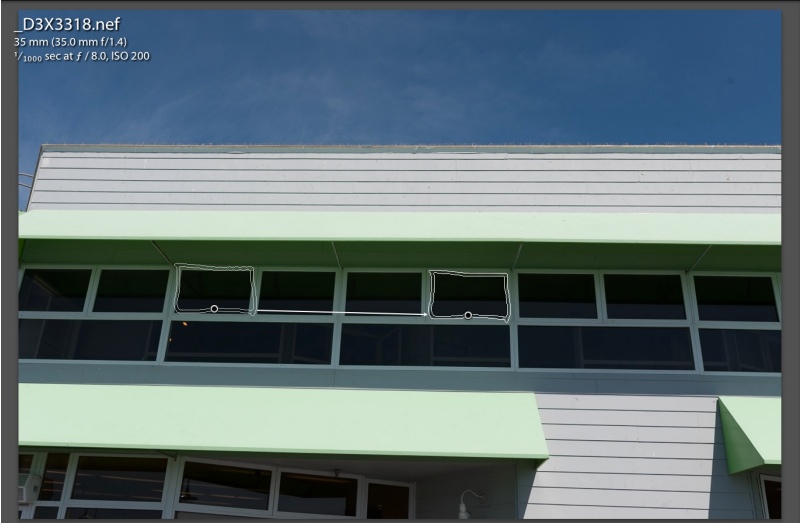
Two beauties against a clean sky.

First and last images – Nikon D3x, 35/1.4 Sigma.