All posts by Thomas Pindelski

Apple boneheads

Flunked Retail 101.

When Apple released iPhone 1 in July 2007 I plunked down $600 for one immediately. The price was ridiculous but as an investor I needed to know about a device which proved to be transformational and disruptive. A few months later nice Mr. Jobs refunded me $200 for his bonheaded pricing.

Well, Jobs may be gone, but the boneheaded gene remains in the corridors of Cupertino, making its latest appearance in the guise of the $329 iPad Mini.

Let’s be clear. There is only one reason Apple entered the mini-tablet segment. To make money. They perceive that they can make significant amounts while retaining the brand’s dominance of the tablet sector by entering the mini segment. Only there are perfectly capable tablets like the Nexus 7 at $199 and much less capable ones like the Kindle Fire for even less. Would you pay $130 more for the Apple product, assuming you do not dine our nightly and do your own laundry? Obviously not. Your school age child can still pull up Wikipedia just fine on his $199 Nexus.

So say goodbye to conquest sales at that price. Because conquest sales are everything for Apple, just as they are for luxury car makers. Once you have used it, you do not go back. You just buy more. And you become a repeat customer.

So pricing the iPad Mini off standard profit margins makes no sense. It needs to be priced as a loss leader/entry product to get the poor schmuck using Android into the Apple ecosystem. And $329 is not going to do it.

$249 is the right price for this device. $329 sells to zealots and the converted only. $249 sells to everyone. And given that connectivity is the lifeblood of mobile device, where on earth is Apple coming from charging a $130 premium – like on the regular iPad – for a Qualcomm cellular chip which retails for $29? Now your Mini is $459. That’s plain stupid, Apple.

Design consistency

Thank you, Nikon.

One of the welcome features of the D2X (2005) is how little its design varies from the much more recent D700 (2008):

Top view – each camera has a GPS data receiver installed top left, the D2X’s safety tethered with dental floss ….

The top plate controls are almost identical except for the aperture/shutter Lock button on the D2X, lower left, for which I have yet to divine a serious use, and the superior metering selector on the D2X’s prism, which has an invaluable lock button to prevent accidental movement. The one on the D700 is just visible here on the rear plate and is prone to accidental change. The ISO button on the D2X moved to the lower rear. The D700 adds a handy pop up flash. The D2X has none.

The rear views are also similar:

The 3″ screen on the D700 dwarfs the 2.5″ LCD on the D2X.

Of note is that one button has been added for minus magnification on the D700 (top) replacing the two button action needed on the D2X, An improvement for those into LCD chimping, a practice I avoid as much as I do politics. Note the Nikon DK-17M magnifying eyepieces I have fitted to both bodies – a massive improvement over stock and a must-have for anyone using manual focus lenses. With these fitted both finders show a huge, clear, uncluttered image, wonderful for composition and shooting.

The D2X adds the lower information panel common to all the D-Pro bodies and most definitely not an improvement as the text is small, for the most part, and hard to read. All of this information falls nicely to the top display in the D700. Finally, in addition to the large battery grip which permits easy vertical shooting, the D2X adds a microphone and speaker activated by the button to the lower right corner of the LCD display for recording voice memos of up to 60 seconds for each snap. Very handy. The D2X hides its CF card behind the door to the right of the LCD and adopts a truly complex access mechanism which will have you resorting to four letter words when it comes time to replace the card. The D700 adopts a far superior sliding latched door on the right of the camera. Finally the center button in the four way rocker dial for changing focus points is far superior on the D700 to the one on the D2X. It protrudes a millimeter or two further, making engagement on a center press much easier. With the D2X you find yourself toggling instead of pressing, as often as not. I suspect that a small piece of rubber glues to the D2X’s button will fix what ails the design. The AE-L/AF-L and AE-ON buttons at top right are identical on the two bodies.

The front plates are identical. What the above snaps cannot disclose is the extent to which the software is much the same between the two bodies and that is the icing on the cake. It adds to an easy ergonomic learning curve the absence of torture-by-software which every new DSLR imposes on a new user. So for D700 owners thinking of upgrading to a pro body – D2X, D3, D4 – they will likely find as I did that they will be up and running in no time.

The D2X is faster in most respects. It can sustain an 8 fps framing rate in cropped mode using the stock battery; to accomplish that with the D700 requires the battery grip and new batteries, as the stock will not fit. Mercifully, regular AA cells are an option to the costly Nikon LiOn battery. Shutter response of the D2X is marginally better, but in practice the difference makes no matter. What is noticeable is how much quieter the D2X’s shutter is. Maybe that’s because it’s smaller given the smaller frame and maybe it’s also because the D2X’s flapping mirror is smaller for the APS-C format. Whatever the reason, the result is clearly distinguishable. Batteries in the D2X are inserted from the side, those in the D700 from below, meaning that if used on a tripod, the change in the D700 is more fiddly. However, both bodies have such high battery lives (probably over 800 shots on a charge) that the practical inconvenience with the D700 is not significant.

For MF lens users the focus confirmation light in the D2X is better than the one in the D700, shuddering less at the point of optimum focus. Nikon has long spec’d its pro and prosumer AF modules as requiring an aperture of f/5.6 or faster, but I have found no difficulty in using the AF confirmation light in the D700 with the f/8 Mirror Reflex Nikkor. On the D2X that light fails, making confirmation focus with the D2X impossible. A shame.

Planting early

Bulbs for the spring.

The gardening crew at Filoli – 14 regulars and no fewer than 300 volunteers – gets to work early, planting bulbs for next spring:

Ever wonder how they get things in those serried rows? You place a plank on the moist soil to provide a template, just so:

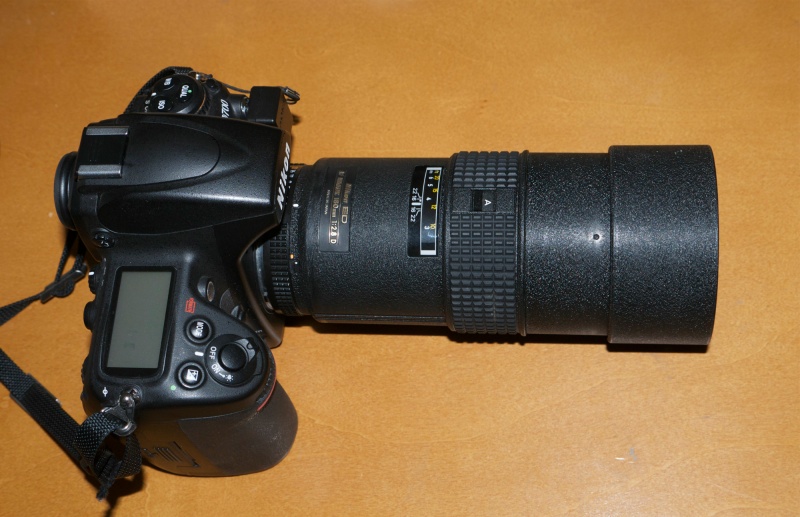
Snapped on the D2X on the Nikkor 200mm MF and 35-70mm AFD, respectively.

The Nikon D2X – Part III

Some snaps.

Part II appears here.

The only thing not to like about the Nikon D2X is the bulk and weight. Hold it your eye for more than a few seconds and fatigue-induced shakes set in. Neither the body nor the classic era lenses I prefer were built with plastic. We are talking a lot of brass and alloys here and that makes for weight.

I took the body and three Nikon lenses – the current 16-35mm VR f/4 G, the twenty year old 35-70mm f/2.8 AFD and the forty-year old 200mm f/4 Nikkor-Q MF with a CPU installed to Filoli to catch the last days before the house and grounds close for the season. With the body set to center point focus and aperture priority enabled, with center weighted auto exposure, I found it a delight to shoot in portrait mode, owing to the provision of the second shutter release and the auxiliary control dials – the latter needed for the G lens. For the AFD and manual lenses I have the body set to permit use of the lens’ aperture ring. The G has no aperture ring so a control dial on the body must be used.

Here are a few of those snaps from yesterday:


Orchard.


End of season. The fallow plots await new bulbs.


Last growth.


These decorative urns are everywhere.


The Bonsai garden.


The alley.


Planter.


The Conservatory.

Despite its massive complexity and versatility, once set to your preferred mode of shooting using the D2X is child’s play. If you can lift it, that is.

A few comments on the sensor. I have long found that the sweet spot for most of my pictures is an ISO 400 setting. Fast enough to mitigate camera shake but not so fast as to destroy image quality. That held in the days of TriX monochrome film with Leicas, with the superb sensor in the original Canon 5D, in the Nikon D700, and in both my Panasonics – the G1 and G3. The D2X is in the same class. At ISO 400 noise in dark areas is just becoming noticeable in a 24″ print if you get too close. Large areas of continuous tone, like skies, show very fine, even grain at those enlargement ratios. And while the D700 is the best as regards noise suppression, owing to the large photosites used in the sensor, the earlier sensor in the D2X does not disappoint.

I have read some comments which have it that the D2X’s sensor is not usable at ISO 400. I can only think writers of this tripe are either technically clueless or spend their days pixel peeping. That’s just arrant nonsense. 36″ x 48″ prints from this sensor at ISO 400 are easily accomplished. Here are my Import Preset settings in Lightroom 4:

Lightroom 4 import settings for RAW files from the D2X.

The clock tower at Filoli – section of a 36″ x 48″ print, ISO 400, 35-70mm f/2.8 AFD Nikkor at f/4.
Grain and sensor noise? Get real.

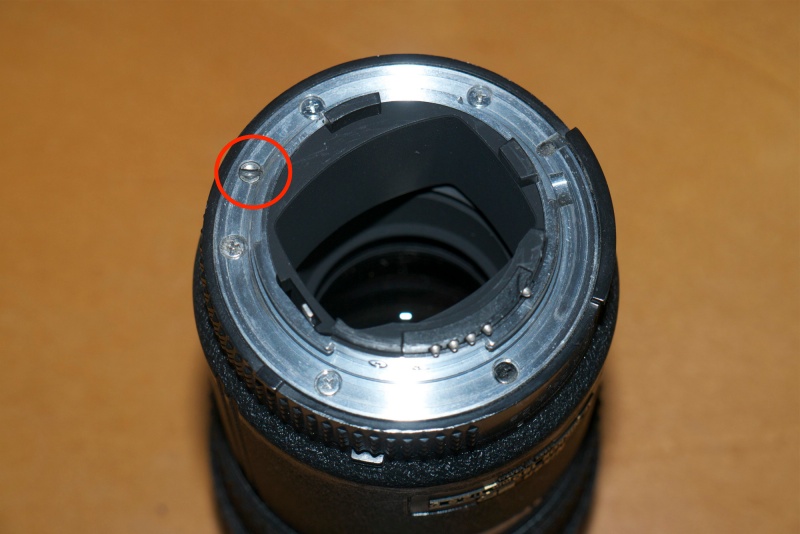
Pay no heed to the fact that the lens profile refers to the D700 in the above screenshot – that’s what I named it. In practice, lens profiles are lens – not sensor – specific, and any of my D700 full frame profiles works equally well with the D2X or any other APS-C Nikon body. Remember that for a lens to be automatically recognized it must have a CPU fitted. One comes stock on Nikon AFD and G lenses (and even on some modern Zeiss Nikon-mount optics), but requires manual labor to install on older lenses. The alternative of remembering to set the ‘Non CPU’ lens variable in the camera’s Shooting Menu is near useless, as you will forget to do so the minute you first change lenses. This is a huge plus of installing CPUs on older pre-Ai (once adapted), Ai and Ai-S lenses. If you prefer spending time in LR or PS manually correcting distortions and vignetting because the application does not know which lens was used and hence which correction profile should be applied, that’s your choice. The few minutes it takes to install a CPU is repaid the first time you use the lens and save time at the processing stage.

Trade offs? Well, the APS-C sized sensor make all your lenses 50% longer. That might be a feature at the long end, but it is a curse for wides. A 16mm ultrawide becomes a more modest 24mm, the sensor only using the central part of the image cast by the lens. On the other hand, that central part is very much the cream of the crop definition and distortion wise, so what you lose in coverage you gain in definition. Where the D2X (and probably its later descendants, the D3 and D4) excel is in handling. The ergonomics are superb, the machine clearly designed with input from working photographers. Everything falls to hand, buttons are there in lieu of frustrating LCD choices for commonly used settings and the machine is built like the proverbial tank. Unlike that tank it is very fast indeed and wonderfully quiet, almost as quiet as a G3 despite the far greater capabilities.

Highly recommended, especially at the price, for someone who wants the last word in robustness at the price of a prosumer entry DSLR made of the purest plastic. Unlike that wonder, the D2X can handily double as a weapon in times of need. A good clunk on the assailant’s head will render him unconscious and you can still get his mug shot with the weapon you just used.

There’s a strong case to be made that the D700 is perfect for the wide-angle user whereas the D2X, owing to its superior ergonomics, excels with longer lenses.