All posts by Thomas Pindelski

Apple’s awful hardware

To be avoided.

As I value reliability over looks, stability over price, I have been an Apple OS X devotee for a decade now. Windows drove me to OS X. But it would be hard to be unhappier with the reliability record of Apple’s hardware which I have experienced. Here, more or less in chronological order, is the list of that company’s hardware I have used over the past decade and what happened to each.

  • iMac 17″ PPC, 1.25gHz – still working great if a bit slow by modern standards. 10 years old. Good for web surfing.
  • Airport Extreme ‘UFO’ style’ router. Nothing but stability problems. Given to a friend.
  • Airport Express ‘G’ model. Impossible to program and totally unstable. Returned for refund.
  • iBook #1 – DVD drive failed after 30 months. Replaced (awful job) and sold.
  • iBook #2 – DVD drive failed after 27 months. Replaced and given to a friend.
  • iBook #3 – HDD failed. Battery failed after 27 months. In surgery now.
  • iMac G5 20″ PPC, 1.8gHz – started to overheat after 2 years’ use. DVD drive errratic. Sold before it could blow.
  • Airport Express ‘N’ model. Refused to extend network despite much telephone time with Apple. Returned for refund.
  • iMac 20″ Intel C2D, white model. Graphics processor failed after 2 years. Not economical to repair. Recycled.
  • iMac 24″ Intel C2D, white model. DVD drive erratic and failing. Graphics processor started to fail after 2 years. GPU board replaced and additional cooling (fans and holes) added. Failed three months later. Recycled.
  • Airport Extreme router ‘N’ model. Unstable out of the box. Replaced under warranty. Replacement continues to work fine.
  • MacBook #1 12″, Intel C2D. Repaired twice under warranty for a wireless problem – Apple replaced the wifi card twice. No use. Complete computer replaced under warranty after 9 months of use. This one broke me, I confess and started my Hackintosh quest.
  • MacBook #2 12″ Intel C2D. Warranty replacement for the above. Sold as quickly as possible before new problems could arise. Replaced with a $300 hacked netbook which is perfect after 15 months’ heavy use, not to mention that it runs 40F cooler.
  • Mighty Mouse – three models – all died from faulty scroll wheels just outside the warranty period. Replaced with a Microsoft RF wireless mouse.
  • White wireless keyboard. Refuses to pair with the iMac 24″. Recycled.
  • Aluminum wireless keyboard. Has refused to pair with anything over the past week. Must be a solidarity thing with the white variant, above.
  • Mac Mini – too new to fail. May reluctantly buy AppleCare at the two year warranty point to get at least one more year out of it.

My current ‘work’ computer where I do all my Lightroom and Photoshop work is the best of both worlds, based on the above experiences. Assembled from off-the-shelf inexpensive PC parts it has mechanical reliability and low repair costs if anything fails. By far the costliest component, the Intel C2Q CPU, ran $230. The twin 22″ Dell IPS monitors I use have nice matte screens, the pair costing in aggregate about half of the amount Apple is asking for their cheapest external monitor with its awful glossy screen. Everything is easily upgraded if the need arises, right down to the CPU.

As Windows is to operating systems what Apple is to hardware (meaning I refuse to use either) the PC is hacked to run OS Snow Leopard, is equal in performance to Apple’s costliest hardware and has been rock stable in the six months since construction. And it runs 40-50F cooler than any Apple Mac I have used.

Doubtless someone will write pointing out that Apple’s EULA claims to prohibit installation of OS X on non-Apple hardware in the US (it’s not legal in Europe so have at it, those of you across the pond) but frankly, given my experiences with Apple’s hardware, what choice do I have? And I paid for the software. It is the height of arrogance to tell me I cannot use it on a machine of my choice.

So our household is down to an absolute minimum of Apple hardware – one 10 year old iMac, one Mac Mini, no mice, no keyboards, one Apple Airport Extreme router and one iPhone. The latter has been a model of reliability, just like the Hackintosh I assembled in desperation.

Amazing – or admirable, depending on your point of view – how almost all the Apple hardware failures I have experienced have occurred just after expiration of the warranty period.

So if I pause and wait when the iPad debuts, you will understand why. For the most part I propose to avoid Apple’s awful hardware as much as I try to avoid politicians. Both are equally trustworthy.

iMac G4. The only reliable Mac I have ever owned.

Ed Hebert

A fine New England photographer.

I first came across Ed Hebert’s work when photoblogging a few years back and suspect that our shared love of both Edward Hopper and Keld Helmer-Petersen was the catalyst for my interest. While Ed frequently does extensive post-processing on his images there’s no issue of striving for effect, for his originals are powerful, sparse, well seen and expertly composed.

Ed makes his home on the Atlantic Ocean in Fairhaven, MA, and you can see his love of the seaside and its landscape from the many examples on his beautifully presented web site. His strong design aesthetic is clearly reflected not just in his work but also in its presentation.

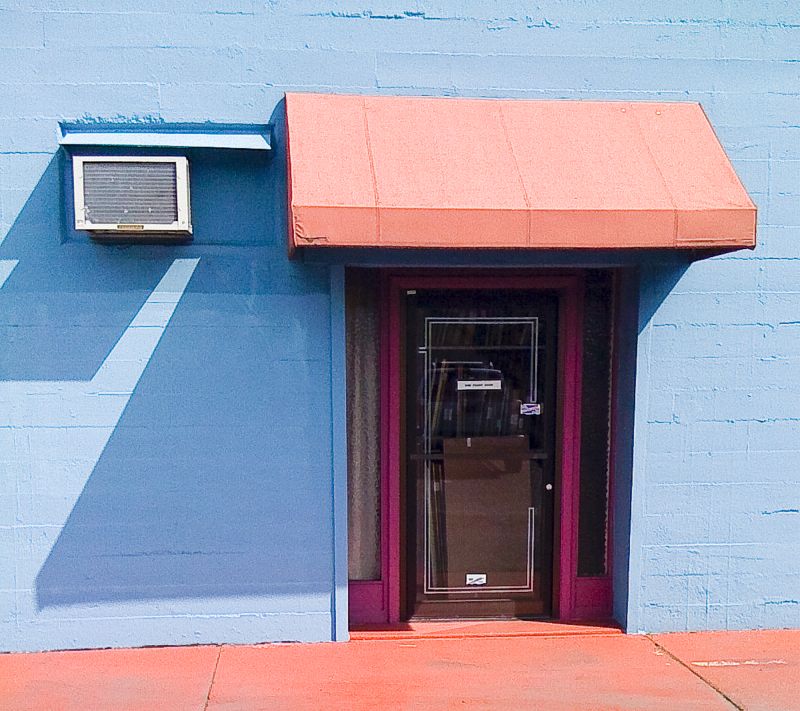
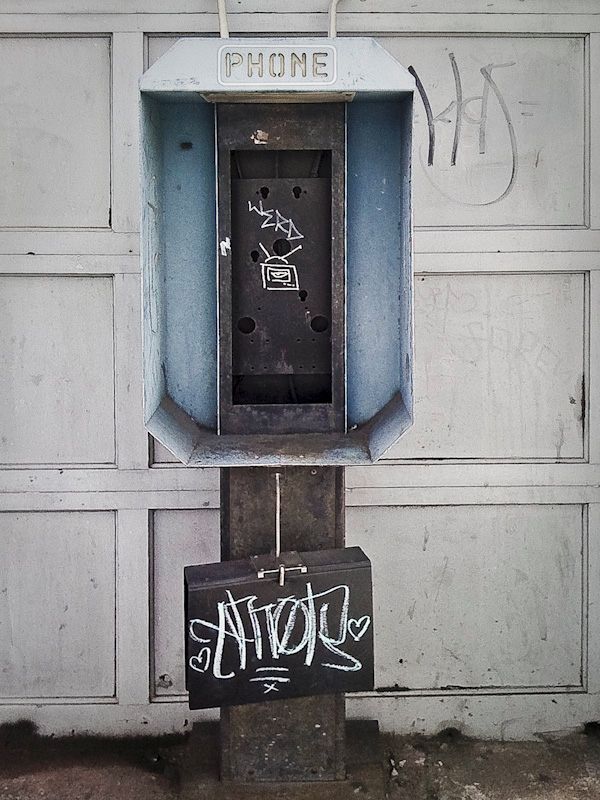
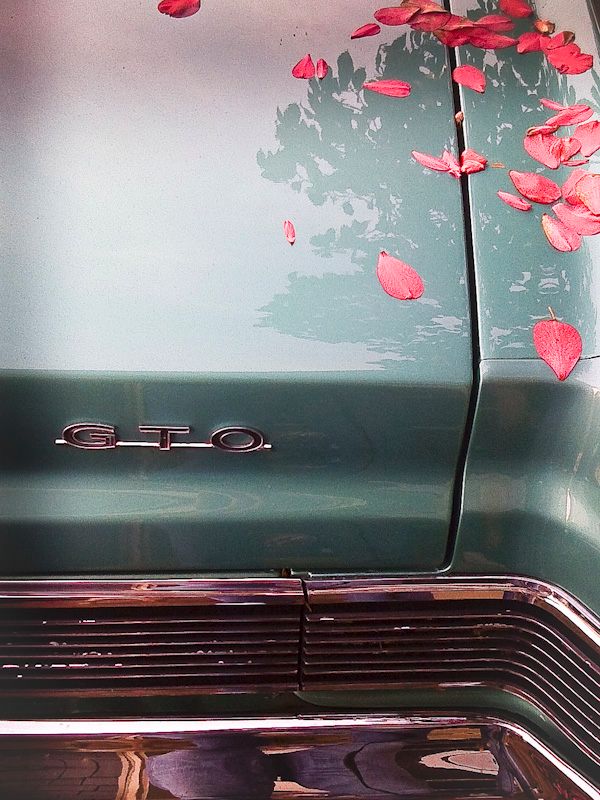
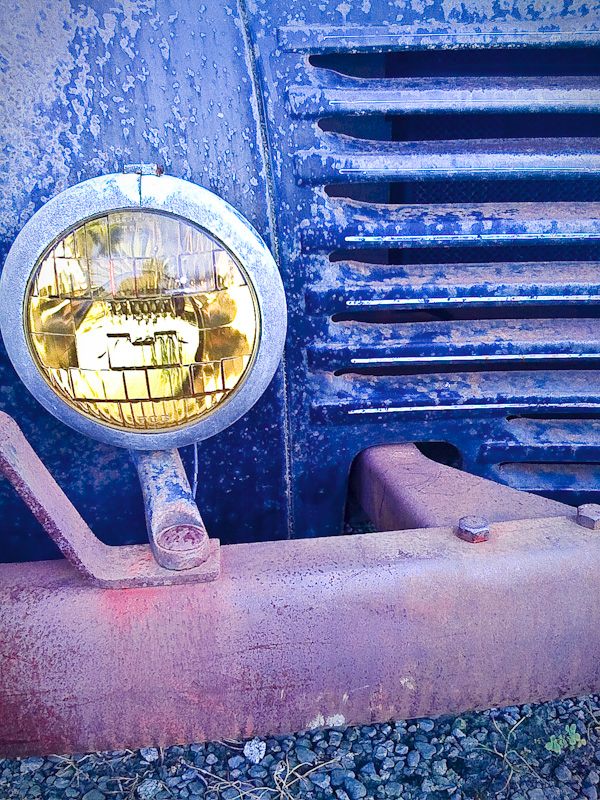
Here are a few of my favorites, reproduced with Ed’s permission – see more by clicking the link above for his web site where you can both view and purchase his work. Ed’s comments, below, are italicized.

* * * * *

Most of my photography is nothing more than a visual representation of the relationship I have with my environment. My photography interacts with the elements of my surroundings in a manner that provides an immediate and palpable sense of place – wherever that place may be. And it’s usually simple, common objects or visual fragments of these elements that hold the strongest allure for me. These fragments are what gets extracted from the whole when we experience our world every day. It’s the stuff that burns into our memories when we think back hoping to remember these places years from now. These fragments of future memories are my subject matter.

I’ll find my subjects in the most common of everyday objects and places – they are mailboxes, doors, benches, signs, paths, structures. These commonly overlooked objects reward me with a defining memory of my experience of the moment, and in return I try to reward them with an uncommon moment in the spotlight of visual recognition.

Since I’ve spent most of my days on the shores of coastal New England, I imagine my style is most heavily defined by this region. But while my subject matter reflects my surroundings, I think my style follows a bit of a more reserved and restrained approach that is commonly associated with New Englanders. If so, guilty as charged.

Since I might be approaching my photography with more restraint, I’m not often interested in capturing objects or landscapes with the same majestic style of those photographers whose images often find their subjects gasping with immediate pleasure, as if watching fireworks explode overhead. Instead, my work is celebrating the quiet beauty of everyday places and objects usually overlooked in favor of a more overtly attractive subject. Further, I typically offer my images with a quiet, sometimes even melancholic presentation. They speak with a much softer voice, and to some the work doesn’t speak at all. But for those who spend time with the photographs, the objects usually keep speaking. Critics of my work have mentioned that it wasn’t until a second or third viewing of an image that they began to understand what was being offered by the photograph. From there, they began to connect with the emotional outpouring offered by the seemingly simple compositions.

These photographs are nothing more than my memories of the world that’s surrounded me. My hope is that by making these photographs, others will appreciate or connect with these memories as well.

* * * * *

Catboat, Screen Door – This photograph was made on Nantucket, and presents a representative fragment of the local personality. The catboat decorated door rail and weathered bronze handle help define the understated, seafaring architecture of this coastal area.

Green Hull and Bilge – The subject of this photograph is one that most would find of little appeal. It’s the water line of a well-worn commercial fishing boat hull, taken as it pumps its bilge into the water of the working harbor of New Bedford, MA. The play of light on these textured hulls presents some uncommonly beautiful abstract compositions, which I’ve assembled into a series called The Shipyard.

Bench – This is a simple bench that sits on the porch of the building of a cranberry grower in Rochester, MA. One shutter peers open in the window, as if someone recently took a peek outside.

Mailbox – This is the mailbox of a neighbor from down the street. The husband has passed away years ago, but his name still tops her mailbox, its bent flag waving to no one. He is gone now. I think this mailbox is telling us all of this itself.

Oil House and Lighthouse – This lighthouse is a local landmark in Mattapoisett, MA. It’s been photographed by thousands over the years. While the Lighthouse enjoys considerable attention, an interesting oil house sits just a few yards away, overlooked by almost everyone who visits the site. Here, I give the oil house the forefront, and relegate the lighthouse to a supporting role.

The Olympus E-PL1 and new lenses

A strange idea.

Let me preface my comments by saying that I have yet to handle the newly announced micro four-thirds Olympus E-PL1. Only journalists who will say nice things about it get advance copies and I am neither journalist nor toady.

The Olympus E-PL1

The camera will likely retail for $500 compared to the $660 asked for the E-P1 and the outrageous $1,100 for the E-P2, even if the latter comes with a clunky clip on EVF. Cost savings are accomplished by dropping the turn wheel and replacing it with slower buttons, more use of plastics and mounting the kit lens in a plastic rather than a metal body. Conferring value added, the E-PL1 has a built in electronic flash, like the E-P2, whereas the E-P1 has none.

So for $160 less than the E-P1 you get more plastic in the body and lens and a flash gun. Not bad. As none of these cameras is intended for use in war zones, I see no problem with the use of plastics and for many the flash is worth having. Stated differently, Olympus has just cannibalized the E-P1 into obsolescence, especially when you realize that the E-PL1 accepts the clip-on EVF denied to E-P1 users. The lack of the thumb wheel for street snappers is no big deal – there’s no time to adjust anything in the urban jungle so it would not be missed by this user. And with any other subject you have all the time on earth to mess with the buttons.

The lens remains interchangeable and there’s still no built-in viewfinder. The clip-on EVF destroys the compactness concept of the design by adding bulk and weight. So, in summary, I see the E-PL1 as a replacement for the E-P1 at lower cost but still a very expensive point-and-shoot restricted by its adherence to an LCD screen for composition, with all the attendant problems those bring. I would guess that E-P1 users are none too happy about Oly’s confused marketing move here.

Olympus 9-18mm wide zoom

At the same time Olympus announced two micro four-thirds lenses of interest. One is a $600 9-18mm wide zoom (18-36mm full frame equivalent) which depends on the camera’s in body image stabilizer, meaning that Panasonic G1/GH1/GF1 users have no IS as those bodies depend on in-lens IS. No big deal with such a short and useful focal length range, and the price is more appealing than the $1,100 asked by Panny for its wider 7-14mm super-wide zoom.

Olympus 14-150

The other newly announced Olympus zoom is the 14-150mm (28-300 FFE). At $525 it offers an appealing value but, once again, comes with a big negative. Without in-lens IS, use at the long end with the Panasonic bodies will require firm support to avoid shake. Olympus body owners benefit from in-body IS but have you ever tried to use an LCD for composition with long lenses, holding the camera two feet from your eyes like a real dork? Another dud, I’m afraid, especially for Panny micro four-thirds aficionados.

From a personal perspective with over 5,000 exposures on my G1, I remain delighted with the crackerjack 14-45mm kit lens (rough zoom ring apart) and find that I pocket the 45-200 IS for those few occasions where I need the reach. And what a reach it is at the long end! All I need to round things out is a pancake 10mm f/2.8 or so for really wide views and I will be a happy man. No sign of such a lens in Panny’s currently announced lens plans. There’s a 14mm f/2.8 coming but the very small kit zoom starts at 14mm and f/3.5 so I simply don’t understand Panny’s thinking here which seems about as clear as Oly’s mistake with the E-P1. The current 20mm Panny adds a fast aperture, true, but it duplicates what I have with the kit zoom and I do not need fast lenses for my kind of work.

Alberto and Henri

Two greats.

The WSJ reports that one of Alberto Giacometti’s great sculptures sold for a record price:

I can never look at this fabulous work without being reminded of the even greater photograph Cartier-Bresson took of Giacometti in Paris in pelting rain, picking up skillfully on the sculptor’s thinness theme.

They simply do not make them like that any more. Let’s hope the sculpture went to a good home.

P.S. You do not have to be poor to have good taste ….

iPad – first reactions

Blah.

I put my predictions on the line yesterday and blew it in two major respects – the price (I reckoned on $1,000) and the lack of Blutetooth (iPad has it).

Having watched today’s presentation and read the tech specs of Apple’s new touch screen tablet computer, here are my first reactions:

    The Good:

  • Great entry price at $499+tax
  • 802.11n high speed wifi
  • I make the full diagonal to be 12.13″ so the 9.7″ claimed for the display area is likely true – that’s a good size
  • IPS screen technology will be great for accurate color photograph display if it can be profiled properly
  • 1.5lb light weight – but no mention of how much the charger weighs – I assume it takes forever to charge through a low current USB cable connection
  • Claimed 10 hour battery life – though I have difficulty believing that
  • Integrated with iTunes store for books, magazines, movies, music
  • If you have an iPhone/Touch you already know how to use it
  • Lots of apps already available though most will have to be rewritten to take advantage of the full definition
  • Bluetooth – let’s hope it works with existing wireless keyboards
  • No need to pay twice for tunes and apps if I read that right – the iPhone version can also be loaded on the iPad at no extra cost
  • Nice looking iBook application
  • iWork and iLife upgraded for touchscreen use
  • Components of iWork may be separately purchased
  • iPhone OS – lean, mean and hopefully fast
  • Claimed ‘instant on’
  • Monthly 3G telco plan available – no long term contract

    The Bad:

  • Glossy screen
  • No iChat camera
  • Poor storage capacity (16gB in base model – that’s only 1,600 RAW files – not much for an extended trip) but maybe the USB port is not crippled and will allow use of external HDDs
  • Uses AT&T not Verizon in the 3G (add $130) versions
  • No indication whether you can upload Lightroom or similar apps and whether the custom CPU can handle it
  • If it doesn’t run Excel and Word say goodbye to any corporate sales. Like it or not, these are the standard
  • No touch screen feedback when keys are activated
  • No indication whether the telco chip will support Verizon technology
  • No SDHC/SDXC card slot – bad oversight – more things to forget for your next trip
  • 4:3 screen not 16:9 – who makes movies on 4:3 any more?

    The Ugly:

  • Dumb as a brick name – “Honey, where’s the iPod?” said with an American accent reminds me of this
  • Ugly broad black bezel
  • Lower margin in an attempt to grab netbook market share – bad for the stock?
  • Probably fragile – a big expanse of bendable glass and lots of fingerprints to contend with on that glossy screen, not to mention your own reflection when in use
  • No support for Adobe Flash – whether you like it or not, that’s the default application for much video on the web

I would like to have seen more emphasis in today’s weak, self congratulatory presentation on other uses, like universal remote functionality, ability to host a business projection, photography, etc.

However, at that price, if the virtual keyboard works reasonably well and if the dockable external keyboard is well priced, this will be a significant challenger to low margin netbooks made by the competition unless the system is so locked that you cannot use applications of choice. Who in their right mind, for example, prefers iWork Numbers to Microsoft Excel for serious number crunching or Pages to Word for heavy duty word processing? My sense is that the old “never buy v1.0 of anything” rule applies strongly here and that my $400 netbook with its 500gB HDD, 802.11n and an SDHC reader, not to mention a real keyboard, just got a new lease on life. Even if it weighs one pound more – worth it for the matte screen alone.

Disclosure: No AAPL positions.