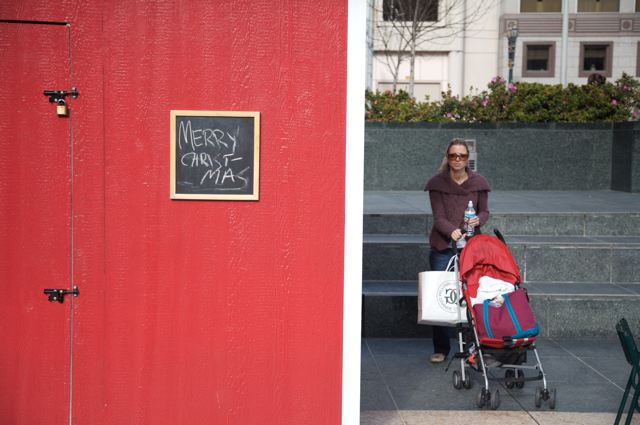
Union Square, San Francisco, Christmas Eve, 2006

The best and worst of a (mostly) great year
Never mind the fact that the free world is threatened by despots vying for nuclear weapons, what does that exemplar of American trash writing, Time magazine, give the Man of the Year award to? Why, to ‘You’. The related garbage prose goes on to laud people who make videos of their pet iguanas and post them on file sharing sites on the internet. So when that suitcase bomb destroys fifty blocks of a major American city, we can be secure in the knowledge that our videos of domestic pets are safely backed up in a remote location. Circulation beats integrity yet again at Time Warner. Well, at least they had the good taste to put a Mac on the cover.
Anyway, as this is the season of holiday cheer, lets get the Worst of the Year over and done with right away. You know – the ethically challenged who sadly pervade our society. The Love America or Leave it candidates.
So don’t expect this journal entry to award any prizes to journalists or photojournalists. Indeed, this year has been marked by the lack of integrity in photojournalism, as I have written about 1 – here, 2 – here, 3 – here and 4 – here.
Further, there’s no obvious candidate for best photographer of the year as I increasingly come to the conclusion that there are no more Great Photographers.
However, the Book reviews section of this journal has looked at many books profiling Great Photographers over the past year and my award goes to Dan Normark for his splendid and heartfelt Chavez Ravine, 1949. No mention of Great Photographers can exclude Elliott Erwitt and maybe the finest book yet on Henri Cartier-Bresson is the outstanding The Man, The Image and The World. Expensive? Yes. Essential? Absolutely. If nothing else, it shows clearly that Cartier-Bresson’s best work was also his earliest, for the most part. Erwitt, by contrast, remains as fresh today as he was fifty years ago.
On the gear front, in the context of technology as the great enabler, there has been a lot of good news. For this photographer who, for the most part, dislikes grain, likes big prints and hates darkroom work, the highest quality image has become par for the course thanks to the wonderful Canon EOS 5D. Still overpriced, owing to a lack of competition, and yes, the LCD screen is next to useless, yet the large, grain free image sensor in this camera has obsoleted the very best film had to offer in 35mm and medium format, with a considerable saving in bulk and clutter owing to broad focal length lenses like the 24-105mm zoom.
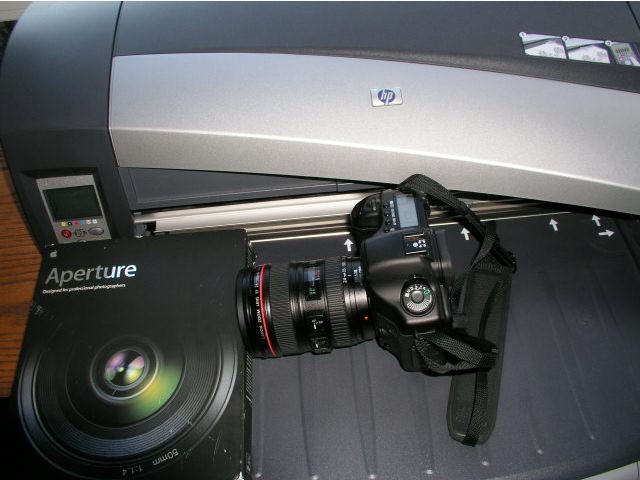
The back end, meaning processing and printing, has been equally well served with two newcomers on the scene, Apple’s Aperture, which finally banished Photoshop to the cupboard under the stairs where it belongs, and the dead reliable and economical Hewlett Packard DesignJet 90 large format dye printer with stable inks and great print quality.
Next year I hope there’s a small, fast digital camera with a wide angle, non-zoom lens and a proper optical finder to give the street snapper the instrument he really needs. Meanwhile, the capable Panasonic LX-1, suitably adapted with an accessory viewfinder, gets the Runner-Up prize.
Meanwhile, thank you Canon, Apple and Hewlett Packard.
RIPs? Well, just two. Film, in general, and Kodak, in particular. Seldom has technological change so overwhelmed a medium or a company so quickly. There’s no saving either.
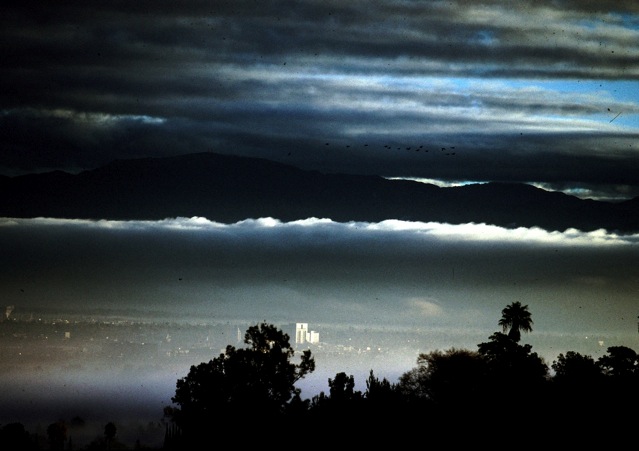
They get the best landscapes
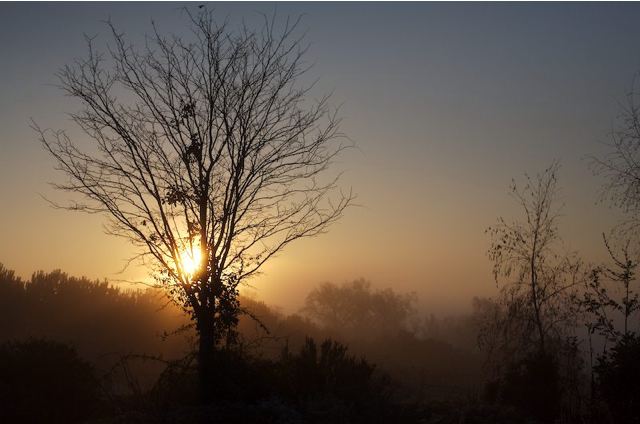
It pays to get up early!
f/1.4 is fast!
I have never owned a lens faster than f/2.
That said, the f/2s I have owned have invariably said ‘Leica Summicron’ on them, whether 35mm, 50mm or 90mm. Which is sort of like saying that all your sports cars have been Porsches, meaning the best of breed. At 90mm, that was an apochromatic, aspherical element lens and suffice it to say that the aperture ring on this lens only did two things – it changed the amount of light striking the film and it changed the depth of field. Definition at any aperture was the same, which is to say superb.
So I got to thinking what something faster might be like. Now f/1 is available from Leica only, and that means a second mortgage, so forget it. The f/1.2 lenses out there from Japanese makers have generally poor reputations, being more exercises in marketing, or keeping up with the Joneses if you prefer, so they are of no interest to me. But guess what? Canon just happens to make an f/1.4 for very little money and it’s auto-everything and a nice match for the 5D body. Plus, having grown up with film Leicas, I simply like the 50mm focal length.
So a couple of clicks on the B&H web site and the 50mm Canon f/1.4 was on my doorstep.
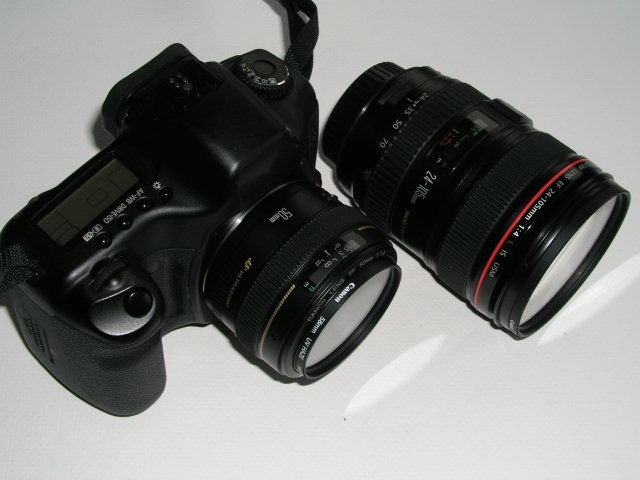
The lens is well made, if not as solid as the ‘L’, meaning the extending focusing mount has a bit of play at the closest focus distance. Auto focus is every bit as fast as the ‘L’ and, strangely, the viewfinder image does not appear much brighter than with the f/4 L – certainly not three stops (8x) brighter. Naturally, as a fixed focus 50mm, it is much smaller and lighter than the L and the absence of Image Stabilization further reduces bulk and weight. The feel, with the lens on the 5D body, is just right – a smaller lens would not feel as good in the hand. The focus ring, if you elect auto-focus override, is a bit blah – it’s geared down approximately 2:1, making for slow manual focusing.
Surfing the web, comments about this lens vary from ecstatic to disappointed, the latter writers damning the optic for soft images at full aperture. How much of this is poor Canon quality control (how much can you expect for $300, after all?) and how much is poor technique I have no idea, but my first ever f/1.4 snap suggests this is a special piece of glass.
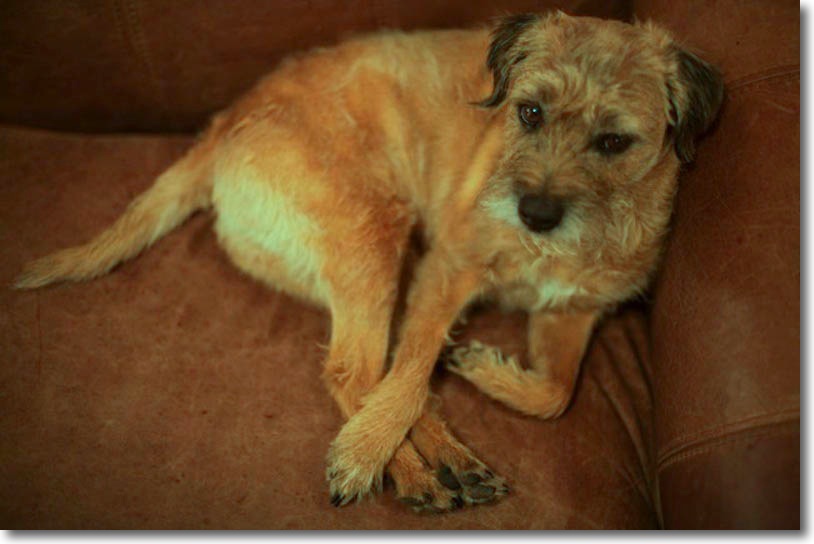
At any rational enlargement ratio, the above snap shows critical sharpness on the right front nails and the eye, which is how I wanted it. The nose, the crowning glory of the Border Terrier, is clearly unsharp, being a few inches closer to the lens.
I took three precautions to avoid definition robbing issues. First, I used a reasonably fast shutter speed of 1/60th second. Second, in the very low lighting in which this was taken, I cranked up the ISO on the 5D to 800, knowing that grain would simply not be an issue with the 5D’s sensor. The aperture was, of course, f/1.4. Finally, and I suspect most importantly, I used Canon’s spot focusing center rectangle to place focus where I wanted it, using a partially depressed shutter buttton to lock in the selected focus point. I wonder whether many users are using the default multi-point focusing feature of Canon’s DSLRs and ending up with the wrong focus point being selected? How on earth can the camera know what you want to focus on using this technology? Optimal auto-focusing depends on a focus point with contrast and detail, as those variables drive auto-focus accuracy. Point your auto-focus camera at a white wall and just watch the mechanism hopelessly try to establish optimal focus. Selecting the nails on Bert’s right front paw satisfied the dictates for accurate focus.
So this inexpensive optic seems like a nice addition to the 5D and some more extended work will disclose whether my first positive experience is borne out over the longer term. If not, I’ll just sell the lens for eighty cents on the dollar and put the loss down as the small cost of a worthwhile experiment.
Some of the best pictures are one hundred yards from your doorstep. Or less..
Given how much time we spend in our homes, it’s surprising that many photographers feel they have to journey to remote, exotic locations in search of picture opportunities. They arrive tired, are in a strange location which they have no time to ‘learn’, and leave frustrated. You must make the return flight and have to make do with whatever weather is around at the time.
By contrast, the circle centered on your home, with a 100 yard radius, provides some of the best photographic opportunities. You know the area, are rested and have no deadlines. There is no return flight. And you can wait for the weather to come to you.
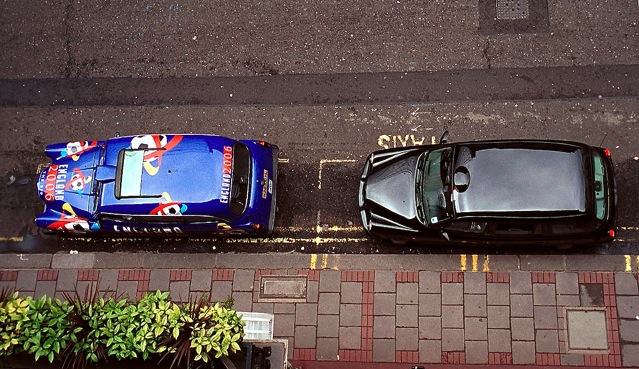
Here are a couple more snaps, taken over the years, all within 100 yards or less of where my bed was the previous night. Today’s entry concludes this five part series.
For more on this theme, please click here.