What’s not to like about the evening sun?

The hat
Compare with the previous snap. Here, color does the trick.

What’s not to like about the evening sun?
Compare with the previous snap. Here, color does the trick.
Shutter lag need not apply.
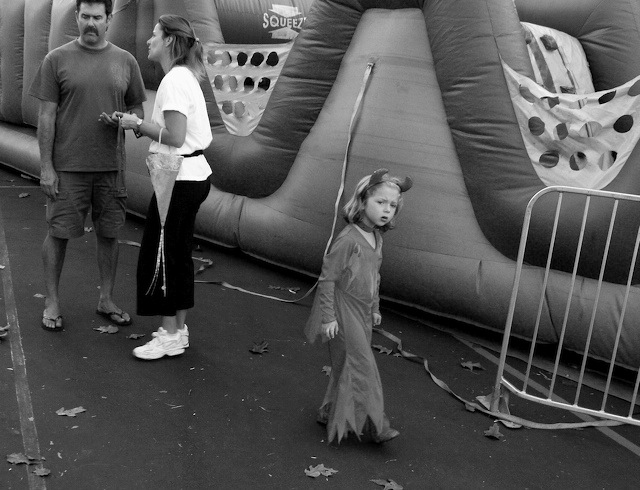
The fast shutter response of the Panasonic Lumix LX-1 makes this sort of thing easy. Black and white keeps the clutter down.
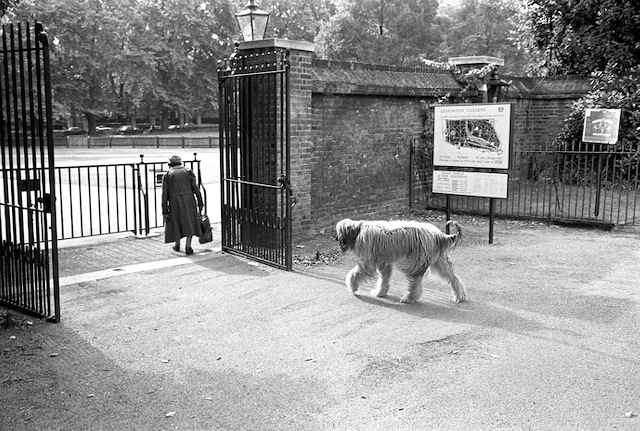
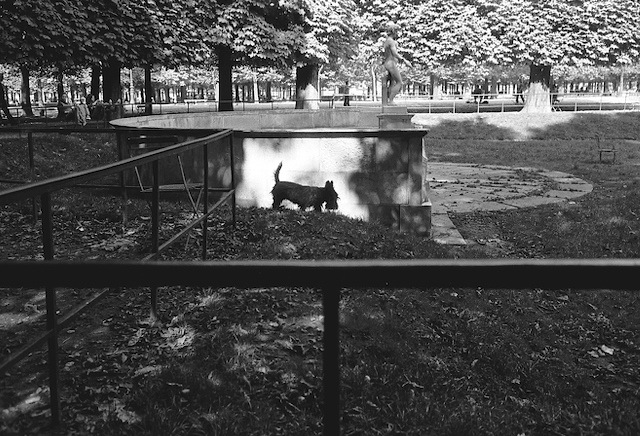
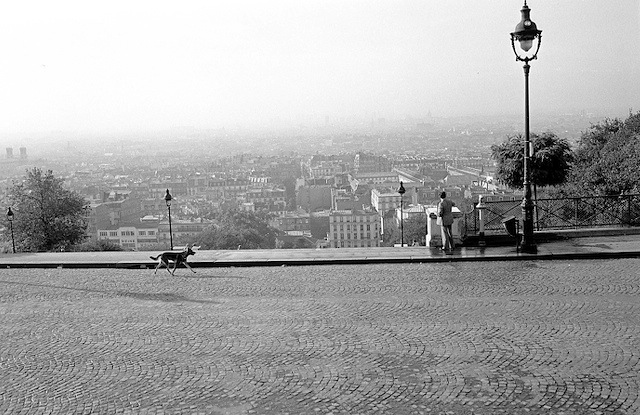
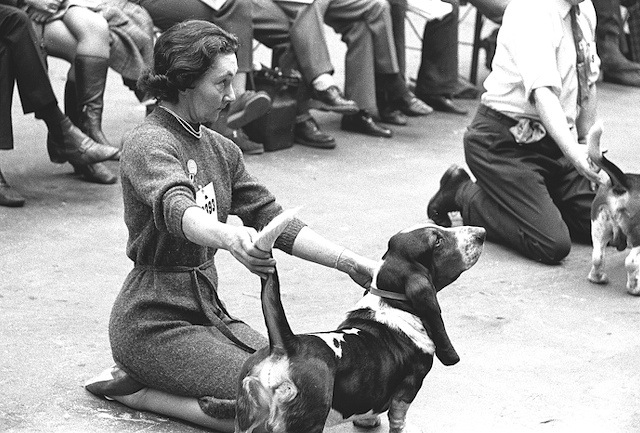
If you dislike dogs, don’t bother viewing this.
If your parents were wise enough to expose you to the four legged set – no, not cats or horses – when you were a child, chances are you turned out pretty well. After all, anyone who can conduct a conversation with a dog knows that this is a pursuit of an intellectual kind on a level sadly lost to those lonely souls who have never enjoyed canine company.
I do not have the keyword ‘dogs’ in my Aperture library. It simply never occurred to me to do that. But leafing through my early monochrome snaps the other day, I was struck by the sheer number of pictures where a pup featured heavily in the subject matter.
Some maintain that people ‘own’ dogs simply because of the guaranteed love the animals unselfishly offer. Well, that may be true for Labradors and Golden Retrievers, hardly the intellectual end of the genus dog, but for me I like a little more challenge and discourse in my canine relationships, meaning it starts and stops with terriers. These chaps can give you a fair run for the money when it comes to politics, economics or even affairs of the heart, and who ever encountered a terrier interested in political office? No, terriers are too smart and honest for that.
So here, without more ado, are some old doggy snaps from the archive which just happen to feature special canines. And, in my book, all dogs are special. Why, there’s even a terrier or two to be found here.
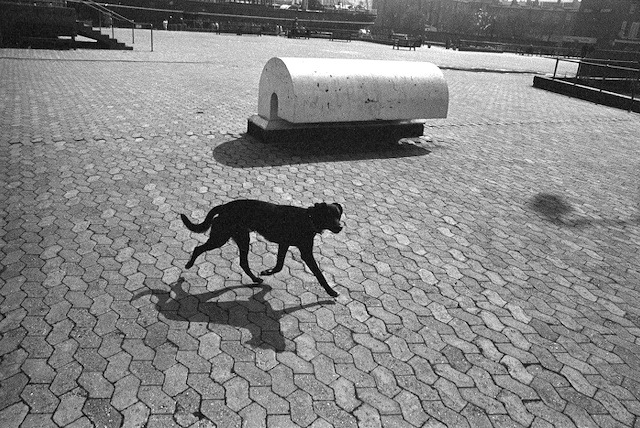
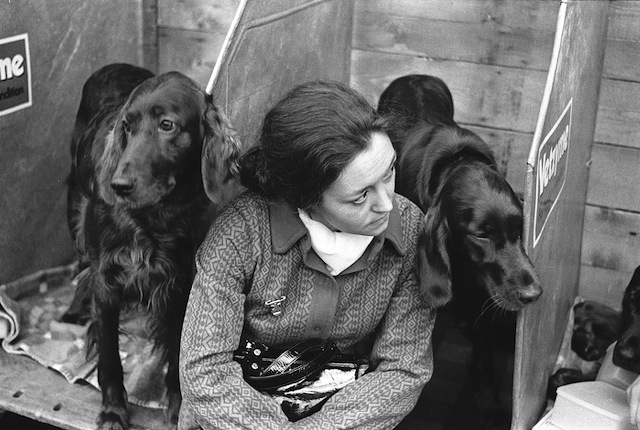
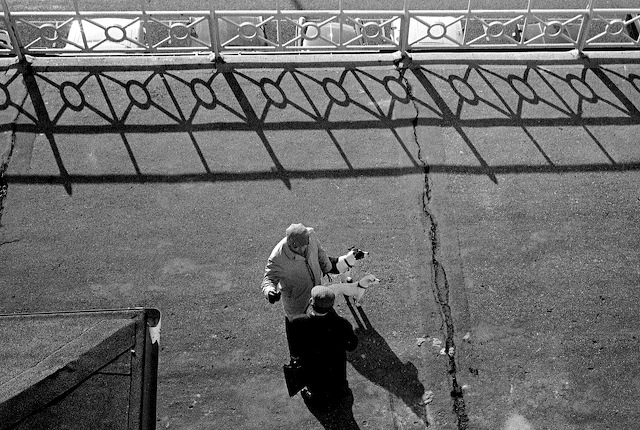
16:9 is really tall!
As I mentioned earlier, I’m getting more serious about using the full frame in widescreen format. That is what the Panasonic Lumix LX-1 delivers and it’s really a pretty exciting experience to see images this wide …. or tall.
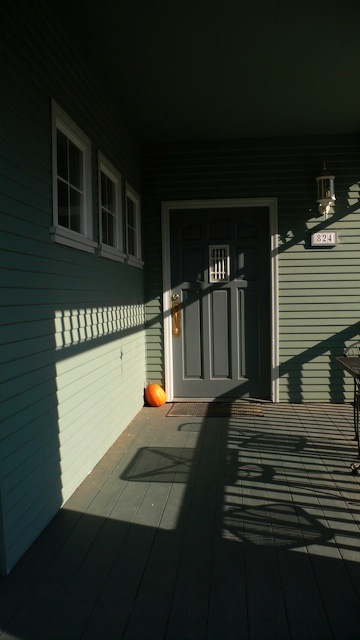
Here’s my 2006 Halloween picture – no drama. Just one lonely, uncarved pumpkin lolling around in the lovely afternoon light, minding its own business. A Hopper pumpkin, if you like.
By contrast, this sad scene of an abandoned toy in an alleyway, snapped seconds later, is in monochrome, to heighten the feeling of that moment:
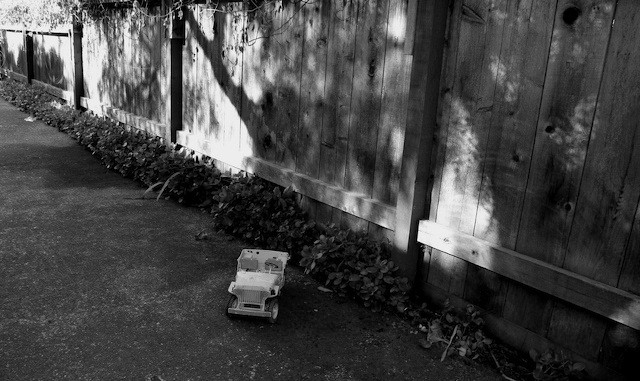
Snapped while strolling with Bert the Border Terrier, which confirms that the only good camera is the one you have with you. Or, in the case of the LX-1, the one you have just whipped out of your pocket.
Who needs it?
I was making an 18†x 24†print the other morning for a friend and noted, with mild annoyance, the presence of grain, however fine, in the blue sky. The original was a 2 1/4†square medium format Kodak Portra VC160 negative, taken on a Mamiya 6, aand scanned in a Nikon Coolscan 8000 scanner. All sold earlier this year, by the way, with the advent of the Canon 5D.
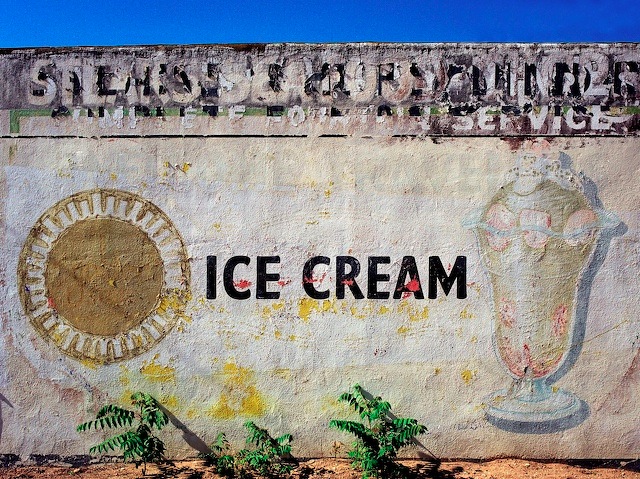
My reaction gave me pause for thought. First, no rational person could complain, as the grain was extremely fine. Second, at any normal viewing distance, no grain was visible. I confess to having had my nose in the print when I noticed the grain, as it was coming out of the HP DJ90 printer. Just like the old darkroom days, it’s still exciting to see the end product of all that work!
So what is the significance of grain to the art print today?
As an art concept, I think that Tony Armstrong-Jones, Lord Snowdon as he would later become, popularized the idea of intended grain with his monochrome series of inmates of mental homes in England. I don’t have it lying around at home, but the work was very moving, rendered more powerful by that Tri-X grain. It was a great idea that worked to complement the pictures and, inevitably, became a cliché though overuse.
While the great early Leica photographers – Cartier-Bresson, Kertesz, Brassai – all struggled with grain owing to the poor emulsions available at the time, for the most part you see their work reproduced in books. Rarely are the reproductions larger than 8†x 10†and what little grain is visible at that modest enlargement ratio is further masked by the printing process. So we don’t think of them as ‘grainy’ photographers. Grain, stated differently, is not relevant to the aesthetic appeal of their work.
Absent the excesses of a David Bailey and a Sarah Moon (who did it in color), fashion photographers avoided grain like the plague. After all, they did actually have to show the fashions, and the finer details of lace don’t exactly benefit from coarse clumps of grain.
Today, grain is mainly used by the cadre I think of as “photographers’ photographersâ€. That’s anything but a compliment. What I mean is those photographers who use grain and, yes, black and white, to make ‘art’ prints whose content is solely appreciated by other …. photographers! In much the same way that those late nineteenth century French academic painters strutted their stuff with some of the most insanely boring pictures ever committed to canvas – folks like Bouguereau, some of whose excrescences, incidentally, may be found on the walls of Hearst Castle here in central California.
Show the loving mother a grainy picture of her baby and she will immediately dismiss it as an example of poor technique. Show a grainy landscape to anyone but a photographer and the reaction is similar. And warranted.
So, gazing at that grainy sky in the print I had just made, I consoled myself that today, with the best digital gear, grain is already a thing of the past and that, for the point-and-shoot class of equipment, it will likewise disappear very soon as sensors are perfected.
And I, for one, will be more than grateful.