Category Archives: Motorcycles

About BMW Airhead motorcycles.

The GOAZ vintage bike show

A day in the sun.

Motorcycles used to be single brand things in the store. In the UK of my youth any self respecting high street would have several such stores from Triumph (died in 1983), BSA (1972), Matchless (1966) and Royal Enfield (1971) for the lowest demographic, through to the Velocette (1971), AJS (1969) and Norton (1975) stores for the higher tuned machines with racing aspirations, then onto the high end which meant Vincent (1955) and BMW (which continues merrily to this day).

With one exception, all the great British marques failed owing to crappy engineering, with little reinvestment in modern production machinery and newer designs, the same curse which destroyed most of British industry while louche aspirants to power like Margaret Thatcher saw to it that Britain became a financialized nation centered in London, making precisely nothing, while shuffling paper denominating debt and real estate.

The one exception was Vincent which went under because of that generic British curse, lousy management. But without doubt, above all these self-inflicted wounds, the one machine which destroyed British motorcycle manufacture was the Honda CB750 of 1969, an across the frame, air cooled four which did all the things British machines did not. It started first thing, sported a powerful engine, had an electric starter, was reliable as a hammer and never leaked oil. Honda got there after making smaller predecessors like their fine 125, 175, 250 and 400 multis, all leading up to the killer 750.

So now the high street line up – this is the early 1970s – found one brand stores from Honda, Yamaha, Kawasaki and Suzuki, the ‘Big Four’, all making superb, powerful, beautifully executed multis. And, of course, BMW, with its staid but reliable and oh-so-well-made twins.

Then the accountants started to take over and today the single brand store no longer exists, unless you consider Harley-Davidson and the ever failing Indian. We can disregard those as they are restricted to PTSD sufferers who were once pawns of the Pentagon, fighting yet another losing war while having their guts vaporized along with their grey cells, such as they were.

They buy motorcycles not to ride but to commiserate.

For the other big name manufacturers, the chances that you will find many brands under one roof are high. One such (very large) roof is GOAZ Motorcycles near my home in Scottsdale, Arizona where on one lot you will find Triumph (resurrected and alive), BMW, Aprilia, KTM, Ducati, Vespa/Piaggio, the Big Four and Ducati. And let’s not forget the Ural, a Russian piece of garbage with a sidecar sold only to the criminally insane.

Every fall, in the first week of autumn (the start of our riding season, as you can no longer fry an egg unaided on the sidewalk), GOAZ holds a vintage motorcycle show where exhibitors (like me) are required to pay a $15 entry fee to show their old machines. Strange economics. Shouldn’t the gawking visitors be paying? It’s a fun show not least because Harleys and their owners are not welcome (there’s the world’s largest HD dealership next door for these knuckle draggers, complete with tattoo parlor and wedding chapel. The dealership actually makes more money from clothing sales than from bikes but the profit leader is the service section because, you know, Harleys make pre-war British bikes look like exemplars of reliability. No, I am not making any of this up.)

The 2018 fall show was held today and my much ridden 1975 BMW R90/6 was again on display, accompanied by lovely old Ducatis, Benellis, Moto Guzzis, British bikes aplenty, lots of vintage Japanese iron, Vespa and Lambretta scooters and on and on.
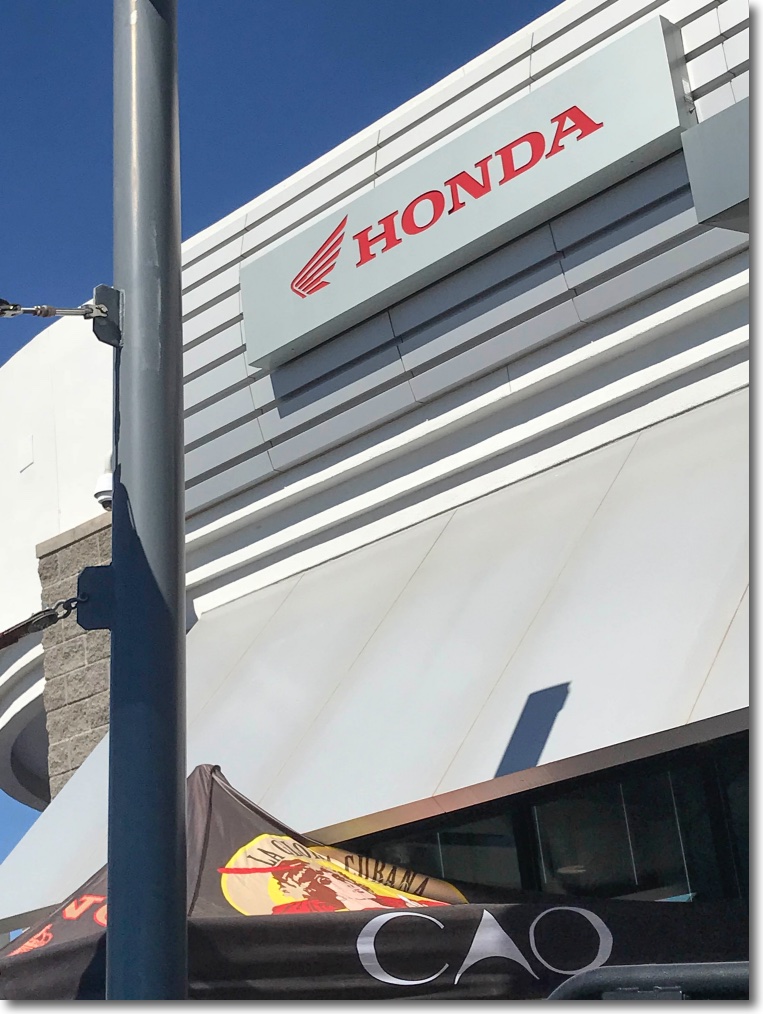


Just one of the many marques sold at the gigantic store.
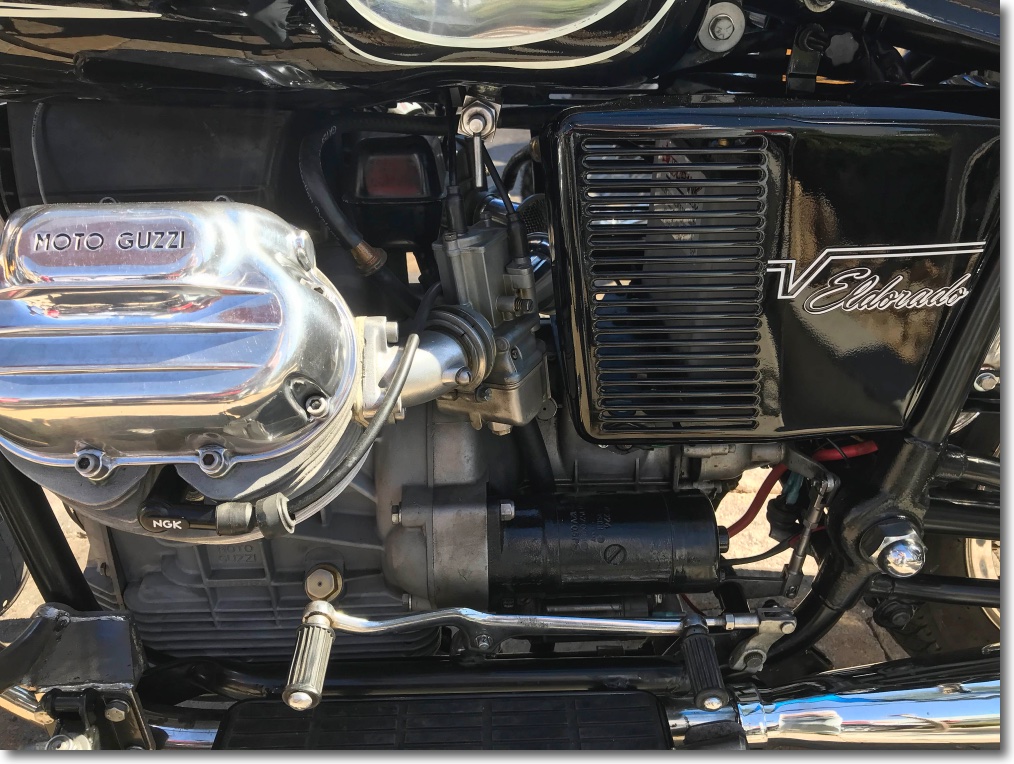

Detail of the fine 90 degree transverse V twin in a Moto Guzzi. Non-period NGK spark plug cap really must go.
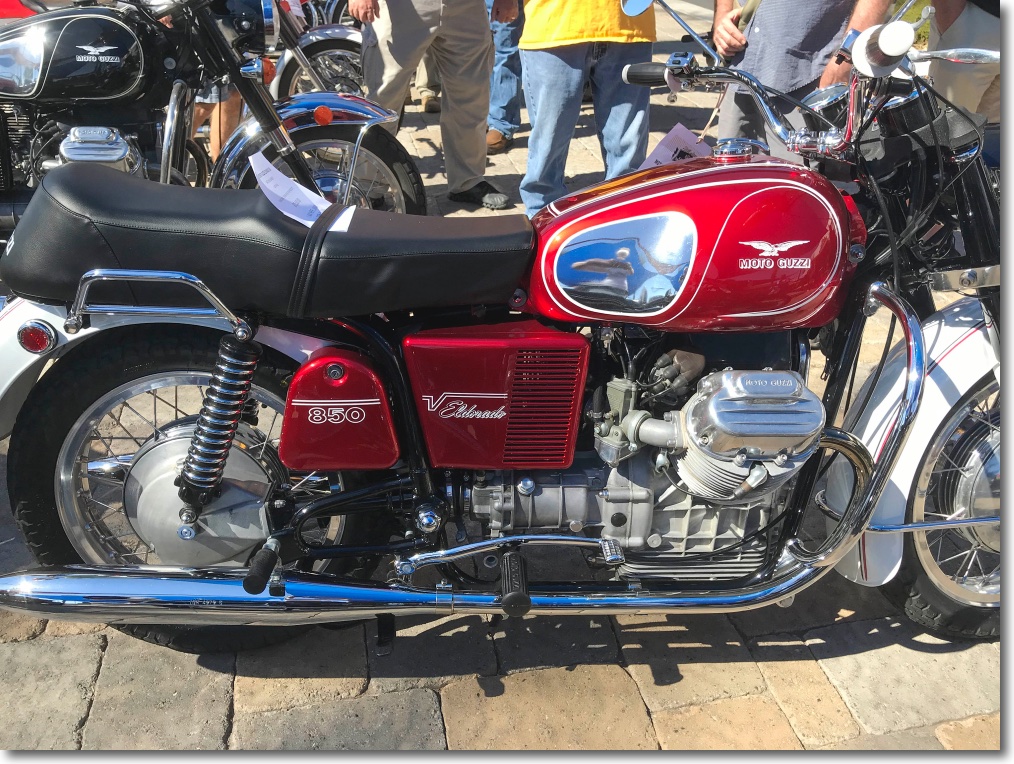

The ‘Goose’ in all its splendor. Beru spark plug cap is the right one. The asking price of $15,000 was 100% too much.
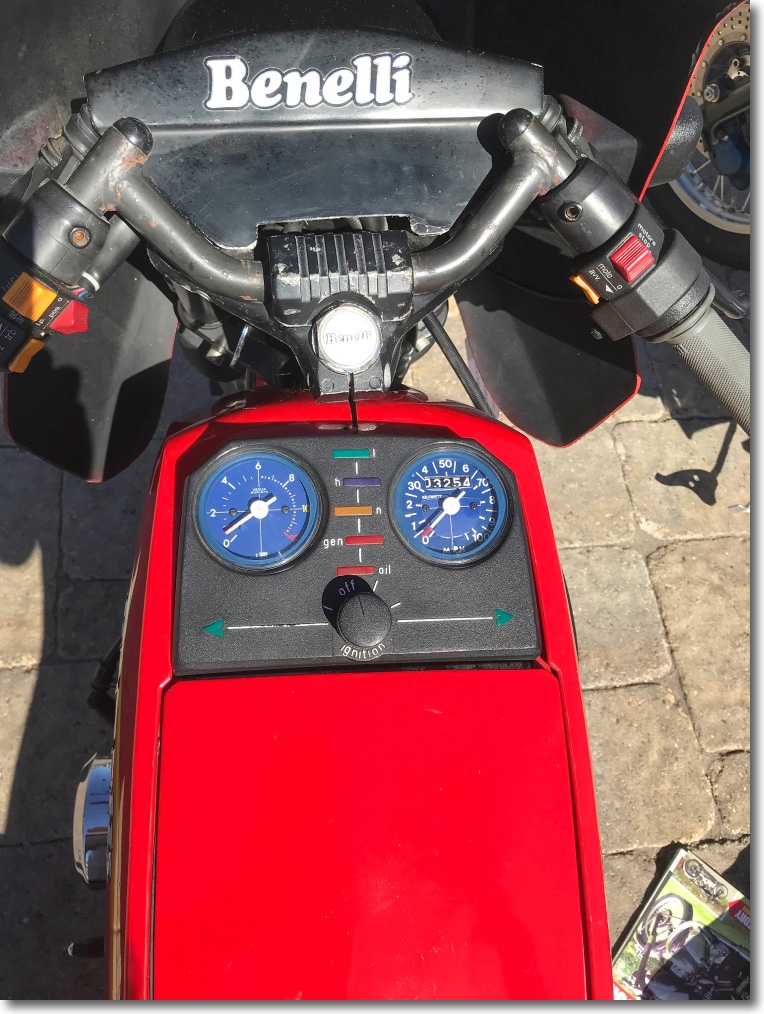

Architectural design touches on a Benelli 250 four, a two stroke screamer that could top 90mph in 1975.
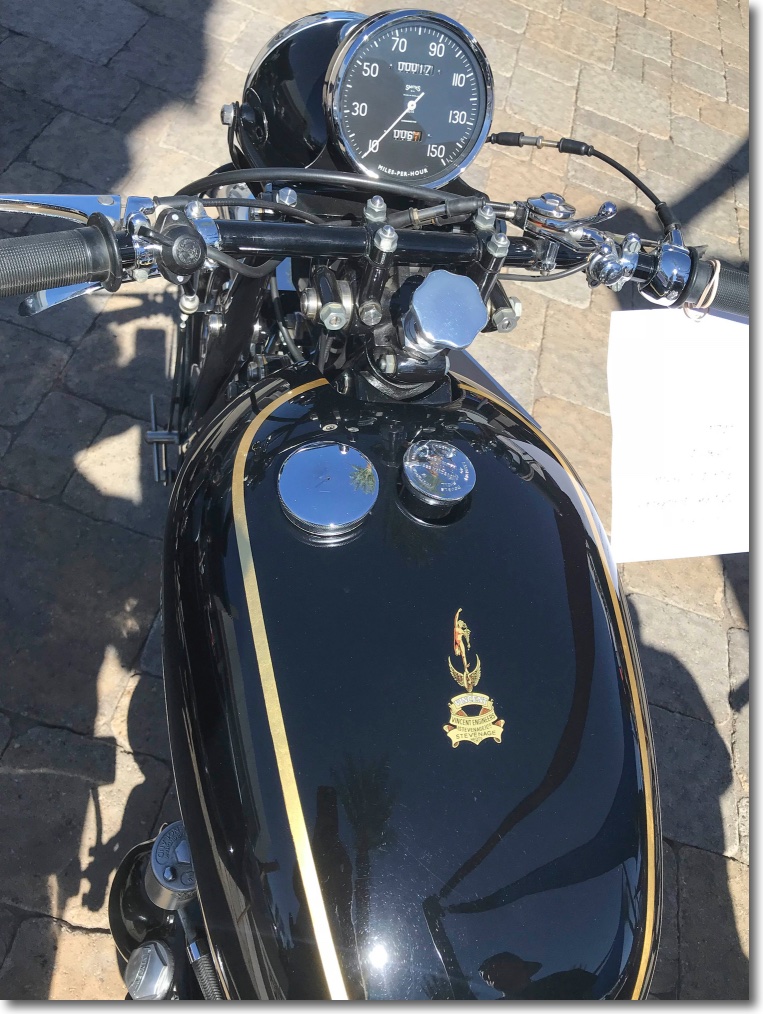

British and Best. The 1954 Vincent Black Shadow. The speedometer is not just for show.
The bike, however, is for show only, as the low post-restoration mileage and accompanying trailer testify. Ugh!
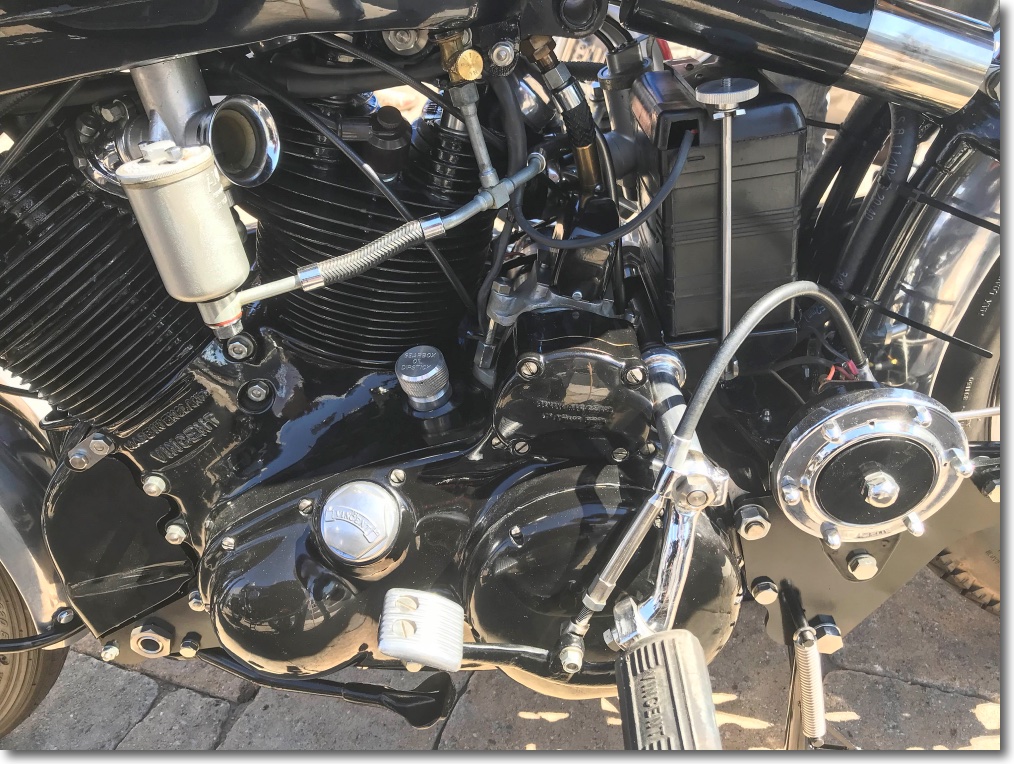

Detail of the 1000cc V-twin in the Vincent. Known as the ‘plumber’s nightmare’ for good reason.
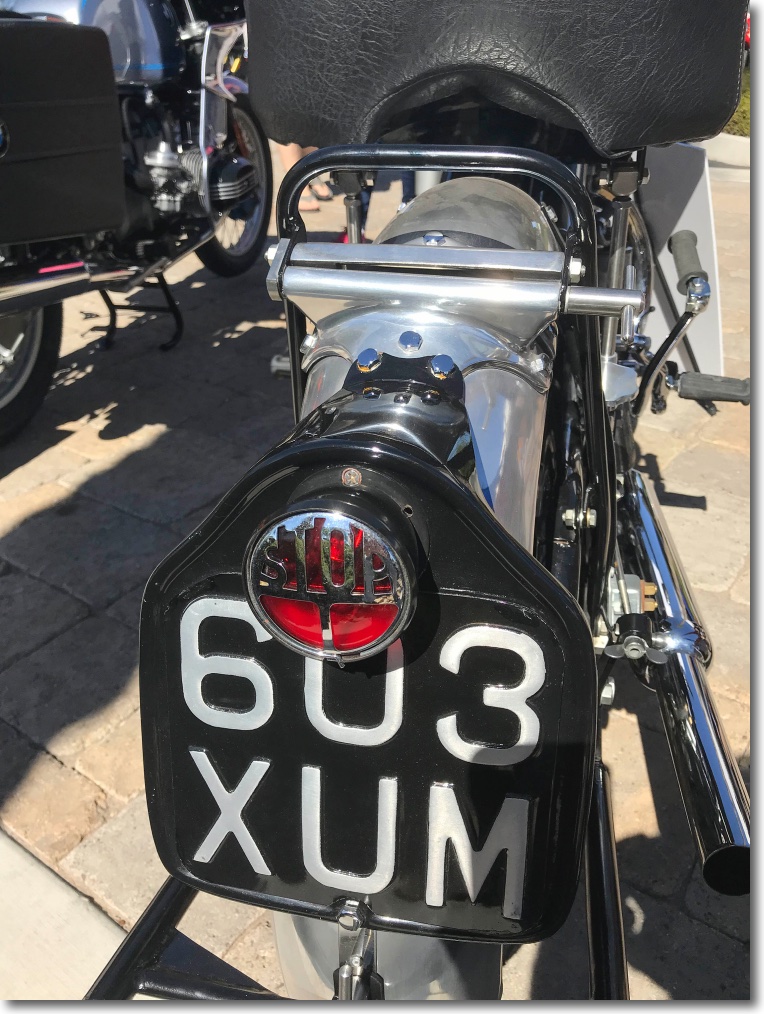

Wishful thinking, for the Vincent’s brakes were reluctant to do anything of the sort.
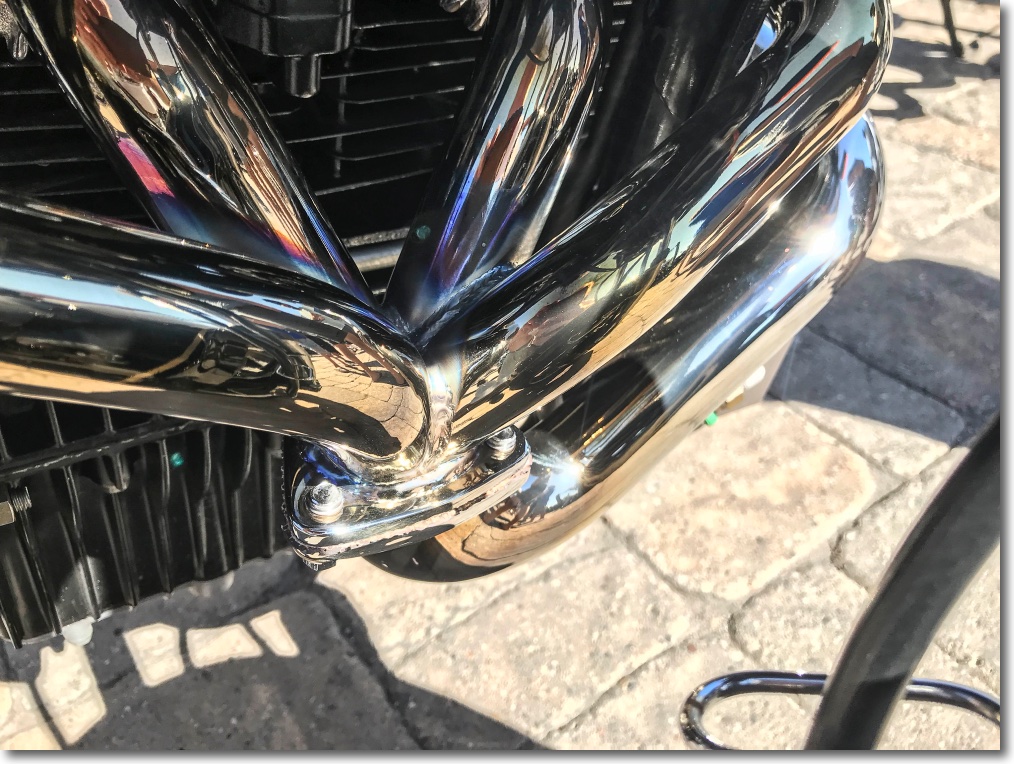

A tribute to the welder’s art. Exhaust junction on a Kawasaki Turbo.
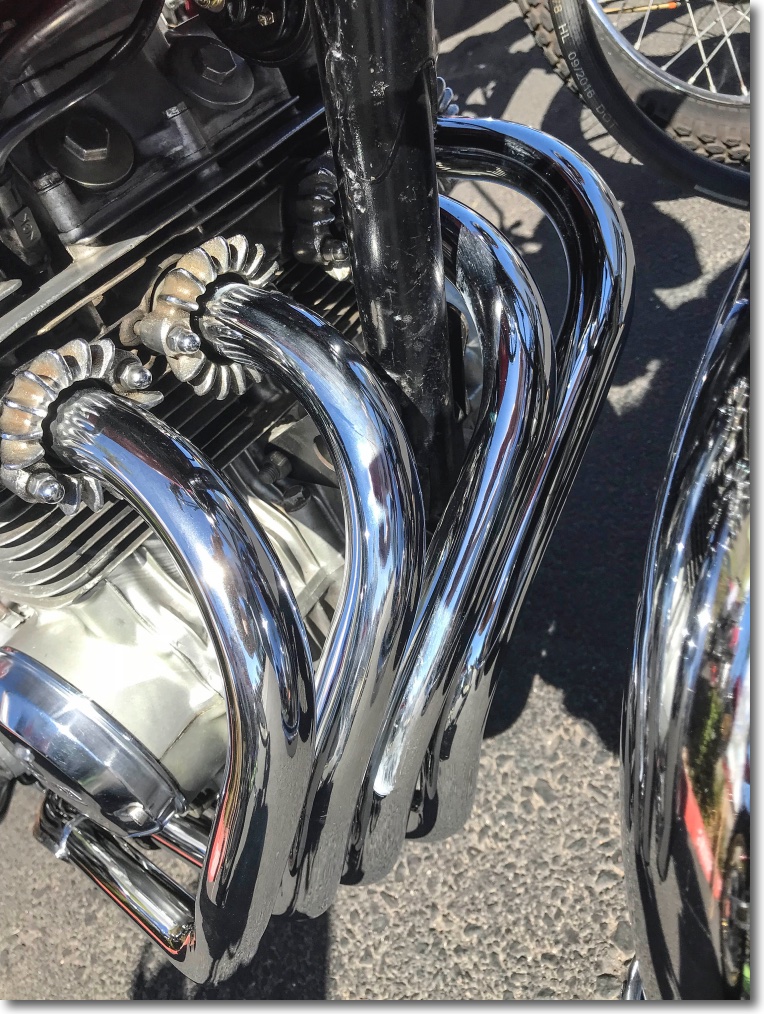

Exquisite exhaust routing on the bejeweled 1975 Honda CB400 four, one of the machines which buried the British motorcycle industry.
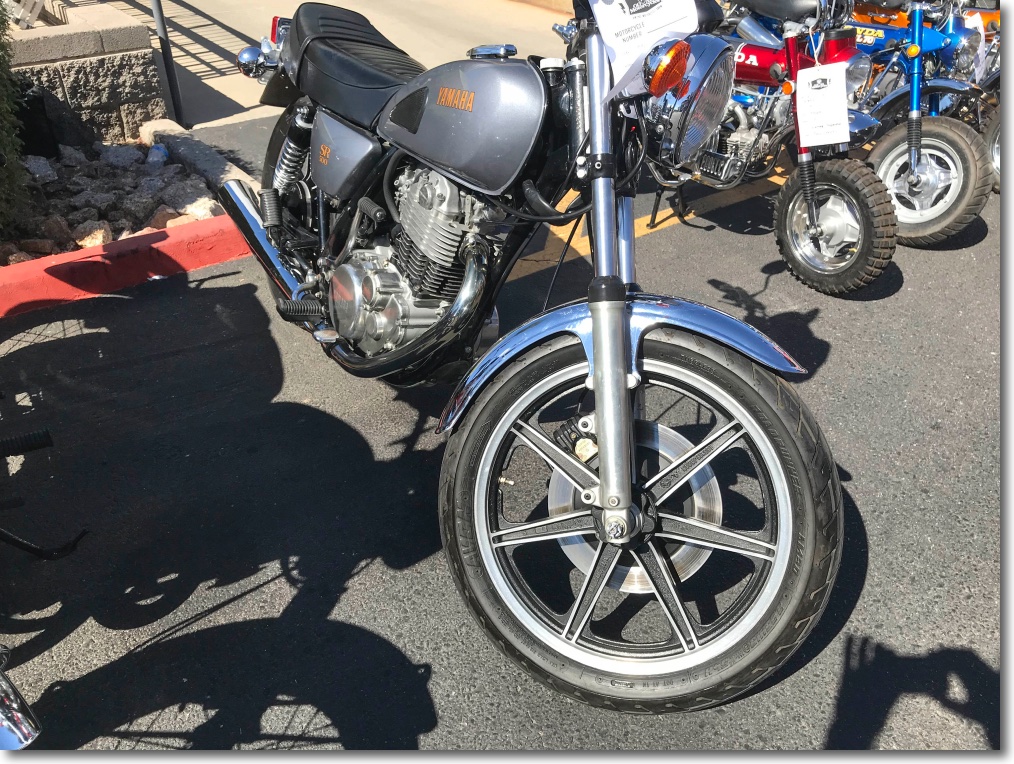

The huge single piston 500cc Yamaha ‘thumper’ of 1978. A counter-balancer ensures
your fillings do not fall out while a compression release makes the kick-starter usable.
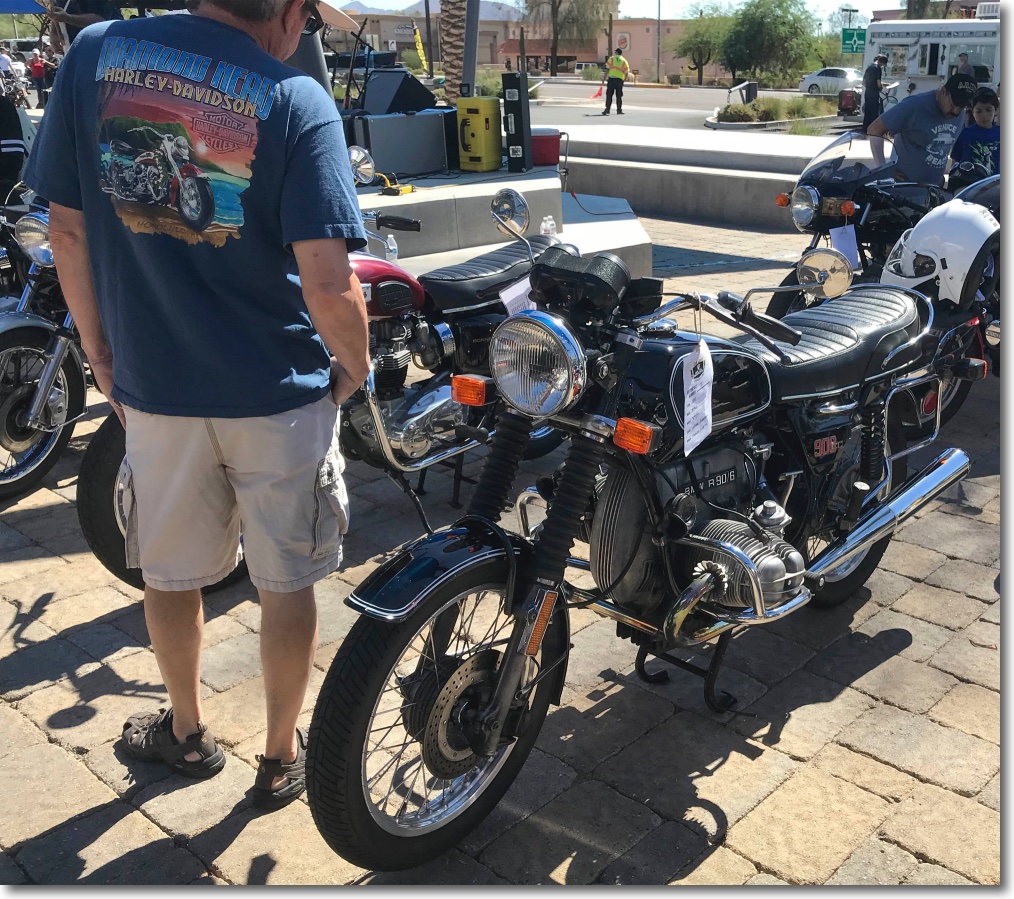

My daily rider, a 1975 BMW R90/6 with 63,000 miles and 29 years of ownership on the clock.
Still bright chrome explains why these cost so much back in the day.
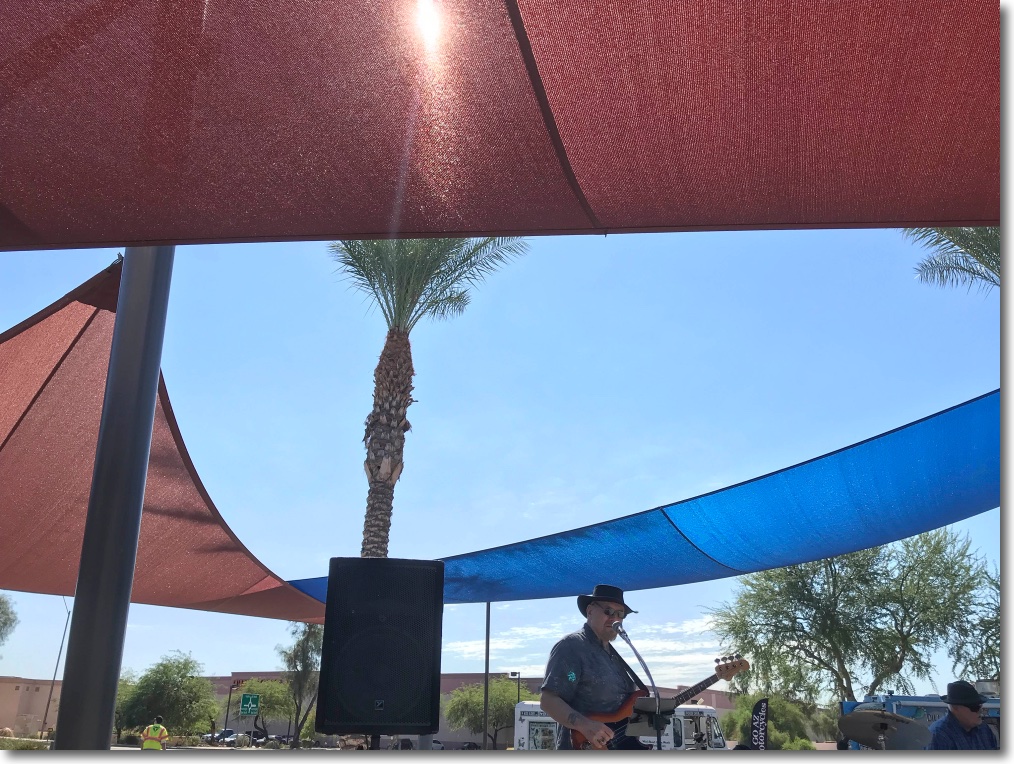

Entertainemnt. Purportedly.


All snaps on the iPhone7 in HDR mode.
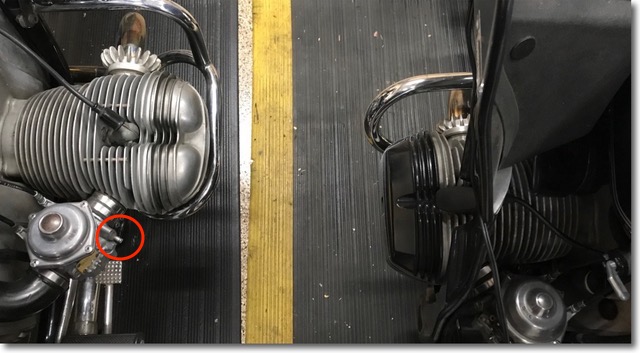
The air cooled twin

BMW, of course.

BMW has been making motorcycles with air cooled twin motors since 1921. While the line was discontinued in 1995 in search of more power for children who think that 100hp is called for in a single track vehicle, the design layout continues in air and oil cooled twins to this day from the BMW factory. Sure the charm and light weight have been lost but the design is as right today as it was almost a century ago.

The 900cc motor at left is in a 1975 R90/6 which is now in my 29th year of ownership. The fully faired touring rig on the right is a tad larger at 1,000cc. Both develop around 60hp, perfectly adequate for touring at 70mph all day long. The beauty of these air cooled twins is that the cylinders are way out there in the air stream, so no oil or water cooling is called for. While the later machine sports a small oil cooler it’s quite unnecessary in practice. A related benefit is that the design means that the center of gravity is very low indeed, making maneuvering at low speeds child’s play. Try horsing that high mounted Japanese ‘across the frame’ four around at parking lot speeds and you will get my drift.

Each cylinder has its own carburetor, as is clear in the image. These share the same technology present in the 1921 version and are as reliable as a hammer. Periodic valve lash check-ups and adjustments are very easy as the valve covers are simply removed (two nuts and one bolt), giving full access to the valves and followers. Rapacious and unnecessary demands for ever more power doomed these machines, which remain firm favorites with touring riders for their quietness, freedom from vibration and comfort. 300,000 miles on one of these engines is no big deal.

The last time horizontally opposed, air cooled motors were used in cars was in the original four cylinder VW Beetle and four and six cylinder Porsches, before both went to water cooling. The modern Subaru uses the design in a water cooled variant and the motors are also famously long lived.

iPhone7 snap.

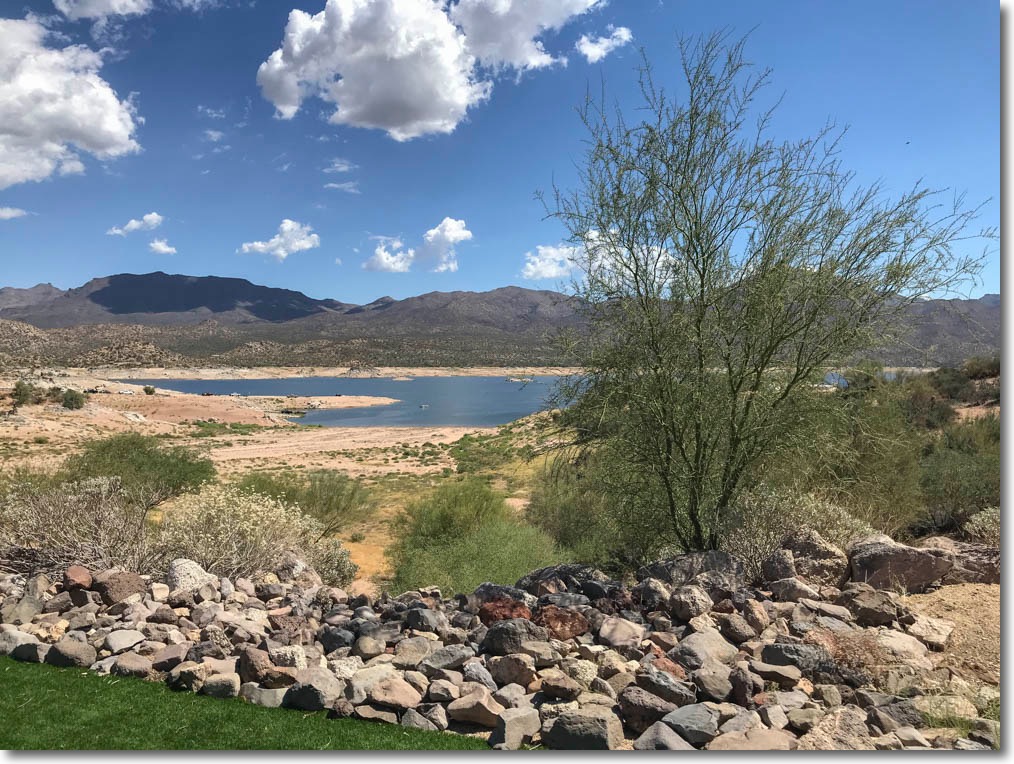
Bartlett Lake, AZ

In the Tonto National Forest.

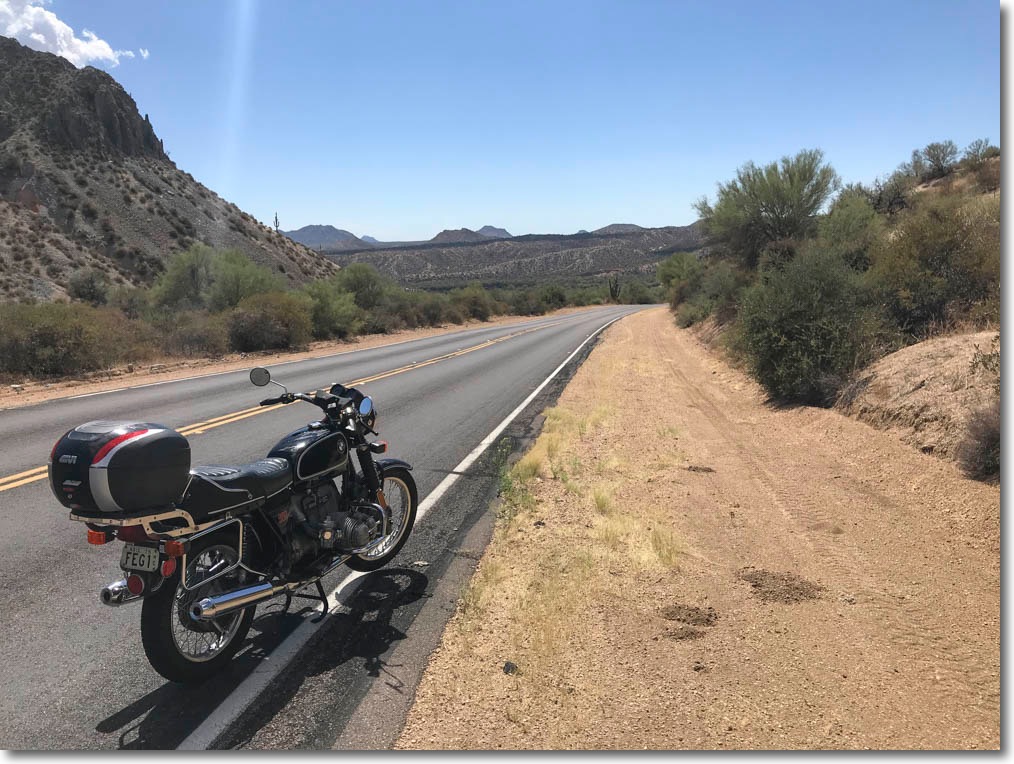
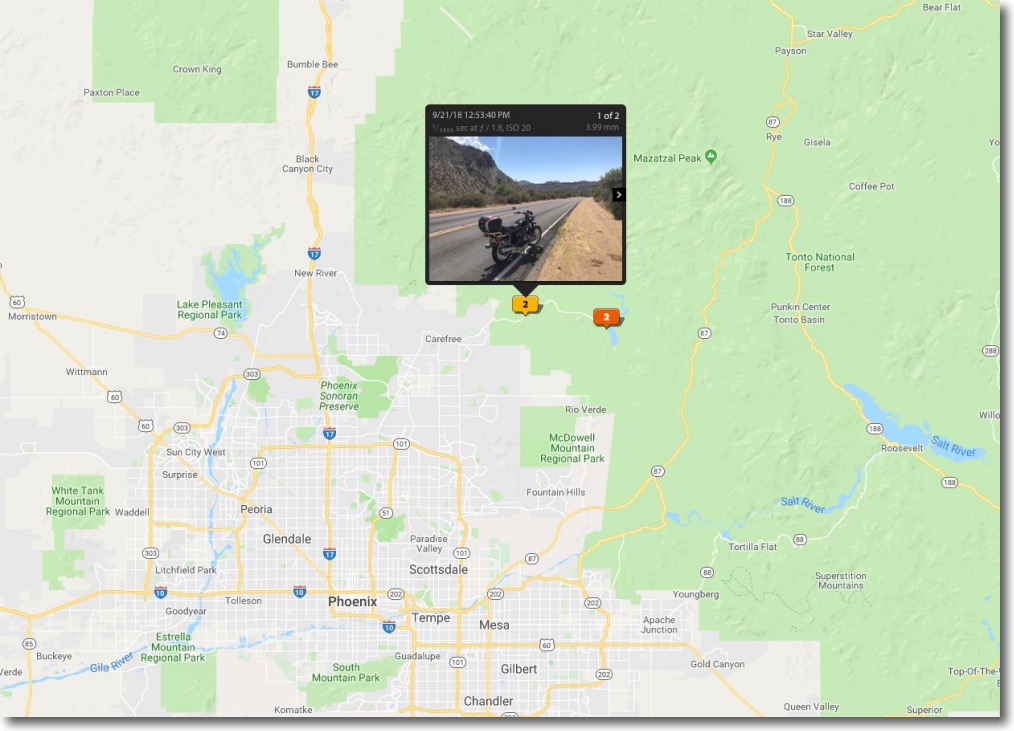
Bartlett Lake is 35 miles northeast of Scottsdale and is deserted on weekdays. The ride through the high desert is lovely, and while the 20 mile approach road through the Forest has seen better days the gentle sweepers and absence of traffic make for a fine opener for the 9 month motorcycling season here, now that daytime highs have dropped to the low 90s.


No traffic in sight.


The map view in Lightroom.


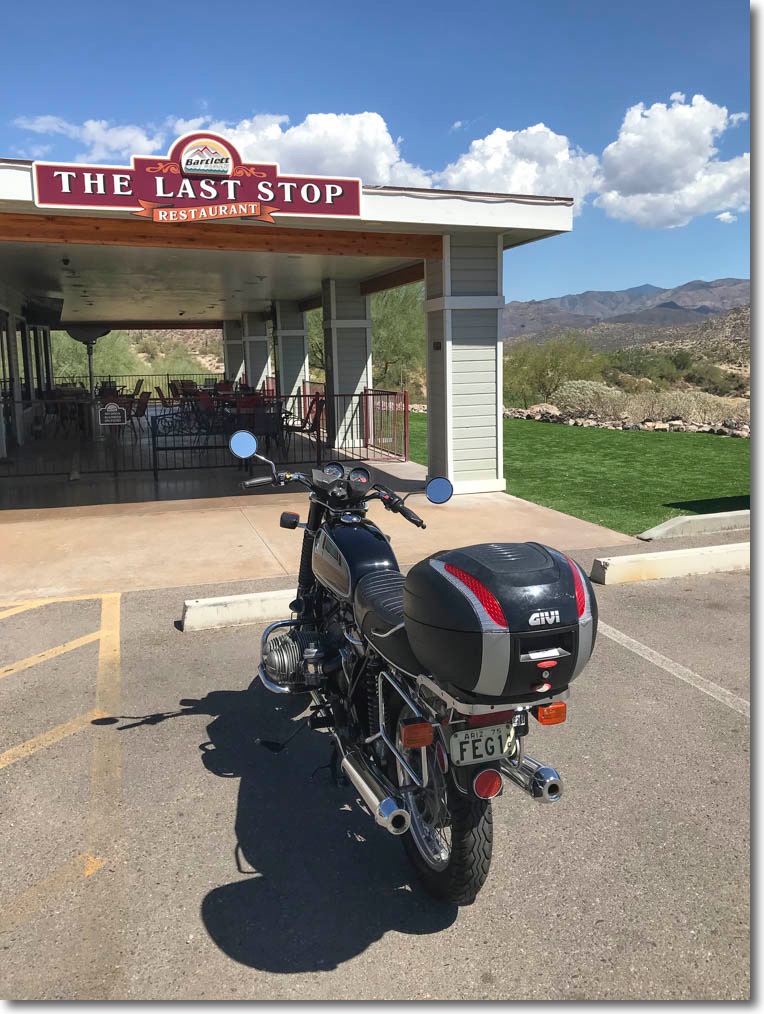
The Last Stop is the only dining place at the lake. Usual burger fare.
Note the matching 1975 historic registration plate on my 1975 BMW R90/6,
now in my 29th year of ownership and a delight to ride.

Boat and JetSki rentals are available.

This was the first occasion on which I aired out the camera in my ‘new’ iPhone7. In contrast to the 8mp files from the excellent camera in the iPhone6, iPhone7 files are 12mp and what little grain there was in iP6 images has disappeared, the crazy azure skies have been tamed a bit (if not quite enough) and resolution is everything you would need for the largest of prints. An incredible technical accomplishment.

The miserable CEO of Apple, Tm Cook, a man devoid of original ideas, claims that one of the justifications for the crazy pricing of the latest iPhones is that you get a great camera thrown in. Well, there’s no question the camera is fine (albeit with the world’s worst ergonomics) but I’ll stick with a separate SLR when conditions get challenging. But for a day-to-day snapper the camera in the iP7 is exceptionally good.

Digitizing slides

Micro Nikkor to the rescue.

I have some old Kodachrome slides I wanted to digitize, but my Canon and Nikon dedicated film scanners were sold long ago. My first attempt was using an Epson 2450 flat bed scanner with transillumination and a dedicated film holder. The result was awful.

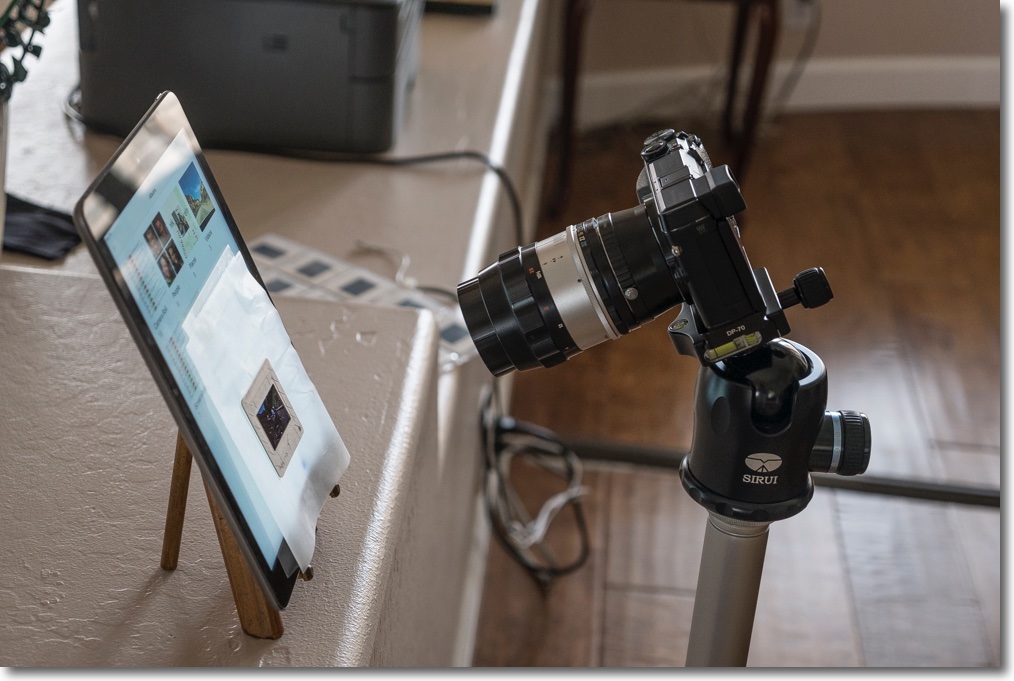
An alternative method suggested itself, using my 55mm Micro Nikkor macro lens, an optic of exceptional performance in the close-up range, fitted to a Panasonic GX7 MFT body using an inexpensive adapter. The Nikkor goes down to 1/2 life size on a full frame body, but down to life-size on MFT. Nice, as the 35mm slide will exactly fill the MFT sensor in 3:2 mode.

Here’s the setup:

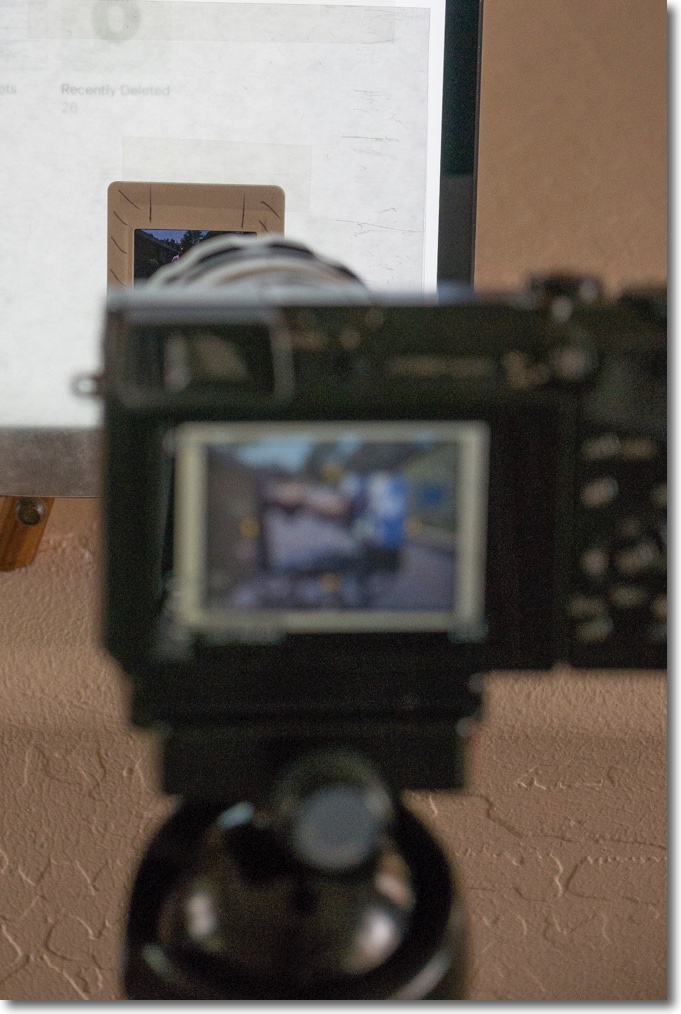
An iPad is used as an illumination source/light-box. After experimenting I found that 2 sheets of wax paper (from the kitchen) had to be used between the slide and the iPad, otherwise the latter’s pixels would show. Parallelism is a piece of cake – just align the camera until all four sides of the opening in the slide mount are parallel to the frame in the finder or on the LCD screen. Here’s the rear view:

Even with the LCD blurred you can see that the slide is correctly aligned. The screen magnification function in the GX7 is used to establish critical focus with the MF Nikkor, as easy as it gets.

Exposure on a very solid tripod and head was made using the electronic shutter of the GX7 which is truly vibrationless. I made five exposures at one stop intervals, thinking that HDR merging might help. The Nikkor was set at f/8, its sweet spot.

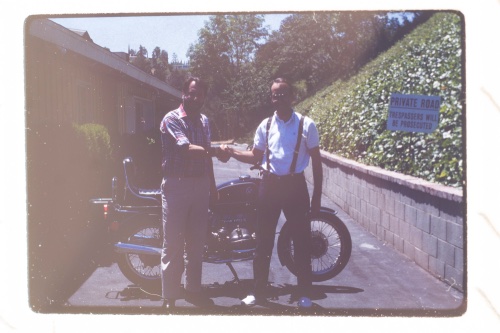
The original slide has exceptionally high contrast and HDR merging did nothing to improve matters. So after importing the best image from the GX7 into LR I dropped it into PS CS5 and messed about with curves and exposure, not to mention the magic lasso on the faces, coming up with something half decent.


The original slide photographed with the GX7 and Micro-Nikkor.


The massaged image after some time in Photoshop.

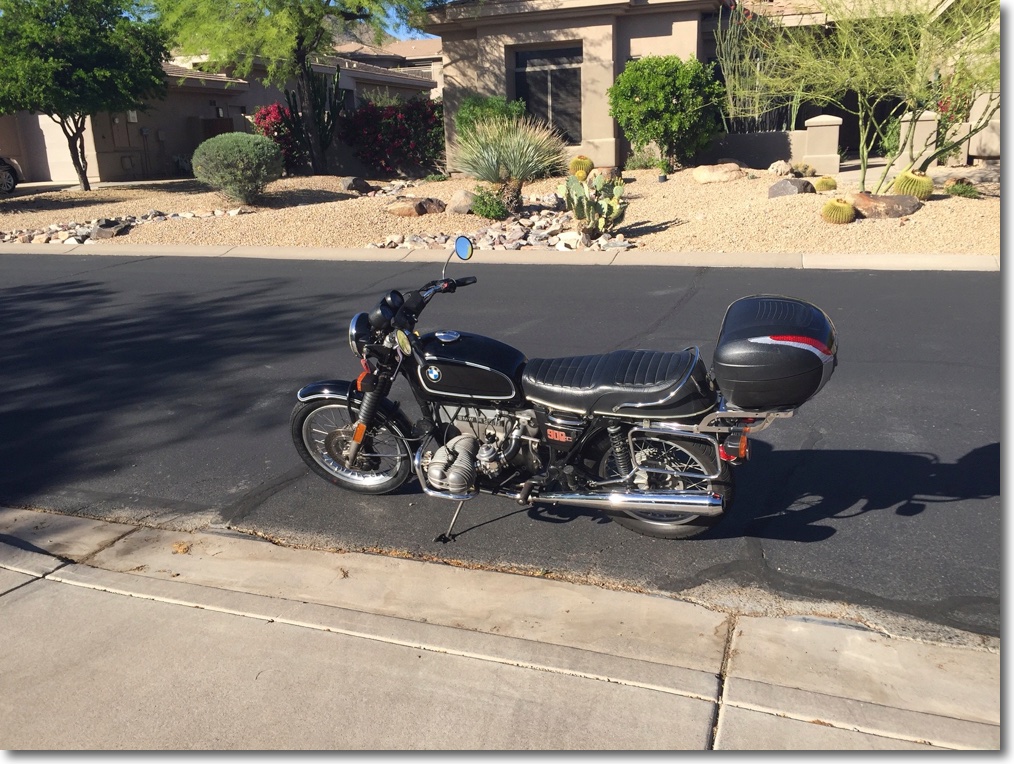
That photograph was taken on June 16, 1990 in lovely Encino, Los Angeles, when the original owner (left, above) of my BMW R90/6 motorcycle delivered it to me upon sale. I continue to ride it to this day! Other than the top case and some better shocks, it remains pretty much stock, right down to the mechanical points ignition which is as reliable as a hammer. The difference between this machine and modern bikes is that the latter will be useless junk 25 years hence when replacements for failed electronics are no longer available, whereas the R90 – whose electronic content is zero – will be happily soldiering along, hopefully with my son riding it. Oh! and I should add, modern BMW machine are ugly rubbish. This is how a motorcycle should look:


My 1975 R90/6 airhead twin in Scottsdale at my home, snapped the other day.

The bike runs as well as it did 28 years ago and no, I do not miss slide film or film of any kind, for that matter. How on earth did we exist before digital?

Film image: Olympus Stylus Quartz. Digital: Panasonic GX7.

Open House at MotoGhost

For two wheeled BMW men.

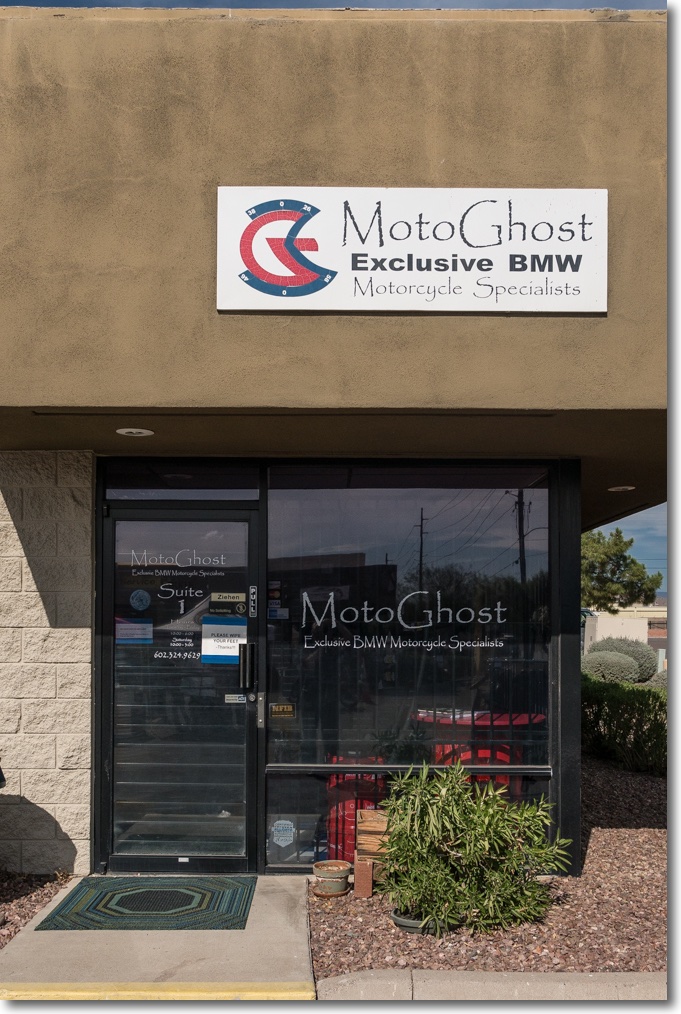
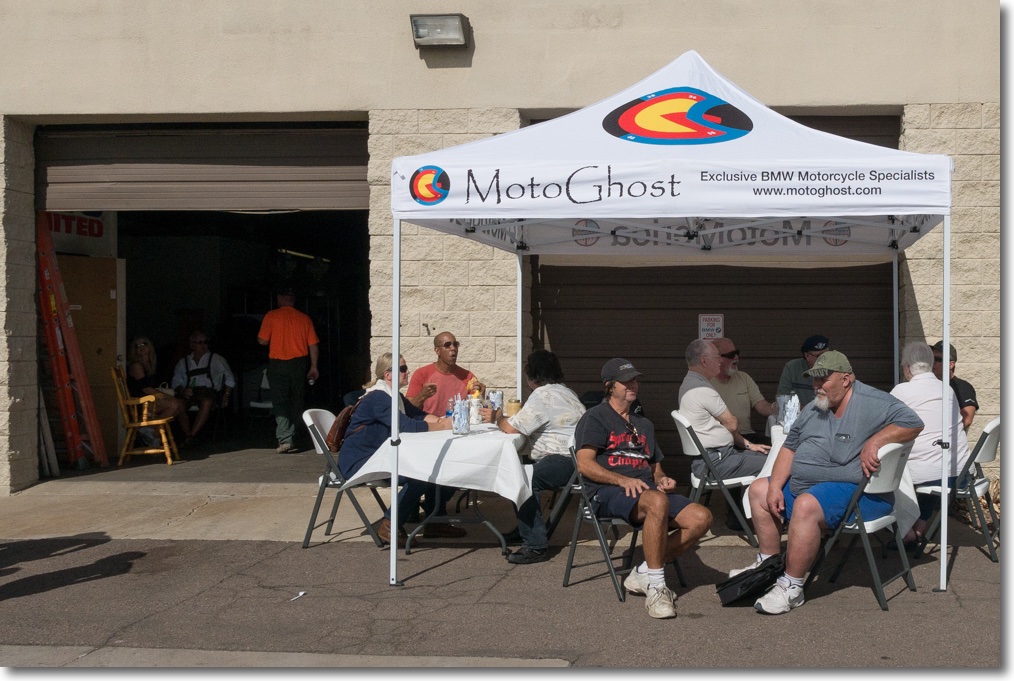
Omar Sayied, the owner of MotoGhost is not only a fine mechanic, he is also an astute businessman, putting his MBA to good use in running a successful business. That business caters to BMW motorcyclists who either own older machines in need of repair, ones which the factory dealers long ago abandoned, or newer motorcycles where the often outrageous dealer pricing is to be avoided. Omar ministers to my two airheads (BMW bikes with air cooled two cylinder motors and shaft drive, last made in 1995) when specialty tools or specialty expertise reside outside my garage.

Today saw the MotoGhost Open House and some one hundred machines were already there when I pulled up at noon, eagerly searching out the free bratwursts! Needless to add, I was one of the youngest riders there. Honest!

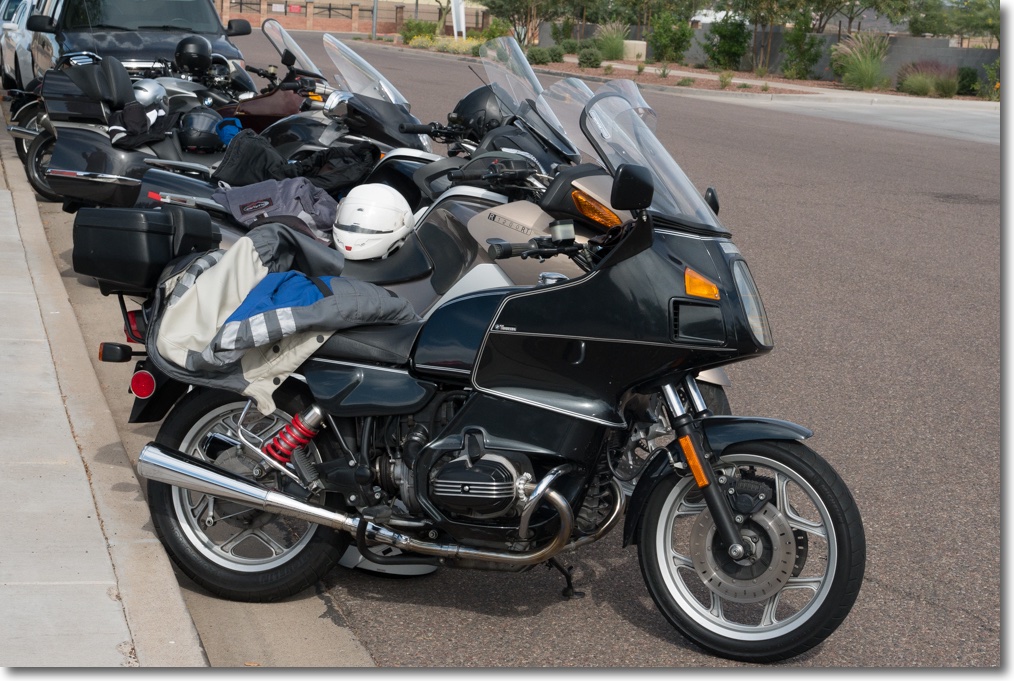
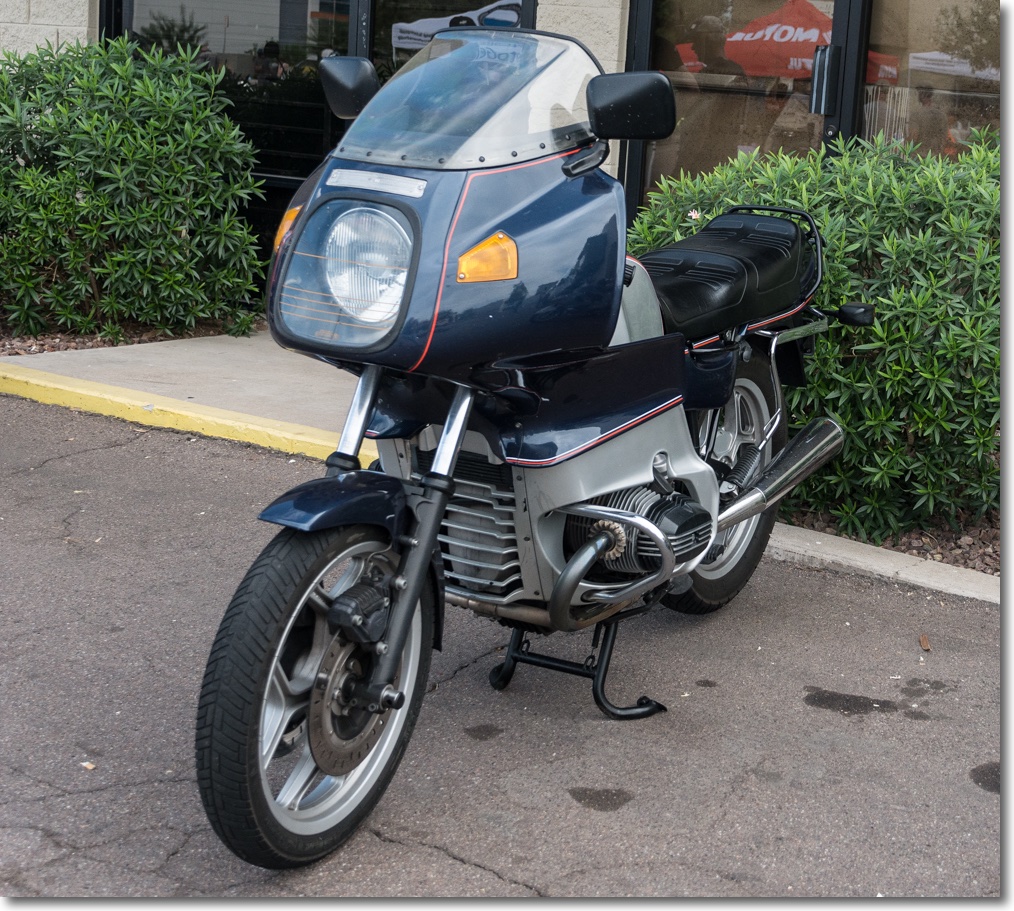
I rode my 1994 R100RT, a fully faired machine perfect for the 16 mile freeway trek north, the motor humming along happily at 70mph and 4000rpm in fifth gear. This is very much the sweetspot for the 1000cc shaft driven, air cooled twin, with vibes at a minimum and everything as it should be. The machine has been trouble free and its relaxed seating position and big fairing make for fine long distance touring, pannier bags and top case attached.

There was a broad variety of machines to be enjoyed:


MotoGhost is in north Phoenix, off exit 26 from the 101.


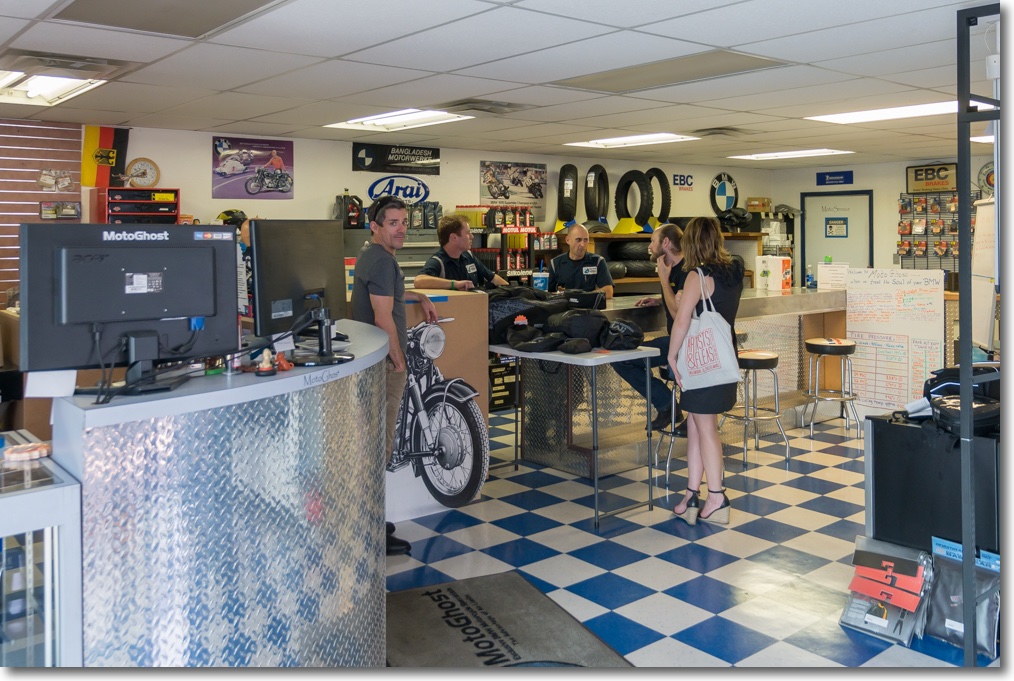
The showroom is small and pristine.


Entente cordiale.


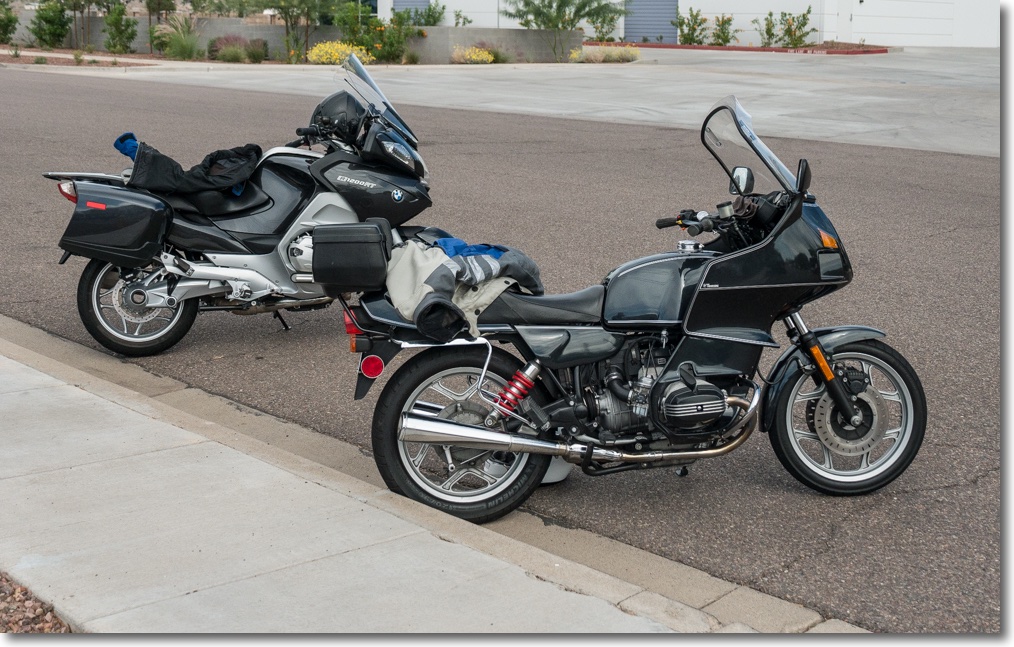
My 1994 R100RT in the foreground. The aftermarket rear monoshock is by Progressive Suspension. 60 horsepower – all you need for day long touring.


Enjoying the free eats.


Ouch!


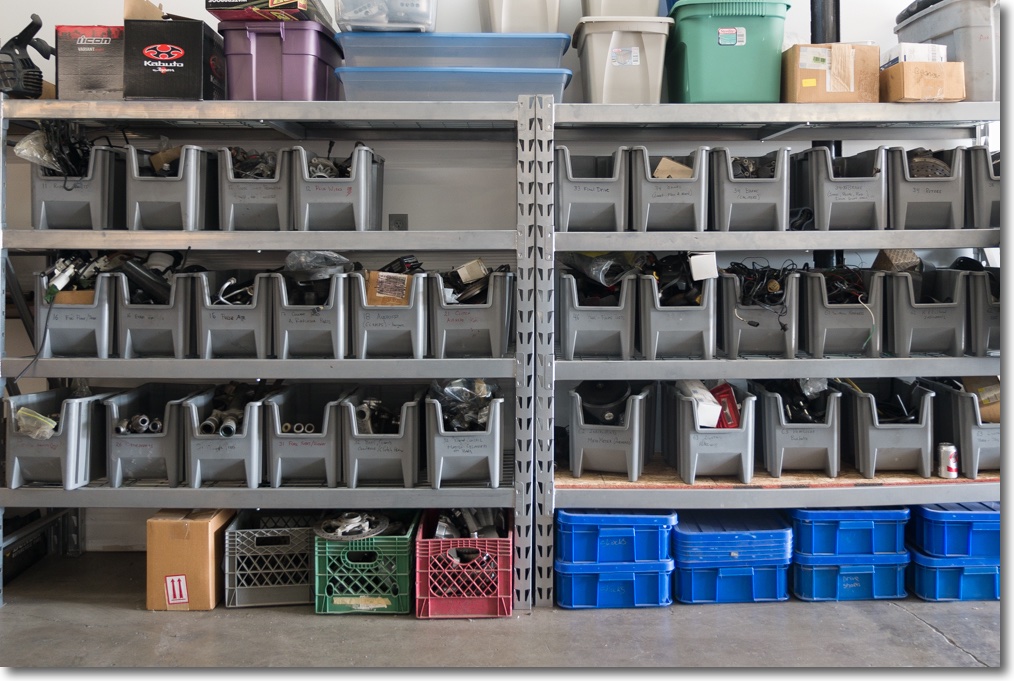
Parts, parts, parts.


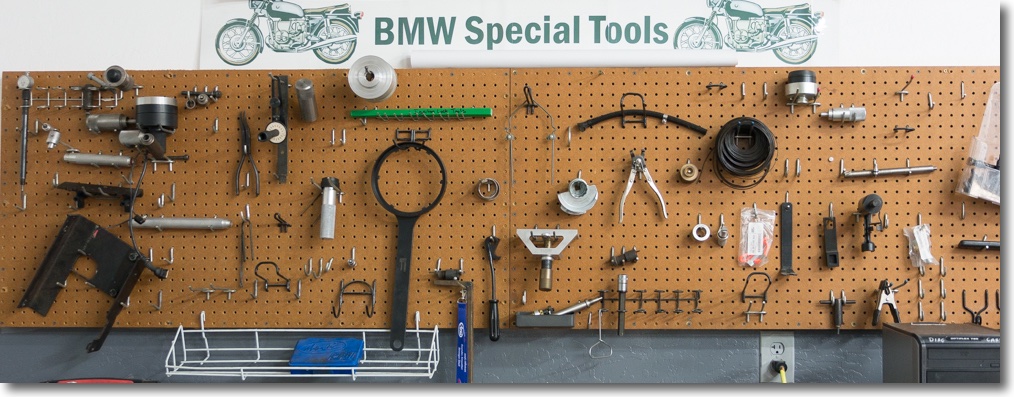
Specialty tools do not come cheap. Not available at Harbor Freight ….


Vacuum gauge for carburettor adjustment.


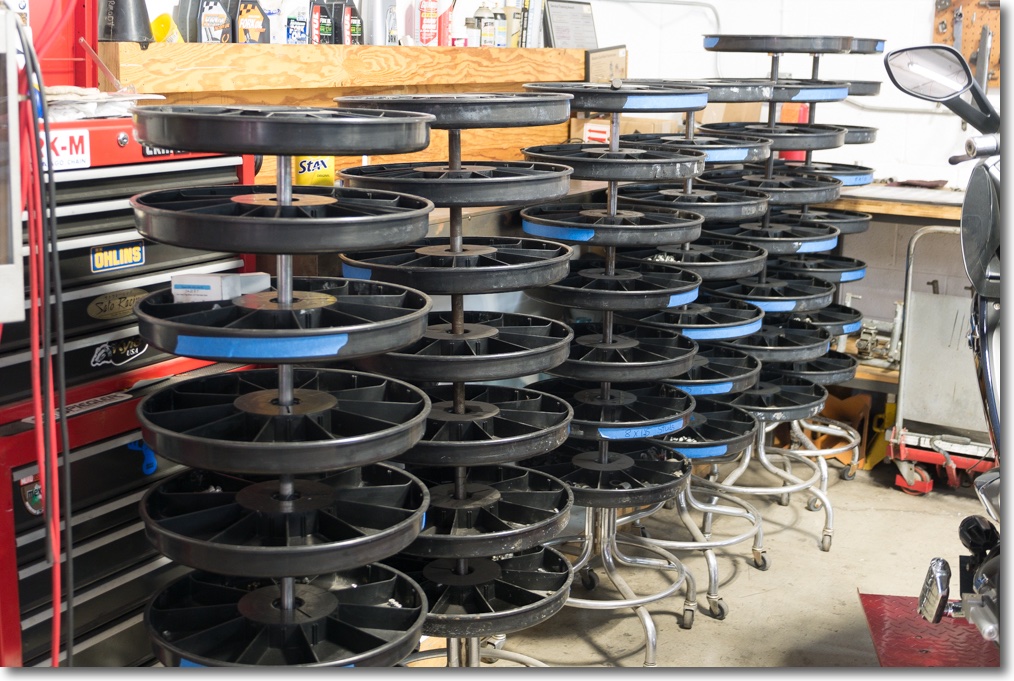
Parts carousels in the workshop.


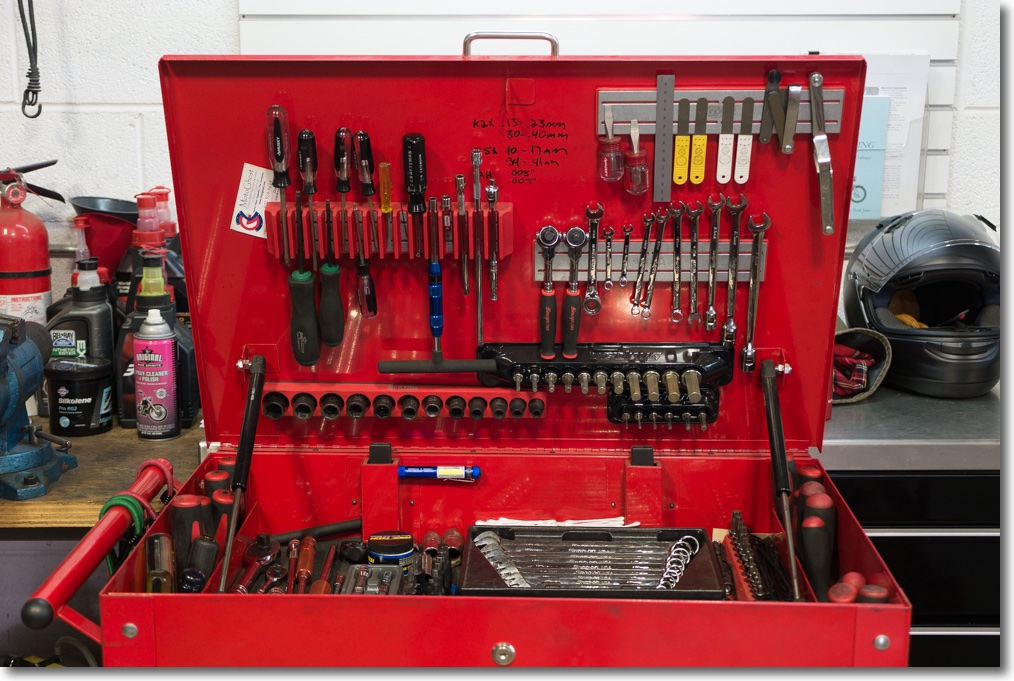
Alles in ordnung! Tools arranged just so.


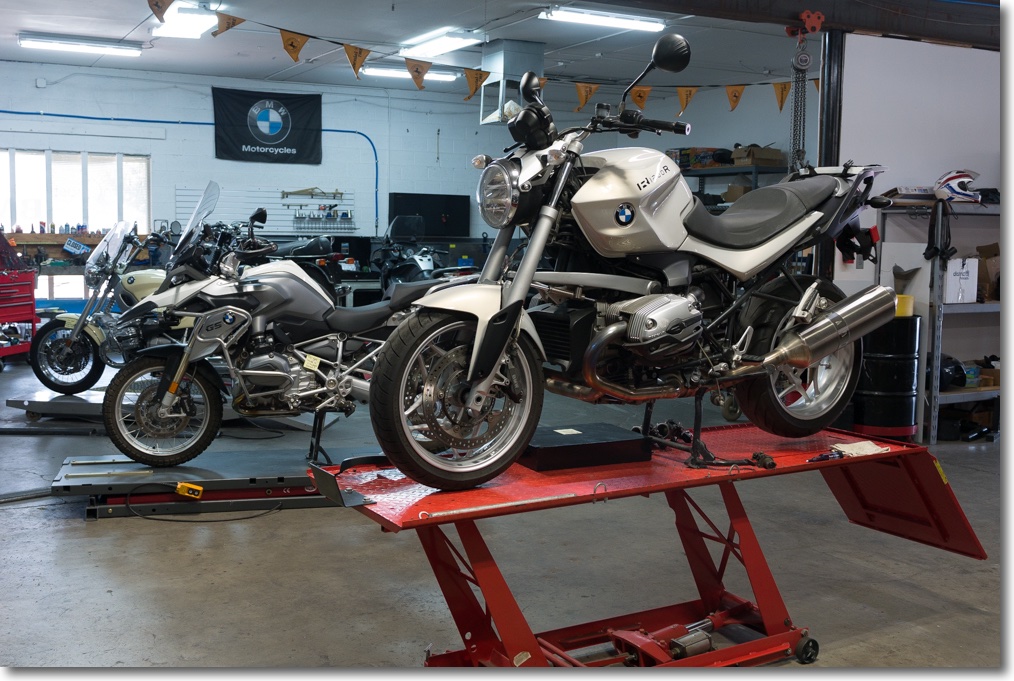
Recent vintage machines in the workshop. The R1200R in the forefront is a nice ride.


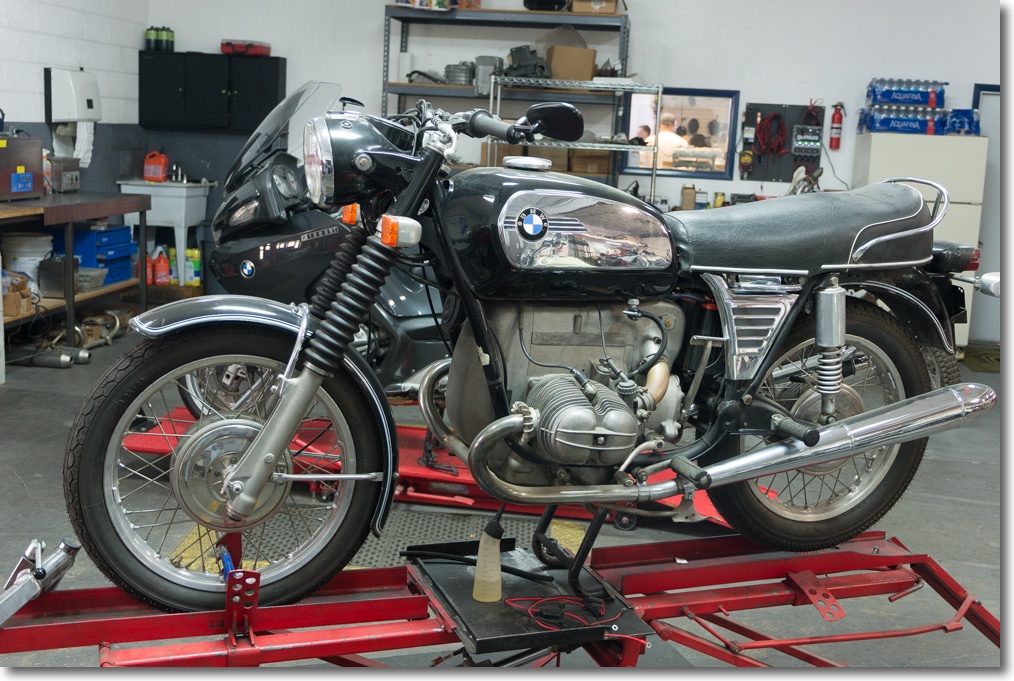
An early 1970s R60/5. Note the drum front brakes. Larger capacity machines of the era sported a single disc brake in front.


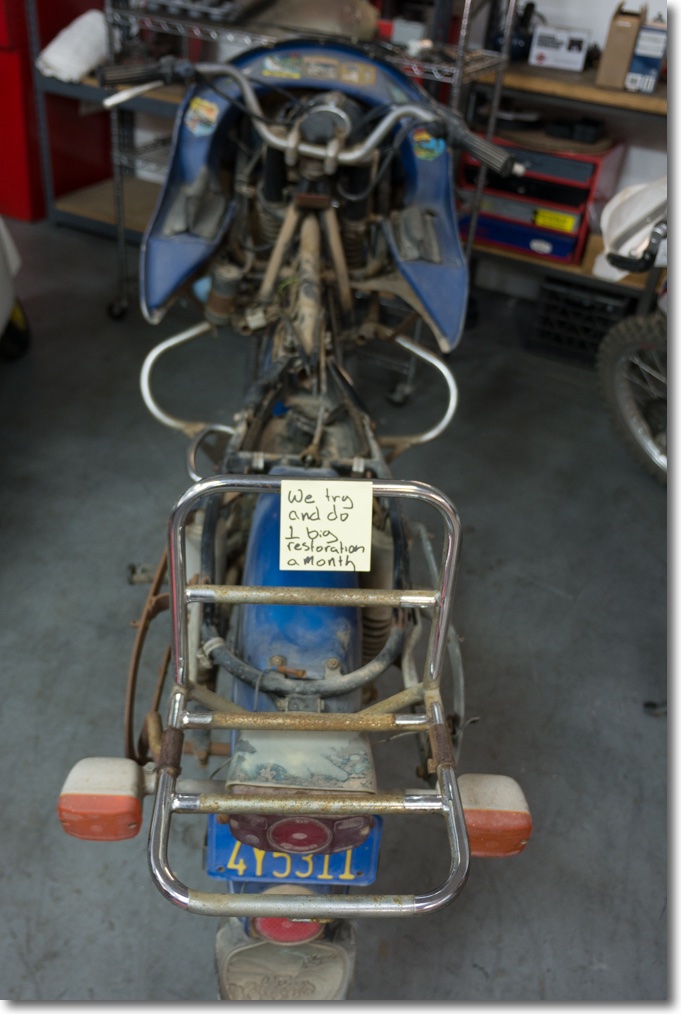
Basket case. Cheaper to buy a good used bike ….


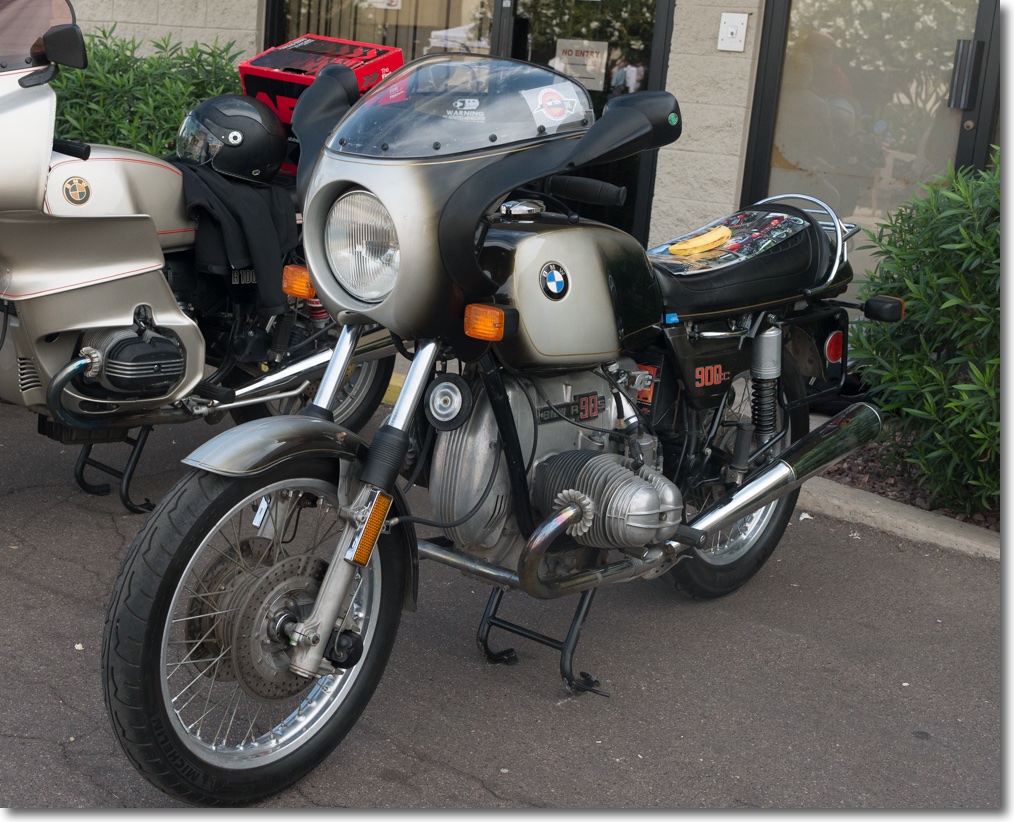
A lovely 1975 R90S, the first modern ‘superbike’.


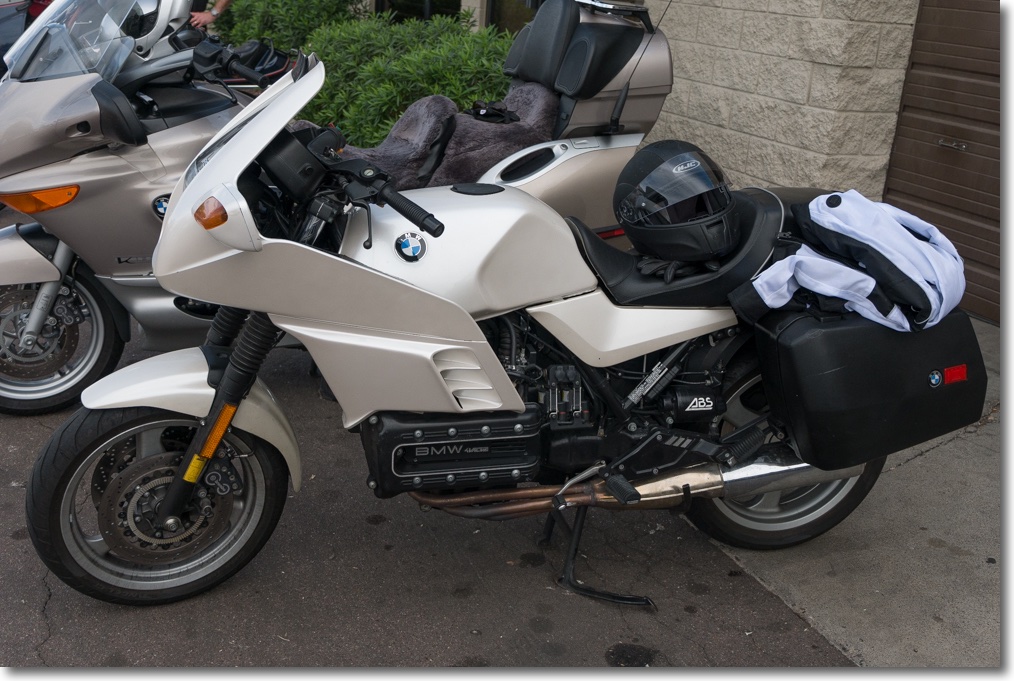
A 1991 K100RS with a four cylinder, 16 valve motor. Lots of power …. and the personality of a washing machine. 95 buzzy horses, this one. ABS brakes are a nice touch


A late 1970s R100RS, the first motorcycle with a wind tunnel fairing, designed by Hans Muth. A machine much loved by autobahn cops.


Modern BMWs have grown along with American waistlines.


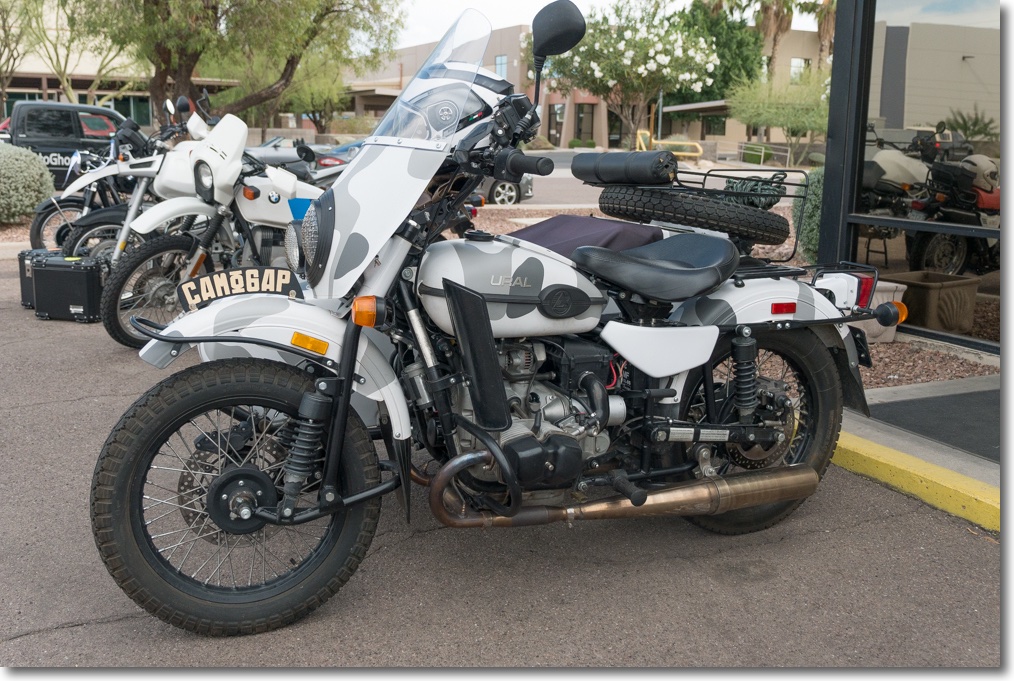
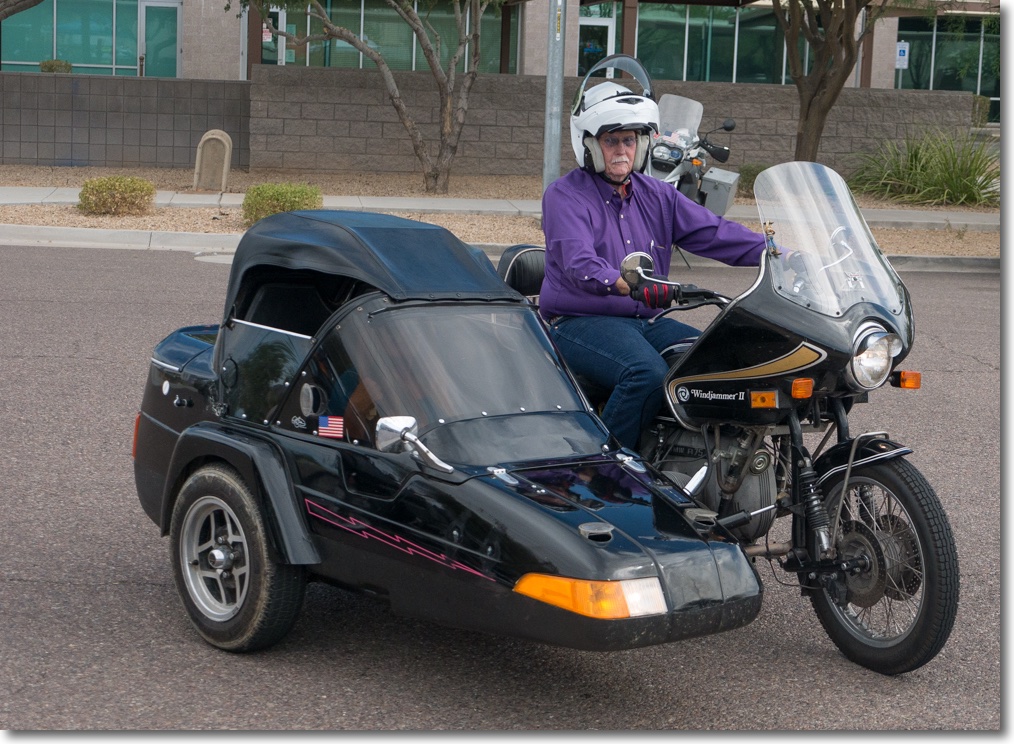
A Russian Ural with sidecar. The Russians stole the airhead engine design from BMW after WW2, and it’s hard to blame them. The quality of these machines is execrable, as you might expect.


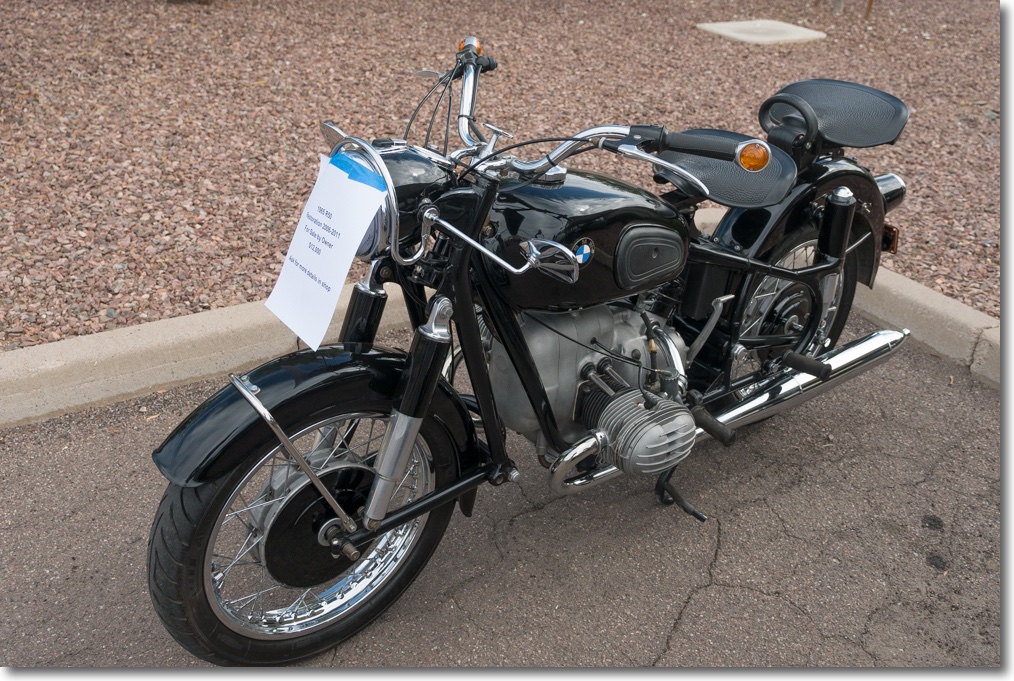
A nicely restored 500cc R50 of the 1960s. Not really enough power for modern freeway speeds, and with marginal brakes, this machine nonetheless exudes period charm. The sprung saddles complement the near non-existent rear suspension. Badly in need of pinstripes!


Sidecar rig, this one with a 750cc R75/6 motor.


My 1994 R100RT backed by a modern R1200RT, a compact and surprisingly light tourer, with an oil and air cooled 8-valve boxer engine and almost twice the power at 109hp.


So, now you know.


If you are a Phoenix area resident, MotoGhost is unreservedly recommended for your two wheeled BMW needs.

All snaps on the Panny GX7 with the 12-35mm pro zoom; the interior images all at the f/2.8 maximum aperture.