Category Archives: Cooking

Cooking hardware that makes a difference.

The perfect egg in a shell

Doing it right.

This is one of an occasional series on cooking devices which make a difference. For an index of cooking articles on this blog click here.

Few things are more satisfying than a properly cooked egg in its shell, be it soft or hard boiled.

The perfect soft boiled egg is a breakfast staple, but often overcooked and poorly presented. Further, it simply does not do to have hard boiled eggs in an egg cup. Decorum and civilization dictate that eggs in cups be soft boiled and runny. And proper presentation is essential to the whole aesthetic.

You can make these in a pot with boiling water but there are so many variables that your chances of consistent success are remote. Thus, an inexpensive tool is called for. Actually, several tools. Tools convert pretense about ‘art’ into the predictable results dictated by scientific method, the core tenet of all good cooking.

First is the egg maker shown at left. Typically holding up to seven eggs – always broad side down, please – this can be had from any number of vendors for under $20. Mine came with an unreadable, graduated plastic measure for determining the correct volume of water required. It was useless. You need a clearly marked, glass laboratory measure and a syringe to get soft boiled eggs right. The larger measuring cup is used for hard boiled eggs only.



Egg maker, large measuring cup, syringe and 250ml graduated measure.

The design of the egg maker is simplicity itself. Water is added to the platen which is then covered with the egg holder plate, eggs are added and the ‘greenhouse’ cover is put in place and the power turned on. The critical thing for a soft boiled, nicely runny egg is the volume of water and ‘critical’ is the right word. The volume of water used determines cooking time. The amount must be right to 5ml or the result will be unsatisfactory. After some experimentation I established that 4 eggs, straight from the refrigerator (forget the gobbledygook about letting them warm up – sheer nonsense) require exactly 175ml of water. That’s where the graduated measure and syringe come in, making accurate measurement of the required volume a simple matter. Your device may vary, so be prepared to experiment.

The key to consistent success is to remove all variables from the equation. Use the same sized eggs from the same source, stored at least overnight in the refrigerator for a consistent starting temperature. And be sure to use the exactly correct volume of water in the egg maker.

The egg maker will pop off after 3-4 minutes when the water has evaporated, thus setting off the thermostat, and you will have four soft boiled eggs. Four perfect soft boiled eggs, every time.

But you are not through.

Topping your eggs to access the runny goodness inside should never, never, never be done with a knife applied to the shell. You will bruise and crack the shell randomly and risk injury into the bargain. The result looks awful. Check the last image below. An egg is one of nature’s most perfect creations and it should be respected as such.

So purchase an ‘egg topper’ – search on those words at Amazon. Mine came in this set – it’s the stainless steel tool removed from its storage cut-out – along with properly sized and shaped spoons. The latter need to be small and slim to properly access the yolk without spillage. Your coffee spoon is not the answer.
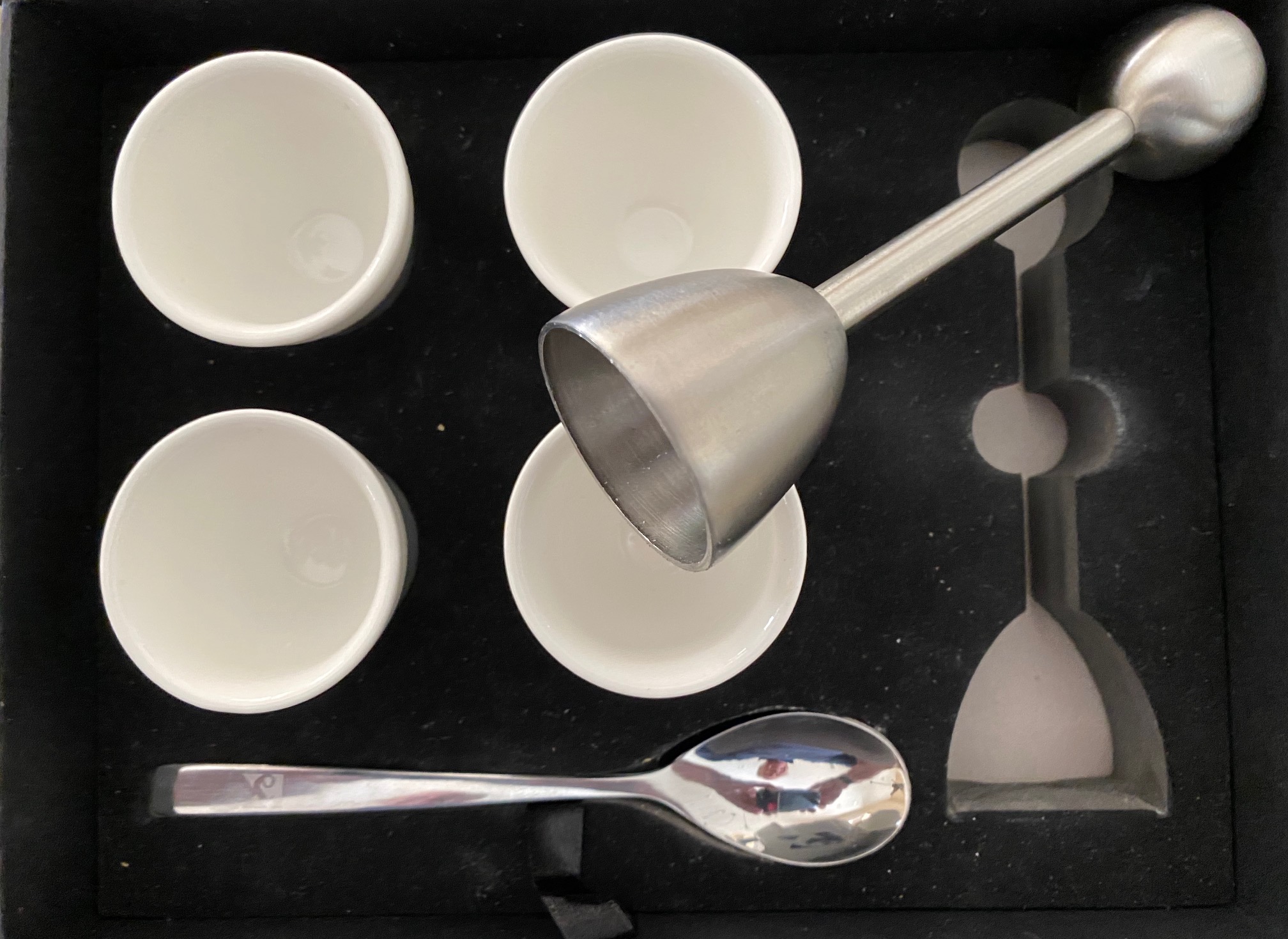


Egg cup outfit with topper. The circumference of the topper’s cone acts as an impact cutter.

The cooked egg is placed, broad side down, in the cup and the tool is placed over the top. The sprung plunger, terminated with the alloy sphere, is retracted and released, whereupon it scores/cuts a perfect circular top on the egg shell. Mine has to be retracted only part way to avoid damage to the rest of the shell, (I marked the optimum retraction distance) and the tool must be carefully removed holding the base of the egg with a cloth. A little practice and you will get a perfectly scored shell top. Now get out that sharp knife – a thin fish boning knife is ideal – and slice through the albumen and flesh of the egg white along with the scored shell part. A properly designed cracker will score the shell just above the yolk. You now have the perfect soft boiled egg, along with high job satisfaction.
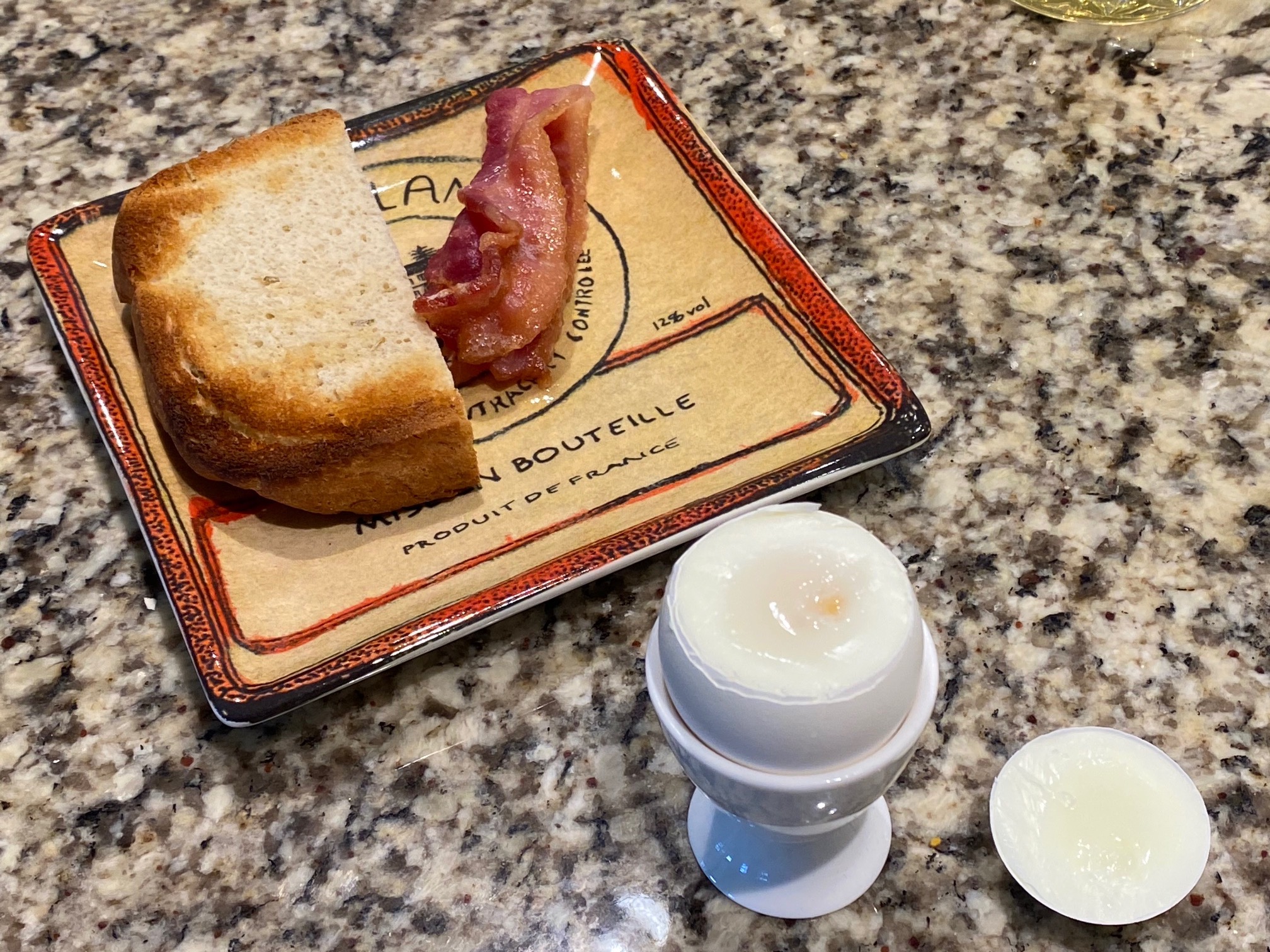


A perfectly topped egg along with obligatory bacon and home made Italian rosemary bread.

As for hard boiled eggs, these are trivial to prepare. Load up all seven if you like, add 1.7 fl.ozs. of water (or the quantity that experimentation indicates) using the large measuring cup in the first image, let the egg maker tool do its thing and you will have seven perfectly hard boiled eggs with none of that disgusting grey ring around the yolk your spouse creates as a result of over-cooking. Soak them in iced water for 5 minutes and you are ready to make salads of your choosing. I have found that the freshest eggs are also the easiest to peel when hard-boiled.

The water in my area has significant mineral deposits which make the egg holder plate and heated platen go a revolting brown after much use. Some medium stainless steel wool cleans things up nicely.



How not to do it. Albert Finney as Churchill eats his breakfast egg in ‘The Gathering Storm‘. Hacked off top and wrong tool use. Gustatory shortcomings notwithstanding, he did OK otherwise.

Update November, 2025:

To make hard boiled eggs easy to peel I have found that using eggs which have been in the refrigerator a few days is the way to go. Now there’s a better method, attributable to this ‘hack‘. No need to use a spoon to tap the rounded end of the egg. I simply tap it gently on the counter. The change in tone from sharp to dull (the latter sounds as if the shell cracked, though it has not) is impossible to miss and, yes, this works. Event eh freshest eggs are easy to peel once hard boiled.
Kitchenaid Artisan 5-Qt. stand mixer

An all time classic.

This is one of an occasional series on cooking devices which make a difference. For an index of cooking articles on this blog click here.

The BMW airhead motorcycle first came to market in 1922. The Kitchenaid Artisan stand mixer beats it by 3 years, having first been sold in 1919. Unlike that wonderful bike engine, last made in 1997, the Kitchenaid mixer soldiers on to this day. If you make dough for bread or cakes, it’s the only way to go and, surprise!, it’s made in Ohio. That’s Ohio, USA not Ohio, Wuhan, China.

I do not have that many hours of use on mine but the gorgeous, classic design of this model dates from 1936. Forty years of happy mixing with no failures are routinely reported:


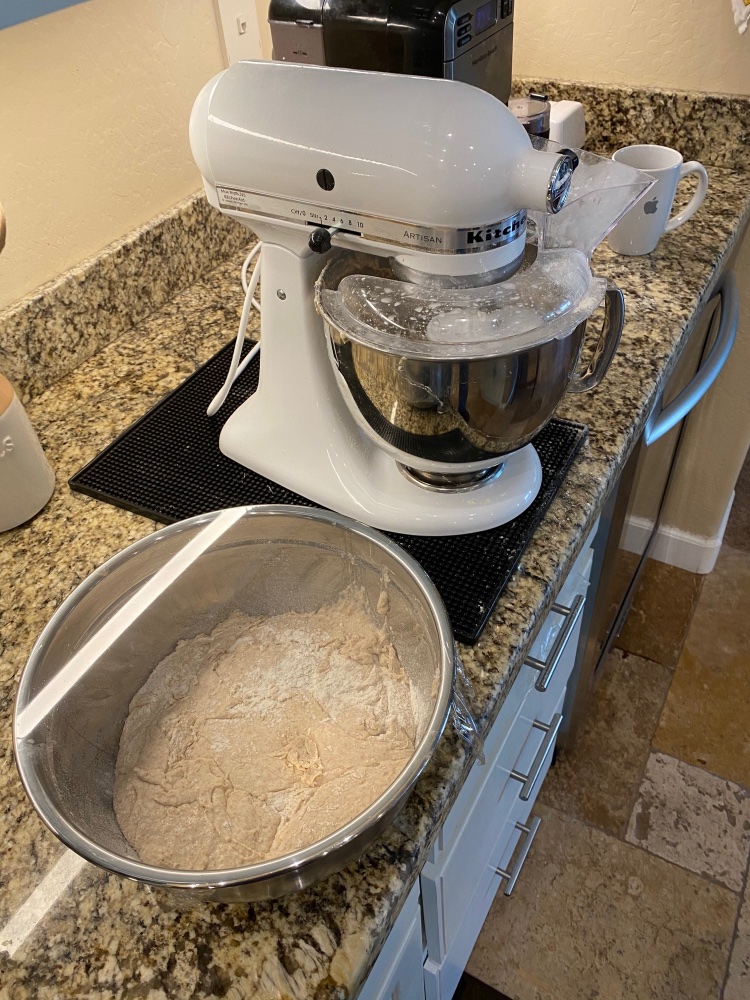
Making bread dough.

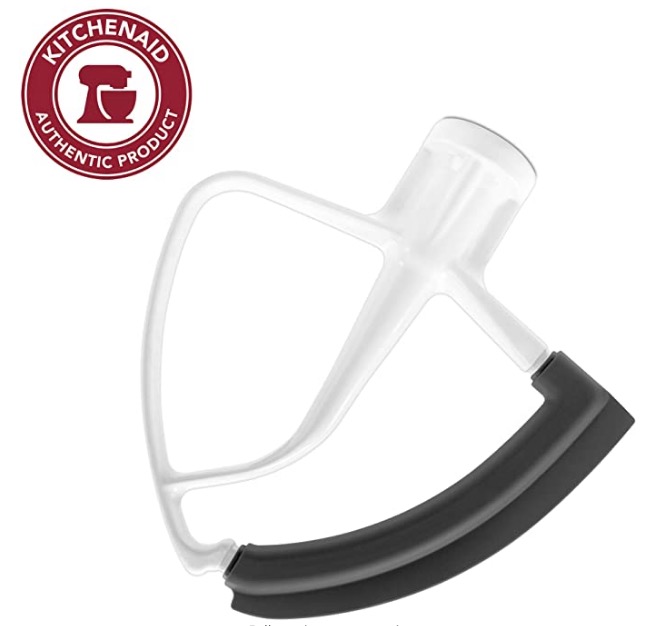
The mixer has a sterling reputation for reliability and longevity. Repair parts are easily available and the commutator brushes are simple to replace, located under the black screw plugs visible in the picture. The mixing tool’s motion is planetary, meaning the tool rotates one way and the mixing assembly the other, conferring the folding motion your grandma used to use while kicking the dog across the kitchen. Mine came with a J hook for heavy dough and a mixer paddle for light work. The latter is ineptly designed and you will want to replace it with the scraper design which looks like this:


The scraper paddle tool.

There are all sorts of tools available and the circular chrome port on the top will accept lots of additional gadgets for pasta making and the like. I have never used that power take-off source as my main interests are making bread dough and saving my aging wrists.

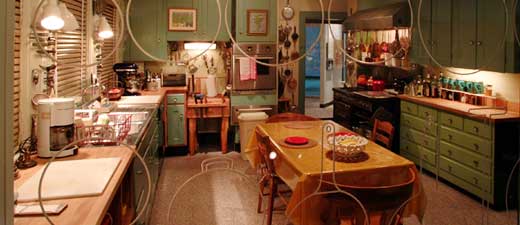
That doyenne of America-French cooking, Julia Child, used one for ages and hers, along with her kitchen, appears in the Smithsonian. Only in America is this possible.


The Artisan in Julia Child’s kitchen.

Kitchenaid has other designs, including rising column ones in lieu of the tilt feature. These are for those with no sense of history and even less taste, like owners of post 1997 BMW motorcycles. Stick with the original. And it really must be white, though about five million colors are now available. The machine is exceptionally heavy and if I have one complaint is that it tends to wander over my polished marble countertop at higher speeds with heavy doughs, so I have placed it on a rubber mat. Kitchenaid needs to add a weighted counterbalancer to cancel out the vibes.

Note that it’s really not a tool you want to hump in and out of storage. It’s simply too heavy.


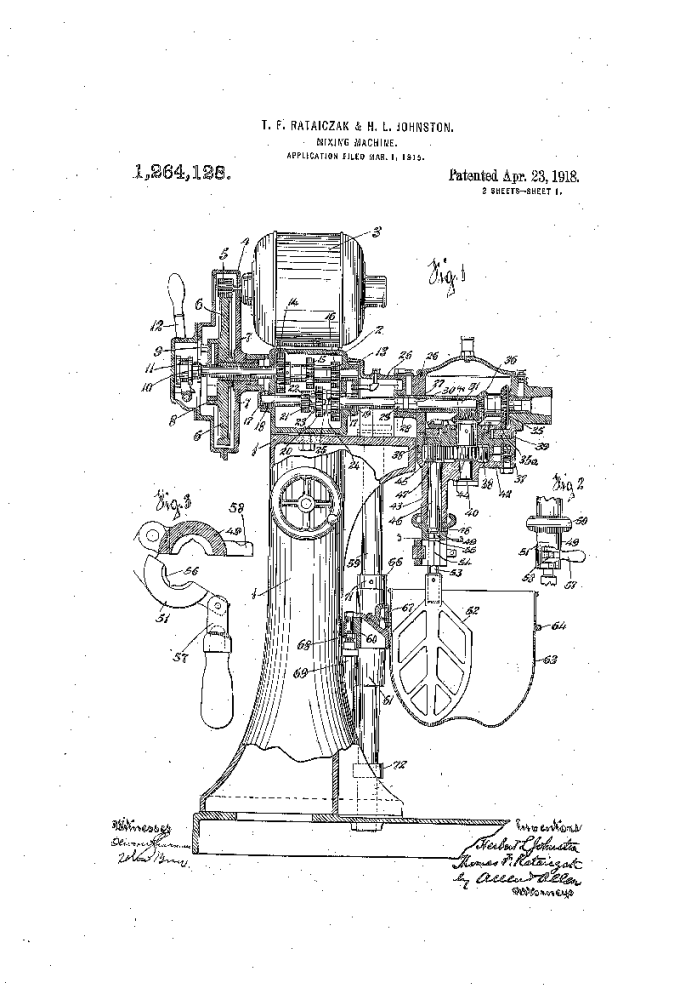
The original 1918 patent drawing.

If Child’s ‘Mastering the Art of French Cooking‘ should be in every kitchen, it needs to share shelf space with Carol Fields’s ‘The Italian Baker‘ which does for bread what Child does for everything else.


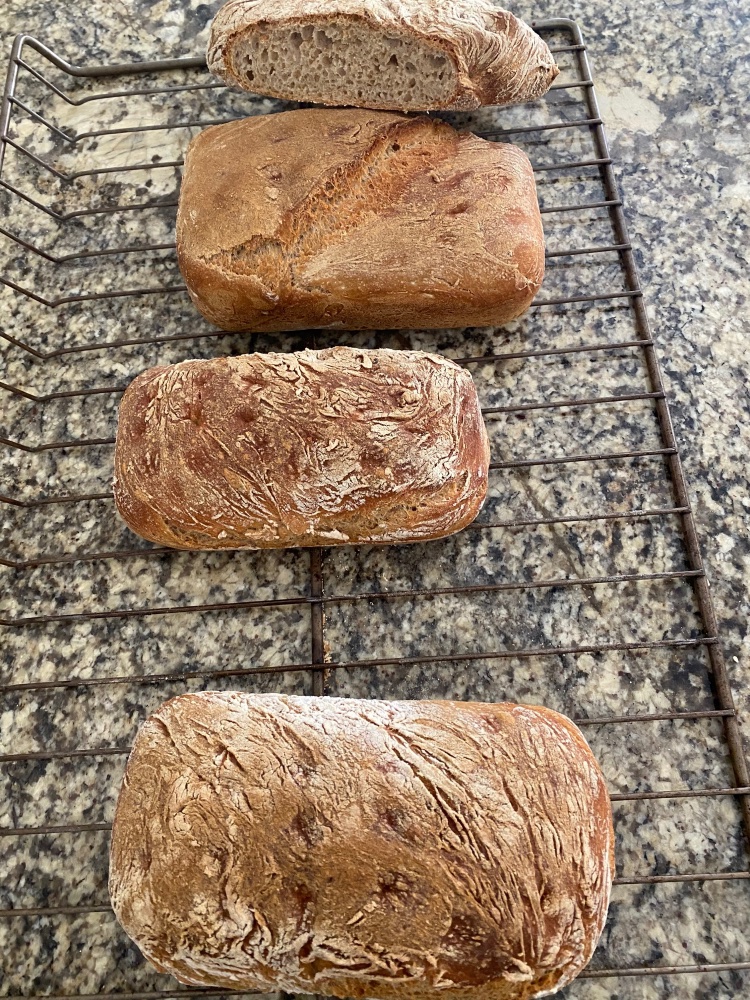
Italian Pane Bigio, a delightful wheat bread courtesy of the Kitchenaid mixer.

Rick Stein’s Secret France

Food and photography.

For an index of cooking articles on this blog click here.


Click the image to go to Amazon US.

Rick Stein started life as a British DJ then migrated to working in a kitchen. One thing led to another and now he has popular restaurants in Cornwall and Australia. His emphasis is on fish and seafood and relatively simple preparation. He travels the world discovering new cuisines which are profiled in popular BBC series. Get a UK server address and you can enjoy these here because, goodness knows, the BBC’s non-existent marketing acumen prevents US residents from watching these shows on their iPlayer app.

While Rick has put in strenuous duty in hell holes in Asia, Latin America and other disease pits where you spend more time sitting on the porcelain than eating from it, his latest book and TV series, named ‘Rick Stein’s Secret France’ shows that the best cuisine in the world is not very far from his native Cornwall. It is, of course, in France. In this series he tries to answer whether French cooking has gone downhill in a world obsessed with fast food ‘culture’ and Facebook.

He concludes, rightly, that the only cuisine a civilized person should consume is French and that the French remain the best cooks. Unlike the Italians who have yet to discover it, the French cook in butter, not oil, the way nature intended. And the variety of French fish, seafood, meats, cheeses, pastries and wines is all any aspiring gourmand needs in a lifetime of quality eating.

The BBC has published a book of recipes from his French sojourn which, like his earlier one, is profusely and beautifully illustrated not only with images of the dishes he prepares but also of the places he visits. Unlike the Mexican tome, replete with recipes for corn and crap (is there worse food on earth than Mexican, accompanied by equally bad music?), the French one is delicious in every regard.


Regular foodie hangout in Burgundy.


Seafood delights in Clermont-Ferrand.

There is a great deal to like here. Indeed, even if your preferred dining location is the local McDonald’s cancer factory, you will enjoy the photography in this fine book.

Vive La France!


A typical recipe which I made yesterday. Delicious.

Zojirushi NP-GBC05 Induction Heating System Rice Cooker

Properly cooked rice. Finally.

This is one of an occasional series on cooking devices which make a difference. For an index of cooking articles on this blog click here.

Purchase considerations:

I haven’t been eating that much rice this past decade, a period which, not coincidentally, coincides with my outlay of $10 on a rice cooker from Walmart. Named the Aroma it did nothing so much as stink. The outside would get dangerously hot – I’m talking burns if you touch it – and it was criminally incompetent in discharging its appointed task, that of making fluffy, nutritious rice. Just the thing, in other words, for the Walmart shopper and boy, did I ever get what I deserved?

So after every use I would swear at it lustily, promising myself to never trouble it again. Our relationship finally came to an end when the last batch of rice this execrable excrescence ever produced was burned on the bottom and raw on the top. Accompanied by a healthy and most satisfying kick, it ended up in the recycle bin.

After much research one manufacturer’s name kept cropping up, accompanied by praise as often as not. Zojirushi. Now I’m too old and wise to believe anything I read in Amazon reviews, but I do like to scan the one star ones as it’s probably unlikely anyone is actually paid to write those. Only 4% of ‘reviewers’ (chaps with a third grade command of the English tongue, without an analytical thought in their make-up) trashed the Zojirushi and their reasons were either that the non-stick coating flaked (yes, this will happen if you place the container in the dishwasher with its extremely high drying temperatures – duh!) or that the device failed after a relatively short period of use. Goodness, how hard is it to give the non-stick surface a rinse and a swipe with a soft sponge?


Zojirushi NP-GBC05 Induction Heating System Rice Cooker and Warmer, 0.54 Litre capacity.
The bright chromed lid opening button is a fingerprint magnet. Yes, it’s Made in Japan.

Accordingly, when I bought mine from Amazon I splashed out an additional $40 on a 4 year warranty which includes shipping costs both ways. And while an additional $40 is a lot, the machine alone ran me $180 + tax and I see it is now up to $225. That’s an awful lot of money for a rice maker, but then $10 for the Walmart stinker was a lot considering it never worked properly. Plus I had all the proceeds left over after selling all my MFT gear and buying the iPhone 11 Pro. And it was Christmas.

Use:

How is it to use? The machine has a 24 hour clock and can be set so that the rice is ready at a stated time. A batch of rice – whether 1/2 cup for one person or 3 cups for six (not 2 as engraved on the container) – takes 50 minutes to cook. Owing to the use of induction coils which surround the removable, non-stick container, heating is even throughout the rice and even on a first try the result was near perfect. I use common or garden Mahatma long grain white rice (newly bought after the old lot moldered in a container for years) and made the mistake of washing the rice before cooking. I used the clear 6.1 oz. container provided. The result was too mushy. So on a second try I did not wash the rice (in fact the rice packet says not to wash before cooking) and slightly cut the water. I used the green 5.8 oz. container (a seemingly minor difference, but these Japanese chaps power down a lot of the stuff while cranking out Nikons, so I trust their instructions) and slightly under-filled the container with water, thus:


Zojirushi water level for two cups of rice, enough for four people.

I went for the ‘sweet rice’ level, which is just a tad below the regular rice one. The result has been perfect the last three times, which means we have already eaten more rice in a week than in the past year. Thank you, Walmart. Incidentally, a Zojirushi ‘cup’, measured using their provided containers, is about 3/4 of a standard American cup. The Japanese, sumo wrestlers apart, are a small people ….

There are also settings for porridge (yecch!) and brown rice, the latter with an optional three hour presoak to allegedly improve release of chemicals which will double your fertility and put 35 points on your IQ. Uh huh! The special offer on the Brooklyn Bridge arrives after you mail in the warranty card.

The use instructions are written in perfect English (they must have used a Japanese to do the translation) and are clear and unambiguous.

Safety? Except for the small area on top, marked with two ‘C’ characters’ denoting the steam vent, you can cradle the device in your hands all day long, for it is properly insulated. And speaking of Nikons, the quality is comparable to that of those (mostly) well made prosumer cameras. Meaning it’s really good. The parts fit properly and the seams are even, just like on a Toyota. Not a whole lot seems to be going on during the cooking cycle except for the release of a few wisps of steam towards conclusion. There’s a folding carrying handle and if the 3 cup capacity is too low, Zojirushi will be happy to take more of your money for a larger one. Their site is here. Rice readiness is indicated by a sweet little melody which can be changed to beeps or to silence. Amazingly some Amazon reviewers complain the default melody cannot be turned off – these are the ones with 3rd grade reading skills.

The device will keep your rice warm for over 12 hours, but you are instructed to fluff it up after the conclusion of the cooking cycle, using the provided spatula.

Stupid design error:

So all is sweetness and light, and your wallet is lighter, too. Great rice every time, after a lengthy cooking cycle, but you simply program the timer to be ready at mealtime and load up the rice and water well in advance. No big deal.

But it wouldn’t do to make a perfect product and Zojirushi well and truly soils the sheets with its battery installation. The machine includes a small battery whose purpose, best as I can tell, is to keep the 24 hour clock running when it’s unplugged and to retain programming instructions for the readiness time. Zojirushi has yet to discover the EPROM, patented almost a half century ago. That battery is soldered to the circuit board, which means that you have to ship it back should the battery fail and you cannot live without retained programming instructions. (If you want to avoid programming, simply load her up and press the big yellow ‘Cooking’ button and your rice is ready in 50 minutes). So if you want to avoid paying for the shipping and repair costs because some twit decided to solder the battery in place, buy the warranty, as I did. You can bet that the round shipping trip plus repair costs will exceed $200 so the risk/reward on the cost of the warranty probably solves.

I rather suspect that the battery issue goes away if you keep the machine connected to the mains at all times, but I prefer to store it in the pantry in the interest of maximizing available countertop space.

Conclusion:

I cannot speak to longevity, yet, but the induction model Zojirushi makes perfect rice every time and has one idiotic design error, a memory battery soldered to the circuit board. A determined user would drill the casing and install an external battery holder, soldered into that circuit board. I can see doing that when the warranty expires and the battery dies the day after. Is it worth over $250 with warranty cost? How much rice do you eat and how much do you have left over after selling your antediluvian photo gear and buying the iPhone 11 Pro?

Update November, 2025:

I have found that the Zojirushi is also excellent with beans (black eyed, lentils, etc.). I use the ‘White Rice’ setting and add water as if I was making rice. Best of all it does a great job of making risotto, where I add chopped onions and chicken stock in place of water. Anyone who has gone through the agony of making risotto in a pan – constant stirring for 60 minutes – or in a pressure cooker – lots of clean-up – will know what I am going on about. I use the Zojirushi 3-5 times a week and have had zero performance issues.

Restoring enameled cookware

Oven cleaner to the rescue.

Very occasionally I write about cooking tools in this journal. For an index of cooking articles on this blog click here.

Almost 12 years ago I wrote about the Sabatier non-stainless chef’s knife, and it remains as perfect as the day I bought it. Sadly, it seems that non-stainless knives are no longer available. Shame, they present the best possible cutting edge to your food, in exchange for a bit of love and care.

Great cooking tools are not the sole preserve of the gourmands who make France home, and Tojiro’s bread knife remains a marvel. The price of that tool has jumped around and is back to a bargain $20 as I write. It will beat the pants off your $100 German original.

Today I’m looking at restoring the original color and finish to a Le Creuset cast iron skillet. Get the 11.75″ one – only regrets will result if you chintz on the smaller one. The downsides of this tool are its high price and high weight, along with a tendency for the gorgeous flame finish (all Le Creuset cookware should only be bought in Flame. Nothing else looks right) to discolor with use. The upsides are that this is one of the few remaining Le Creuset tools to still be made in France (hence the price) and the fact that you can put it in an oven at broiler temperature comfortable in the knowledge that no damage will result. And your grandchildren will be passing it down to the next generation.

Mine was horribly discolored after years of brutal beatings.


Hard, baked on deposits.

Hot soapy water? Fughedaboutit.

A baking powder and water slurry? Useless.

Bar Keeper’s Friend cleaning solution? Bad idea. Despite claims to the contrary, just try rubbing some of this product between thumb and forefinger. Yup, it’s mildly abrasive, meaning that vigorous use will destroy the gloss on your cookware’s enamel.

So the hard stuff was called for.


The nasty stuff.

The makers say this oven cleaner is fume free (they lie), and take it from me. You want this nowhere near your kitchen surfaces. Off to the garage and give the pan a serious spray coat. The recommended cure time is 2 hours, cold, after which my pan’s surface looked like this – rubber gloves and paper garage towels are all that’s required:


80% clean after 2 hours.

OK, do it again:


Two more hours.

Now we are at 95% clean.

So, no more Mr. Nice Guy. Another coat and leave to stew overnight:


Aah!

Now we are very much in the land of diminishing returns, at 99% clean.

A thorough wash with soap and hot water is called for unless you want to grow another head and develop terminal cancer. But the gloss is there, as is the restored pride of ownership. A schmuck who uses a brassed up Nikon to broadcast his macho prowess is as bad a photographer as the lousy cook who takes no pride in the appearance of his tools is a chef.