Category Archives: Lenses

Canon’s 20mm f/2.8 lens

It’s nice to have a 20mm again


Chevy. 5d, 20mm, ISO 250, 1/500, f/11, 1 stop underexposed, processed in Aperture

No question about it, I miss my 21mm Leica Asph Elmarit, though who can afford one at $3k+ today beats me. The Canon 24-105mm L zoom is wonderful, if a tad bulky and heavy, and the 15mm Fisheye + ImageAlign works out to something like 12mm! So there’s a big hole between 12 and 24mm and the inexpensive 20mm Canon lens fills it nicely.

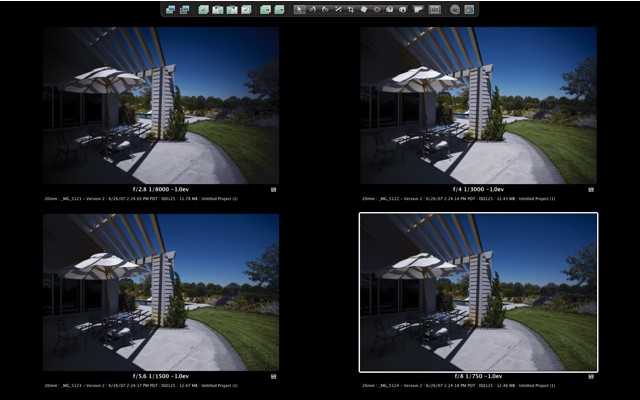
Anyway, that’s my excuse, and I’m an ultra-wide guy by nature. The Elmarit does that to you. Now this lens, at one tenth the price, is no Elmarit, but it’s more than serviceable. Plus you don’t have to deal with the crappy (sorry, no other word to describe it) plastic Leica viewfinder which, for all its cost, gives only a very rough approximation of what you will get on film. Sorry, film only for the Leica lens if you want all of its 21mm wide on the image. That disables it for me ay any price. If you want to get flare free snaps with biting corner definition at full aperture, and you are unaware that film is dead, the price of entry to the Elmarit world is justifiable. For me, this Canon 20mm f/2.8 does fine. By f/5.6 vignetting becomes very low and the corners sharpen up nicely; frankly, they’re not so great at f/2.8. At f/5.6 an 18x print will not embarass you, provided your original is sharp and well exposed.

Yes, it has some flare spots into the sun – see above – but the image retains high contrast across the frame. All I did was bring up the shadows in this snap, using Aperture. Exposure was for the highlight on the hood. Contrast is as recorded by the camera otherwise. Works for me.

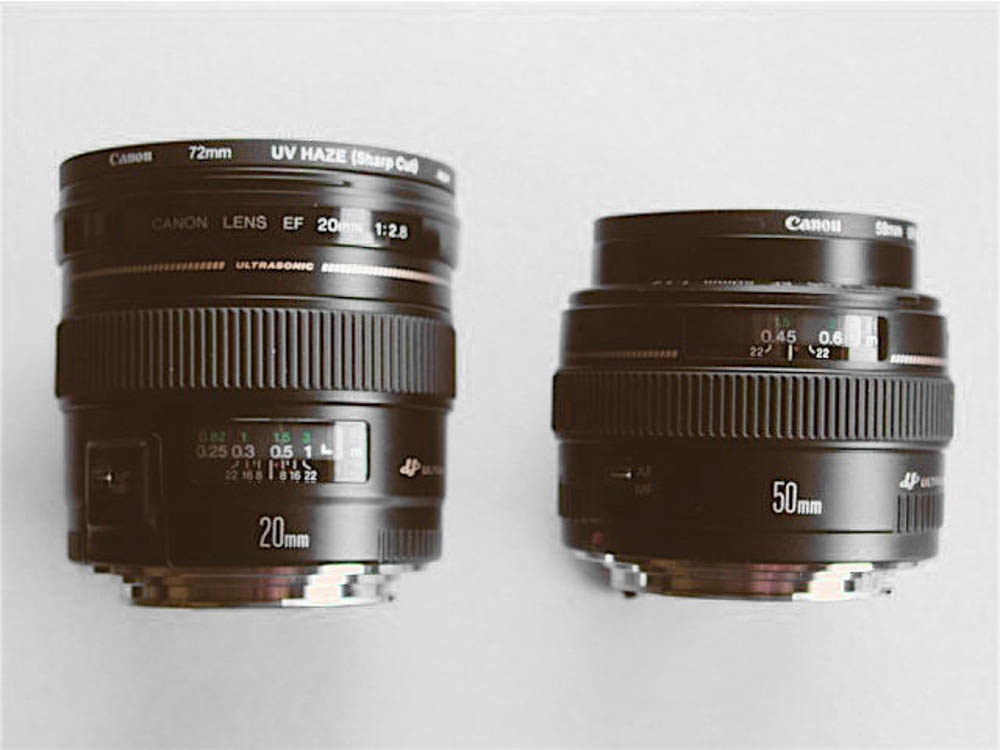
A nice lens, not all that compact, and fully automatic – lightning quick auto focus (though hardly vital with a lens this wide) and easy manual override. I bought mine from B&H in New York along with an inexpensive Canon 72mm UV filter to protect that bulging front element.

Update: After some more experience I ended up exchanging the lens for another – read here.

Canon and collimation

An intriguing new feature in the latest pro Canon DSLR

It was a rite of passage when using my rangefinder Leica bodies – the M2 and M3. Should the rangefinder alignment go out for whatever reason, you would go outside, place the camera on a tripod, focus on infinity then remove the lens. Sighting the rangefinder, lateral out-of-alignment would be corrected by using a right angled flat bladed screwdriver on the roller cam, which is eccentrically mounted. Replace the lens, check, repeat if necessary.

Vertical alignment was even easier – with the lens in place, remove the small chrome screw next to the rangefinder window on the front and use a jeweler’s screwdriver on the slotted screw thus disclosed.

This was called ‘adjusting the rangefinder’.

Much the same your friendly Leica repair specialist would do, though for your $250 you would get a three month waiting list and the obligatory German accent should you actually be lucky enough to reach this exemplar of the mechanical arts on the phone. If lucky to get him, you could plead for the return of your body after the obligatory three month absence. Good luck.

Aaah, Leica ownership. Like owning a Jaguar. You need two. One for the garage while the other is in the shop. You also need two mechanics in case one breaks down.

So lo and behold, what does the new professional grade Canon 1D Mark III offer? Why, a modern electronic version of this same feature. I quote from the awesome (as in 720 page!) B&H Digital Photography catalog which the local fork lift operator just delivered:

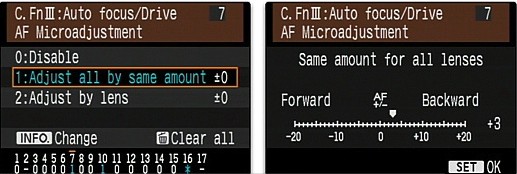
AF Micro-adjustment is another example of the flexibility of the Mark III’s AF system. If a critical photographer ever finds that his system seems to consistently focus slightly in front of or behind the intended subject, the AF Micro-adjustment (C.Fn III – 07) allows the user to adjust this in fine increments to put the sharpest plane of focus back where they’d (sic) like it to be. It even allows different adjustments for up to 20 different Canon EF lenses if necessary

So it sounds like Canon has not only added an overall adjustment to correct for an incorrectly adjusted focus sensor, they have also made it possible to key this adjustment to your lens of choice, recognizing that manufacturing tolerances would, inevitably, result in mis-collimated lenses. So you adjust things in the camera rather than at the manufacturing stage, suggesting a very smart way of keeping the cost of lenses within reason.

Now this latest Canon camera holds no interest for me. It uses a cropped sensor, making my wide angles less wide. Even if it had a full frame sensor I would not be a buyer as I simply do not need battle toughness or 10 frames a second capability, nor the massive bulk of the fixed battery grip.

But it’s nice to know that this feature will be coming to more ordinary bodies down the road, as these things inevitably do.

For some stunning Canon publicity images from this new camera, which claims a sharper sensor than its predecessor (these are clickable BIG downloads), click here. Make sure you check out Sample Image 7 – taken on the 85mm f/1.8 – the cheapest optic used and quite superb, as I know from personal experience.

Full aperture

f/1.4 is fast!

I have never owned a lens faster than f/2.

That said, the f/2s I have owned have invariably said ‘Leica Summicron’ on them, whether 35mm, 50mm or 90mm. Which is sort of like saying that all your sports cars have been Porsches, meaning the best of breed. At 90mm, that was an apochromatic, aspherical element lens and suffice it to say that the aperture ring on this lens only did two things – it changed the amount of light striking the film and it changed the depth of field. Definition at any aperture was the same, which is to say superb.

So I got to thinking what something faster might be like. Now f/1 is available from Leica only, and that means a second mortgage, so forget it. The f/1.2 lenses out there from Japanese makers have generally poor reputations, being more exercises in marketing, or keeping up with the Joneses if you prefer, so they are of no interest to me. But guess what? Canon just happens to make an f/1.4 for very little money and it’s auto-everything and a nice match for the 5D body. Plus, having grown up with film Leicas, I simply like the 50mm focal length.

So a couple of clicks on the B&H web site and the 50mm Canon f/1.4 was on my doorstep.

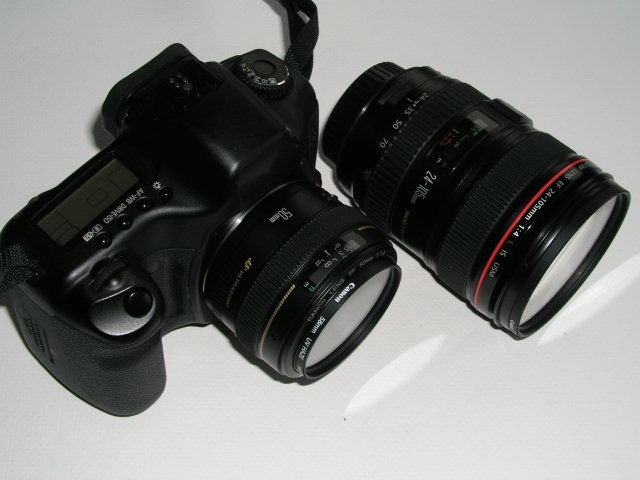
Much smaller than the ‘standard’ 24-105mm f/4 L zoom

The lens is well made, if not as solid as the ‘L’, meaning the extending focusing mount has a bit of play at the closest focus distance. Auto focus is every bit as fast as the ‘L’ and, strangely, the viewfinder image does not appear much brighter than with the f/4 L – certainly not three stops (8x) brighter. Naturally, as a fixed focus 50mm, it is much smaller and lighter than the L and the absence of Image Stabilization further reduces bulk and weight. The feel, with the lens on the 5D body, is just right – a smaller lens would not feel as good in the hand. The focus ring, if you elect auto-focus override, is a bit blah – it’s geared down approximately 2:1, making for slow manual focusing.

Surfing the web, comments about this lens vary from ecstatic to disappointed, the latter writers damning the optic for soft images at full aperture. How much of this is poor Canon quality control (how much can you expect for $300, after all?) and how much is poor technique I have no idea, but my first ever f/1.4 snap suggests this is a special piece of glass.

A long-suffering Bert the Border Terrier poses for Canon’s wonder lens

At any rational enlargement ratio, the above snap shows critical sharpness on the right front nails and the eye, which is how I wanted it. The nose, the crowning glory of the Border Terrier, is clearly unsharp, being a few inches closer to the lens.

I took three precautions to avoid definition robbing issues. First, I used a reasonably fast shutter speed of 1/60th second. Second, in the very low lighting in which this was taken, I cranked up the ISO on the 5D to 800, knowing that grain would simply not be an issue with the 5D’s sensor. The aperture was, of course, f/1.4. Finally, and I suspect most importantly, I used Canon’s spot focusing center rectangle to place focus where I wanted it, using a partially depressed shutter buttton to lock in the selected focus point. I wonder whether many users are using the default multi-point focusing feature of Canon’s DSLRs and ending up with the wrong focus point being selected? How on earth can the camera know what you want to focus on using this technology? Optimal auto-focusing depends on a focus point with contrast and detail, as those variables drive auto-focus accuracy. Point your auto-focus camera at a white wall and just watch the mechanism hopelessly try to establish optimal focus. Selecting the nails on Bert’s right front paw satisfied the dictates for accurate focus.

So this inexpensive optic seems like a nice addition to the 5D and some more extended work will disclose whether my first positive experience is borne out over the longer term. If not, I’ll just sell the lens for eighty cents on the dollar and put the loss down as the small cost of a worthwhile experiment.

A tale of two lenses

Some empirical tests deliver surprising results.

Being the ‘serious’ photographer in the family, the sad responsibility of selling off everyone’s film cameras naturally falls on my shoulders as we all move on to the world of digital picture taking.

I made mention of my mother-in-law’s magnificent Kodak Medalist II earlier, at which time I also sold her film Canon Rebel, together with its cheesy 28-80mm ‘kit’ lens.

Years earlier I had bought the same Rebel but got so tired of the execrable quality of the kit lens that we sold it and replaced it with a better 28-105mm f/3.5-4.5 Canon with improved optical and mechanical quality. When she decided to upgrade to the digital Rebel, we did the same, buying the pricey EF-S 17-85mm f/4-5.6 IS in lieu of the 18-55mm f/3.5-5.6 non-IS kit lens. A wise decision once you have handled the latter.

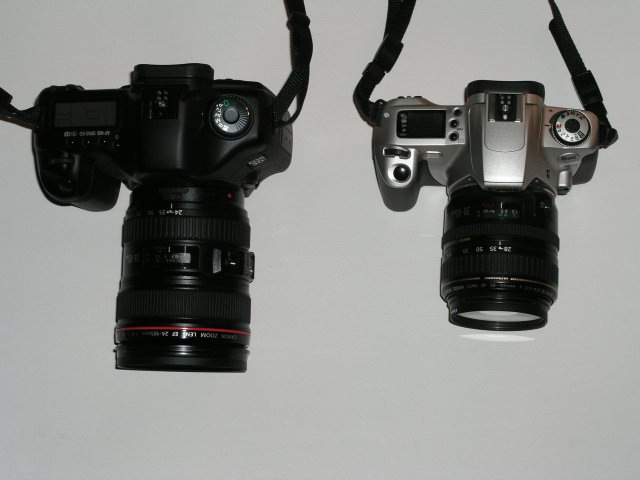
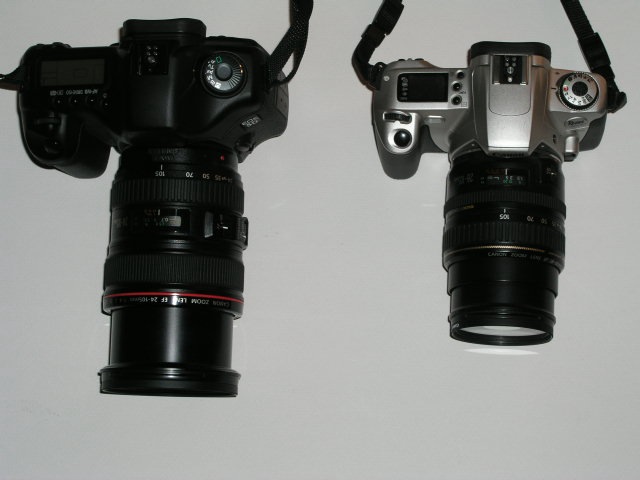
Anyway, I finally decided to sell the film Rebel and I dutifully listed it for sale. However, as the lens will cover a full 35mm frame I spent a few moments taking some pictures with it side by side with the costly 24-105mm f/4 L lens, both on my Canon 5D. You can get some sense of the relative sizes of the lenses here:


Both lenses at their shortest focal lengths


Both lenses fully extended

I took pictures at full aperture and f/8 with both, at 28mm, 50mm and the 105mm maximum.

Looking at the results, I must confess any differences are more imagined than real, and I know my 24-105mm L is good for enlargements to any size any rational user would want.

The L lens adds an Image Stabilizer, goes wider at a very handy 24mm, has lots of metal, very smooth controls no wobble anywhere plus …. lots of weight and bulk. By contrast, the 28-105mm lens is very light, although the mount is metal, has a horribly raspy, grabby zoom ring and the lens barrel wobbles about merrily when fully extended. Both have autofocus with the L marginally faster, but not enough to make any practical difference. Oh! and yes, before I forget, the L is $1,300 and the other is $230.

Now we may have been lucky and got a really good example of the cheaper lens, but based on this little exercise, I would recommend it without hesitation for anyone looking for light weight, fine resolution and a nice broad zoom range good for 95% of anything a regular photographer might need. You might not want to bash it about too much or expect it to last to the next millenium but, then again, you would also save a lot on chiropractor bills, not to mention over $1,000 on the lens.

Vibration Reduction

The greatest photographic invention since digital imaging.

The current B&H paper catalog contains no fewer than ten pages listing some 132 digital cameras, from inexpensive point-and-shoots to full frame Canon DSLRs. So there’s no shortage of choice at any price point. What is intriguing is that some 25% of these now include words like “Image Stabilizer” or “Vibration Reduction” in their specification. Go back a couple of years and the only place you could find these technologies was in a select few exotic lenses for their DSLRs from Canon and Nikon. True, some makers cheat by simply upping the ISO where slow shutter speeds would otherwise be required, but you can see the general technological direction nonetheless.

My guess is that, a couple of years hence, every digital camera save the very cheapest will have this technology built-in. Makers have come to realize that it offers a competitive advantage and, until proper optical viewfinders make a comeback, holding a camera at arm’s length to squint at the little LCD screen on the back while composing the picture denies everything we were taught as children about holding a camera steady.

And steady means sharp.


The stabilizer switch on the superb Canon 24-105mm L lens

I have become so attuned to the grain-free sensor in the Canon 5D that an 18″ x 24″ print is, if not something that is made with impunity, at least pretty commonplace, and the definition in the details is nothing short of startling. There is simply no way that I would be turning out so many large, sharp prints, with 35mm film technology. The enlargement ratio would be the same, true, but the vibration reduction in that splendid 24-105mm Canon lens would be noticeable by its absence. So while Leica can justifiably lay claim to making the best 35mm interchangeable lenses on the planet, not a one of them boasts vibration reduction. Bottom line? The less refined Canon optic with VR beats the superb Leica one unless a very sturdy tripod is used.

And it’s not just at the slower speeds that this is noticeable. Like most photographers, the majority of my pictures is taken using shutter speeds in the 1/60th – 1/500th range. Now the old rule used to be that you had to use a shutter speed no longer than the reciprocal of the focal length for a sharp picture. So, 1/50th for a 50mm, 1/100th for a 100mm and so on. This rule, of course, is so much rot. Go to any photo show and viewers will not step back twice as far to view an 18″ x 24″ print as they would for an 8″ x 10″ one. So the effects of camera shake in big prints are effectively magnified from the viewer’s perspective. So that 1/50th at 8″ x 10″ suddenly becomes 1/100th at 18″ x 24″ for the same perceived absence of camera shake. Offset this with the three shutter speeds of added sharpness gained from VR and you can see why most of my 5D originals easily scale to 18″ x 24″ prints. I am, in effect, using far faster shutter speeds than ever before, thanks to VR. Take away the detail-robbing effects of film grain, courtesy of the 5D’s noiseless sensor, and you have another quantum leap in definition.

So VR will become as commonplace in digital cameras as anti-lock brakes have in cars.

No way I need VR in my Canon fisheye, which has an effective focal length of 12mm after applying ‘defishing’ software, but I would kill for it in the 200mm f/2.8 where it is sorely missed. So until Canon does that, I continue to drag my monopod around with me when using this otherwise excellent optic.