Category Archives: Lenses

So you thought f/1.4 was fast?

How about f/0.85 back in 1934?

‘Glamor’ lenses for 35mm cameras, the ones with bragging power, have either entailed large apertures or extreme length.

On the extreme length end, it was rather like the cubic capacity of motorcycles. Once you hit the magic thousand, you had bragging rights. So when Vincent motorcycles (then known as HRD) came out with its magnificent Series A twin in 1936, it was a ‘thousand’ (actually 998 ccs) that graced the frame and made it the talk of the town. On the lens front, thousand mm lenses have been around for ever, even if they were never priced at amounts the amateur could afford. No, you had to use someone else’s money to buy a Zeiss Mirotar 1000mm mirror lens for your Contarex back in the sixties. That or choose between a car and that lens. Nikon already had lenses of this length and greater. Canon had a 1200mm ages ago and it was a regular refractive rather than mirror optic, some 853mm long. That’s almost three feet! Get one of these and you could say yours was longer than anyone else’s with little fear of contradiction.
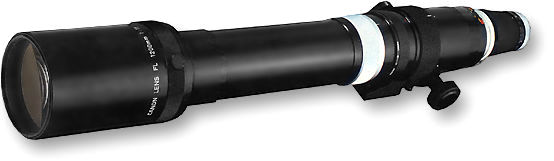
The Canon 1200mm f/8 telephoto lens

Quite how you were meant to keep this monster steady unless your tripod was built like the Maginot Line is unclear to me, but hey!, you were the big guy on the block so who cared? Sure, Nikon had the 2000mm mirror lens, weighing in at 40 lbs. but, let’s face it, it was barely two feet long so the only bragging rights it conferred was how long it took you to recover from the hernia induced by lifting it on your tripod. Or, for that matter, from lifting the tripod sans lens if it was one sturdy enough.
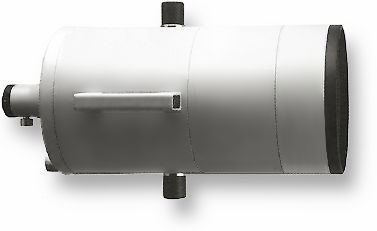
The Nikon 2000mm f/11 mirror lens

So long was long and nowadays these monsters are as passÄ— as bell bottoms and wide flower ties. Reminders of silly one upmanship and passing fads. The longest Nikon and Canon lenses I can find in the B&H catalog are 1000mm (a mirror lens with a modest f/11 aperture) and 600mm (with a whopping f/4 maximum), respectively.

But for the average man in the street, fast was always more intriguing than long. If his ship came in, a nice 50mm f/1.4 was more likely to grace his camera than a 2000mm f/11. Heck, you could actually use the thing. Indeed, even before WW2, Leica and Zeiss offered f/1.5 50mm lenses. Back as far as 1925 Erich Salomon was taking his great candids with an Ermanox 4.5 x 6cm plate camera fitted with an f/1.8 lens. So speed goes back a few years. Once modern anti-reflective coatings started to be used about 1942 (wars and technological progress being synonymous) these lenses began to transmit something close to their stated apertures. Later Leica gave the world the Summilux, an f/1.4, originally a 50mm and later joined by 35mm and 75mm versions. All superb.

In 1953 Zunow came out with an SLR, largely made of pure cheddar with an f/1.1 lens. Four were sold and have never been heard of since. I recall seeing one and that lens was certainly impressive to look at. In 1956 Nikon equalled them with an f/1.1 for its screw thread Leica clones.

So in 1961, not to be outdone, Canon came up with the 50mm f/0.95 for its Canon 7 rangefinder cameras which used a Leica thread mount. So large was the lens it had a separate external bayonet mount to fit around the standard mount on the camera body. User comment suggests this was truly one of the worst lenses of all time but, what the hell, it was under f/1.0! “Brighter than the human eye” the advertisements screamed. I’ll bet it sold a lot of Canon 7 bodies with f/1.8 lenses. You could always say you could get three faster lenses in case of need – f/1.4, f/1.2 and this worthless wonder.
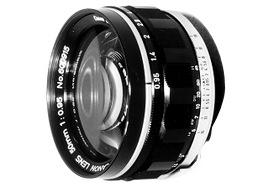
The Canon 50mm f/0.95 lens. Like most marketing exercises, fast and worthless.

By the way, Canon tried again with a 50mm f/1 lens in their ‘L’ line early in the 21st century. Testifying to the poor performance of that lens, suggesting Canon had learned little from their prior experience, that lens was discontinued a couple of years ago and now has, you guessed it, collectible status. Must make for a nice paperweight, I suppose.

Leitz’s approach was different. The German character, not renowned for its sense of humor, reckoned that anything faster than f/1.4 actually had to be capable of taking sharp pictures, so they took it in baby steps, first coming up with the f/1.2 Noctilux with its exotic and costly aspherical element. Needless to say, the lens was superb and the limited production run of some 2,000 has ensured its collectible value. Meaning, sadly, hardly anyone uses one of these any more, most rotting in some collector’s cage.

It took Leica another 10 years to work out how to do it with spherical glasses and how to make it faster, and the f/1.0 Noctilux was born in 1976. It remains in production to this day and is probably the first useable f/1.0 lens for a 35mm camera ever made.
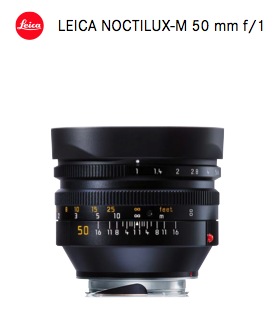
But Leitz always were horrible at marketing. Had they but searched their long and distinguished history, they would have found this and it was made in 1934 with an aperture of f/0.85! Or maybe they knew and were embarassed that 42 years later they could only manage f/1.0?

The Leitz 75mm f/0.85 Summar. From Theo Scheerer’s ‘The Leica and the Leica System’, Fountain Press, 1962

And you thought f/1.4 was fast?

By the way, want a $300 f/0.70 lens which will blow any of the above away for definition? Simple. Place that inexpensive Canon 50mm f/1.4 on your EOS 5D, set the speed to 1600 ISO and enjoy finer grain than TriX film at 400 ISO. Two stops gained from f/1.4 make it an f/0.70 with the depth of field and definition of an f/1.4. So Canon finally made a decent sub-f/1.0 lens, by virtue of that wonderful full frame sensor in the 5D!
Canon 15mm Fisheye lens – Part II

Not only wider than the 14mm, it more than holds its own

I dropped by Hearst Castle again today to put the Canon Fisheye lens through its paces. The ultra wide angle of view, equivalent to a 12mm full frame lens using ImageAlign – see Part I – is ideal for interiors of the magnificent rooms, aided by the noise free sensor in the EOS 5D which allows ISO to be cranked up to 800 with impugnity. Something that is required as the Castle prohibits the use of flash and tripods.

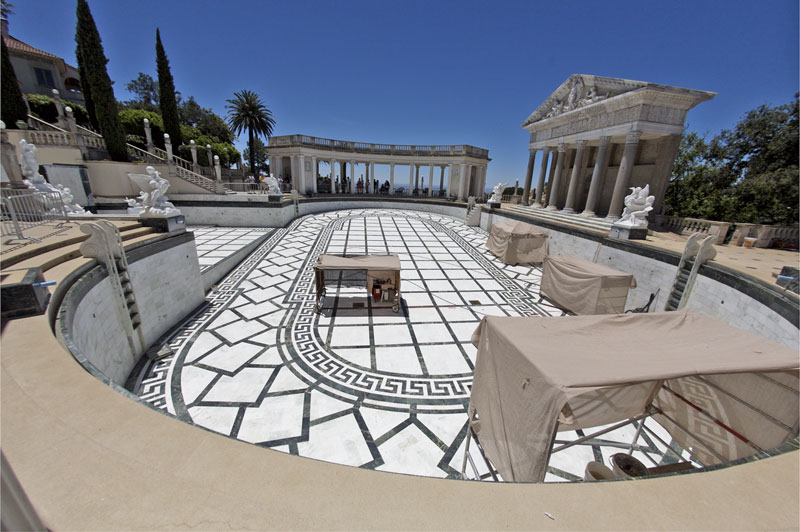
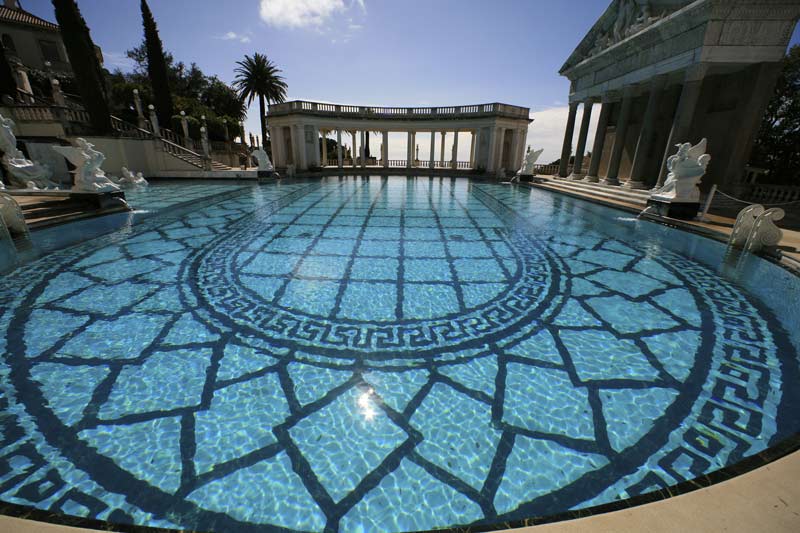
I took Tour 3 this time, which visits the bedrooms used by Hearst and his many guests – the likes of Cary Grant, Clark Gable, Errol Flynn and David Niven. On the way we stopped by the large outdoor pool only to find, to my amazement, that it had been drained! Actually no bad thing as you could see the beautiful Carrara marble floor in broad sunlight. Evidently the pool had sprung a leak and workers were busy patching it up for the Hearst family’s annual summer visit, something they negotiated with the State of California when they donated the property years ago.

Well, it was a moment’s work to take a snap from the exact same vantage point I had used a few weeks ago when a fellow photographer had allowed me to try his very costly 14mm Canon ‘L’ ultra-wide lens. In the pictures below, you can see just how much wider the fisheye is after correcting for barrel distortion with the ImageAlign plug-in in Photoshop.

Canon EOS 5D, 14mm Canon ‘L’

Canon EOS 5D, 15mm Canon fisheye, Image Align

Chromatic aberration had been minimized in both images using the lens correction filter in Photoshop CS2.

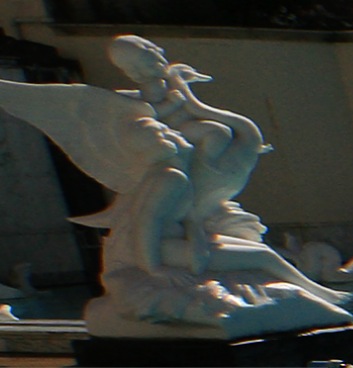
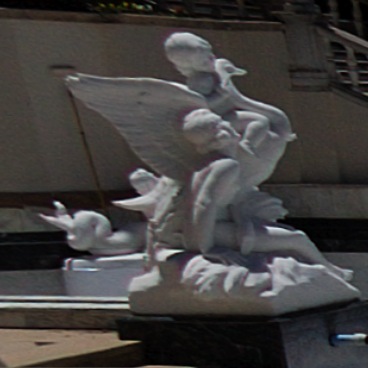
While I was processing these, I thought it might be instructive to compare actual pixel-sized extracts of each image. Granted, the lighting conditions varied slightly, but here are screen shots of the white marble statue at center left – the print size would be over 40″ wide:

Canon EOS 5D, 14mm Canon ‘L’, actual pixels

Canon EOS 5D, 15mm Canon fisheye, Image Align, actual pixels

Fairly compelling evidence that the Fisheye + ImageAlign more than holds its own. The smaller size of the statue in the second picture is accounted for by the wider field of view of the fisheye lens.

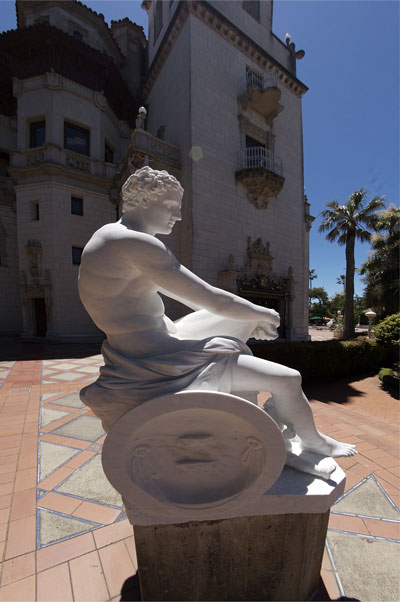
How do the lenses compare directly into the sun? Both are simply outstanding. The original of the 14mm image had one internal reflection at the top, which I removed in processing. In the following fisheye image, the sun is in the frame of the original, disappearing after use of ImageAlign. You can see one internal reflection artifact above and to the right of the statue’s head.

The god Mars. Carrara marble. Canon EOS 5D, 15mm Canon fisheye, Image Align.

Indoors? No problem. Both lenses are bright at f/2.8, making composition easy.

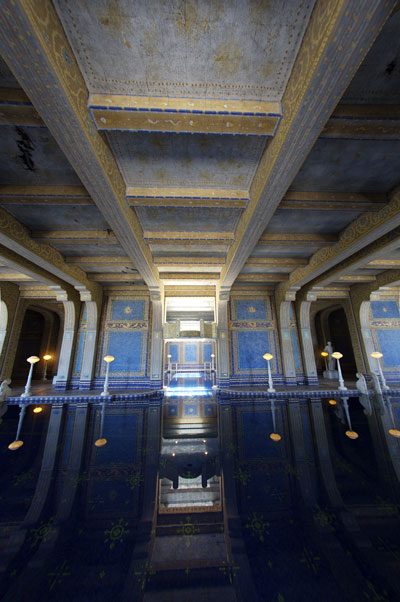
Hearst Castle. The indoor pool. Canon EOS 5D, 15mm Canon fisheye, Image Align. ISO 1600

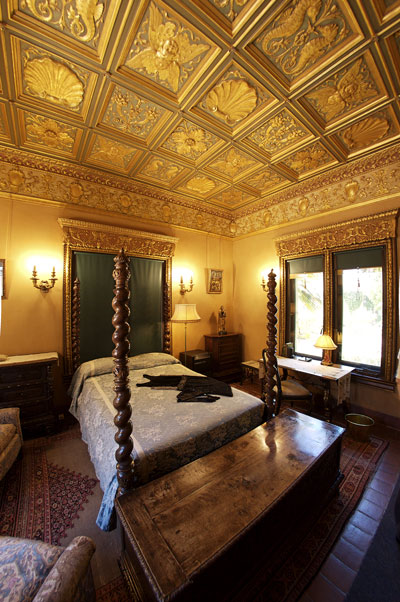
Hearst grew up in a time when the incandescent light bulb was just coming to market and never got over his wonder at the magic of electricity. This fascination translated into a near total absence of lampshades in the Castle’s guest rooms. That is as Hearst wanted it. Opportunity enough to try the fisheye’s handling of light sources in the frame at full aperture.

Guest room at Hearst Castle. Canon EOS 5D, 15mm Canon fisheye, Image Align. f/2.8. ISO 800

The bare bulbs are rendered with a gentle glow – not perfect, but more than acceptable in the circumstances – this room is very dark as are most, by design. There is no air conditioning in Hearst Castle.

For Part III of this review, click here.

Canon 15mm Fisheye lens – Part I

Not just a throwback to the sixties

Update November 2009: ImageAlign is out of business and the plugin described here is no longer available. However, something every bit as good is available. It’s called PTLens and you can read about it here. Lightroom3 also now includes ‘defishing’ controls.

The lengthy list of things best forgotten from the 1960s includes long hair, bad music, revolting students …. and done-to-death fisheye lens images. So you can imagine there was no way on earth I would ever contemplate buying one of these gimmicks.

Yet here was the latest addition to my little outfit yesterday:

Canon EOS 5D, 15mm Canon f/2.8 Fisheye lens

A while back I wrote of the stroke of luck I had when I bumped into a fellow Canon DSLR user at Hearst Castle; he was nice enough to let me take a couple of snaps with his super exotic 14mm f/2.8 ‘L’ lens on my 5D body. This was mightily impressive, the creative opportunities legion, but at some $1,800 for the occasional superwide snap I decided I preferred to keep bread on the table. But that super-duper wide angle view stuck in my mind.

With my standard lens on the 5D being the wonderful 24-105mm zoom, a 20mm, the next widest lens, made little sense. The difference between 20mm and 24mm is not all that great, and I felt pretty happy with the 24mm setting on the zoom. Plus I did not want the bulk of a wide zoom lens. Then I found myself thinking about image correction and how much more of this sort of thing is increasingly being done in processing rather than with the camera’s software. Sharpening, exposure, contrast even lens aberrations can be repaired in Photoshop CS2 and Aperture.

Wait a minute! Lens aberrations? Well, couldn’t you take a cheap fisheye and remove the native barrel distortion, giving you something seriously wide at modest cost? So I typed ‘lens distortion correction’ into Google and one of the first results was for a New Zealand (New Zealand?) company named Grasshopper. Turns out they sell a Photoshop Plug-in named ImageAlign so I did a spot of reading which disclosed that this was a natural match for any number of fisheye lenses out there, making straight that which would otherwise be curved. So I plonked down $650 for the Canon fisheye and took a couple of snaps. No way was Photoshop CS2 able to straighten the curves with its modest range of corrections, so I downloaded the trial version of ImageAlign and, hey presto!, straight lines. So another $79 saw me equipped with what is, in effect, a 12mm wide angle after corrections are applied.

Read that again. A 12mm wide angle full frame lens.

August 2008 update: Grasshopper seems to be out of business but the features of ImageAlign described here are now available in Photoshop CS3.

How does it all work? Well, first you have to overcome the bout of vertigo you get from using a fisheye – a new experience for me. (The fisheye, not the vertigo – I get that every tax day already). Then you have to watch out that you don’t photograph your toes or shadow. Easier said than done. The fisheye fills the frame with its image on the 5D and is very, very wide indeed. Don’t even think of using this lens on a non-full frame sensor camera as your fisheye becomes a 24mm wide, so you might as well buy the equivalent lens (a 15mm non-fish on a 1.6x body) to get straight lines in the first place. But you cannot get this wide with anything except a full frame camera. A 1.6x sensor needs a 7.5mm lens to get this wide and they do not exist.

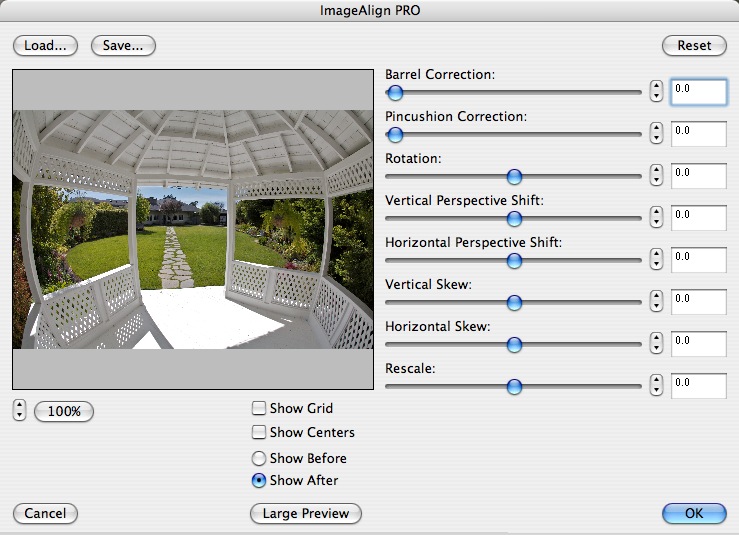
You then load the picture into Photoshop CS2 where the Grasshopper plug-in appears under the ‘Filter’ menu. The interface is everything that Photoshop is not – simple, intuitive and fast. Here is what you see:

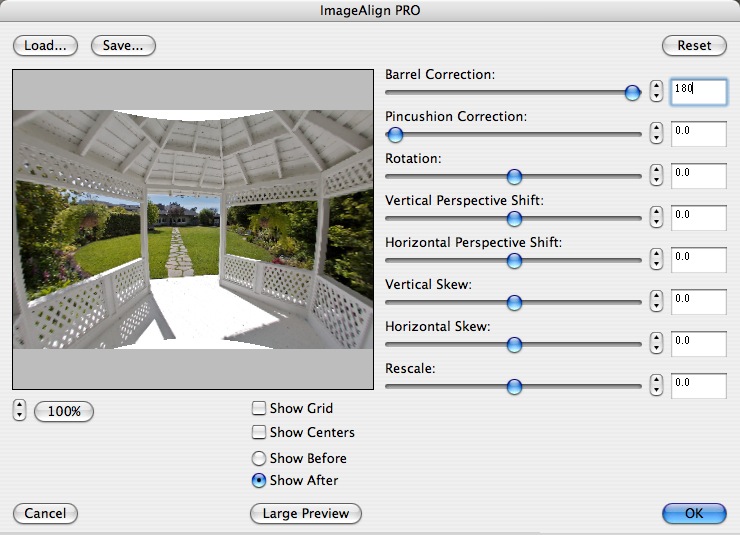
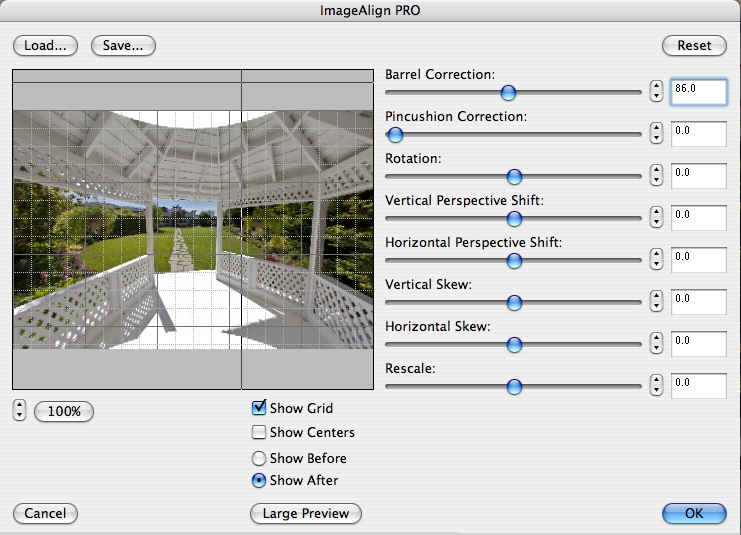
Now to get the curves dead straight, you crank in 180 (max) barrel correction:

Almost straight, but not quite. Save this and crank in another 86 degrees of barrel correction:

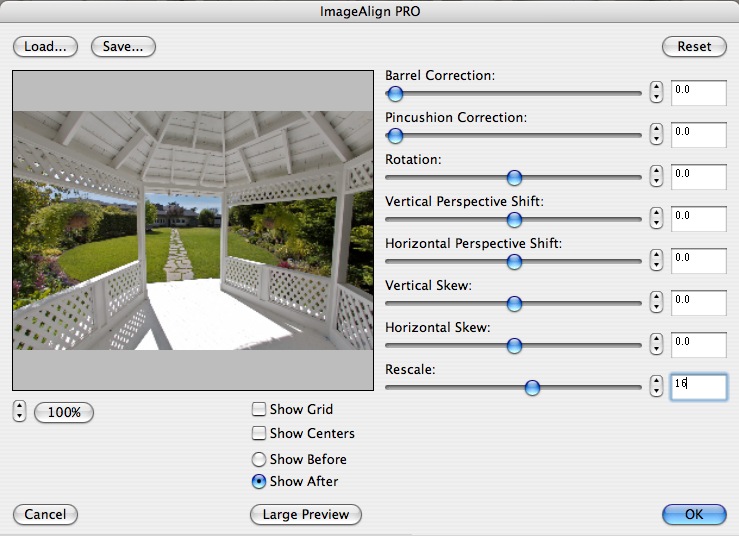
Now things are straight. It only remains to remove the half moons top and bottom by dialing the Rescale slider to 16 and you are done:

Note that in the conversion nothing is lost from the center top and base, but some corner details disappear. That’s distortion correction for you.

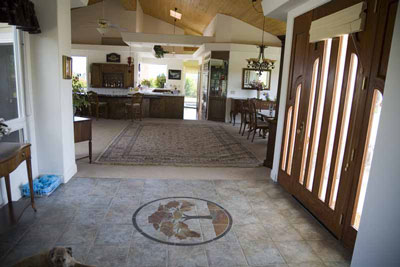
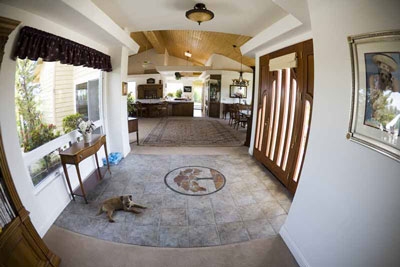
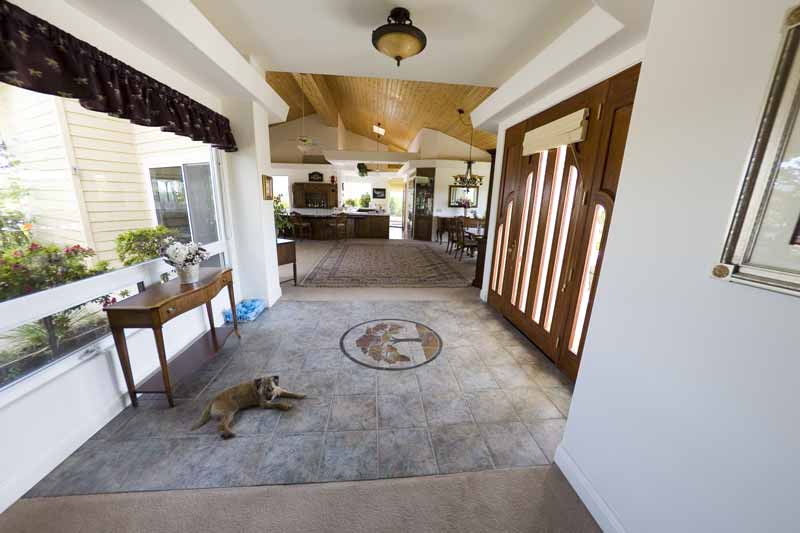
How wide exactly is this combination? Well, suffice it to say that every self-respecting realtor should own one of these. Here’s the main corridor in our home with the 24-105mm at 24mm and with the fisheye:

And here is the fisheye version after correction with ImageAlign:

See what I mean? The price of the old estate just doubled.

It should be added that this lens is not easy to use. You don’t have to get close. You have to get intimate with your subject. Not for nothing does this lens focus down to a few inches. Rumor has it that Canon has not changed this lens in twenty years, and I can’t blame them. Edge definition is far superior to the 14mm that I used and while the little focus motor makes a whirring sound, the focus throw is so short that this is simply not an issue. The 14mm ‘L’ lens is silent, by comparison, and weighs twice as much. It also costs three times as much. No one ever said that silence was cheap.

Canon provides a metal lens cap, which is a shame. Plastic, as supplied with the 14mm, resists scratches and knocks far better. And, for once, you have to keep the stupid lens cap with you as there’s no way to protect the front element with a filter.

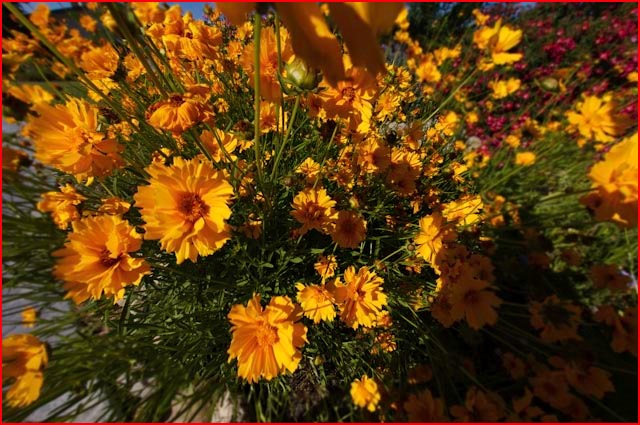
In practice, I kept feeling that I was looking at Van Gogh’s Yellow Chair or any one of a number of Bonnard paintings, so tilted is the perspective. You can get some sense of this from a few snaps I took down the road at the Cambria Pines Lodge, whose grounds include a beautiful garden, by clicking here. Some of these snaps are corrected with ImageAlign, some are left native where the distortion does not detract.

One other thing to note is that it makes sense to bracket exposure if in doubt. Digital sensors really seem to hate overexposure, reminiscent of slide film, so you want to preserve detail in the highlights and adjust the shadows later when processing. And chances are that you will have a huge contrast range outdoors owing to the enormous field of view of the fisheye. The last picture in the attached slide show, which is the interior of the Lodge’s Lounge, was taken at the fisheye’s full aperture at 1/20th second, with ISO dialled up to 1600, hand held. The glass of wine I had just enjoyed, visible in the foreground, served in lieu of a tripod. Is it sharp? The 13″ x 19″ print lying on my desk would make your eyes pop.

So there you have it – the widest rectilinear DSLR wide angle lens in the world, with absoutely no discernible vignetting, for some $650. Try it. You might like it. Yes, I know there’s a 12mm Voigtlander lens for film cameras, but before you spring for it and its extreme vignetting and poor resolution, let me remind you that Film is Dead.

Cambria Pines Lodge garden. Canon EOS 5D, 15mm Canon Fisheye, sepia toned in Aperture

Part II of this review appears here.

Canon 200mm f/2.8 ‘L’ lens

Finally, a replacement for the magnificent Leica Apo-Telyt-R

Mention of the fabulous Leica Apo-Telyt-R lens in my column on the Leicaflex SL the other day prompts mention of its replacement which I have been using for a few weeks now on the Canon EOS 5D.

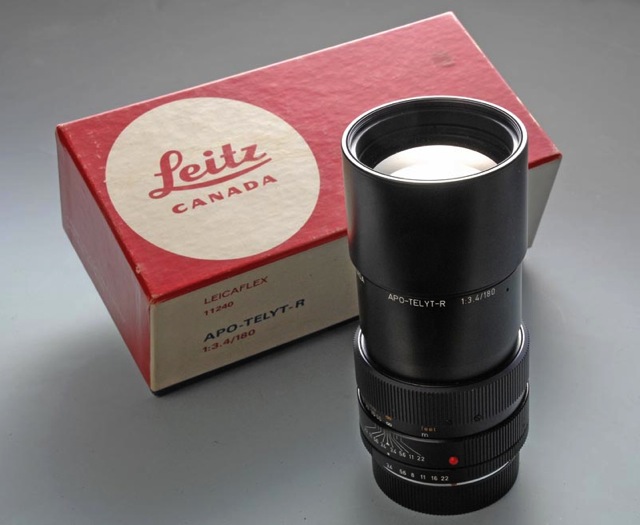
Available during the period 1975-98, the 180mm f/3.4 Apo-Telyt was one of the first Apochromatic lenses available for 35mm cameras, meaning there was no color fringing to be seen no matter how big the enlarged print. It was a surprisingly compact lens, weighing in at 1.65 lbs with its built in lens hood. Full aperture definition was as good as that at any other aperture, meaning superb, or as good as your ability to hold it steady.


The fabulous Leitz 180mm Apo-Telyt R

While cursed with yet another clunky lens hood (why on earth did Canon abandon the earlier sliding lens hood? Another Canon lens hood in the garbage can), the Apo’s replacement on the EOS 5D is Canon’s superb 200mm f/2.8 ‘L’ lens. The ‘L’ lens adds the benefit of automatic focus, to boot. As I sold the Apo-Telyt in a moment of foolishness a few years back, I have been using the fully manual Leitz 200mm f/4 Telyt on the 5D where it works well, but you have to stop down and focus manually. A legacy of my Leica M/Visoflex housing days. Closest focus with the Canon is down to 4.9 feet (compared to a rather poor 8.2 feet for the Apo-Telyt) and can be limited to 8.2 feet in the interest of faster performance when the close-up range is not needed. Weights of the two lenses are 1.65 lbs for the Apo and 1.68 lbs for the Canon, meaning the latter uses plastics where possible as it has automatic diaphragm and focus motors to conceal in its somewhat bulkier body.

Automatic focus speed on the 5D is simply startling. So fast you don’t even think of it, though I have taken the precaution of limiting auto focus area selection to the center focus rectangle in the interests of accuracy. There’s not much depth of field at 200mm and f/2.8! The only thing missing is vibration reduction. Now that would be nice to have!

Consistent with my commitment not to get loaded down with gear, I purchased a small cylindrical soft case for the lens which attaches to my belt and, because its overall dimensions are similar to the 24-105mm f/4 ‘L’ , when one lens is on the camera the other makes its home in the belt case. Each is fitted with a clear UV filter, so only a rear cap need be used – I would dispense with that also, but the rear lens element on the zoom is too exposed to take that risk, given my proclivity to thumbprint everything.


The Canon 200mm f/2.8 and 24-105mm f/4 lenses. The zoom (right) is at its longest setting.

Why a prime lens rather than another zoom? Two reasons – weight and maximum aperture. Performance is less of a concern given the high optical standards of Canon’s ‘L’ lenses. I really do not need focal lengths between 105mm and 200mm and the 5D’s sensor allows image enlargement in this intermediate range without compromising definition. Further, any lens with a half-decent maximum aperture that zooms beyond 200mm is impossibly bulky. On the very rare occasions I need something longer I have my 400mm f/6.8 Leitz Telyt to fall back on.

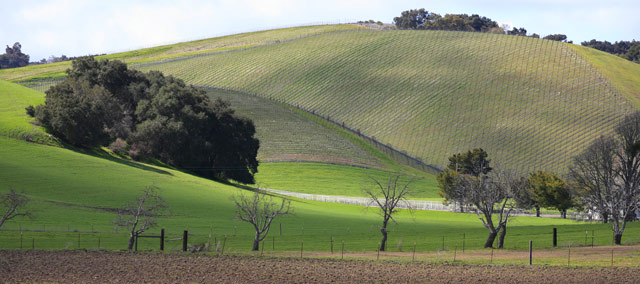
The 200mm is a fine landscape lens, compressing perspective and focusing on essentials.


Canon EOS 5D, 200mm f/2.8 ‘L’, probably at f/5.6.

Best of all, as ‘L’ glass goes it’s positively a bargain, and chump change compared to the Leitz lens which it so ably replaces.


Canon EOS 5D, 200mm f/2.8 ‘L’, at f/3.5. No problem with background clutter!