Category Archives: Hardware

Stuff

It was 25 years ago today ….

…. and it’s still the only Superbowl ad anyone remembers.

To this day, this inspired piece of anti-Big Brother propaganda convinces consumers that their PC maker of choice is a struggling start-up fighting the forces of evil, when in reality the company has $28bn in cash, 50% operating margins, a $100bn market capitalization and a presence in just about every country and seemingly on every Main Street on earth. Heck, IBM is smaller than the eponymous fruit company now.

You can fool all of the people all of the time and, no, I will emphatically not be watching the Superbowl with its hopped up, hyper-thyroid, cortisone injected ‘athletes’ any more this year than I did 25 years ago. I will, however, be watching the ads, as usual, to see how consumer trends can benefit investing strategy.

Something’s afoot at Panasonic

The new Leica M?

Call me dated. Say I am out of touch. Ridicule my love of the mechanical age.

I have no problem with any of those accusations as all are true.

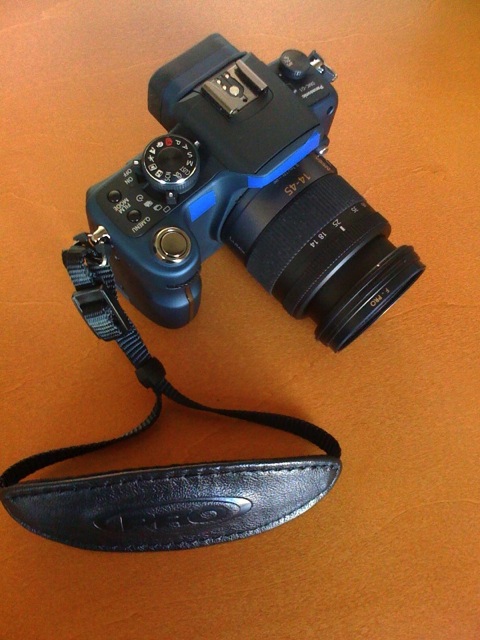
So when I wrote a while back, not a little intrigued, of the Panasonic G1, it was for no other reason than that this photographer’s schnozzer sensed a possibility in the making.

Revolution? Why, yes. A modern Leica M for the digital set because, whether you like it or not, we are all members. Meaning small, fast, quiet and with large aperture lenses for low light work.

And we all know who designs the lenses for the best Panny designs, don’t we? Can you say Leica?

These thoughts were brought to the fore when DP Review published its analysis of the Panasonic G1. To cut to the chase, it’s not ready for prime time any more than the L1 (which at least looked like a Leica M) was. But you have to respect where Panny is going with this.

Meaning they are inching closer to the Leica ideal – small, quiet, fast, unobtrusive.

Now all they need to do is throw the design book out of the window and …. take a hard look at the form factor of the Leica M – but 33% smaller this time. And it wouldn’t hurt to have a viewfinder that works in something less than California sunshine.

SDHC cards in the Canon 5D

Some surprising results.

SDHC cards are, let’s face it, the happening thing. With capacities up to 32gB and multiples of that in the offing in a postage stamp-sized medium, CF cards are not going anywhere. Add the fact that one vendor even offers an SDHC card with wireless transmission capability (though it does not support RAW files at the time of writing) and there’s reason to think that the greater bulk and inferior contact mechanism of the CF card (which depends on mating fragile pins with the card as opposed to the SDHC’s far more robust broad wipers) are headed for the technology waste bin. Finally, the burgoening netbook and flash memory markets are not about to use CF cards whereas every netbook and more devices have built-in SD card slots.

So, just for fun, I procured an inexpensive CF-SDHC card adapter ($25) and a bottom-of-the-line Kingston 8gB SDHC card ($18) and tried it in the 5D.


CF-SDHC Jobo card adapter, 8gB Kingston SDHC and 2gB Sandisk CF cards


455 RAW images on one card!


Side loading of the SDHC card in the adapter


While thicker than a CF card, the adapter fits the Canon 5D fine

The comparison, for timings, was a top-of-the-line Sandisk Extreme IV. I expected write times to be much faster with the Extreme IV, and they were. Taking 10 snaps in rapid succession in RAW on the 5D, the red light (indicating write status) on the rear of the camera remained on 16 seconds with the Sandisk compared with 39 seconds for the SDHC+adapter combination after taking the last picture. So if serial shooting in vast quantities is your thing, look elsewhere – the 5D has a 17 image RAW buffer so rapid shooters will find themselves bumping up against this – and slowing snap to snap times – with slower cards.

However, when it came to importing the images into Lightroom 2 (I used a Firewire CF card reader for the Sandisk and a cheap Transcend USB reader for the Kingston), import timings were 28 seconds and 26 seconds respectively. The SDHC card was faster! By contrast placing the SDHC card in the CF adapter and using the Firewire reader took 34 seconds – slower still. So SDHC import using an SDHC USB reader beats CF in Firewire!

Why bother? Because I like to use a netbook (with its SDHC slot) on the road and the built in SDHC card reader is a joy to use – no card adapter to forget. And because fast write times mean little to me, I am quite happy to have 450+ pictures available on one card which also fits a broad gamut of other devices in the home. And, maybe one day, Eye-Fi will produce an SDHC card with wifi built-in which supports RAW files. You won’t be seeing that in the CF format any time soon.

My only niggle is that it would have been nice had the adapter been end- rather than side-loading as the design requires removal of the adapter from the 5D to permit removal of the card. But overall, this is a fine value and I would guess the slower write speed in the camera would be made up for by the use of faster cards, if that matters to you. For me, it’s not an issue.

Lens of the Year

No contest.

It’s not so much ‘Lens of the Year’ as it is ‘Outfit of the Year’ and the choice will surprise none who have been visiting here recently.


Canon 5D, Canon 100mm EF Macro and Bower ring flash

While none of this gear is ‘new’ – the 100mm macro has been around for ages, the 5D is no spring chicken and ring flashes are as old as politicians’ lies – what is so very special about this outfit is how simple the technical side becomes. Back when, in the bad old film days, you used a lens head on a bellows, constantly messed with focus and depth of field, tried to remember the right exposure compensation when the bellows were racked out and then suffered agonies trying to light your subject. Then, when you snapped the picture, you realized that you had forgotten to stop the lens down and were five stops over-exposed.

But Canon obsoleted all of that with a few strokes of genius, doubtless available from other makers also. First, they made the lens fixed length. It does not change in size as you focus. Second, the focus range is continuous from infinity to life size on a full frame sensor body. Third, focus is automatic and blisteringly fast. And, finally, E-TTL makes sure that all those arcane calculations are a thing of the past, computing the optimal blend of natural and flash light on the fly. A nice 100mm length also allows the photographer to step back from the subject, leaving more working room, and throw in the Software of the Year and you have the most perfect macro kit yet.

Thanks to all this magic 100% of your attention can be devoted to the subject and the technology takes care of the back end. This compares well with the automatic gearbox in cars which leaves more brain cycles available for the job of driving rather than shifting gears. Sure, there are people who like to use a clutch. (None of them drive in Formula One, by the way). There are also people who will tell you that film beats digital and good sound ended with the LP era. Have pity on them, while they do their calculations and make incantations to the analog gods of yore. The world will always have its technophobes, most so over-invested in yesterday that they have to defend antiquity.

And it’s not like this wonder lens is wildly expensive, compared to the mess of adapters, bellows, racks etc. in olden days. The lens retails for under $500 and works every bit as well on Canon’s cropped sensor bodies as it does on full frame. The optical and mechanical quality is right up there with Canon’s exalted ‘L’ offerings – I know as I own some. In fact, there’s not a sharper lens in my kit. So add an inexpensive digital Rebel body, splash out another $150 on the ring flash (no need to get Canon’s costly version), and you have the best macro kit out there for under $1,000. What’s that, you say? You want the ability to switch off one side of the ring flash tube for better modeling effects like the Canon one does? Well, dear reader, I have two words for you. Black tape. You stick it over one half of the flash tube in the same way you stick it on your camera to obliterate all those gauche manufacturer’s markings. Now that’s what I call a bargain.


The good old days were …. really bad.

The Canon EF 100mm f/2.8 USM Macro autofocus lens is the Lens of the Year.