Category Archives: Hardware

Stuff

Canon’s EOS Capture

Instant digital gratification?

I messed about some more with the software Canon provides with its 5D camera, Digital Photo Professional (DPP). You know the application with all those comedic spelling errors.

Well, I found more spelling errors, true, but I got to wondering about the little USB cable Canon provides with the camera that plugs into a receptacle under that silly flap on the side.

After installing DPP on my iBook, I plugged the camera in and switched the ‘Communications’ option on the Tools menu on the LCD from ‘Print/PTP’ (the default) to ‘PC Connect’. That really should read ‘iMac Connect’ but I’ll let it go. With the camera switched on, go to DPP->Tools->Start EOS Capture on the iBook and you are ready.

Take a snap in RAW format and, hey presto!, the picture appears on the iBook’s screen. It works as well in Jpg mode. You see the snap on a full screen where you can actually gauge sharpness, focus, exposure and so on, as opposed to the small LCD screen on the back of the camera where you mostly see your nose in the reflection.

For a studio photographer, whether taking product pictures or using live models, this strikes me as the bee’s knees in functionality. The pictures are automatically transferred from the camera’s card to the computer while all this is going on. Thus a smart pro could have his studio assistant view the screen shots and provide instant feedback allowing corrections to be made. After all, said assistant no longer has anything else to do as he’s not loading film any more. And you thought Polaroid invented instant gratification?

With the camera set to the lowest quality Jpg setting, a sharp picture pops on the screen in 3 seconds; with RAW it pops up blurred in 5 seconds and takes another 10 seconds to sharpen. There’s quite a bit of processinbg going on in this case and, let’s face it, my iBook’s 1.42 gHz processor isn’t the fastest on the planet. The timing with RAW + low quality Jpg is similar.

A separate panel on the iBook’s screen also appears allowing you to set many of the cameras settings using the keyboard, such as aperture, shutter, ISO, image quality. Most intriguingly, you can also enable a timer automating shots with stated intervals. Maybe astronomers will like this sort of thing?

The cable provided is ridiculously short – some eighteen inches – as to be unusable, but that’s nothing an extension cable cannot fix.

Postscript: I tried this set-up with a 15 foot long USB extension cable using my iMac G5 which has a 2 gHz Power PC processor, 2 gB of memory and very fast video processing. A sharp RAW image is displayed in 5 seconds, highest quality Jpg takes 3 seconds and lowest quality Jpg is around 1.5 seconds. These times suggest this would be an extremely capable studio installation as, by the time you have set the camera down to look at the monitor, the image will be there.

Noise

Shutters are all over the board

Over the years I have owned cameras from across the noise spectrum, by which I mean the noise the shutter makes when it’s tripped has varied from near silence to cacophonous. From a gentle whisper to a metalllic explosion.

For the most part, it’s fair to assume most photographers would agree that noise is not a good thing. Not only does it distract and cause vibration, there’s something just wrong about it. It’s in our genetic make-up. Why do you think the costliest real estate is invariably in the quietest locations, be it Fifth Avenue mansions with one foot thick stone walls or the sweeping estates of the Bel Air with the nearest neighbor hundreds of yards distant?

Silence, then, is a premium priced attribute, yet that fact seems to have escaped many camera manufacturers. Thinking back, the large Pentax 6×7 I owned years ago had the most wonderful lenses, yet the only truly sharp results I obtained from it were when it was used with a studio flash, with which it unfortunately synchronized at very low speeds. The problem was that tripping the shutter set off an explosion so loud, that people a hundred yards distant would duck for cover wondering which cowboy had come to town, guns blazing. So nice as that big negative was, and it fit 16″ x 20″ paper near perfectly, the camera had to go. The ten explosions a roll plus the onset of carpal tunnel from trying to hold this beast to eye level, not to mention hearing problems, were simply too much.

My large format gear is at the other end of the noise spectrum. In fact the lens shutters are so nearly totally silent, an illusion enhanced by the distance of the shutter from the operator and the huge space between lens and film which acts as a baffle, that sometimes I wish the shutters were a tad louder. Take the time I was photographing by a waterfall. Did that shutter trip or not? In other words, a crucial element essential in the design of all machines, feedback to the operator, is missing. It’s the same problem that makes using a silent keyboard so difficult.

Engineers will point out that noise is not just sound. Rather, it’s a collection of sounds of varying frequency, volume and duration all mixed together. So while I have no idea what the optimal mix is, I do know that higher frequencies are not a good thing as they tend to amplify the apparent noise too much. On the other hand, too much low frequency sound, is just as bad. As it takes far more energy to generate a loud low frequency sound than a loud one of high pitch – compare a cello or double bass to a violin – too much of the low stuff means something is moving hard and fast. Like a mirror thudding into a frame, protected only by a strip of neoprene. That spells vibration.

The second noisiest camera I ever owned was the Rollei 6003 medium format single lens reflex. What with the large instant return mirror, the electrical diaphragm and the motor yanking the film to the next frame, you could not be inconspicuous using one of these beasts. Rollei must have done something right with damping and vibration control, however, as even images at 1/15th or 1/8th second on a solid tripod showed no blurring from camera movement. And as a studio camera par excellence there’s an argument to be made in favor of noise as the subject knows that the picture has been taken. There’s that feedback thing again.

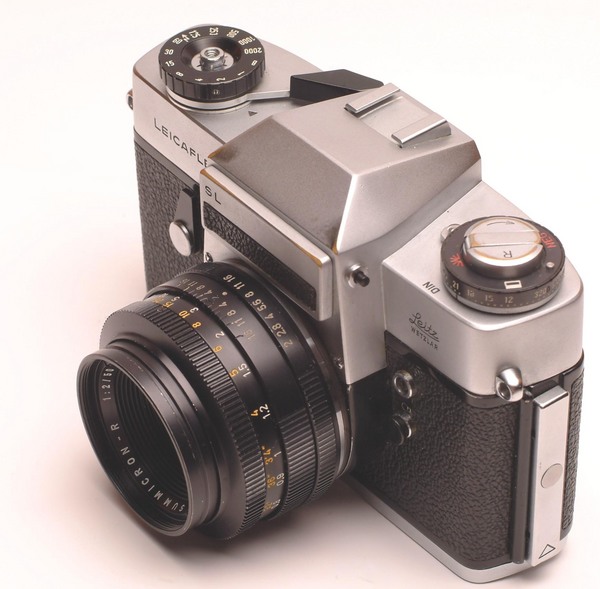
The Nikon F wasn’t bad. Like everything else about the camera, the noise was purposeful. No nonsense. “Built to last” was the thought that came to mind when operating this brute of a camera. The Leicaflex SL that succeeded it in my tool kit gave the exact opposite impression. Tinny, limp-wristed, you always wondered how long things would last before the next trip to the repair shop. Quite a contrast to the magnificent solidity of the lenses.

The screw thread Leicas rangefinder were always far noisier than you expected. While their “clack” was not that obtrusive, it hardly meshed with the Leica’s reputation as a stealth camera. The M3 and its successors were superior, though I always wished they were quieter, especially with that irritating shutter bounce on 1/15th and 1/30th, which every mechanical shutter M has had. The best in this regard was the M6 I used for several years which had a zinc top plate replacing the brass in the M2 and M3. Brass is ideal for chrome plating, but my M6 was black, so zinc was used as a cost saving. That camera had a beautiful shutter sound, sadly not matched by its build quality which was dramatically inferior to the M2 and M3. Plus the quick jam loading system was an absolute catastrophe – you had to crimp the film end to ensure it did not slip out of the stines meant to grasp it. So the M6 moved on, but not on account of its shutter sound. With any mechanical Leica M (I have not used the electronic M7) you get wonderful tactile feedback from the shutter release, to the extent that you know exactly how much pressure is needed to trip the shutter. Worth its weight in gold, whether on the street or in the studio.

The Canon EOS 5D is nothing to get excited about either way. The timbre of the noise is not objectionable, the volume is middle of the road, but you are going to be noticed when you press the button. For an electrical release, feedback is not bad. The first pressure to lock in focus and exposure is easily distinguished from the second which releases the shutter. There’s not that progressive feel of the Leica M’s shutter release, but it’s a worthy effort.

Setting aside the minority audience for large format cameras, the two quietest shutters I have used were from opposite camps. The one on the Rollei 3.5F was purely mechanical and wonderfully quiet. Feedback was not the greatest, not helped by the awkward location of the button, but it was a joy to use and hear.

The other was in the Mamiya 6, also a medium format camera. This one is purely electronic, the shutter release is actually an electrical switch, with all the challenges that poses for feedback design. Owing to an absence of a flapping mirror and the use of between the lens shutters, the camera was simply wonderfully quiet and what you did hear was just right.


Mamiya 6. Noise? Just right.

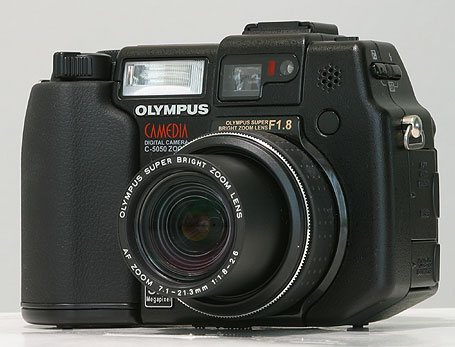
Before closing, I have to say a word about the shutter in my Olympus 5050Z point and shoot. Near silent, Olympus felt obliged to add an option of an electronically generated shutter sound. This emanates from the camera’s speaker after the shutter is pressed. Unfortnately, it comes so late that it’s tomorrow by the time you hear it. Add the huge shutter lag and you have an example of how to get it dead wrong. Needless to add, the shutter release button has such poor resistance design that accidental exposures become the order of the day. At least you can switch off the electronic shutter noise.

So, camera designers, in my next camera I would like the sound of the Mamiya 6 with the tactile feedback of a Leica M2 or M3, with some of the overtones from the M6 for reassurance. The gun makers can use the Pentax 6×7 and Rollei 6003 as reference for their latest efforts. And the people at Olympus have some learning to do.

Choices

They will always be limited at the top.

Reading the other day that Konica/Minolta had given up making cameras I started getting worried that we are headed for a world with too few choices when it comes to manufacturers of photo gear. Competition improves the breed, after all. Then a few moments of reflection suggested that maybe there never has been more than a very small handful of choices when it comes to the best of the best. What the pros use.

At the start of the second World War, your choice was 35mm or medium format. Sure, large format has been around for a hundred or more years and soldiers on today, but it’s hardly a product with what you would call critical mass. In 35mm it was the world of the rangefinder – meaning Leica or Contax. The Contax had it all over the Leica, more sophisticated in every way, but damned by a fragile shutter mechanism. Leica countered with a great shutter and maybe the worst viewfinder/rangefinder yet invented. In medium format there was no choice. It was Rolleiflex or nothing. Now little about twin lens reflex design makes sense, but it worked, had great lenses and a negative big enough that even the average duffer could make a decent 8″ x 10″ print.

In film the choice was greater – Kodak, Agfa, Ilford, Perutz, Adox – all made great monochrome emulsions and Kodak, of course, was working on Kodachrome. Two violin players, the Leopolds – Mannes and Godowsky – were locked in a lab by the boys in Rochester and emerged a couple of years later with Kodachrome, rated at all of 12 ASA. Just in time for the film to be used by Nazi photographers to record Hitler as he set about destroying the great race whence these two geniuses of chemistry came. If the Leica was the greatest camera of the century, and it was, then Kodachrome owns a similar place in the world of film. Kodachrome was simply fabulous. Without it 35mm color photography would not have blossomed the way it did.

In the early fifties Leica finally made the single greatest 35mm camera of all time. The M3. Learning from the Zeiss Contax that integration of the viewfinder and rangefinder into one eyepiece might just be a good idea, and that making the thing bigger than a pinhole could be a selling feature, they added a wonderful, sharply delineated rangefinder rectangle and those projected, illuminated, nay, electric, field of view frames that left you in no doubt whatsoever as to what your lens was seeing. And you could use that viewfinder in almost non-existent light, focusing and framing with the utmost confidence, taking your picture with the near silent whisper of the Leica shutter. They didn’t stop there. They crafted what remains the greatest 35mm lens made. The 50mm Summicron which remains, to this day, the standard all Japanese manufacturers aspire to. This pairing was a high point in engineering aesthetics and optical design.

The M3 and its descendants lasted in the pro’s gadget bag through the mid-sixties when machismo dictated long lenses and brutal looks. The former to avoid the bullets, the latter to state unequivocally that your camera could double as a weapon in time of need. The smart people at Pentax may have invented the instant return mirror, but the Nikon F was the camera of the Viet Nam generation. Its brute good looks, augmented by the equally masculine finish of the lenses, said you were the Real Thing. Pentax was not to be outdone, however. They started painting their cameras black and had the smarts to give a few to a London fashion photographer par excellence named David Bailey. In stark contrast to the stodgy, patrician, epicene Beaton, wedded to his Rolleiflexes and his Royal sitters, Bailey rocked. He was a real man. Pentax pushed it. They ran one of the greatest camera ads ever. It showed a beaten up black Spotmatic, brass wear spots everywhere, with just three words. David Bailey’s Pentax. Wow! Here was a guy slogging it out in the studios of London with all those dolly birds and clearly having every bit as tough a time of it as the fellows in Nam with their Nikon Fs. Years later, Bailey admitted he had taken sandpaper to his Spotmatics and rubbed the paint off at strategic locations. It got him a lot of dates. Not bad for a few bob and a couple of minutes of elbow grease, huh? So in the ’60s your choice in 35mm was Nikon or Pentax.

David Hemmings played Bailey in Antonioni’s wonderful movie ˜Blow Up”, though his weapons of choice were a Nikon F and a Hasselblad. Change in the medium format world was slower than in the frenetic corner known as 35mm. At least you finally had a choice. It was no longer just a clunky twin lens reflex Rolleiflex. Why, the Hasselblad, scarcely more competent, said you had arrived. Because you could afford it. OK, so the viewfinder was lousy and the mirror did not return after you pressed the button, but good marketing saw to it that you did not notice.

Enter the seventies and eighties and Canon began to get noticed. They could not compete with Nikon or Pentax for charisma, those marques having earned their stripes in the hellish fields of Viet Nam and Carnaby Street. So they had to sell something else. And that something was technology, backed with abundant capital. Fast, small motors to move the film? Of course. Coreless linear motors to focus the lens? Naturally. Fast sensors to provide autofocus? Absoluement. Eye controlled focus? Well, we did it just to show that we could. Suddenly the competitors were rocked by this Japanese copier-making powerhouse with seemingly infinite resources, and they have been playing catch up ever since. But the old rule prevailed. In 35mm your choices were few at the top. Canon, Nikon, and maybe Pentax.

In medium format, the old guys were still at it. Rollei came out with a camera that four people bought, the SL66. Its huge mass and focal plane shutter which hated working with studio flash made sure that no one bought it. Zenza came out with something even worse, the Bronica, which jammed as soon as you looked at it. They had taken the worst of the Rollei and made it …. worse. Working photographers preferred proper flash synchronization and bought a Hasselblad. Rollei fixed that deficiency with their wonderful 6000 series of medium format SLRs, but it was too late. Traction had been ceded to Hasselblad. The Hasselblad may have been horribly unreliable but it was glamor personified. Plus it shared Rollei’s great German lens providers. An entry ticket to the world of Madison Avenue. So, like a Jaguar owner, you bought two hoping that one would survive while the other was in the shop.

Then in the ’90s, digital arrived. No matter that the first efforts were comical in the extreme. Digital was Now and the old protagonists, Canon and Nikon, were at it again, followed by a somewhat breathless Pentax. The latter had one thing the two others could never understand. The word ˜elegance” is part of Pentax’s genetic make up, a concept that never graced the worlds of Nikon and Canon. Olympus gave Pentax some competition when it came to chic design but let’s face it. What self respecting, red blooded American male was going to be seen with his wife’s camera? David Bailey’s Olympus? I don’t think so.

So, once again, choice was limited. Sure, you could have flirtations with minority brands like Minolta or Konica, but it was always rather comical to see the poor photographers using this gear. Like the people who were buying Saabs, hoping they would be sufficiently different that the downright horribleness of their choice would qualify them as eclectic, independent, thinkers. Wrong. They just didn’t get it.

Meanwhile, digital completely bypassed the medium format boys during this decade, and they will never recover the lead established by the big Japanese houses. When full frame digital beats medium format film, why would you blow $15k on a digital back for your Hassy when you could get a couple of Canon’s best bodies for the same coin and have something reliable to boot?

Leica? While issuing quarterly denials of impending bankruptcy their apparent goal is to sell only to Japanese collectors and tax exiles in Geneva. So you can’t have one. Settle for a Rolls or Bentley instead.

Film, meanwhile, had gone the way of Contax and Yashica and Konica and Minolta. The choices in color were now down to just two – Kodak and Fuji. The latter may have done a number on the former, taking away market share daily, but it’s all history now. Neither will be making color film by the end of the decade.

So there never have been that many choices at the top. Today it’s Canon or Nikon. Pentax for those willing to be different. And for medium format it’s Hasselblad digital, but who knows how long that will survive. And no one needs film.

After the Purge

Equipment then and now.

I took a few moments to take stock of how my equipment has changed over the past quarter as a result of the move to full frame digital.

Before:
3 Leicas (IIIG, M2, M3)
1 Leicaflex SL for long lenses
1 Bessa T for the 21mm Elmarit
21, 35, 50 (3), 90 (2) and 135mm Leica M lenses
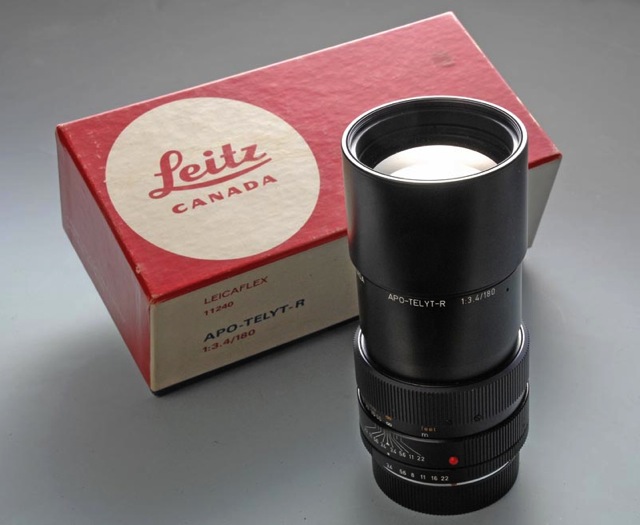
200 and 400mm Leica Telyt lenses
Rollei 3.5F
Rollei 6003
40, 80, 150 and 350mm Rollei lenses
Rollei extension tubes
Mamiya 6MF when I didn’t want to drag the Rollei about
50, 75 and 150mm Mamiya lenses
Crown Graphic 4” x 5” with 90, 150 and 210mm lenses
Canon 4000 35mm scanner
Nikon 8000 medium format scanner
Epson 2450 large format scanner
HP DJ90 large format printer

After:
Canon EOS5D
24-105mm Canon lens
1 Leica M3
35, 50 and 90mm Leica M lenses
200 and 400mm Leica Telyt lenses adapted to the Canon
Crown Graphic 4” x 5” with 90, 150 and 210mm lenses
Epson 2450 large format scanner
HP DJ90 large format printer

Quite a reduction in clutter! The original goal, recall, was to get medium format quality without the bulk and complexity. The 5D came though with flying colors on that front, equalling or exceeding medium format quality at 30″ print sizes, while making pictures possible that would never have been taken on film, thanks to Image Stabilization and a sensor which renders grain free ISO 400 images.

Now I’m keeping the Leica M3. Not rational, I know, but it has been a dear friend for more than thirty years and we are not ready to part company. Yet. However, it seems appropriate to focus on the need for the 4″ x 5″ gear. If you can actually expose the film in this beast, large sharp prints are trivial, owing to the enormous size of the negative.

So I compared 30” prints from both and, interestingly, there was little to choose. It seems easier to get a broad dynamic range from negative film than from digital, the latter needing more attention to exposure. Like using slide film. My large format Kodak VC160 negatives are scanned at 2400 dpi on a well tuned Epson 2450 flat bed scanner, using Silverfast Ai software. Doubtless drum scans would be even better but after waiting for two weeks for the film to be processed, I’m not about to wait two more for the scans.

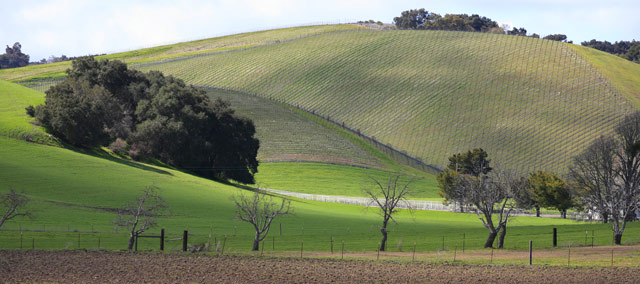
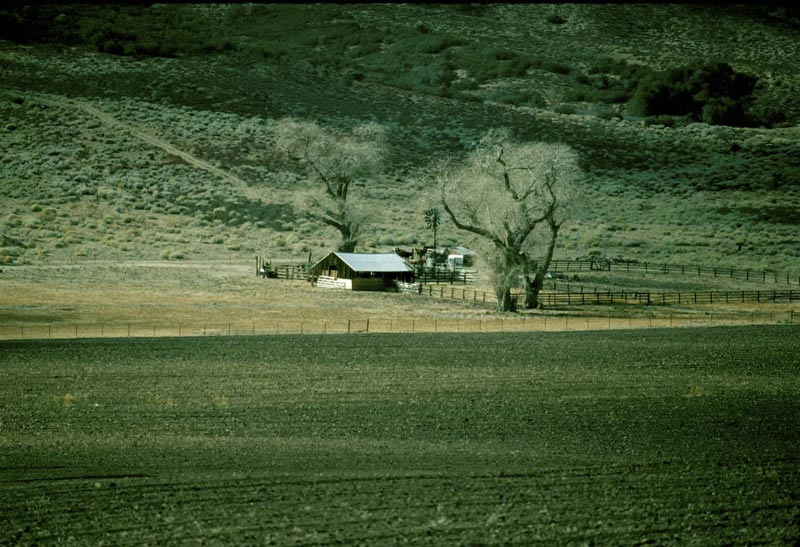
For what are very similar scenes, the technical details could hardly be more different. Here’s the 4″ x 5″ picture:

This was taken using a 210mm Rodenstock Sironar lens, probably 4-8 seconds at f/22. A massive Linhof tripod was used for stability. That lens is similar to a 75mm on 35mm. Setup time to take the picture was some five minutes. Processing was by Calypso Labs in California – an outfit that literally needs to clean up its act, judging from the amount of dust on the negative. The scan on the Epson took approximately 20 minutes. The file is 250 mB (!). Unsharp masking in Photoshop was 45/1/0 – in other words not a lot.

Now compare this with the Canon EOS 5D snap taken a week later.

Here I can disclose the technical details with certainty – they are part and parcel of the file. The shutter speed was 1/15th with the camera hand held on a monopod. ISO was set to 400 to allow a faster shutter speed. That’s a nice attribute of the Canon – ISO is used to control shutter speed. Up to ISO 800 grain is simply not an issue. The lens was fully opened at f/4 at a focal length of 40mm. Setup time was maybe 10 seconds. So the lighting was identical – 1/15 @ f/4 @ ISO 400 is nearly the same as 4 seconds @f/22 @ ISO 160. The original most certainly did not need any dust retouched, and I did not have to wait weeks for the negative to come back. The file size is 73 mB. USM in Photoshop was 250/3.2/0 – much more than with film and reflecting Canon’s own recommendation that the user starts at 300/0.3/0 to overcome the softening effect of the anti-aliasing filter in the camera.

So as a landscape camera the 5D excels. Meanwhile the Crown Graphic is on probation. There will be rare occasions where something larger than 30″ x 40″ may be called for (I cannot immediately recall ever having made a larger print) in which case a drum scan and a professional printing house would be required, with goodness knows how long a lead time. That is, of course, if color film in this size is still made when the need arises.

A Gorgeous Bit o’ Bottle

Just mind you don’t fall in the water.

Hearst Castle is the most popular tourist destination in central California so I took the precaution of booking a ticket in advance rather than be faced with a long wait for the tour bus which takes you some two thousand feet above sea level to Hearst’s opulent home. While I may have trashed Hearst for his part in dragging down the quality of journalism, a visit to his Castle on the central coast makes me feel a lot better about how he spent his money. As one of the tour guides pointed out, this magpie of a man expended some 78 of his 81 years collecting, starting with a trip to Europe aged three when he asked his mother why they couldn’t simply buy all the the things he liked. Got to like that!

While waiting for the bus – I chose Tour 2 which takes in the upper levels with all the living quarters, the kitchen and the two pools – I chanced on a fellow photographer using a pretty exotic looking Canon L lens finished in white enamel. Now I had seen these things at televised sports events but had never actually encountered someone actually using one, so my curiosity was piqued.

I confess to being in two minds about that red stripe that Canon places on its best glass. On the one hand it tells fellow photographers that you are serious (or maybe just seriously rich) about your images. On the other, it smacks vaguely of driving around in a Rolls Royce or Mercedes. Rather ostentatious and an invitation to thieves everywhere. Short of resorting to brush and paint, there’s really no simple way of blacking out the offending red stripe, unlike the ease with which electrician’s tape can be used to take out the obnoxious markings on the camera’s body.

Mick M. responded that the lens was a 70-200mm f/2.8 L zoom, and an impressive piece it is. Hard not to be noticed with all that white paint which, I suppose, must leave the nature photographer for ever seeking camouflage. Mick then opened his camera bag to disclose a veritable cornucopia of Canon L glass. Let’s see, there was a 24-70mm zoom, an 85mm f/1.2 portrait lens (yes, f/1.2!), an extender for the zoom and a strange looking duck with an enormous, bulbous front element. Proferring it, Mick explained this was a 14mm f/2.8 ultra wide angle. Not a fish eye. A genuine wide angle. This, I confess, had me greatly intrigued, and when Mick explained that his cameras were a 20D and 10D, the fact that these have small image sensors led me to pounce.

“Why not stick that wide on my 5D and see what 14mm really feels like?”. It was the only trump card I held, what with the one body and just the 24-105 L on it.

What ensued was that the loudest sound to be heard in Hearst Castle’s parking lot was that of jaws dropping. Mick’s, when he held the camera up to his eye, and mine shortly after. Now I had used a 21mm Asph Elmarit on my Leica for many years, to the extent that in some ways it had become my standard lens. Despite the cheesy, distorting, plastic viewfinder it came with, the lens itself was seemingly perfect in every way. Sharp at all apertures, compact and distortion free, it left nothing to be desired optically. Point it into the sun and flare was noticeable by its absence. The Leica 21mm has moved on once I concluded that 24mm at the short end of the Canon’s zoom range was fine for my purposes, but not without a twang or two on the heartstrings. We had become firm friends.

I can only guess that there is some sort of macho rivalry between lens makers – maybe I should refer to them as programmers – when it comes to making the widest lenses. I checked B&H and Leica has a 15mm for their reflex camera (costing about as much as a new car, needless to add), Nikon has a 14mm, and the various after-market manufacturers have 14s and 15s aplenty. Given that all of these run $1000 or more, they can hardly be mass market items and about the only use I can envisage on a daily basis is for unscrupulous realtors looking to make interiors larger. “Here is the bathroom” instantly become “Here is the palatial bathroom”.

Nonetheless, the impact of the lens in the viewfinder was overwhelming, and framing with it, walking towards a subject, gave this user a distinct feeling of unsteadiness owing to the width of the field of view, far in excess of what the human eye perceives. To cut a long story short, Mick very generously offered me the use of the 14mm and I reciprocated with the use of my 5D into which he needed only place one of his digital film cards to have a go. I got first go and on arriving at Hearst’s home in the sky one of the first sights was the outdoor pool. The weather was just so, a wisp of a cloud or two in the sky and a pleasant mild day in California. How do people in the mid-west get through the winter?

Having a fair amount of experience with ultra-wide lenses I knew enough to avoid the bane of all these optics which is boring, extraneous foreground. You really have to get in close, so I proceeded to attack the pool with aplomb, forced to sight through the finder, never having used something this wide before. I can ‘think’ 21mm, but 14mm is like a scene from Hitchcock’s ‘Vertigo’ by comparison. And vertigo was the order of the day as I teetered on the edge of Hearst’s ten foot deep outdoor pool! Now you absolutely have to use the hood with this lens, if for no other reason than there is no way to protect the cyclopean front element with a filter. It is simply too bulbous. And here’s a snap of the pool taken with Mick’s lens.

Though taken directly into the light, the lens seems flare free with just one small internal reflection visible in the picture. An extraordinary piece of design and execution. Will I be rushing out to buy one? No way. It’s the sort of thing I would use once a year and is inconsistent with my desire to minimize equipment, but thank you, Mick, for your generosity in allowing me to take a few pictures with this gorgeous bit o’ bottle.

If you would like to see a travelogue of a few more snaps from Hearst Castle, please click here.

And for a cheaper, wider, better lens than the 14mm, just click here.