Software can yield far greater improvements than optics.
For an index of all Leica-related articles click here.
You might fairly accuse me of worshipping at the altar of the gods in Wetzlar when it comes to optics. For the last 75 years of the twentieth century, Leitz Wetzlar, as it was most of that time, created two great cameras – the screw thread Leica and the M3 and its variants – and dozens of the best lenses known to photographers. And while I may have moved away from Leica rangefinder cameras in the absence of a digital option, I have had the rare pleasure of using many of Wetzlar’s lenses on my rangefinder and reflex Leicas.
My first Leica lens was the 50mm Elmar. It’s sole limitation was the boob behind it pressing the button on the M3. Twist the mount counter-clockwise and the lens neatly collapsed into the camera body, passing for what was compact back in 1971 when I got mine. August 2, 1971 to be exact. The 90mm Elmar and a superb 35mm Summaron followed. In each case these were the ‘beginner’s’ option (meaning cheap, by Leitz standards), and only years of hard work later did a Summicron grace the M3. That was the incomparable 50mm Dual Range, the brass mount having last seen duty as the main engine bearing in a Panzer tank. And I’m afraid that mention of any of the dozen others that came and went would be a tedious exercise in the overuse of superlatives. For the M these included the 21mm Asph Elmarit, the 35mm Asph Summicron, later and mercifully lighter versions of the 50mm Summicron, a 90mm Elmarit, Tele-Elmarit, Elmar-C and Asph Apo-Summicron, a 135mm Hektor, Elmar and Apo-Telyt, 200mm, 280mm and 400mm Telyts, and on and on. Each magical in its own way.

Map reader. 1973. Leica M3, 50mm Elmar, TriX/D76.
For the most part, these lenses were designed the old fashioned way. Hard graft with calculators and logarithmic tables, long hours melting ever more exotic glasses, interspersed with occasional bouts of sheer lunacy. The ‘we made it because we could’ lenses like the original 50mm f/1.2 Noctilux with its aspherical grinds, the NASA commissioned 180mm f/3.4 Apo Telyt R which finally brought the red spectrum in line with the rest of the colors to give an image of startling definition, the fabulous 75mm f/1.4 Summilux (if only you could focus it right – that sort of thing needs an M3 vewfinder!). And while computers played an increasing role in the design of later lenses, the long heritage of optical excellence at Leitz, Wetzlar, West Germany saw to it that they were programmed right. The reality is that if lenses for 35mm cameras can get any better no one will notice as the magicians at Wetzlar had long ago exceeded anything film could resolve.
These thoughts have been coursing thorugh the old brain increasingly as I look at the modern processing workload. Now bear in mind that this is coming from someone who adopted a beginning to end pure digital workflow only earlier this year with a Canon 5D. Until then it was film + scanning, which took over from film + color lab, which in turn had supplanted film + darkroom/bedroom. And what strikes me most is how much software has become a dominant part of picture processing.
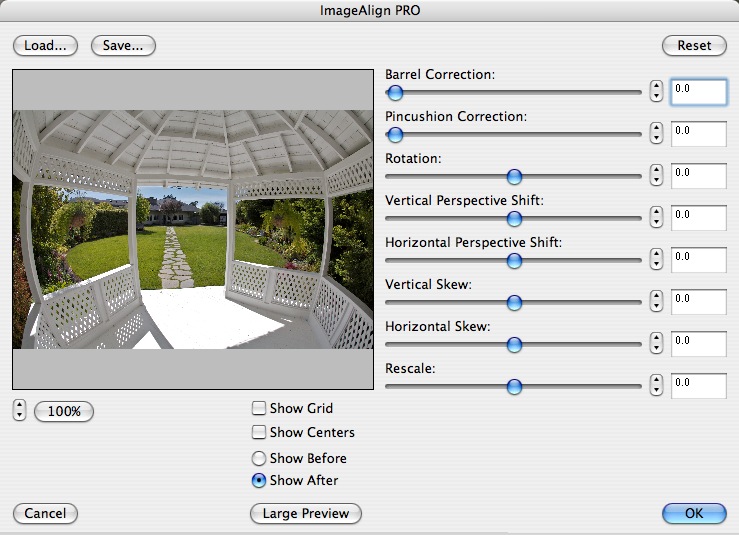
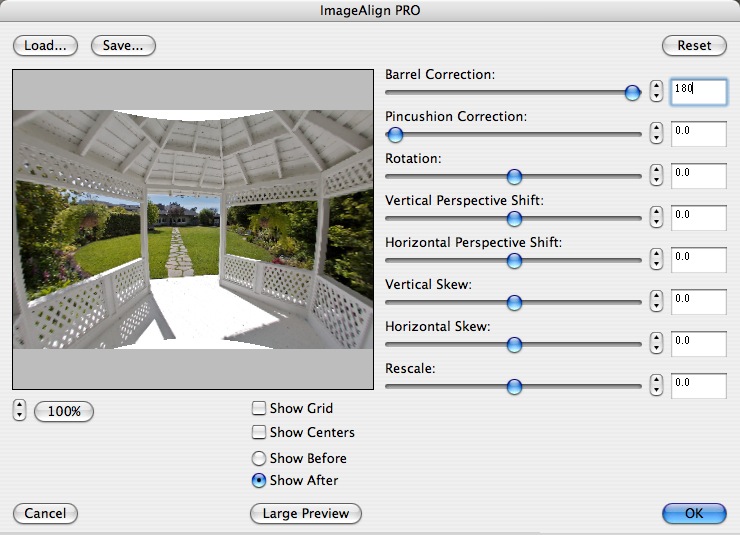
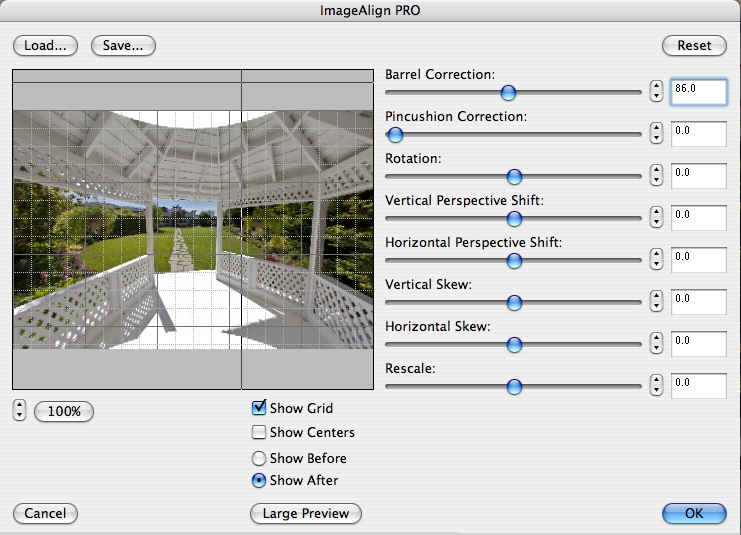
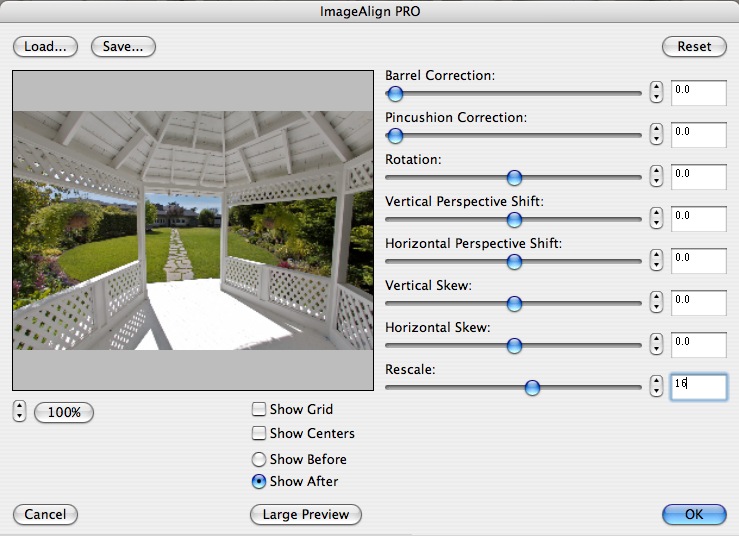
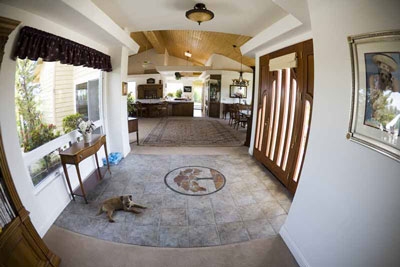
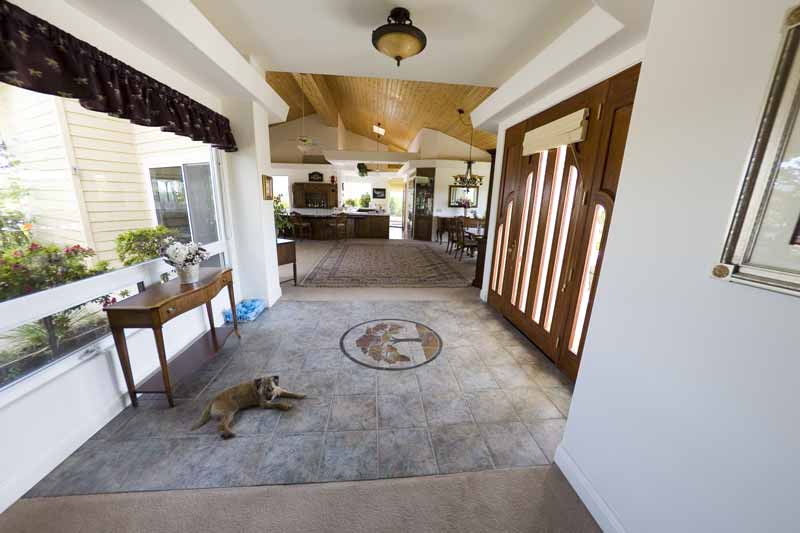
Start with the in-camera software that tells the sensor RAW or JPG, maybe with various amounts of contrast, sharpness and other processing included. In to Aperture or Photoshop where chromatic aberration (color fringing) at the edges has to be repaired. Then the barrel distortion has to be removed at the wide end of the zoom. Another tweak and the vignetting is gone. Three aberrations I simply do not recall having to deal with in the days of the Summicron and its brethren. Because if they were present, they were not visible. So on that scale, I suppose, one would rightly argue that Canon lenses simply do not hold a candle to those from Leitz Wetzlar. OK, so you have to laboriously manually focus the Leica lens, and the aperture is manual and the only way to zoom is to walk closer or fall in the water…. But from the sheer standpoint of optics, if I had to bet my life on resolving power and freedom from aberrations, it would have to be Leica every time.
The reality is, it no longer matters. Good software can correct all those problems in seconds. Further, because the digital ‘film’ in the 5D is far superior to the one from Kodak which I used in the M3, the overall result is better in every conceivable way, and it’s mostly due to software. I believe designers are getting the message. Increasingly we are seeing new technologies like image stabilization add more definition than any film based user could hope for, and we are probably very close to the point where very large aperture lenses with vast zoom ranges with minimal bulk are around the corner. The necessary optical compromises will be corrected in the camera with tailored software. For that matter, the lens need no longer be interchangeable as the zoom range will be so large it will accomodate all conceivable needs.
Sceptical? Look at the Kodak P712 digital camera announced earlier this week. The lens is equivalent to 36-432mm (432mm!) with a smallest aperture of f/3.7. F/3.7! The camera costs $499 and weighs probably under one pound. Compare that with the 400mm f/4 DO Canon lens, at $5,200 and 4.3 lbs. And it doesn’t even zoom. Sure, I have no doubt the Canon lens is better, but how long do you expect that to last?
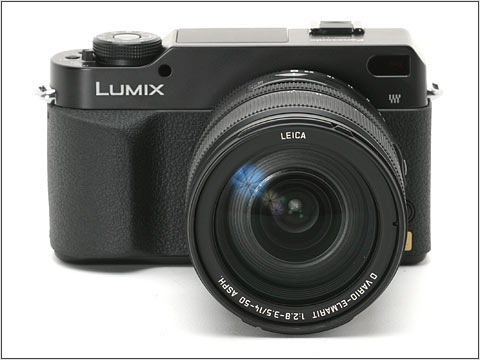
Case in point. My Panasonic LX-1 (click on the entry at right) has a Leica lens that reads ‘DC Vario-Elmarit 1:2.8-4.9/6.3-25.2 ASPH.’ Phew!. Not like saying 50mm Summicron now, is it? To make sure things are not blurred the camera has image stabilization, because some unnamed brilliant engineer at Panasonic thought it up. Auto focus makes sure it’s focused right adding yet more definition to the competitive equation. This lens is like a 28-112mm on a regular camera. At its longest setting it extends 1.5″ from the barrel on the camera’s body.
So, supposing I want a 24-105mm f/2. That would translate to a 5.4mm – 23.6mm lens which, fully corrected, would doubtless be a lot bulkier than the one on the DP. Now throw out the large front element, there to reduce vignetting. Get rid of several of the others there to confer minimal color fringing. And the hell with barrel distortion. Curvature of field and all those insurmountable problems with edge pixels and wide angle lenses? Nonsense. Just bow the edges of the sensor towards the lens as the focal length changes. Flexible sensors? Why not? Zoom? The next generation of sensors will obsolete optical zooming and do it all electronically. About time. Program around all of that with some smart software, fix the image on the fly when saving (or even when viewing if it’s that horrible to look at) and your 24-105mm f/2 zoom is now 1″ in diameter and 1″ long. Wow! So we gradually return to the days of the Box Brownie with its miniscule single meniscus lens, but with an image readily enlarged 12 times or more.
And who will be the genius designing these new ‘lenses’? It won’t be a god the likes of Max Berek or Walter Mandler in Wetzlar. It will be some kid who is really sharp at coding who happens to like a superb picture from the one ounce piece of plastic passing for a lens attached to his camera. The great days of optics are yet to come and their designs will emanate from the keyboard of some unknown master even now getting his lips around the teat on that plastic milk bottle.

Gorilla. 2006. Panasonic Lumix LX1, 6.3mm DC Elmarit Asph, ISO100, image stablizer.