Category Archives: Hardware

Stuff

Full frame bargains

From Canon.

One of the signal advances for photographers has been the continuous improvement in processing software. The enhanced capabilities for shadow recovery and highlight taming in products like Lightroom 4/5 (and doubtless in others like DxO, CaptureOne and Aperture – none of which I use, but competition always does its thing) give new life to old picture files.

Case in point, my first serious DSLR was the original Canon 5D (2006). When I pull up images from that body in LR5 they appear with an exclamation point lower right alerting me that an older version of LR was used to process them. Update those to the latest version (Develop Module->Settings->Process) and your images can enjoy the benefits of the latest in processing technology.

I have gone back and re-printed some of these and the results really are impressive.


The indoor pool at Hearst Castle.

The above 5D Mark I image has high dynamic range. Updating to the 2012 Process from the original 2003 in LR5 allows easy recovery of the shadows and taming of the highlights with the related sliders. A touch on the Noise slider takes out what ails the shadows. A quick click in the Lens Profile section has the 15mm Canon Fisheye image de-fished for a linear rendition, into the Print module and the 18″ x 24″ print will knock your socks off.

Sure, neither the original 5D or its ‘pro’ equivalent 1DS Mark II had sensor dust removal, but I can assure you that my Nikon D700 did and it was almost useless. You still had to clean the sensor with moist alcohol swabs, as I now do with my Nikon D3x. The price of a lightly used, amateur owned 5D or 1DS Mark II? How about $450 or $800? If there’s a better bargain for a photographer looking to make really large prints from full frame negatives I do not know of it. And you can forget the overpriced ‘red ring’ Canon ‘L’ lenses. The 15mm f/2.8 Fisheye (discontinued), the 35mm f/2 USM, the 50mm f/1.4 USM and the 85mmf/1.8 USM ‘cooking’ variants deliver all the quality you need, at bargain prices. Just avoid the cheap and nasty zooms if you are printing big. For web display any FF DSLR is overkill.


The exceptional Canon 1DS Mark II.

Nikon? There are no FF bargains yet. The D700, which has an excellent low noise sensor sells lightly used for a surprisingly high $1,300, the D3 (same sensor, pretty much) for $1,800.

New prices of the 5D and 1DS Mark II? How about $3,000 and $8,000, respectively? Do you really need the latest and greatest or would a small fraction of the extra money be better spent on a large format printer, paper, ink and some mounting supplies so you can really show your work for once?

Imminent failure

Don’t worry about it.

On occasion when buying some new item of photo gear from which I hope to get many years’ use, the thought which crosses my mind is “What if the maker goes out of business?”


Sony’s innovative A7R Won’t be around long.

Over the past decades we have variously read that each of Leica, Zeiss, Ricoh, Pentax, Olympus, Panasonic, Sony, Nikon, you name it, will shortly be exiting the camera business. Yet all still make cameras and lenses, though the paucity of data about the profitability and size of the photo segments in these businesses makes it impossible to make meaningful predictions of the likelihood of demise.


From a soon to be bankrupt manufacturer, the thrilling OMD EM1.

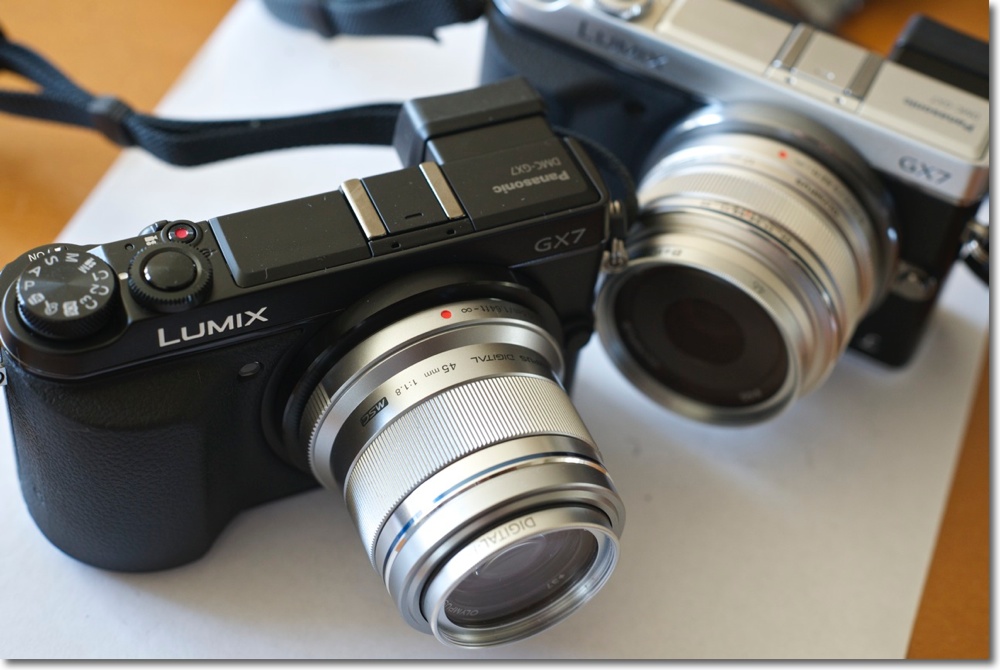
Leica, after many reorganizations and recapitalizations, seems to be selling everything it can make to the collector set. It’s a private company and not about to tell what it’s earning. Pentax was, we are told, at death’s door until Ricoh bought it, but how much Ricoh makes on photocopiers – in themselves a dying business – to permit subsidy and recap of Pentax is unknown. Olympus we know for one startling financial statistic, being that over the past decade they committed the greatest accounting fraud since Enron yet today they remain in business helped along by the tightly knit society of Japanese bankers and industry, a philosophy also prevalent in Germany. Olympus meanwhile is rolling out some of the most exciting MFT bodies since the format was invented with Panasonic. Based on no data that I can find, Panasonic has been rumored to be exiting the MFT world for many quarters now but they continue to innovate with such splendid bodies like the GX7 and a raft of excellent lenses.


Pentax K3. The K is for Kaput.

Nikon, as a business with relatively few sidelines, has been cremated a dozen times over the past decade, while making some of the very best DSLRs available (the D4 and D800) and remaining a strong #2 (I’m guessing here) to Canon in the pro-DSLR stakes. Sony has stubbornly managed to lose vast sums in its flat panel TV business for over a decade now, but Japanese pride prevents then walking away from this commoditized sector. Their latest reorganization says they will focus on 4K TVs, but it’s hard to forget that the Trinitron CRT was once your cash cow. Meanwhile Sony experiments aggressively with new camera bodies and in the compact A7 and A7R full frame DSLRs they have shown that innovation remains in their soul. They also make sensors for more other camera makers than the latter care to admit.


The just introduced Panasonic GH4, from a maker
exiting the camera business any day now.

So why does America no longer make consumer cameras? I think the answer is a function of the transparency of American financial reporting and the brutal discipline of quarterly earnings reporting. Mess up and your stock and executive options go south, fast. It’s a system heavily focused on profitable growth and innovation. Once a product line is seen to be losing profit margins or revenues start dropping, it’s immediately put under the microscope of forensic accounting by both the company and Wall Street analysts, and Americans have never had an issue with dumping a loser and moving on. Whereas failure is punished in Germany and Japan, and its victims ostracized, here it’s seen as a badge of honor and a stepping stone to greater things. The cancer excised, we move on. iPod anyone?


Nikon D800. Finished. Fughedaboutit.

Accordingly, when dark thoughts of a camera manufacturer’s iminent demise crowd my brain at buying time, I disregard them. Not only have I yet to see any credible, predicitve data on all those rumored events, corporations are almost as good as governments in ‘kicking the can down the road’.

A tale of two sensors

‘Good enough’ is better than good enough.

A clear thinking friend of mine has a simple philosophy when it comes to consumer durable purchases, and he calls it the ‘good enough’ concept. If it’s good enough, forget spending the extra for the top of the line model, the one with the bells and whistles. The marginal return is …. marginal, the incremental cost ruinous and the depreciation far higher. (This reminds me of Lord Chesterfield on the subject of sex: “The pleasure momentary, one’s position ridiculous and the cost? Damnable.”)

And I’m here to declare that Micro Four-Thirds is more than ‘good enough’. My standard for comparison? The full frame sensor in my Nikon D3x, the MFT one being that in my Panny GX7. For all of you who prefer wasting your money see my my product review of the Leica M240. Be assured that I not only do not own two of these, I don’t even own one. Nor will that change.

Some recent sensor history. Panny started with a 12mp design in the ground breaking G1, upping it later to 16mp which my G3 enjoyed. The practical change was that whereas 13″ x 19″ nosey prints were easy with the G1, the easy size grew to 18″ x 24″ with the G3 and later bodies. Nosey? It’s when your viewer sticks his schnozzer in the print and you have to get the cotton balls out to clean the surface. In the GX7 they tweaked the software a bit and got the marketing boys to do some writing, but to all intents it’s much the same as the one in the G3 and others, which is to say very good indeed.


The fabulous Panasonic GX7 – the best street snapper ever made.

Nikon delegates sensor manufacture to Sony, claiming credit for the design (eh?) and perhaps the best full frame sensor they made for the money was the one in the D3/D700. The D3x doubled the pixels to 24mp, trading the increased resolution for more noise at higher ISOs, especially noticeable in the dark bits of the image. The D4’s sensor improved a bit more on the low pixel count one in the superb D700 and the one in the D800 blew everyone out of the water where they remain to this day. But that’s pixel peeper stuff. In the real world of large prints, it’s irrelevant.

Why do I say this? Because I constantly print my images for display in the moveable feast which is the wall displays at the old manse. Coming on a round of spring changes, I have had ample opportunity to tweak and print images at 13″ x 19″ and, better, at 18″ x 24″ from both the D3x full frame body and the GX7 MFT one. In both cases I am using my favored focal length of 35mm FFE. The exceptional Sigma 35mm f/1.4 behemoth on the no less porky D3x, and the magnificent Olympus Zuiko 17mm f/1.8 on the GX7, with AF speed which leaves FF lenses in the dust. I suppose the weight and bulk ratio is some 3:1, yet I enjoy both.

Were cameras dogs (Leica’s M would instantly qualify for inclusion in the latter species, a frou frou toy breed, fragility redefined, constantly in need of attention), then the big pro-body Nikon would be a Golden Retriever. Immensely dependable, lumbering and stolid, it will never let you down, can take a battering from the kids and still emerge with an all-weather smile on its face. And it keeps going longer than you can. The GX7 could scarcely be more different. It’s the terrier of the camera world. Small, fast, high-strung, sharp as a tack, it demands a little more care and attention in the relationship but rewards out of all proportion to its diminutive size. And it burns out (its battery) pretty fast.

Those printed images? I rattled off a handful of 18″ x 24″ on the ever dependable HP DesignJet 90 dye printer the other day and, blow me down, I simply could not tell which were taken on the Nikon compared with the Panny. We are talking nosey examination of micro detail here. Which is another way of saying that the Panny is ‘good enough’, for the Nikon is way better than almost anyone needs. And my rule of thumb has long been if it can print at 18″ x 24″ it can print at any size you want, as the viewer is forced further back as size increases, mitigating resolution loss.

Ah! you say. But no way the MFT system can match the big, fast zooms available to Nikon and Canon snappers, the classic 24-70mm and 70-200 f/2.8 fixed maximum aperture zooms and the like. Think again. Have you seen what Panny and Olympus has been up to recently? How about Panny’s 12-35mm f/2.8 zoom?

Panasonic 12-35mm f/2.8.

Or their 35-100 f/2.8?

Panasonic 35-100mm f/2.8.

Olympus has hardly been asleep, either. In addition to their wonderful 17mm and 45mm f/1.8 Zuikos which I use, there are such exciting conceptions like these:


The Zuiko 12mm f/2.


The Zuiko 75mm f/1.8.

And don’t even think of asking about size, weight and price, because that’s a losing proposition for the Big Boys.

Finally, modern MFT ‘pro’ bodies like the Olympus EM1 can offer all the framing rates and weather resistance you need, once again at a fraction of the price. And so can the tiny GX7 though no one will take you seriously. Which is possibly the best feature of all.

Do yourself a favor. Put the fun back in your snapping and pick up something which says Panasonic or Olympus on the body and whose lens detaches.

A prodigal son returns

The review you have been waiting for.

Long time readers will recall my tearful parting with the last of my film Leicas some eight years ago, after no fewer than 35 years’ hard use, since when I have been busily in denial extolling the virtues of Japanese digital genius while unsparingly trashing the geniuses in Wetzlar and Solms for their tired, overpriced toys.

Well, it’s time to confess that I was wrong. You can take a man away from his Leica, but you cannot take the Leica out of the man.

When that realization came to pass, and when I was forced to admit that the 2013 market left me with some pocket change, I did the only irrational thing possible and plumped down the coin for a couple of M240 bodies, and the full range of lenses. Yup, the whole megillah. Anyway, my accountant says I need the deduction.

Here’s my review at Amazon:

Readers will have become used to the byline ‘Panny GX7, 17mm Zuiko’ accompanying the majority of my snaps published here over the past two months and now the truth must out. They were actually taken on one of my two M240s with the 35mm Asph Summicron, and the Leica owners among you will have immediately spotted the Leica ‘glow’ in the images. It was a minor deception vested in the need to test the gear and confirm that Leica is the only camera for me, and I trust you will forgive me.

Note: I am being inundated with questions about the above. To get the answer, click the image and read the review then figure it out.

Instant update!

Proving there really is one born every minute, Anon writes:

This writer has been attempting to soil these esteemed pages since they started in 2005, and you can read more of his enjoyable, if cowardly, drivel here. And, yes, I can disclose he bought a GX7 on my recommendation and now wishes he had bought the M240 he cannot possibly afford. He’s actually a bearded 27 year old still living in his parents’ basement, bathes monthly, and still rues the fact that the world denies his contribution to computer code. His rôle model is Jeffrey Lebowski. Oh! and he uses Windows, of course.

And another – this guy was no coward as he used a name – but Home Econ hardly qualifies as an education, his protestations to a PhD (10 rupees, Bombay) notwithstanding:

He wanted his comment published. Noblesse oblige.

Saddest thing about these gear fetishists. No sense of humor.

The Sirui K-40X ball head

A cheap knock-off, well made.

My recent night-time efforts with the Nikon D3x, the 35mm Sigma and the old Linhof tripod in Carmel produced one or two nice snaps but far more in the way of garage language. You see, my old Manfrotto QR plate and jolly, colored Novoflex ball head just could not reliably handle the weight of the camera and lens, the poor ball head protesting that this really was not its role in life.

So I did a spot of research and had pretty much settled on the Arca Swiss Z ball head and related QR plate, a non-trivial $450 with spare plate, when DP Review published a thoughtful review of a bunch of big ball heads, accompanied with excellent test measurements. The Arca was among those tested, and comparison with the $214 Sirui (with spare QR plate) disclosed that the latter was pretty much a Chinese knock-off at less than half the price. Having discounted the American Acratech, whose funky design I concluded was trying too hard to be different for no obvious benefit, I went ahead and joined the lottery, ordering a Sirui from B&H, hoping I would luck out with a good one. The Sirui improves on the Arca Swiss (made in Beijing, for all I know) with more bubble levels – all useless – and a properly calibrated pan base, compared with the dots passing as calibrations on the Arca Swiss. Has anyone at Arca actually tried to use these? With a spare QR plate the Sirui was a bargain and if I got a good one the six-year warranty would make me feel good though it’s likely as useless as those spirit levels. Spare plates are a total rip-off, by the way. Sirui gets $48 for theirs, others charge even more, for a simple machined piece of metal.

Anyway, it seems I lucked out. I had none of the issues noted by DPReview with their sample which had crooked spirit levels and poor rubber sheathing on the locking knob. The QC tag in the box is dated 8/24/2013, so it’s a fairly recent one. The head is beautifully made, no machining marks anywhere, heavy-duty if not too heavy at 18 ozs., and comes with excellent English instruction, probably a first for any Chinese marketed product in the US. I mean, they are written in real, idiomatic, grammatically correct English. By ‘heavy duty’ I mean you do not have to tighten the locking knob at all hard to really lock down a heavy piece of gear safely. The friction adjuster’s use is well explained and while it does allow the presetting of friction so the camera does not flop about on the head when the release knob is loosened, this tends to vary quite a bit with ambient temperature, so use with care. There’s a neat QR button for the QR head which means you only need loosen the QR plate retaining knob a tad, press the button and slide the camera off. Alternatively, you can unscrew the retaining knob completely – four turns, when it locks – and simply lift the camera out vertically as the retaining dovetail grooves are fully separated at that point. This is poor design as the thread pitch of the knob is far too fine, defeating the QR concept. Two turns would have been a nice compromise between safety and speed.


Ball head with the D3x and Sigma 35mm f/1.4
on my ancient Linhof tripod.

The design of the ‘industry standard’ Arca plate is sub-optimal. So much for standards. Engagement, whether sliding the camera in – retaining screw released half a turn – or dropping it in – retaining screw released four turns – is far too fussy as regards placement. The earlier Manfrotto is superior in every way here. Still, I suppose I’ll get used to it, fiddling with the bloody camera until I can get the grooves on the plate and head to align just so. A disappointment. No QR device should need anything other than feel – certainly not sight – to operate and this design fails the test of ease of use. At night on a poorly lit street I’m not about to crouch down and try to see that I am properly mating two black matte pieces of metal ….

The ball head itself uses the meatier 3/8″ female screw thread for tripod attachment, which is a good thing. The Arca plate provided with the head has three slots and comes with two 1/4″ retaining screws. One has a fold out arc to allow finger tightening, but mine immediately fell off as the retaining pin had not been installed correctly. No matter, as there is both an Allen socket in the screw and a transverse slot which will fit a flat-bladed screwdriver or small coin. An Allen wrench is provided but this is simply an awful idea, for you can bet the one time you will need it on the road you will have left it at home. It is also an invitation to the ham-handed to over-torque the retaining screw. The straight slot works with a US cent or dime just fine, and it’s not likely you will be without either. The screw with the fold-out arc has too large a diameter base, meaning it will only fit in the center one of the three slots in the plate. Had Surui bothered to make it a couple of millimeters smaller all would be fine. To their credit (?) they mention this in the instructions and advocate use of the smaller allen screw if either of the two other channels is to be used. This smaller head screw also comes with a screwdriver/coin slot. OK, a good save, but the wrong answer.

By contrast, the spare plate I ordered is of a different design. It comes with one slot only and with the fold out arc screw only, as well as with an Allen wrench. Interestingly it has two small fold up red plastic tabs which can act as a limit device for some cameras where the baseplate will abut the raised tabs. Think of these as anti-twist devices. Not so good for my big Nikons with their rounded-edge baseplates, but a nice idea. This plate resides full-time on my D3x as the fold out arc on the retaining screw has yet to break off and I like the idea of tool-free installation and removal; the stock plate resides full-time on my 500mm Reflex Nikkor. If it helps, the stock 3-slot plate is designated TY-70X, while the single slot spare with the red tabs is TY-70-2.

Here’s the TY-70-2 spare plate on the D3x – I prefer transverse attachment rather than having the plate protrude front and back of the camera’s baseplate. You can see the fold out tabs, the allen head and the screwdriver slot below. The red tabs in longitudinal orientation can be folded up to protrude from the top of the plate allowing certain cameras to abut them.

Sirui has a large selection of QR plates which you can see here. There are many camera specific ones, shaped to fit the baseplate, with versions for the D700, D800, and a host of Canon bodies, if nothing for the D2/3/4 Nikons.

Finally, the panning base is a welcome feature, well indexed in degrees of rotation. The grease used here is heavy and makes for just the right degree of resistance with a heavy camera body and lens. Friction is not adjustable for this function. I have had no issues using the camera vertically via the drop slot in the ball head. Make sure the slot is aligned with a tripod leg and there’s no risk of the rig tipping over.


The vertical slot in use. No clearance issues.

A very nice neoprene pouch comes with the head and, as you will never use it, it makes for a fine lens pouch with proper drawstrings with movement lockers. Handy.

I am the worst possible source to look to for comments on longevity, as tripod use is largely anathema to this street snapper. If I use a tripod a dozen times annually that’s a lot. Thus I will not be able to comment on meaningful, hard use in harsh environments, as I will be doing neither. However, if you are looking for what appears to be a bargain, are prepared to maybe have to exchange the first one or two (this is beginning to sound like a Sigma lens review) and use heavy gear needing a solid head, the Sirui deserves consideration. For me the sweetest part is that I sold my old Novoflex head for what the Sirui cost me!

Some test data:

The D3x is most susceptible to camera shake on a tripod at 1/15th second exposure time. The reason is that the vibrations caused by the slap from the rising mirror are present for a significant percentage of the exposure time. Shorter shutter speeds obviate the issue while longer ones make the percentage smaller with the same positive result. So using 1/15th with the D3x is an iffy proposition if maximum resolution is aimed at. One way to avoid this is by using Mirror Lock Up and a wireless remote to trigger the shutter, with the first press raising the mirror and the second releasing the shutter.

Thus I set up the camera on the tripod taking snaps of the mesh window screen at 1/250 and 1/15th – depth of field obviously varies, but the mesh screen is a very critical indicator of camera shake. Here are the results using MLU, with a 5 second pause after mirror up before wireless release. These enlargements would yield 48″ prints:

Magnified on my display there is no difference, suggesting the Sirui + Linhof + wireless remote are doing their job.

For results from a successful field trip, click here.

Update May 24, 2015:

A reader who has lost his manual wrote that it’s nowhere to be found on the web, so I append images below: