Category Archives: Photography

Nik Collection

Cheap if that’s your thing.

Having bought Nik Software a while back, Google now appears to be trashing all their desktop applications and focusing on mobile. The excellent desktop version of Snapseed is already dead and now they are offering the whole Nik collection of image manipulation apps for $150. Shop around and you can find further discounts down to $125.

Here’s the TechCrunch piece:


Click to read the whole article.

Readers frequently point me to SilverEfex Pro 2, the black and white app, but I have never been tempted to buy what was a very costly plugin as I rarely do monochrome. I see, and photograph, in color, mostly finding monochrome a crutch to make ‘good’ that which is mediocre.

Still, Google’s evil geniuses are making the whole bundle available for a free 15 day trial, so I downloaded the Mac Lightroom version which installed seamlessly and became available as a series of processing options, thus:

Mercifully the HDR component did not come over, for whatever reason, which spares me not using it to make garish chocolate box covers of my images. I gave the B&W plugin a run and it’s well engineered, decently speedy and the highlight for me is the localized adjustments where you can select a limited area to which effects are applied. Here’s a before and after of an image where the plugin has been used, with localized darkening of the fore- and backgrounds:


Nik monochrome plugin at work.

It’s easy to create very high contrast monochrome effects but, as I said, using the B&W crutch to save a mediocre color snap rarely works:


Crutch at work.

The Color Efex (sic) Pro 4 plugin provides a host of coloring actions, thus:


Color Efex Pro at work.

There are so many free versions of these plugins on the web that it’s hard to justify spending money on this, but as it’s included in the bundled price maybe one can live with that.

Dfine2 and the two sharpening plugins do nothing for me that Lightroom and Photoshop (the latter adds uprezzing in the Print menu) cannot, so once again it’s hard to see paying money for these if you already have Adobe’s applications.

Viveza 2 strikes me as a complete waste of money, adding nothing to the basic color processing controls already available in Aperture, Lightroom and Photoshop.

Bottom line: If you are into monochrome and need a capable, flexible tool which adds easily used localized adjustments, the Nik plugin may be for you. The other stuff is just fluff if you already have Lightroom and Photoshop. There are also Photoshop and Aperture versions of Nik’s suite, available for both Mac and Windows. I would look to buy these now if you are interested, despite Google’s protestations that they will remain available. There is no reason to believe anything from a company whose business is founded on the theft and resale of your private information and images. And I do believe they are lying.

All images on the Nikon D3x with the 35mm Sigma f/1.4 lens.

Back to the future

Moving on.

I have sold all my Nikon and Panasonic digital gear and invested the proceeds in a wet collodion outfit.


My new gear.

The reason is simple. I believe we photographers need to return to the basics to rediscover ourselves and create original work once more. Vast undiscovered and rarely photographed areas of America, like Yosemite, the Grand Canyon and Yellowstone, are crying out to be documented in sepia tones for the world to see. I also have several computers I will remainder for very attractive prices, as I will no longer be needing that invasive technology. Drop me a line if interested.

My first investment was in a horse and cart, a true return to basics. I can harvest the manure for my organic vegetable garden – it’s good err…. manure – though I confess the smell is a bit much when I’m photographing Half Dome. The blamed horse persists in eating while I sleep, so thank goodness for the proceeds from my 500mm f/4 AF Nikkor and two D4 bodies. The Leicas fetched good coin from some fellow in Tokyo once I assured him they had never been used. Great buyer – he’ll never see that dent on the Monochrom body as he believes in displaying unopened boxes only. The proceeds should keep the Dobbinator in hay for at least four more trips to Yosemite.


My camera kit. Dobbin not shown – he was eating when this was snapped.

Life is a little slower when returning to basics. Ol’ Dobbin maxes out at about 10 per, and needs frequent water and potty stops, but there’s no denying the primeval attraction of this method of transportation. I’ve grown a long beard and whiskers, and the top hat neatly completes the outfit. I find that no one hassles me in this kit.

As for the gear, well, I made it myself. Always a skilled woodworker, the body was simplicity itself and my metalworking skills came in handy making the barrel for the lens, the glass coming from a couple of old Coke bottles in my collection. Definition is so-so, but the romantic glow the f/48 Double Coke lens adds to everything works jolly well on my 18″ x 24″ plates.


Ready to take a snap.

Of course, there was a bit of a hiatus recently during my stay in the detox unit. Like many Russian oligarchs, I managed to accidentally inhale some of the poisonous chemicals when last at Yosemite Falls, and mercifully a young couple, chancing on my prone form, transported me to the local hospital. But I merrily accepted this temporary setback as a learning experience and got me one of those WW1 gas masks my grandad used when fighting the Germans in the trenches at Ypres. And speaking of wipers, I use a coupla those window cleaning rubber squeegee thingies to smoothe the chemicals just so on the plate. It’s my one concession to modernity and after the hospital stay I have learned not to use my handkerchief for the task. Plates gotta be wet when exposed, you see. Gas mask on at all times, natch.


I recover from silver nitrate poisoning. Snap by me mate Ansel.

Things are coming along nicely. Here’s one of my first efforts of the never before photographed Yosemite Valley. Took me a few months to get back home, not helped by Dobbin going lame on me and my own occasional fainting spells after the poisoning episode, so this one was actually snapped last year. Still, I’m sure you will agree it was worth the wait:


Yosemite Valley, home-made wet collodion camera, Coke double
anastigmat at f/48, one hour exposure.

The highlights are a bit blown out, true, but it’s a sight better than anything out of that second-rate Nikon gear.

Cool huh? Half Dome is next. That art dealer fella back East has offered me $50,000 for the image but I’m holding out for six figures. A buddy of mine in the hedge fund biz says that no self-respecting collector pays under six figures for photographic art. Plus, ol’ Dobster’s gonna need the coin for his next meal.

Goodness, am I glad to have sold all that tired Nikon digital gear. It represented such a total denial of the photographic art that I cannot think what got me into that technology in the first place. At least now my output is worth something as I return to basics and find my true inner self. I recommend the journey heartily to all true Artists reading this odyssey. Remember, it’s the journey, not the destination. And you only have to snag a few hedgies annually to clean up.

Upgrading: No sooner had I written the above than a friend sent over a snap of his rig. Now the upgrade bug has well and trully bitten and I will have to hire a crew:

Reader Gregg writes:

“I share the sentiment and have made my own moves! Reflecting back on my old Pentax Spotmatic, I missed it’s elegant simplicity. Now everything is so small and highly digitized, with tiny buttons and controls, that I’ve done a 180 and joined your move to the origins. However, even those Ansel boxes were just too small! A man-sized man needs a man-sized camera….. something that inspires awe. So, with the help of neighbors, a journeyman carpenter, and a tent maker, I’ve created the Greggon K20000000D, with a Super Hackumar 6 meter lens. (Post processing is done in my swimming pool.) The results have been amazing! ….. no actual prints have been made but the negative draws crowds. We’re now building an enlarger, with elevator adjustment…… using a real elevator.”

ʇsɹıɟ ןıɹdɐ ʎddɐɥ

An amusing review

The competition neatly skewered.

Atlanta based music photographer Zack Arias has an amusing review of the Fuji X100S, well illustrated with excellent photography, on his blog. I think my favorite bit is about the two old duffers, Canon and Nikon, sitting in the corner, resentful of the newcomers, and perennially arguing.

Click the image below to go there.


Click the picture.

Mac OS 10.8.3

One nice enhancement.

The best thing about Apple’s troubles – a CEO with the charisma of a sponge, a stock down over 30% from its peak, more cash than it knows what to do with, a tired cell phone offering, a lack of innovation and failure in the TV market – is that these many distractions mean fewer updates of OS X, the OS powering Macs and Hackintoshes. Because, let’s face it, every ‘enhancement’ since OS Snow Leopard (10.6) has been so much fluff and noise. SL (Intel machines only) can still be bought from Amazon for some $40 but will almost certainly not run on the latest Macs. It’s fine with Hacks and offers one huge feature missing from Lion and Mountain Lion – Rosetta, the PPC G3/4/5 emulator which allows it to run any old apps from your PPC days on an Intel Mac or Hack. You know, apps like HP’s DJ30/90/130 color management utility which will not run on anything later and is essential for debugging whatever ails your HP DesignJet dye ink printer.

As I still have a ten year old PPC iMac G4 for DesignJet maintenance, the loss of Rosetta is not such a big deal, so it was with trepidation that I approached the latest minor upgrade of Mountain Lion 10.8.3. What else would now be broken by Cupertino’s policy of planned obsolescence?

When performing the upgrade I did so by downloading the complete (Combo) update from Apple here rather than the incremental upgrade which is what is applied if you upgrade through the App Store. Hackintosh community chat has it that a Combo upgrade is more reliable than an incremental one. I have no idea if that is true, but this approach avoids being forced to upgrade to the latest version of iTunes, an app which Apple has never got right.

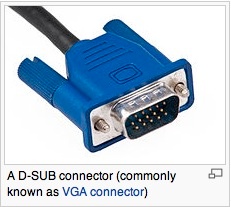
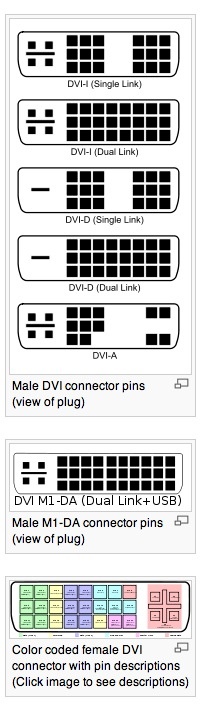
After a week of running I can say it seems fine and there is one significant enhancement. Because one of the new 2012 iMacs uses the nVidia 660M GPU, Apple has had to provide native support in OS X for the nVidia 660 GPU family to run OS X on that machine. The GTX 660 is one of nVidia’s finest bang-for-the-buck mid-range GPUs, with the 660M in the iMac being – yup, you guessed it – a crippled version. The iMac 660M version has but 0.5GB of memory, compared with 2GB (3GB on some EVGA cards in the US for $30 more) for the aftermarket cards. I would bet the clock speed is lower too, heat being any iMac’s bugbear, but cannot confirm this. The Zotac GTX 660 I am using (not the 660 TI) retails for $215, which includes two powerful variable speed integrated fans which are exceptionally quiet. These aftermarket cards all support up to two 2560 x 1600 pixel displays and include HDMI and DisplayPort in addition to DVI sockets. The Zotac board is recommended over the competitors’ if you have limited space in your box. It is considerably shorter, making a major difference to the accessibility of the motherboard’s SATA sockets in my Antec Sonata III enclosure. Non-trivial.

To put the sophistication of these latest GPUs into context, the Intel i7 Ivy Bridge CPU has some 800,000 transistors. The nVidia GTX660 CPU has 2.54bn – three times as many! Little wonder nVidia is making serious progress in the world of supercomputers, where its graphics chips are delivering cost effective performance at state-of-the-art throughputs.

My three monitors remain the estimable Dell 1650 x 1080 21.5″ 2209WA IPS ones, now some 4 years old, because they are easily calibrated and the dot pitch is fine for my purposes. Plus I like the bigger default fonts these deliver. If you use newer 1920 x 1200, 1920 x 1080, 2560 x 1600 or 2560 x 1440 displays, a card like the GTX 660 will easily crunch through graphics which might leave earlier nVidia GT2xx, GT4xx, 98xx or 88xx cards running out of steam.

I wrote about updating my HP100 Hack to nVidia’s latest card here and that hardware and OS needed nVidia’s separate drivers to make the card work. Now, with 10.8.3, the drivers come with the OS, so no external drivers are necessary. The benefits are twofold. My Hack is now more stable – looking to be as good as in the Snow Leopard days of yore – and the CPU’s idle temperature has fallen from 104F to 94F. Nice. The start-up problem where 10.8.2 frequently refused to recognize my third display, driven through a DisplayLink USB dongle, is gone. And the i1 DisplayOne Lion colorimeter display profiling software continues to work fine.

The Zotac GTX 660 in the HP100. Lots of room.

The native GTX660 support works for all nVidia cards, whether Asus, EVGA, MSI, Gigabyte (all per chat boards), Zotac (mine), PNY (tested and owned by reader PB) or any other brand. The chips are the same. Once you upgrade your Hack to 10.8.3 you can delete these two lines from your Boot Drive/Extra/org.chameleon.Boot.plist file on your Hackintosh as the presence of native drivers no longer requires the Hack to be informed that a 660 Kepler card is installed (thanks to reader PB for the tip):


The above lines can be deleted.

nVidia also released an update to its CUDA driver, which you can download through the related System Preferences pane, after which you will see this:


Latest CUDA driver.

The System Information->Displays data is also updated to reflect the use of native nVidia 660 drivers:

Let us all hope that Apple remains seriously distracted with its other woes and leaves OS X alone for good and all, instead of adding dumb gesture support, hidden Library directories and poorly implemented voice recognition. They might like to start by fixing the joke that is Siri on the iPhone. I use Google search on my iPhone – it’s everything Siri is not. Fast, accurate, a joy to use for voice search with excellent speech recognition. Even if you speak English, like me, not American!

Rolleiflex 6003

The ultimate medium format film SLR.

Franke & Heidecke had been making twin lens reflex medium format film cameras since 1920 until they decided to compete with Hasselblad with an SLR medium format design named the SLX in 1976. This quickly got a reputation as one awfully unreliable piece of hardware with common failures including the film drive motor and the lens aperture motor. Hasselblad was not about to be replaced as the fashionistas’ camera of choice, a reputation earned over several decades by the Swedish camera maker using Zeiss lenses.

But Rollei kept banging away and by the time the Rolleiflex 6003 Professional was introduced in 1996, the product was close to perfection. One later iteration saw the addition of AF, hardly an essential in this type of body and dictating replacement of all those expensive optics, but the 6003 Pro improved on the dated Hasselblad’s design in every way possible.

The design was Bauhaus modern, the oversized controls on the body and lenses perfectly conceived and the detachable handgrip, which could lock at various angles, was a piece of design genius. It made a clunky studio camera into a fully fledged street operator, albeit at the price of a lot of dollars and avoirdupois. This camera was heavy!

The images below are of (and by) the one I owned.


Large, clear controls. Note the Multiple Exposure dial, lower right.


Bauhaus design influences everywhere.
Beautifully designed and integrated handgrip with adjacent green shutter release.


The collapsible waist-level hood could be replaced with a 45 degree pentaprism.


Rear view. I was always a Kodak man.


Compact, inexpensive film holders could be preloaded for rapid reloading.
Unlike the tortuous film path in the Hasselblad, Rollei did it right.
Fully interchangeable backs were also available.


Easy to use exposure compensation dial. The mirror could be locked-up.
Spot/average metering control on the periphery. Modern flash shoe.


Built-in QR tripod base.


Easily changed focusing screen. I used
an aftermarket Beattie Intenscreen, far brighter than stock.


High capacity NiCd battery could be swapped in seconds and powered the
film motor, the exposure meter and the lens’s diaphragm.
The fuse protects the battery from overcharging.


The controls and markings on the lens were outstanding.
Operation with gloves was very easy.


150mm Zeiss Sonnar portrait lens.


Tack sharp – and massive – 40mm Zeiss Distagon wide-angle optic.


The 45 degree prism finder could be rotated.


Massive – and massively imposing – 350mm Zeiss Tele-Tessar telephoto.


Extension tube showing electronic contacts for the lens.


The outfit in a LowePro backpack.

Where the Hasselblad was created in a mechanical age, the Rollei was clearly a child of the electronic era. Unlike with the Hasselblad, the Rollei had motorized film advance (available for extra on special Hasselblad models, and still as clunky as it gets), an instant return mirror where the Hasselblad had none, and far superior ergonomics. It was an integrated whole, needing no add-on gadgets. The accurate TTL meter was built-in, you could opt for aperture-priority, shutter-priority or fully automatic program modes, single or continuous shooting, spot or average metering and even TTL flash metering on the 6008 variant. There was a full bright red LED status readout of all the vital signs at the base of the finder window and once you attached the 45 degree prism the outfit would really sing at a comfortable chest/eye level. There were two shutter releases – green in the above images – the one perfectly placed for use with the handgrip. Hand held use for close-ups was easy with a couple of extension tubes which conveyed all the information needed to the camera and lens using electrical contacts. Even the aperture was electronically controlled by a linear motor – advanced in its day, now stock in most DSLR lenses.

Hasselblad’s claimed advantage was that all the lenses for the 500C and later bodies had in-lens leaf shutters, the long-lived Synchro-Compur. This purportedly added to the cost of lenses, not that shutterless Rollei/Zeiss lenses seemed any cheaper. Rollei countered by adding selected lenses with leaf shutters, which have the advantage that they can be sync’d with flash at any speed, unlike focal plane shutters, allowing for easier balancing of ambient light and motion blur. Eventually Schneider also offered lenses for the Rollei, just as it did for the Hasselblad, making for a very large lens selection indeed for both marques. If you could afford them, that is. These optics were insanely expensive, not helped by a perenially strong Deutschemark and an overfed and overpaid German worker. Nothing changes.

I used mine with a Nikon Coolscan 8000 film scanner which would take a few minutes to render a 4000 dpi scan for a theoretical definition of 81mp, but in practice with all the variables, the vagaries of film and scanner and so on, it looks more like 10mp on my display using Lightroom.

And that was the Rollei’s undoing. When the 12mp Canon 5D was released as the first full frame affordable DSLR, a first look at the results doomed the Rollei to eBay. The Canon had superior resolution and color rendering, the lenses were outstanding and much faster, the body was a fraction of the bulk and cost of the Rollei and if you wanted 3+ fps, no problemo. But, best of all, there was no need to waste precious time scanning and then retouching the spots and scratches conferred by the film lab. And that was after first waiting to get the film back.

But my, my, what a well designed and fun to use machine this Rollei was. It always reminded me of what Lord Chesterfield said of sex. “The pleasure momentary, one’s position ridiculous and the cost damnable”. I sold my outfit before the penny dropped in the mass market that MF film was dead. A year or two after sale the price of used Rollei MF SLR gear had dropped 70% and Rollei had gone bust. Such is technological obsolescence.

It mystifies me why anyone would buy one today when a like-priced Nikon D600, with lenses a fraction of the cost, will leave the Rollei in the dust in every regard. Further, spares are unavailable and qualified technicians who can fix the electronics are even rarer. Finally, be prepared to procure replacement cells and soldering skills when the dated NiCd battery gives up the ghost. But as a design and display exercise, it’s as good as medium format film cameras ever got.

If you really must get into MF film gear SLRs, I highly recommend a Hasselblad. The bodies are mechanical, aesthetically beautiful to hold and behold, easily fixed and abundantly available. Their dated features are more than compensated by the ease of repair and the ready availability of spares and technicians, even if Lord Chesterfield’s pricing mechanism comes to mind.

As for all you hear about the plasticity and rendering and blah, blah, blah of medium format film, forget it. Pure claptrap engaged in by those with too large an investment in dead tech, now worthless.


Morro Rock from Highway 46. 350mm Tele-Tessar.


Sunrise, Templeton, CA. 40mm Distagon.


Highway 46 at Highway One. 150mm Sonnar.


Starfish, Moonstone Beach. 80mm Planar.


Moss and molluscs, Moonstone Beach. 80mm Planar.


Clams and rock, Moonstone Beach. 150mm Sonnar.


Driftwood. My son calls this one ‘The Snake’ and he was the one who spotted it.
“Daddy, daddy! Look, look! A snake!”
150mm Sonnar – 9+ 17mm Extension tubes.