Category Archives: Photography

Troubling times for PPs

Confirmation bias rules.

For the man in the street the idea of blowing $3,000 on a camera, without a lens mind you, is silly. For the Pixel Peeper (PP for short) it’s downright scary.

You see, the PP, who prides himself on the definition of his output when he zooms in on the screen has ‘invested’ ten to thirty times that sum in his medium format digital gear. So his expenditure naturally generates confirmation bias. It’s the most expensive gear out there so it has to be the best, right?

Then what happens is the same as happened when Canon’s 5D obsoleted medium format film gear almost overnight. Something better comes along, courtesy of Moore’s Law. The PP has a bunch of boat anchors and is looking at an upstart which equals his quality at one tenth the cost.

No great secret that I’m writing about the killer duo, here, the new Nikon D800 and D800E DSLR bodies. What makes matters even worse for the PP is that the inexpensive Nikon takes just about any Nikon lens made since 1959, finally doing many of these amazing optics justice. The sensor is at last likely better than the lens projecting the image on it.

And while no one could argue that the ‘pro’ DSLR is a lightweight, just ask a PP with his handcart and bad back how the bulk and weight of the gear compares to MF DSLRs. Not to mention speed of operation.

I’m not much of a follower of the debate raging about the latest and greatest in sensors, but I know a seismic shift when I see one and the Nikon D800 is such a shift. Were I an MF DSLR aficionado I would be following the same advice I gave myself when the Canon 5D came along. Run, don’t walk, to your favorite advertising medium and dump the MF gear just as fast as you can. Paperweights have little value.

Clap for PPs. The Nikon’s 36mp Sony-made sensor.

Snapseed for OS X improved

Welcome enhancements.

Snapseed is a simple and effective application for both iOS and OSX for conferring special effects on pictures. I mostly use it to add grunge in those snaps which merit the treatment.

Now the two major issues I had with the OS X version of the application have been fixed by Nik Software. First, you can export to Snapseed directly from Lightroom and second the application will now accept TIFF files rather than just JPGs. I have tested both and can confirm the revised version does both perfectly, and when you save the file it’s stacked with the original in Lightroom.

Here’s a snap processed in Snapseed with grunge, vintage effect and frame added:

On Broadway, SF. D700, 105mm f/2.5 Nikkor-P at f/11.

If caps could talk

Everything that’s wrong with today.

Adding those mechanical era Nikon lenses for pennies to my arsenal makes me reflect how much computer technology has breathed new life into optics almost 50 years old. A CPU is easily added conferring proper EXIF data on every file. A tailored lens correction profile can be made in minutes and will recognize the lens in Lightroom using the newly found EXIF data. Searches on focal length are now made possible – it’s a common search field for me when I ‘lose’ an image despite fairly decent keywording. I often find that I can easily recall which focal length was used to make an image in the catalog. Superb new processing technologies, such as the enhanced Clarity slider in LR4, add microcontrast where there was none. Sharpening technologies make the mushy pop, and you can even add lens blur easily in Photoshop. All of these technologies make something very old, in photographic terms, new again and lenses long ago forgotten are resurrected to once more work their magic.

That appeals mightily to the engineer’s soul in me.

No one would deny that the latest Nikon AF D and G series lenses are masterpieces of the optical designer’s art. Or maybe one should say masterpieces of the computer programmer’s code. We have optics like the 14-24mm ultrawide zoom whose performance, by all accounts, improves on its prime competitors from the same maker. And while not cheap, try buying the constituent primes for less. But the problem with these new lenses is that their settings are awful. Plastic this, resin that. The controls grind rather than rotate, nylon gears abound and the whole thing feels like the kit lens off lower end budget models. And while the materials used appear not to lessen performance – indeed, lightning fast autofocus is a modern miracle which only ever helps matters – I believe that a well made lens can improve a photographer’s output in much the way a Porsche makes everyone a better driver. Eventually.

And nowhere can you find a more succinct summary of what ails modern designs than in the humble lens cap.

1965 and 2012 Nikon rear caps.

With three real oldies in my collection, all from around 1970, I thought it only appropriate to track down period rear caps. Those three lenses – the 50mm f/2 Nikkor-H, the 105mm f/2.5 Nikkor-P and the early four element 200mm f/4 Nikkor-Q – have an aggregate age approaching 130 years. The last, incidentally, though a simple four element Sonnar design, is probably the standout of the three, which is saying something given the prowess and renown of the first two designs. It’s only fair to grace them with period caps. And just look at those caps – the 1965 model is bakelite and has large, deep and long ridges which makes one-handed removal easy, because it is correctly shaped. The 2012 variant makes no such concessions to function and proves that if you can get everything wrong in something so simple, modern designers will find a way. The milling is pathetic, pure decoration without function. Then, to make absolutely sure that the thing is as slippery as a snake, the milled surface is inclined, making it almost impossible to remove the cap with one hand. Finally, well, there’s no other way to say it, it looks like the crap it is.

Here are those three Nikkors with which I am gradually getting acquainted, each superb in its own right and optically equal to the latest resin mounted horrors. Sure you have to turn the focus collar and, yes, I have installed CPUs in all three, as you can see, but the sheer pleasure these confer on this photographer’s snapping makes for better pictures. And $200 gets you the lot.

50, 105 and 200mm Nikkors from the last great era of lens making.
All have been Ai converted and have CPUs installed.

Bringing an old lens back to life. CPU installed on the 105mm Nikkor.

Transamerica from Columbus Avenue – 50 years old this year! 105mm Nikkor-P – a spring chicken at 42.

Sometimes old can be better.

Caffe Roma

For the criminal justice set.

Should you ever find yourself at the Hall of Justice in San Francisco, probably not a good thing, you could do worse than repair for lunch to Caffe Roma across the road, at 7th and Bryant Streets. The sandwiches, served on various Italian breads, are fresh and delicious and there’s a good selection of salads. If you are a coffee maven they roast their own here.

The interior is clean and spacious and you will likely find a mix of attorneys, process servers, bail bondsmen (they’re the ones with the gold chains and bulging suits) and working girls inside:

I had the Torino sandwich, served with chips, and a glass of water for all of $7.50. Half the sandwich is all you need, so you get dinner included in the bargain!

Click for the full menu.

Caffe Roma. Favored hangout of cops and the shyster set.

All snapped on the D700 with the 20mm f/3.5 Ai-S MF Nikkor, using my custom lens profile.

Out and about with the 20mm Nikkor

Just a delight to use.

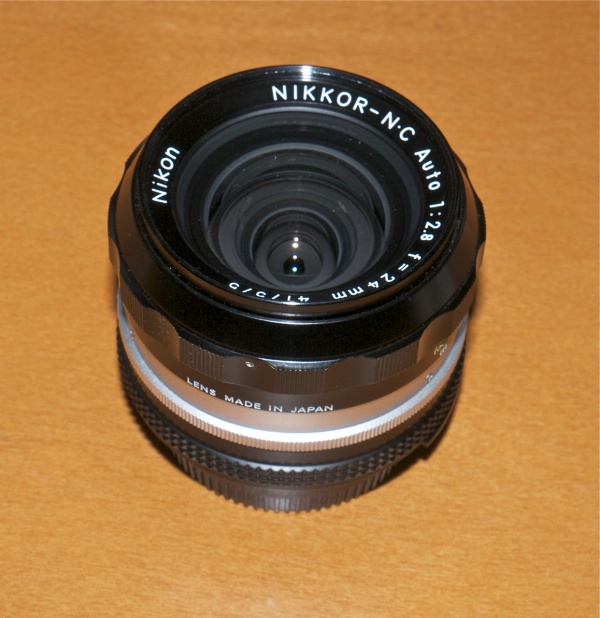
I rambled on about the old MF Nikkor 20mm f/3.5 lens I picked up the other day here. Autofocus is really not missed at this focal length and such vignetting and distortion as there is can be easily corrected using the tailored lens profiles I provide here.

So the other day when a break in our unusually rainy weather opened up, I shot off to the city with the 20mm bolted on to the D700 (‘bolted on’ seems in keeping with that body’s macho ethos) and I thought it might also be fun to try out that little GPS logger and receiver mentioned yesterday, while I was at it.

I set off boldly heading west on foot along Harrison Street to the Hall of Justice, surrounded (in order of decreasing morality) by mendicants, zonkers, auto bodyshops, cops, whores, pimps, bail bondsmen and criminal lawyers. Firing up the GPS, here’s my out and back route as shown in Lightroom 4’s map module. I headed back after a sandwich at Caffe Roma at Seventh Street, taking Bryant Street:

As seen in LR4. Flags are numbered when the photo count exceeds one.

Hover over a flag in LR4 and you see the snap:

Cursor hovers to disclose picture in LR4.

Until I figure out some way to add a map when the cursor is hovered over an image, you will have to take my word for it that these were snapped on the route shown. And while the area may not be the greatest, there are probably more cops per square mile here than anywhere else in the city. They are needed to protect the shyster lawyers from their abused clients. Thus, it’s actually pretty safe.

The GPS performed very well. There was one small blind spot, maybe half a block long, where no coordinates were recorded (the GPS flag in the D700’s LCD display was extinguished), probably caused by a skyscraper obscuring the satellite, but the data were easily interpolated using LR4’s ‘drop-on-map-to-record’ option. Built up cities with high rises are the severest test. Open countryside is no problem.

The lens acquitted itself well. Fine detail is there in abundance across the frame and a click in LR4 applies the lens profile in cases where the distortion is objectionable. More a fetish than a requirement much of the time, to be honest. Where you see vignetting it has been added by me, not by the lens.

The Endup. Grunge added in Snapseed.

The wave.

Bail bondsmen. My favorite shingle is ‘Ballestrasse’. What could be more appropriate?
Looks like a business divided along ethnic lines – these presumably service Jews, Germans and Italians, respectively.

SOMA Artists Studio. Arrow points the wrong way ….

Green door and wall on Bryant Street.

Plant on Bryant Street.

Yup, that little 20mm is a keeper and is ideal for subjects where sidewalks are narrow and you have no choice but to be close. What I think of as an ‘environmental lens’ and a favorite focal length. And GPS works fine – a couple of dead spots where there was no reception, with coordinates easily backfilled in LR4. The unit is completely unobtrusive and I paid it no attention on this little sojourn. It delivered in (accurate) spades. It nails locations within a couple of yards.