Category Archives: Photography

A wireless remote for the Panasonic G range

Cheap and effective.

For a delivered price of $20.98 you can buy a wireless remote for any G-series Panasonic camera on eBay, shipped from Hong Kong. Mine took two weeks to arrive, complete with transmitter, receiver, a cord for the latter and the requisite two batteries. The 23A battery goes in the transmitter/trigger and the CR-2 in the receiver. The short cord goes from the receiver to the socket on the G1. Note that the CR-2 battery is wrapped tightly in plastic which must first be removed. The receiver itself fits in the flash shoe on my G1 but has no contacts of its own. If you are using the flash shoe for something else, like an external finder, or if you are using the in-camera flash, you can Velcro the receiver to some other convenient point on the camera’s body.

Here’s how it looks in practice:

The uWinKa wireless remote. Cord connections from/to the G1 circled.

I tested it at home and it still worked fine from 50 feet away and through several walls, so the claimed range of 100 feet is believable. Flashing LEDs on the remote (taped off in the picture) confirm operation, as does a flashing LED on the trigger. The only thing you have to do is to remember to power up the receiver (camera end) with the on/off switch. There’s a choice of 16 code settings, changed with microswitches on the bodies of both devices, in the event of interference from other RF devices. Both receiver and transmitter are very small, in keeping with the scale of the Panasonic G1. Weight is negligible.

The trigger has a two position switch which is appropriately stiff on mine to preclude accidental switching – instant release or five second delay – which you can use nicely with the 3 or 10 second delay on the G1 to give you a choice of 5, 8, 10 or 15 seconds. The claimed delay is 3 seconds, but mine delivers 5. There’s also a Bulb option. You are meant to hold the button on the trigger for 5 seconds and the shutter should remain open until the button is pressed again. I could not get that to work. Hardly an issue. Finally, a brief press on the trigger button will focus the lens but not release the shutter. That worked for me. There’s an extendable antenna on the transmitter for longer range use. It’s extended in the picture, above. There’s also a release button on top of the receiver but I can’t say I have found a use for it, though it works fine.

All except the Bulb option works perfectly. The only hitch I encountered was that I had to reverse the provided cable from receiver to camera to make it trigger the shutter. The behavior is repeatable suggesting that there’s a diode in the small box in the connecting cable which transmits current in one direction only. The cable bears no directional markings so if yours does not work simply reverse it. While I haven’t tried it, I would be prepared to wager that this device will work fine on any camera which has a three pole mini-coax socket on the body. Try at your own risk.

The accessory shoe for mounting on the camera is flimsy; you can remove it by removing the one black Philips screw retaining the bottom cover and then the two chrome ones retaining the shoe from the inside. Use a fine flat file to ‘machine’ down the retaining prongs thus exposed (they are unnecessary should you decide to restore the shoe, as the two retaining screws prevent rotation in any case), thus procuring a plane base, and use industrial strength Velcro to stick the remote to some convenient flat part of your camera instead. One warning – Velcro adhesive refuses to adhere to the rubberized body on my G1!

Or, as the French might so elegantly put it, plus ça change, plus c’est la même chose. That one,, for the 5D, is quite a bit larger than the one profiled above.

The new iMacs – 2011

Still a poor choice for photographers.

From a reading of the specs of the latest iMacs, the reasons to upgrade are:

  • You do a lot of moving of large video files. The new Thunderbolt connector is 10x faster than USB but peripherals using it are rare and only just coming to market.
  • You need three displays. Existing iMacs can support two (iMac + 1 external). The new ones can support three (iMac + 2 external) using Thunderbolt. Once again, the only displays currently using Thunderbolt are the overpriced and glossy-only ones from Apple which simply cannot be properly calibrated for serious photography use. Once it becomes available, a good Dell matte display will be half the price of the add-on Apple one, the latter too garish/bright/contrasty, just like the display in every iMac since they went all glossy four years ago.

The modest CPU and GPU speed increases are not a compelling reason to upgrade.

Further, AAPL still has issues with graphics cards overheating (which killed both our white non-glossy iMacs and made me build the Hackintosh – these were the last iMacs with a screen that could almost be properly profiled for photography use). Still? Well, yes. Why do you think the iFixit tear down shows that the graphics board in the latest iMacs is removable, rather than integrated on the motherboard? Because they expect to replace many, testament to the poor cooling of the part in the tight confines of the box. Form over substance design continues at Apple. Plus, as you need to remove the motherboard to access the removable GPU, you need to be very skilled or very lucky. And then where do you get the replacement? It simply does not solve.

Click the picture for the iFixit teardown of the latest iMac.

If you need a good photography machine and must have Thunderbolt, the best bet is to wait for the Mac Mini to add that connector and hook it up to a couple of proper displays from Dell. Or for higher speed, build a Hackintosh.

Save your money unless the above are compelling reasons for you.

The single best thing you can do to make your iMac significantly faster is to add a Solid State Drive for the OS and applications. It can sit externally – internal installation is sheer hell – and you tell System Preferences->Startup Disc to make the SSD the one to start from. Install OS and copy over apps and you are set. You continue to keep data on your existing internal HDD which is big and cheap. The SSD is small and costly but it dramatically increases start-up speed and application loading. I added an Intel SSD (only 128gB) to the Hackintosh and the difference is night and day. I use maybe 50% of it – OS + apps only. Far more real world performance increase than newer CPUs or GPUs. It cost me $225, and prices continue to fall. Once you have used an SSD there’s no going back. Also, an SSD has no moving parts – always a good thing.

The Panasonic G3 – soon?

Here’s hoping.

My Panny G1, bought in July 2009 was discontinued about a year ago. Panasonic replaced it with the underwhelming G2. The latter added a movie mode and a touch (more like “push”) screen.

Panasonic G3? I wish!

A far more significant improvement was in the recently introduced and costly ($1,000 body) GH2 which added the second ever MFT sensor. All Panny and Oly MFT cameras have shared the same sensor until now. This increased the pixel count and reviews suggest that the noise and resolving properties are now comparable to the considerably larger APS-C sensor in the best models from Canon and Nikon. A related benefit is the professional quality movie mode which has many pro movie makers dumping their costly video gear in favor of the superior GH2. Impressive.

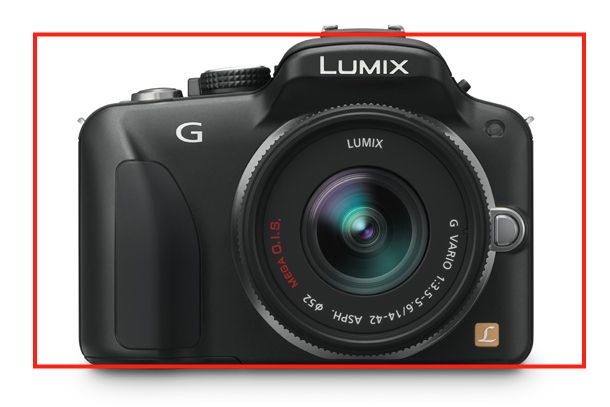
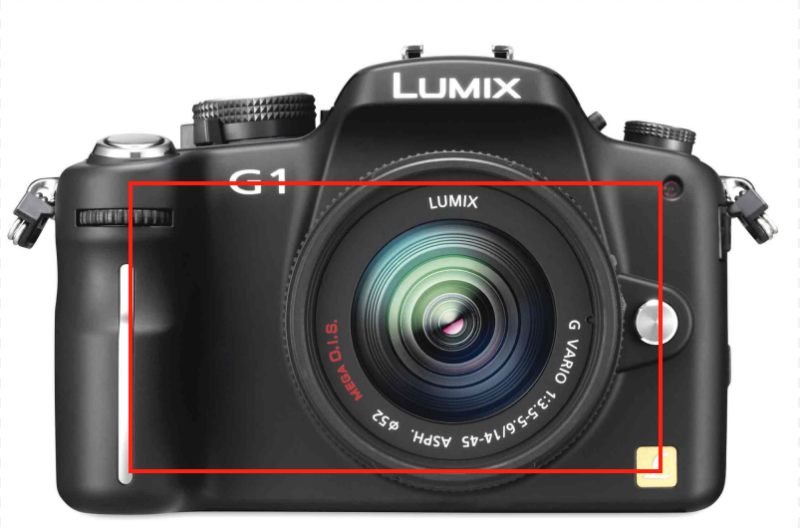
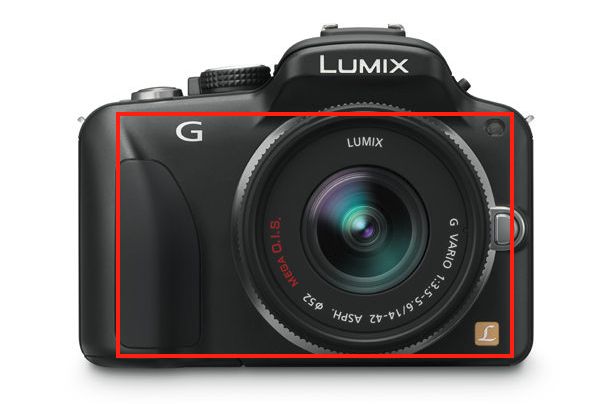
Now it’s not like the results from the G1 are bad. I have little difficulty consistently producing 13″ x 19″ prints from mine and, with extra care, 18″ x 24″ is possible. That’s larger than 99.9% of users will ever make. As for display on a big TV screen, there are no issues. Everything looks great. However, an even better sensor, especially one with less noise at 1600 ISO, would be welcome. So would deletion of the useless prism hump on the G-series DSLRs, placed there by Panny’s admission to make traditional DSLR switchers comfortable. Or something silly like that.

The reason the mock up, above, interests me is because not only is the prism hump gone, the body also includes the EVF from the G1 which is as good as it gets. Meaning that, unlike the GF1 and GF2 which include an LCD finder only or an add-on EVF which makes them bulkier than the G1, you get a proper, integrated finder. Plus that improved sensor. Anything that allows me to be more careless when pressing the button, in the interest of getting the picture, is a good thing. So faster ISOs made possible by a less noisy sensor means faster shutter speeds. That means a higher success rate in street snapping.

The rumor mill has it that Panny will announce the G3 on May 11, in London. Let’s hope that the recent earthquake in Japan does not delay that.

The G1? Still a superb bargain. I paid $640 for mine and Amazon still sells new ones for $550 with the kit lens. Mint to new ones sell for under $250 for the body only on eBay. If the G3 is too costly or delayed, I have no difficulty recommending the G1 to aspiring street snappers who will not miss a movie mode. And forget the touch screen. No one needs that.

Price? I’m guessing $650-700 for the body only. They may have to discontinue the GF2 as who wants a non-EVF body of comparable size at a like price?

Mounting glossy prints

Care needed.

I finally got around to mounting some glossy prints made on the HP paper I received as a gift.

The Seal 160M.

I use a Seal 160M press which I bought ages ago, used, on eBay for some $400 + half my net worth in shipping. It weighs a ton! They are still in business and even shipped me some missing nuts no charge. Today’s price- some $1,400 – reflects the uncompetitive cost of US labor. Will we ever see a flood of cheap ones from China? After all, a press is just a couple of slabs of cast iron and a heater. I doubt it. Few make big prints for mounting any more and I doubt the replacement market in commercial businesses is significant.

Only a fool buys these new. They regularly crop up for $250-500 used and all parts are readily available, not that there’s much to go wrong. The 160M weighs 60 lbs so try to buy locally. The 210M comes in at a whopping 75 lbs. Buy locally and bring a friend.

Typical eBay selling price – this is for the 210M. The 210M has two pressure adjustment knobs in contrast to one for the smaller 160M

The device could not be simpler, so if the heater or thermostat blows, replacement is cheap and the process simple. The whole thing is made up of less than two dozen parts, and B&H carries the essential ones. Framers’ Island also carries spares, including thermostats.

Not exactly complex ….

You can read all about mounting prints here.

I turned the temperature down from my usual 190F (HP Satin) to 170F for the glossy and also first removed the heated platen and gave it a thorough scrubbing with steel wool to remove any surface imperfections. You know how glossy is! Further, I’m careful to keep the release paper (prevents the print sticking to the heated platen) in a dust proof bag to avoid ingress of particulate matter which could mar the surface.

The results are simply spectacular. The surface loses a minor amount of gloss (it will much more at 195F so temperature seems critical) and there’s not a divot or scratch to be seen. But it is a labor of love! The faster these prints go behind glass, the better.

Mounted glossy prints with helper.

To learn more about the Seal press click the download buttons below. If you track down a used one, look for the S or M designation in the model number, indicating it’s a later model which does not use asbestos in the wiring insulation. Life’s too short as it is.

Download the Seal 160M/210M manual. 160M – up to 2×18.5″,
210M up to 2×23″. Both accommodate any length.

Download the Seal 110S manual – up to 2×12″

The maximum width of a board which these will accept is twice the larger dimension of the platen – you simply flip the board around. Overlapping/reheating a previously sealed area has no deleterious effect. The maximum length is infinite as you simply slide the board sequentially through the press. A 13″ x 19″ print needs two passes in my 160M, whereas an 18″ x 24″ requires four, both when centrally mounted on a 22″ x 28″ mat. It’s the size of the mat, not of the print, which constrains capacity. 2 minutes under pressure per ‘press’ using Drymount mounting tissue and release paper does the trick.

Nothing beats a professionally mounted print and, as I have written before, I am still searching for evidence of fading or discoloration in prints I mounted almost 40 years ago using a domestic iron. So when snake oil salesmen come calling, telling you that heat mounted prints fade, ask to see the evidence.

Glossy paper

The touchstone of the photographer’s art.

Its been quite a while since I made glossy prints. In the darkroom days I would squeegee the print, face down, onto a high gloss sheet of chrome-plated steel then heat the thing in a press. If you got things right the resulting print would emerge with an indescribably high gloss (this was before awful RC papers ruined traditional printing) which was also quite incredibly fragile. Any moisture or fingerprints and the surface would be ruined. But the definition afforded the image was beyond compare.

This was not all good, of course. Every imperfection in the image was disclosed, every grain of Kodak’s unbeatable TriX emulsion revealed. Sometimes you wanted that. Sometimes not. And the whole process was a real pain in the nether regions but once you saw an unglazed, normally dried glossy print you never wanted to go there again.

Nearly all the many prints I have made on my HP DesignJet 90 dye ink jet printer have been on HP-branded Premium Plus Satin paper. This paper has a semi-gloss finish, retains detail well and is very easy to use. It has a swellable surface, meaning its pores open when sprayed with ink to absorb the dyes. After a few hours the swelling subsides and the print is less fragile and can be handled easily. Until then the surface is quite fragile. I always handle paper using cotton gloves because any grease from fingers on the surface can result in poor ink absorption, blotchiness and reduced life. Done carefully, HP’s Vivera inks are certified by Wilhelm Research for some 80 years longevity.

Well, take a look what arrived on my doorstep the other day:

Nice things happen to nice people.

The buyer of a hefty chunk of my Canon 5D outfit found several goodies in the shipments I made. A few CF cards, a wired and wireless remote, an LCD protector, a CF-to-SDHC adapter and so on. He had been a pleasure to deal with, none of the usual game playing or nickel and dime nonsense so beloved of buyers of even fairly priced gear, that I felt it was the least I could do. Well, Barry B. dropped me a note saying that he no longer made prints and would I like some HP Glossy? Is the Pope a Catholic? It gets better. The small fortune in printing paper is not only the swellable type specific to my HP DesignJet, it was shipped to me at no charge! There are decent people left in the world …. thank you, Barry.

On receipt the first thing I did was to download the paper profile from HP and make it available to Lightroom. Then I took an image which would really benefit from the ability of glossy paper to render fine detail and ran a test print. In this image I had retouched some overhead wires using Photoshop CS5 and Content Aware Fill and it looked just fine on my Dell 2209WA display. But, oh! boy, the test print clearly displayed my retouching so I had to go back into PS and try harder. That’s glossy paper for you. Every imperfection, every pore, every blemish, is writ large to the world.

A second print – I have no fewer than 125 sheets of 13″ x 19″ to play with so I’m feeling a tad profligate – put all to rights and the quality is simply breathtaking. And this from the Panny G1’s poncy little MFT sensor!

A warning. Before these swellable papers dry, a matter of a few hours, they will show a mottled surface reflecting (!) disparate ink absorption across the surface. Give them a few hours and the surfaces returns to normal, meaning a high gloss almost as good as those monochrome prints from ages ago, but a lot easier to make.

Glossy is not for everyone. It’s hard to display, attracting reflections as it does. It’s fragile and really needs mounting behind glass. It’s unforgiving when it comes to the photographer’s technique. And it needs to be handled with kid gloves …. OK, cotton gloves. But, done right and displayed right, a glossy print remains the touchstone of the photographer’s art.

Why do you think that nice Mr. Jobs insists on those dumb glossy screens on all his computers? Because they plain look better on a casual acquaintance. That’s fine for prints. Not so good for computer screens.

HP Glossy is anything but water resistant, so keep it away from rain drops and the like:

Two minutes under a tap and the emulsion starts to run.