Category Archives: Photography

CrashPlan – Part V

Adding more.

In Part IV I mentioned that I had copied all my photo files to CrashPlan’s cloud storage.

As there are currently no limits on storage volumes, and I do not expect this status to prevail, I have been gradually moving other non-photo data to CrashPlan on the assumption that unlimited volume rights will be grandfathered if they decide to charge for large storage spaces. I have signed up for three years at CrashPlan and now have over 300gB of data on their servers.

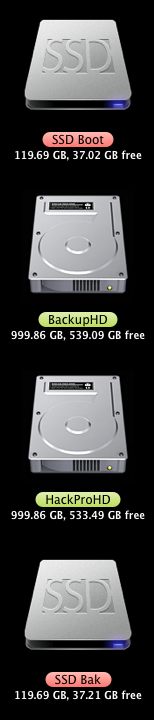
Here’s how the storage paths selected for cloud backup look at CP:

CrashPlan directories.

When inputting new paths, the best way is to drag and drop the folder from Finder on your Mac to the above CP box. Typing in the path does not cut it – Finder omits the suffix “.aplibrary” from the Aperture database, for example, and without it the back-up will fail. Further, remember to add the trailing slash (‘/’) or the back-up will fail. Irritating quirks and CP really needs to adopt a visual icon based approach, compared to this geeky one.

How about Applications? Increasingly applications are purchased by download, so all you need keep in the cloud is information relating to your serial number and related access keys. Uploading gigabytes of applications to the cloud makes no sense. It’s also likely you will miss one or more of the hidden directories many applications use. Just re-download the app if you lose the original (assuming the vendor is still in business), then re-input the key. Rather than using CrashPlan I strongly recommend 1Password used in combination with a free DropBox account. The latter will not only store all your keys remotely, but also provides efficient syncing of all your 1Password data to all your Macs and iDevices. After many months of use I can confirm it works properly. 1Password is an application every Mac or iDevice user should own.

Here’s an extract of the Software section in my copy of 1Password:

What about software you bought on DVDs? For me that leaves the truly awful Intuit Quicken. I store that DVD offsite.

CrashPlan’s warning feature:

CrashPlan will backup even if your computer is logged out; however it cannot do so if the machine is switched off. That happened with my HackPro the other day when, for the first time in ages, I left it off overnight while doing some hardware maintenance. I received the following alert from CrashPlan in my email the next day – a nice feature:

Edwin Land and genius

The Real Thing.

It has long seemed to me that the greatest photographic invention is the digital sensor. It made immediate and cheap what was either seriously delayed – processing, printing in the film days – or very costly – Polaroid instant pictures. And it also made cameras better in every way – sharper, faster, smaller and more reliable. But there’s no naming the inventor of the digital sensor. The technology is so complex, the manufacturing process so capital intensive, that only committees of scientists and technologists could invent something like this.

The greatest photographic invention ever.

Until the digital sensor came along you could easily identify the great inventors who moved the technology of photography forward. In the nineteenth century they included Niepce (often credited with the first ever photograph dated 1826), Fox Talbot (calotype permanent images, 1834) and Daguerre (silver Daguerrotype images, 1839). George Eastman’s invention of roll film in 1884 made the taking of multiple pictures easy, allied with his preloaded Kodaks which you simply exchanged for a new one when dropping off the old to have the pictures processed. Eastman saw that messing with plate cameras and dark slides, all to take one picture, was not the future.

But it wasn’t until the twentieth century that four giants bestrode the field making quantum leaps in photographic technology. Interestingly, the invention of each was spurred by simple personal desire to make things easier, lighter or faster.

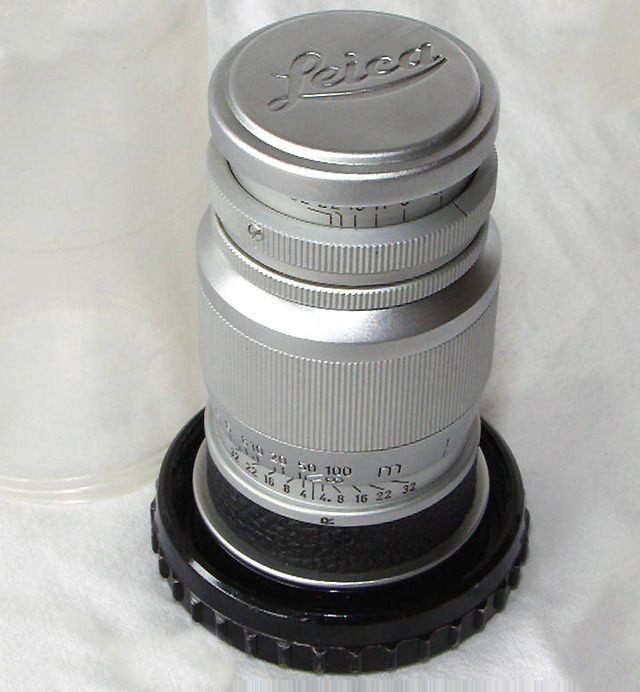
The first was Oskar Barnack of Ernst Leitz to whose failing health we owe the Leica. Barnack got tired of humping his heavy plate camera and tripod around in the mountains so came up with something light and pocketable to help allay his asthma. It didn’t hurt that he was a master engineer or that he had the inspiration of using 35mm movie film stock to allow 36 snaps to be taken on one roll.

The next two were ‘Man and God’ as they were known in Kodak’s Rochester factories. Leopold Mannes and Leopold Godowsky were geniuses like they used to make them, and their chemistry skills gave the world its first usable color film, Kodachrome. Mannes and Godowsky were amateur tinkerers in pursuit of a dream and Kodak had the genius to give them time, space and capital to pursue their dream of a stable color emulsion. The result was the greatest film ever made, before digital swept aside all before it.

But to my mind, the greatest inventor of all, when lone inventors still existed, was Edwin Land. His daughter’s insistence on seeing the picture right after it was taken led this engineering and chemistry titan to come up with the Polaroid process. The original design required you to pull out the print/developer sandwich whose chemical sacks would open when squeezed by the rollers in the camera’s body, initiating processing, and a minute later you would have a moist print in one hand and the discarded caustic chemical part in the other. You would then have to coat the print with the provided squeegee to fix the image and prevent fading. Later, Land made a color version and I have nothing but warm memories of using both and, yes, you really did not want to touch those chemicals. I can still smell the odor of the fixer as if it was yesterday when I last took a Polaroid picture, in much the same way as I recall the aroma of a fresh roll of Kodachrome. Thanks to the Polaroid process, the thrill of the darkroom was now in your hand, and no work or blackout blind were required.

But Land was not to be satisfied. All that chemical detritus got to him and he determined to do better. His invention of a new process which would obsolete the separate tear-off chemical step and have the color picture develop in broad daylight dictated not only a huge step in chemistry but also required the invention of a completely new camera, the SX70. The history of those inventions is described in fascinating detail in Harry McCracken’s Technologizer blog, and you can read the whole story by clicking the image below.

Click the image for the article.

As McCracken elegantly writes:

“But greatness isn’t a popularity contest – not primarily one, at least. Maybe it has more to do with the concept expressed by Arthur C. Clarke’s Third Law: making technology indistinguishable from magic. By that measure, I can’t think of a greater gadget than the SX-70 Land Camera, the instant camera that Polaroid introduced in April 1972. We ranked the SX-70 eighth on that 2005 list, but the sheer magnitude of its ambition and innovation dwarfs the Walkman, iPod, and nearly every other consumer-electronics product you can name.”

In our modern world we adulate carnival barkers like Steve Jobs or copyists like Bill Gates. These two excelled at taking someone else’s idea and either slickly repackaging that which they did not invent or using monopoly power to sell mediocre products with no competition. Edwin Land was not of that caste. Along with Niepce, Daguerre, Fox Talbot, Barnack, Mannes and Godowsky, he was the Real Thing.

Leica 25mm f/1.4 Summilux MFT

Strange.

The newly introduced 25mm f/1.4 Leica Summilux.

When you wanted a really fast lens for the Panasonic G range of cameras the usual resort was to the 20mm f/1.7. That lens mightily underwhelmed when I used it, showing very slow focus, awful flare control and lots of other issues, which you can read about here. I returned mine.

Now along comes the Leica-branded 25mm f/1.4 MFT lens at a rumored price of $1,000, making it the costliest MFT lens yet. The design and pricing raise several questions.

First, a 25mm f/1.4 has the same depth of field as a 50mm f/2.8. If you have used the latter on a full frame camera you will know that f/2.8 is too slow to really isolate a subject from its background. The 50mm FFE new Leica lens for MFT will be no different. So if you are buying this lens to isolate subjects you will be disappointed. Now a 50mm f/1.4 really does isolate – but that would mean the 25mm would have to be f/0.7. That is not going to happen. (Depth of field is solely a function of focal length and aperture; the size of the frame exposed is irrelevant. A 105mm lens on a 4×5 camera has the same depth of field as the same focal length on an MFT one).

Second, the lens has no OIS shake reduction. OIS adds two stops of safety so 1/30 at f/1.4 without OIS is the same as 1/8 at f/2.8 with OIS. The sole beneficiaries here will be Olympus MFT Pen users where OIS is built into the body, though I suspect any Pen body will be overwhelmed by this big lens. No Panny MFT body includes OIS – it’s in selected lenses.

Third, there’s no indication of how quickly this lens focuses. It will have to be fast and accurate to justify the astronomical price tag.

Fourth, you can buy a 50mm f/1.4 for your Canon for $450 or your Nikon for $400. Sure, you lose the compactness of an MFT kit, but that’s an enormous price difference.

Fifth, by MFT standards, the lens is huge. Who wants that when one key reasons to use MFT is compactness?

Finally, the new 16mp sensors found in the Panny GH2 and in the upcoming G3 add a rumored two stops of grain reduction. So your poky f/3.5 lens just became the equivalent of an f/1.7 by simply setting your ISO 4x faster for the same level of noise as before. And a G3 body at $600 still leaves $400 in change from the Leica-branded optic.

So I confess I’m unsure who this lens is marketed to. It’s too costly, lacks OIS, too bulky and you can do a better job with background blur in a few seconds using Photoshop’s tools. I doubt Panny will sell many.

I would much rather see Panny fixing what ails the 20mm f/1.7 and maybe making a good 45mm (90mm FFE) fast portrait lens. A 20mm f/1.4, say, with OIS, proper flare control and fast focusing at $600 would get my attention.

Snapseed

Adobe, where are you?

Click for the Snapseed site

This $5 iPad app shows the progress being made in touchscreen photo processing apps. (Warning – I have not used it). Check out their video by clicking the above picture. The app uses the touchscreen technology well and the app is very much more than a toy. It includes area selection and smart masking for application of processing to selected areas. Check out the Selective Adjust video. The automasking is just the sort of magic the iPad is all about. Night and day compared to any other masking scheme I have seen, and entirely intuitive, Well done, Nik Software. Every user of digital sensors knows about their propensity to burn out highlights and this is just the ticket to fix those.

In its usual manner, Apple is squeezing the margins and disappointingly refused to increase the maximum storage when they release iPad2, the largest still limited to a modest 64gB. It’s not a hardware constraint. Tear downs of iPad2 disclose there’s lots of room in there for more flash storage. And given the rotten state of competitors’ offerings, Apple has no incentive to add storage at the present time.

Still, that will eventually come, and it’s important for photographers who want to work with RAW files rather than with compromised JPGs. What use is you super-duper DSLR with its phenomenal data capture if you are going tp throw most of the goodness away by working with compressed JPGs?

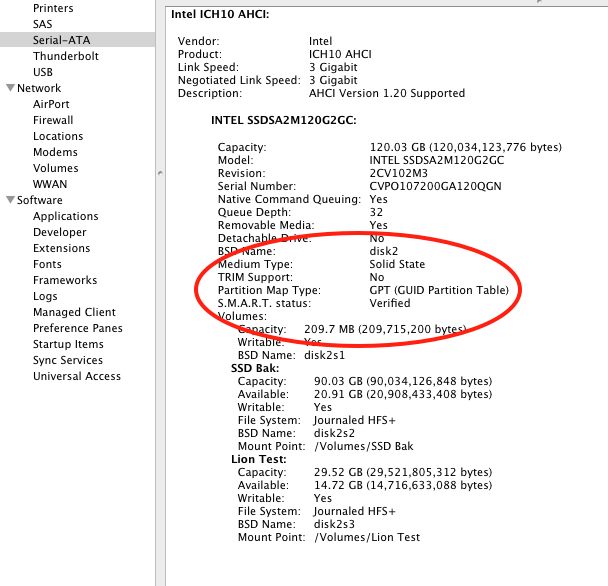
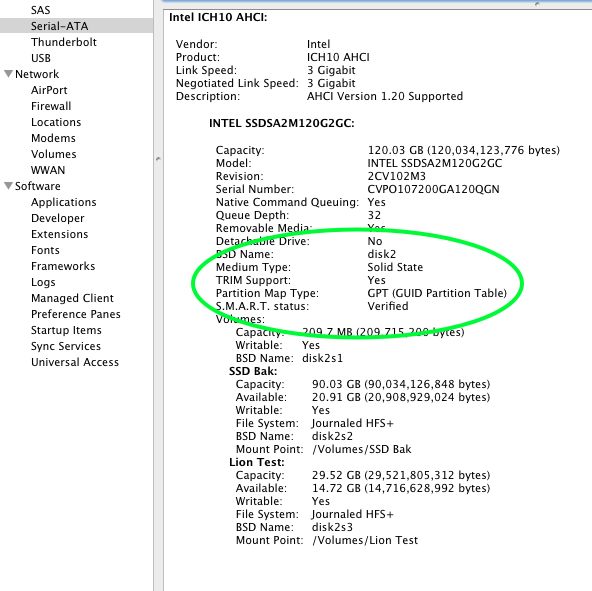
More flash storage is on the way. Intel is making huge strides with flash storage technology. The SSD recently installed in my HackPro used 32nM spacing (1nM = One billionth of a meter); it’s already obsolete, the current offering using 25nM, at a lower price. Once they cut that to 12nM, storage per unit area will quadruple and per unit volume it will be eight times as much. So help is on the way. With the typical RAW file coming in at some 15mB, 1000 RAW originals will need 15gB of storage or some 235 times the current maximum. With storage densities doubling annually we are 8 years away from that number. It wouldn’t surprise me to see it reached sooner, driven in large part by a burgeoning mobile computing market.

By that time, Intel’s high speed connectivity technology (which Apple would have the world believe is their invention, naming it Thunderbolt) will be the standard on all devices, mobile or not, so downloading your processed pictures from the iPad to your work computer will take seconds. Right now low USB transmission speeds are a huge bottleneck.

Meanwhile, where is Adobe in all of this? They own the serious/professional photo processing market though two outstanding applications, whether you are a Mac or Windows user. Lightroom and Photoshop. (Aperture’s market share is a rounding error). But Adobe’s poky touchscreen offerings for the iPad are underwhelming. Let’s hope they get on it before their faster, smaller competitors take the market from them. Why do I care? Because I want the functionality of exporting to LR or PS on my desktop and I sure as heck do not want to learn any new, big, complex apps which may replace it. I would rather be taking pictures.

I would rather be taking pictures. The Bubble. G1, kit lens.

A magic moment in a child’s life, spotted in San Francisco’s west Mission District.

Rosamunde Sausage Grill

In SF’s Mission District.

People shopping on west Mission Street in San Francisco are not wealthy. The area is full of cut price stores and interesting groceries selling exotic foods. Many languages are spoken, Spanish being the most common. The people are warm and extroverted, neighbors frequently meet on the street and if the area has more than its share of drunks, addicts and derelicts, none of that takes away from its character.

When you next find yourself on west Mission Street, be sure to check out The Rosamunde Sausage Grill. The menu offers a choice of sausages on a French roll ….

…. and a varied beer selection. Wine drinkers need not apply. Check out the great names. I can recommend the ‘Russian River Damnation’ lager:

The interior is nothing to write home about, basic beer cellar, but the food and beer are excellent.

Best of all, sit outside and watch the street scene as drama unfolds before your eyes.

Son of Klingon. G1, kit lens @ 18mm, 1/400, f/4.5, ISO 320.